Plant ID
 Call Kai
 Learn
Learn Practice Test
 Spaced Repetition
 Match
Match Flashcards
 Knowt Play
1/30

Earn XP
Description and Tags
scientific name common name picture description
Name | Mastery | Learn | Test | Matching | Spaced | Call with Kai | Chat |
|---|
No analytics yet
Send a link to your students to track their progress
31 Terms
Cane (switchcane)
Arundinaria gigantea
Native. Forms dense thickets. Found commonly in wetlands, floodplains, swamps, streams. Good for understory cover. Rabbit habitat. Bamboo-like. Slender joined stem that can grow several feet tall and long, narrow, lance shaped leaves.

Paw Paw
Asimina triloba
Native. tree/shrub. Large, Simple leaves that are smooth and pointed tip. Distinct smell when crushed. Large round fruits. Butterflies use for larvae. Mammals eat fruits.

American Beautyberry
Callicarpa americana
Native. woody fern or shrub. Branching. Long, Simple leaves that are oval shaped with serrated margins and pointed tip. Songbirds will eat berries. Distinct smell. Used as bug spray.

Common Persimmon
Diospyros virginiana
Native. Tree. Simple, Alternate Leaves smooth and pointed tip. Orange Fruits. Food source for deer and birds.

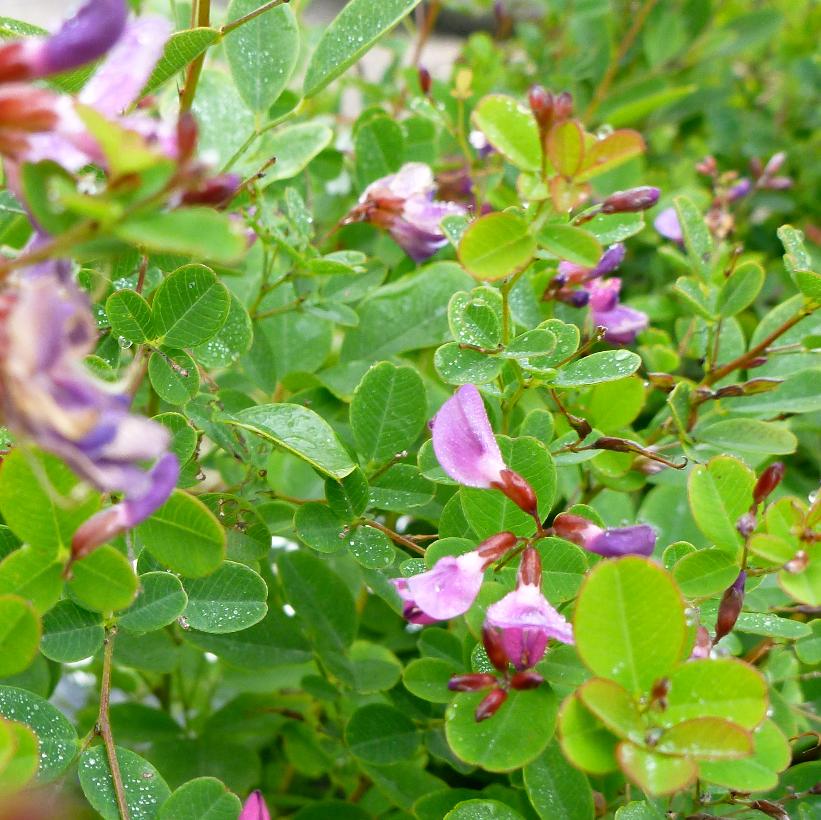
Bicolor Lespedeza
Lespedeza Bicolor
Nonnative. Shrub. Trifoliate Leaves that are small, alternate, oval shaped. Pink/Purple flowers. Commonly found in old fields, forest edge, roadsides. Good cover for animals, erosion control, food for wildlife like bobwhite quail, but spreads aggressively.
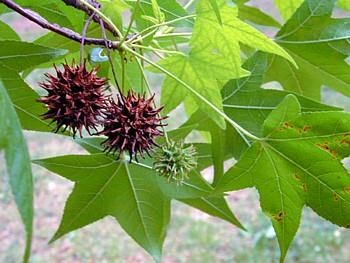
Sweetgum
Liquidambar styraciflua
Native. Tree. Star shaped leaves with 5 lobes. Spiky round fruits. Corky Wings on Twigs. Provides cover and nesting habitat, seeds eaten by birds/small mammals.
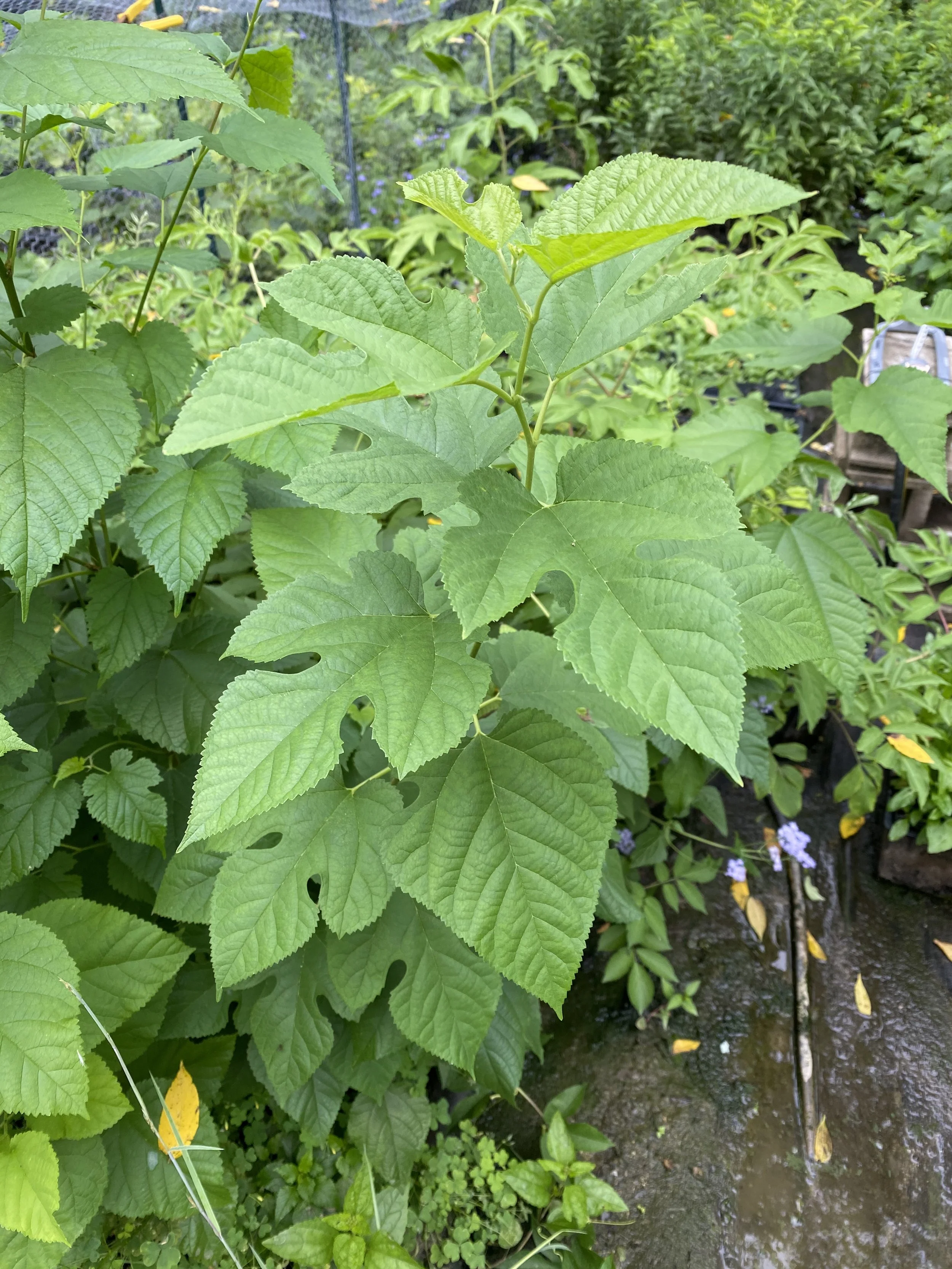
Red Mulberry
Morus rubra
Native. Some leaves look like mitten, others are round/heart shaped, others have three lobes. Simple, Alternate, serrated margin leaves. Tree. Fruits eaten by many wildlife including birds, squirrels.
winged elm
Ulmus alata
Native. Tree. Simple Alternate Oval Leaves. Serrated Margin. Corky Winged Ridges on twigs branches main indicator. Samaras fruits. Tree provides nesting and cover, fruits provide food source birds/small mammals.

Muscadine Grape
Vitis rotundifolia
native. woody vine. simple round/oval serrated leaves. Fruit eaten by deer, turkey, birds ect.

Winged Sumac
Rhus coppalina
native. tree/shrub. Pinn. Compound leaves. Smooth leaf margin. Broad wing like extensions between the leaflets. fruits eaten by birds and squirrels and base eaten by squirrels.

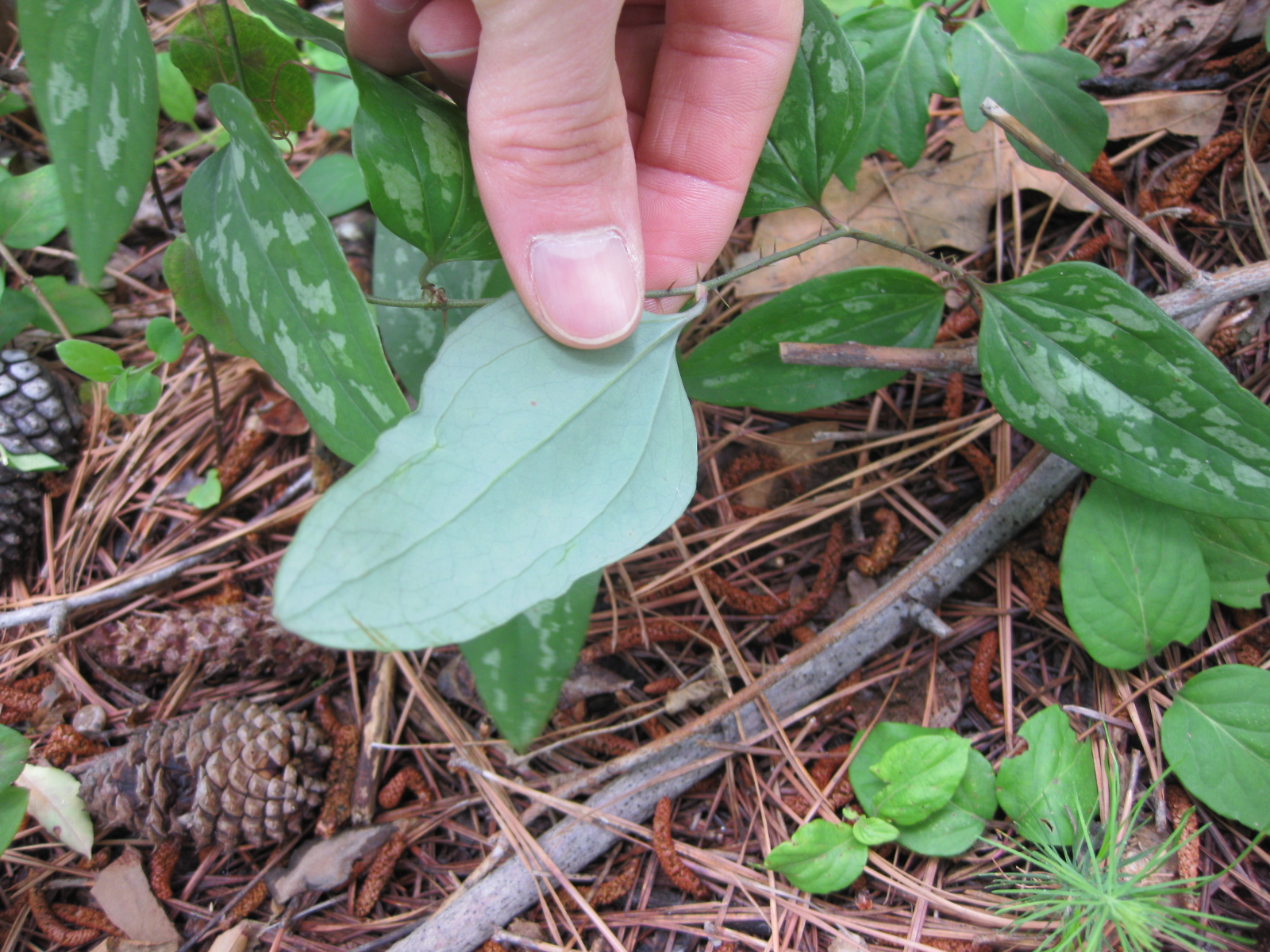
Catbriar
Smilax glauca
Woody Vine. WTD forage. The underleaf is whiter/lighter than the top. prickles on stem. Berries eaten by birds. Simple, Alternate leaves.
Sawbriar
Smilax bona-nox
Woody Vine. WTD forage. Spikes on margin. prickles on stem. Berries eaten by birds. Simple, Alternate leaves.

Greenbrier
Smilax rotundifolia
Woody Vine. WTD forage. smooth margin. prickles on stem. Berries eaten by birds. Simple, Alternate leaves.

Sericea lespedeza
Lespedeza cuneata
Forb and Legume. non-native. Alternate trifoliate leaves. White flowers with little purple markings. More branchy. Good cover, seeds food source.

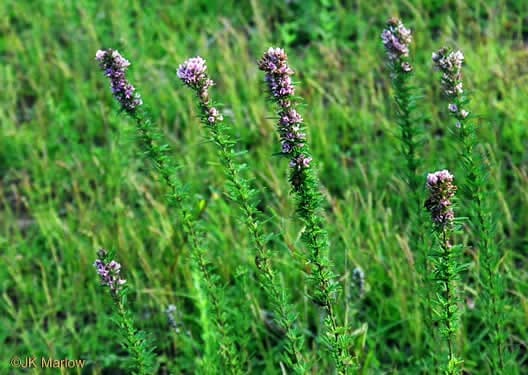
Slender lespedeza
Lespedeza virginica
Forb and Legume. Native. Alternate trifoliate leaves. Silvery gray hairs underneath. Pink/Purple flowers. Slender. Good cover, seeds food source.
Slender woodoats
Chasmanthium laxum
Native. Grass. Long, narrow, flat, alternate leaves. Upright growth. Flattened seed heads. Seeds are good for small mammals and bird.

Longleaf uniola, woodoats
Chasmanthium sessiliflorum
Native. Fuzzy at bottom. Long, narrow, flat, alternate leaves. Upright growth. Flattened seed heads. Seeds are good for small mammals and bird.

Broadleaf uniola, Indian woodoats
Chasmanthium latifolium
Native. NOT fuzzy at bottom. Broader, Wider Leaves. Large drooping seed heads. Seeds are good for small mammals and bird.

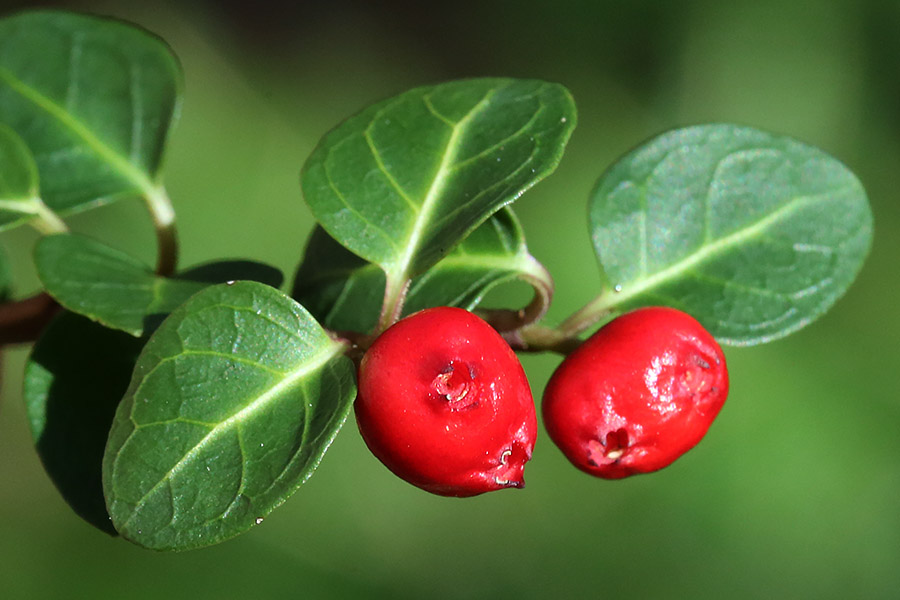
Partridgeberry
Mitchella repens
Native. Vine. On the ground low growing. Can have tiny white flowers and red berries. Opposite leaves with brighter midvein. Birds will eat berries, small mammals and WTD will forage.
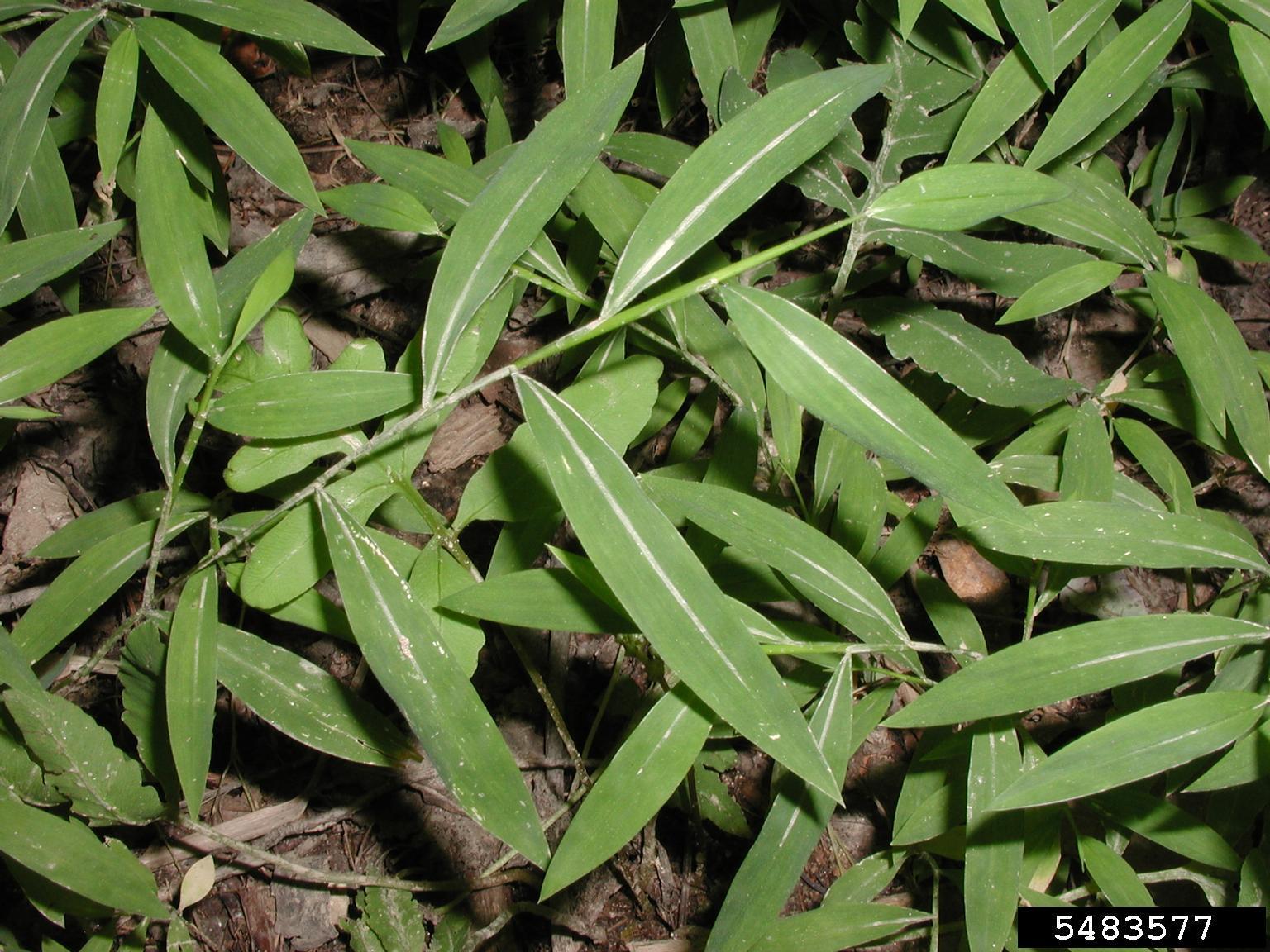
Japanese stiltgrass
Microstegium vimineum
Non-native. Leaves are lance shaped with silver stripe in center. Very Low wildlife value.
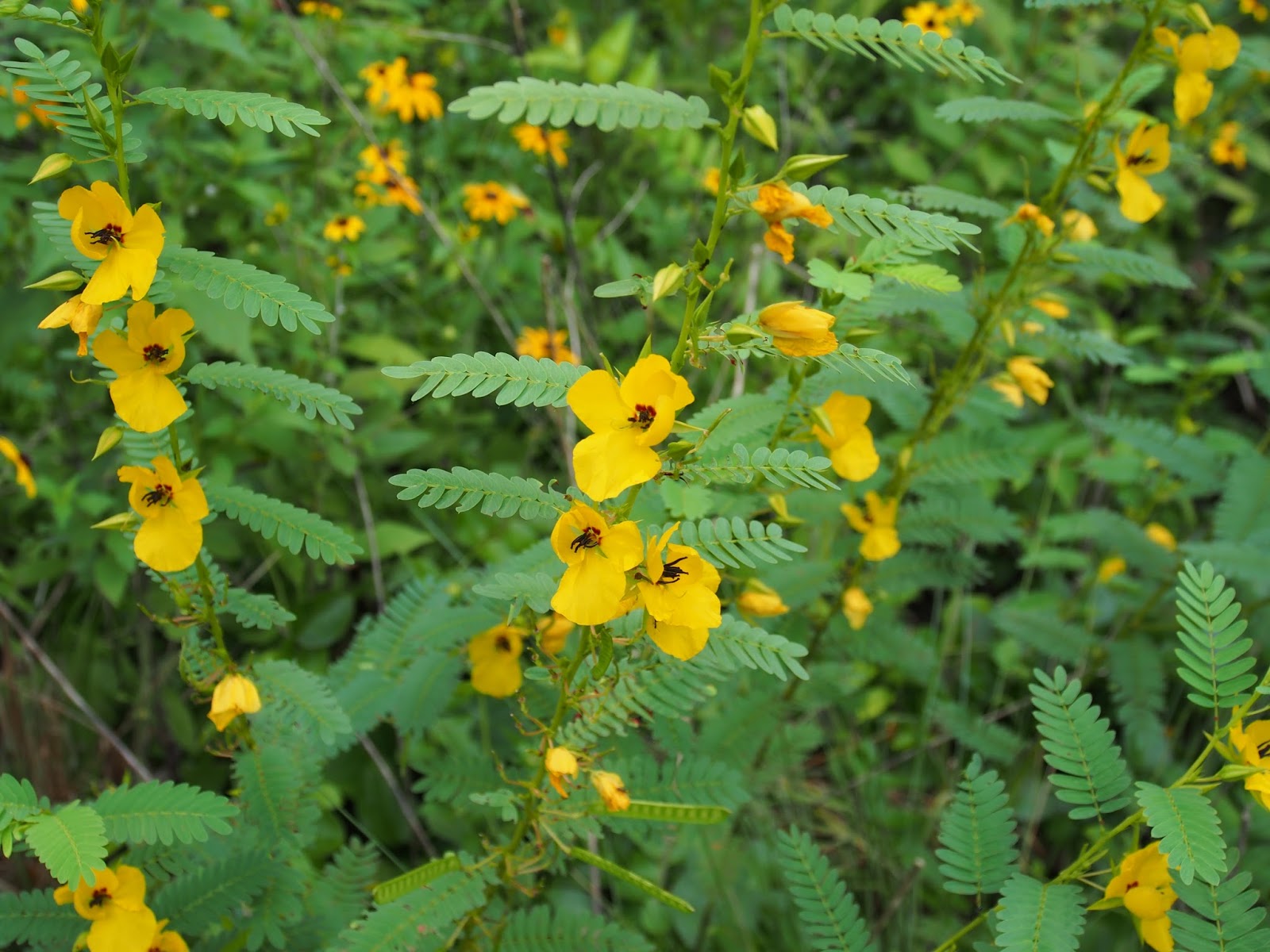
Showy Partridge Pea
Chamaecrista fasciculata
Forb. Legume. Native. Compound leaves with paired leaflets. Bright Yellow Flowers. They remain ‘showy’ if you touch the flowers. Good Pollinators and seeds can be eaten by birds.
beaked panicgrass
Panicum anceps
Native. Grass. Good cover and forage for wildlife. Panicle seed head with ‘beaked’ or pointed tip appearance.

Yellow nutsedge
Cyperus esculentus
Sedge. Native. Triangular Stem. Yellowish flowers at top. Long narrow leaves with noticeable midrib.

panic grass
Dichanthelium spp.
Native. Grass. Panicle Seed Head. Long narrow leaves. Good cover and foliage for wildlife and seeds eaten by songbirds.

Sweet/fragrant goldenrod
Solidago odora
Native. Ford. Small but long, narrow, alternate, smooth Leaves. Fragrant when crushed. Tiny yellow flowers in plume like clusters at top. Seeds for birds and good pollinators.

Common boneset, whorled lancolate
Eupatorium perfoliatum
Native. Forb. Opposite Lance Shaped Leaves. Leaves appear fused through the stem. White Flower Clusters. Found in wet areas. Good Pollinators.

Roundleaf thoroughwort
Eupatorium rotundifolia
Native. Forb. Opposite round serrated leaves. Appear hairy. White Flower Clusters at the top. Common in dryer areas and fields. Good pollinators.

Boneset, lateflowering thoroughwort
Eupatorium serotinum
Native. Forb. Opposite Lance shapes branching leaves. White Flower Clusters. Very Common, found in fields and by roadsides. Good Pollinators.

Panicledleaf Ticktrefoil
Desmodium paniculatum
Native. Legume/Forb. More bushy. Narrow leaves. usually smaller. compound 3 leaflets. Forage for WTD, seeds eaten by small mammals. the base of stem and leaflets has two hairs. Leaves are bigger and sticky texture. Small pink/purple flowers.

Velvetleaf Ticktrefoil (tall, robust Desmodium)
Desmodium viridiflorum
Native. Legume/Forb. Tall upright coarse looking plant. 3 leaflets with velvety/hairy texture. Hairy stems. Forage for WTD, seeds eaten by small mammals. the base of stem and leaflets has two hairs. Leaves are bigger and sticky texture.

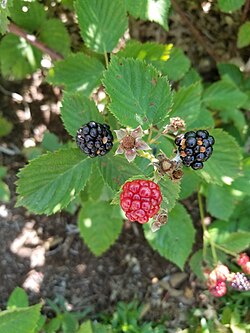
Sawtooth blackberry, higbush blackberry
Rubus argutus
Native. Shrub. Compound 3-5 leaflets. Serrated ‘Sawtooth’. white flowers sometimes. Black/red fruits eaten by many different wildlife. Thorny stems.