WK 6
 Call Kai
 Learn
Learn Practice Test
 Spaced Repetition
 Match
Match Flashcards
 Knowt Play
1/7

There's no tags or description
Looks like no tags are added yet.
Name | Mastery | Learn | Test | Matching | Spaced | Call with Kai | Chat |
|---|
No analytics yet
Send a link to your students to track their progress
8 Terms
What is the difference between income and revenue
income is broader and is any economic benefit in the accounting period that occurs via inflows, improvement of assets, decrease in liabilities that increase equity excluding contribution from equity participants
income = rev + gains
revenue is just income that comes from the entity’s ordinary activities (sale of gs)
gains are income that is not from the entity’s normal activities
what are the 5 steps for recognising revenue
identify if there’s a contract with customers
determine how many performance obligations there are
determine transaction price
allocate transaction price to each performance obligation based on a standalone selling price basis.
recognise revenue as PO gets satisied.
Step 1:identify contract with customer. How to determine if contract exists.
all 5 must be met
is approved and committed to by all parties
read over and agreed upon
clarity regarding what will be received and what will be provided: rights identifiable
know how much and when to pay
commercial substance: know if contract will affect future cfs.
collection probable.
Step 2: identify performance obligations (POs)
PO is a promise to transfer a distinct gs to a customer
what counts as distinct
Customer can benefit from it on its own
its separately identifiable
shouldn’t have been significantly integrated, modified or interdependent
if both are met then its a separate performance obligation if not u combine it with other gs
Step 3: Determine transaction price
what is transaction price: amount of consideration entity expects to be entitled to receive for transferring gs to customer.
factors affecting transaction price:
variable consideration: if theres factors/future events that affects the final amount received eg. discounts, penalties rebates
if a significant portion is financing costs: time value of money. need to adjust for this.
how to estimate transaction costs
prob weighted expected value
most likely outcome
can we always recognise full estimate:
Variable consideration is included in the transaction price only to the extent that it is highly probable that a significant revenue reversal will NOT occur.
Estimate first → then ask: Is it sufficiently certain?
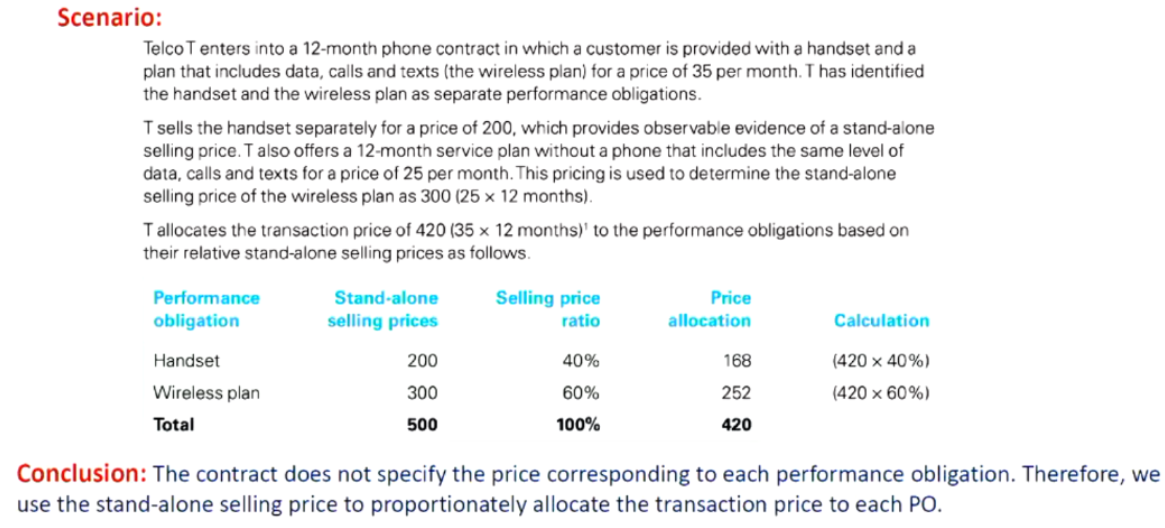
step 4: transaction price allocation to performance obligation
allocate based on a relative standalone selling price basis
standalone selling price- what entity would get if they sold gs separately
allocated based on proprtion of standalone selling prices
Step 5: recognise revenue as po is satisifed
you recognise revenue when entity satisifies perfromance obligation by transferring control of promise of gs to customer
control: ability to direct the use of and derive substantially all economic benefits remaining from the asset
how performance obligations get satisfied
at a point in time
overtime
overtime if any 1 is met
customer simultaneoulsy receives and consumes benefit eg. cleaning service
customer gets control of asset as it is created eg. building on customer land
no alternative use and entity is entitled to payment for work completed. eg. some customised assets
if considered overtime how do we allocate revenue
either based on input or output method
Principal vs agent consideration
principal is when the nature of promise is a po to provide the specified gs itself
indicators of principal:
They are primarily responsible for transferring gs
Bear inventory risk before or after the goods are ordered by customer
Has discretion in establishing prices
agent when nature of promise is to arrange for gs to be provided by another party.
Principal vs agent revenue recognition
principal: recognise all revenue and pay commission fee to agent (expense)
agent: Revenue is just commission earned