Chapter 6 Skeletal System
 Call Kai
 Learn
Learn Practice Test
 Spaced Repetition
 Match
Match Flashcards
 Knowt Play
1/46

There's no tags or description
Looks like no tags are added yet.
Name | Mastery | Learn | Test | Matching | Spaced | Call with Kai | Chat |
|---|
No analytics yet
Send a link to your students to track their progress
47 Terms
red bone marrow
site of hematopoiesis; in adults located in all spongy bone
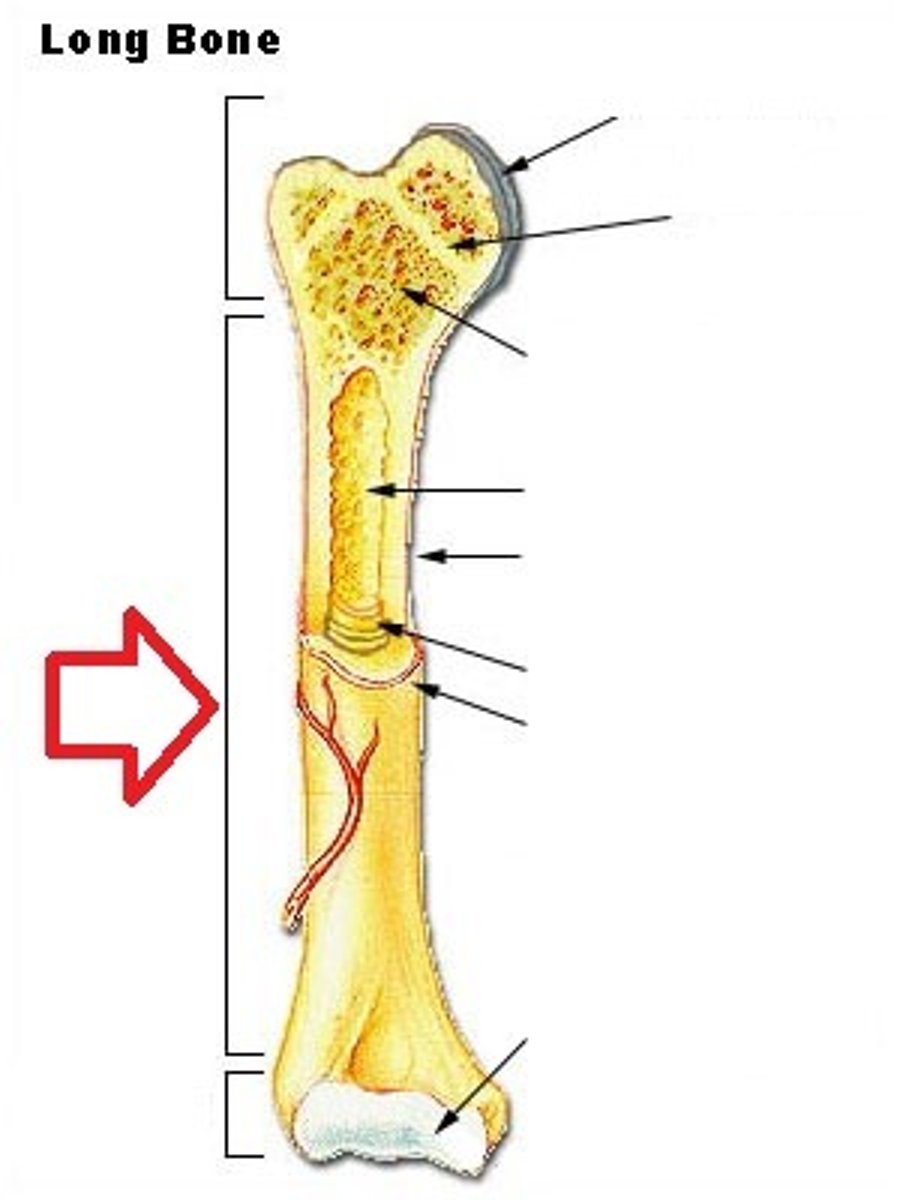
Diaphysis
shaft of a long bone
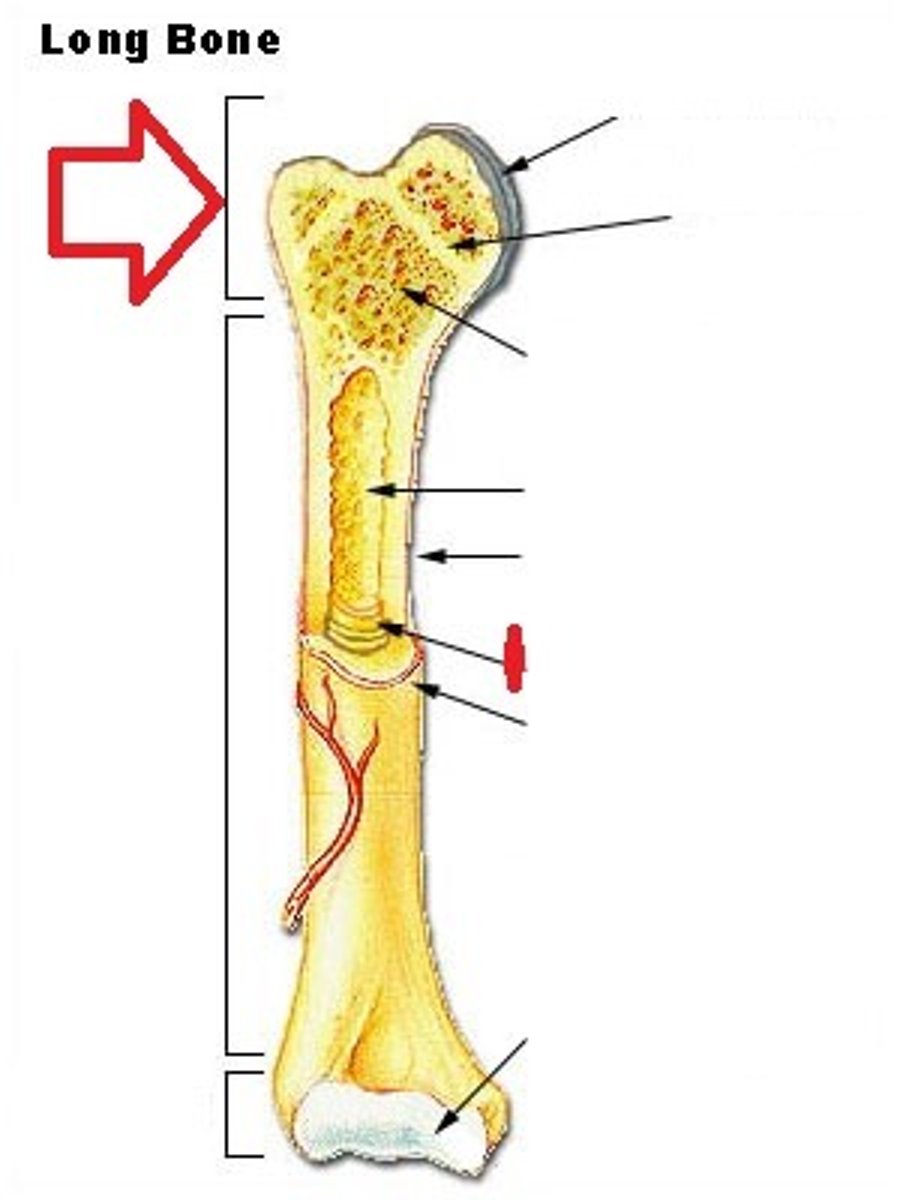
proximal epiphysis
the end of the bone located nearest to the midline of the body
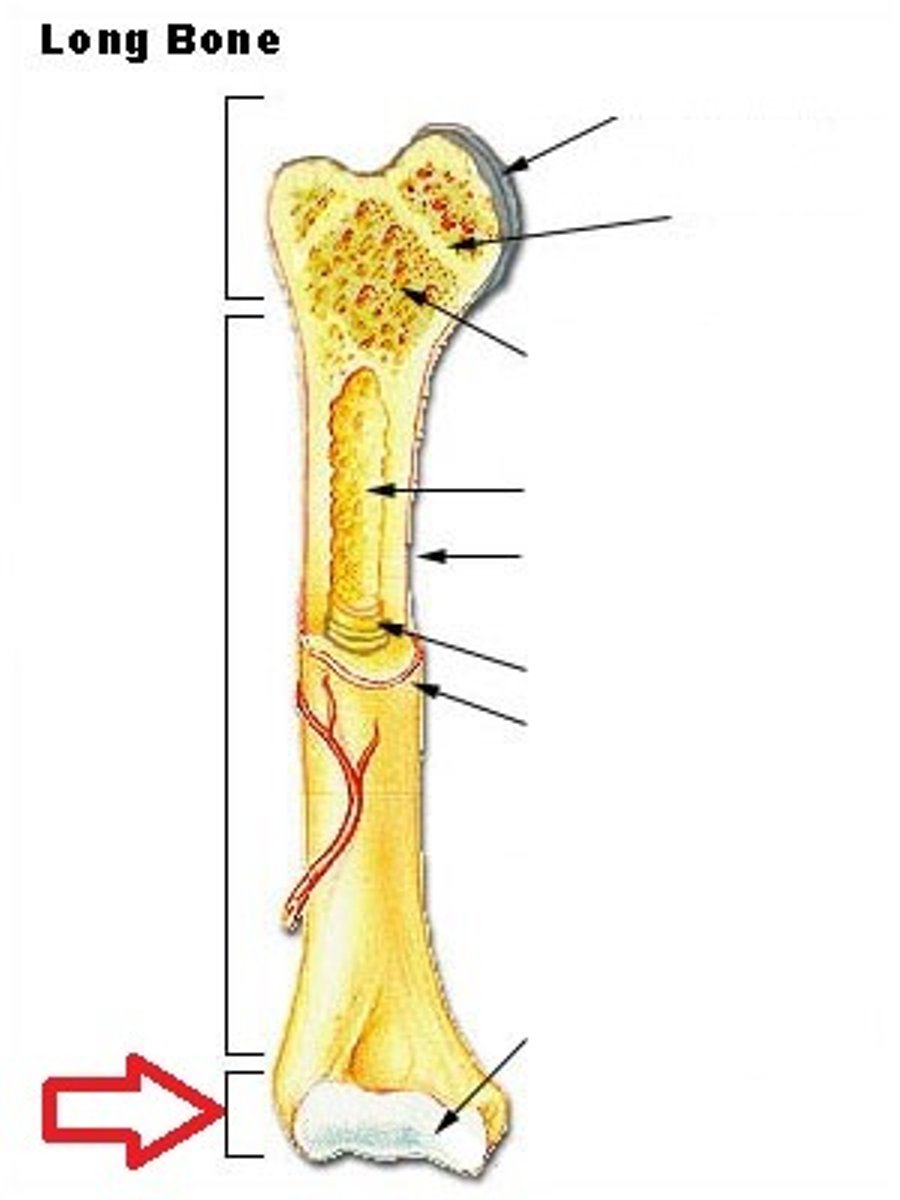
distal epiphysis
end of the bone located farthest away from the midline
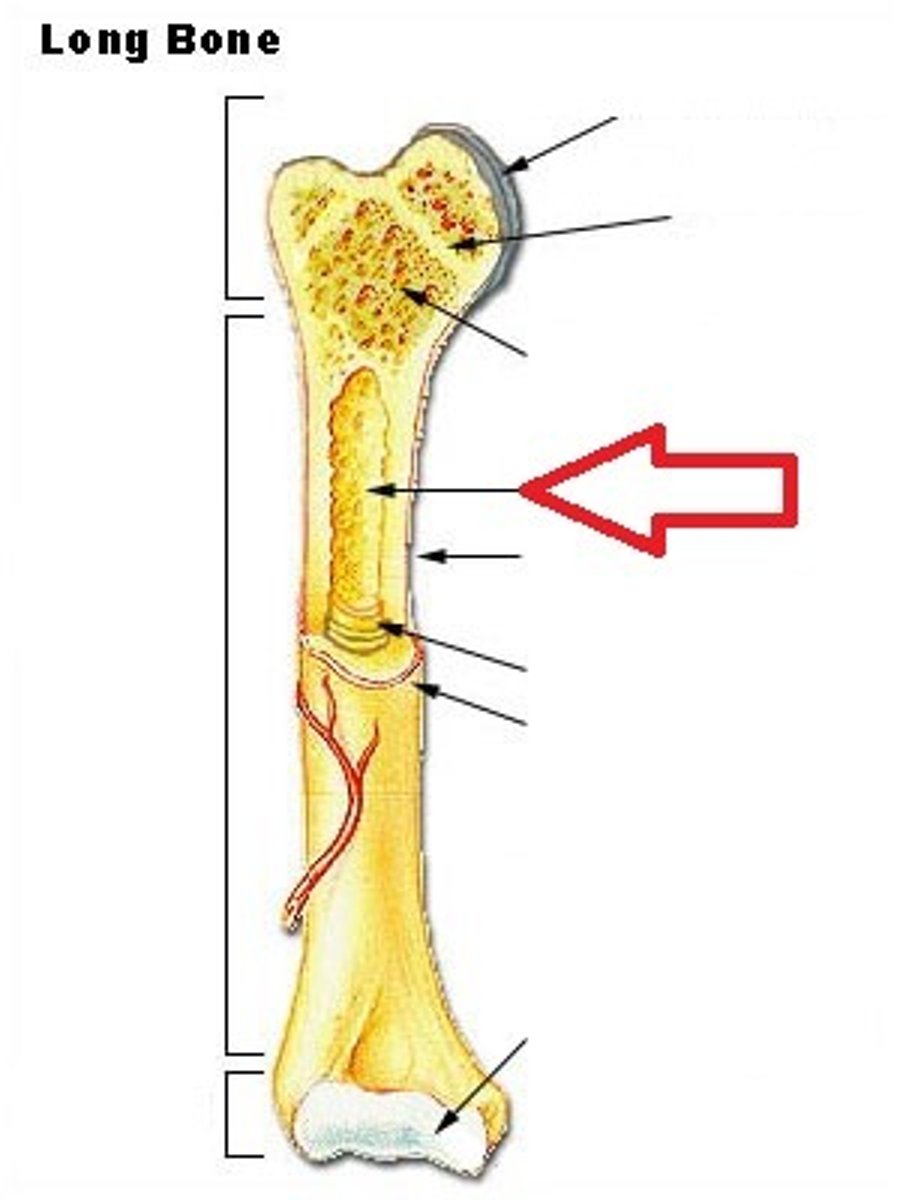
medullary cavity
central, hollowed-out area in the shaft of a long bone
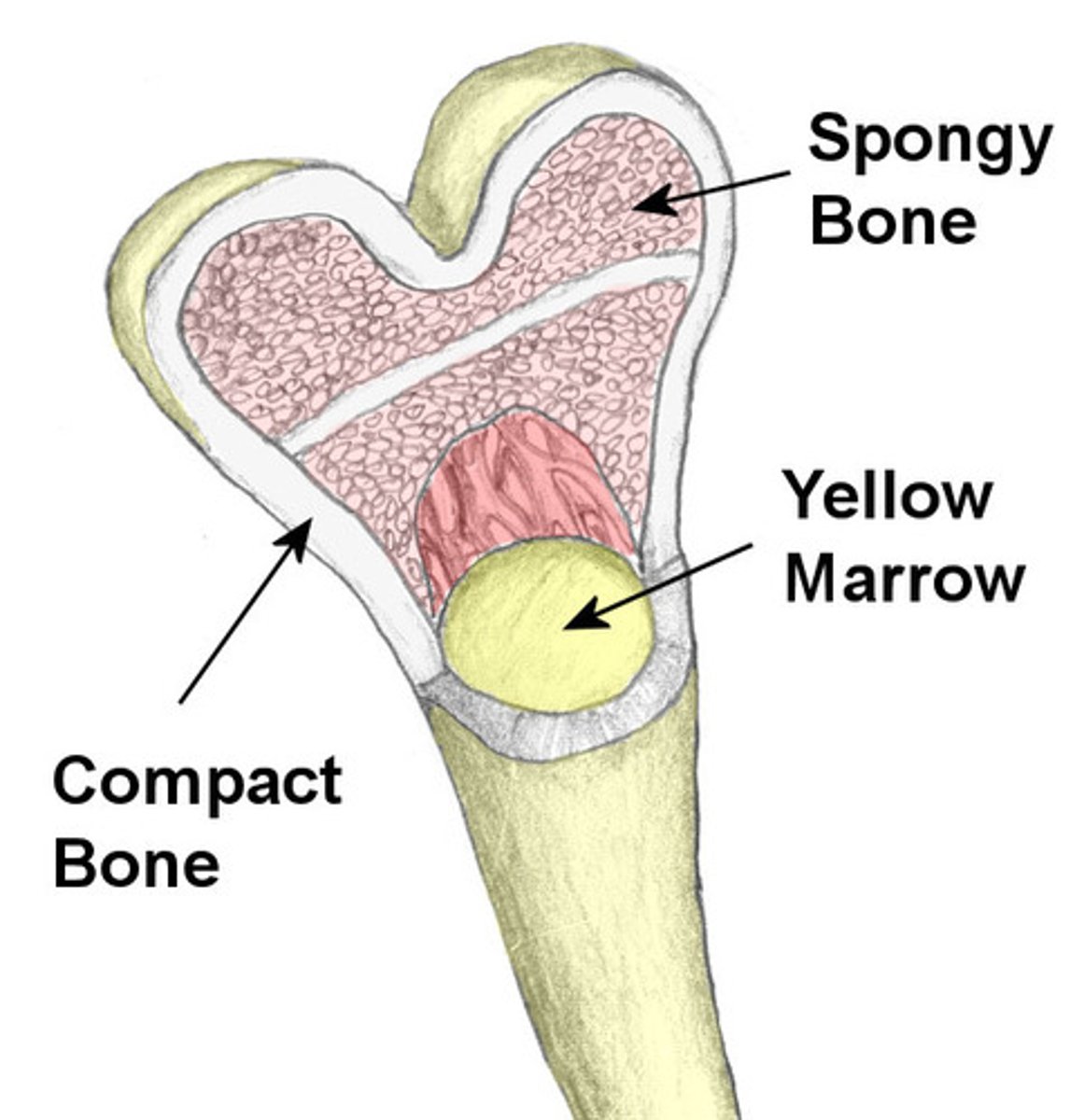
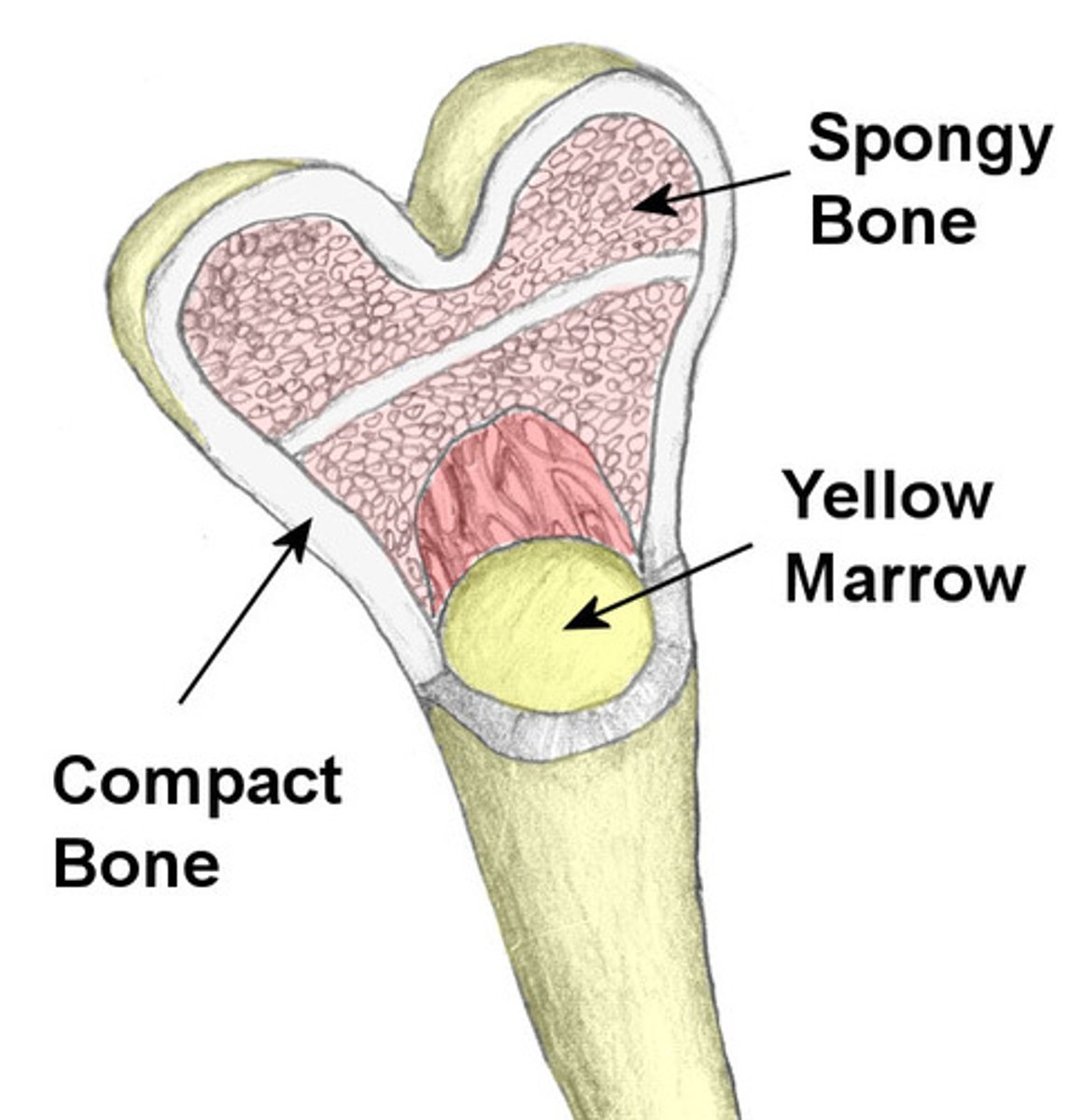
compact bone
Hard, dense bone tissue that is beneath the outer membrane of a bone, found in diaphysis
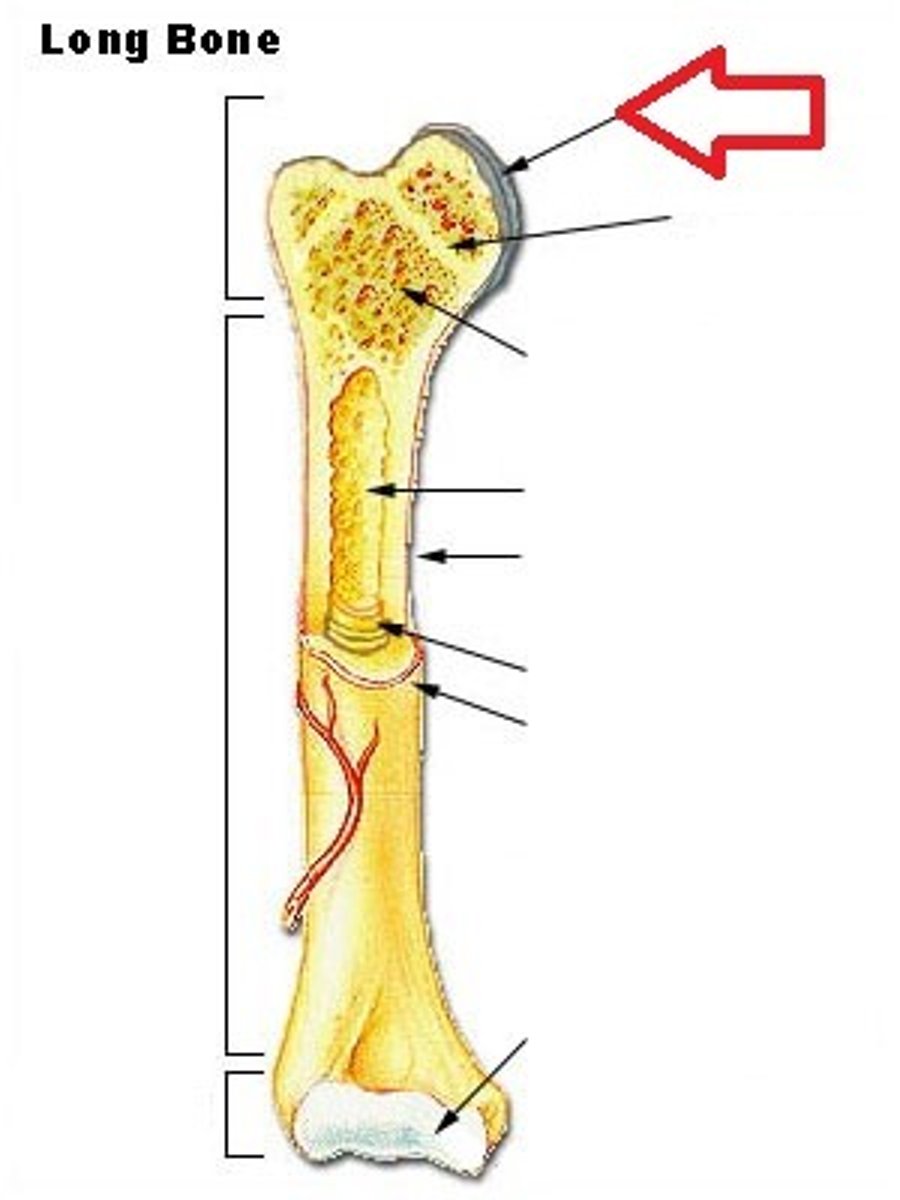
articular cartilage
covers the surfaces of bones where they come together to form joints
spongy bone (cancellous bone)
mesh-like bone tissue found in the interior of bones, and can be found at the epiphysis
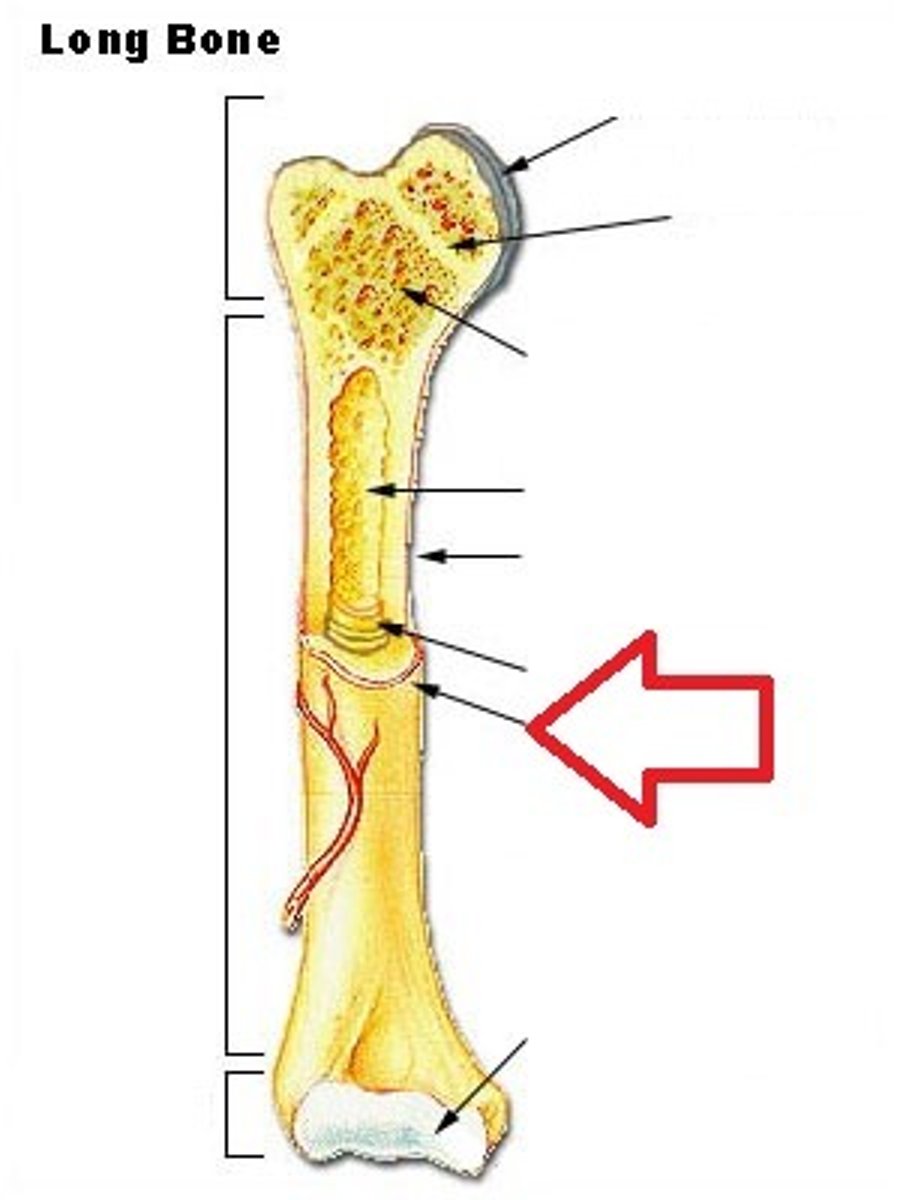
Periosteum
A dense, vascular, fibrous membrane covering the surface of bones and serving as an attachment for tendons and muscles.
yellow bone marrow
Stores fat, found in medullary cavity of adult bones
epiphyseal plate
structure composed of hyaline cartilage where longitudinal growth takes place in the growing skeleton
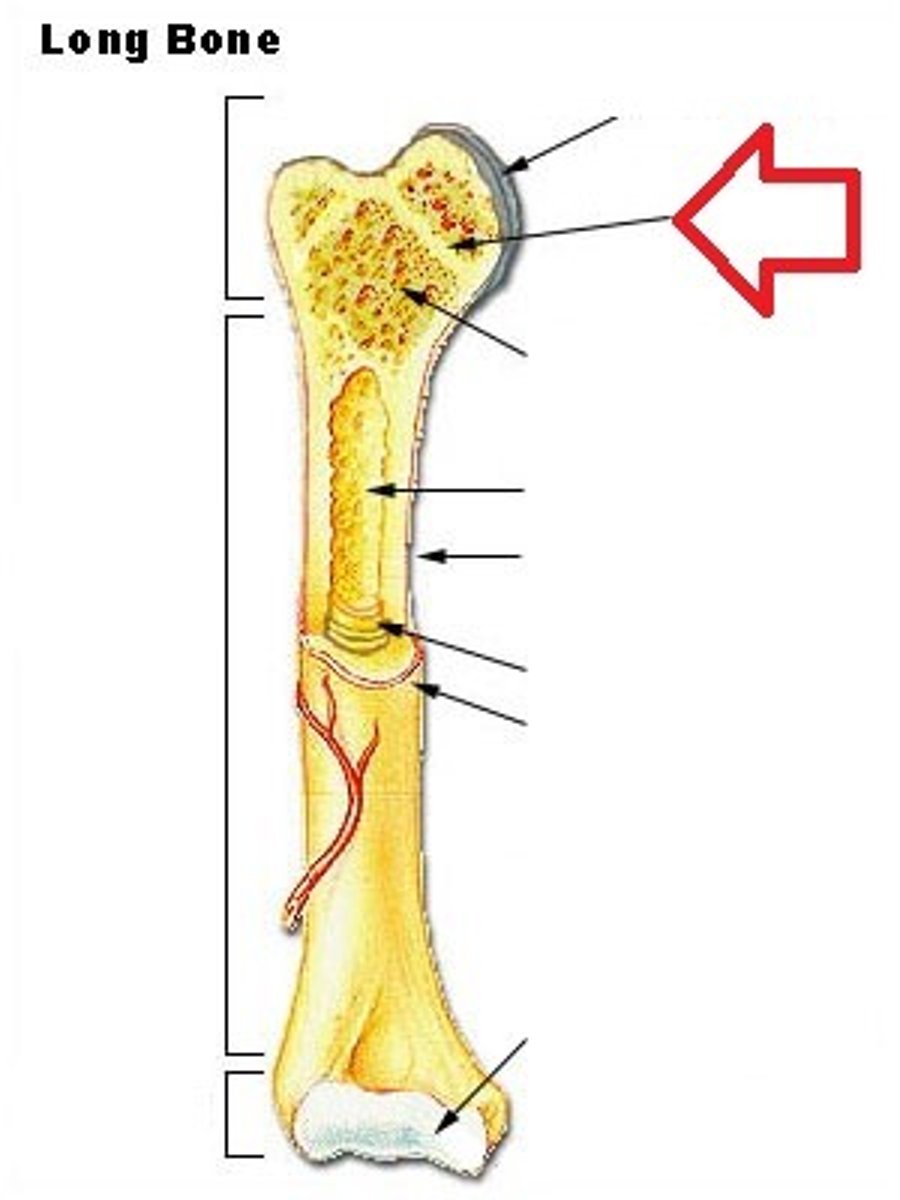
Endosteum
inner membrane that lines the medullary cavity and trabeculae of spongy bone
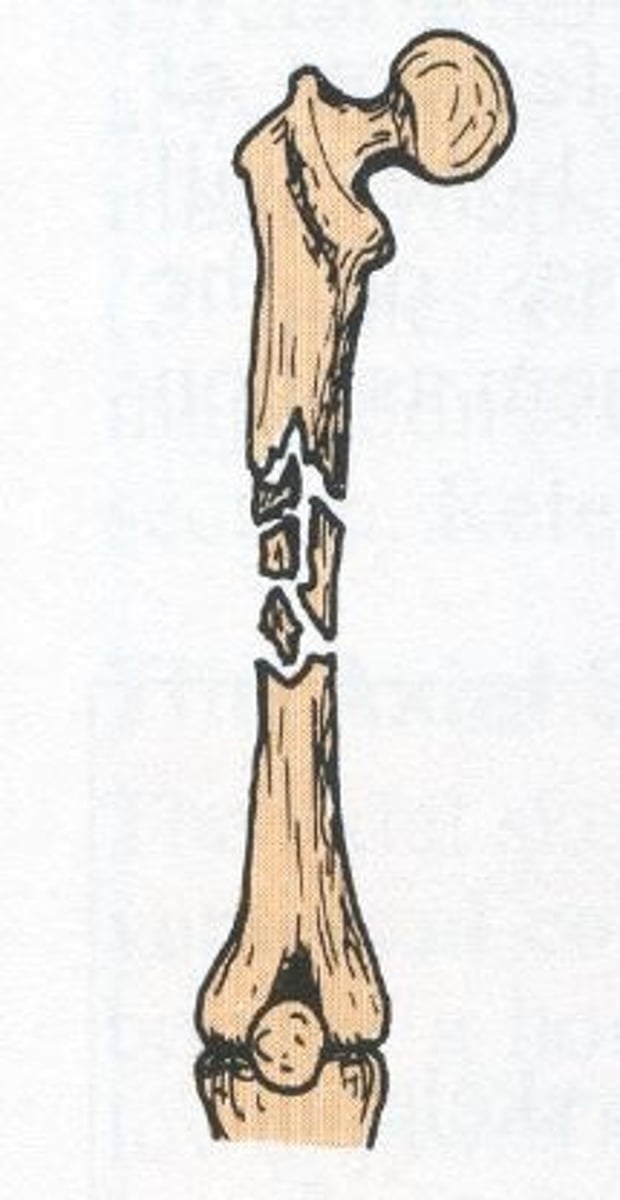
comminuted fracture
fracture in which the bone is splintered into 3 or more pieces
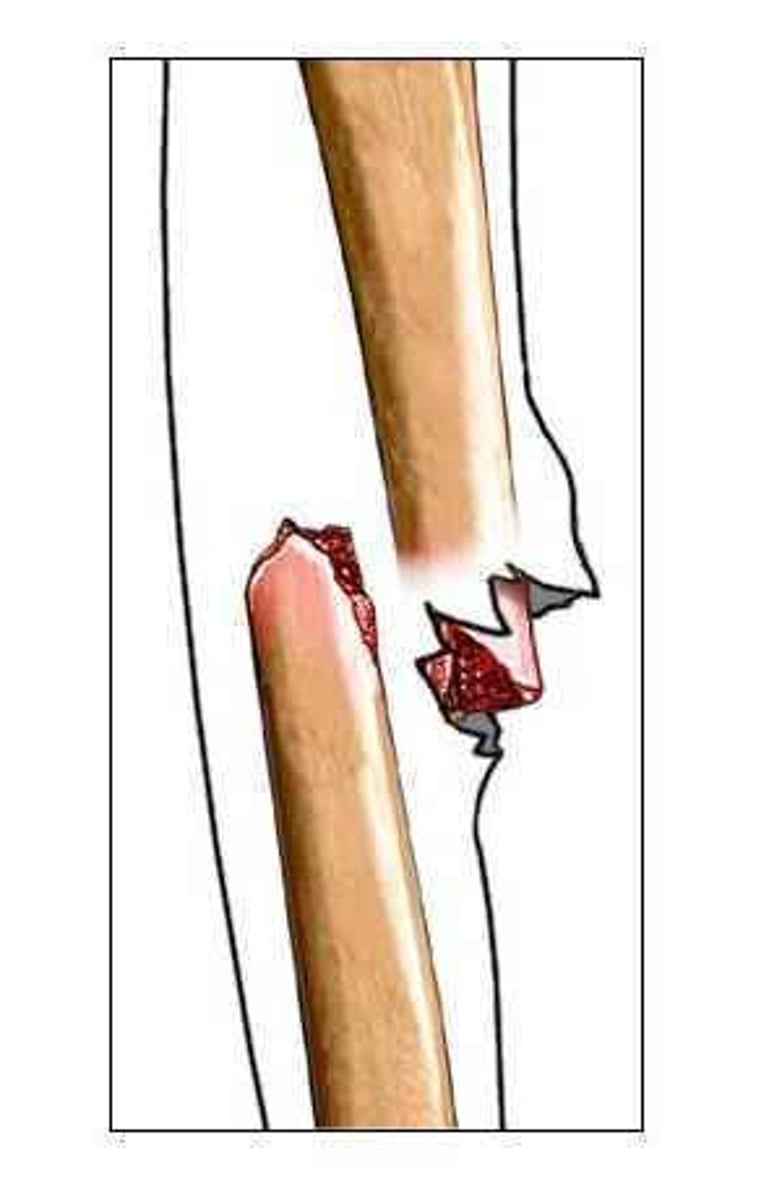
displaced fracture
bone ends are out of normal alignment
greenstick fracture
bending and incomplete break of a bone; most often seen in children
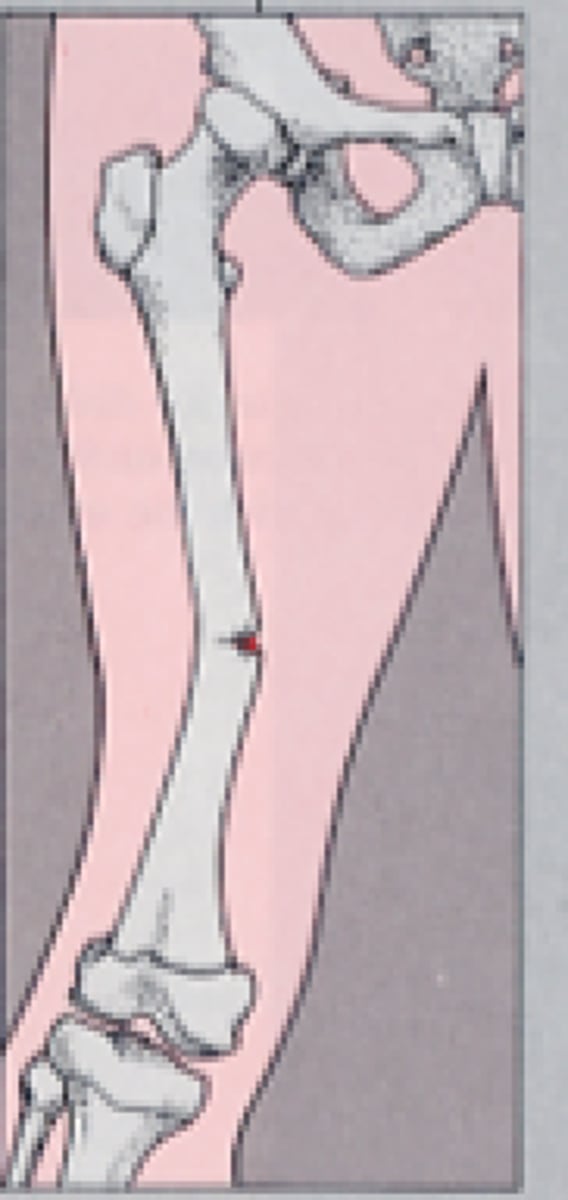
incomplete fracture
bone is not broken all the way through
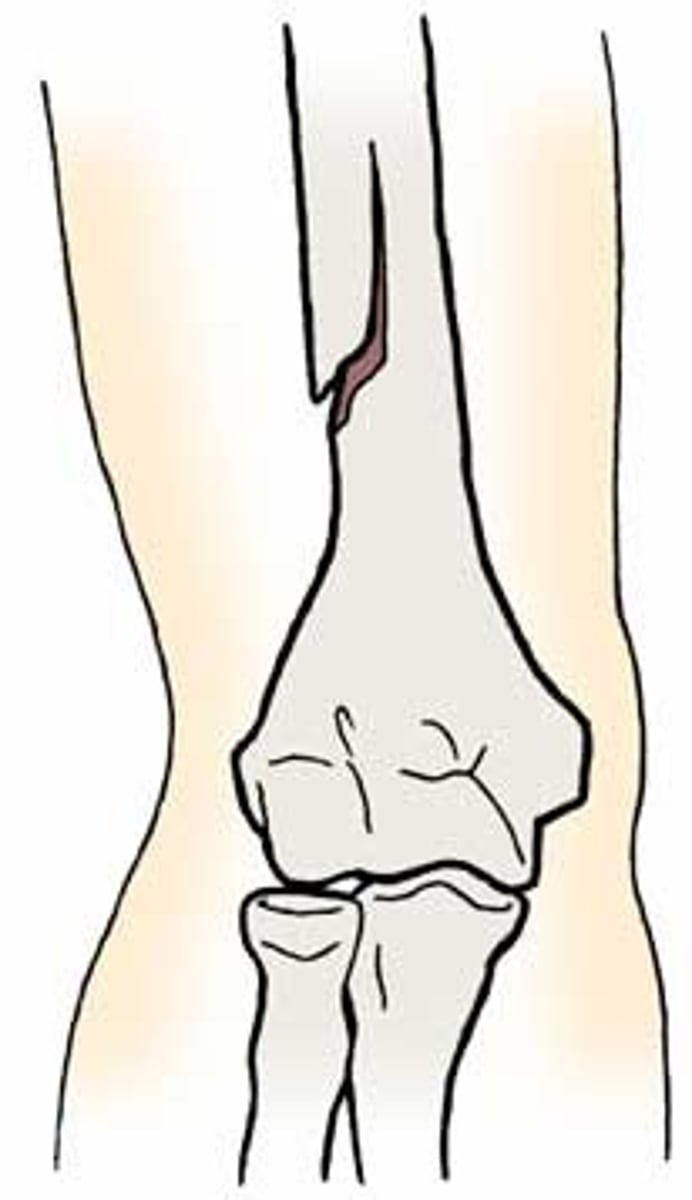
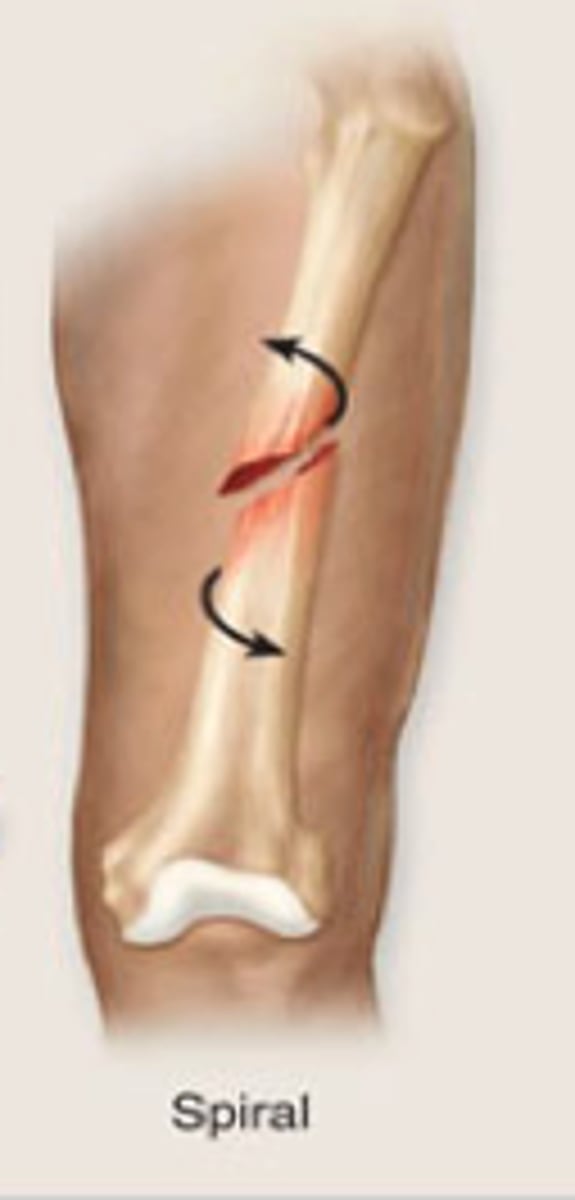
spiral fracture
a fracture in which the bone has been twisted apart
axial skeleton
Portion of the skeletal system that consists of the skull, rib cage, sternum, and vertebral column
appendicular skeleton
The portion of the skeleton that attaches to the axial skeleton and has the limbs attached to it
Functions of bones
support, protection, movement, storage, blood cell formation
Hematopoiesis
blood cell formation
Two basic types of bone tissue
compact bone and spongy bone
Classification of bone shapes
long bones, short bones, flat bones, irregular bones
Osteoblasts
bone forming cells
Osteocytes
mature bone cells
Osteoclasts
Bone-destroying cells
parathyroid hormone (PTH)
raises blood calcium level when the calcium levels are too low, inhibits osteoblasts and stimulates osteoclast to work
osteon
A structural unit of compact bone consisting of a central canal surrounded by concentric lamellae of matrix.
fibrocartilage
cartilage located in pubic symphysis, menisci of knee, and intervertebral discs
canaliculi
tiny channels that radiate from lacunae; contain cytoplasmic projections of osteocytes for diffusion of nutrients
epiphyseal fracture
a break at the location of the growth plate, which can affect growth of the bone
endochondral ossification
process of creating bone from from the inside of a cartilage model
3rd step of endochondral ossification
the periosteal bud invades the internal cavities and spongy bone formation begins as primary ossification center
hydroxyapetite
a crystalline mineral compound of calcium and phosphorous that make up bone
wolff's Law
A bone grows or remodels in response to forces or demands placed upon it
elastic cartilage
flexible cartilage located in the ear and epiglottis
compression fracture
a fracture in which the bone is crushed; common in the vertebral column
intramembranous ossification
process by which bone forms within/between two membranes such as in the clavicles and skull bones
lamellae
rings around the central canal, sites of lacunae
depression fracture
broken bone portion is pressed inward
fibrocartilagenous callus formation
2nd step of fracture repair
flat bones
examples are sternum, ribs, parietal bones
short bones
examples are carpals and tarsals
irregular bones
examples are coxal bones, vertebrae, scapula
long bones
examples are femur, tibia, radius
organic components
the portion of bone that makes it flexible
inorganic components
calcium phosphate (hydroxyapetite) crystals provide strength and make bone hard