BIO LSG P11

0.0(0)
studied byStudied by 0 people
0.0(0)
full-widthCall Kai
learnLearn
examPractice Test
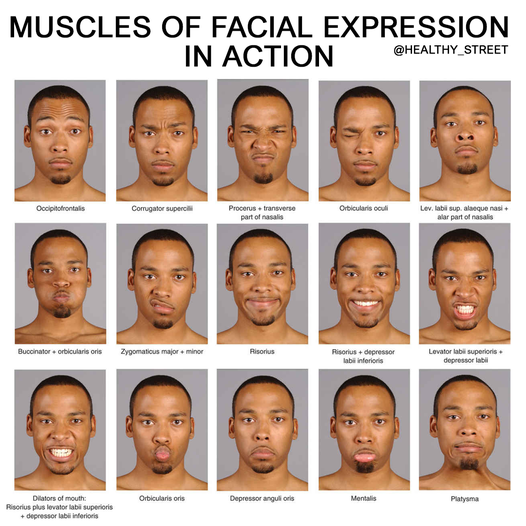
spaced repetitionSpaced Repetition
heart puzzleMatch
flashcardsFlashcards
GameKnowt Play
Card Sorting

1/22

flashcard set

Earn XP

Description and Tags

Head, Neck, and Torso Regional Anatomy

Study Analytics
Name
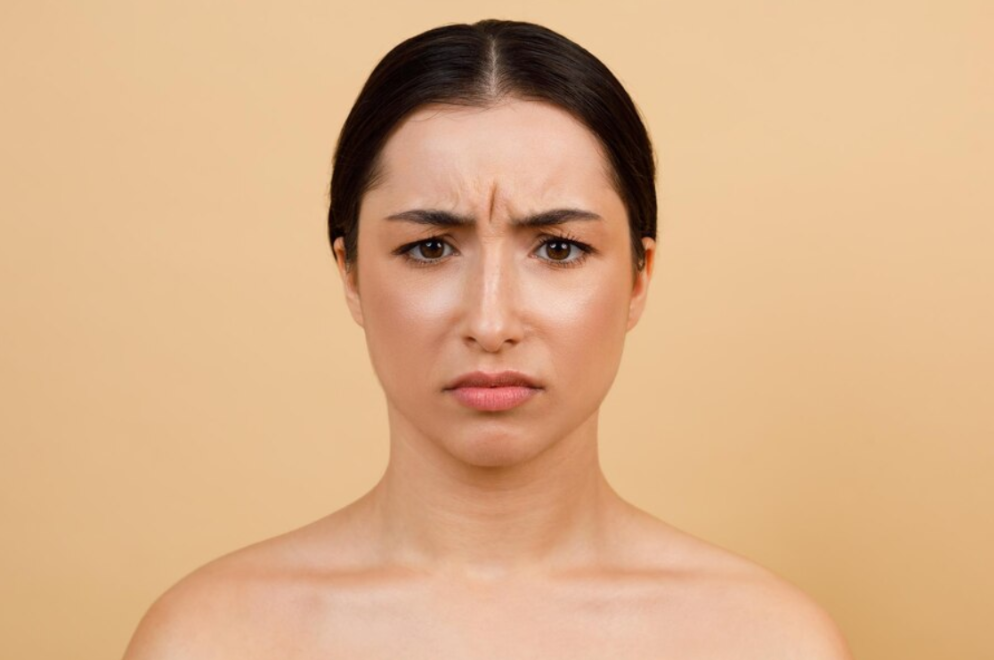
Mastery
Learn
Test
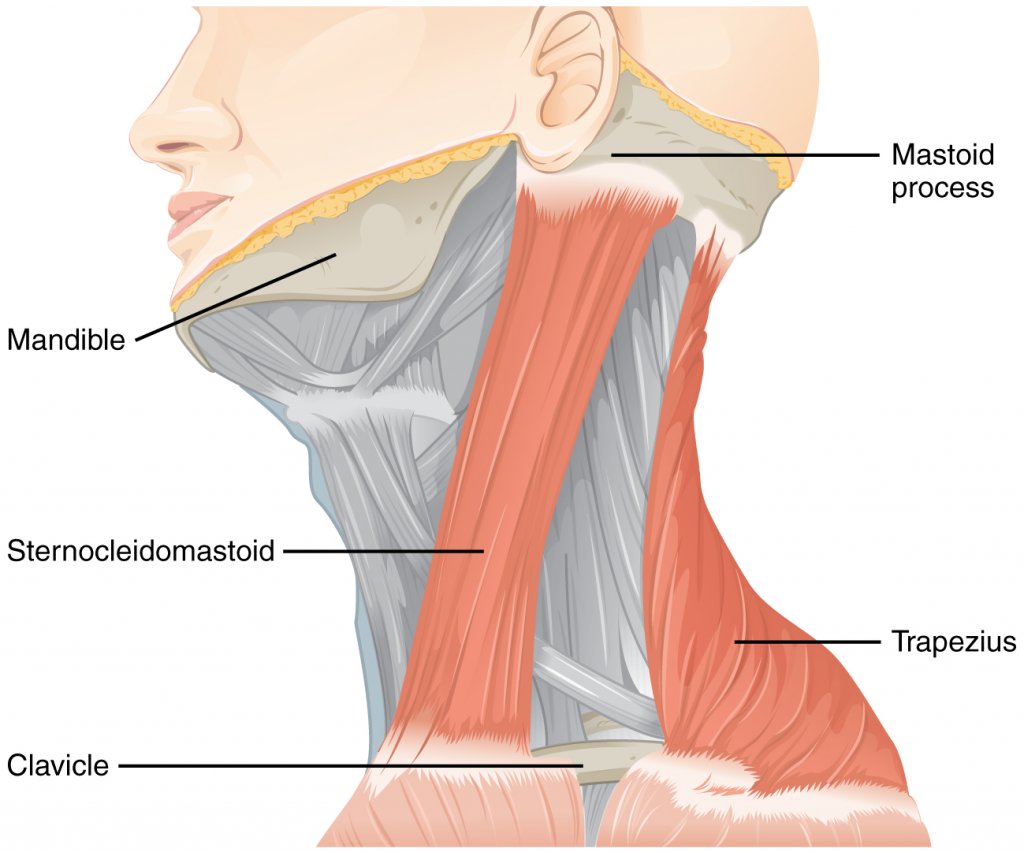
Matching
Spaced

No study sessions yet.

23 Terms

1
New cards

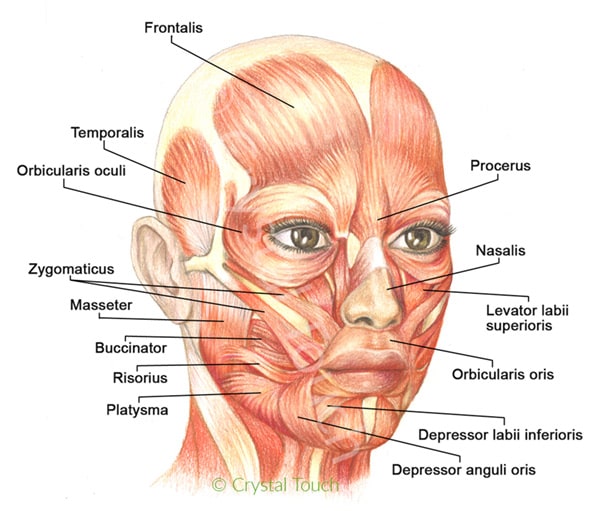
For most of the head and face muscles, what do they pull on to create movement and a variety of facial expressions? (For example: bone, skin, an internal organ, etc.?)

  • Most head and face muscles pull on SKIN to create movement!

2
New cards

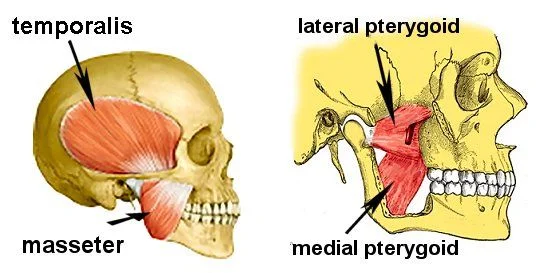
There is an exception! There are three head and face muscles that move the mandible:

  1. platysma

  2. masseter

  3. temporalis

3
New cards
<p>Name at least one of the<strong> head/face muscles that move the mandible (chewing)</strong>:</p>

Name at least one of the head/face muscles that move the mandible (chewing):

  1. Masseter: powerful muscle used for elevating (closing) the jaw / often easily felt on side of the cheek when you clench your teeth

  2. Temporalis

4
New cards

Being able to move the mandible is important for what kinds of movements and/or facial expressions? Please give one example.

  • Mandible movement is important for chewing, but it can also be used to make a “grimace” facial expression.
5
New cards
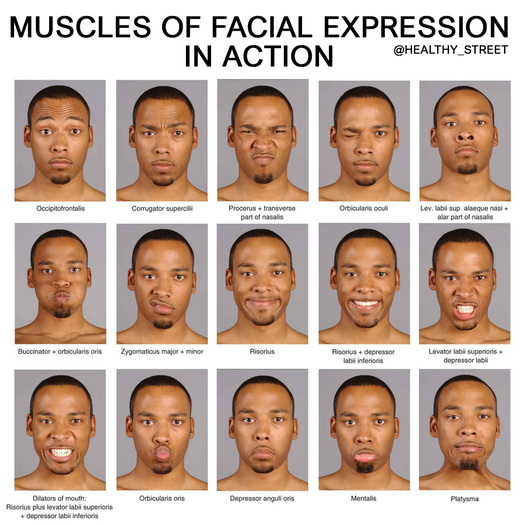
<p>What is the role of the muscles of facial expression?</p>

What is the role of the muscles of facial expression?

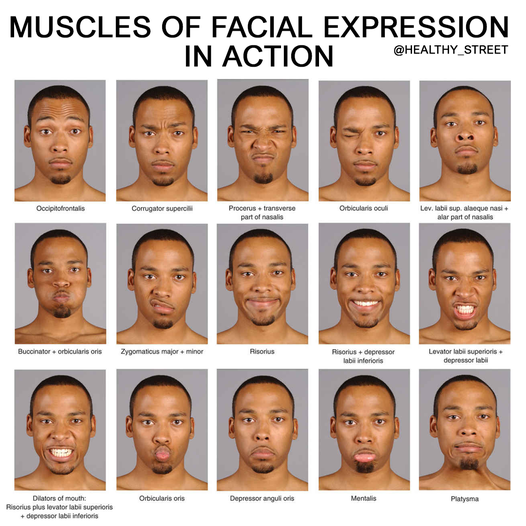
  • Provides us the ability to express a variety of emotions:
    -Displeasure
    -Surprise
    -Fear
    -Happiness
6
New cards
<p><span><span>Where do the muscles of facial expression lie?</span></span></p>

Where do the muscles of facial expression lie?

They lie within the layers of superficial fascia (connective tissue beneath the skin)
7
New cards
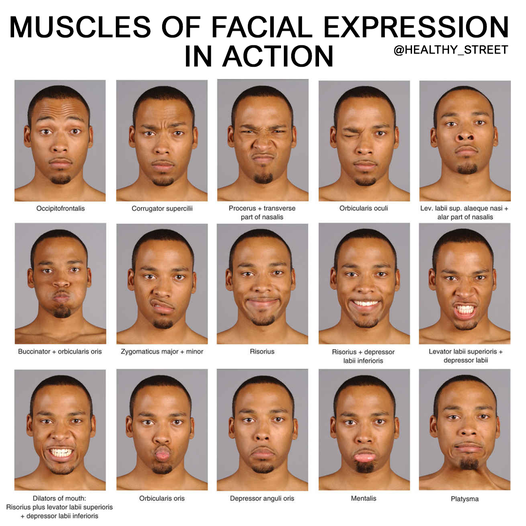
<p>What muscle is being worked when you are elevating / <span style="color: rgb(217, 255, 192);"><strong>wrinkling the brow (forehead)?</strong></span></p>

What muscle is being worked when you are elevating / wrinkling the brow (forehead)?

  • Muscle: occipitofrontalis (frontalis)

  • Raises the eyebrows (elevation).

  • Wrinkles the forehead (creating horizontal furrows).

It is a key muscle for conveying expressions like surprise or concentration.
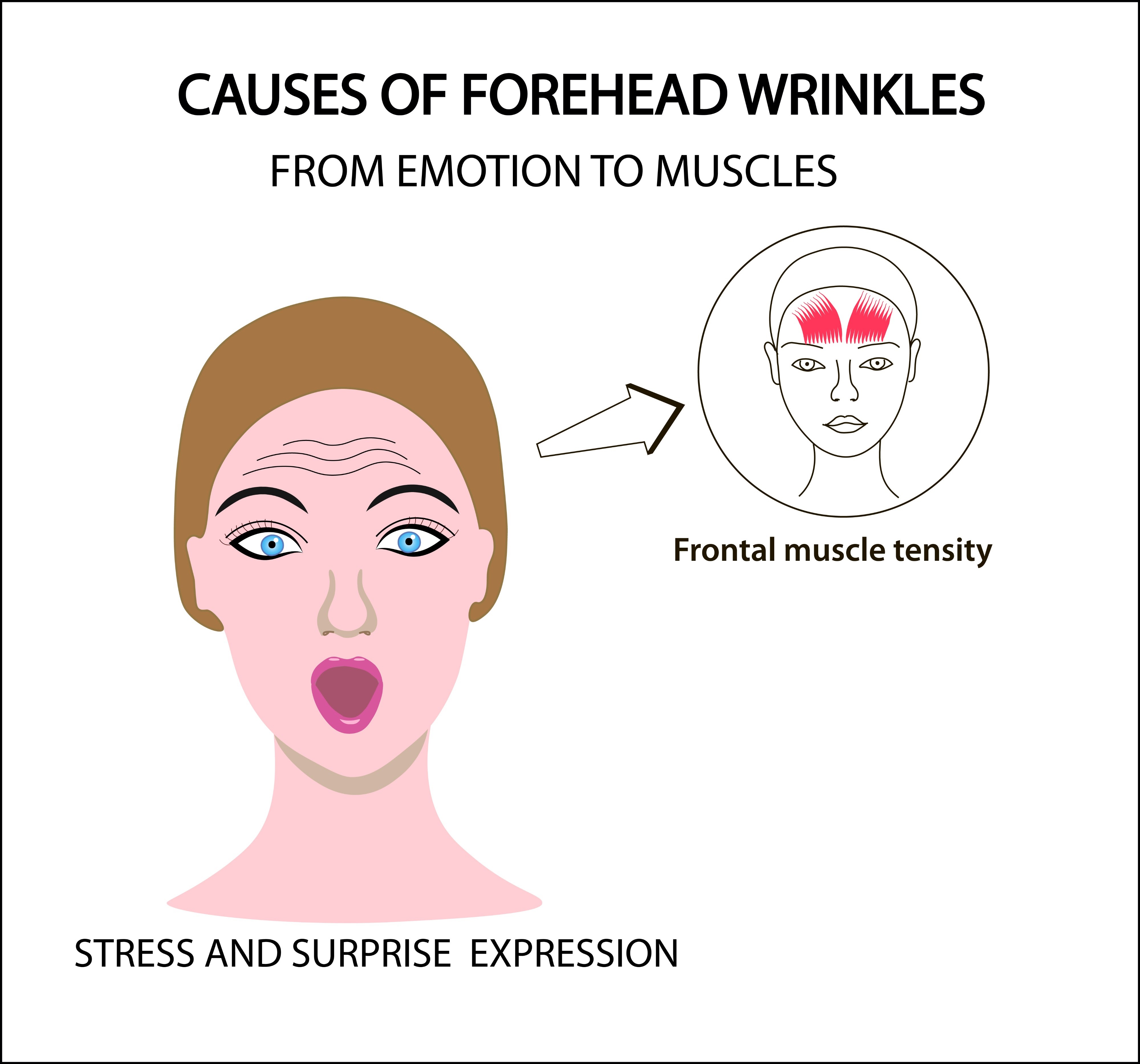
<ul><li><p>Muscle: <span style="color: rgb(197, 255, 192);"><strong><u>occipitofrontalis (frontalis)</u></strong></span></p></li></ul><ul><li><p><span style="color: rgb(197, 255, 192);"><strong>Raises the eyebrows</strong> (elevation).</span></p></li><li><p><span style="color: rgb(197, 255, 192);"><strong>Wrinkles the forehead</strong> (creating horizontal furrows).</span></p></li></ul><p>It is a key muscle for conveying expressions like <span style="color: rgb(197, 255, 192);"><strong>surprise</strong> or <strong>concentration</strong>.</span></p>
8
New cards
<p>What muscle is being worked when you are <strong>elevating the skin over the occipital area</strong><span style="color: rgb(183, 255, 249);"><strong> (pulling the scalp or skin upward = helps raise brows)?</strong></span></p><p></p>

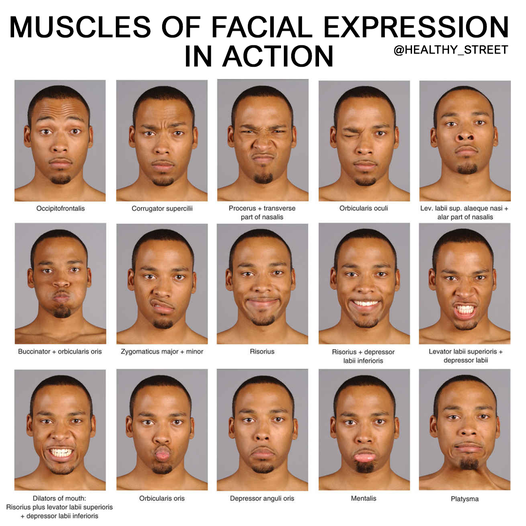
What muscle is being worked when you are elevating the skin over the occipital area (pulling the scalp or skin upward = helps raise brows)?

  • Muscle: occipitalis

  • The Occipitalis pulls the scalp backward and upward.

  • This action helps to anchor the scalp so the Frontalis can effectively pull the eyebrows and forehead skin upward, which is often done to convey expressions of surprise or attention.
9
New cards
<p>What muscle is being worked when you are wrinkling the skin around the eye to close the eye tightly<span style="color: rgb(183, 226, 255);"><strong> (blink or WINK)</strong></span>?</p>

What muscle is being worked when you are wrinkling the skin around the eye to close the eye tightly (blink or WINK)?

  • Muscle: orbicularis oculi

  • One part of the muscle (the palpebral part) closes the eye gently during sleep or blinking.

  • The deeper part (the orbital part) closes the eye forcibly, causing the skin around the eye to wrinkle or squint.
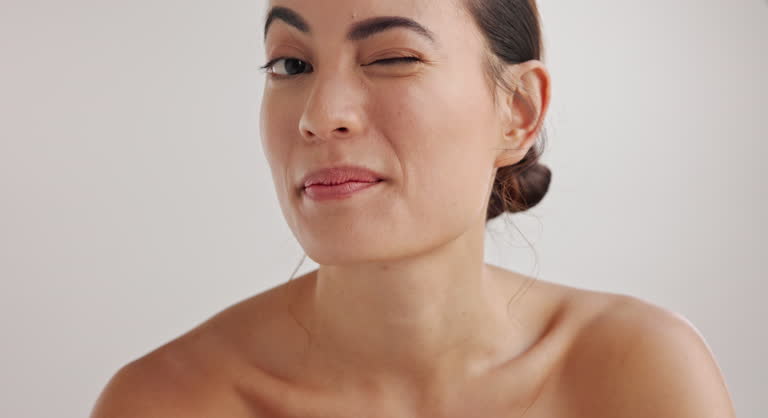
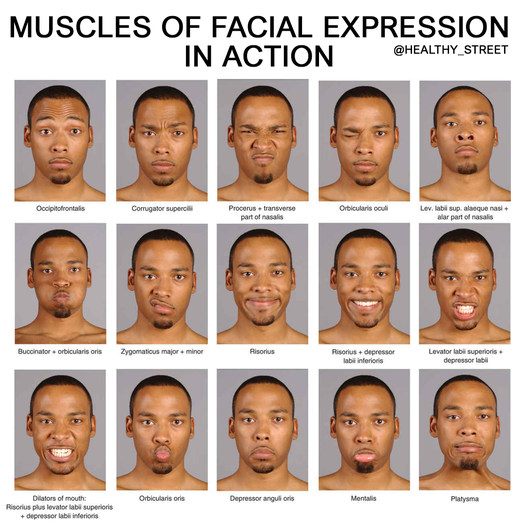
<ul><li><p>Muscle: <span style="color: rgb(183, 226, 255);"><strong><u>orbicularis oculi</u></strong></span></p></li><li><p>One part of the muscle (the palpebral part) closes the eye gently during sleep or blinking.</p></li><li><p>The deeper part (the orbital part) closes the eye forcibly, causing the skin around the eye to <span style="color: rgb(183, 226, 255);"><strong><u>wrinkle or squin</u></strong></span>t.</p></li></ul><p></p>
10
New cards
<p>What muscle is being worked when you are<span style="color: rgb(211, 191, 255);"><strong> constricting or dilating nostril, depends on which side contracts (wrinkles nose)</strong></span>?</p>

What muscle is being worked when you are constricting or dilating nostril, depends on which side contracts (wrinkles nose)?

  • Muscle: nasalis

  • Transverse Part (Compressor Nasi): Constricts the nostrils (closes them).

  • Alar Part (Dilator Nasi): Dilates (opens) the nostrils, often used during deep breathing or expressions of anger/flaring.
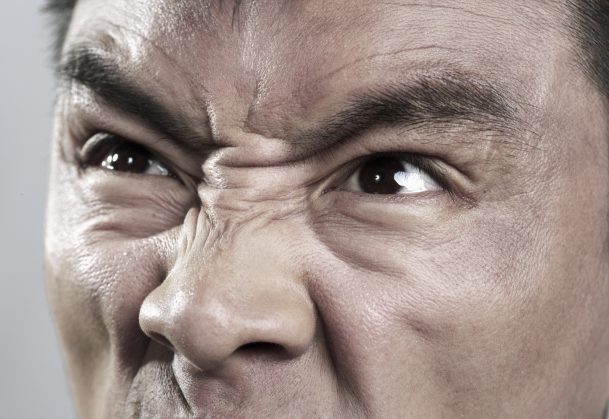
<ul><li><p>Muscle: <span style="color: rgb(211, 191, 255);"><strong><u>nasalis</u></strong></span></p></li></ul><ul><li><p><strong>Transverse Part (Compressor Nasi):</strong> <span style="color: rgb(211, 191, 255);"><u>Constricts the nostrils (closes them).</u></span></p></li><li><p><strong>Alar Part (Dilator Nasi):</strong> Dilates (opens) the nostrils, often used during <span style="color: rgb(211, 191, 255);"><strong><u>deep breathing or expressions of anger/flaring</u></strong></span>.</p></li></ul><p></p>
11
New cards
<p>What muscle is being worked when you are elevate and retract the corner of mouth (<span style="color: rgb(255, 154, 249);"><strong>smiling</strong></span>)?</p>

What muscle is being worked when you are elevate and retract the corner of mouth (smiling)?

  • Muscle: zygomaticus major / minor

  • Zygomaticus Major: This muscle originates on the zygomatic bone (cheekbone) and inserts into the corner of the mouth. Its contraction pulls the corner of the mouth upward (elevation) and laterally (retraction), which produces a genuine, full smile.

  • Innervation: Like all muscles of facial expression, it is innervated by the Facial Nerve (Cranial Nerve VII).
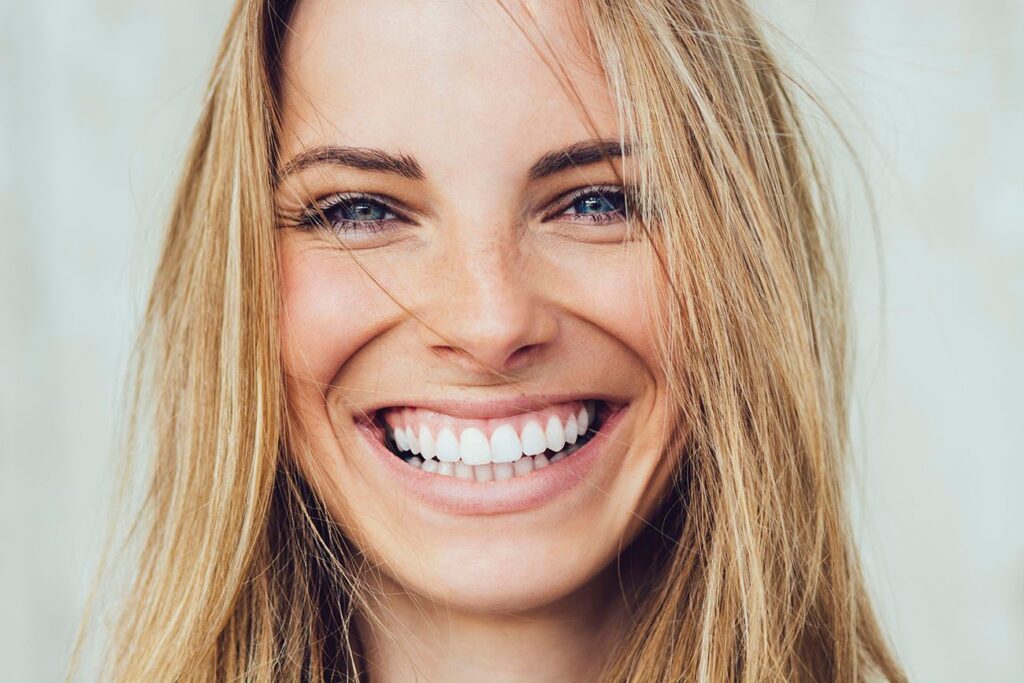
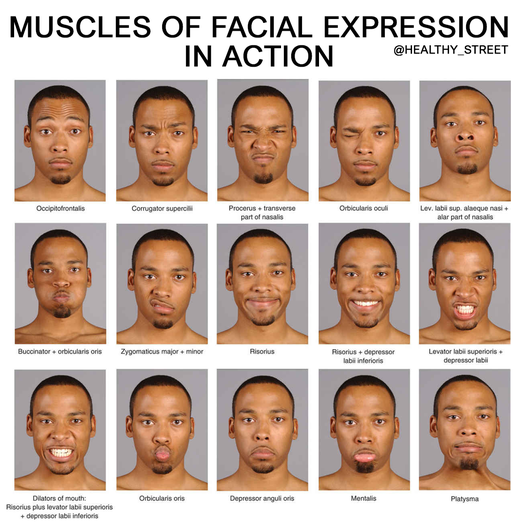
<ul><li><p>Muscle: <span style="color: rgb(255, 154, 249);"><strong><u>zygomaticus major / minor</u></strong></span></p></li></ul><ul><li><p><strong>Zygomaticus Major:</strong> This muscle originates on the <strong>zygomatic bone</strong> (cheekbone) and inserts into the <strong>corner of the mouth</strong>. Its contraction <span style="color: rgb(255, 154, 249);">pulls the corner of the mouth <strong>upward</strong> (elevation) and <strong>laterally</strong> (retraction)</span>, which <span style="color: rgb(255, 154, 249);"><strong><u>produces a genuine, full smile.</u></strong></span></p></li><li><p><strong>Innervation:</strong> Like all muscles of facial expression, it is innervated by the <strong>Facial Nerve (Cranial Nerve VII)</strong>.</p></li></ul><p></p>
12
New cards
<p>What muscle is being worked when you are drawing the corner of the mouth laterally <span style="color: rgb(253, 171, 202);"><strong><span>(producing a simple, flat grin or a sneer)</span></strong></span>?</p>

What muscle is being worked when you are drawing the corner of the mouth laterally (producing a simple, flat grin or a sneer)?

  • Muscle: risorius

  • The Risorius is a thin, narrow muscle that pulls the corner of the mouth directly outward (laterally).

  • Its action produces a horizontal stretch of the mouth, which results in the flat, often forced, grin or grimace.
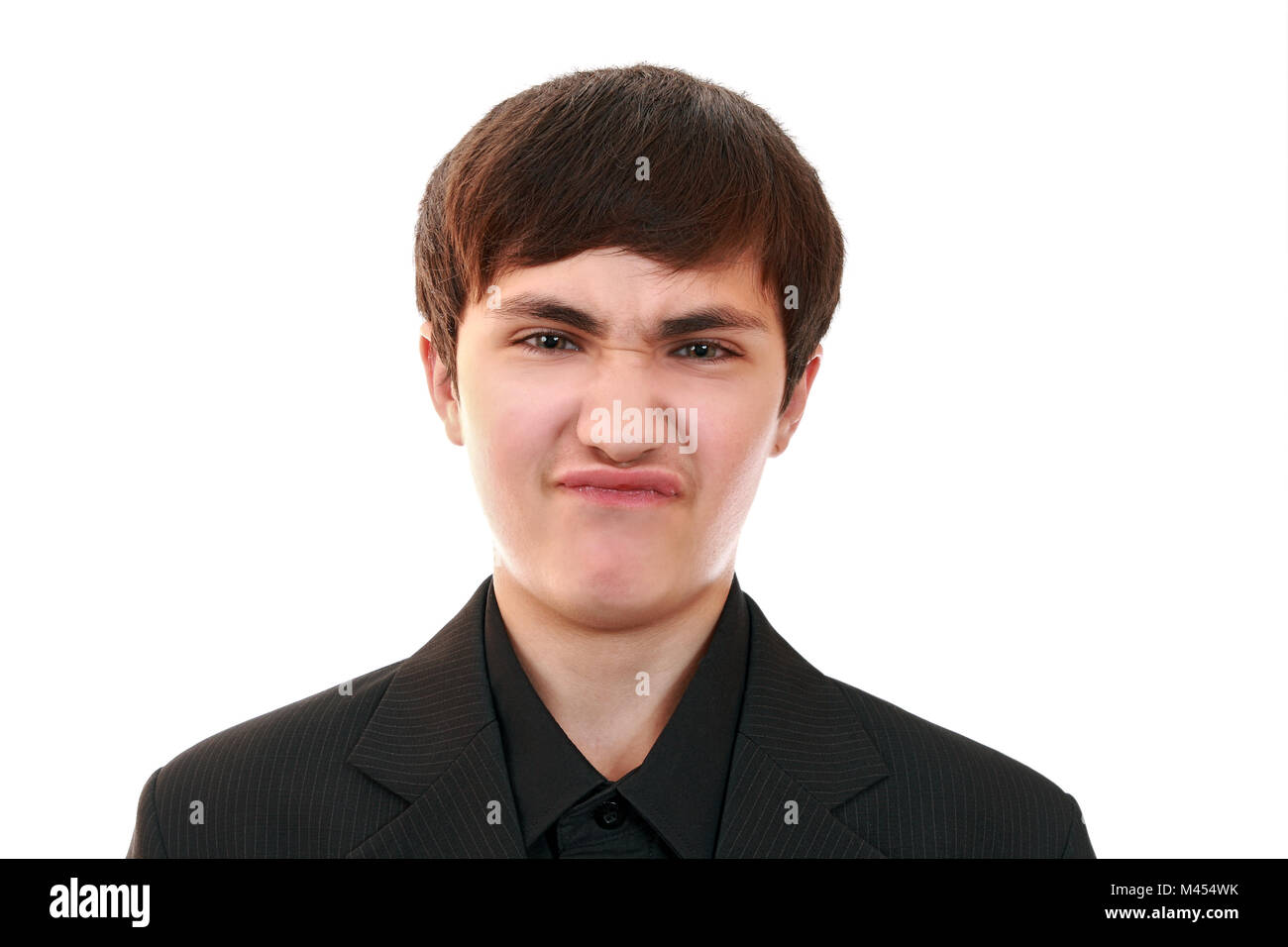
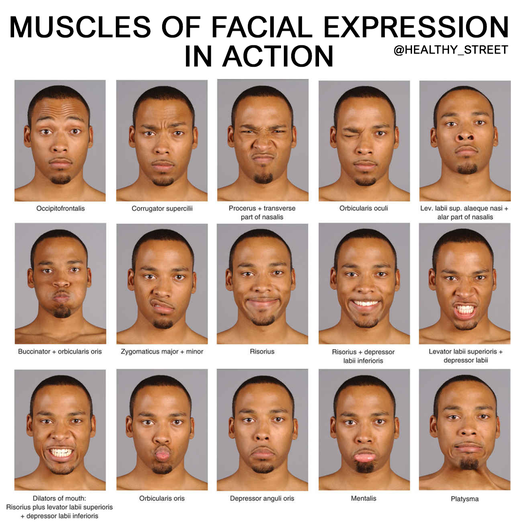
<ul><li><p>Muscle: <span style="color: rgb(253, 171, 202);"><strong><u>risorius</u></strong></span></p></li></ul><ul><li><p><span>The </span><strong><span>Risorius</span></strong><span> is a</span><span style="color: rgb(253, 171, 202);"><span> thin, narrow muscle that pulls the corner of the mouth </span><strong><span>directly outward</span></strong><span> (laterally).</span></span></p><p></p></li><li><p><span>Its action produces a horizontal stretch of the mouth, which results in the</span><span style="color: rgb(253, 171, 202);"><strong><span> flat, often forced, grin or grimace</span></strong></span><span>.</span></p></li></ul><p></p>
13
New cards
<p>What muscle is being worked when you are <span style="color: rgb(255, 183, 183);">elevating the upper lip (typically a <strong>sneer</strong> or an expression of <strong>disgust</strong>)?</span></p>

What muscle is being worked when you are elevating the upper lip (typically a sneer or an expression of disgust)?

  • Muscle: levator labii superioris

  • It pulls the upper lip superiorly (upward).

  • It simultaneously pulls the alae of the nose (the flared parts of the nostrils) upward.

This dual action of raising the upper lip and flaring the side of the nose results in the signature expression of disgust or a prominent sneer.
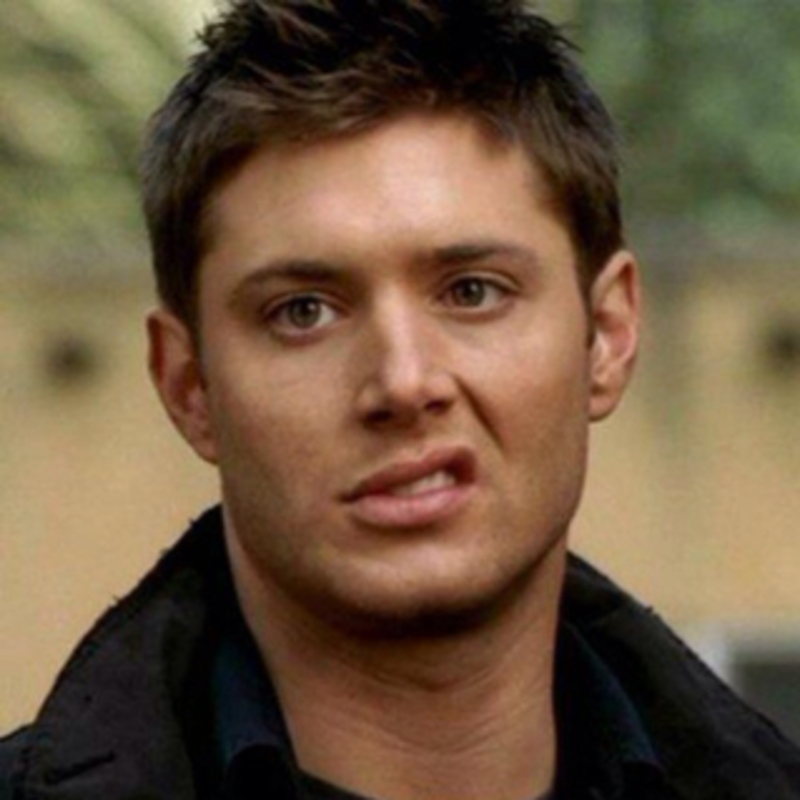
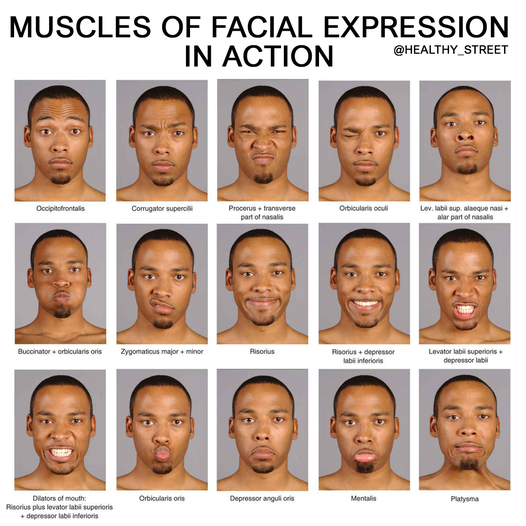
<ul><li><p>Muscle:<span style="color: rgb(255, 183, 183);"> <strong><u>levator labii superioris</u></strong></span></p></li></ul><ul><li><p>It pulls the <span style="color: rgb(255, 183, 183);"><strong>upper lip superiorly</strong> (upward).</span></p></li><li><p>It simultaneously <span style="color: rgb(255, 183, 183);">pulls the <strong>alae of the nose</strong> (the flared parts of the nostrils) upward.</span></p></li></ul><p>This dual action of raising the upper lip and flaring the side of the nose results in the <span style="color: rgb(255, 183, 183);">signature expression of <strong>disgust</strong> or a prominent <strong>sneer</strong>.</span></p>
14
New cards
<p>What muscle is being worked when you are <span style="color: rgb(255, 187, 123);"><strong>depressing the lower lip (pout)?</strong></span></p>

What muscle is being worked when you are depressing the lower lip (pout)?

  • Muscle: depressor labii inferioris

  • Depressor Labii Inferioris: This muscle originates on the mandible (chin bone) and inserts into the lower lip. Its name literally means "depressor of the lower lip."

  • Action: When it contracts, it pulls the lower lip straight down and slightly laterally (outward), causing the lower lip to turn out in a trembling or pouting gesture.
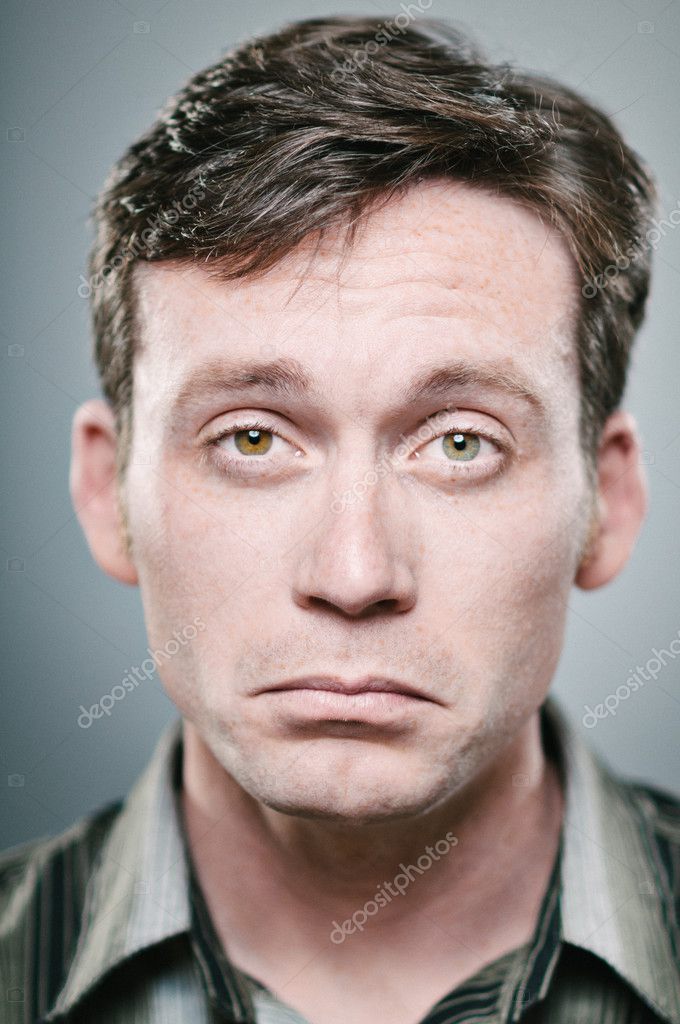
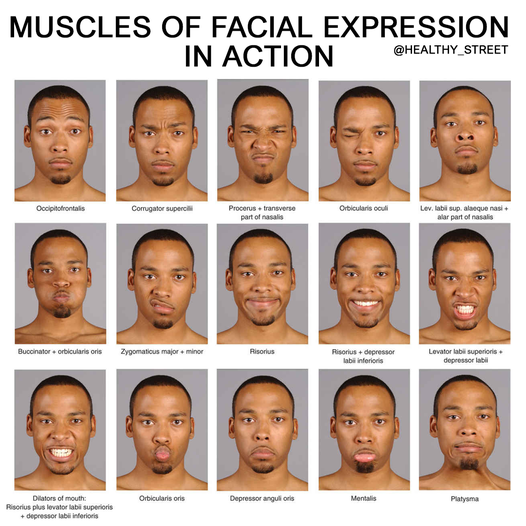
<ul><li><p>Muscle: <span style="color: rgb(255, 187, 123);"><strong><u>depressor labii inferioris</u></strong></span></p></li></ul><ul><li><p><strong>Depressor Labii Inferioris:</strong> This muscle originates on the mandible (chin bone) and inserts into the lower lip. Its name literally means "depressor of the lower lip."</p></li><li><p><strong>Action:</strong> When it contracts, it <span style="color: rgb(255, 187, 123);">pulls the lower lip <strong>straight down and slightly laterally</strong> (outward)</span>, causing the lower lip to turn out in a <span style="color: rgb(255, 187, 123);"><strong>trembling or pouting gesture</strong></span>.</p></li></ul><p></p>
15
New cards
<p>What muscle is being worked when you are <span style="color: rgb(244, 250, 167);"><strong>depressing the corner of the mouth (frown)?</strong></span></p>

What muscle is being worked when you are depressing the corner of the mouth (frown)?

  • Muscle: depressor anguli oris

  • Depressor Anguli Oris (DAO): This muscle originates on the mandible (chin bone) and attaches to the corner of the mouth (oral angle). Its name means "depressor of the angle of the mouth."

  • Action: When it contracts, it pulls the corner of the mouth straight downward, creating the downturned corners characteristic of a frown or sad expression.
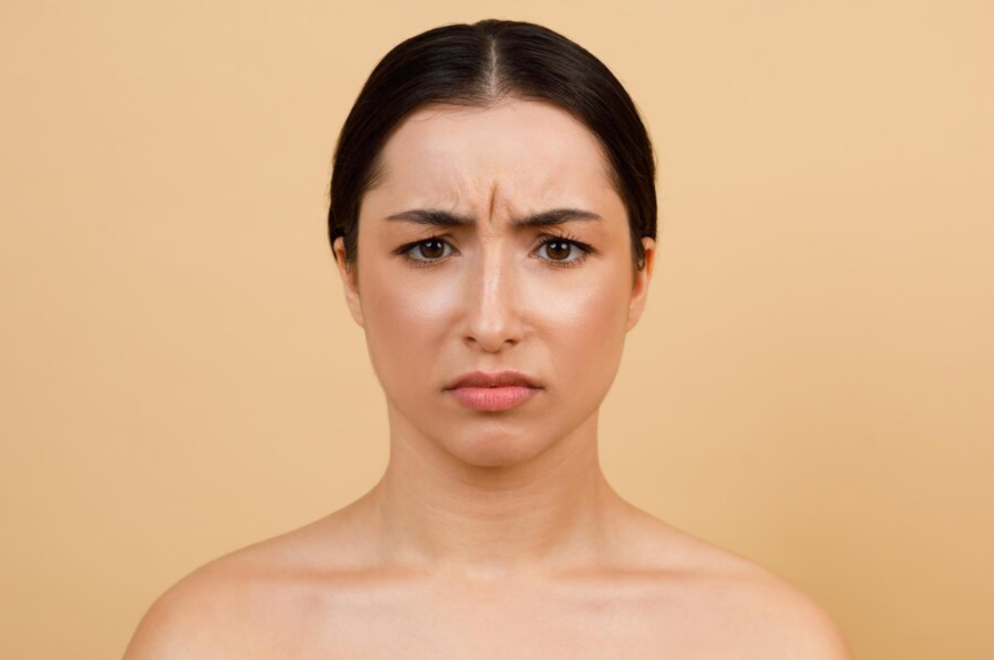
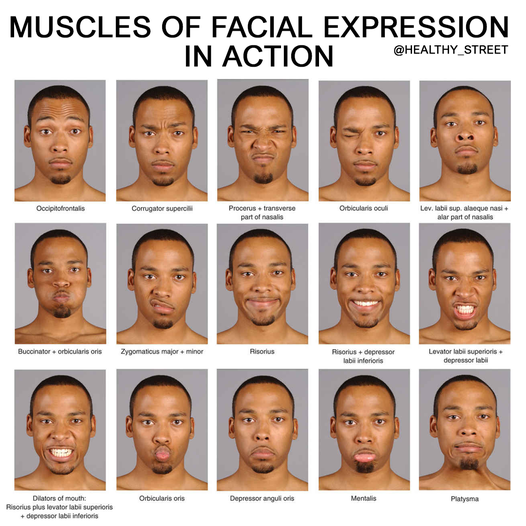
<ul><li><p>Muscle: <span style="color: rgb(244, 250, 167);"><strong><u>depressor anguli oris</u></strong></span></p></li></ul><ul><li><p><strong>Depressor Anguli Oris (DAO):</strong> This muscle originates on the mandible (chin bone) and attaches to the <span style="color: rgb(244, 250, 167);"><strong>corner of the mouth (oral angle)</strong>. Its name means "depressor of the angle of the mouth."</span></p></li><li><p><strong>Action:</strong> When it contracts, it <span style="color: rgb(244, 250, 167);">pulls the corner of the mouth <strong>straight downward</strong></span>, creating the downturned corners characteristic of a<span style="color: rgb(244, 250, 167);"><strong> frown or sad expression.</strong></span></p></li></ul><p></p>
16
New cards
<p>What muscle is being worked when you are <span style="color: rgb(206, 255, 187);"><strong>wrinkling / compressing skin around mouth (kissing)?</strong></span></p>

What muscle is being worked when you are wrinkling / compressing skin around mouth (kissing)?

  • Muscle: orbicularis oris

  • Orbicularis Oris: This is a complex, sphincter-like muscle that circles the entire mouth.

  • Action: When it contracts, it acts like a drawstring, closing the lips, pushing them together, and puckering them (as in kissing, whistling, or drinking through a straw). It also causes the fine wrinkles around the mouth.
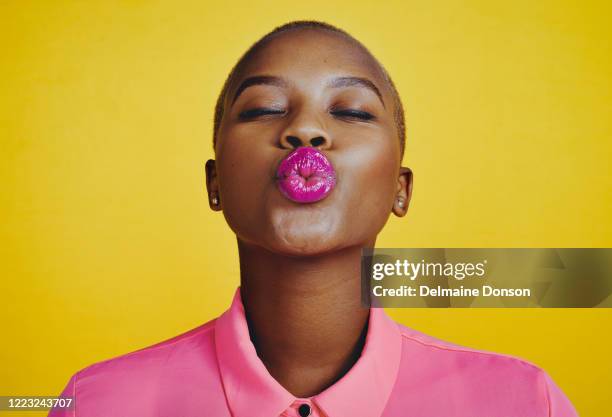
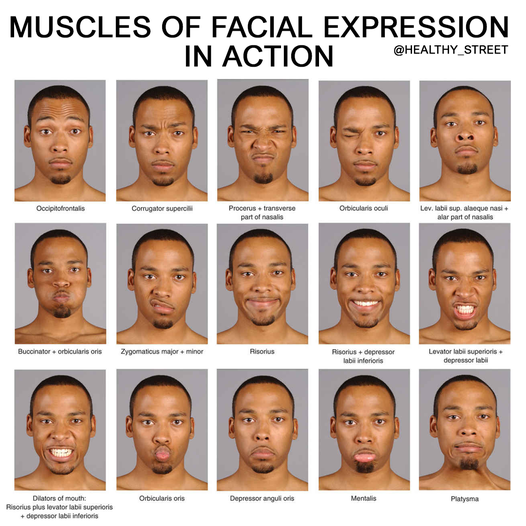
<ul><li><p>Muscle: <span style="color: rgb(206, 255, 187);"><strong><u>orbicularis oris</u></strong></span></p></li></ul><ul><li><p><strong>Orbicularis Oris:</strong> This is a complex, <span style="color: rgb(206, 255, 187);">sphincter-like muscle that <strong>circles the entire mouth</strong>.</span></p></li><li><p><strong>Action:</strong> When it contracts, it acts like a drawstring,<span style="color: rgb(206, 255, 187);"> closing the lips, pushing them together, and <strong>puckering</strong> them (as in <strong>kissing</strong>, <strong>whistling</strong>, or drinking through a straw</span>). It also causes the fine wrinkles around the mouth.</p></li></ul><p></p>
17
New cards
<p>What muscle is being worked when you are<span style="color: rgb(177, 252, 252);"><strong> holding a bolus of food in the mouth (also whistling)?</strong></span></p>

What muscle is being worked when you are holding a bolus of food in the mouth (also whistling)?

  • Muscle: buccinator

  • Buccinator: This muscle forms the deep part of the cheek wall, running horizontally from the maxilla and mandible to the orbicularis oris muscle at the corner of the mouth.

  • Action:

    • Chewing/Swallowing: It compresses the cheek, pressing the food firmly against the teeth (mastication) and moving the food toward the pharynx (swallowing). It prevents food from collecting in the space between the cheek and teeth.

    • Whistling/Sucking: It also flattens the cheek and is used to expel air, as in whistling, playing a wind instrument, or sucking.
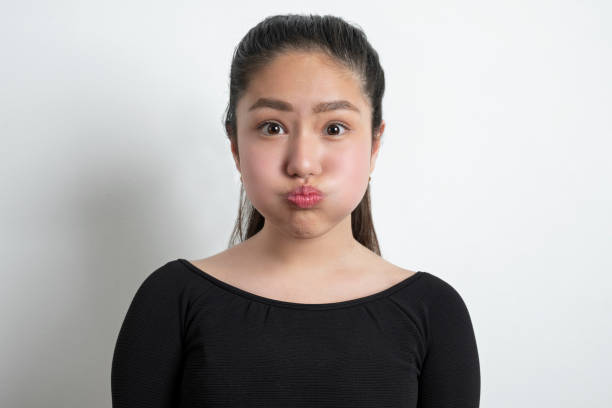
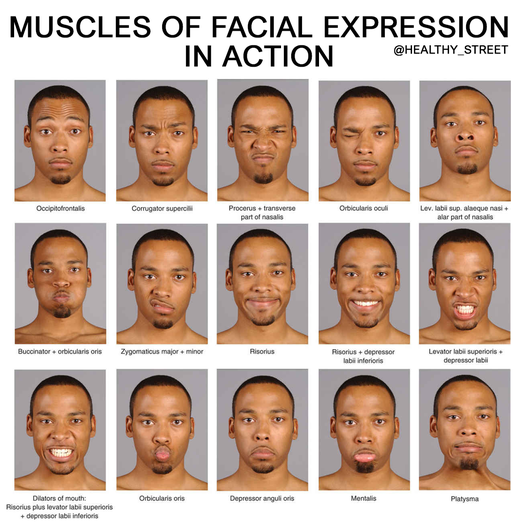
<ul><li><p>Muscle: <span style="color: rgb(177, 252, 252);"><strong><u>buccinator</u></strong></span></p></li></ul><ul><li><p><strong>Buccinator:</strong> This muscle forms the deep part of the cheek wall, running horizontally from the maxilla and mandible to the orbicularis oris muscle at the corner of the mouth.</p></li><li><p><strong>Action:</strong></p><ul><li><p><span style="color: rgb(177, 252, 252);"><strong>Chewing/Swallowing</strong></span><strong>:</strong> It compresses the cheek, pressing the food firmly against the teeth (mastication) and moving the food toward the pharynx (swallowing). It prevents food from collecting in the space between the cheek and teeth.</p></li><li><p><span style="color: rgb(177, 252, 252);"><strong>Whistling/Sucking</strong></span><strong>:</strong> It also flattens the cheek and is used to expel air, as in whistling, playing a wind instrument, or sucking.</p></li></ul></li></ul><p></p>
18
New cards
<p>What muscle is being worked when you are <span style="color: rgb(148, 212, 255);"><strong>depressing and retracting mandible (almost like a chin tuck)?</strong></span></p>

What muscle is being worked when you are depressing and retracting mandible (almost like a chin tuck)?

  • Muscle: platysma

19
New cards
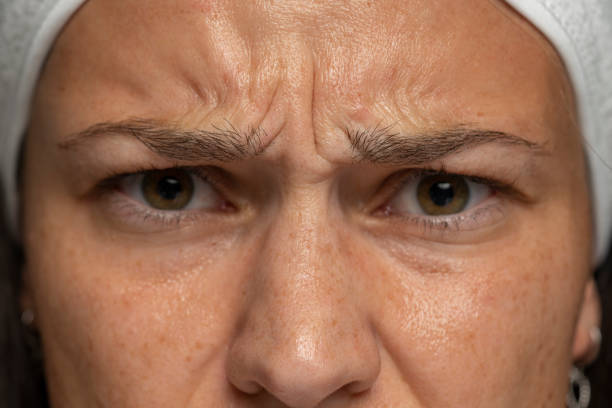
<p>What muscle is being worked when you are<span style="color: rgb(195, 202, 255);"><strong><span> drawing your eyebrows down and medially create vertical lines in skin (like during frowning)? = frown lines</span></strong></span></p>

What muscle is being worked when you are drawing your eyebrows down and medially create vertical lines in skin (like during frowning)? = frown lines

  • Muscle: corrugator supercili

<ul><li><p>Muscle:<span style="color: rgb(195, 202, 255);"><strong><u> corrugator supercili</u></strong></span></p></li></ul><p></p>
20
New cards
<p>What muscle is being worked when you are<strong> </strong><span style="color: rgb(234, 207, 255);"><strong>pulling skin between eyebrows down and together (frowning)?</strong></span></p>

What muscle is being worked when you are pulling skin between eyebrows down and together (frowning)?

  • Muscle: procerus

<ul><li><p>Muscle: <span style="color: rgb(234, 207, 255);"><strong><u>procerus</u></strong></span></p></li></ul><p></p>
21
New cards
<p>What muscle is being worked when you are <span style="color: rgb(255, 179, 246);"><strong>elevating and protruding lower lip, draws skin over chin medially (pouting)?</strong></span></p>

What muscle is being worked when you are elevating and protruding lower lip, draws skin over chin medially (pouting)?

  • Muscle: mentalis

  • Mentalis: This small, paired muscle is located in the chin region (the word mental refers to the chin).

  • Action: It pulls the skin of the chin upward (medially), which causes the chin to wrinkle, and at the same time, it helps to push or protrude the lower lip outward (like pushing the bottom lip out).

  • Expression: This combination of actions is what creates the distinct look of a pout or a look of doubt/disdain.
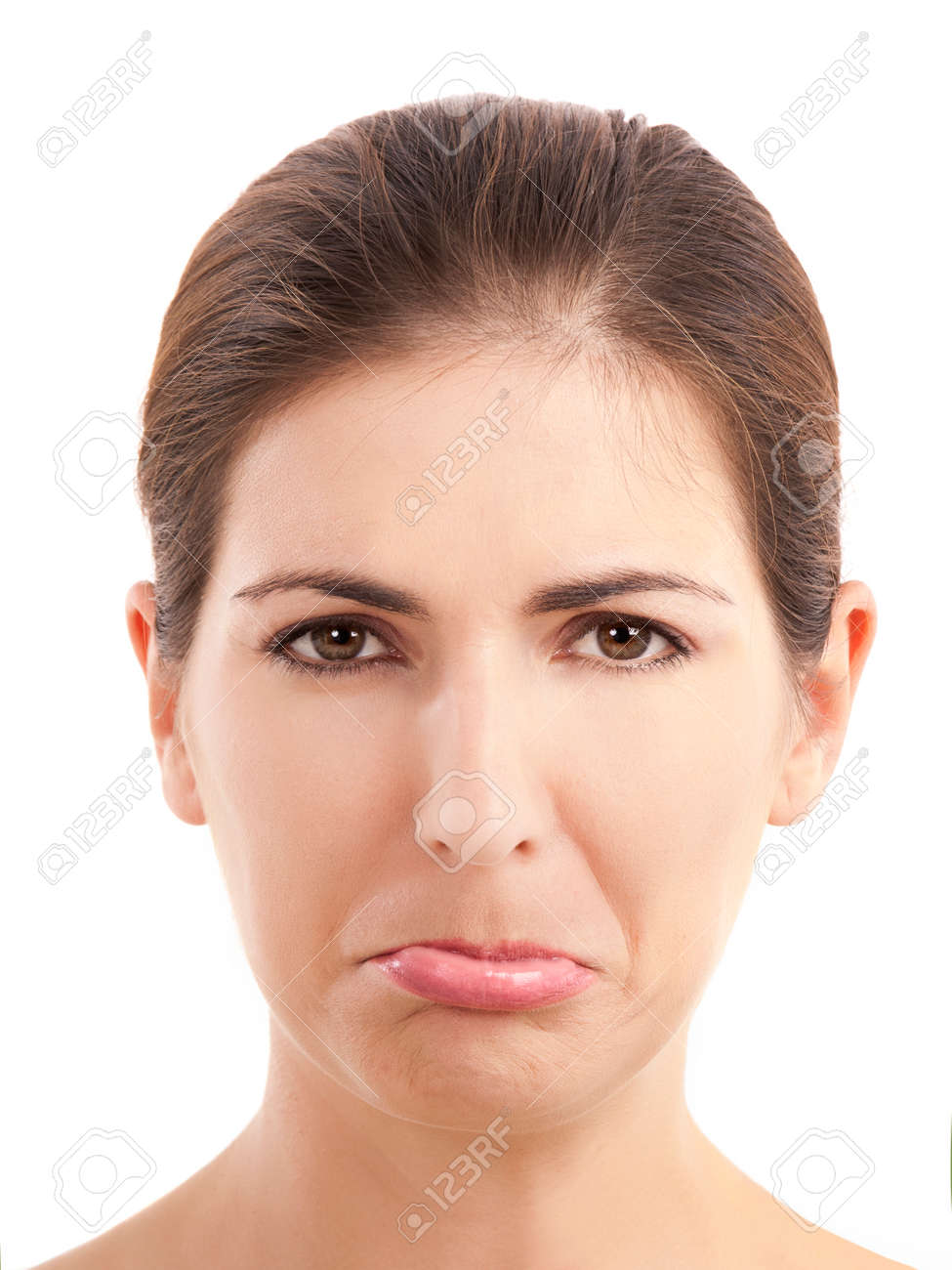
<ul><li><p>Muscle: <span style="color: rgb(255, 179, 246);"><strong><u>mentalis</u></strong></span></p></li></ul><ul><li><p><strong>Mentalis:</strong> This small, paired muscle is located in the chin region (the word <em>mental</em> refers to the chin).</p></li><li><p><strong>Action:</strong> It <span style="color: rgb(255, 179, 246);">pulls the skin of the chin <strong>upward</strong> (medially)</span>, which causes <span style="color: rgb(255, 179, 246);">the chin to <strong>wrinkle</strong></span>, and at the same time, it helps to <span style="color: rgb(255, 179, 246);">push or <strong>protrude the lower lip outward</strong> (like pushing the bottom lip out).</span></p></li><li><p><strong>Expression:</strong> This combination of actions is what creates the distinct look of a <span style="color: rgb(255, 179, 246);"><strong><u>pout or a look of doubt/disdain.</u></strong></span></p></li></ul><p></p>
22
New cards
<p>movement / muscles of the neck:</p>

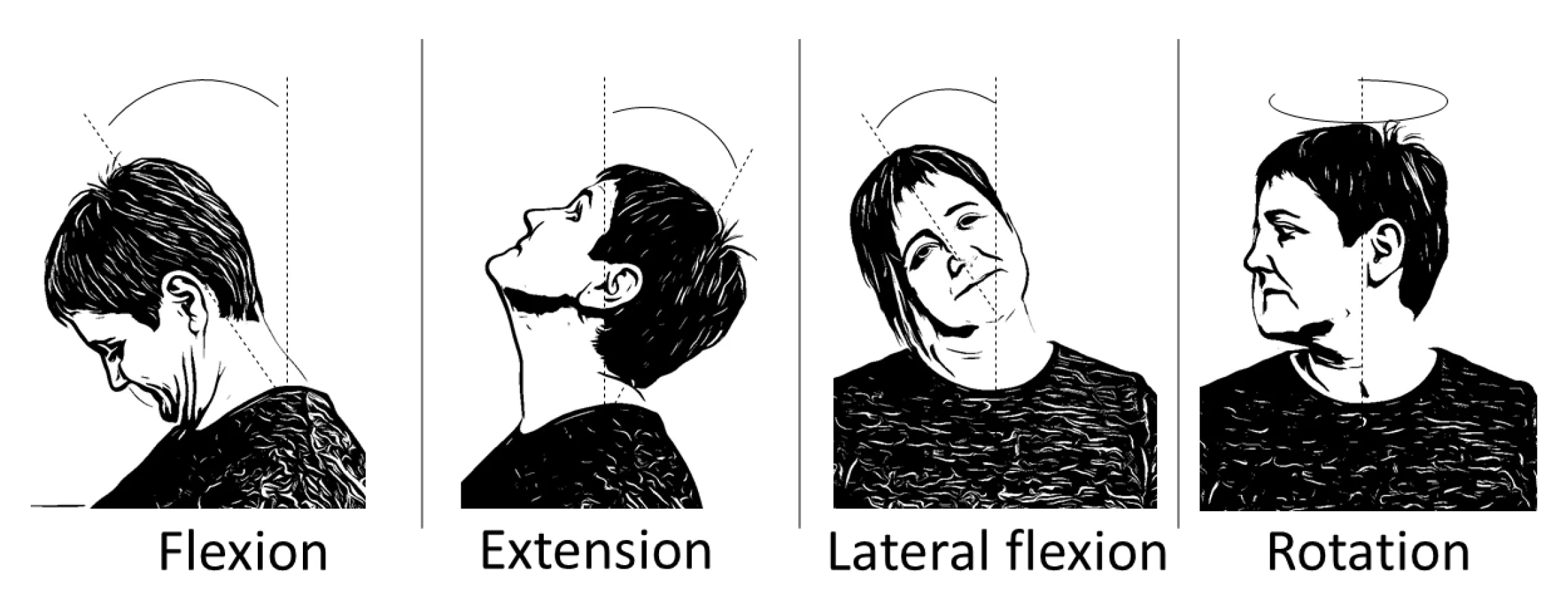
movement / muscles of the neck:

  1. Movement: flexion Muscles: sternocleidomastoid

  2. Movement: extensionMuscles: trapezius

  3. Movement: rotation Muscles: sternocleidomastoid

  4. Movement: lateral bending (flexion) Muscles: sternocleidomastoid

<ol><li><p><u>Movement</u>: <span style="color: rgb(255, 186, 186);"><strong>flexion </strong></span>→ <u>Muscles</u>: <span style="color: rgb(255, 186, 186);"><strong>sternocleidomastoid</strong></span></p></li><li><p><u>Movement</u>: <span style="color: rgb(253, 211, 180);"><strong>extension</strong></span> → <u>Muscles</u>: <span style="color: rgb(253, 211, 180);"><strong>trapezius</strong></span></p></li><li><p><u>Movement</u>: <span style="color: rgb(251, 255, 161);"><strong>rotation </strong></span>→ <u>Muscles</u>: <span style="color: rgb(251, 255, 161);"><strong>sternocleidomastoid</strong></span></p></li><li><p><u>Movement</u>: <span style="color: rgb(209, 255, 191);"><strong>lateral bending (flexion) </strong></span>→ <u>Muscles</u>: <span style="color: rgb(209, 255, 191);"><strong>sternocleidomastoid</strong></span></p></li></ol><p></p>
23
New cards
<p>Movement / muscles of spine (thoracic / lumbar torso region):</p>

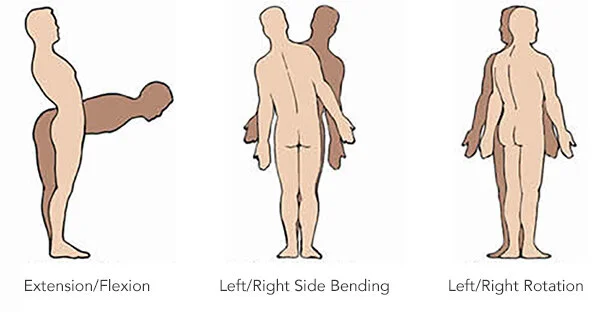
Movement / muscles of spine (thoracic / lumbar torso region):

  1. Movement: flexion Muscles: Rectus abdominis, external oblique, & internal oblique
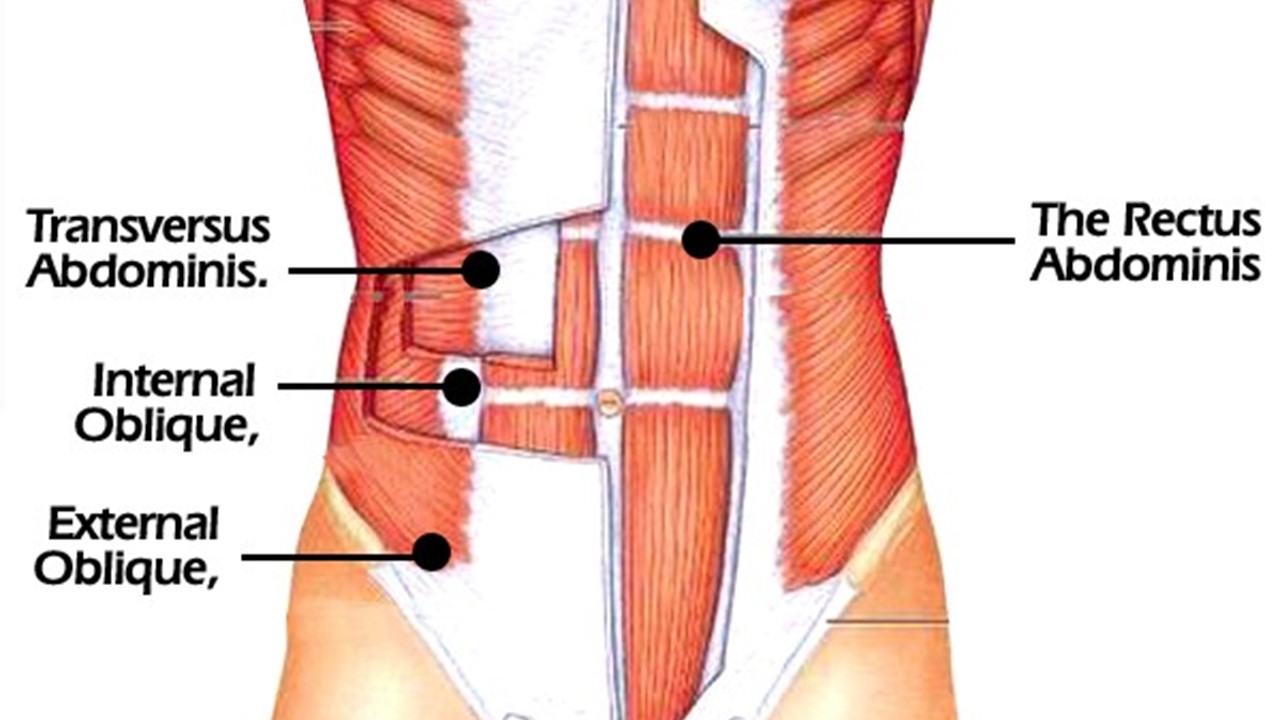
  2. Movement: extension Muscles: Erector spinae group

  3. Movement: rotation Muscles: External oblique / internal oblique

  4. Movement: lateral bending (flexion)Muscles: Rectus abdominis, external oblique, & internal oblique

<ol><li><p><u>Movement</u>: <span style="color: rgb(181, 255, 229);"><strong>flexion </strong></span>→ <u>Muscles</u>: <span style="color: rgb(181, 255, 229);"><strong>Rectus abdominis, external oblique, &amp; internal oblique</strong></span></p></li><li><p><u>Movement</u>: <span style="color: rgb(163, 245, 255);"><strong>extension </strong></span>→ <u>Muscles</u>:<span style="color: rgb(163, 245, 255);"><strong> Erector spinae group</strong></span></p></li><li><p><u>Movement</u>: <span style="color: rgb(181, 194, 255);"><strong>rotation </strong></span>→ <u>Muscles</u>: <span style="color: rgb(181, 194, 255);"><strong>External oblique / internal oblique</strong></span></p></li><li><p><u>Movement</u>: <span style="color: rgb(215, 182, 255);"><strong>lateral bending (flexion)</strong></span> → <u>Muscles</u>: <span style="color: rgb(215, 182, 255);"><strong>Rectus abdominis, external oblique, &amp; internal oblique</strong></span></p></li></ol><p></p>