Human Anatomy & Physiology I (BIO 211)
 Call Kai
 Learn
Learn Practice Test
 Spaced Repetition
 Match
Match Flashcards
 Knowt Play
1/84

Earn XP
Description and Tags
Unit A
Name | Mastery | Learn | Test | Matching | Spaced | Call with Kai | Chat |
|---|
No analytics yet
Send a link to your students to track their progress
85 Terms
Cranial
Towards the head end of the body
Caudal
Towards the tail end (lower part) of the body
Superior
Towards the head, or the upper part of a structure; above
Inferior
Away from the head, toward the lower part of a structure; below
Superficial
Towards or at the body surface
Deep
Away from the body surface; more internal
Medial
Toward the midline of the body; closer to the center.
Lateral
Away from the midline of the body; towards the sides of the body
Anterior
Towards the front of the body
Posterior
Towards the back of the body
Dorsal
Towards the back (spine) of the body. Corresponds to posterior in humans
Ventral
Towards the belly (front) of the body. Corresponds to anterior in humans
Prone
Lying face down (front of body facing down)
Supine
Lying face up (front of body facing up)
Coronal (Frontal) Section
A vertical plane that divides the body into anterior and posterior sections.
Saggital Section
A vertical plane that divides the body into right and left parts.
Mid-Saggital Section
A vertical plane that divides the body into equal right and left halves.
Transverse Section
A horizontal plane that divides the body into cranial and caudal sections.
Dorsal Cavity
The space within the body that contains the central nervous system, including the brain and spinal cord.
Dorsal Cavity Location
Located along the posterior of the body.
Cranial Cavity Location
The skull.
Cranial Cavity Contents
The brain, pituitary gland, cerebral blood vessels, roots of cranial nerves.
Cranial Cavity Protective Structure
Cranial (skull) bones.
Spinal / Vertebral Cavity Location
The vertebral column.
Spinal / Vertebral Cavity Contents
The spinal cord, spinal blood vessels, roots of spinal nerves.
Spinal / Vertebral Cavity Protective Structure
Vertebrae.
Thoracic Cavity Location
Superior to the diaphragm.
Thoracic Cavity Contents
Contains the Pleural Cavities, Mediastinum, and Pericadial Cavity.
Pleural Cavity Contents
The lungs.
Mediastinum Contents
Pericadial Cavity, thymus, trachea (windpipe), esophagus.
Pericardial Cavity Contents
The heart.
Thoracic Cavity Protective Structure
Sternum, ribs, and diaphragm.
Abdominopelvic Cavity Location
Inferior to the diaphragm.
Abdominopelvic Cavity Contents
Abdominal Cavity and Pelvic Cavity
Abdominal Cavity Contents
Stomach, liver, spleen, pancreas, small intestine, large intestine, kidneys.
Pelvic Cavity Contents
Urinary bladder, reproductive organs, rectum.
Abdominopelvic Cavity Protective Structure
Abdominal wall muscles.
Abdominopelvic Cavity Regions
Right + Left Hypochondriac, Epigastric, Right + Left Lumbar, Umbilical, Right + Left Iliac, Hypogastric.
Levels of Biological Organization
Atoms
Molecules
Biomolecules
Organelles
Cells
Tissues
Organs
Systems
Organism
Population
Species (community, ecosystem, biome)
Organic Molecules
Carbon-based. Includes carbohydrates, lipids, proteins, and nucleic acids.
Inorganic Molecules
Not carbon-based. Includes salts, minerals, and water.
Carbohydrate Composition
C, H, O (1:2:1)
Carbohydrate Building Block
Monosaccharide
Lipid Composition
C, H, O
Lipid Building Blocks
Glycerol, Fatty Acids, Phosphate, Cholesterol
Protein Composition
C, H, O, N
Protein Building Block
Amino Acid
Nucleic Acid Composition
C, H, O, N, P
Nucleic Acid Building Block
Nucleotide (sugar, PO4, nitrogenous base)
Epithelium Tissue Function
Covers and protects body surfaces, lines cavities.
Connective Tissue Function
Supports, binds, and connects other tissues.
Muscle Tissue Function
Produces movement; protection, and heat.
Nerve Tissue Function
Communication and regulation of body activities through the generation and transmission of signals.
Proximal
Closer to the trunk of the body or the point where a limb attaches.
Distal
Farther away from the trunk of the body or the point where a limb attaches.
Ipsilateral
Same side of the body in relation to a specific point or structure.
Contralateral
Opposite side of the body in relation to a specific point or structure.
Covalent Bonding
Sharing electrons, strongest bond type.
Ionic Bonding
Transferring electrons, oppositely charged ions attract each other, strong when dry, break easily in water.
Hydrogen Bonding
Weak attraction between polar molecules due to partial charges.
Inorganic Molecules
Compounds that do not contain carbon-hydrogen bonds (e.g., water, salts, acids, bases).
Organic Molecules
Compounds that contain carbon-hydrogen bonds (e.g., carbohydrates, lipids, proteins, nucleic acids).
Hydroxyl (Alcohol) Functional Group
X-OH

Phosphate Functional Group
X-PO4

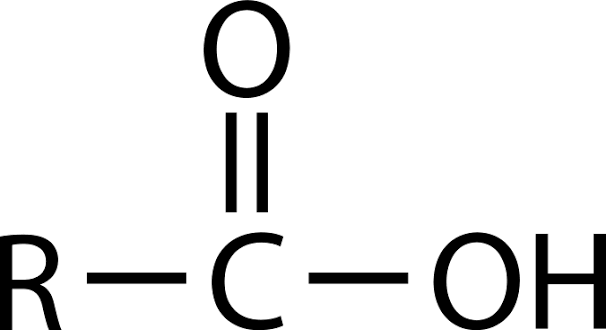
Carboxylic (Carboxyl) Functional Group
X-COOH
Amino Functional Group
X-NH2

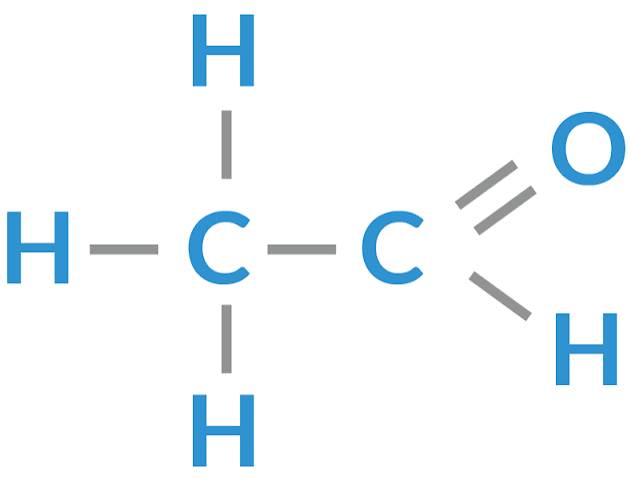
Aldehyde Functional Group
X-COH
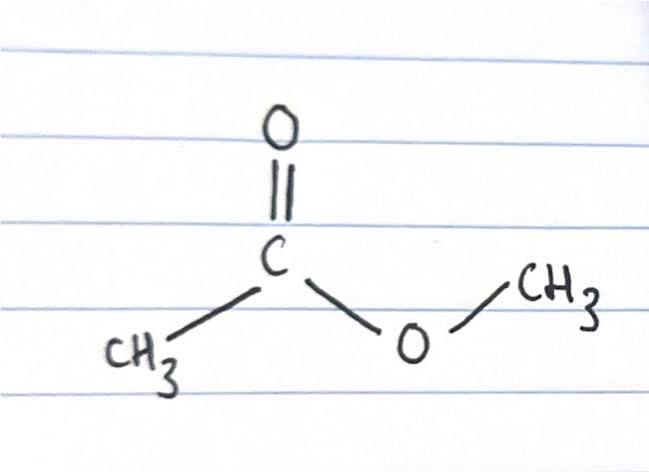
Ester Functional Group
XC-O2-X
Methyl Functional Group
X-CH3

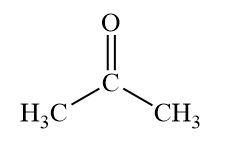
Ketone Functional Group
XX-CO
Organelles
Nucleus, Ribosome, Golgi, Endoplasmic Reticulum, Mitochondria
Nucleus Function
Control center
Ribosome Function
Protein production
Golgi Function
Protein packaging
Endoplasmic Reticulum Function
Transport network
Mitochondria Function
Energy production (ATP)
Parts of Basic Feedback System
Stimulus, Receptor, Input, Control Center, Effector Response
Stimulus
A change in the environment that produces a change in the controlled variable.
Receptor
Monitors change, communicates with control center.
Input
Information received by receptors, travels along an afferent pathway to the control center.
Control Center
Generates output that travels along an efferent pathway to the effector.
Effector Response
Receives output from control center, produces the response.
Homeostasis
The process through which the body maintains a stable internal environment despite external changes, involving feedback mechanisms.
Negative Feedback Loop
A response that reverses or opposes the original stimulus, bringing the variable back toward the set point.
Positive Feedback Loop
A response that enhances or amplifies the original stimulus, pushing the variable further away from the set point.