BU Part 1.1 - Plumbing & Sanitary,
 Call Kai
 Learn
Learn Practice Test
 Spaced Repetition
 Match
Match Flashcards
 Knowt Play
1/129

There's no tags or description
Looks like no tags are added yet.
Name | Mastery | Learn | Test | Matching | Spaced | Call with Kai | Chat |
|---|
No analytics yet
Send a link to your students to track their progress
130 Terms
Plumbing
Art and science of installing pipes, fixtures and other apparatus to convey and supply water in buildings
Plumbarius
Refers to an individual who worked in the sanitary field in ancient Rome
Plumbum
On the other hand, meant lead
London
A modern sewerage system began operating in ______ in the 1860's.
Plumbing System
The water supply distributing pipes; the fixture and fixture traps; the soil, waste and vent pipes,etc.
Water Supply System
Provides and distributes water to the different parts of the building or structure, for purposes such as drinking, cleaning, washing
Drainage System
All the piping within public or private premises which conveys sewage, rainwater or other liquid wastes to a point of disposal.
Sanitary Drainage and Vent Piping System
Installed by the plumber to remove wastewater and water-borne wastes from the plumbing fixtures
Sanitary Drainage Pipes
Pipes installed to remove the wastewater and water-borne wastes from plumbing fixtures
Ventilation System
The purpose of providing circulation of air and creating balanced atmospheric condition within the system thereby preventing siphonage and backpressure.
Soil Pipe
A pipe that conveys the discharge of water closets or similar fixtures containing fecal matter
Waste Pipe
A pipe that conveys only liquid waste free of fecal matter.
▪ Cold Water Supply System
▪ Hot Water Supply System
Water Supply and Distribution System:
▪ Direct Waste Piping System
▪ Indirect Waste Piping System
Waste Piping System:
▪ House Sewer
▪ Drainage Cleanout
▪ Plumbing Traps
House Drain:
Uses of Water: Nourishment
Much of the human body is water, the most abundant chemical in our body
Uses of Water: Cleansing and Hygiene
Water is a nearly ideal medium for the dissolution and transport of organic waste, and its high heat storage capacity
Uses of Water: Ceremonial Uses
Largely through its association with cleaning, water acquired a ceremonial
Uses of Water: Transportation Uses
Even before land transportation was discovered man had already ventured into the water as transportation medium.
Uses of Water: Cooling Medium
Water has a remarkable cooling potential: it stores heat readily, removes large quantities of heat when it evaporates
Uses of Water: Ornamental Element
Our association of water with nourishing, cleansing, and cooling make a very powerful design element
Uses of Water: Protective Uses
The vast quantities of water potentially required for firefighting must be delivered quickl
• Agricultural
• Industrial
• Household
• Recreation
• Others
Uses of Fresh Water:
Sources of Water: Rainfall
• Obtained from roofs and watersheds.
• It is soft pure and good on places where there is an abundant rainfall
Sources of Water: Natural Surface
• Obtained from ponds, lakes, rivers
• Easiness of procurements and good for locality near such bodies of water
Sources of Water: Underground Water
• Obtained from below ground surface by means of mechanical and manual equipments
Groundwater
That portion of the rainwater which was percolated into the earth to form underground deposits called “aquifers” (water bearing strata of the soil).
Surface Water
A mixture of surface run-off and groundwater, surface sources include rivers, lakes, ponds and impounding reservoir.
4 to 5 gals.
Average Daily Consumption per Fixture.: Water Closet
2 gals.
Average Daily Consumption per Fixture.: Lavatory
10 to 40 gals.
Average Daily Consumption per Fixture.: Shower
Sedimentation
Particles of matters that are suspended in the water are allowed to stay in a container
Chemical Treatments
To kill the harmful bacteria present and to cure the turbid taste or mud taste, used chemical is chlorine
Filtration
Filtered on various processes, so as to remove the particles of vegetable matter, used materials are sand and gravel
Aeration
Raw water is made to pass on pipes of tiny sieves and exposed to air of fine mist
Coagulation
A chemical such as Alum (hydrated aluminum sulfate) is added to turbulent water
Disinfection
Chlorine, Chloramine, Chlorine Dioxide, Iodine
Distillation
Water is heated to allow condensation, as water vapor encounters cooler surface, it condenses
Fluoridation
Fluoride may help in minimizing tooth decay but excessive amounts are toxic and caused mottled teeth
Adsorption
A mechanism of contaminant removal making use of the adsorption phenomenon, the act of physical adhesion
Water Desalination
Done by Entrained Gases where the water vapor is condensed and removed
Entrained Gases
Are carbon dioxide, hydrogen sulfide methane, oxygen and nitrogenous and organic compounds
Wells
______ that are supplying water for public use should be located at a minimum distance of 100 meter radius from residential areas
Up feed System
Water is distributed from normal water pressure coming from public water main for use in low rise buildings
Pneumatic Tank
Water pressure is distributed from air pressure coming from suction tank for use in all tall buildings which cannot be reached by normal water pressure.
Down feed System
By gravity from overhead tanks and are suspended either by structural frames or on the roof decks.
Storm Water
From the rain
Grey Water
Waste from laundries, wash basins, sinks etc.
Black Water
Human waste and urine
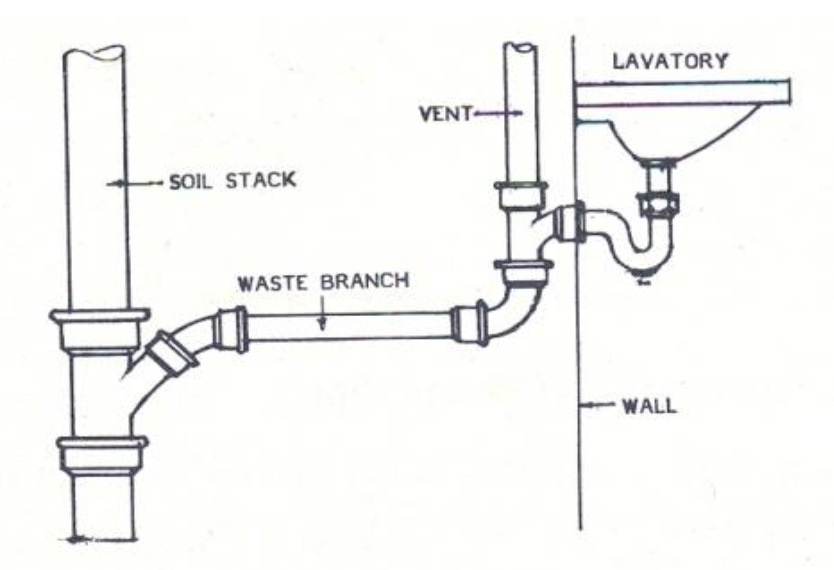
Waste Pipe
It receives the discharges of any fixture except the water closet
Direct Waste
➢ Urinals
➢ Bathtub
➢ Lavatories
➢ Sink
➢ Showers
➢ Drinking fountain
➢ Laundry
➢ Laboratory
➢ Hospital fixtures
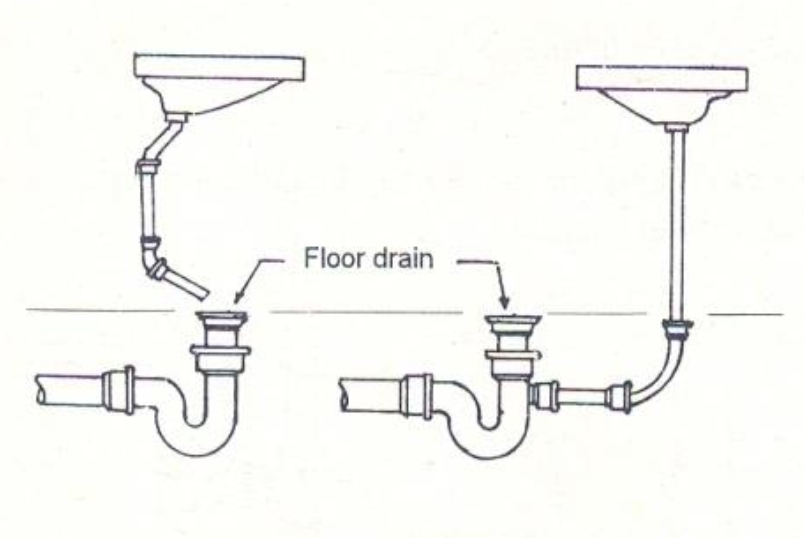
Indirect Waste
➢ Soda Fountain
➢ Bar Waste
➢ Refrigeration
➢ Drinking Fountain
Soil Pipe
A pipe that receives and conveys discharges of water closet, with or without the discharge from other fixtures
House Drain
➢ Is the portion of the plumbing system that receives the discharges of all soil and waste stacks within the building
➢ Referred to as the “Collection Line of a Plumbing System”
House Trap
Is defined as a device installed in the house drain immediately inside the foundation wall of the building.
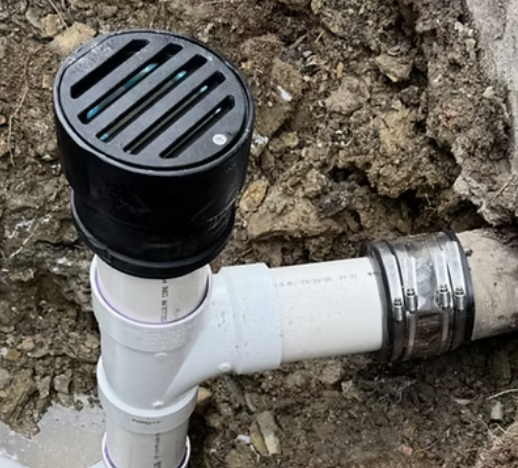
Area Drain
Consists of a running trap installed under the basement floor to protect it from freezing.
Floor Drain
A receptacle used to receive water to be drained from the floor into the plumbing system.
Yard Catch Basin
A receptacle used to catch surface water drained from the cemented courts, driveways and yards
House Sewer
That portion of the horizontal drainage system which starts from the outer face of the building and terminate at the main sewer in the street or septic tank
Storm Drain
The unit of the plumbing system that conveys rain or storm water to a suitable terminal.
Ventilation
To maintain a balance atmospheric pressure inside the system to prevent various plumbing problems.
Vents
For admission of air and discharging of gases, soil, and waste stacks
Main Soil and Waste Vent
It serves as the terminal for the main vent and other vents of the plumbing system
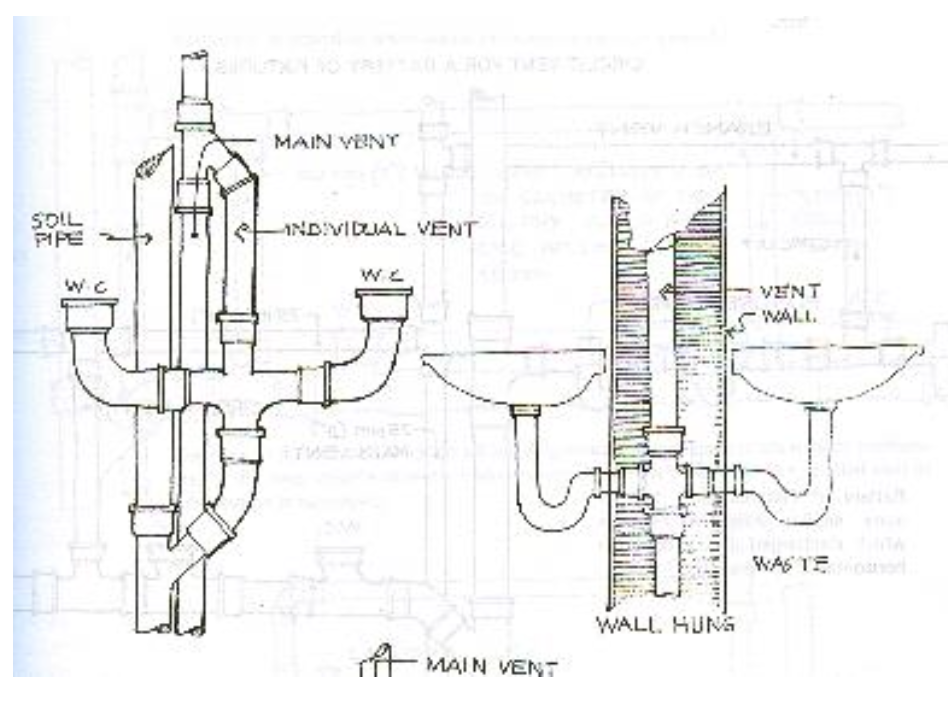
Main Vent
It is the portion of the vent pipe system which serves as a terminal of the smallest forms of units and grouped fixture trap ventilation.
Individual Vent
Also known as the back vent, it is the portion of the vent pipe system which serves a single trap.
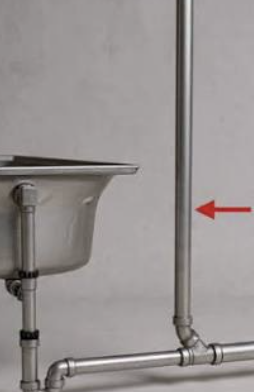
Unit Vent
This is the portion of the vent pipe which ventilates two fixture traps.
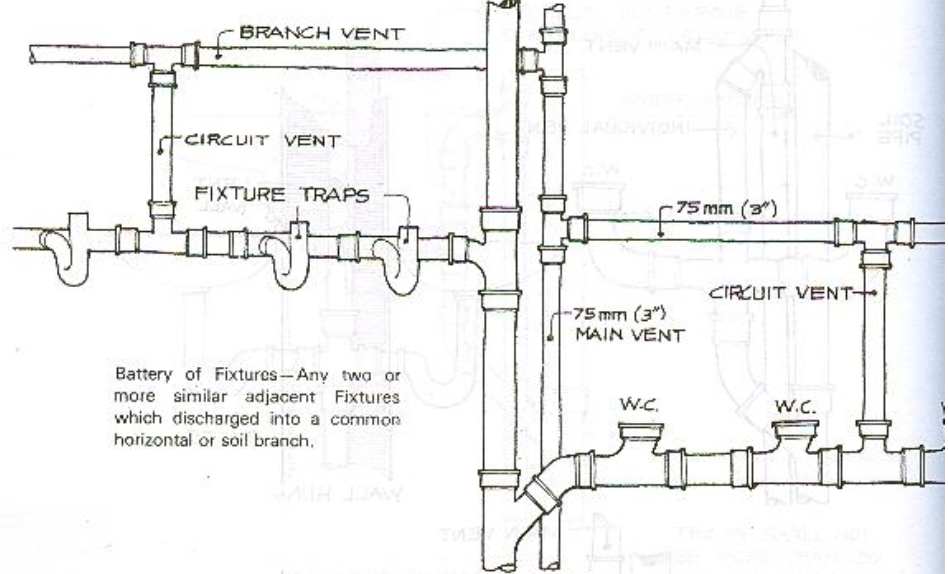
Circuit or Loop Vent
This is employed where two or more fixture traps are installed on a horizontal soil or waste branch.
Relief Vent
Provided when waste branches are circuit vented
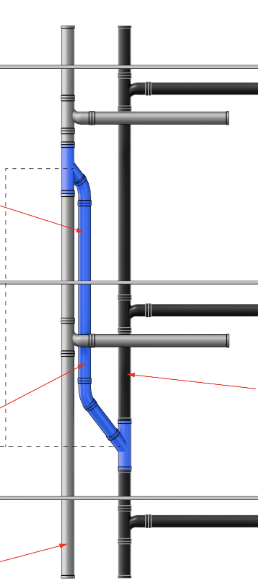
Yoke or By-Pass Ventilation
On a long vertical soil pipe, a relief vent is installed at 3 to 5 floor intervals.
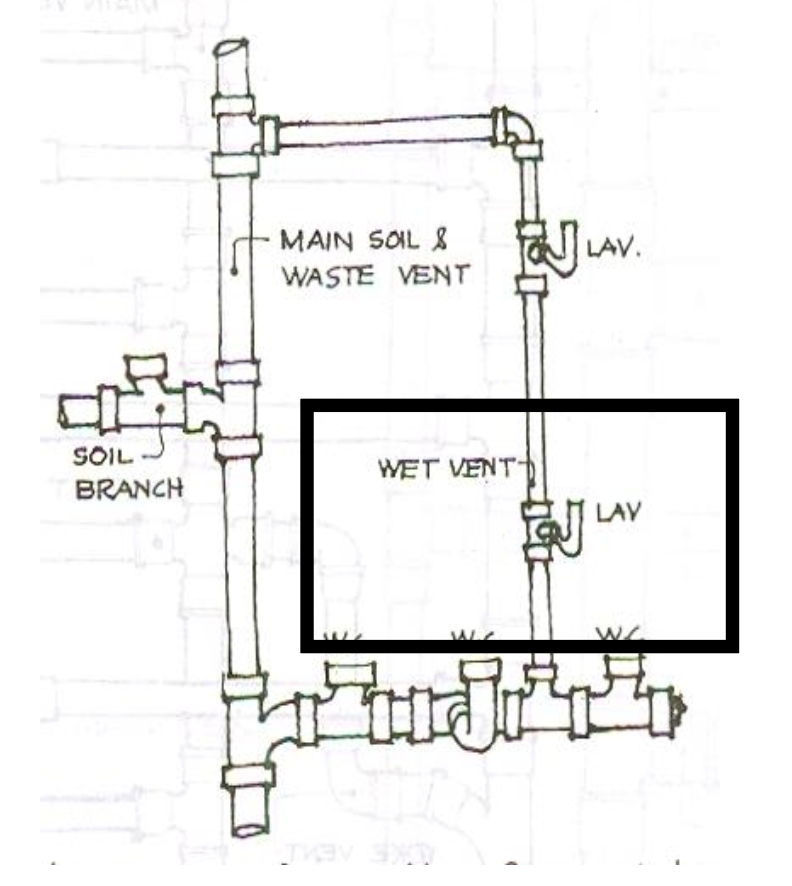
Wet Ventilation
Installation and fixture traps which at the same time receives and convey liquid waste discharge from the fixtures.
Looped Vent
It is used on fixtures in a room away from any partitions.
Trap Seal Loss
Can be attributed to inadequate ventilation of the trap and the subsequent minus and plus pressures inside the system.
1. Siphonage
2. Back Pressure
3. Evaporation
4. Capillary Action
Four Factors of Trap Seal Loss:
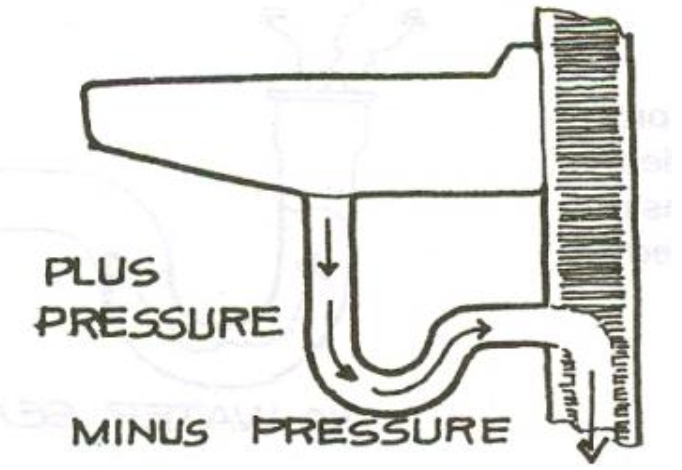
Siphonage
It is the result of the minus pressure in the drainage system.
A. Direct self-siphonage
B. Indirect or momentum
Two Types: Siphonage
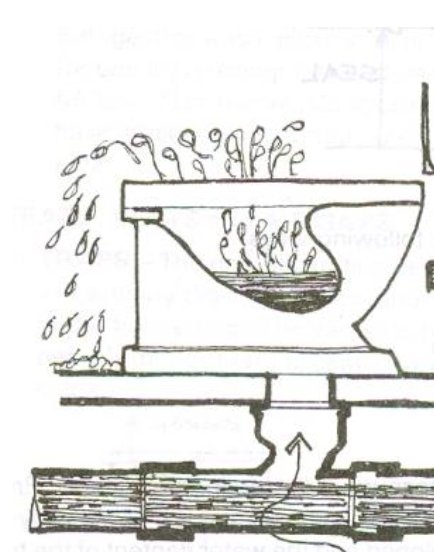
Back Pressure
This condition is caused by a plus pressure which blows the water out of the fixture.
Evaporation
Only on floor drains not regularly used to admit water but is exposed to extreme temperature
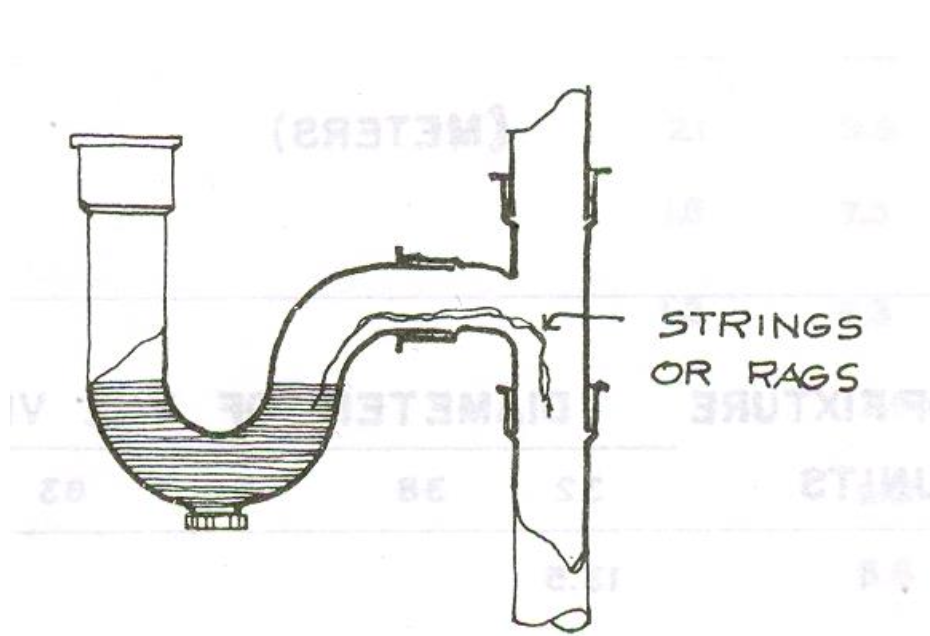
Capillary Action
The condition is caused by a suspension of a foreign object such as a string, rags, strands of hair extended
Trap
Used on plumbing fixture is a device scientifically designed to prevent the back flow of gases
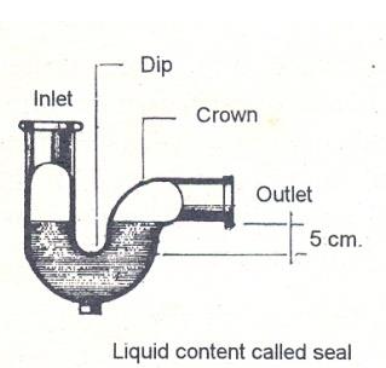
The Common Seal
It has 5 centimeters deep water seal between the overflow and the dip, which will offer resistance against abnormal conditions
The Deep Seal
This trap may be used under normal condition, but it’s purposely designed for abnormal situations
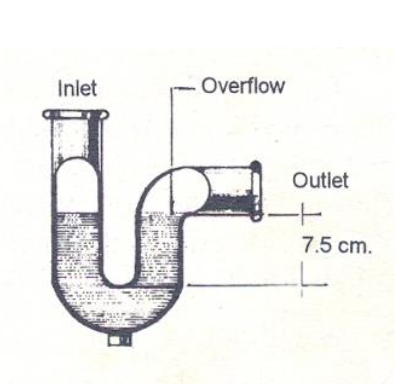
Permissible Traps
What are under traps are these:
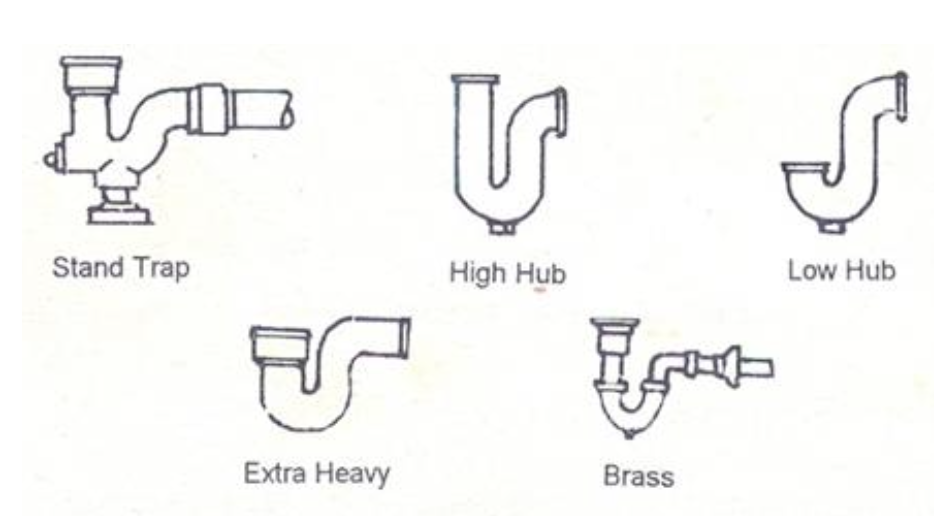
Objectionable Traps
What are under traps are these:
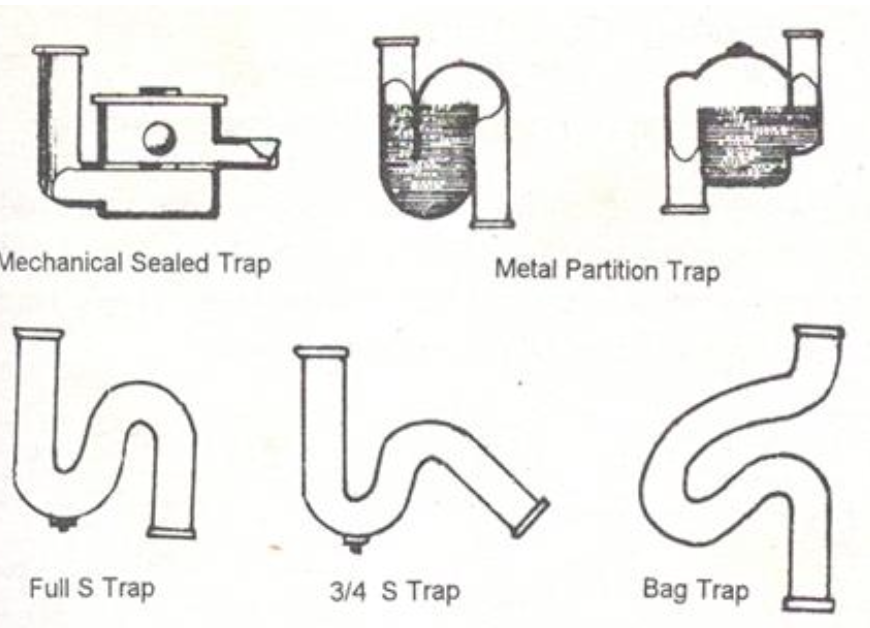
Stand Trap
What kind of trap is this?
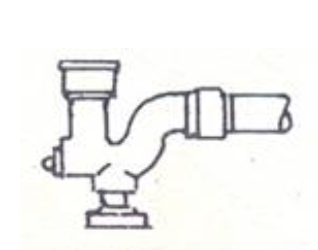
High Hub
What kind of trap is this?
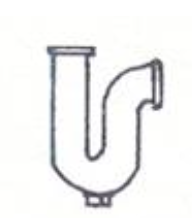
Low Hub
What kind of trap is this?
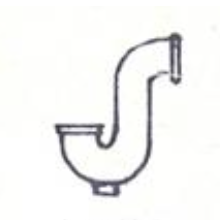
Extra Heavy
What kind of trap is this?
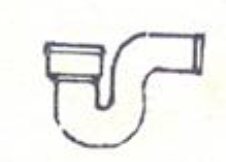
Brass
What kind of trap is this?
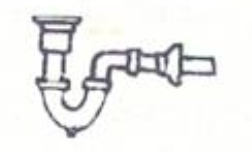
Mechanical Sealed Trap
What kind of trap is this?
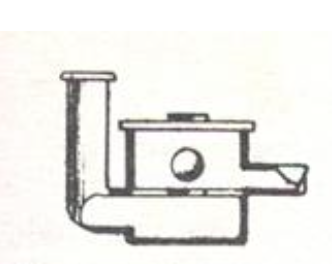
Metal Partition Trap
What kind of trap is this?
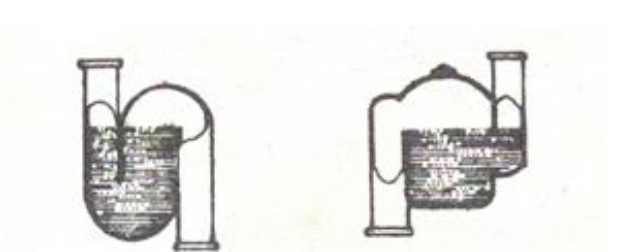
Full S-Trap
What kind of trap is this?
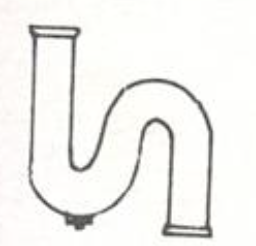
¾ S-Trap
What kind of trap is this?
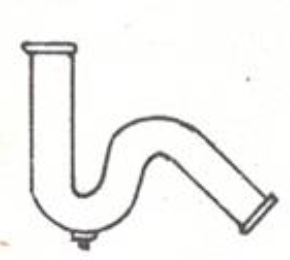
Bag Trap
What kind of trap is this?
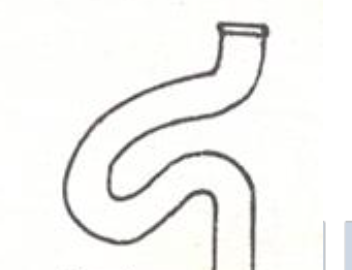
P-Trap
> U or J-Shaped pipe located under sinks and drains
> It holds a small amount of water to create a seal that blocks noxious sewer gases and odors from entering your home
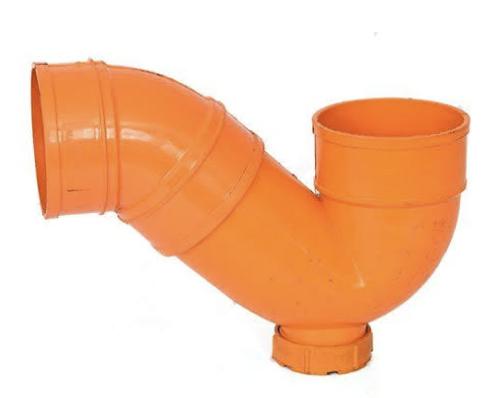
Drum Trap
An older plumbing component often found in homes built before 1960s.
It consists of a large, drum-shaped container, to trap debris and prevent sewer gases from entering the home.
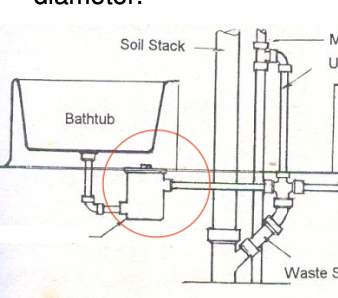
Grease Trap
To intercept fats, oils, and grease (FOG) from wastewater before it enters the sewer system
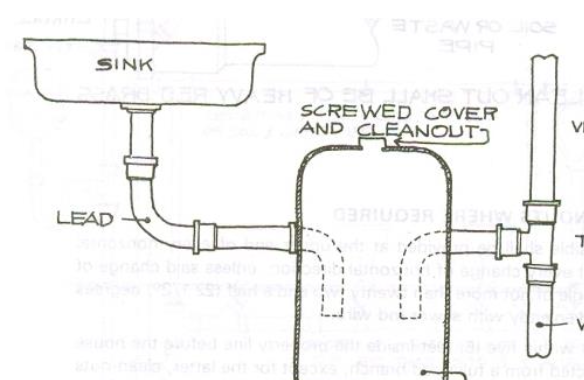
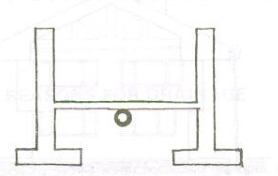
Inside Storm Drain
Is sometimes located under the basement floor or within the walls of the building.
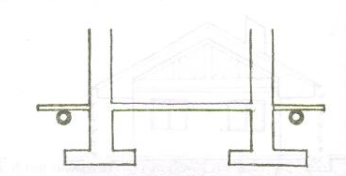
Outside Storm Drain
Possible on location where the lot is not totally occupied by the building
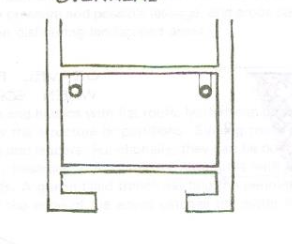
Overhead Storm Drain
Adopted when the street drainage is higher in elevation than the basement floor of the building.
Roof Leader
> Popularly known as the water conductor or downspout either concealed or exposed type.
> It connects the roof terminal to the storm drain.