Chem 1A midterm 1
 Call Kai
 Learn
Learn Practice Test
 Spaced Repetition
 Match
Match Flashcards
 Knowt Play
1/87

There's no tags or description
Looks like no tags are added yet.
Name | Mastery | Learn | Test | Matching | Spaced | Call with Kai | Chat |
|---|
No analytics yet
Send a link to your students to track their progress
88 Terms
chemistry
the study of matter and the changes it undergoes
for Li what is the atomic mass and atomic number
atomic number 3, atomic mass 6.94
properties of matter
solid, hard, shiny, squishy, flexible, liquid, wet, soft, blue, sweet
bonding ratios increase
left to right
reactivity increases
Top to Bottom (Metals) Bottom to top (Non Metals)
mass increases
left to right and top to bottom
radius increases
right to left and top to bottom
hardness increases
bottom to top (metals)
nonmetals
H, C, P, Se, I, At and everything to the right
metalloids
B, Si, Ge, As, Sb, Te
model
conceptual or mathematical representation of real-workd things or processes; simplier than the real thing, Does NOt have to be perfectly accurate, DOES have to align with current and future data
elements
unique # of protons (Z)
protons where, charge, size, mass?
in nucleus, 1+, big relatively, ~1 amu

neutrons where, charge, size, mass?
nucleus, none, big, ~1 amu

electrons
where, charge, size, mass?
in shells outside the nucleus, 1-, tiny, ~0amu


isotopes
unique # of neutrons (same element just different amnts of neutrons)

average atomic mass =
weighted average of isotope masses
ions
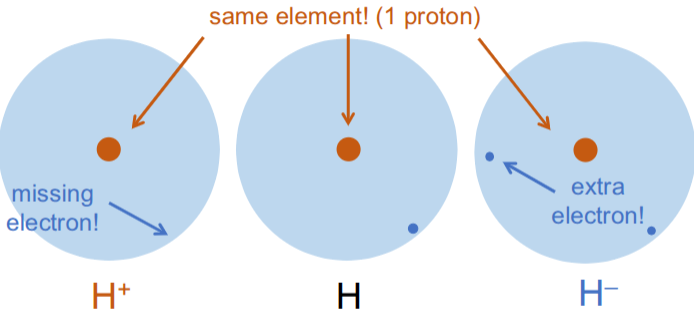
unequal # of protons and electrons (ex. same element; same amnt protons diff electron amnt)
cation
# protons > # electrons (+ charge overall); metals atoms "give up" valence e- to become ions with net (+) charge
anion
# protons < # electrons (- charge overall); nonmetals "steal" valence e- to become ions with net (-) charge
core electrons
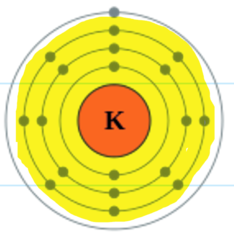
e- in inner shell(s)
valence electrons
e- in outermost shell

Coulomb's Law what is each variable (should be on equation sheet) F=k[(q1q2)/(r^2)]
F= force -attract +repel k=constant, q1q2=charges r^2=distance b/w charges
opposite charges _______, like charges __________, bigger/greater charges=_______, bigger/greater distance=______
ATTRACT, REPEL, stronger force/attraction, weaker force/attraction
radius reactivity and softness increases
down a column same across a row
core e- in inner shells ________, valence e- __________-
repel, outward
z effective=
protons - core e
higher z eff means
stronger hold on outer electrons=higher ionization and greater electronegativity
protons on element
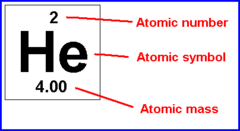
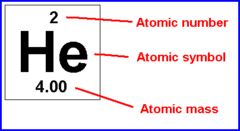
atomic number
neutrons on element
mass # - atomic#
electrons are the ________ that ___________ atoms ________
glue, hold, together
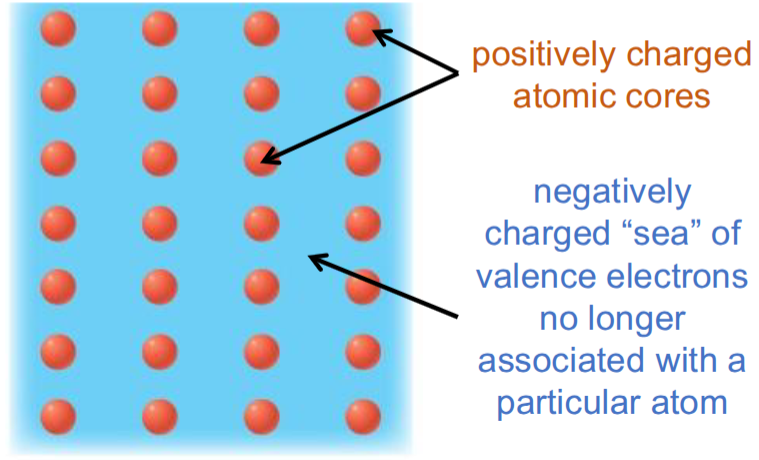
metallic bonding
exists in substance consisting only of metallic elements, such as Al(s) and Cu(s)
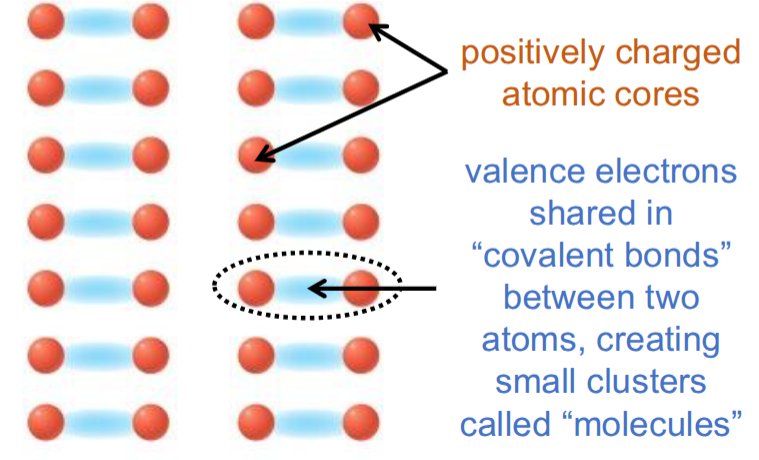
molecular covalent bonding
exists in substances consisting only of nonmetal elements, such as H20, sugar, alc, acetone

ionic bonding
exists in substances consisting of metal + nonmetal elements, such as NaCL, NaHCO3, and FeSO4

extended covalent bonding
exists in substances consisting only of nonmetal elements, such as C(s) and [CH2]n
solubility for the bondings
more electron glue=
metallic=
molecular covalent=
ionic=
extended covalent=
more electron glue=less soluable
metallic= doesnt dissolve
molecular covalent= many dissolve
ionic=many dissolve
extended covalent= doesn't dissolve
Conductivity for bondings
more mobile charges=
metallic=
molecular covalent=
ionic=
extended covalent=
more mobile charges=more conductive
metallic= conducts dry
molecular covalent= doesnt conduct
ionic= solution conducts
extended covalent= doesn't conduct
hardness in bonding
more electron glue=
more mobile electrons
metallic
molecular covalent
ionic
extended covalent
more electron glue=stronger bonds
more mobile electrons=more bendable bonds
metallic=bendable, malleable
molecular covalent=gases, liquids, or soft solids
ionic=hard, but brittle
extended covalent= rigid, difficult to break
ionic brittleness
charges too close, ionic solids break, snap, or crack
metallic bonding patterns for hardness, conductivity, and solubility
hard/flexible, insoluble, conducts dry
molecular covalent bonding patterns for hardness, conductivity, and solubility
soft/liquid/gas, osluble, doesn't conduct
ionic bonding patterns for hardness, conductivity, and solubility
hard/brittle, soluble, solution conducts
extended covalent/network covalent bonding patterns for hardness, conductivity, and solubility
hard, insoluble, doesn't conduct
subscripts shows
how many of the thing right before it

superscripts show
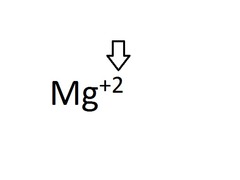
charge
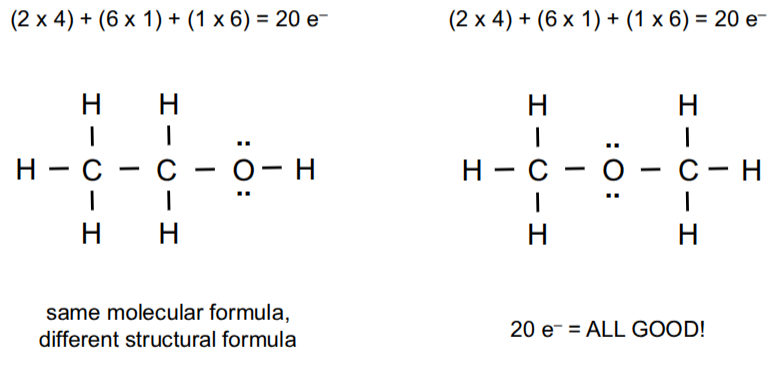
isomers
lewis structures with atoms connected differently; same molecular formula, different structural formula

Resonance Contributors
same atom locations, different e- locations
finding bond orders
counting the lone and base pairs and getting the average
changing temps: temps vs avrg KE(kJ/mol)
directly proportional


changing temps: temps vs avrg v(m/s)
v generally increases with T; inversely proportional

other impacts of temp: temps vs volume(L)
directly proportional
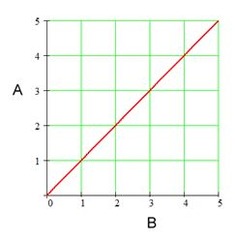
other impacts of temp: temps vs pressure (atm)
directly proportional; P=kT P=collisions with walls (in rigid container)

changing volume and pressure: volume (L) vs pressure (atm)
inversely proportional
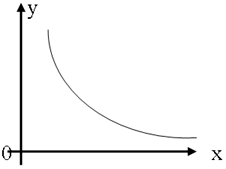
__________ containers will change V until P inside=P outside
flexible
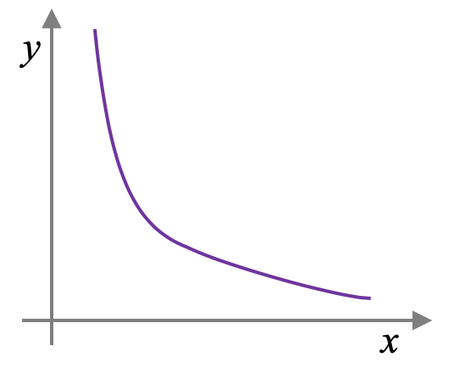
Equalizing Pressure: volume (L) vs pressure (atm)
inversely proportional
changing # of particles: # of particles(mol) vs pressure(atm)
directly proportional (rigid container)
changing # of particles: # of particles (mol) vs volume (L)
directly proportional (flexible container)
Ideal gases
no interactions; only motions (KE)
Real gases
motion (KE) & interactions (PE)
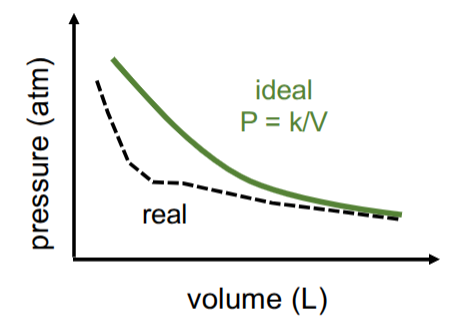
Real Gases: Compression
high V: Preal = Pideal because particles are too far apart to experience attractions (KE wins!)
low V: Preal < Pideal because attractions keep particles closer together and less likely to collide with the walls (PE wins!)
Real Gas Law: {P+ a[(n^2)/(V^2)]} x (V - nb) = nRT what's a and b?
a is accounts for attraction; b is accounts for "bigness"
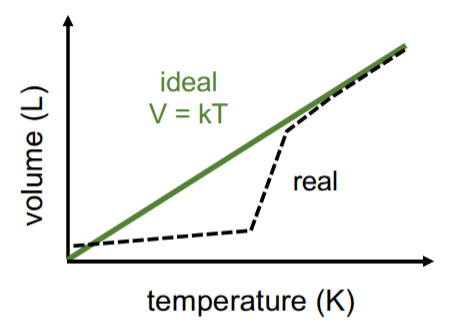
Real Gases: Cooling
high T: Vreal = Videal
because high kinetic energy outweighs potential energy
med T: Vreal < Videal
because attractions keep particles closer together
low T: Vreal > Videal
because particles have some nonzero size
in liquids/low T
PE wins; favors the attractions of liquids
in gas/ high T
KE wins; favors the motions of gases
Kinetic energy
more important at high T; ideal gas-like behavior
potential energy
more important at low T; real gas or liquid-like behavior
formal charge formula
# valence e when alone - #nonbonding e - # bonds
formal charge readings
Better structures have fewer and smaller formal charges. the negative formal charge on the more electronegative atom
what is the geometry shape, domain, bond pairs, and bond angle
linear; 2 domains; 2 bond pairs; 180
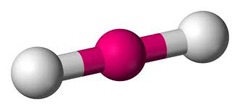

what is the geometry shape, domain, bond pairs, and bond angle
trigonal planar; 3 domains; 3 bond pairs; 120
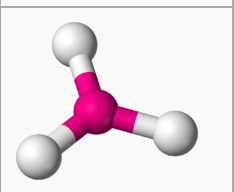
what is the geometry shape, domain, bond pairs, and bond angle
bent; domains vary, 2 bond pairs; less than 180

what is the geometry shape, domain, bond pairs, and bond angle
tetrahedral; 4 domains; 4 bond pairs; 109.5
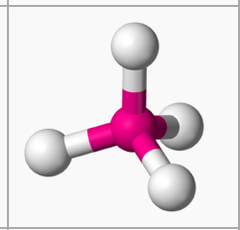

what is the shape, domain, bond pairs, and bond angle
trigonal pyramidal; 4 domains; 3 bond pairs; 107.5

what is the shape and bond angle
trigonal bipyramidal; 120 and 90
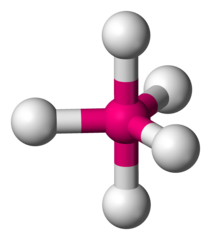
electron domains
Regions of electron density around a central atom.
molecular geometry vs electron geomtery
molecular: w/out lone pairs electron: with lone pairs
nonpolar covalent
equal sharing ex. F-F

polar covalent
unequal sharing ex. F-H

ionic polarity
electron transferred
electronegativity
the intrinsic ability of an atom to attract a bonding pair of electrons towards itself
electronegativty increases from
left to right bottom to top
hydrogen bonding
polar molecules that has a N, O, or F bonded to a Hydrogen; attraction that forms due to different charges; not a bond because electrons are not being transferred
ion ion
the attractions or repulsion between two fully charged particles(ions); opposites charges attract ex NaCl
ion dipole
attraction between a fully charged ion (NaCL when breaking)(+ or -) and a partially charged side of a polar molecule(H2O)(𝛿+ or δ−)
dipole dipole
when polar molecular that produces 2 regions of opposite charges like partial - attracts to partial + (ex. HCl)
D-ID
when a regular/permanent dipole(H2O) (balanced and not lopsided) molecule gets attracted to a lopsided molecule/induced dipole(O2)
London Dispersion Forces or (ID-ID)
persent in ALL molecules, only IMF present in nonpolar moleculars; like dipole dipole but it’s a temporary dipole
IMF strength from strongest to weakest
Ion-ion > Ion-dipole > Hydrogen bond > Dipole-dipole > Dipole-induced dipole > Induced dipole-induced dipole