Module 3: Hazards in Food
 Call Kai
 Learn
Learn Practice Test
 Spaced Repetition
 Match
Match Flashcards
 Knowt Play
1/53

There's no tags or description
Looks like no tags are added yet.
Name | Mastery | Learn | Test | Matching | Spaced | Call with Kai | Chat |
|---|
No analytics yet
Send a link to your students to track their progress
54 Terms
Foodborne Illness
A disease caused by the digestion of Contaminated Food
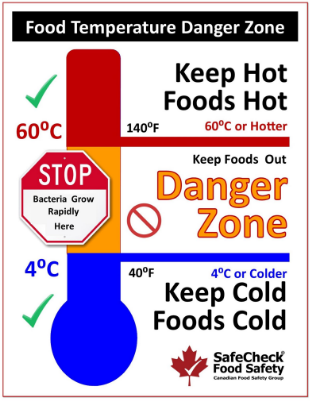
4-60 Degrees Celsius
The temperature danger zone where bacteria grows the fastest.
Hazard.
A term used to describe something as dangerous
Biological, Physical, Chemical, Allergens
The 4 types of food hazards.
Biological Hazards
A food hazard consisting of microorganisms and toxins which can’t be smelt, seen or tasted in food, such as fungi, bacteria, or parasites.
Damaged, Irregular, Mold, Smell, Throw it Out
To check for biological hazards, check for ()/() packaging, () on food, or a weird () coming from the food. If there is any doubt, ().
Physical Hazards
A food hazard were foreign objects or natural unwanted parts of food get inside.
Washing food, Hair Restraints, keeping Food Covered, Keeping food preparation areas clean
How to control physical hazards from entering food.
Chemical Hazards
Food Hazards which comprise of chemicals(Such as cleaning supplies) which make food dangerous to ingest. They may not be seen smelled or tasted.
Covering Food Before Cleaning, using approved cleaning agents/stabilizers, Labelled Chemicals, Proper Chemical Storage, Approved Cleaning Utensils.
How to Control Chemical Hazards from Entering Food.
3
There are () food Allergenic Hazards.
Food Sensitivity
A Food Allergenic Reaction which includes allergies, food Intolerances, and Chemical Sensitivity.
Food Allergy
A from of food sensitivity where the body’s immune system reacts to specific proteins in food.
A form of food sensitivity which doesn’t involve the Immune System.
Food Intolerance
The 12 main foods which can be a food allergenic hazard.
tree Nuts, peanuts, sesame Seeds, Wheat/Triticale, Eggs, Milk, Soy, Crustaceans/Molluscs, Fish, Mustard Seeds, Gluten, Sulphites
Complying with legal responsibilities(label/disclosing potential food allergen hazards, Implementing Allergen Control Policies from purchase to service, repeated training of staff, knowing the menu and allergen content.
Controls for prevention of food allergen hazards are…
Microrganisns
Small forms of life found everywhere but only visible with a microscope.
Pathogens
Harmful bacteria/micro-organisms which cause foodborne illness
Food(Rich in carbs/protein), Acidity(4.5-7.5), temperature(4-60 celcius), Time(2 hours in the temperature danger zone), Oxygen, Moisture(0.85+)
The 6 factors which affect the growth of bacteria
Some bacteria are () requiring oxygen for growth, while others are () which means they don’t need oxygen to grow.
Aerobic, Anaerobic
In favourable conditions, bacteria can double every () to () minutes.
10,20
A form of bacteria which creates vegetative cells which create spores, with those spores growing into harmful bacteria when conditions are favourable. Cooking at the right temperature may not kill the toxins produced by the bacteria
Spore-Forming Bacteria
Contamination
The unwanted presence of food hazards in food.
When one item transfers contamination to another, either directly crossing due to direct contact, or indirect via a vehicle.
Cross-Contamination
The transfer of a pathogen from one infected person to another
Transmission
Foodborne Infection
Growth of Pathogens in the Gastrointestinal Tract which Cause Illness
Foodborne Intoxication
Toxins released by pathogens which causes illness
Infected Cuts/Sores, Poor Personal Hygiene
Other Sources of Foodborne Illness
Vomiting, Diarrhea, Stomach Cramps, Fever, headache, Blurred Vision, Severe Exhaustion, Paralysis
Symptoms and Effects due to pathogens
30, 3, hours, Mild Illness, Death
Symptoms of foodborne illness appear between () minutes and () months, although they last from a few () much longer. Consequences range from () to ().
Children, Elderly, Pregnant Women, Hospitalized People, Immunocompromised/ weakened people
High-Risk Individuals from foodborne illness
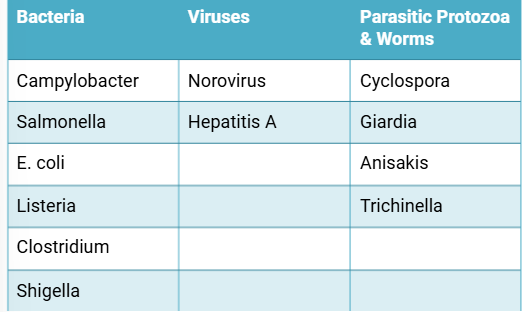
Image of common foodborne pathogens
Sources of Bacteria
Contaminated water/soil, animal/human waste, people
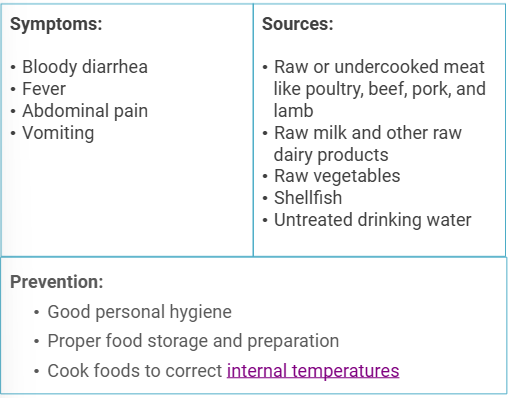
Info about the pathogen Campylobacter
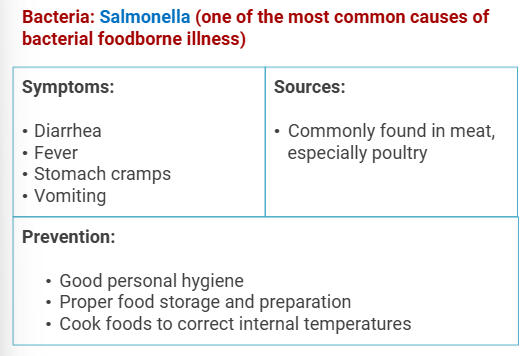
Info about the Bacteria Salmonella
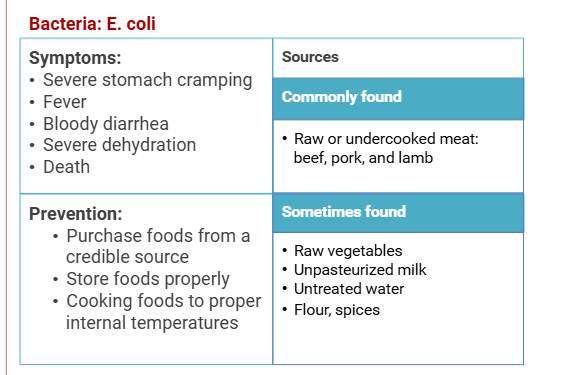
Info about the Bacteria E. Coli
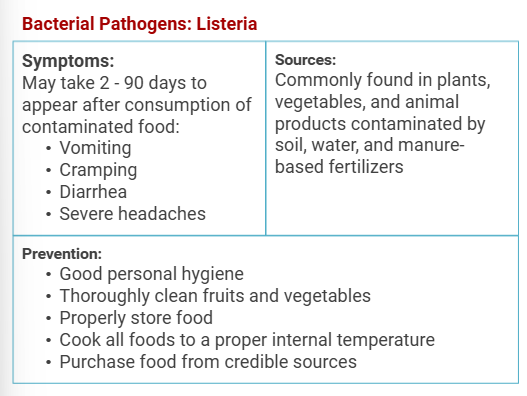
Listeria Info
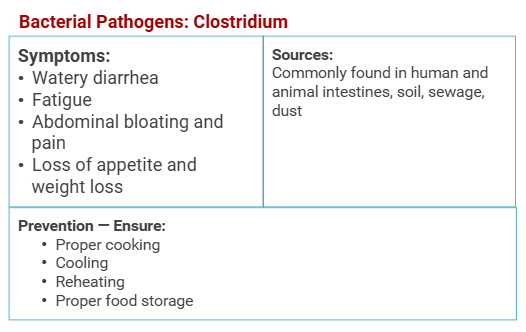
Clostridium Info
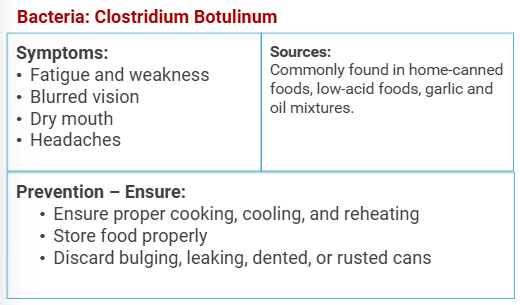
Info about Clostridium Botulinum Bacteria
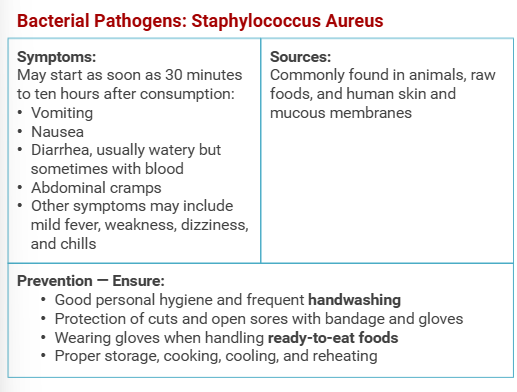
Info about Staphylococcus Aureus Bacterial Pathogens
() are a type of pathogen which don’t grow on food, although they spread via contact with infected people or food which has been contaminated. People can be a carrier of it with or without showing any sickness.
Viruses
Covid-19 mainly spreads through (), not through food/water/packaging.
Personal Contact
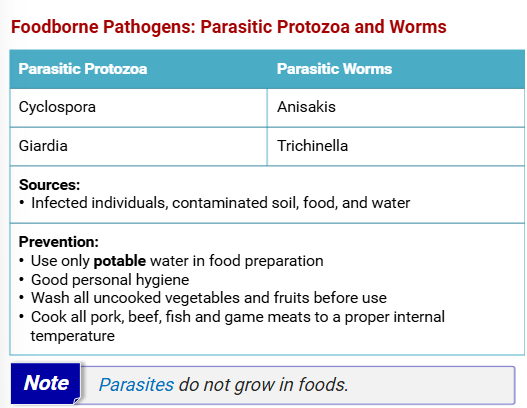
Info about Parasitic Protozoa/Worms
To prevent parasites freeze fish at () for () days or () for 15 hours for raw dishes.
-20 c, 7, -35 c
Pathogens can be transmitted by (), mainly by (), or (),
Direct Transmission, Feces. Indirect Transmission
The severity of foodborne illness depends on the following factors:
Infective Dose, Amount of Contaminated Food Consumed, Prior Health Status
(), specifically moulds, yeasts, and mushrooms cause food spoilage and produce Toxins, although some moulds/yeasts are beneficial
Fungi
A form of technology where the air inside food packaging is replaced with a protective gas/mix of gases which preserve food color and prevent mold/spoilage.
Modified Atmospheric Packaging(MAP)
Toxins can also be (), coming from seafood, or plants.
Biological
The 3 main categories of risk a food poses to health.
Low, Medium, High(Potentially Hazardous Foods)
Foods which are non-acidic/slightly acidic, moist, protein rich, and require several steps to ensure food safety.
High Risk Foods
Foods which require a specific step to minimize health risks.
Medium Risk Foods
Foods which don’t provide significant health hazards by themselves
Low Risk Foods
Potentially hazardous foods(PHF) are high in () and (), low (), high ().
Protein, Carbs, Acidity, Water Activity