lecture 14 localisation
 Call Kai
 Learn
Learn Practice Test
 Spaced Repetition
 Match
Match Flashcards
 Knowt Play
1/24

There's no tags or description
Looks like no tags are added yet.
Name | Mastery | Learn | Test | Matching | Spaced | Call with Kai | Chat |
|---|
No analytics yet
Send a link to your students to track their progress
25 Terms
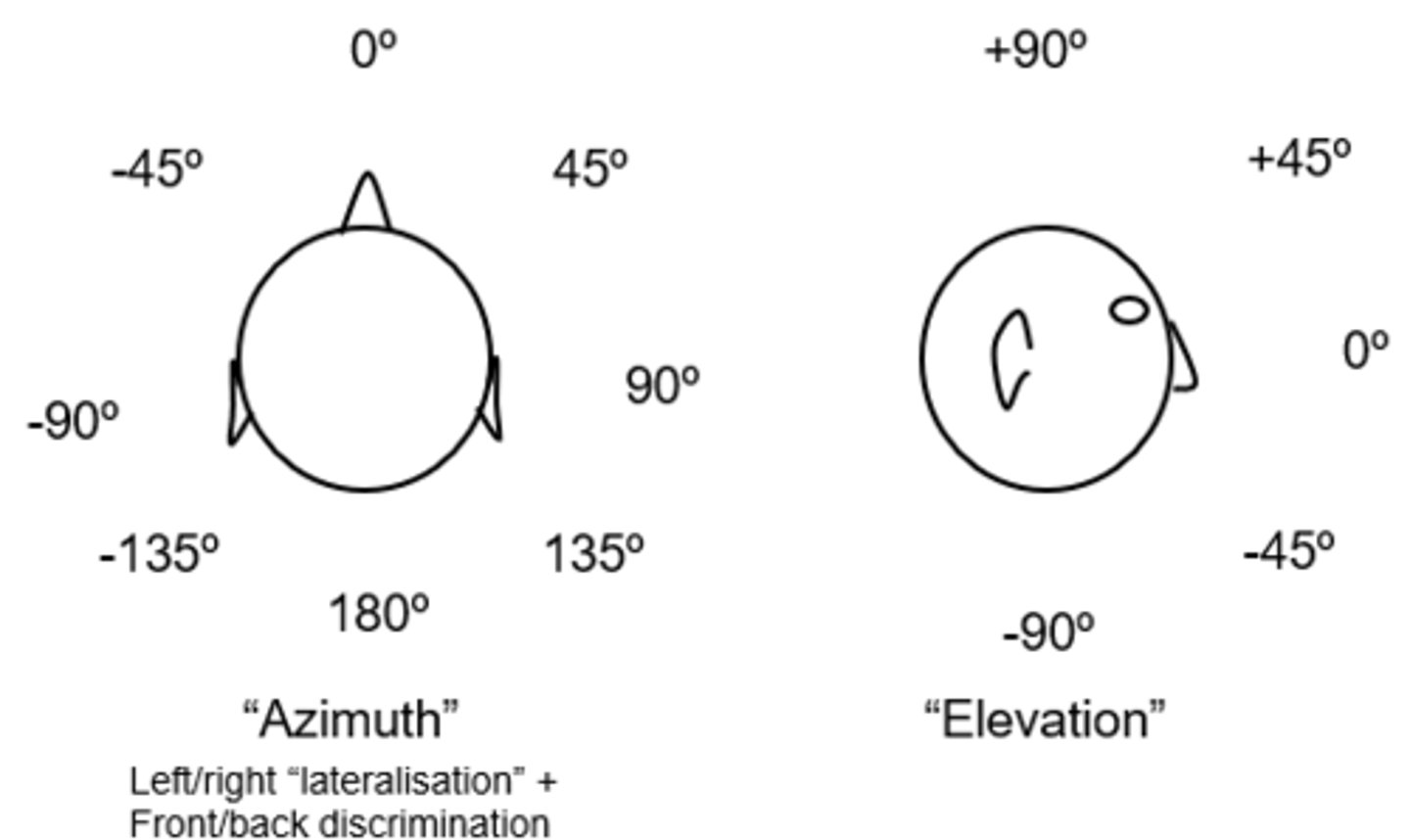
Sound direction and localisation componenets
Sound direction has
-Azimuth - left/right lateralisation + front/back discrimination
-Elevation
Sound localisation has a third
-externalisation + distance
Externalisation + distance
Sound is usually heard "externalised" at some distance...
... but headphone presentedsound tends to be heard"internalised" - within the head
binaural cues
cues to sound location that involve both ears working together
eg Interaural level differences , Interaural time delay (ITD)
constructive vs destrcutive waves
an be destructive (cancel each other out) or constructed (combine)
Interaural level differences
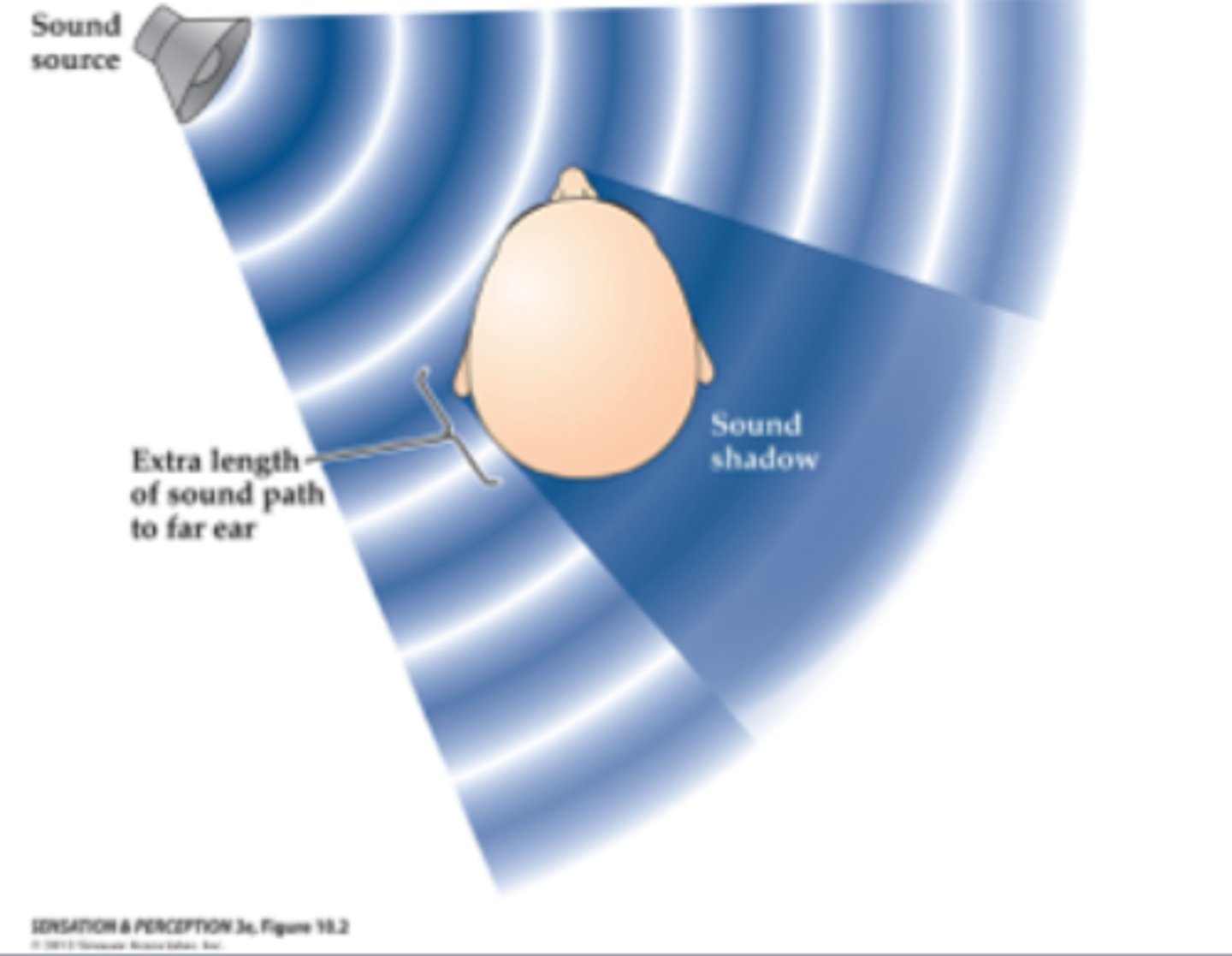
The head is an obstacle to sound, so when sound comes from the side, one ear is in an "acoustic shadow" (this is the main effect)
-because not as much sound has been able to get round to it (some will gradual reduction)
In addition
-sound will then bend to get round the other side and some will reflect of side it reaches
-therefore the patterns of waves are complicated, can be destructive or constructive
This means the interneural level differences are complex
ILDs + frequncy
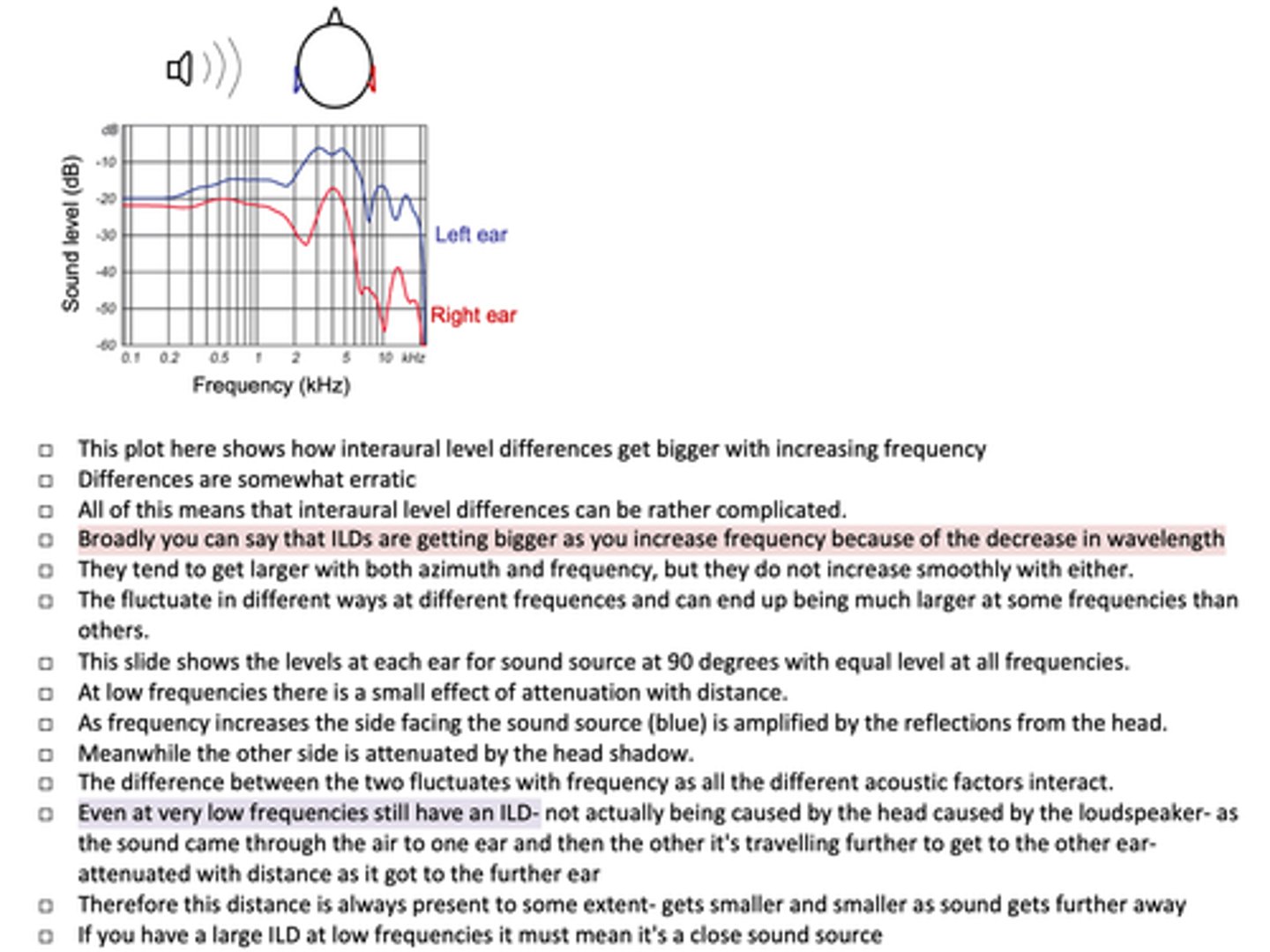
ILDs get larger with increasing frequency
-volume consistently louder for left ear (reaches first)
-this difference increases s frequecny increase but in complex pattern due to the complicated pattern of waves
ILDs at very low frequency
there is still small difference even though these waves are so long they ignore presence of head
-just to do with distance from sound source!
Interaural time delay (ITD)
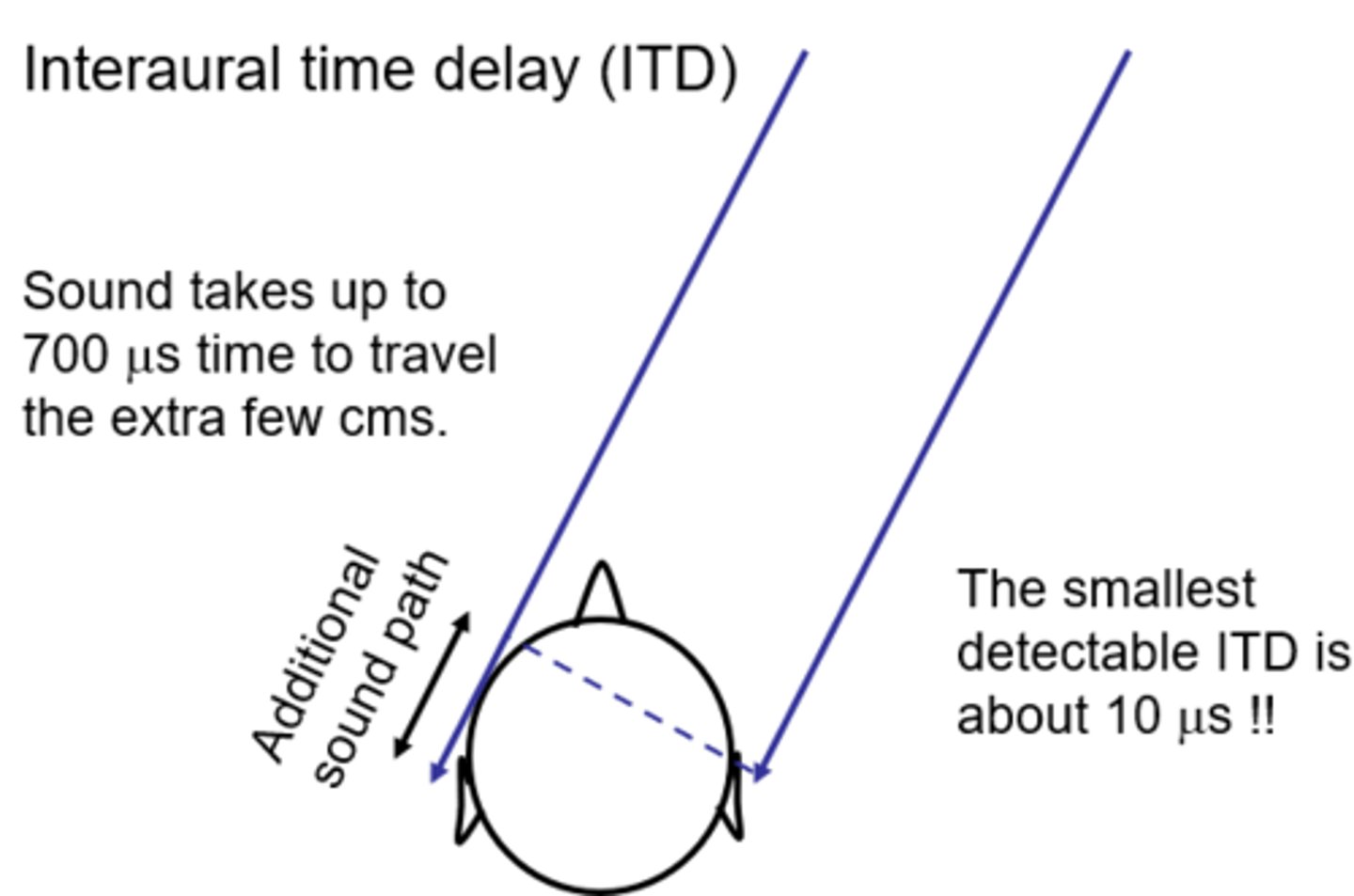
Sound takes up to 700 micro secs time to travel the extra few cms.
The smallest detectable ITD is about 10 micro secs !! -by some people
-works for lower frequencies -to do wth loss of phase locking#complicated
model of sound lateralisation
Theory developed by Jeffress that lots of work has backed up
-exploits phase locking (L12)
-the axonal delay is used to work out which ear was stimulated first
-using coincidence detector's (or EE units) which need action potentials from both sides to reach them at the same time to fire
-in the medial superior olive they are arranged so there is a different delay from each ear for them to be reached at the same time
-neurological map of sound detectors in head
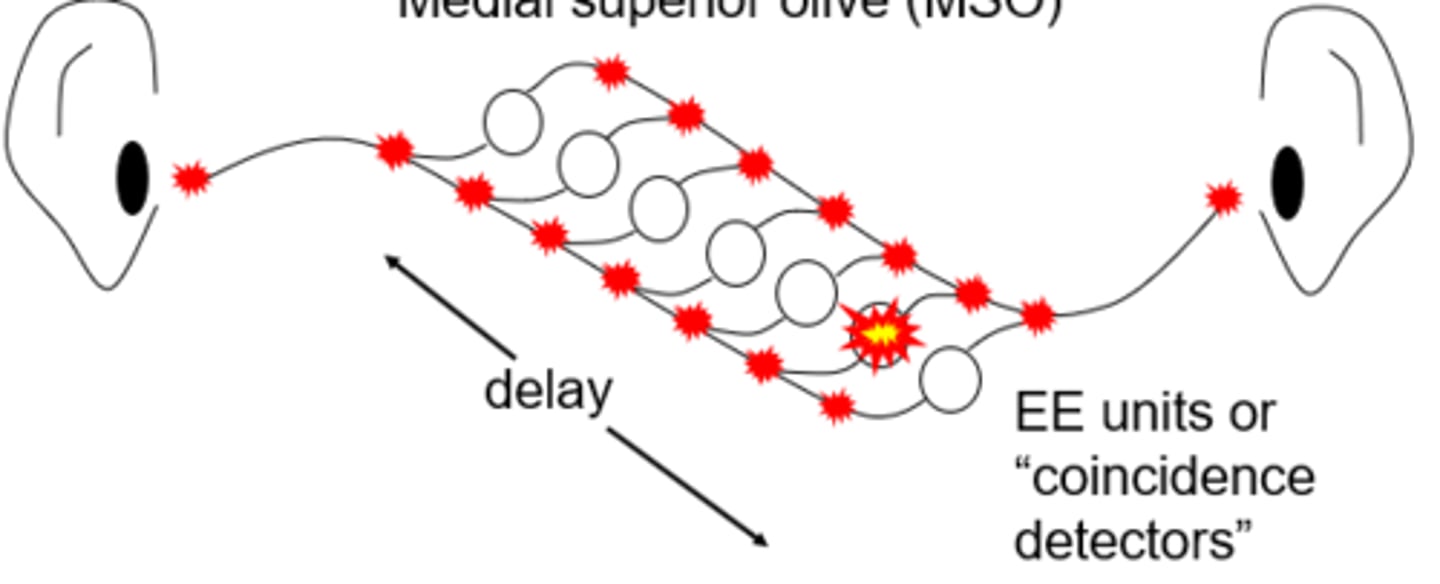
where model f sound lateralisation has and hasnt been supported
-has been found in barn owls etc
-but only found 2 (not 8) in guunie pigs
We're basically never going to know for humans just speculation?
biggest synapse!
The Endbulb of Held
-largest synapse (compare to conventional
Communication of precise phase-locked action potentials to the central nervous system requires extraordinary synapses in the brainstem
-as it is so big is very fast (at firing when signal reaches) so preserves timing more
This is important for axonal delay moel as this transmission is necessary for that
what kind of tones are hard to detect study
Stevens and Newman (1934)
Mid-frequency pure tones are hard to localise, because the ILD is small and the ITD ambiguous.
(ILD good at high frequecy and ITD at low)
the ability to localise tones in azimuth was relatively error-prone at around 2-4 k kHz.
THIS DOES NOT HAPPEN WITH MOST NATURAL SOUNDS (rarely pure tone + this frequency often artifical)
On the roof of Harvard Biological Laboratory...(rduce reflection etc)
Cues for elevation
pinna (Sometimes called "monaural").
problem the pinna is solving
The "cone of confusion"
ITD and ILD are the same (roughly) at all points on the conical surface.
-from these cues dont know where it will be on this plane
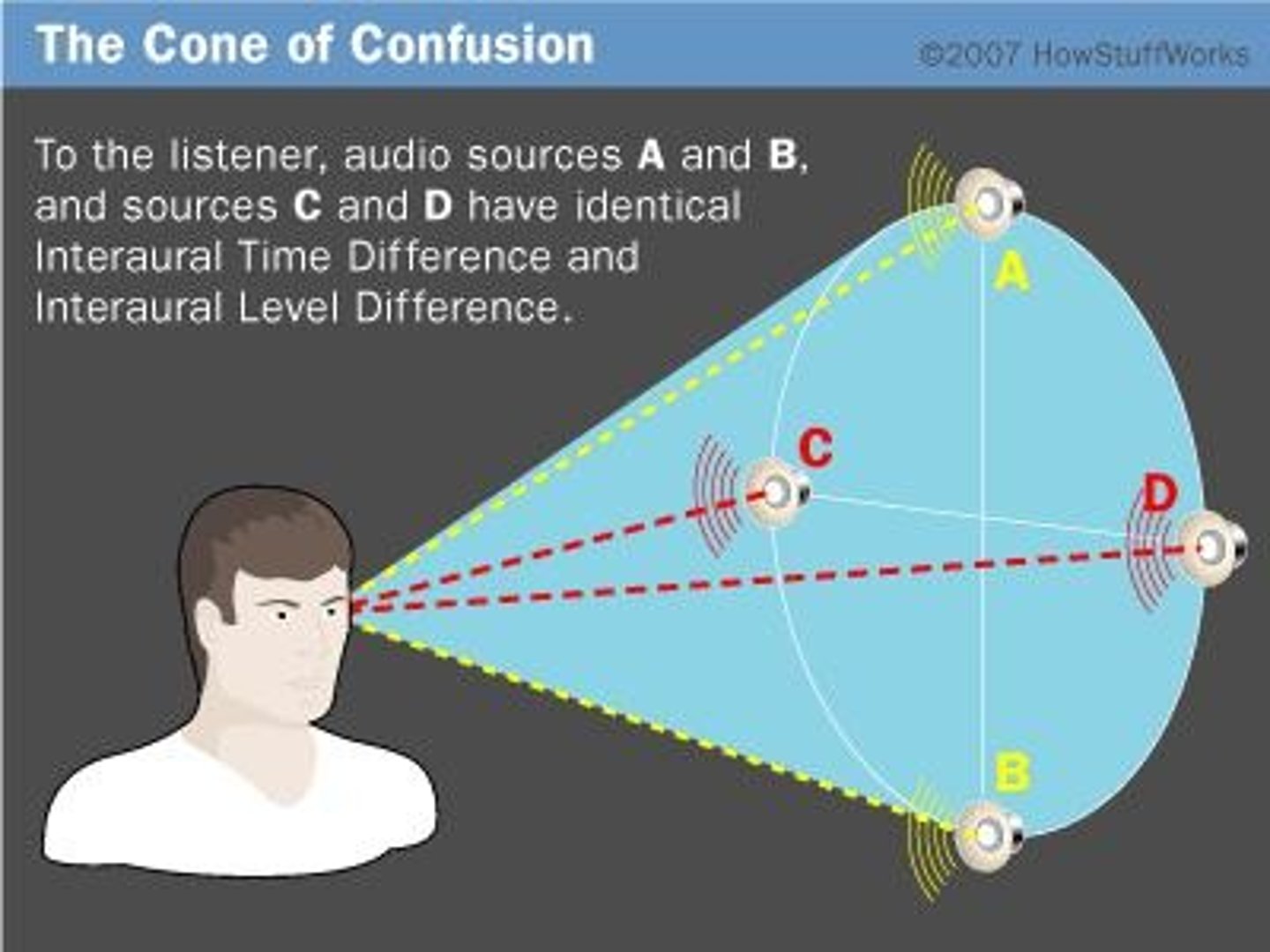
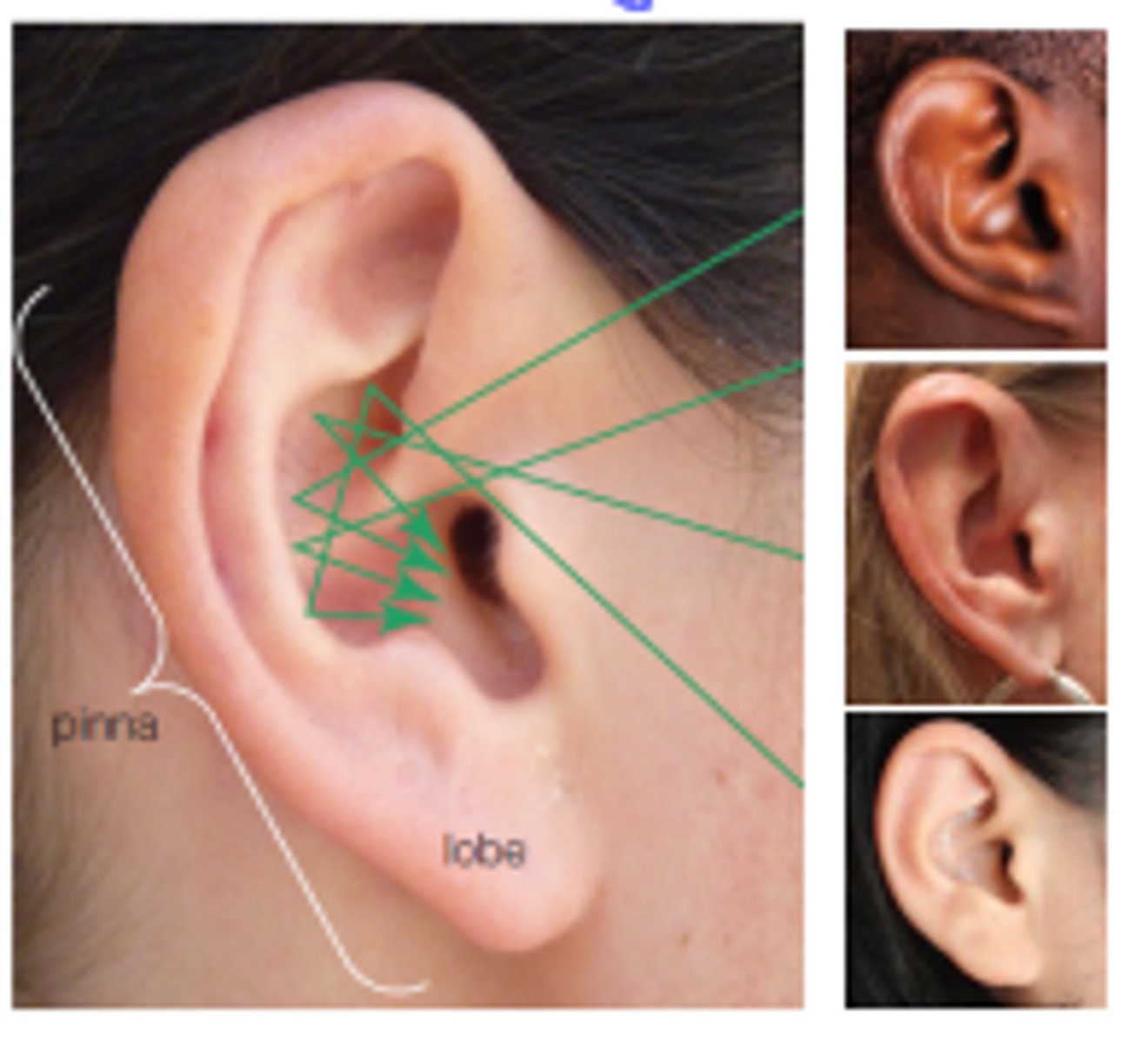
how pinna helps
Sound reflects from the currugations of the pinna, particularly the concha and
interferes with the sound directly entering the meatus.
The interference changes the sound spectrum producing a direction-dependent "colouration". (some amplified some reduced )
-does assume you know what the sound is at its source
-helps discriminate azizmeth + elevation
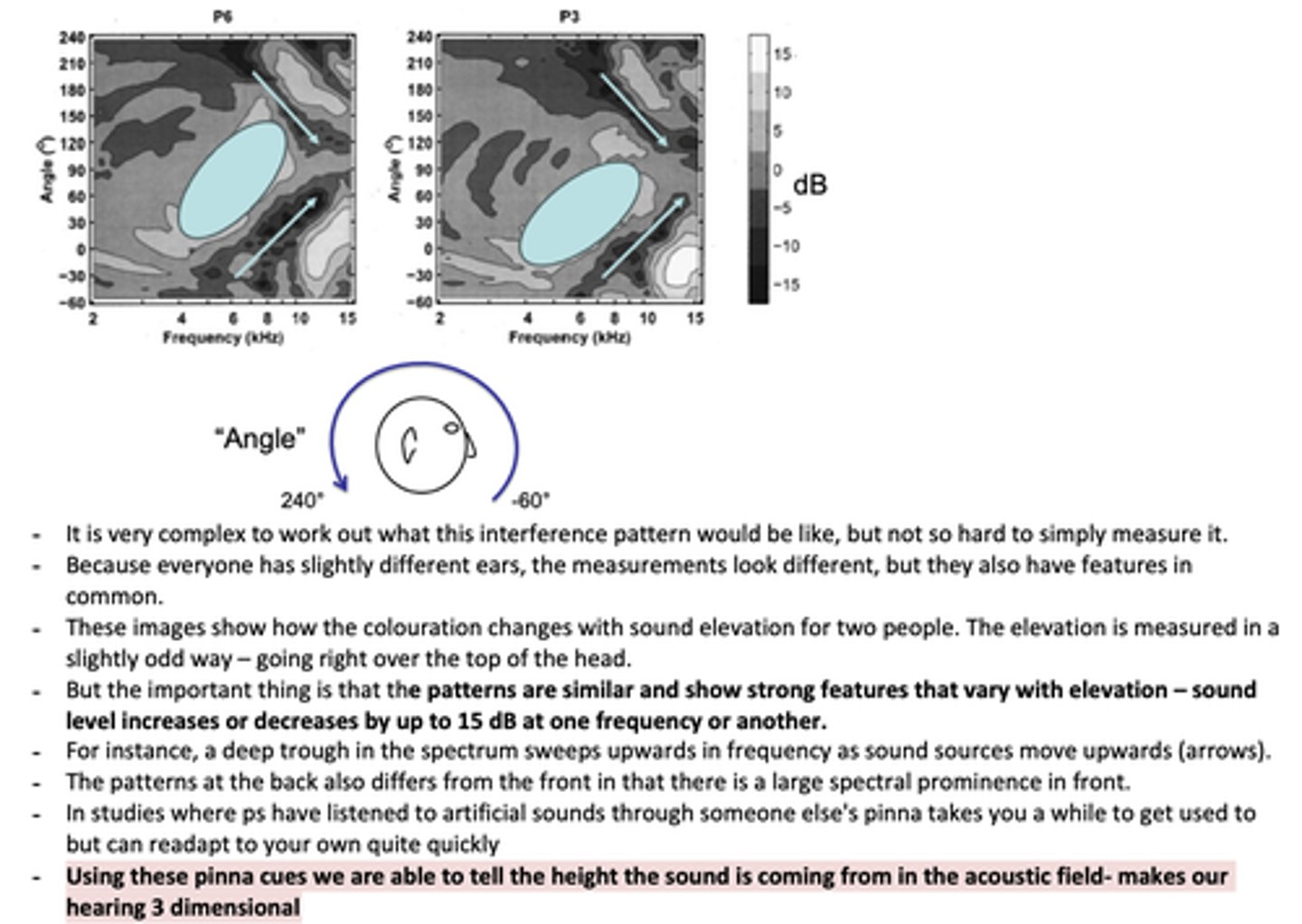
frequency + the pinna
Frequency response of the human pinna (two different individuals) as a function of sound elevation
-similarities ad differences between individuals
what bits of the pinna are important study
Gardner and Gardner (1973)
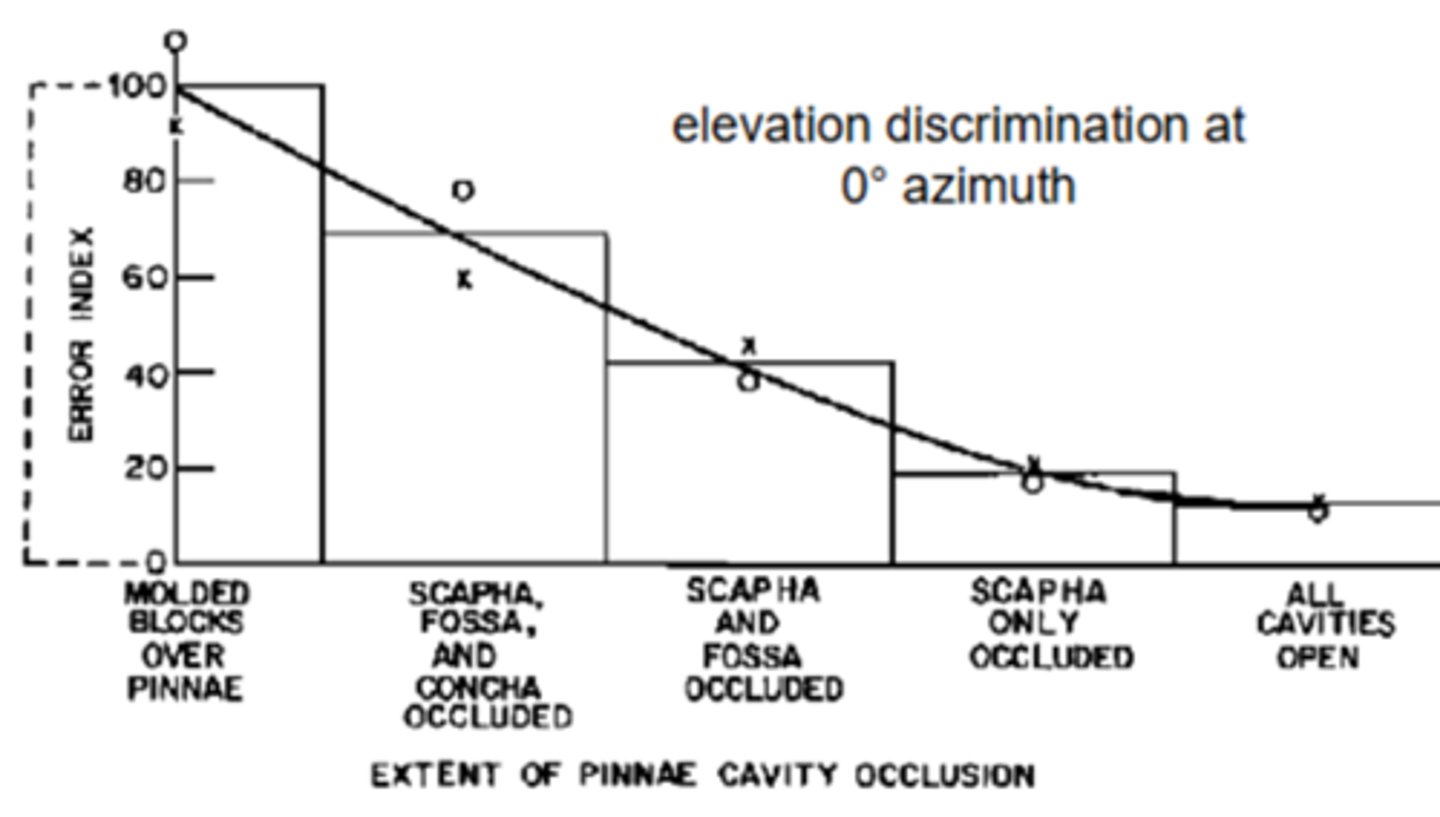
Effect of filling the pinna's folds with mouldable rubber (to see which bits are important)
elevation discrimination at 0° azimuth
This data shows that participants made more errors in elevation judgements as more parts of the pinna were filled in.
Head movements
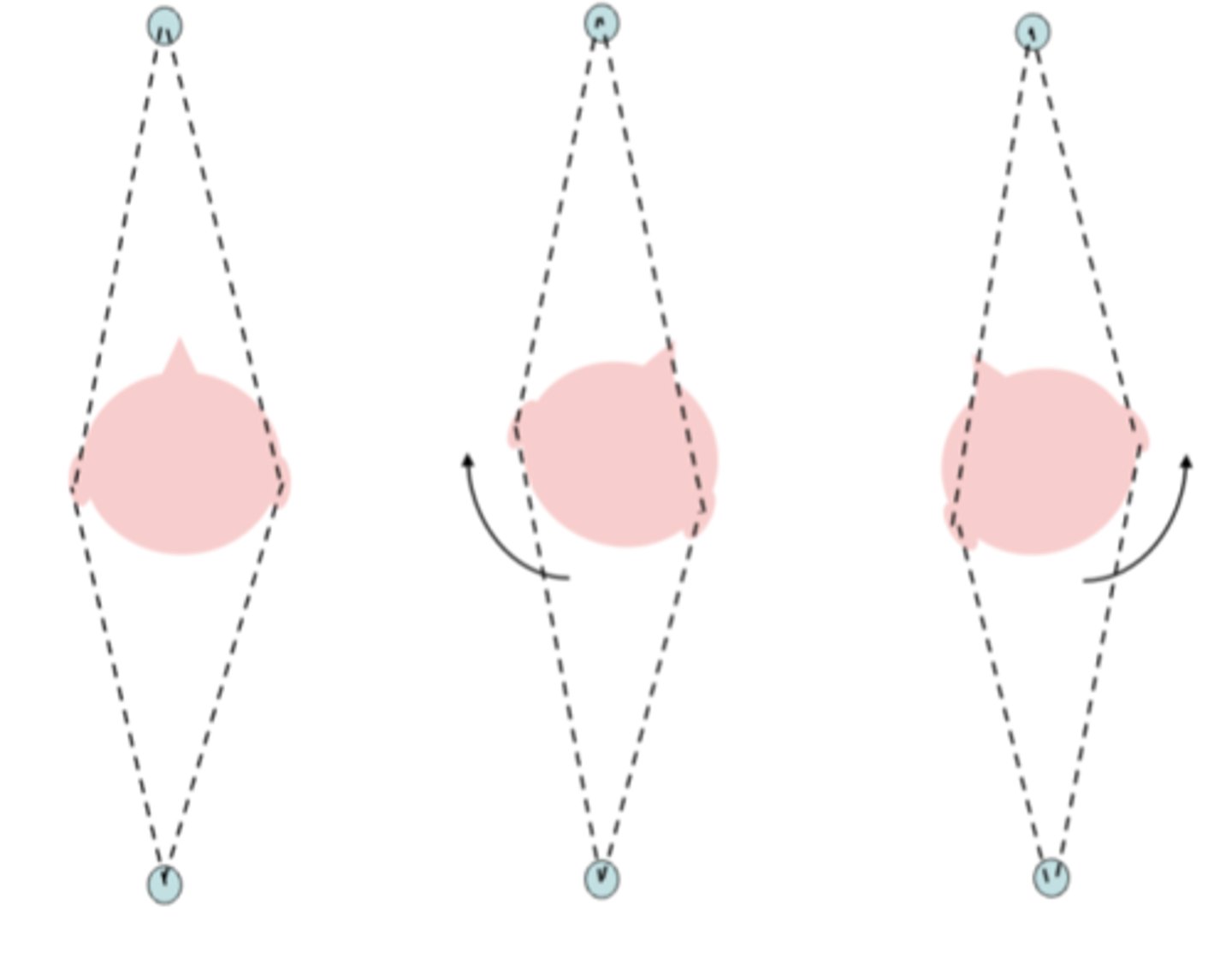
Although the pinna can help us discriminate front from back, people tend to find this the hardest discrimination - front-back errors are common if the head is kept still.
- a small turn of the head will make a sound in front become a source on one side, while a source to the rear would be on the other opposite side.
The sound needs to extend in time long enough for the head to turn, but when this is possible, front-back confusion falls close to zero
what we are/arent good with sound localistation
-sound localisation not very good overall -weakness
-especially when compare to visual localisation on the retina
-but we handle room reverberation well
Room reverberation
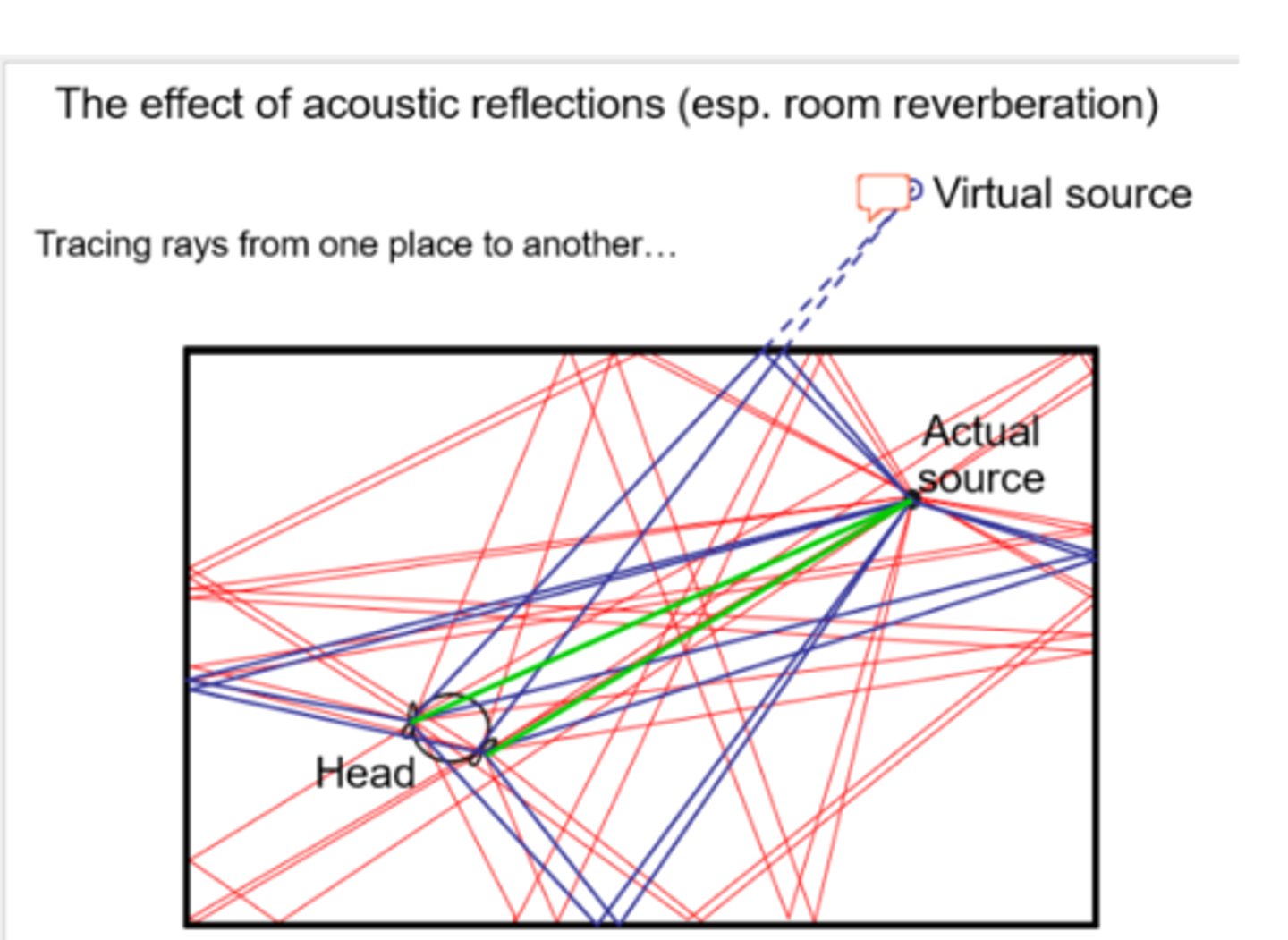
-to do with wavefronts being bounced back in room
-think about rays being bounced of the walls leads to virtual sources
-how do we know what source it rally comes from , surprisingly we rarely make mistakes on this
to understand reverberation we take advantage of
sound travels much slower than light, and the auditory system is very fast
- location of a sound source is determined based only the direct sound, which, having travelled directly to the listener arrives earlier, by a few milliseconds, than most of the reflections
preference for directional cues in the very first part of the sound is called the "precedence effect."
precedence effect
Wallach et al. (1949)
Two loudspeakers in a room - 3 experiment
-first manipulated distance - they heard the closer one as source
-then manipulated possible confound of volume - still thought from closer one (source
-then manipulated delay electronically, ppts heard first as source
The sound is heard to come from the loudspeaker whose signal arrives earliest at the listener. (the second one also pinging )
The auditory system ignores the location of echoes occurring just milliseconds after the direct sound.
externalisation research
-headphones sound inside your heads how would you change this
Realistic, individual pinna cues (if these are stimulated)
Reverberation (especially if different at each ear).
Source stability during a head turn. (if change coherently
distance + reverb
Reverberation can also make sounds vary in perceived distance. This makes sense because the sound at the ears for nearby sounds is dominated by the direct sound if the source is close by.
Summary
Sounds are localised in azimuth by ITDs and ILDs.
Elevation and front/back discrimination rely on pinna cues.
Front/back discrimination can also be assisted by head rotation.
Sound localisation in reverberation is robust in most circumstances due to the precedence effect.