Quiz 3 A and P
 Call Kai
 Learn
Learn Practice Test
 Spaced Repetition
 Match
Match Flashcards
 Knowt Play
1/38

There's no tags or description
Looks like no tags are added yet.
Name | Mastery | Learn | Test | Matching | Spaced | Call with Kai |
|---|
No analytics yet
Send a link to your students to track their progress
39 Terms
hinge joint
convex end of one bone articulates with the concave end of the adjoining bone
examples of hinge joints
elbow, ankle, knee, interphalangeal joints
pivot joint
round/ conical bone to shallow depression/foramen
examples of pivot joint
atlas and axil
plane joint
flat surface
example of plane joint
intercarpal/tarsal joints and vertebrocostal joints of rib (2-7)
condyloid/ ellipsoidal joint
oval condyle to ellipsoidal depressione
example of condyloid/ ellpisodial joint
radiocarpal joint and metacarpophalangeal joints
sadle joint
saddle shaped, one convex, one concavee
example of saddle joint
metacarpals and trapezium of wrist
ball and socket joint
ball shaped head fits into cup like depression
example of ball and socket joints
shoulder and hip
flexion
decrease joint ankle
extension
increase joint angle
hyperextension
increase joint angle above 180 degrees
abduction
limb away from midline
adduction
limb towards midline
rotation
movement around longitudinal axis
circumduction
distal end moves in circle
inversion
medial turn of sole
eversion
lateral turn of sole
dorsiflexion
ankle joint flex upward
plantar flexion
ankle joint flex downward
pronation
palm moves from anterior to posterior
supination
palm moves from posterior to anterior
protraction
scapula or mandible from anterior to posterior
retraction
scapula or mandible from posterior to anterior
elevation
upward movement of scapula or mandible
depression
downward movement of scapula or mandible
movement of pivot joint
uniaxial allows rotation
movement of hinge joint
uniaxial allows flexion and extension
movement of condyloid joint
biaxial allows flexion, extension, abduction, adduction, circumduction
movement of saddle joint
biaxial allows flexion, extension, abduction, adduction, and circumduction movements
movement of plane joint
multiaxial allows inversion, eversion of foot, flexion, extension
movement of ball and socket joint
multiaxial allows flexion, extension, abduction, adduction, circumduction, and rotation
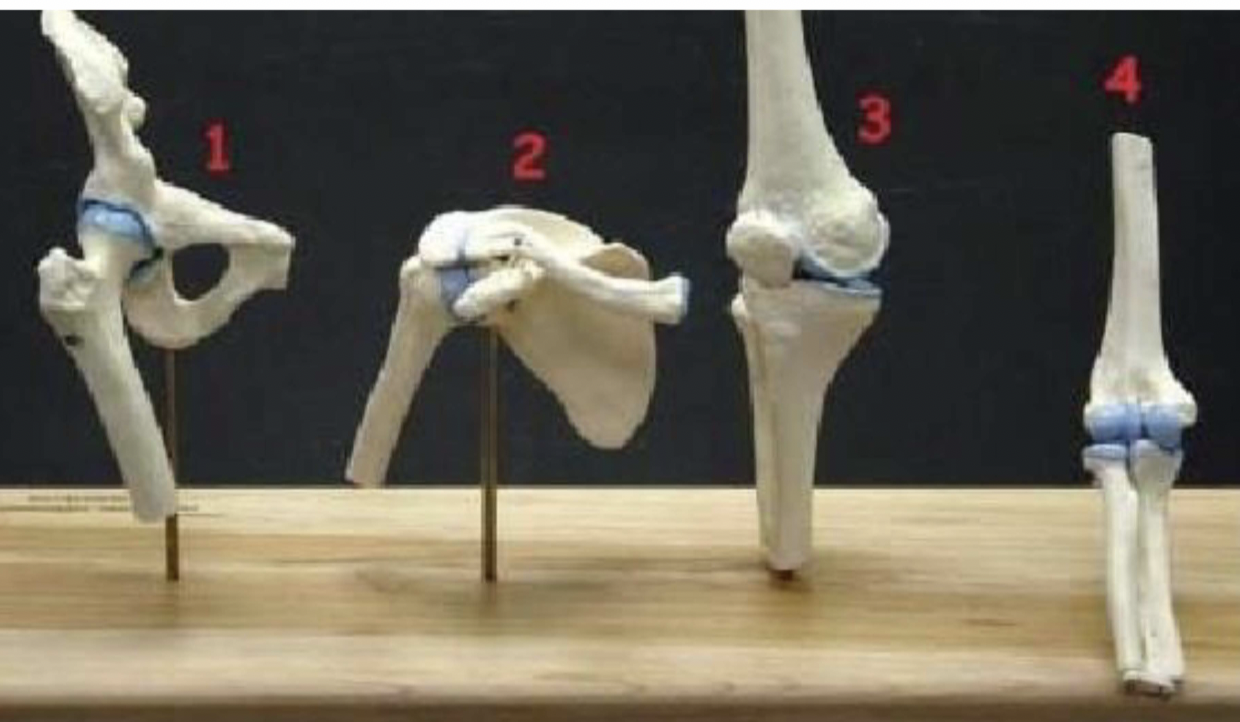
label joint one and the bones associated
ball and socket (femur and coxal bone)
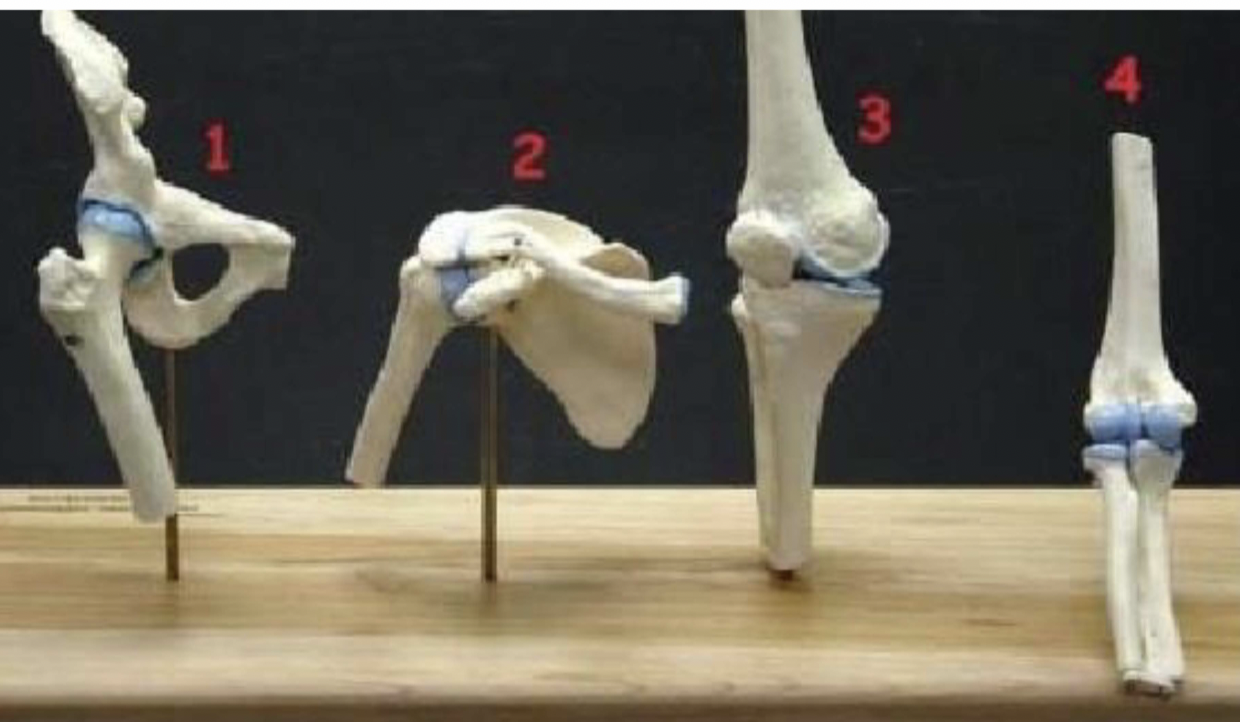
label joint 2 and the bones associated
ball and socket (humerus, clavicle, and scapula)
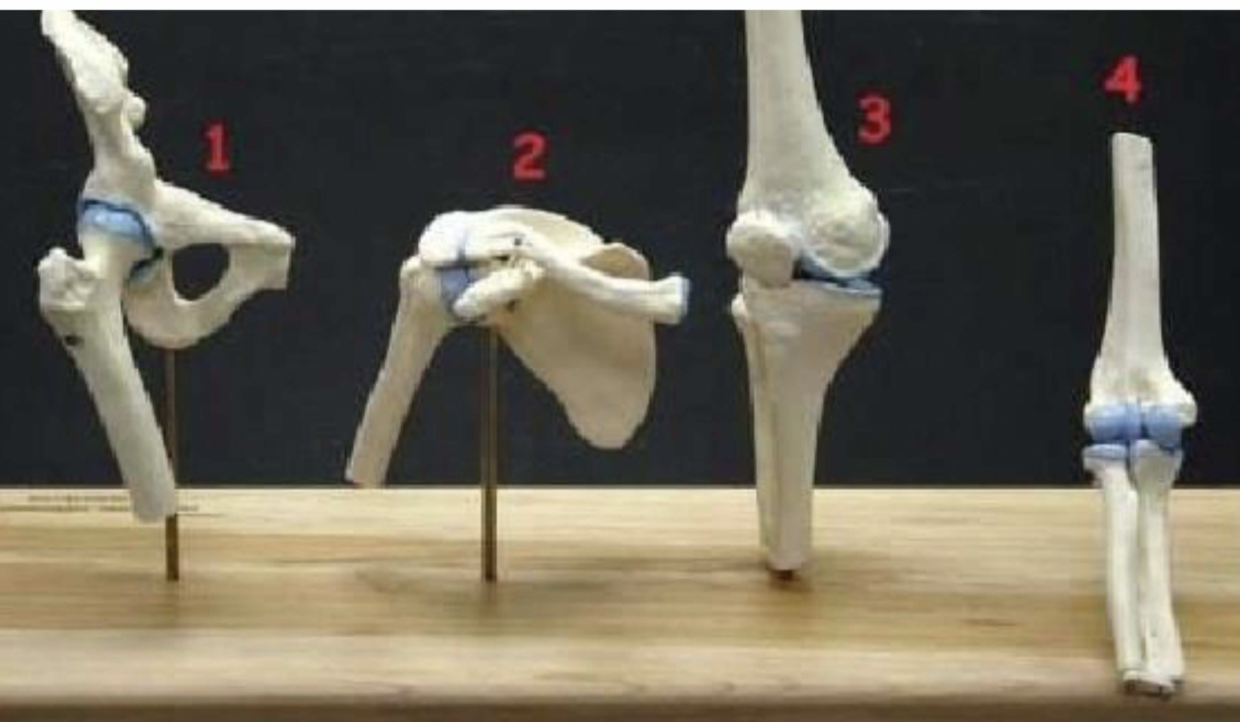
label joint 3 and the bones associated
hinge (tibia, femur and patella)
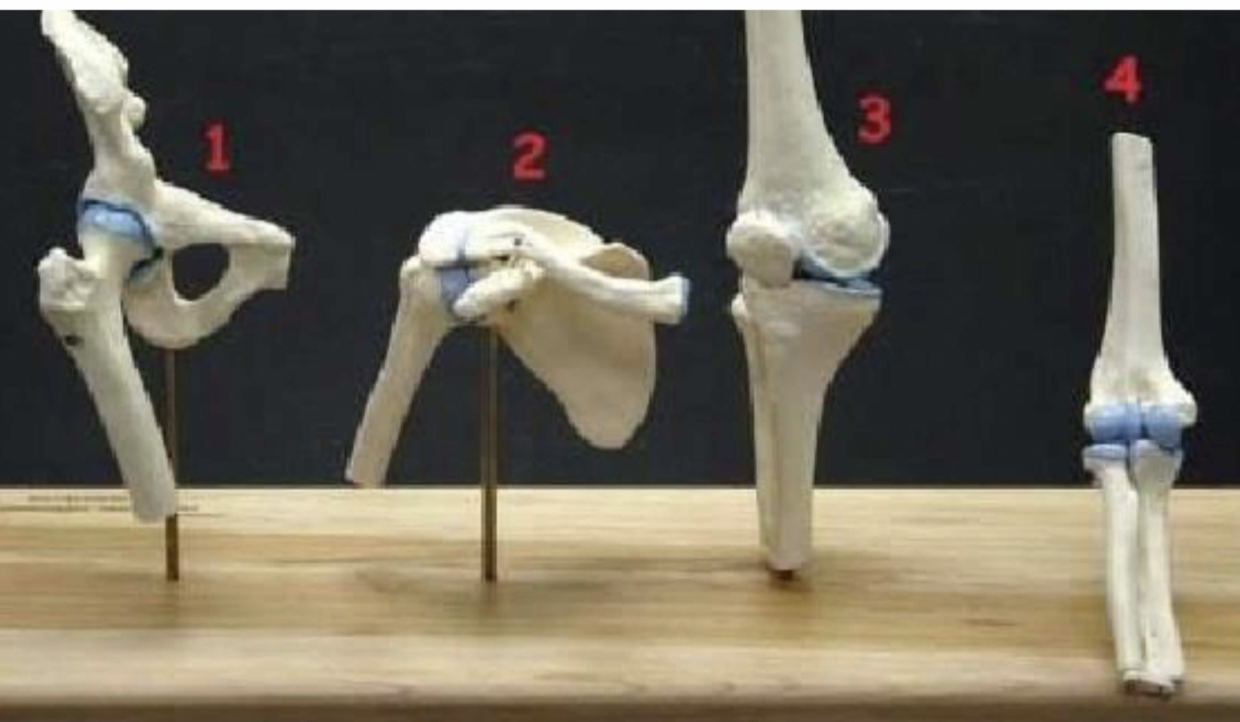
label joint 4a and 4b and the bones associated
4a) hinge (humerus and ulna)
4b) pivot (radius and ulna)