TỔNG HỢP KEYTERMS TACN1
 Call Kai
 Learn
Learn Practice Test
 Spaced Repetition
 Match
Match Flashcards
 Knowt Play
1/176

There's no tags or description
Looks like no tags are added yet.
Name | Mastery | Learn | Test | Matching | Spaced | Call with Kai | Chat |
|---|
No analytics yet
Send a link to your students to track their progress
177 Terms
organizing
a management function that includes designing the structure of the organization and creating conditions and systems → everyone work together → achieve org' goals and objectives
leading
creating a vision for the org and guiding, training, coaching and motivating others → work effectively → achieve org' goals and objectives
motivation
factors that influence the behavior of workers towards achieving business goals. It can be increased by:
monetary rewards
non-monetary rewards
introducing ways to give job satisfaction
the enjoyment a worker gets from the feeling that they have done a good job.
3 ways to motivate workers to be more committed to their jobs and work more effectively:
job rotation (swapping workers around and only doing a specific task for a limited time before swapping round again)
job enlargement (extra tasks to make job more interesting)
job enrichment (adding tasks that require more skill and/or responsibility
Theory X
the average person does not like work → must be constantly supervised → motivation is from external factors (pay schemes,…)
Theory Y
the average person is motivated by internal factors → find ways to help workers take an interest in their work (give rewards, incentives,…)
Frederick Herzberg's motivation theory
humans have two sets of needs:
- basic needs → hygiene factors or needs
- for human to grow psychologically → motivational needs"
glocalization
a combination of globalization and localization → describe a product or service that is developed and distributed globally but is also adjusted to accomodate the user or consumer in a local market
High-context culture
a culture by which the rules of communication are primarily and dominantly transmitted through the use of contextual elements (form of body language, social/familial status, tone of voice…) → rules are not explicitly written or stated
public sector
the sector of economy in which organizations are owned and controlled by the state (government)
private sector
the sector of economy in which orgs are owned and controlled by individuals
shareholders
the owners of a limited company → buy shares which represent part-ownership of the company
Kaizen
continuous improvement, focusing on the elimination of waste (method of leaning production)
materials handling
the movement of goods within a warehouse, from warehouses to the factory floor, and from the factory floor to various workstations
supply chain
a network of facilities that performs the function of procurement of materials, transformation of these materials into finished products, and the distribution of these products to customers
logistics management
part of supply chain management, which plans, implements and controls the flow and storage of goods between the point of origin and the point of consumption
Total Quality Management (TQM)
the continuous improvement of products and processes by focusing on quality at each stage of production
leading indicators
predict future performance or outcomes (level of staff satisfaction…)
lagging indicators
show a result (warranty…)
Key performance indicators (KPI)
statistical measures of how well an organization is doing in particular area
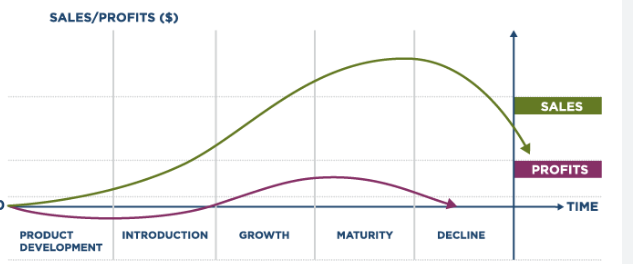
product life cycle
the standard pattern of sales of a product over the period that it is marketed
distribution channel
all the companies or individual ('middlemen') involved in moving goods/services from producers to consumers
wholesaler
an intermediary that stocks manufacturers' goods or merchandise, and sells it to retailers and professional buyers
advertising
a form of communication that aims to promote or persuade an audience to take a specific action, often to buy a product, use a service or support an idea --> paid, non-personal message disseminated through media channels
any paid form of non-personal presentation or promotion of ideas, goods, or services of an identified sponsor
advertising agency
the organization that takes care of advertising for clients
advertising campaign
a time-limited set of ads → run across different media for one month or ten years → categorized together (execution of a central idea)
demographics
describe an audience by age, gender, ethnicity,… (the facts about them)
focus groups
small, select groups representing a target audi who are paid to answer ques at the behest of a market research org
product positioning
establishing the market niche of a product (may not be as the brand leader) → advert to the appropriate segment of the audi
USP (Unique Selling Proposition/Point)
a highlighted benefit of a product which makes it stand out from all rival brands
publicity stunt
chiêu trò quảng cáo
brand image
the public's beliefs and perceptions about particular product