BCM. 30 Light reactions
 Studied by 0 people
 Call Kai
 Learn
Learn Practice Test
 Spaced Repetition
 Match
Match Flashcards
 Knowt Play
1/16

There's no tags or description
Looks like no tags are added yet.
Name | Mastery | Learn | Test | Matching | Spaced |
|---|
No study sessions yet.
17 Terms
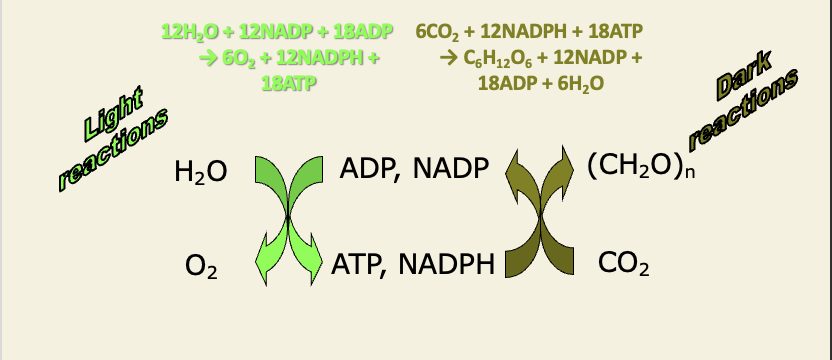
Photosynthesis has two distinct phases
the light reactions also called the ‘light dependent reactions’ and the ‘thylakoid reactions’
the dark reactions are also called the ‘light-independent reactions’ or ‘stroma reactions’
given that the latter also occur in the cytoplasm of cyanobacteria, and that they are dependent on the products of the light reactions → hence are not really independent of light
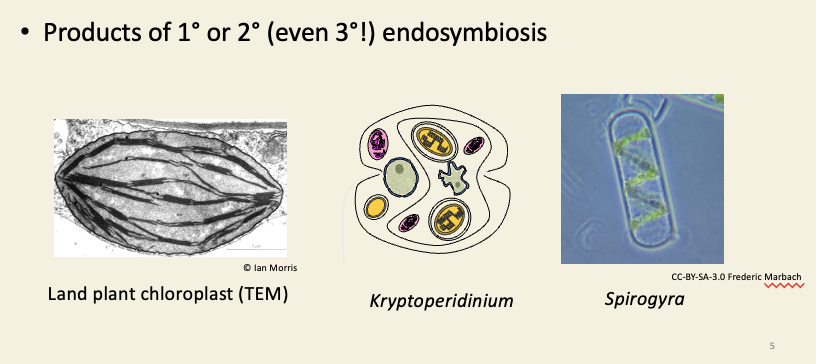
Photosynthesis occurs in plastids
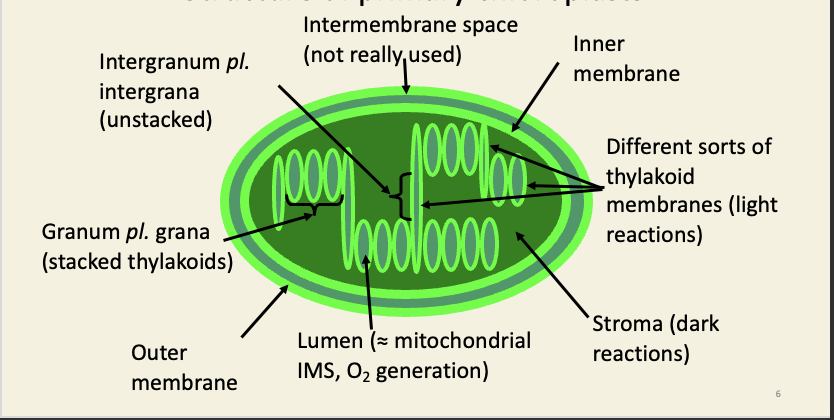
Structure of primary chloroplasts
the lumen of the thylakoids is derived from ‘pinched off’ piece of intermembrane space, so it has the same kind of relationship to the stroma as the IMS does to the matrix of a mitochondrion
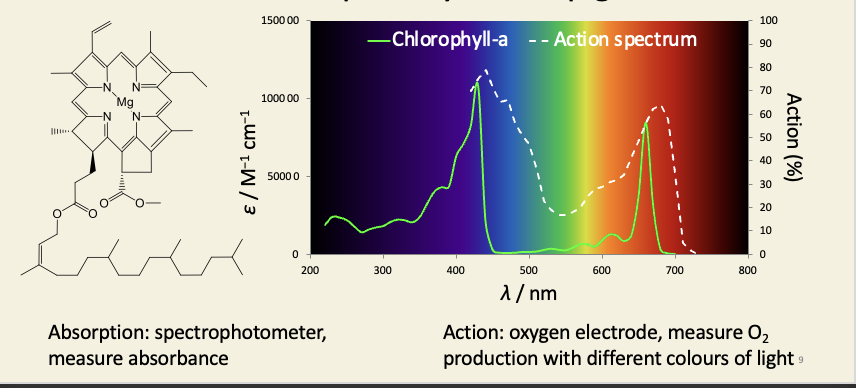
Action spectrum shows chlorophylls are the main photosynthetic pigments
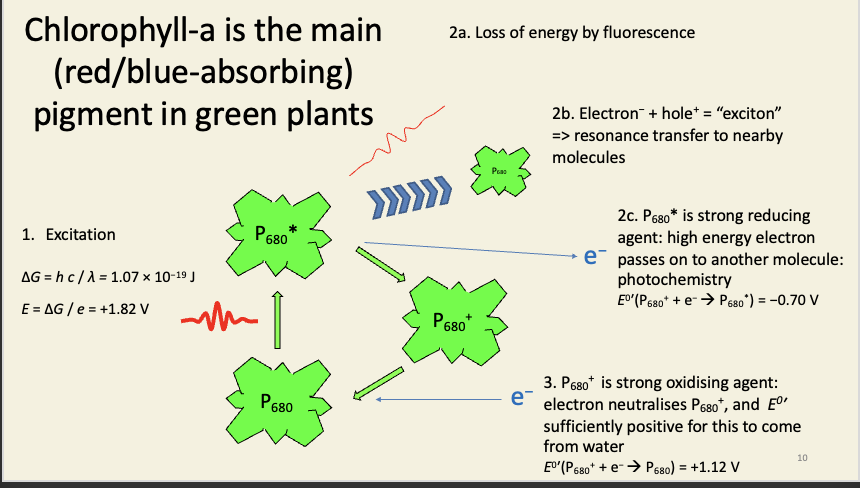
Accessory pigments transfer excitons to chlorophyll-a
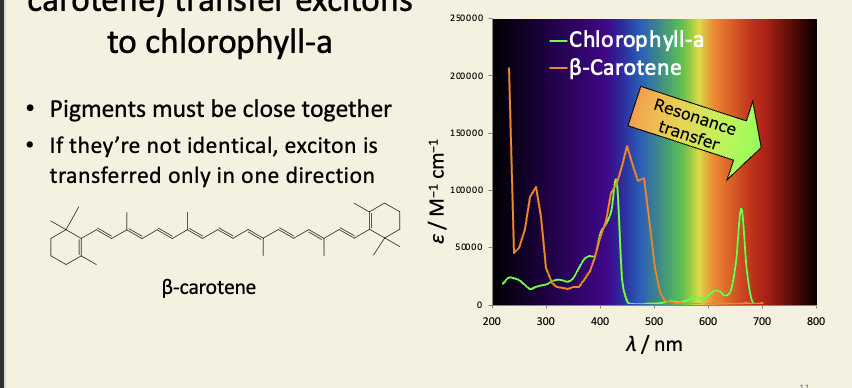
Photophosphorylation electron transport chain
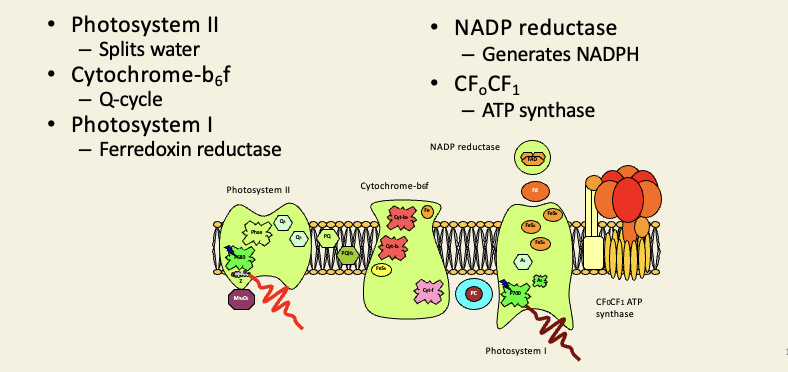
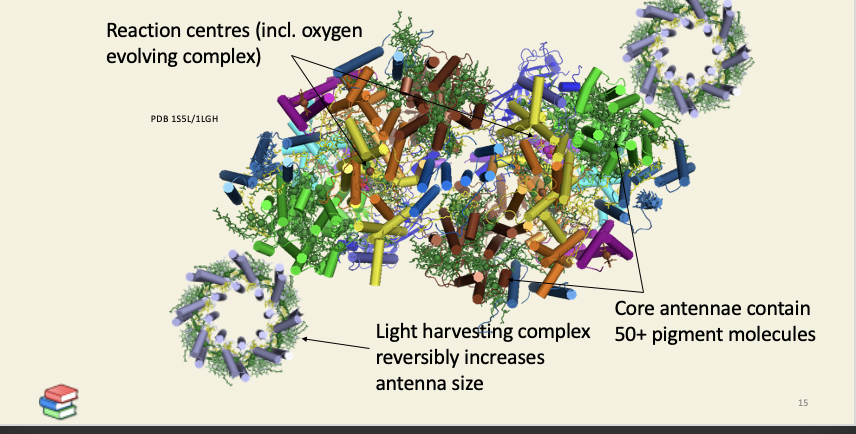
Photosystem II splits water and reduces a quinone
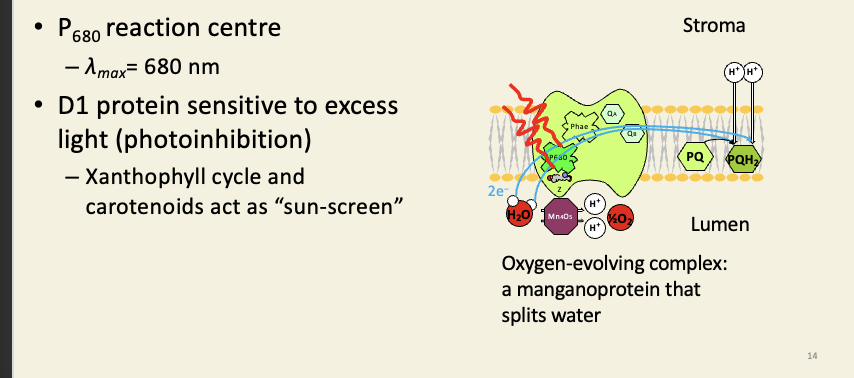
PSII is a dimer (view from above)
if energy flux into PSI and PSII is not closely matched, electrons will lead out of the PQH2 pool and cause oxidative stress
the stroma also contains vitamin c as an antioxidant
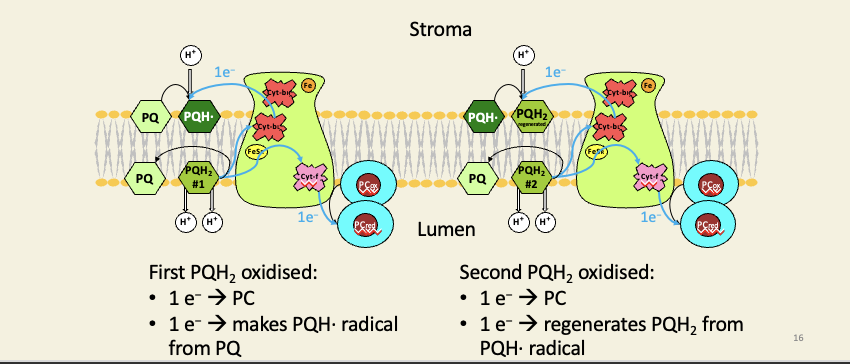
Cyt-b6f complex - like complex III in mitochondria - runs a Q cycle
very similar to complex III Q cycle - most of the differences you will spot are not differences in one or the other groups of photosynthetic bacteria, e.g. purple bacteria use the same quinol for both respiration and photosynthesis
cyanobacteria use a similar cyt-bc complex for both respiration and photosynthesis; some bacteria use cyt-c instead of PC
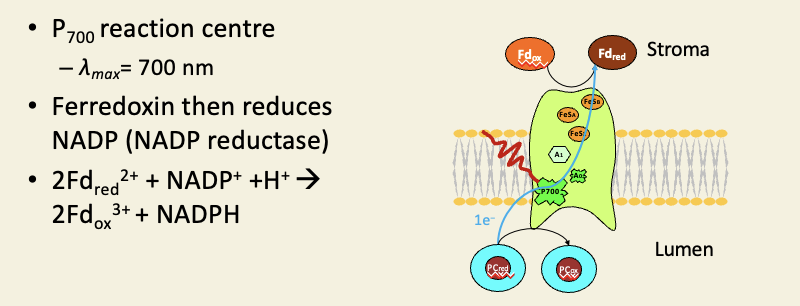
Photosystem I reduces ferredoxin and thence NADP
The two photosystems are physically separated and chemically distinct
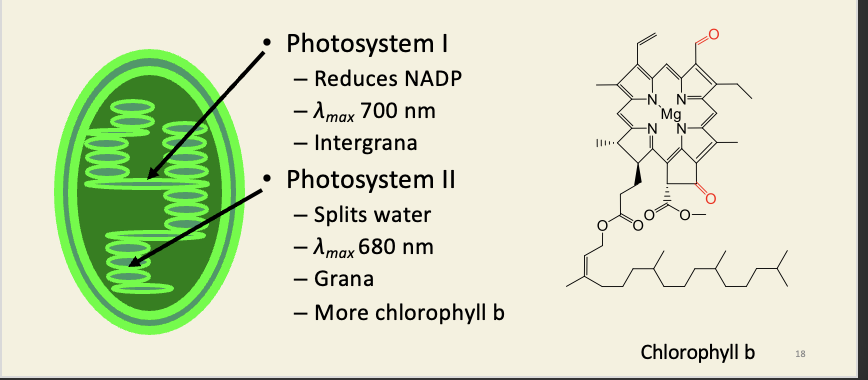
In the stroma

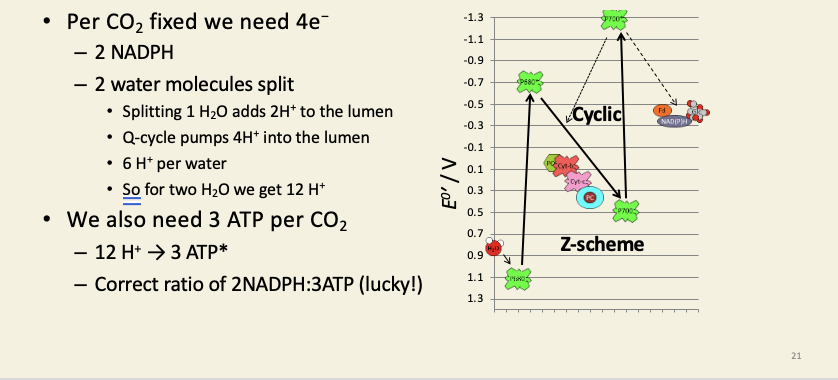
Z-scheme photophosphorylation makes NADPH and ATP
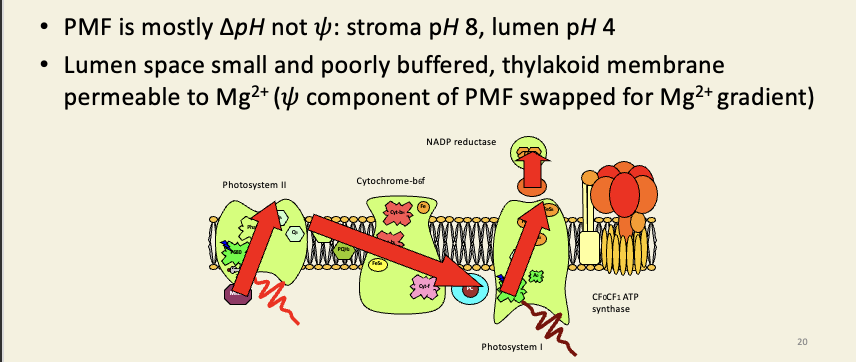
Energy budget from Z-scheme
there is an argument about the stoichiometry of the plastid ATPase - it probably only requires c.3 protons per ATP, despite having more c subunits in its FO, which is very difficult to explain
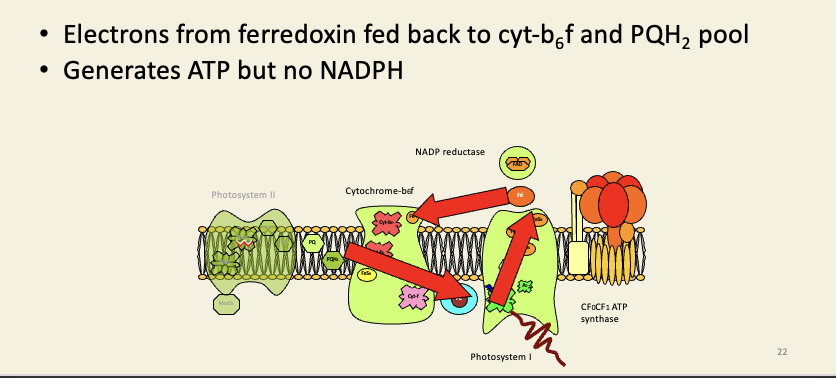
Cyclic photophosphorylation can make extra ATP if required
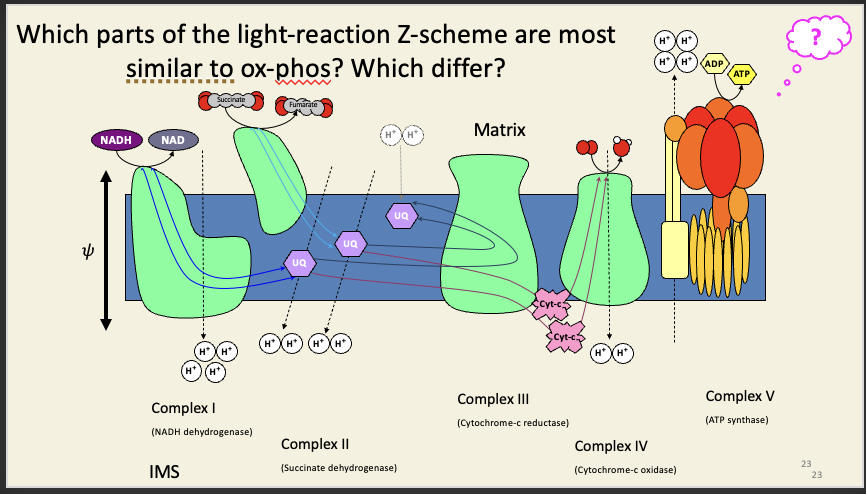
complexx III and cyt-b6f are very nearly identical; UQ and PQ and the Q cycleare also just variations on a theme, as are ATP synthases
Cyt-c is playing a role similar to PC - in some bacteria cyt-c is actually used at this point
the overall process is ‘backwards’ - electrons from NAD(P)(H) to or from oxygen/water
matrix = stroma, and IMS = lumen, but not the lumen is a slightly different kidn of compartment from the IMS
the PMF has different major components tough, and complex I,II, IV and the photosystems are not very similar