EXAM 2
 Call Kai
 Learn
Learn Practice Test
 Spaced Repetition
 Match
Match Flashcards
 Knowt Play
 Podcast
1/126

Earn XP
Description and Tags
microbiology
Name | Mastery | Learn | Test | Matching | Spaced | Call with Kai |
|---|
No analytics yet
Send a link to your students to track their progress
127 Terms
Epidemiology
the study of the transmission, incidence, and frequency of disease within a population/ It focuses primarily on the occurrence of a disease to help epidemiologists understand how quickly it is spreading and evaluate its overall severity
Case Reporting
Provides crucial data regarding the incidence and prevalence of a disease. This information is essential for determining exactly how many individuals are infected or at risk within a given population, illustrating how infectious a disease is and its rate of spread.
Patient Zero
the first documented patient with the disease—allows epidemiologists to trace movements and map out a transmission web . This tracing helps warn individuals who had contact with an infected person so they can self-isolate or get tested if symptoms present.
Can sometimes act as an asymptomatic carrier without displaying symptoms themselves.
Centers for Disease Control and Prevention (CDC)
located in Atlanta, Georgia
Main source of epidemiology information in the United States
World Health Organization (WHO)
located Worldwide
Main source of epidemiology information globally.
Contagious (Communicable) Diseases
Diseases that are easily spread from one person to another. An example includes measles, which is highly contagious and very dangerous.
Non-communicable Diseases:
Diseases that are not spread from one host to another. Instead, they are caused by genetic, physiological, environmental, or behavioral factors (e.g., diabetes, cancer, cardiovascular diseases).
Sporadic Diseases:
Occur only occasionally within a population (e.g., Typhoid fever)
Endemic Diseases:
Constantly present within a specific population (e.g., the common cold)
Pandemic Diseases:
Occur worldwide across multiple countries or continents (e.g., COVID-19, AIDS)
Acute Disease:
Develops rapidly but lasts for only a short period of time (e.g., influenza virus).
Chronic Disease:
Develops more slowly; body reactions may be less severe but continue over a long duration (e.g., tuberculosis).
Latent Disease:
The causative agent remains completely inactive for a period, then becomes active to cause symptoms.
For example, a person recovered from chickenpox retains a latent virus in their nerve cells, which can reactivate later as shingles due to triggers like stress, an immunocompromised system, or co-infection
Prevalence
The total number of people in a population who develop a disease
Takes into account both new and old cases; indicates how seriously and how long a disease affects a population
Incidence
The number of people in a population who develop a disease during a specific timeframe
Focuses exclusively on at-risk individuals during that period
Predisposing Factors
Make the body more susceptible to a disease and can alter its course Examples include:
Gender: Breast cancer is observed significantly more frequently in women than in men
Climate and Weather: Diseases like the cold and influenza experience higher incidence rates during colder months This may be due to individuals spending more time indoors where there is less airflow, leading to a higher concentration of droplets when someone sneezes
Other Factors: Inadequate nutrition, fatigue, age, environment, lifestyle, occupation (e.g., coal miners having higher exposure to toxic agents), pre-existing illness, and medical treatments like chemotherapy
Incubation Period:
The interval between the initial infection and the first appearance of any signs or symptoms. Duration depends on the specific microorganism, its virulence, the number of infecting microbes, and host resistance.
Prodromal Period:
A short phase following incubation characterized by early, mild, and non-specific symptoms such as aches and malaise
Period of Illness:
The phase where the disease is at its most severe, presenting obvious and definitive signs and symptoms. White blood cell counts may visibly increase or decrease depending on the infection.
Period of Decline:
Signs and symptoms begin to diminish. This phase can happen rapidly (in less than 24 hours), leaving the patient highly vulnerable to secondary infections.
Period of Convalescence:
The final stage where the individual regains strength, and the body returns to its pre-diseased state as recovery takes place.
Human Reservoirs:
People who transmit pathogens directly or indirectly. Individuals who transmit pathogens without showing signs of illness are called carriers.
Animal Reservoirs (Zoonoses):
Diseases that occur primarily in wild and domestic animals but can be transmitted to humans (e.g., rabies, Lyme disease). Transmission can occur via consumption of infected animal products or insect vector bites.
Non-living Reservoirs:
Soil and water harbor various pathogens.
For example, Clostridium botulinum and Clostridium tetani are normal intestinal microbiota of horses and cattle found in feces. Soil harbors fungi causing mycoses, and water can be contaminated with human/animal feces leading to diseases like Cryptosporidium.
Direct Contact Transmission:
Physical contact between the source and a susceptible host (e.g., kissing, touching, sexual intercourse)
Examples: Staph infections, common cold, measles
Indirect Contact Transmission:
Pathogen transfer from reservoir to host via a fomite (a non-living object, such as a remote control or door handle)
Droplet Transmission:
Microbes are discharged into the air via coughing, sneezing, laughing, or talking and travel a short distance in droplet nuclei. A single sneeze can generate up to 20,000 droplets (e.g., influenza)
What are the different types of Vehicle Transmission?
Waterbone, Airborne, and Food-borne
Waterborne
Spread by water contaminated with untreated or poorly treated sewage (e.g., Cholera)
Airborne
Spread by infectious droplet nuclei or agents like spores, staphylococci, and streptococci over longer distances (e.g., tuberculosis, COVID-19)
Food-borne
Transmitted in foods that are incompletely cooked, poorly refrigerated, or prepared under unsanitary conditions
What are the different types of Vector Transmission?
Mechanical, Biological
Mechanical
Passive transport of pathogens on the insect's feet or body parts (e.g., a house fly landing on food transferring typhoid fever or shigellosis)
Biological
An active process where an arthropod bites an infected host, ingests infected blood, and replicates the pathogen before biting a new host
Healthcare-Associated Infections (HAIs)
HAIs are infections acquired by patients while receiving treatment for other conditions within a healthcare facility (such as hospitals, nursing homes, surgical centers, or clinics) .
Susceptible Hosts:
HAIs primarily affect immunocompromised individuals, such as patients with severe burns or surgical wounds.
Chain of Transmission:
Can spread via direct contact between staff members and patients, patient-to-patient contact, or through contaminated fomites (e.g., catheters, syringes, respiratory devices) .
Prevention:
The implementation of strict aseptic techniques is critical to lowering the occurrence of HAIs.
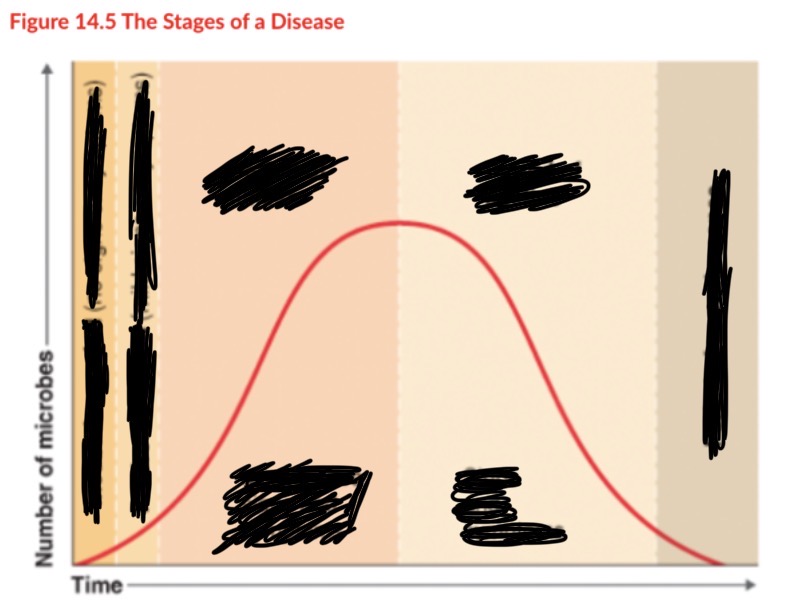
what are the phases of disease development?
Incubation period, prodromal period, period of illness, period of decline, period of Convalescence
Obligatory Intracellular Parasites:
Viruses absolutely require a living host cell in order to multiply, effectively hijacking the host metabolic machinery.
Nucleic Acid Core:
They contain a single type of nucleic acid—either DNA or RNA, but never both.
Transmission Example:
Hepatitis A virus is an example of a viral pathogen transmitted primarily via ingestion.
Host Range
Highly restrictive, Most viruses are capable of infecting only specific types of cells within a single host species, determined by specific host attachment sites and cellular factors.
Viral Size and Entities
viruses are submicroscopic particles typically observed using an electron microscope. Most are significantly smaller than bacteria, with sizes generally ranging from 20 to 1,000 nanometers (nm).
virion
defined as a complete, fully developed, infectious viral particle composed of nucleic acid surrounded by a protective protein coat.
Nucleic Acid:
Can be either DNA or RNA (never both), single-stranded or double-stranded, linear or circular. DNA typically serves as the primary genetic material in DNA-class viruses, whereas RNA serves in RNA-class viruses to produce proteins.
Capsid:
The protective protein shell enclosing the nucleic acid. It is composed of individual structural subunits called capsomeres.
Envelope:
A lipid, carbohydrate, and/or protein layer covering the capsid in some viruses. Enveloped viruses often acquire this coat from the host cell's plasma membrane during exit. When entering a new host cell, the virus typically leaves its envelope outside and injects its nucleic material.
Spikes:
Carbohydrate-protein complexes that project from the surface of the envelope. Spikes are required for attachment to host cells and can be used for laboratory identification. They stimulate the host's immune system to generate antibodies.
However, surface mutations (such as in Influenza) allow some viruses to escape antibody neutralization, resulting in a lack of permanent cures.
Non-enveloped Viruses:
Viruses whose capsids are exposed without an outer lipid layer. The bare capsid protects the viral genome from host nuclease enzymes that actively attempt to degrade foreign nucleic acids.
Helical Viruses:
Resemble long rods that may be rigid or flexible. The nucleic acid is housed within a cylindrical, helical capsid. Examples include rabies virus (bullet-shaped) and Ebola virus.
Polyhedral Viruses:
Many-sided viruses (e.g., non-enveloped structural arrangements protecting genomes from chemical degradation).
Complex Viruses:
Possess complicated structural features. For example, bacteriophages (viruses that infect bacteria) feature a polyhedral capsid head containing the nucleic acid attached to a protein sheath, a baseplate, pins, and tail fibers.
Single-Stranded DNA (Non-enveloped):
Parvoviridae (e.g., Human parvovirus B19, causing fifth disease and severe anemia in immunocompromised patients). Size: 18–25 nm.
Double-Stranded RNA (Non-enveloped):
Reoviridae (e.g., Reovirus, Rotavirus, causing mild respiratory or gastrointestinal infections, and Colorado tick fever transmitted via arthropods). Size: 60–80 nm.
Serological Methods:
Used to identify viruses based on their highly specific interactions with target antibodies. In a diagnostic membrane filter assay, a patient sample is applied to a membrane filter. A positive sample contains virus particles that bind successfully with diagnostic antibodies (visualized as orange V-shaped complexes capturing the sample on the surface).
Influenza A viruses regularly cross species boundaries due to changes in their surface spikes: Hemagglutinin (HA) and Neuraminidase (NA).
Historical Shifts: Prior to 1998, H1N1 circulated strictly in swine populations. In 1998, H3N2 spread from humans to pigs.
Avian Reservoirs: H5 and H7 subtypes are found predominantly in wild bird populations. While bird viruses do not typically infect humans directly, transmission can occur via feces/droppings or contaminated environments.
The Role of Intermediate Hosts: Pigs serve as crucial genetic mixing vessels because they can be concurrently infected by both human and avian influenza strains. When these viral genes mix inside a swine host, a major antigenic shift occurs via a triple reassortment of human, avian, and swine gene pools. This process forms completely new strains capable of targeting humans, birds, and pigs, giving rise to global outbreaks like
In Living Animals:
Diagnostic samples or viral stocks are inoculated into susceptible animals. The animals are subsequently monitored for physical signs of clinical disease or euthanized so that specific infected tissues can be harvested and analyzed.
In Embryonated Eggs:
A highly efficient method used extensively to cultivate viruses for commercial vaccines (such as the annual seasonal flu vaccine). Inoculations can be precisely directed into the amniotic cavity, allantoic cavity, yolk sac, or chorioallantoic membrane depending on viral requirements.
In Cell Cultures:
Cells are isolated from tissue matrices and maintained in artificial culture media that closely mimics fluid components of the human body.
Immortal Cell Lines (HeLa Cells)
First isolated from Henrietta Lacks in 1951 without her explicit knowledge or permission, these "HeLa" cells possess the unique capability to proliferate indefinitely in vitro (24/7). While HeLa cells became globally commercialized, generating a multimillion-dollar industry with vials retailing from $200 to $10,000, historical inequalities left the Lacks family lacking access to basic health care services.
Lytic Cycle
Attachment & Injection: The bacteriophage attaches firmly to the bacterial surface and injects its double-stranded DNA into the cell.
Genome Circularization: The injected phage DNA circularizes. At this junction, it commits to either the Lytic or the Lysogenic pathway.
New phage DNA and structural proteins are rapidly synthesized and assembled into fully formed virions.
The host cell undergoes enzymatic lysis, releasing the newly manufactured virions to infect adjacent healthy cells. The original host cell dies.
Lysogenic Cycle
Attachment & Injection: The bacteriophage attaches firmly to the bacterial surface and injects its double-stranded DNA into the cell.
Genome Circularization: The injected phage DNA circularizes. At this junction, it commits to either the Lytic or the Lysogenic pathway.
Instead of replicating, the phage DNA integrates directly into the bacterial chromosome via a recombination event, becoming a silent prophage.
The lysogenic bacterium reproduces normally, copying the integrated prophage alongside its own genome across many cell divisions.
Induction: Occasionally, a spontaneous stimulus or stress causes another recombination event, prompting the prophage to excise from the bacterial chromosome and enter the active lytic cycle.
Lysogenic host cells are completely immune to reinfection by the exact same type of bacteriophage.
Phage Conversion, Specialized Transduction
Phage Conversion:
The integration of prophage DNA can cause the host bacterium to express entirely new phenotypes or toxins. For instance, only Streptococcus strains carrying a specific lysogenic phage can synthesize the pyrogenic exotoxins responsible for causing toxic shock syndrome.
Specialized Transduction:
Upon prophage excision, adjacent bacterial genes may be accidentally packaged inside a phage capsid along with viral DNA, allowing genetic traits to transfer into a brand-new microorganism.
Animal Virus Replication Cycle
Attachment: Viral ligands attach to complementary protein receptors embedded in the host cell's plasma membrane.
Entry: Occurs via receptor-mediated endocytosis (where host membrane proteins engulf the particle) or through direct envelope fusion.
Uncoating: The protective protein coat is systematically dismantled and degraded by viral or host enzymes, releasing bare nucleic acid into the cytoplasm.
Maturation & Release:
Enveloped Viruses (Budding): Structural viral proteins incorporate directly into the host's plasma membrane. The assembled viral capsid pushes outward through this modified membrane sector, pinching off to form a brand-new envelope. Budding allows gradual exit and does not immediately destroy or kill the host cell.
Non-enveloped Viruses: Are released through distinct breaks or ruptures in the host plasma membrane, a destructive process that immediately kills the host cell.
Viruses
Approximately 10% of all global human cancers are induced directly by viral infections.
Latent Viral Infections:
A virus remains completely dormant inside host cells over extended periods without causing noticeable pathology until triggered by a stimulus. An classic example is the Varicellovirus (Chickenpox). During childhood, the virus causes an acute skin disease, travels through the bloodstream, and enters regional nerve cells where it establishes latency. Later in life, immune system changes or stress reactivate the virus, causing it to manifest as shingles. Effective vaccination prevents this long-term shingles reactivation.
Persistent (Chronic) Infections:
Occur continuously and gradually build up viral titers over a prolonged duration. Unlike acute infections, which are short-lived and followed by complete recovery, persistent viral infections are typically fatal.
Prions
purely proteinaceous infectious agents devoid of nucleic acids, causing transmissible spongiform encephalopathies via misfolded protein cascades.
Mechanism of Action:
Disease pathogenesis is driven entirely by the post-translational conversion of a normal cellular host glycoprotein, PrPC (Normal Prion Protein), into an altered, infectious conformation designated as PrPSc (Disease-causing Prion Protein).
Mad Cow Disease (Bovine Spongiform Encephalopathy - BSE):
Caused by prion agents that historically jumped species barriers into cattle populations from contaminated sheep scraps infected with scrapie prions. Prions cannot be inactivated or destroyed by conventional household cooking, heating, or boiling of infected beef; the only effective control measure is the culling/slaughter of affected herds. The progressive aggregation of prions leaves microscopic holes throughout the brain tissue, giving it a sponge-like appearance.
Creutzfeldt-Jakob Disease (CJD):
A terminal human brain disease caused by prions. It is extremely rare and can manifest across sporadic, hereditary, or acquired clinical forms. Early indicators include progressive memory loss, sudden loss of physical coordination, and severe behavioral changes.
Why are viruses classified as obligate intracellular parasites?
depend on host cell to reproduce and survive
What is the name of the cellular process that occurs when a host cell internalizes a virus particle via membrane engulfment?
Endocytosis
Fungal Morphologies
Yeast, Mold
Yeast:
Characterized by a round or ovoid shape. It reproduces primarily through asexual budding, where a single parent cell gives rise to two cells. Budding can leave distinct bud scars on the cell surface. Elongated chains of buds that fail to detach are referred to as pseudohyphae (false branching).
Mold:
Characterized by long, filamentous threads called hyphae, which form an intertwined network of branches called a mycelium. Hyphae can be structurally categorized as Septate Hyphae and Nonseptate Hyphae
Septate Hyphae:
Divided into distinct compartments by cross-walls called septa (e.g., as seen in Penicillium).
Nonseptate Hyphae:
Lacking cross-walls, resulting in a continuous, multinucleated cytoplasmic tube (e.g., as seen in Rhizopus).
vegetative hyphae
surface or submerged hyphae that digest and absorb nutrients from the substrate via structures like rhizoids
reproductive/aerial hyphae
which grow upward and bear reproductive spores
Dimorphic Fungi:
Organisms that can transition between a yeast-like form and a mold-like form depending on environmental factors (such as temperature).
A prominent characteristic of many fungal pathogens, such as Candida albicans.
Fungal Nutrition
Chemoheterotrophic, Saprobes (Saprophytic Decomposers), Parasitic, Habitat
Are Fungi Chemoheterotrophic?
All fungi are chemoheterotrophic, meaning they rely on organic compounds for both energy and carbon. They cannot utilize inorganic substances or fix carbon dioxide to synthesize organic material.
Are fungi decomposers?
Yes, Saprophytic Decomposers.
The vast majority of fungi are harmless decomposers living off dead plant and animal matter. They secrete extracellular fluids containing enzymes to break down organic macromolecules into absorbable nutrients.
Are fungi parasitic?
Yes, Some fungi live on or within the tissues of other living organisms, causing harm. However, none are obligate parasites, meaning they can survive outside a living host.
What is the Habitat Distribution like for Fungi?
Fungi exhibit an extremely widespread distribution across diverse habitats, including soil, aquatic environments, bathrooms, everyday surfaces (like shoes), and the human body.
Fungal Reproduction
Asexual Reproduction: Involves the generation of exact genetic copies. In yeasts, this occurs via budding. In molds, it occurs through the production of asexual spores generated from vegetative hyphae or specialized reproductive hyphae. Germination begins when a spore develops a germ tube, which elongates to form a new hypha.
Sexual Reproduction: Involves the fusion of two compatible mating strains (designated as + and - strains). This fusion leads to the creation of a unique sexual structure that produces genetically diverse sexual spores.
The Importance of Fungi
Ecological Impact: Vital as primary decomposers of dead organic matter, recycling essential nutrients back into ecosystems.
Medical & Industrial Benefits: Act as sources of critical antibiotics (e.g., Penicillium species secreting penicillin). They are extensively used in food production (e.g., baking and brewing with yeast) and serve as excellent model organisms in genetic and metabolic disease studies, including cancer research.
Adverse Impacts: Responsible for food spoilage, toxin production (mycotoxins), and fungal infections known as mycoses, which can be pathogenic or deadly to humans.
Algae: Photosynthetic Protists
Characteristics: eukaryotic photosynthetic organisms containing chloroplasts. The majority possess a rigid cell wall. They can exist as unicellular, colonial, or multicellular forms (e.g., Chlorophyta, Euglenozoa, Dinoflagellates, Bacillariophyta/Diatoms, Phaeophyta, Rhodophyta).
Habitat: Primarily free-living organisms dwelling in freshwater and marine ecosystems. Some flagellated algae, like Euglena, contain complex structures including a flagellum, eyespot, reservoir, contractile vacuole, pellicle, nucleolus, and starch granules.
Ecological & Medical Importance:
Form the foundational basis of the aquatic food web as plankton.
Produce a massive percentage of global atmospheric oxygen (O2).
Harvested commercially for cosmetics, foods, and pharmaceutical/medical products.
Adverse Effects: Certain species, such as Dinoflagellates, can multiply rapidly to cause harmful algal blooms known as "red tides." These dinoflagellates release potent toxins that accumulate in shellfish, causing Paralytic Shellfish Poisoning in humans who consume them.
Protozoa: Motile, Heterotrophic Protists
Characteristics: Almost exclusively unicellular eukaryotes that lack both a cell wall and chloroplasts. They are heterotrophic or mixotrophic (requiring organic compounds for energy and carbon, or using a mix of energy/carbon acquisition pathways).
Motility and Classification: While most are free-living in moist habitats, several are specialized parasites. Primarily classified based on their modes of locomotion and reproduction:
Flagellates: Move utilizing long, whip-like appendages called flagella.
Amoebas: Move and capture food by extending temporary cytoplasmic projections called pseudopods ("false feet").
Ciliates: Move via rows of coordinated, hair-like projections called cilia.
Apicomplexa: Non-motile or poorly developed motility structures in adult stages. All members of this group are obligate parasites characterized by complex, multi-stage life cycles.
Parasitic Helminths (Kingdom Animalia)
Classification: multicellular animals grouped under the Kingdom Animalia. They possess true tissues and organs highly specialized for reproduction, digestion, locomotion, and protection.
Parasitic Adaptation: They live inside or on host tissues, where they actively consume or leach vital nutrients from the host organism. Many have developed sophisticated mouthparts, hooks, or suckers to securely attach to host tissues.
Reproduction & Life Cycle: Most possess highly developed reproductive systems with specialized sex organs to produce vast quantities of eggs and sperm. Fertilized eggs undergo a distinct larval development period, which may take place either inside or outside of the host's body.
Flatworms (Phylum Platyhelminthes)
Characterized by a flattened body profile with no definite internal body cavity. They absorb pre-digested nutrients directly through their outer protective layer, known as the cuticle. They are subdivided into:
Cestodes (Tapeworms): Highly elongated, ribbon-like, segmented worms.
Trematodes (Flukes): Flattened, nonsegmented, leaf-like worms equipped with specialized sucking mouthparts for attachment.
Roundworms (Phylum Nematoda)
Characterized by an elongated, cylindrical, unsegmented body shape. Unlike flatworms, they possess a complete, one-way digestive tract. They utilize specialized spines, teeth, or hooks located around their mouthparts to firmly anchor themselves to the host's intestinal wall or internal tissues.
Constitutive Genes:
Genes that are continuously expressed at a fixed rate ("turned on" all the time) because they code for proteins required for indispensable, routine cellular functions.
Regulated Genes:
Genes that are turned on (induced) or turned off (repressed) only in response to specific environmental triggers or metabolic demands.
Operon
In bacteria, genes with related metabolic functions are often grouped together and controlled under a single regulatory mechanism
Consists of two main sections: the control region and the structural genes
Regulatory Gene (I)
Located outside the operon itself; it continuously transcribes and translates a repressor protein that blocks or permits transcription.