Anatomy and Physiology: Body Structure, Function, and Organization
 Call Kai
 Learn
Learn Practice Test
 Spaced Repetition
 Match
Match Flashcards
 Knowt Play
1/26

There's no tags or description
Looks like no tags are added yet.
Name | Mastery | Learn | Test | Matching | Spaced | Call with Kai | Chat |
|---|
No analytics yet
Send a link to your students to track their progress
27 Terms
What is anatomy?
The study of the structures of the body, including what they are made of, where they are located, and associated structures.
What is physiology?
The study of the functions of anatomical structures and their individual and cooperative functions.
How are anatomy and physiology related?
They are inseparably linked; anatomy leads to physiology and physiology leads to anatomy.
What type of epithelium is found in the alveoli of the lungs?
Simple squamous epithelium, which allows for gas exchange.
What type of epithelium is found in skin cells?
Stratified squamous epithelium, which provides protection.
What is the hierarchy of complexity in living organisms?
Organisms are composed of organ systems, which are composed of organs, which are composed of tissues, which are composed of cells.
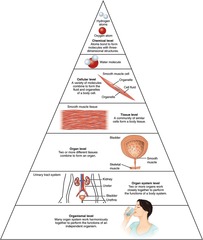
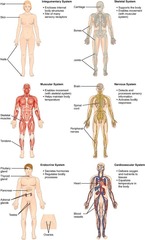
What are the 11 organ systems in the human body?
Integumentary, Skeletal, Muscular, Nervous, Endocrine, Cardiovascular, Blood and Lymphatic, Respiratory, Digestive, Urinary, Reproductive.
What is homeostasis?
The process by which all body systems work together to maintain a stable internal environment.
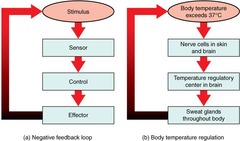
What are the components of the homeostasis system?
Receptor (receives stimulus), Control center (processes signal and sends instructions), Effector (carries out instructions).
What is negative feedback?
A mechanism where the body senses a change and activates mechanisms to reverse the stimulus, maintaining stability.
What are some examples of negative feedback mechanisms?
Regulation of blood glucose and body temperature.
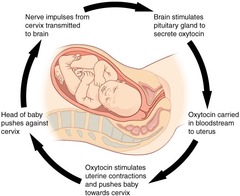
What is positive feedback?
A self-amplifying change that leads to a change in the same direction, reinforcing the stimulus.
What is the anatomical position?
A standard frame of reference where a person stands erect, feet flat, arms at sides, and palms facing forward.
What is the difference between supine and prone positions?
Supine is lying face up, while prone is lying face down.
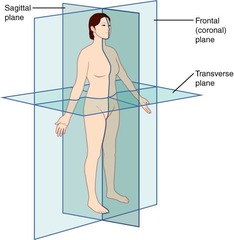
What are the anatomical planes?
Sagittal (divides body into right and left), Frontal (divides body into front and back), Transverse (divides body into upper and lower).
What does the term 'superior' mean in anatomical directions?
Above or toward the head.
What does the term 'inferior' mean in anatomical directions?
Below or toward the feet.
What does 'anterior' refer to in anatomical terminology?
The front surface of the body.
What does 'posterior' refer to in anatomical terminology?
The back surface of the body.
What is the axial region of the body?
The head, neck, and trunk.
What is the appendicular region of the body?
The upper and lower limbs.
What is the thoracic cavity?
The cavity that contains the heart and lungs, separated from the abdominopelvic cavity by the diaphragm.
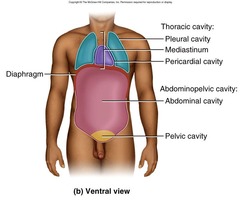
What is the abdominal cavity?
The cavity that contains the gastrointestinal tract, kidneys, and ureters.
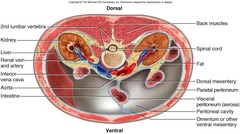
What is the pelvic cavity?
The cavity that contains the rectum, bladder, urethra, and reproductive organs.
What is the role of the mesentery in the abdominal cavity?
It suspends the intestines and wraps them as a serosal layer.
What is a potential space in anatomy?
A space that can separate and fill with fluid under unusual situations, such as the pleural cavity.
What happens during life-threatening fever?
Body temperature exceeds 108 degrees F, increasing metabolic rate and reinforcing heat production, potentially fatal at 113 degrees F.