ANP Ch 2 old
 Call Kai
 Learn
Learn Practice Test
 Spaced Repetition
 Match
Match Flashcards
 Knowt Play
1/41

There's no tags or description
Looks like no tags are added yet.
Name | Mastery | Learn | Test | Matching | Spaced | Call with Kai | Chat |
|---|
No analytics yet
Send a link to your students to track their progress
42 Terms
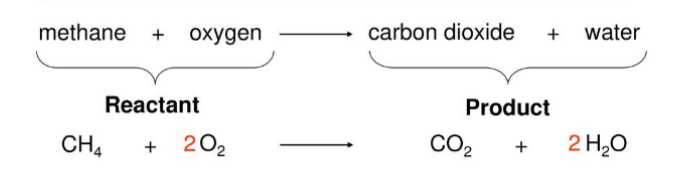
When do chemical reactions occur
occur when chemical bonds are formed,
rearranged, or broken
chemical equation contents
Reactants: substances entering into reaction
Product(s): resulting chemical substances
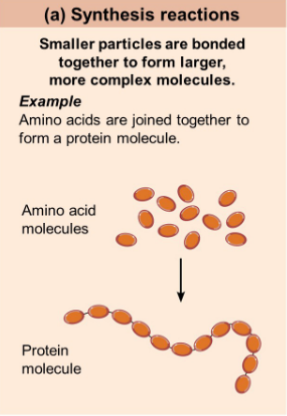
Synthesis reactions
reactions involve atoms or
molecules combining to form larger, more
complex molecule
Used in anabolic (building) metabolism
A + B = AB
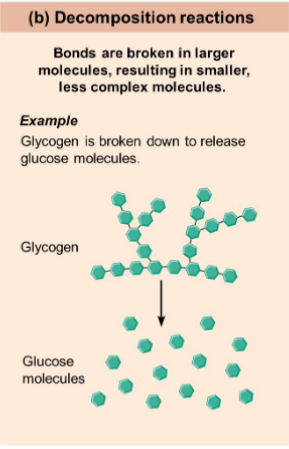
Decomposition reactions
reactions
involve breakdown of a molecule
into smaller molecules or atoms
(reverse of synthesis reactions)
Involve catabolic (bond-
breaking) reactions
AB = A + B
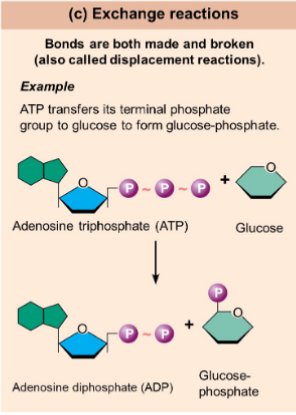
Exchange reaction
reactions involve
both synthesis and
decomposition
Bonds are both made and
broken
AB + C = AC + B
Redox Reaction
In living systems, an example of exchange reactions is oxidation-
reduction or redox reactions
Atoms are reduced when they gain electrons and oxidized
when they lose electrons

Cellular Respiration Chemical Reaction
Redox reactions
Principle source of energy on the planet
Ex: Cellular respiration - carbon is oxidized and oxygen is
reduced

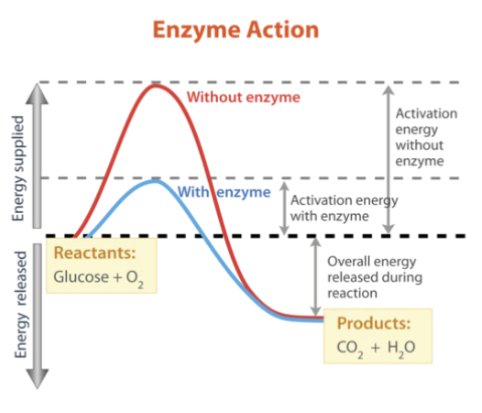
What does a catalyst do to rate of chemical reaction
Increase rate of
reaction without
becoming part of the
product
Lowers
activation
energy
Biochemistry
study of chemical composition and reactions of living
matter
Inorganic compounds/chemical
Do not contain carbon backbone
Water, salts, and many acids and bases
Both equally essential for life (organic)
Organic compounds/chemical
Contain CARBON backbone covalently bonded
Usually large
Carbohydrates, fats, proteins, and nucleic acids
Both equally essential for life (inorganic)
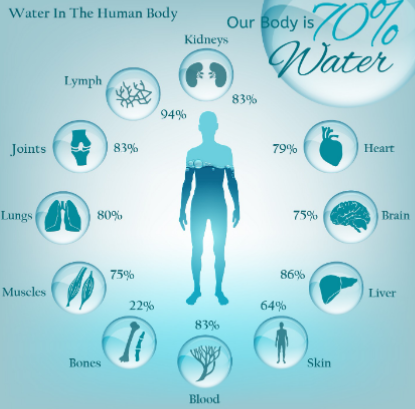
Inorganic Compounds - Water in Body
Most abundant
inorganic compound
Accounts for 60%–80% of
the volume of living cells
Inorganic Compounds - Water in Body
What properties does water have to make it the most important inorganic compound?
High heat capacity
High heat of vaporization
Polar solvent properties
Reactivity
Cushioning
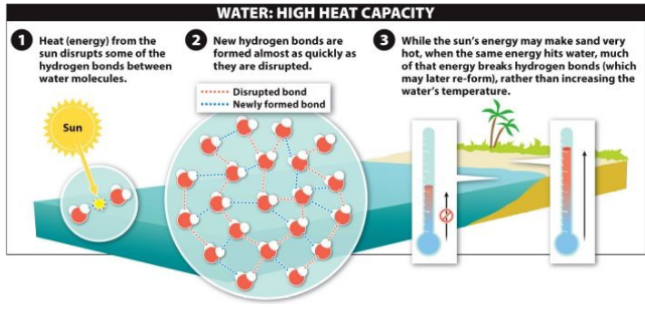
Water Properties - High heat capacity
Ability to absorb and release heat with little temperature
change
Prevents sudden changes in temperature
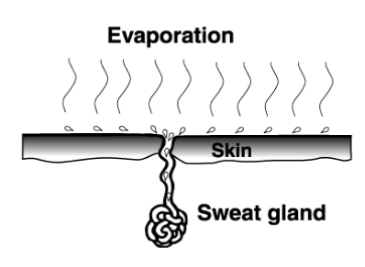
Water Properties - High heat of vaporization
Evaporation requires
large amounts of heat
Useful cooling
mechanism
Sweating to cool body
down
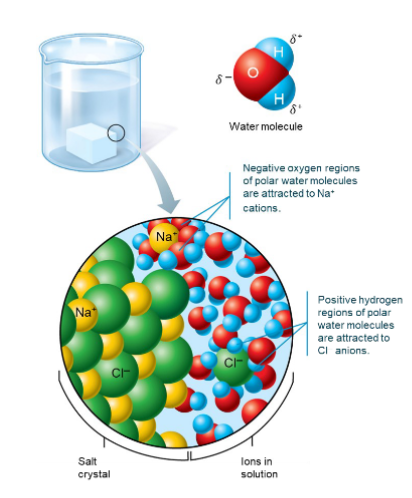
Water Properties - Polar solvent properties
Dissolves and
dissociates ionic
substances
Forms hydration
(water) layers around
large polar molecules
Body’s major transport
medium
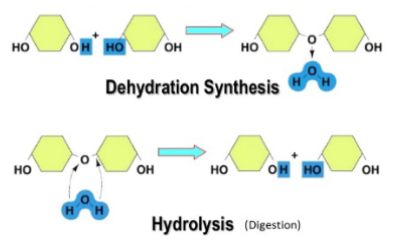
Water Properties - Reactivity
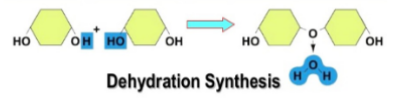
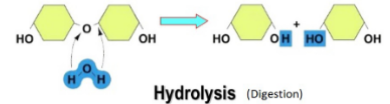
Necessary part of hydrolysis and dehydration synthesis
reactions
Important for metabolism
Dehydration Synthesis
Hydrolysis
Water Properties - Cushioning
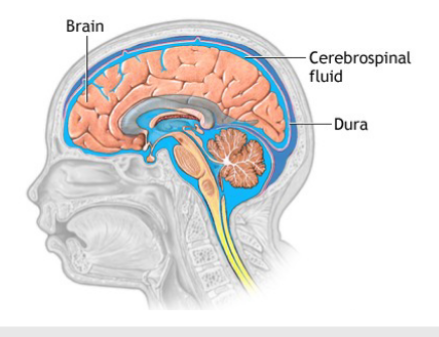
Protects certain organs from physical trauma
Example: cerebrospinal fluid cushions nervous system
organs
Inorganic Compounds - Salts
Salts are ionic compounds that dissociate into separate ions in water
• Separate into cations (+) and anions (-)
• Called electrolytes because they can conduct electrical currents in solution
• Ions play specialized roles in body functions
• Example: Na+, K+, Cl-
• Ionic balance is vital for homeostasis
Inorganic Compounds - Acids and bases
Acids and bases are both electrolytes
• Ionize and dissociate in water
Inorganic Compounds - Acid
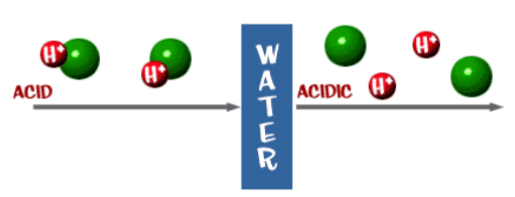
Are proton donors: they release hydrogen ions (H+, have
no electrons) in solution
Acidity involves only free H+ in solution
Inorganic Compounds - Basic
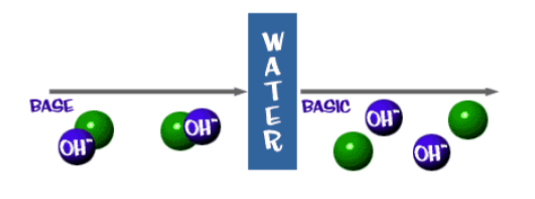
Are proton acceptors: they pick up H+ ions in solution
• When a base dissolves in solution, it releases a hydroxyl
ion (OH –)
Acids and Bases - pH
measurement of H+ concentration in a
solution
• Ranges from 0-14
• Is negative logarithmic
• Each pH unit represents a 10-fold
difference
• Ex: pH 5 solution is 10x more acidic
than a pH 6 solution
• ↑ H+ concentration, ↑ acidity, ↓ pH
• Water has a pH of 7

Acids and Bases - Buffers
Resist abrupt and large swings in pH
• Can release hydrogen ions if pH rises
• Can bind hydrogen ions if pH falls
• Important for homeostasis
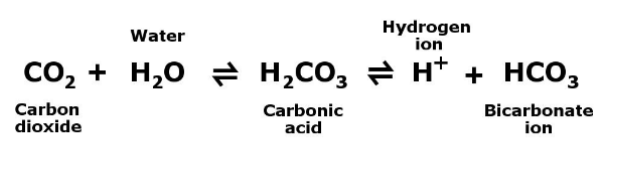
• Carbonic acid–bicarbonate system (important buffer
system of blood):
Homeostatic Imbalance
Blood must stay within a very narrow pH range: 7.35-7.45
• An arterial pH of 7.0 during cardiopulmonary resuscitation
predicts a poor outcome
• Patients presenting with an arterial pH of less than 6.85
rarely survive
Organic Compounds
contain carbon
exceptions: CO2 and CO are inorganic
Electroneutral
Carbon is electroneutral
shares electrons; never gains or loses them
forms four covalent bonds with other elements

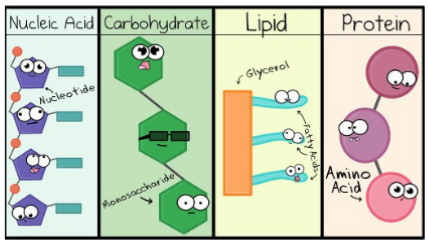
Major organic
compounds
(macromolecules)
Carbohydrates
2. Lipids
3. Proteins
4. Nucleic acids
Organic Compounds: Polymerization
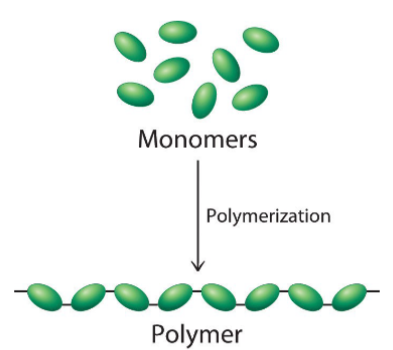
Most macromolecules are
polymers
• Composed of chains of
similar units monomers
(building blocks)
Synthesis and Hydrolysis -
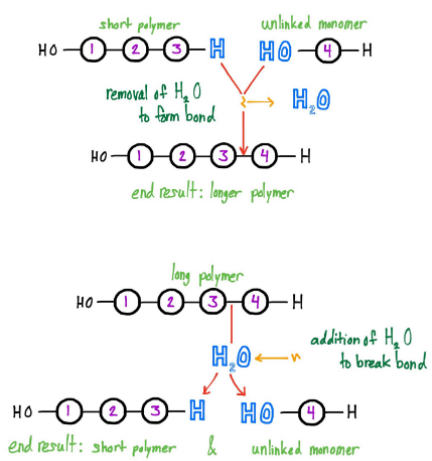
Polymers are
• Synthesized by
dehydration
(synthesis) reactions
• Water is released
• Broken down by
hydrolysis
(decomposition)
reactions
• Water is consumed
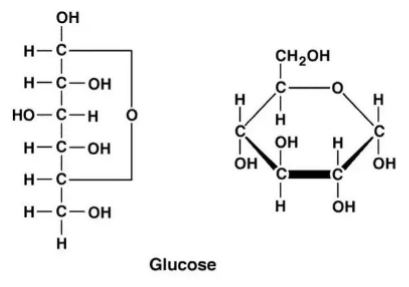
Carbohydrates
Contain C, H, and O
•Cn(H2O)n
n = number of carbon atoms
Carbohydrate Classes
Monosaccharides: monomer, one single sugar
Disaccharides: two sugars
Polysaccharides: many sugars

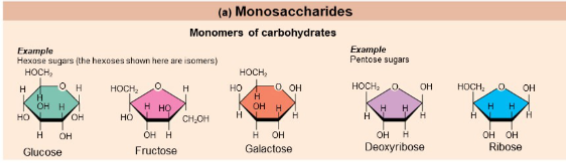
Carbohydrate Monosaccharides
Simple sugars containing three to seven carbon atoms
• Important monosaccharides
• Pentose sugars
• Ribose and deoxyribose
• Hexose sugars
• Glucose (blood sugar)
Carbohydrates Disaccharides
Important disaccharides
• Sucrose, lactose
• Formed by dehydration synthesis of two monosaccharides

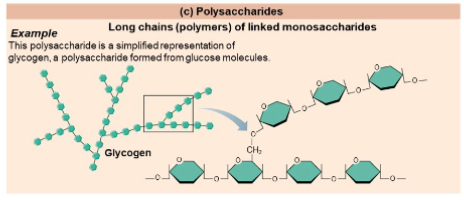
Carbohydrates Polysaccharides
Important polysaccharides
• Starch: carbohydrate storage form used by plants
• Glycogen: carbohydrate storage form used by animals
• Cellulose: fiber
Lipids
Contain C, H, O, and sometimes contain P
• Mostly C-H bonds (non-polar bonds)
• Mostly insoluble in water (does not dissolve in water)
• No monomers
•
Lipids Main Types
Main types:
• Triglycerides
• Phospholipids
• Steroids

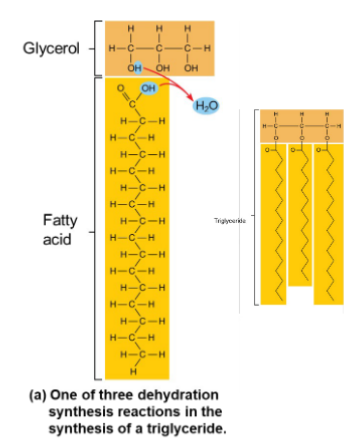
Lipids Triglycerides
Called fats when solid and
oils when liquid
• Composed of three fatty
acids (linear hydrocarbons)
bonded to a glycerol
molecule
• Main functions
• Energy storage
• Insulation
• Protection
Lipids Phospholipids
Glycerol and two fatty acids
plus a phosphorus-
containing group
• Head is polar and
hydrophilic (attracted to
water)
• Tails are nonpolar and
hydrophobic (water
fearing)
• Important in cell membrane
structure

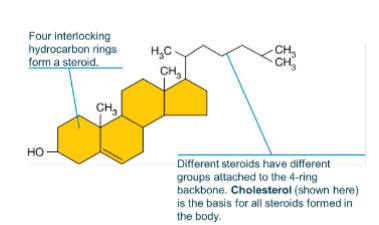
Lipids Steroids
Consist of four interlocking ring structures
• Most important steroid is cholesterol
• Made by liver and also found in animal products
• Necessary for synthesis of vitamin D, steroid hormones,
and bile salts
• Important in cell plasma membrane structure