B.1. TYPES OF TITRATIONS Part 1
 Call Kai
 Learn
Learn Practice Test
 Spaced Repetition
 Match
Match Flashcards
 Knowt Play
1/82

There's no tags or description
Looks like no tags are added yet.
Name | Mastery | Learn | Test | Matching | Spaced | Call with Kai | Chat |
|---|
No analytics yet
Send a link to your students to track their progress
83 Terms
1. Visual Titration
2. Potentiometric Titration
3. Electrometric Titration
TYPES OF TITRATIONS BASED ON INDICATION OF ENDPOINT (3)
1. Direct Titration
2. Residual Titration
3. Blank Titration
4. Indirect Titration
TYPES OF TITRATIONS BASED ON NATURE (4)
1. Acid-Base (Neutralization)
2. Redox Titration
3. Complexation Titration (Compleximetry)
4. Precipitation Titration (Precipitimetry)
TYPES OF TITRATIONS BASED ON TYPE OF RXN INVOLVED (4)
a. Visual Titration
[BASED ON INDICATION OF ENDPOINT]
The type of titration that makes use of indicators to make observation of endpoint possible
a. Visual Titration
b. Potentiometric Titration
c. Electrometric Titration
d. Direct Titration
b. Potentiometric Titration
[BASED ON INDICATION OF ENDPOINT]
The type of titration where equivalence point is signified by a sharp change in potential of the solution
a. Visual Titration
b. Potentiometric Titration
c. Electrometric Titration
d. Direct Titration
c. Electrometric Titration
[BASED ON INDICATION OF ENDPOINT]
The type of titration where equivalence point is signaled by a change in electrical conductivity
a. Visual Titration
b. Potentiometric Titration
c. Electrometric Titration
d. Direct Titration
b. Potentiometric Titration
[BASED ON INDICATION OF ENDPOINT]
The type of titration that uses pH meter
a. Visual Titration
b. Potentiometric Titration
c. Electrometric Titration
d. Direct Titration
c. Electrometric Titration
[BASED ON INDICATION OF ENDPOINT]
The type of titration that uses voltameter and a coulometer
a. Visual Titration
b. Potentiometric Titration
c. Electrometric Titration
d. Direct Titration
d. Direct Titration
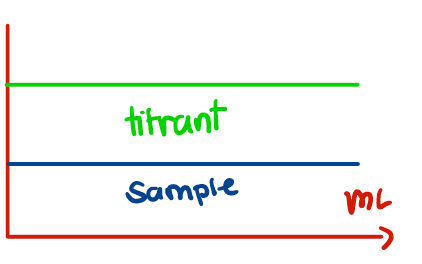
[BASED ON NATURE]
The type of titration where the analyte is reacted with the titrant after rendering it soluble in the titration medium
a. Residual Titration
b. Indirect Titration
c. Blank Titration
d. Direct Titration
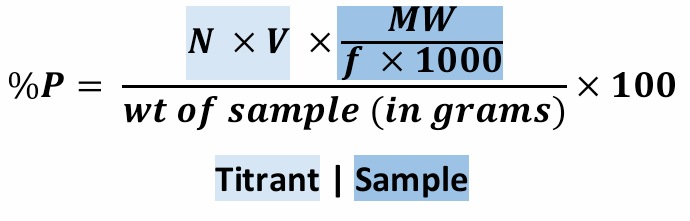
C.
[BASED ON NATURE]
The formula used to calculate %P in Direct Titration
a. %P = (N₁V₁ − N₂V₂) × MW/f×1000 / wt × 100
b. %P = N × (Va − Vb) × MW/f×1000 / wt × 100
c. %P = N × V × MW/f×1000 / wt × 100
d. %P = N × (Vb − Va) × MW/f×1000 / wt × 100
a. Residual Titration
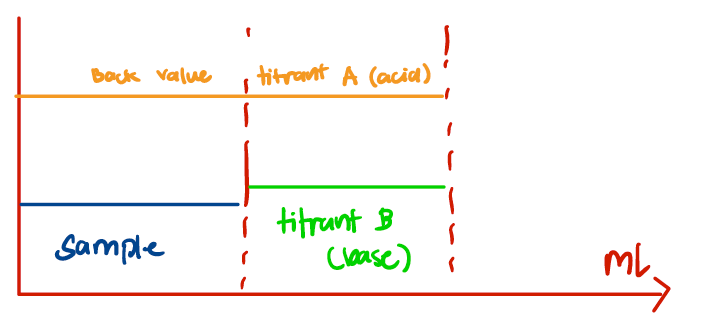
[BASED ON NATURE]
The type of titration that uses two titrants wherein one VS is added in excess (T1) and then the unreacted excess is back titrated with another VS (T2)
a. Residual Titration
b. Indirect Titration
c. Blank Titration
d. Direct Titration
b. Insoluble sample, volatile sample &
d. Slow reaction, no sharp endpoint
[BASED ON NATURE]
The indications for using Residual Titration
(Multiple answers)
a. Soluble sample, fast reaction, sharp endpoint
b. Insoluble sample, volatile sample
c. Colored sample, volatile sample
d. Slow reaction, no sharp endpoint
C

[BASED ON NATURE]
The formula used to calculate %P in Residual Titration
a. %P = N × V × MW/f×1000 / wt × 100
b. %P = N × (Va − Vb) × MW/f×1000 / wt × 100
c. %P = (N₁V₁ − N₂V₂) × MW/f×1000 / wt × 100
d. %P = N × (Vb − Va) × MW/f×1000 / wt × 100
D.
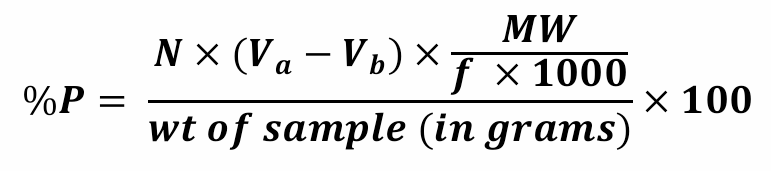
[BASED ON NATURE]
The formula used to calculate %P in Direct Titration with Blank
a. %P = (N₁V₁ − N₂V₂) × MW/f×1000 / wt × 100
b. %P = N × (Vb − Va) × MW/f×1000 / wt × 100
c. %P = N × V × MW/f×1000 / wt × 100
d. %P = N × (Va − Vb) × MW/f×1000 / wt × 100
C.
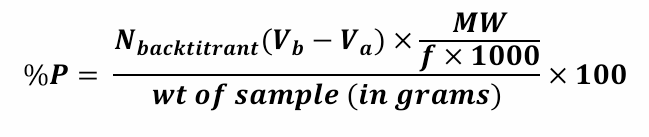
[BASED ON NATURE]
The formula used to calculate %P in Residual Titration with Blank
a. %P = N × (Va − Vb) × MW/f×1000 / wt × 100
b. %P = N × V × MW/f×1000 / wt × 100
c. %P = Nbacktitrant × (Vb − Va) × MW/f×1000 / wt × 100
d. %P = (N₁V₁ − N₂V₂) × MW/f×1000 / wt × 100
d. Indirect Titration
[BASED ON NATURE]
The type of titration where the analyte undergoes preliminary treatment prior to titration
a. Direct Titration
b. Residual Titration
c. Blank Titration
d. Indirect Titration
b. Assay of Malic Acid in Cherry Juice
1:1 ratio

[BASED ON NATURE]
An example of Indirect Titration
a. Titration of HCl with NaOH
b. Assay of Malic Acid in Cherry Juice
c. Titration of I2 with Na2S2O3
d. Titration of KMnO4 with Na2S2O3
c. HCl or H₂SO₄
[BASED ON TYPE OF RXN INVOLVED]
The titrant used in Acidimetry
a. NaOH or KOH
b. Potassium biphthalate
c. HCl or H₂SO₄
d. Tromethamine
d. NaOH or KOH
[BASED ON TYPE OF RXN INVOLVED]
The titrant used in Alkalimetry
a. HCl or H₂SO₄
b. Tromethamine
c. Na₂CO₃
d. NaOH or KOH
b. Free base or salts of weak acid
[BASED ON TYPE OF RXN INVOLVED]
The analyte in Acidimetry
a. Free acid or salts of strong acid
b. Free base or salts of weak acid
c. Free acid or salts of weak acid
d. Strong base only
d. Free acid or salts of weak base
[BASED ON TYPE OF RXN INVOLVED]
The analyte in Alkalimetry
a. Free base or salts of weak acid
b. Strong acid only
c. Free base or salts of strong base
d. Free acid or salts of weak base
a. Na₂CO₃
[BASED ON TYPE OF RXN INVOLVED]
The old standard used in Acidimetry
a. Na₂CO₃
b. Potassium biphthalate
c. Sodium oxalate
d. Tromethamine
b. Tromethamine
[BASED ON TYPE OF RXN INVOLVED]
The new standard used in Acidimetry
a. Na₂CO₃
b. Tromethamine
c. Sodium oxalate
d. Potassium biphthalate
d. Potassium biphthalate (KHP)
[BASED ON TYPE OF RXN INVOLVED]
The standard used in Alkalimetry
a. Na₂CO₃
b. Tromethamine
c. Sodium oxalate
d. Potassium biphthalate (KHP)
c. NaHCO₃ and KHCO₃
[BASED ON TYPE OF RXN INVOLVED]
The examples of analytes in Direct Acidimetry
a. ZnO and Milk of Magnesia
b. Aspirin and Ethyl Acetate
c. NaHCO₃ and KHCO₃
d. HCl and H₂SO₄
b. ZnO and Milk of Magnesia
[BASED ON TYPE OF RXN INVOLVED]
The examples of analytes in Residual Acidimetry
a. NaHCO₃ and KHCO₃
b. ZnO and Milk of Magnesia
c. HCl and H₂SO₄
d. Aspirin and Ethyl Acetate
d. Dilute H₃PO₄
others: HCl, H₂SO₄, H₃PO₄, H₃BO₃, and tartaric acid
[BASED ON TYPE OF RXN INVOLVED]
The example of analyte in Direct Alkalimetry
a. Aspirin
b. ZnO
c. NaHCO₃
d. Dilute H₃PO₄
b. Aspirin
other: Ethyl Acetate, Phosphomolybdate Assay for Phosphates
[BASED ON TYPE OF RXN INVOLVED]
BEQ: The example of analyte in Residual Alkalimetry
a. Dilute H₃PO₄
b. Aspirin
c. NaHCO₃
d. ZnO
c. Phenolphthalein, Methyl Red, Methyl Orange
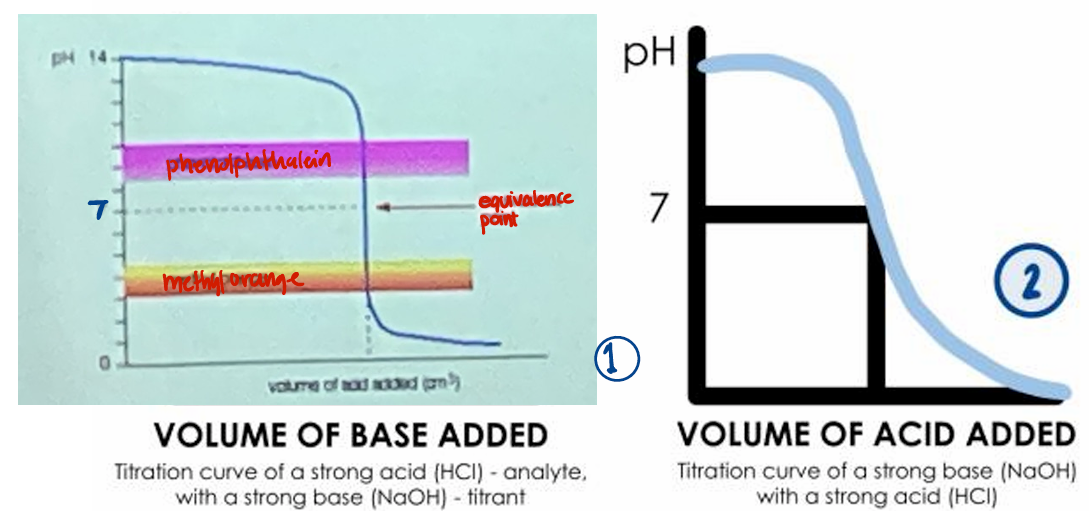
[BASED ON TYPE OF RXN INVOLVED]
The indicator used for Strong Acid + Strong Base (SA + SB) titration
a. Phenolphthalein only
b. Thymolphthalein
c. Phenolphthalein, Methyl Red, Methyl Orange
d. Methyl Red and Methyl Orange only
d. Phenolphthalein
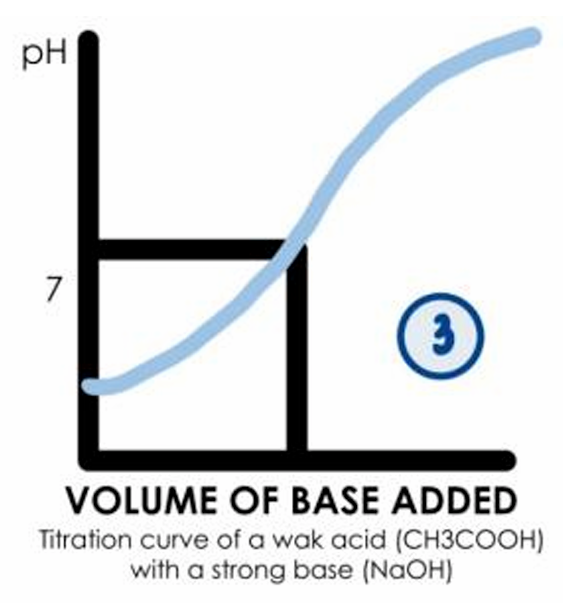
[BASED ON TYPE OF RXN INVOLVED]
The indicator used for Weak Acid + Strong Base (WA + SB)
a. Methyl Red and Methyl Orange
b. Crystal violet
c. Thymol blue
d. Phenolphthalein
a. Methyl Red and Methyl Orange
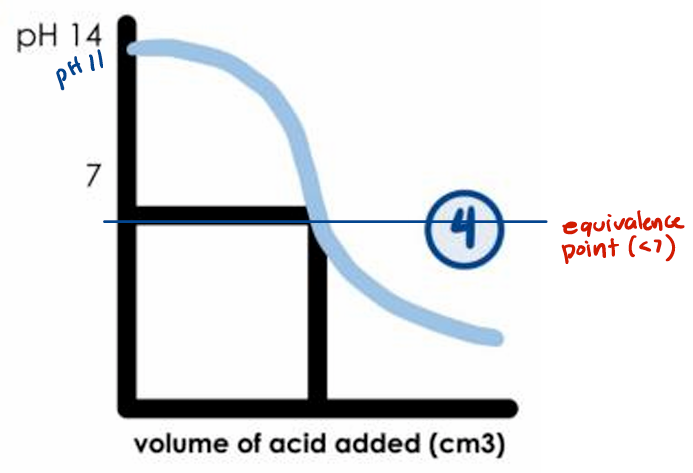
[BASED ON TYPE OF RXN INVOLVED]
The indicators used for Weak Base + Strong Acid (WB + SA)
a. Methyl Red and Methyl Orange
b. Crystal violet
c. Thymol blue
d. Phenolphthalein
d. WB + WA
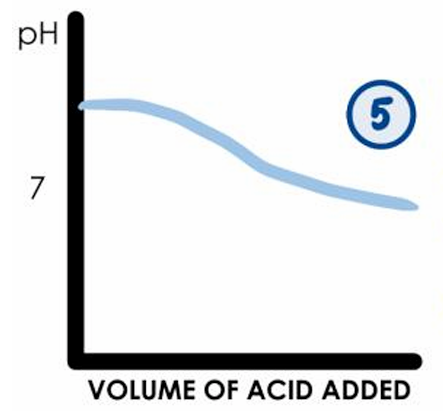
[BASED ON TYPE OF RXN INVOLVED]
The type of titration that is NOT possible among neutralization curves
a. SA + SB
b. WA + SB
c. WB + SA
d. WB + WA
Methyl yellow
Methyl red
Methyl orange
[BASED ON TYPE OF RXN INVOLVED]
AZO DYES Indicators (3)
a. Acid-range indicators
“methyl-acid”
[BASED ON TYPE OF RXN INVOLVED]
The classification of Azo Dyes as indicators
a. Acid-range indicators
b. Both acid and basic range indicators
c. Neutral indicators
d. Basic-range indicators
d. Red
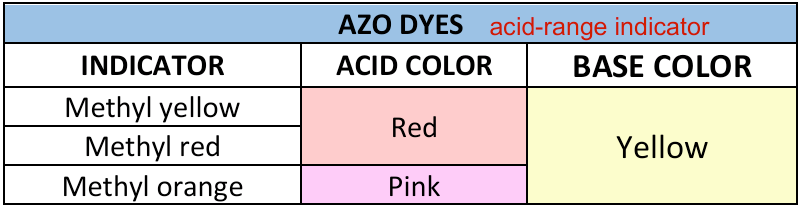
[BASED ON TYPE OF RXN INVOLVED]
The acid color of Methyl Yellow and Methyl Red
a. Yellow
b. Pink
c. Colorless
d. Red
a. Pink
[BASED ON TYPE OF RXN INVOLVED]
The acid color of Methyl Orange
a. Pink
b. Yellow
c. Colorless
d. Red
b. Yellow
[BASED ON TYPE OF RXN INVOLVED]
The base color of Methyl Yellow, Methyl Red, and Methyl Orange
a. Pink
b. Yellow
c. Colorless
d. Red
b. Basic-range indicators
[BASED ON TYPE OF RXN INVOLVED]
The classification of Phthaleins as indicators
a. Acid-range indicators
b. Basic-range indicators
c. Both acid and basic indicators
d. Neutral indicators
d. Colorless
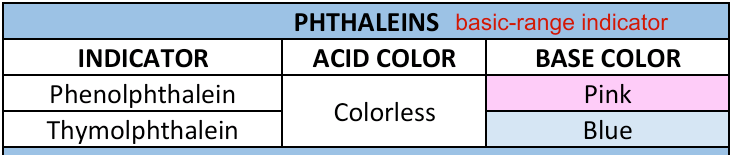
[BASED ON TYPE OF RXN INVOLVED]
The acid color of Phenolphthalein
a. Pink
b. Blue
c. Yellow
d. Colorless
c. Pink
[BASED ON TYPE OF RXN INVOLVED]
The base color of Phenolphthalein
a. Colorless
b. Blue
c. Pink
d. Yellow
b. Blue
[BASED ON TYPE OF RXN INVOLVED]
The acid color of Thymolphthalein
a. Colorless
b. Blue
c. Pink
d. Yellow
b. Exhibit two color transitions
from acidic to neutral to basic
[BASED ON TYPE OF RXN INVOLVED]
The unique property of Sulfonphthalein indicators
a. Single color transition
b. Exhibit two color transitions
c. Only in acid range
d. No color transition
All
[BASED ON TYPE OF RXN INVOLVED]
The examples of Sulfonphthalein indicators with yellow color in acid
Bromophenol Blue
Bromothymol Blue
Bromocresol Green
Bromocresol Purple
Phenol Red
Cresol Red
Malachite Green
Thymol Blue
Bromophenol Blue
Bromothymol Blue
Bromocresol Green*
Thymol Blue
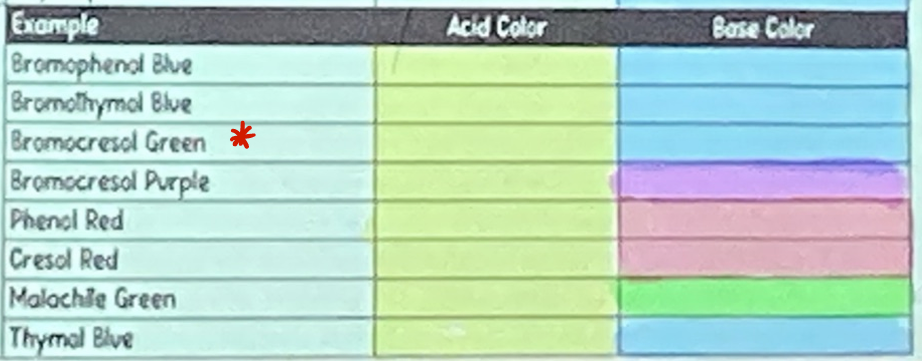
[BASED ON TYPE OF RXN INVOLVED]
The examples of Sulfonphthalein indicators with blue color in base
Bromophenol Blue
Bromothymol Blue
Bromocresol Green
Bromocresol Purple
Phenol Red
Cresol Red
Malachite Green
Thymol Blue
Bromocresol Purple
[BASED ON TYPE OF RXN INVOLVED]
The examples of Sulfonphthalein indicators with purple color in base
Bromophenol Blue
Bromothymol Blue
Bromocresol Green
Bromocresol Purple
Phenol Red
Cresol Red
Malachite Green
Thymol Blue
Phenol Red
Cresol Red
[BASED ON TYPE OF RXN INVOLVED]
The examples of Sulfonphthalein indicators with red color in base
Bromophenol Blue
Bromothymol Blue
Bromocresol Green
Bromocresol Purple
Phenol Red
Cresol Red
Malachite Green
Thymol Blue
Malachite Green
[BASED ON TYPE OF RXN INVOLVED]
The examples of Sulfonphthalein indicators with green color in base
Bromophenol Blue
Bromothymol Blue
Bromocresol Green
Bromocresol Purple
Phenol Red
Cresol Red
Malachite Green
Thymol Blue
PERMANGANOMETRY
CERIMETRY
IODIMETRY
IODOMETRY
[BASED ON TYPE OF RXN INVOLVED]
Redox Titration examples
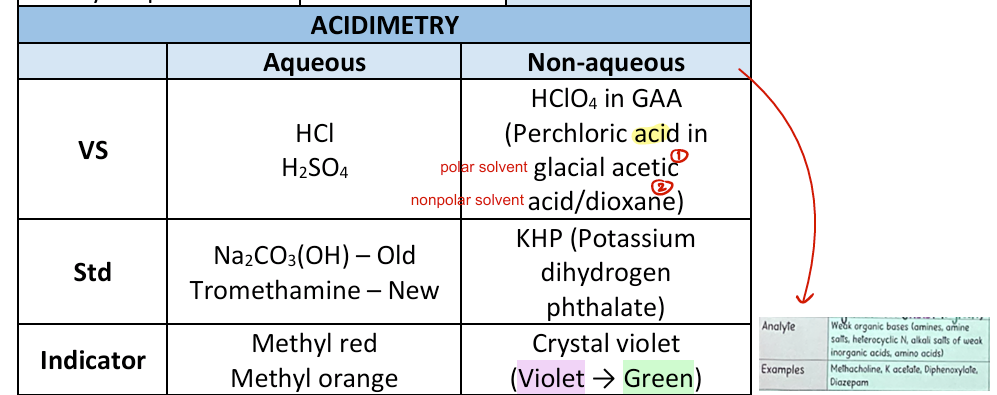
d. HClO₄ in GAA
Perchloric acid in glacial acetic acid or dioxane
[BASED ON TYPE OF RXN INVOLVED]
The titrant used in Non-aqueous Acidimetry
a. HCl and H₂SO₄
b. NaOH or KOH
c. Na methoxide
d. HClO₄ in GAA (Perchloric acid in glacial acetic acid/dioxane)
c. Polar solvent
[BASED ON TYPE OF RXN INVOLVED]
The property of Glacial Acetic Acid (GAA) as a solvent in non-aqueous acidimetry
a. Nonpolar solvent
b. Neutral solvent
c. Polar solvent
d. Basic solvent
a. Nonpolar solvent
[BASED ON TYPE OF RXN INVOLVED]
The property of dioxane as a solvent in non-aqueous acidimetry
a. Nonpolar solvent
b. Neutral solvent
c. Acidic solvent
d. Polar solvent
c. HCl and H₂SO₄
[BASED ON TYPE OF RXN INVOLVED]
The titrant used in Aqueous Acidimetry
a. HClO₄ in GAA
b. NaOH or KOH
c. HCl and H₂SO₄
d. Na methoxide
d. Na₂CO₃
[BASED ON TYPE OF RXN INVOLVED]
The old standard used in Aqueous Acidimetry
a. KHP
b. Tromethamine
c. Sodium oxalate
d. Na₂CO₃
b. Tromethamine
[BASED ON TYPE OF RXN INVOLVED]
The new standard used in Aqueous Acidimetry
a. KHP
b. Tromethamine
c. Sodium oxalate
d. Na₂CO₃
c. Potassium dihydrogen phthalate
[BASED ON TYPE OF RXN INVOLVED]
The full name of KHP used as standard in Non-aqueous Acidimetry
a. Potassium hydrogen phosphate
b. Potassium hydrogen permanganate
c. Potassium dihydrogen phthalate
d. Potassium hydrogen periodate
a. Methyl red or Methyl orange
[BASED ON TYPE OF RXN INVOLVED]
The indicator used in Aqueous Acidimetry
a. Methyl red or Methyl orange
b. Phenolphthalein
c. Thymol blue
d. Crystal violet
d. Crystal violet (Violet to Green)
[BASED ON TYPE OF RXN INVOLVED]
The indicator used in Non-aqueous Acidimetry
a. Methyl red
b. Phenolphthalein
c. Thymol blue
d. Crystal violet (Violet to Green)
a. Weak organic bases
amines, amine salts
heterocyclic N
alkali salts of weak inorganic acids
amino acids
[BASED ON TYPE OF RXN INVOLVED]
The analyte examples in Non-aqueous Acidimetry
a. Weak organic bases
b. Strong organic bases
c. Weak organic acids
d. Weak inorganic acids
b. Diazepam and K acetate
d. Methacholine and Diphenoxylate
[BASED ON TYPE OF RXN INVOLVED]
The drug examples in Non-aqueous Acidimetry
(Multiple answers)
a. ZnO and Milk of Magnesia
b. Diazepam and K acetate
c. NaHCO₃ and KHCO₃
d. Methacholine and Diphenoxylate
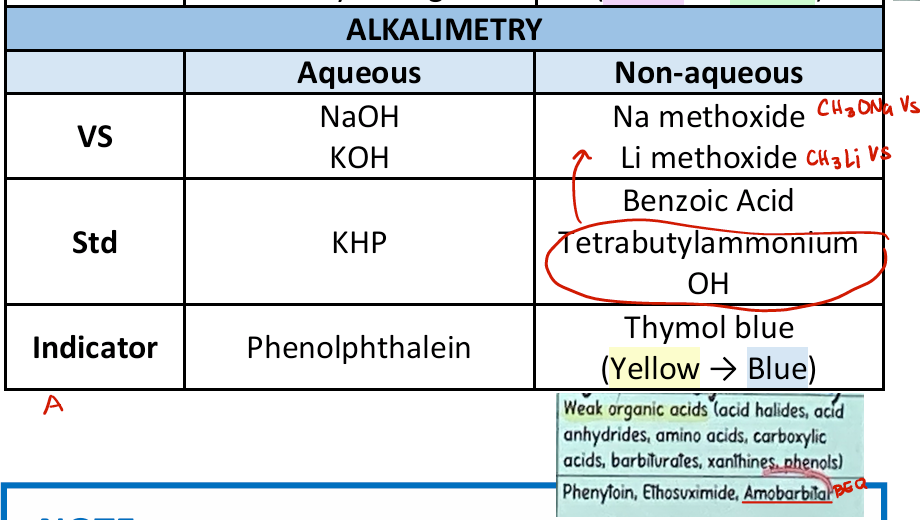
d. NaOH or KOH
[BASED ON TYPE OF RXN INVOLVED]
The titrant used in Aqueous Alkalimetry
a. Na methoxide
b. Li methoxide
c. Tetrabutylammonium OH
d. NaOH or KOH
b. Tetrabutylammonium OH
c. Na methoxide and Li methoxide
[BASED ON TYPE OF RXN INVOLVED]
(multiple answers)
The titrants used in Non-aqueous Alkalimetry
a. NaOH and KOH
b. Tetrabutylammonium OH
c. Na methoxide and Li methoxide
d. KHP and Na₂CO₃
c. CH₃ONa — Vs
[BASED ON TYPE OF RXN INVOLVED]
The abbreviation and formula of Na methoxide
a. CH₃ONaOH — Vs
b. CH₃Li — Vs
c. CH₃ONa — Vs
d. (C₄H₉)₄NOH
d. KHP
[BASED ON TYPE OF RXN INVOLVED]
The standard used in Aqueous Alkalimetry
a. Na₂CO₃
b. Tromethamine
c. Sodium oxalate
d. KHP
c. Benzoic acid
[BASED ON TYPE OF RXN INVOLVED]
The standards used in Non-aqueous Alkalimetry
a. Na₂CO₃ and KHP
b. Tromethamine and KHP
c. Benzoic acid
d. Sodium oxalate and As₂O₃
a. Phenolphthalein
[BASED ON TYPE OF RXN INVOLVED]
The indicator used in Aqueous Alkalimetry
a. Phenolphthalein
b. Thymol blue
c. Methyl red
d. Crystal violet
d. Thymol blue (Yellow to Blue)
[BASED ON TYPE OF RXN INVOLVED]
The indicator used in Non-aqueous Alkalimetry
a. Methyl red
b. Phenolphthalein
c. Crystal violet
d. Thymol blue
a. Yellow→ Blue
[BASED ON TYPE OF RXN INVOLVED]
The results with Thymol blue used in Non-aqueous Alkalimetry
a. Yellow→ Blue
b. Blue→ Yellow
c. Green→ Blue
d. Violet → Green
d. Weak organic acids
acid halides
acid anhydrides
amino acids
carboxylic acids
barbiturates, xanthines, phenols
[BASED ON TYPE OF RXN INVOLVED]
The analyte examples in Non-aqueous Alkalimetry
a. ZnO and Milk of Magnesia
b. NaHCO₃ and KHCO₃
c. Aspirin and Ethyl Acetate
d. Weak organic acids
a. Amobarbital BEQ
b. Phenytoin, Ethosuximide
[BASED ON TYPE OF RXN INVOLVED]
The examples of drugs analyzed by Non-aqueous Alkalimetry
(multiple answers)
a. Amobarbital
b. Phenytoin, Ethosuximide
c. NaHCO₃, KHCO₃, KHP
d. Diphenhydramine, Diazepam, Atropine
c. Insoluble in water or too weak to be titrated in water
The two reasons a sample requires Non-aqueous titration
a. Too acidic or too basic for water
b. Too expensive or too rare
c. Insoluble in water or too weak to be titrated in water
d. Too reactive or too unstable in water
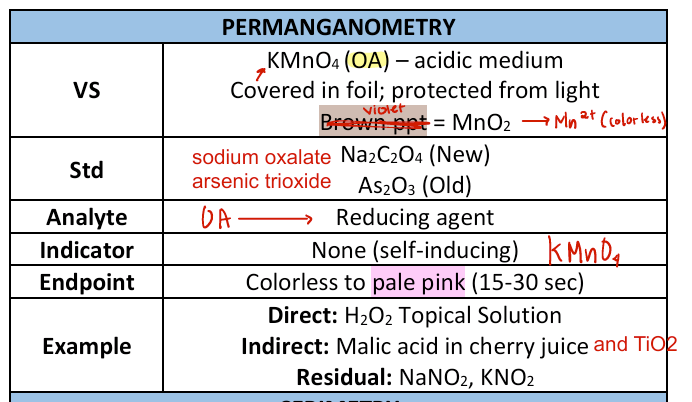
d. KMnO₄
[BASED ON TYPE OF RXN INVOLVED]
The titrant used in Permanganometry
a. Ce(SO₄)₂
b. I₂
c. Na₂S₂O₃
d. KMnO₄
c. Acidic medium
KMnO₄ (Oxidizing Agent)
[BASED ON TYPE OF RXN INVOLVED]
The medium required for Permanganometry
a. Neutral medium
b. Basic medium
c. Acidic medium
d. Non-aqueous medium
c. Protected from light
[BASED ON TYPE OF RXN INVOLVED]
Special instruction in performing Permanganometry
a. Protected from heat
b. Protected from moisture
c. Protected from light
d. Protected from air
d. Brown/violet
[BASED ON TYPE OF RXN INVOLVED]
The color of MnO₄ solution
a. Colorless
b. Red
c. Yellow
d. Brown/violet
d. MnO₂ → Mn²⁺ (colorless)
[BASED ON TYPE OF RXN INVOLVED]
The product formed when KMnO₄ reacts as oxidizing agent (OA)
a. MnO₂ → Mn³⁺ (colorless)
b. MnO₄²⁻ → Mn²⁺ (colorless)
c. Mn²⁺ → MnO₄⁻ (colorless)
d. MnO₂ → Mn²⁺ (colorless)
a. As₂O₃ (arsenic trioxide)
[BASED ON TYPE OF RXN INVOLVED]
The old standard used in Permanganometry
a. As₂O₃
b. Tromethamine
c. KHP
d. Na₂C₂O₄
d. Na₂C₂O₄ (Sodium oxalate)
[BASED ON TYPE OF RXN INVOLVED]
The new standard used in Permanganometry
a. As₂O₃
b. KHP
c. Tromethamine
d. Na₂C₂O₄
b. Reducing agent
[BASED ON TYPE OF RXN INVOLVED]
The analyte in Permanganometry
a. Oxidizing agent
b. Reducing agent
c. Acid
d. Base
d. KMnO₄
self-inducing
[BASED ON TYPE OF RXN INVOLVED]
The indicator used in Permanganometry
a. Ce(SO₄)₂
b. I₂
c. Na₂S₂O₃
d. KMnO₄
c. Colorless to pale pink (15-30 seconds)
[BASED ON TYPE OF RXN INVOLVED]
The endpoint color change in Permanganometry
a. Blue to colorless
b. Red to blue
c. Colorless to pale pink
d. Yellow to green
a. H₂O₂ Topical Solution
[BASED ON TYPE OF RXN INVOLVED]
The example of Direct Permanganometry
a. H₂O₂ Topical Solution
b. NaNO₂
c. KNO₃
d. Malic acid in cherry juice
c. Malic acid in cherry juice and TiO₂
[BASED ON TYPE OF RXN INVOLVED]
The example of Indirect Permanganometry
a. H₂O₂ Topical Solution
b. KHP
c. Malic acid in cherry juice and TiO₂
d. Na₂CO₃
a. NaNO₂ and KNO₃
[BASED ON TYPE OF RXN INVOLVED]
The example of Residual Permanganometry
a. NaNO₂ and KNO₃
b. Malic acid in cherry juice
c. TiO₂
d. H₂O₂ Topical Solution