Histology Fixation Exam
 Call Kai
 Learn
Learn Practice Test
 Spaced Repetition
 Match
Match Flashcards
 Knowt Play
1/191

There's no tags or description
Looks like no tags are added yet.
Name | Mastery | Learn | Test | Matching | Spaced | Call with Kai | Chat |
|---|
No analytics yet
Send a link to your students to track their progress
192 Terms
An example of an additive fixative is one that contains:
a. picric acid
b. acetic acid
c. ethyl alcohol
d. acetone
a. picric acid
- Although picric acid is considered an additive fixative, its reaction with proteins is not completely understood
When compared with tissue fixed in formalin, tissue fixed in zinc-formalin will show:
a. better ultrastructural preservation
b. decreased immunoreactivity
c. increased enzyme activity
d. superior nuclear detail
d. superior nuclear detail
- Zinc is not as toxic as mercury and has been substituted for mercury in the mercury-containing fixatives, as well as added to formaldehyde, because of the comparable, or increased, nuclear detail and increased antigenicity
Microscopic examination of an H&E stained section fixed in formalin shows marked nuclear bubbling. One most often sees this artifact if the specimen is processed following:
a. incomplete fixation
b. prolonged fixation
c. microwave fixation
d. frozen sectioning
a. incomplete fixation
- If tissue is incompletely fixed before placing in the dehydrating solution, a nuclear bubbling artifact may result
Microscopic evaluation of H&E stained sections from a surgically removed small bowel specimen shows an absence of much of the epithelium in otherwise normal tissue. This most likely resulted from:
a. mechanical trauma
b. delayed fixation
c. ulceration
d. poor choice of fixative
b. delayed fixation
- When a prolonged delay in fixation occurs, some cells may completely disappear, such as the epithelial cells in the intestinal tract. GI specimens should be opened, pinned out, and placed in fixative immediately upon receipt
A specimen of kidney must be shipped to another city for immunofluorescence studies. The specimen should be placed in:
a. saline
b. Michel solution
c. buffered formalin
d. Orth solution
b. Michel solution
- Tissue for immunofluorescence studies must be unfixed and when unfixed tissue is to be held for several days or transported over a long distance, then Michel transport medium is recommended
A certain project requires a fixative that contains acetic acid yet stabilizes erythrocyte membranes. One fixative that could be used is:
a. Zenker solution
b. Bouin solution
c. Gendre solution
d. Hollande solution
d. Hollande solution
- The cupric acetate present in Hollande solution stabilizes RBC membranes, so that the lysis that occurs with Bouin solution, and other acetic acid containing fixatives, is much less.
When the microwave oven is used for fixation, the most critical factor is the:
a. preparation of the formalin solution
b. use of glass containers
c. control of the temperature
d. osmolality of the fixation solution
c. control of the temperature
- When the microwave oven is used for fixation, irreversible morphologic damage will result if the temperature is not carefully controlled.
To adequately remove the calcium from a specimen containing areas of microcalcification, the tissue could be fixed in:
a. Hollande solution
b. neutral buffered formalin
c. B-5 solution
d. Zamboni solution
a. Hollande solution
- Hollande solution is a modification of Bouin solution, which contains acetic acid, and this will decalcify small specimens of bone. none of the other fixative listed are acidic.
Which of the following fixatives contains copper acetate?
a. Hollande
b. Bouin
c. Gendre
d. Zamboni
a. Hollande
- Hollande solution contains cupric acetate, which will stabilize RBC membranes and the granules of eosinophils and endocrine cells.
A specimen is submitted with the statement that it was fixed in formalin. Microscopic sections show marked lysis of erythrocytes. This indicated that the fixative most likely was:
a. prepared with too much formalin
b. buffered above neutrality
c. acidified with acetic acid
d. not formalin
c. acidified with acetic acid
- marked lysis of erythrocytes is characteristic of fixatives containing acetic acid.
Fixatives are classified as additive because of the :
a. addition of several chemicals to the solution
b. addition, or binding of the fixatives to tissue proteins
c. additional reactions occurring with longer fixation
d. additional reactive tissue sites available for dye binding
b. addition, or binding of the fixatives to tissue proteins
- Additive fixatives chemically link, or add themselves onto, the tissue and change it with this action.
Kidney biopsy tissue has been fixed in phosphate-buffered glutaraldehyde for 2 hours and then placed in phosphate buffer solution. If a portion of this tissue is processed for light microscopy, sections would most likely show:
a. very poor glomerular preservation
b. decreased uptake of hematoxylin
c. lysis of cytoplasmic elements
d. nonspecific PAS staining
d. nonspecific PAS staining
- Glutaraldehyde is a dialdehyde, and the extra aldehyde group is not involved in most crosslinking reactions; therefore, it is left free to react in any method using Schiff reagent, such as the periodic acid-Schiff (PAS) stain, for the detection of aldehydes. This leads to false positive results.
Uric acid crystals are preserved ONLY when tissue is fixed in:
a. absolute alcohol
b. neutral buffered formalin
c. Orth solution
d. Zamboni solution
a. absolute alcohol
- Uric acid crystals are water soluble, so can be maintained in the tissue only with a fixative solution containing no water. Absolute alcohol is recommended.
Improper preservation of tissue will result if there is:
a. a delay in fixation
b. rapid penetration of the fixing fluid
c. prolonged storage following formalin fixation
d. rapid dehydration, clearing, embedding, and sectioning
a. a delay in fixation
- A delay in fixation will cause improper preservation of the tissue. The nuclei may show a loss or complete disappearance of chromatic; the tissue may also show disruption of the cytoplasm, cell shrinkage, artifactual spaces around cells, or complete loss of some cells.
A good fixative will:
a. render cell constituents soluble
b. minimize differences in tissue refractive indices
c. protect tissue against alteration during subsequent processing
d. minimally affect tissue metabolic processes
c. protect tissue against alteration during subsequent processing
- A fixative should stabilize the tissue elements, so that the effect of any subsequent procedures, such as processing, will be minimal.
The function of methanol in commercial formalin solutions is to:
a. retard the polymerization of formaldehyde
b. prevent the formation of formic acid
c. stabilize the formalin at a basic pH
d. permit room temperature storage of formalin
a. retard the polymerization of formaldehyde
- Commercial formaldehyde contains about 10-14% methanol which is added to help prevent polymerization to paraformaldehyde, a highly polymeric form of formaldehyde.
The problem shown in this image is the result of (SEE PICTURE):
a. incomplete fixation
b. excessive dehydration
c. incomplete clearing
d. poor paraffin infiltration
a. incomplete fixation
- The cracks in the tissue and the smudgy nuclei are due to incomplete fixation.
In electron microscopic, Zamboni fluid, glutaraldehyde, and osmium tetroxide function as:
a. dehydrating agents
b. clearing agents
c. embedding media
d. fixative solutions
d. fixative solutions
- Zamboni solution, glutaraldehyde, and osmium tetroxide function as fixatives for specimens for electron microscopy. Osmium tetroxide may be used either as a primary or a secondary fixative. Zamboni solution and glutaraldehyde are usually followed by osmium tetroxide to increase fat retention and thus membrane preservation.
Tissue will remain unfixed if placed in:
a. potassium dichromate
b. sodium borate
c. osmium tetroxide
d. zinc chloride
b. sodium borate
- Sodium borate is not a fixative.
Bouin solution is contraindicated for:
a. small tissue biopsies
b. tissue intended for subsequent trichrome stains
c. tissue to be stained by the Feulgen reaction
d. routine tissue sections
c. tissue to be stained by the Feulgen reaction
- Picric acid is sufficiently strong acid to hydrolyze nuclei, so if stains for DNA (Feulgen) or RNA are anticipated, any fixative containing picric acid (Bouin, Gendre, Hollande) should be avoided.
Formalin pigment can be removed from tissue sections by treatment with 10%:
a. hydrochloric acid in 70% alcohol
b. nitric acid in 70% alcohol
c. sulfuric acid in 70% alcohol
d. ammonium hydroxide in 70% alcohol
d. ammonium hydroxide in 70% alcohol
- 100 mL of 70% alcohol containing 3 mL of ammonium hydroxide will remove formalin pigment when slides are placed in this solution for 30 minutes to 3 hours.
Stock neutralized formalin is prepared in the laboratory by storing the solution over a layer of calcium carbonate. The solution withdrawn from this stock container will:
a. become acidic
b. become alkaline
c. remain neutral
d. exhibit metachromasia
a. become acidic
- Solutions of neutralized formalin prepared by storing the solution over a layer of calcium carbonate will gradually become acidic, because the pH has not been stabilized by buffering the solution.
Microscopic evaluation reveals a poorly stained H&E section of spleen. These results will be difficult to remedy if the problem is:
a. poor fixation
b. improper sections
c. poor staining
d. incorrect section placement
a. poor fixation
- When poorly fixed tissue is processed and embedded, the staining results are most often not optimum and are very difficult, if not impossible, to remedy.
To make a 10% formalin solution, how many mL of water should be added to 300 mL of 37% to 40% formaldehyde solution?
a. 1,800
b. 2,500
c. 2,700
d. 3,600
c. 2,700
- 300 mL of 37%-40% formaldehyde solution added to 2,700 mL of water will yield a total of 3,000 mL of a 10% formalin solution.
One action of acetic acid is to:
a. exert a shrinking effect of tissue
b. render nucleoprotein acidophilic
c. form salt linkages between protein chains
d. coagulate nucleoproteins
d. coagulate nucleoproteins
- The major use of acetic acid in fixatives is the precipitation, or coagulation, and preservation of nucleoproteins.
Aldehyde fixatives are used for electron microscopic preparations because they:
a. are readily available
b. visibly stain tissue
c. preserve cell ultrastructure
d. coagulate tissue lipids
c. preserve cell ultrastructure
- Aldehyde fixatives are used for electron microscopy preparations because they preserve cell ultrastructure. They must be followed by secondary osmium tetroxide fixation to preserve lipids.
A fixative containing potassium dichromate:
a. is suitable when histochemical techniques are planned
b. will result in excellent subsequent silver staining
c. is preferred for the preservation of argentaffin cells
d. will make tissue more receptive to eosin staining
d. will make tissue more receptive to eosin staining
- Tissue that has been fixed in a solution containing potassium dichromate will be very receptive to eosin staining.
If mercuric chloride is used alone for fixation, it will:
a. leave tissue proteins uncoagulated
b. produce a very acidic solution
c. penetrate poorly and cause excessive shrinkage
d. decrease tissue affinity for stains
c. penetrate poorly and cause excessive shrinkage
- Poor penetration and excessive shrinkage will result if mercuric chloride is used alone for fixation. It is a powerful protein coagulant and enhances staining by leaving the tissues very receptive to dyes.
Tissue stored for long periods of time in unbuffered formalin or in acetate formalin may show brown, crystalline pigment in stained sections. To remove this pigment prior to staining it is necessary to treat the microscopic section with:
a. saturated alcoholic picric acid
b. alcoholic lithium chloride
c. iodine and sodium thiosulfate
d. potassium permanganate and oxalic acid
a. saturated alcoholic picric acid
- The pigment is black acid hematin, or formalin pigment, which tends to form when the pH of the solution drops below 6.0; this may happen in unbuffered formalin solutions. The pigment may be removed by treating with saturated alcoholic picric acid.
For good fixation of tissue with osmium tetroxide for electron microscopy, it is recommended that the tissue segment be no larger than:
a. 1 mm^3
b. 2 mm^3
c. 1 cm^3
d. 2 cm^3
a. 1 mm^3
- Osmium tetroxide penetrates very poorly, and so specimens should be minced to approximately 1 mm cubes for electron microscopy and cut very thin for demonstrating fat in paraffin sections.
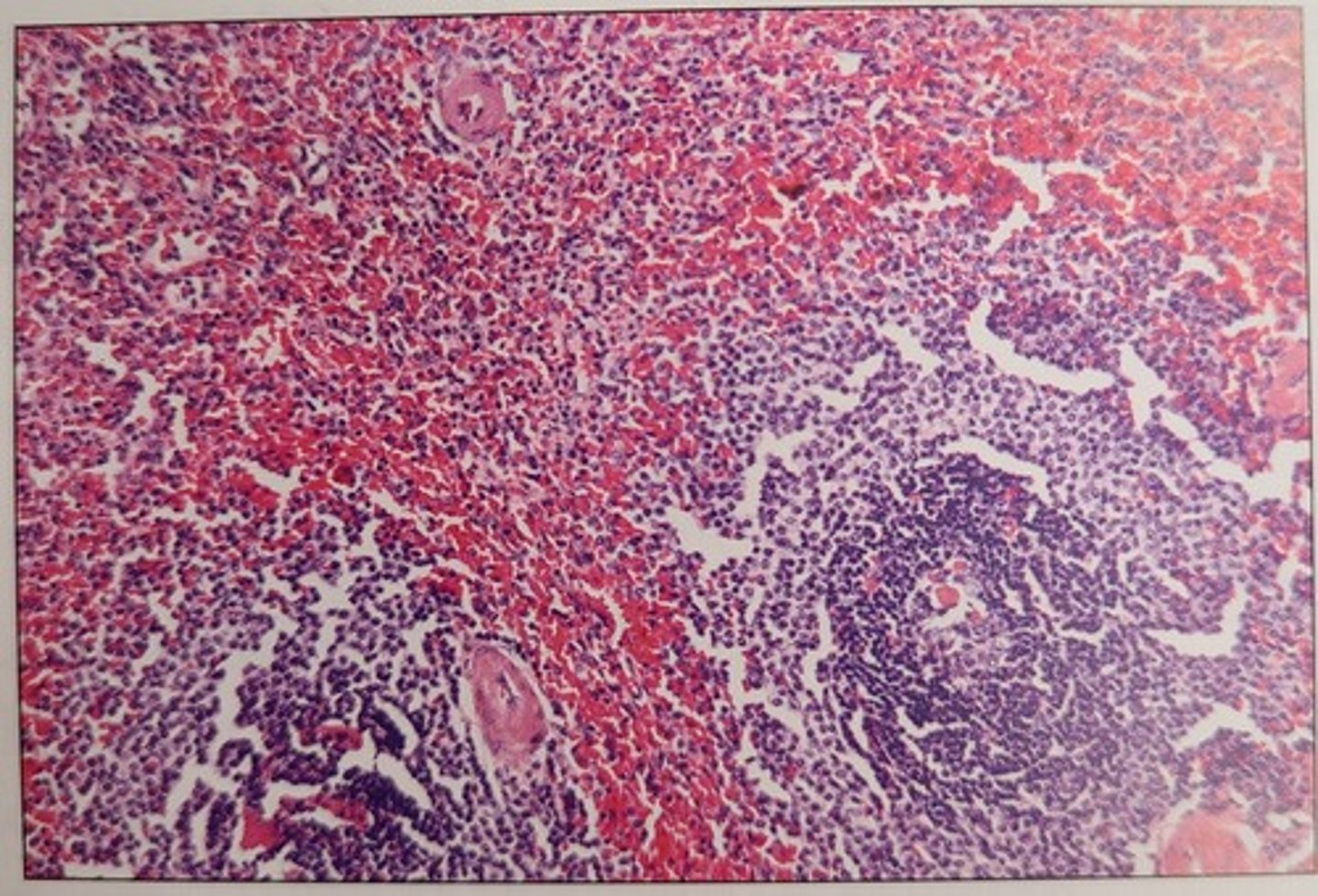
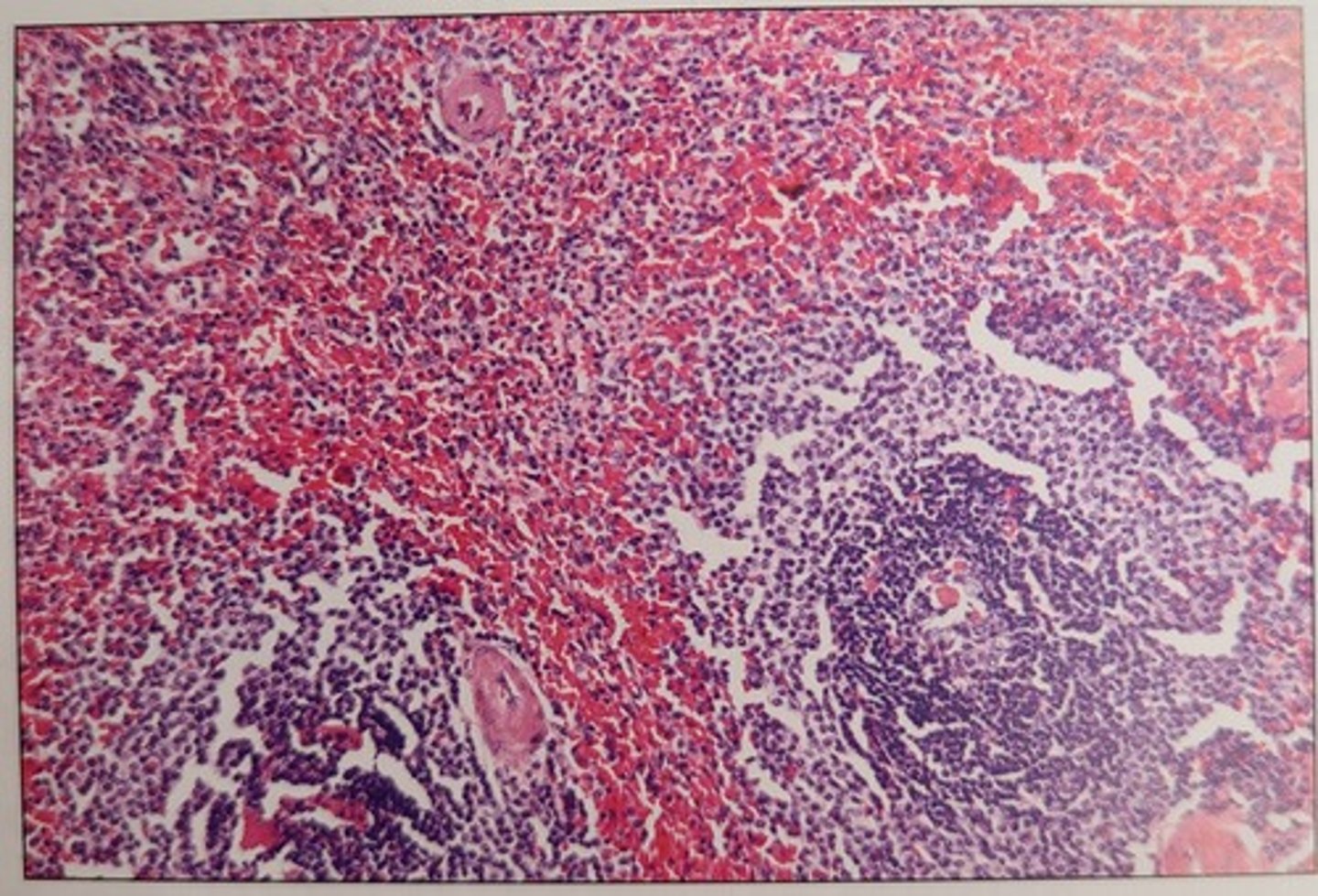
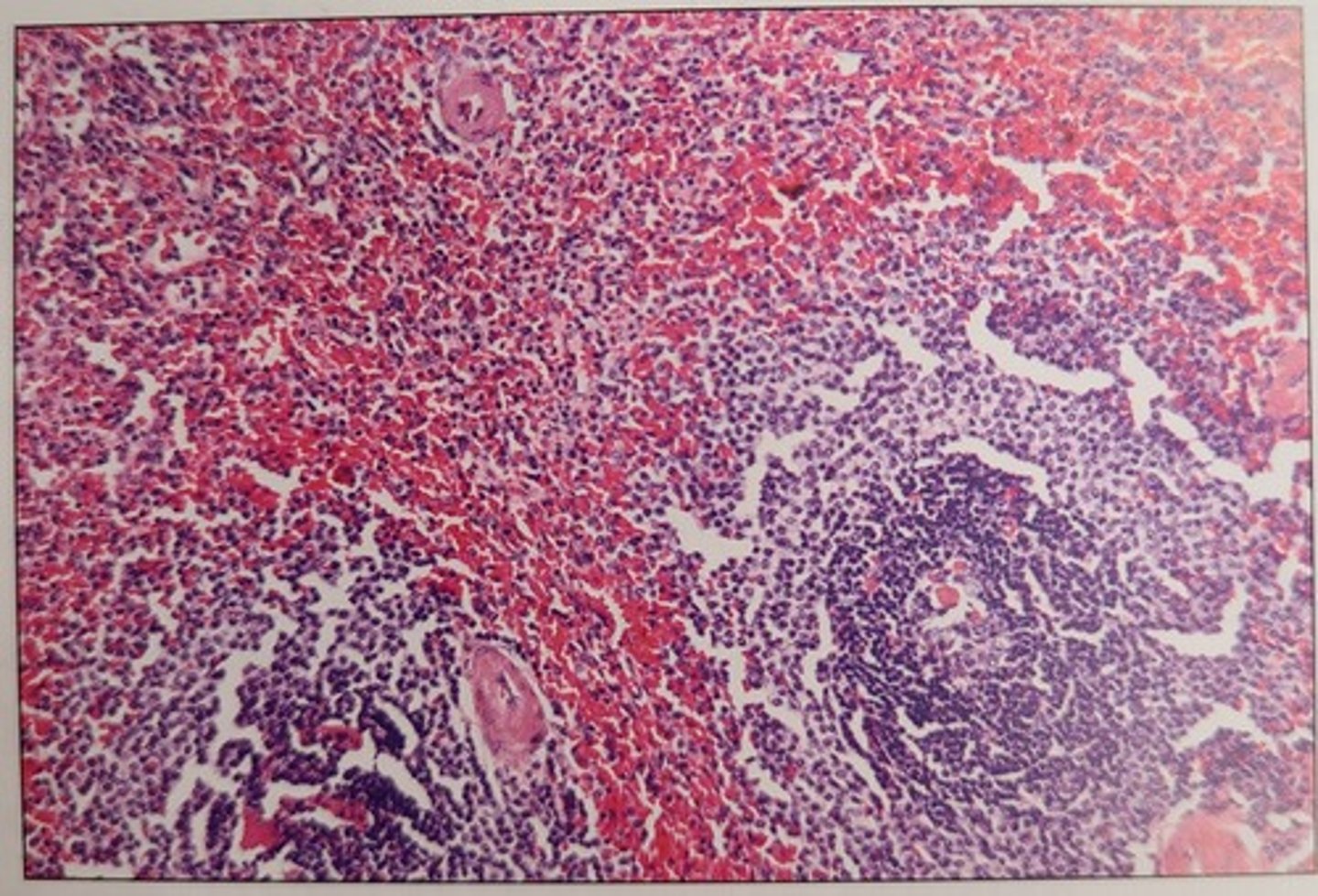
The tissue shown in this image is (SEE PICTURE):
a. liver
b. kidney
c. spleen
d. lymph node
c. spleen
- The tissue shown in this image is spleen.
Following fixation with Bouin solution, tissue should be washing with:
a. absolute alcohol
b. 50% to 70% alcohol
c. 20% to 40% alcohol
d. saline solution
b. 50% to 70% alcohol
- Traditionally, tissue fixed in Bouin solution is wased with 50%-70% alcohol or 70% alcohol saturated with lithium carbonate, before processing. If excess picric acid is left in embedded tissue, the staining will deteriorate.
The PTAH staining technique would be required postfixation, or mordanting, if the tissue were originally fixed in:
a. Bouin
b. Zenker
c. Gendre
d. formalin
d. formalin
- PTAH stains are not good after formalin fixation. Zenker fixative has been used traditionally, but bouin solution and other mordants are also effective.
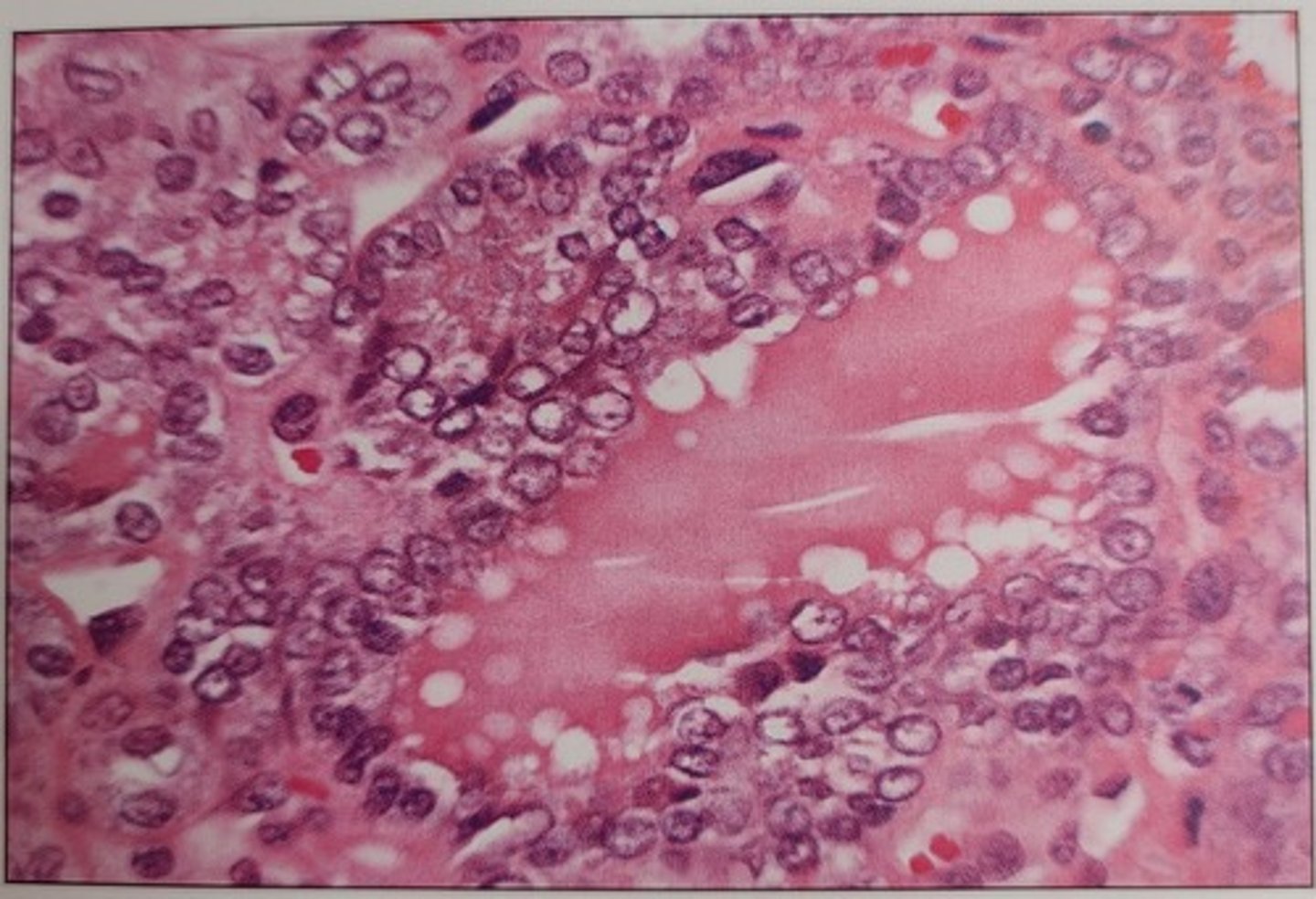
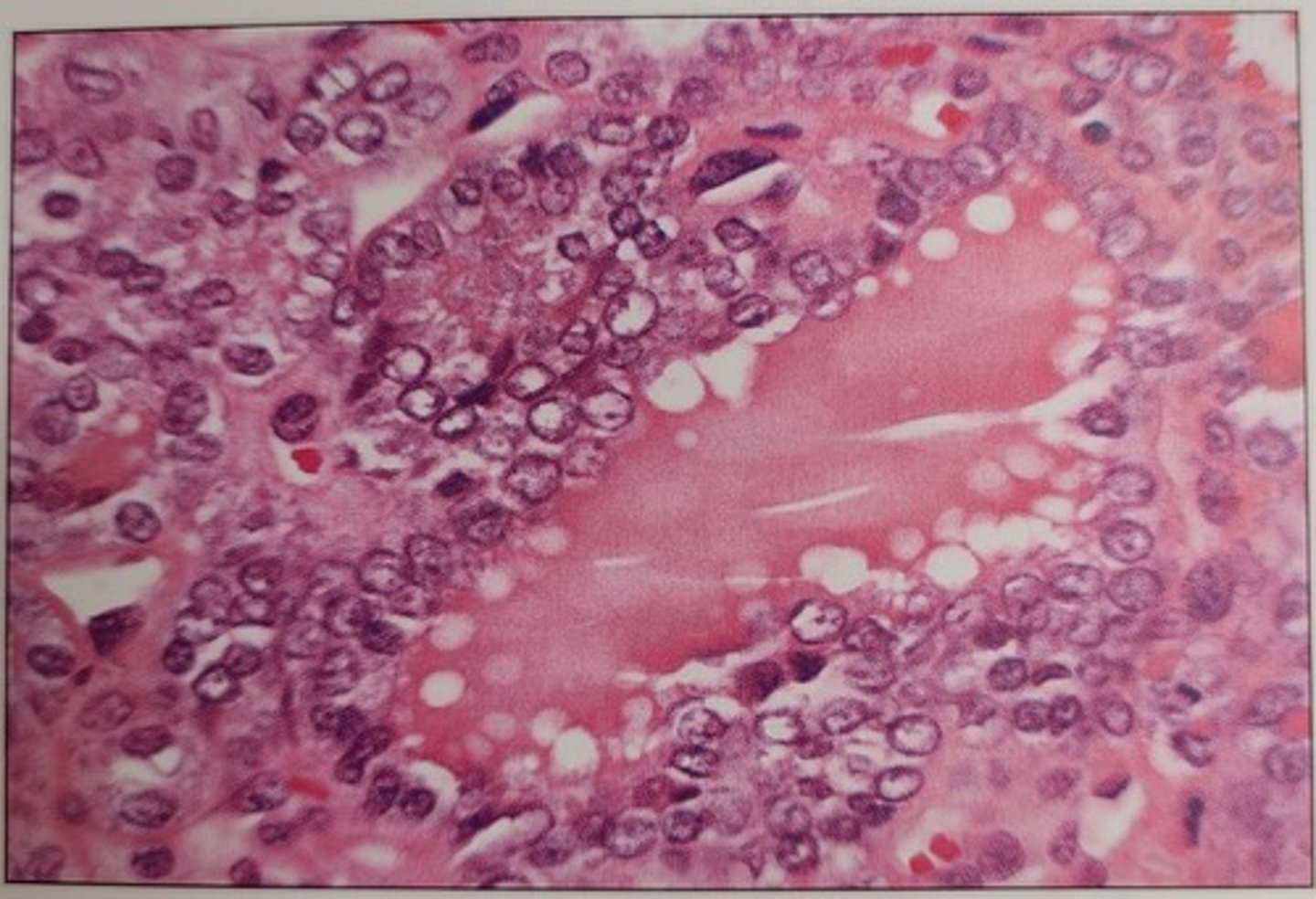
The problem seen in this image is known as (SEE PICTURE):
a. cell shrinkage
b. smudgy nuclei
c. pyknotic nuclei
d. nuclear bubbling
d. nuclear bubbling
- The problem shown in this image is nuclear bubbling.
Absolute ethanol is a poor choice for the fixation of:
a. glycogen
b. pigments
c. lipids
d. blood smears
c. lipids
- Absolute ethanol will dissolve lipids, and therefore should not be used if lipid preservation is important.
Which of the following fixatives may give false positive results in some carbohydrate techniques?
a. neutral buffered formalin
b. Bouin solution
c. Gendre solution
d. glutaraldehyde
d. glutaraldehyde
- Glutaraldehyde is a dialdehyde. The extra aldehyde group does not form crosslinks with the tissue, leaving one techniques depending on the demonstration of aldehydes.
It is necessary to adjust the pH of most formalin solutions because of the presence of:
a. methanol
b. formic acid
c. paraformaldehyde
d. carbon dioxide
b. formic acid
- Formaldehyde solutions become acidic by reacting with atmospheric oxygen to form formic acid; therefore, most formalin solutions require raising the pH, or preferably buffering to approximate neutrality Formic acid is undesirable because it leads to the formation of formalin pigment.
The rate of fixation varies with the fixative and also with the:
a. time place in the fixative of choice
b. expected completion time of the report
c. anticipated special stains needed
d. temperature of the fixative solutions
d. temperature of the fixative solutions
- In general, an increase in temperature increases the rate of fixation but also increases the rate of autolysis and diffusion of cellular elements.
Carnoy solution is recommended for the preservation of:
a. acid-fast bacilli
b. nucleic acids
c. lipids
d. red blood cells
b. nucleic acids
- Carnoy solution exhibits good nuclear preservation, but lyses red blood cells, dissolves lipids, and is not recommended for the preservation and subsequent demonstration of acid-fast bacilli.
Which of the following factors affects fixation for light microscopy the least?
a. temperature
b. volume ratio
c. penetration rate
d. pH
d. pH
- Good preservation of tissue for light microscopy is least dependent on fixative pH, and many fixatives are quite acidic. Varying the pH from 4 to 9 apparently makes little difference in the fine structure produced by formalin fixation; however, a pigment is produced at the lower pH. The other factors listed are very important.
Formalin pigment is generally created in tissues fixed in formalin when the pH:
a. rises above 6
b. falls below 6
c. is buffered to neutrality
d. is 7.2
b. falls below 6
- Formalin pigment is generally created in tissues fixed in formalin when the pH falls below 6. This pigment may be formed by any acidic fixative containing formaldehyde.
Very bloody cytology smears are often treated with:
a. 10% formalin
b. Hollande solution
c. Clark solution
d. acetone
c. Clark solution
- Because blood somtimes obscures important cellular detail in very bloody cytology smears, Clark solution is used to lyse the red blood cells.
Glyoxal is one of the newer fixatives which has the added advantage of:
a. ability to crosslink
b. rapidity of action
c. enhanced staining
d. preservation of erythrocytes
b. rapidity of action
- Glyoxal fixatives are extremely rapid in action, and surgical specimens are fixed after only 4 to 6 hours exposure. Glyoxal forms crosslinks only under very specific conditions, lyses erythrocytes, and there may be a slight reduction in staining especially after long periods of storage.
If a tissue section was fixed in a solution different from that required for a staining procedure, microscopic sections frequently can be stained anyway if they are:
a. soaked in a solution of lithium carbonate prior to staining
b. revitalized by washing in a solution of sodium bisulfite
c. postfixed in the appropriate fixative prior to staining
d. treated with hydrogen peroxide
c. postfixed in the appropriate fixative prior to staining
- Sections can usually be mordanted, or postfixed, in the fixative required for yielding the best staining results.
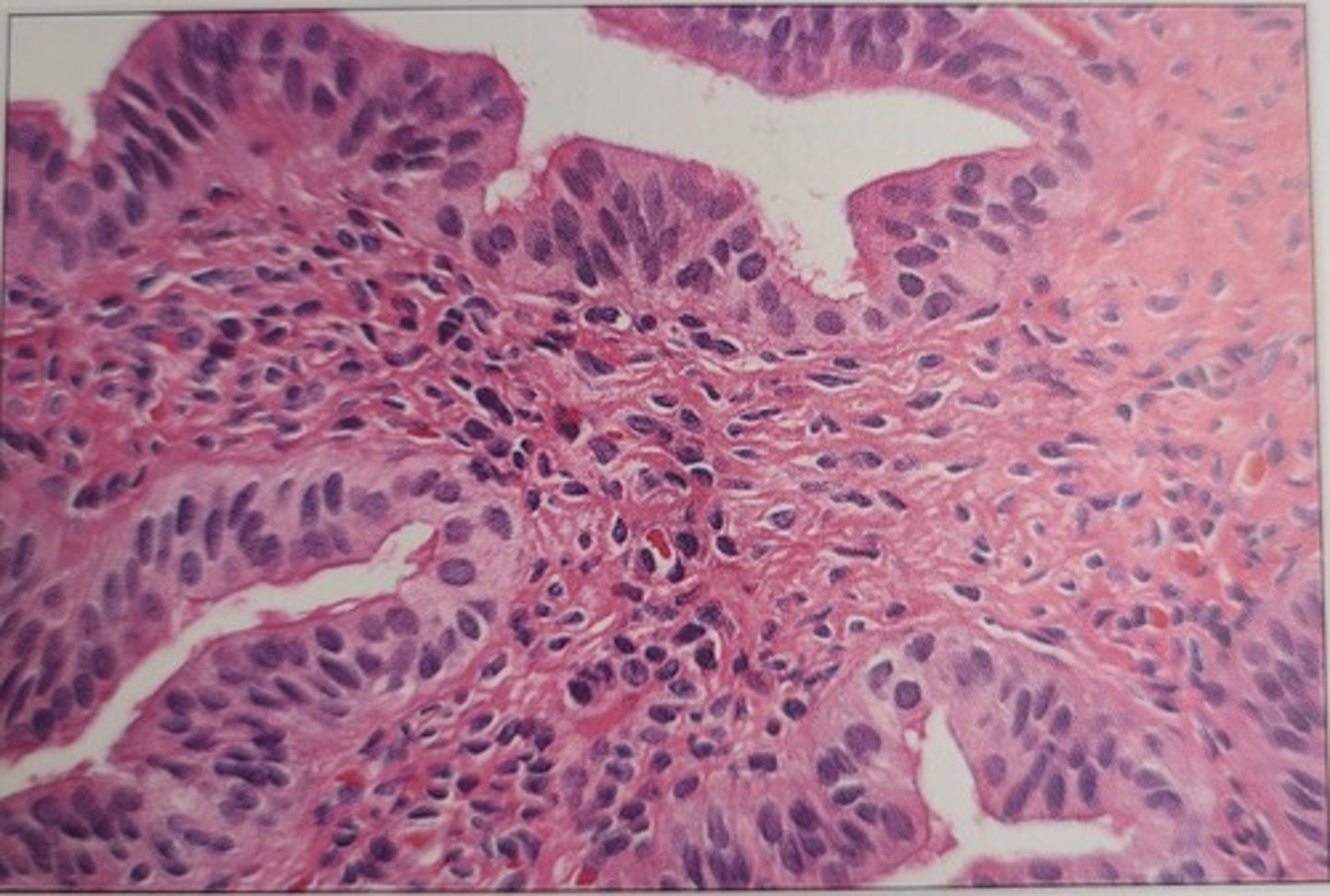
The nuclear problem seen in this image is (SEE PICTURE):
a. understained chromatin
b. cell shrinkage
c. smudgy nuclei
d. nuclear bubbling
c. smudgy nuclei
- The nuclear problem seen in this image is smudgy nuclei, or the lack of a visible chromatin pattern, especially in the epithelium.
Fixation in Bouin solution is:
a. recommended for the Feulgen reaction
b. excellent for ultrastructural preservation
c. the cause of considerable swelling of tissue
d. frequently used for endocrine tissues
d. frequently used for endocrine tissues
- Bouin solution is an excellent fixative for biopsy specimens of the gastrointestinal tract and of the endocrine system.
B-5 fixative contains:
a. mercuric chloride, sodium acetate, and glacial acetic acid
b. mercuric chloride, potassium dichromate, and glacial acetic acid
c. mercuric chloride, sodium acetate, and 37% to 40% formaldehyde
d. mercuric chloride, potassium dichromate, and 37% to 40% formaldehyde
c. mercuric chloride, sodium acetate, and 37% to 40% formaldehyde
- B-5 fixative contains mercuric chloride, sodium acetate, ad 37%-40% formaldehyde.
Pigmented caused by mercury-containing fixatives can be removed from tissues by:
a. saturated alcoholic picric acid
b. iodine-sodium thiosulfate
c. washing in running water
d. potassium hydroxide in water
b. iodine-sodium thiosulfate
- Iodine followed by sodium thiosulfate is used for the removal of the pigment caused by mercury-containing fixatives.
Which of the following fixatives has a mordanting effect on tissue?
a. Carnoy solution
b. 10% calcium formalin
c. absolute alcohol
d. Bouin solution
d. Bouin solution
- Bouin solution is indicated as a mordant for trichrome stains if the tissue was not originally fixed in that solution.
Tissue should be placed in a fixative solution immediately after removal from the body to:
a. prevent decomposition due to enzymatic activity
b. permit the dehydrant to function properly
c. inhibit crosslinking of tissue proteins
d. stabilize tissue carbohydrates
a. prevent decomposition due to enzymatic activity
- Decomposition of tissue by enzymatic action begins as soon as the blood supply is interrupted; therefore, the tissue should be placed in fixative solution immediately after removal.
Calcium-formalin fixative is recommended for the BEST preservation and subsequent demonstration of:
a. glycogen
b. phospholipids
c. amyloid
d. estrogen receptors
b. phospholipids
- Calcium formalin is recommended especially for the fixation and preservation of phospholipids in tissues. Phospholipids tend to take up water and extend their surface by growing outward in wormlike myelin forms; calcium ions have a dramatic effect in preventing this.
For most fixatives, the volume of fixing fluid in relation to the volume of tissue should be:
a. 2 to 5 times
b. 6 to 9 times
c. 10 to 14 times
d. 15 to 20 times
d. 15 to 20 times
- The volume of the fixative solution should be at least 15-20 greater than the volume of the tissue.
Ultrastructural preservation will be very poor following fixation in:
a. Zamboni PAF
b. 2% buffered glutaraldehyde
c. osmium tetroxide
d. 10% aqueous formalin
d. 10% aqueous formalin
- Ultrastructural preservation will be poor following fixation in 10% aqueous formalin. Formalin solutions should be buffered to neutrality and the tonicity adjusted for use as a fixative for electron microscopy.
Glyoxal is a/an:
a. aliphativ hydrocarbon
b. aromatic hydrocarbon
c. dialdehyde
d. ketone
c. dialdehyde
- Glyoxal is the smallest dialdehyde
Zinc-formalin fixatives:
a. give poor ultrastructural preservation
b. can be used to preserve enzymes
c. result in poor nuclear detail
d. will not coagulate tissue proteins
a. give poor ultrastructural preservation
- Zinc-formalin fixatives will give poor ultrastructural preservation. Zinc is a protein coagulant and the fixatives used for ultrastructural studies are noncoagulants
Zamboni PAF refers to a fixative containing:
a. potassium dichromate, acetic acid, and formaldehyde
b. potassium aluminum sulfate and paraformaldehyde
c. buffered picric acid and formaldehyde
d. picric acid, acetic acid, and formaldehyde
c. buffered picric acid and formaldehyde
- Zamboni refers to a buffered picric acid-formaldehyde solution that may be used as a general purpose fixative. It allows secondary fixation with osmium tetroxide and preserves the morphologic characteristics accurately; therefore, it is useful for both light and electron microscopy
The problem seen in this image most likely could have been prevented by (SEE PICTURE):
a. immediate and prolonged fixation
b. less processing time
c. increased time
d. better microtomy technique
a. immediate and prolonged fixation
- The problem in this section could have been prevented by slicing the specimen upon receipt, placing it in fixative and allowing plenty of time for complete fixation
The preferred fixative when tissue is to be stained for the presence of simple fats is:
a. Zenker
b. Helly
c. Hollande
d. neutral buffered formalin
d. neutral buffered formalin
- Stains for fat are done on frozen sections, and the preferred fixative is neutral buffered formalin
Fixation of cytology smears should occur within:
a. 1-2 seconds
b. 10-15 seconds
c. 40-45 seconds
d. 1 minute
a. 1-2 seconds
- Cytology smears should be fixed within 1-2 seconds, or an air-drying artifact will most likely occur
When osmium tetroxide is used as a fixative in histology, it:
a. destroys lipids
b. interferes with staining
c. leaves tissue very soft
d. distorts cell membranes
b. interferes with staining
- After osmium tetroxide fixation, cell cytoplasm has little affinity for the anionic (acid, eg, eosin) dyes, but will readily accept cationic (basic) dyes
The breakdown of tissue due to enzyme activity is called:
a. polymerization
b. putrefaction
c. autolysis
d. osmosis
c. autolysis
- The breakdown of tissue due to enzyme activity is called autolysis. Putrefaction is cause by bacterial action, polymerization is a chemical reaction in which 2 or more small molecules join together to form a larger molecule, and osmosis refers to diffusion through a semipermeable membrane
The fixative of choice for the demonstration of a gouty tophus is:
a. neutral buffered formalin
b. absolute alcohol
c. Bouin solution
d. Znker solution
b. absolute alcohol
- Urate crystals found in gouty tophi are water soluble; therefore, an aqueous based fixative cannot be used; absolute alcohol is the fixative of choice
A good fixative for routine use is one that:
a. makes tissue more permeable to fluids
b. is hypotonic to the tissue constituents
c. enhances putrefaction of tissue components
d. promotes tissue autolysis
a. makes tissue more permeable to fluids
- A good fixative for routine use should make the tissue more permeable to fluids, so that all subsequent processes occur readily
A pigment caused by chromate-containing fixatives can be prevented by treating the tissue prior to processing with:
a. running water
b. iodine
c. picric acid
d. potassium permanganate
a. running water
- Chromate-containing fixatives should be washed with water before processing because the dehydrating alcohol can cause an insoluble pigment to form
When fixing tissue for electron microscopy with formaldehyde or glutaraldehyde, the preservation of ultrastructure depends upon all of the following EXCEPT the:
a. pH
b. time and temperature
c. concentration and purity of the reagent
d. type of tissue
d. type of tissue
- The pH, time, and temperature of fixation, and the concentration and purity of the reagents all play an important role in the proper preservation of the ultrastructure, the type of tissue is not important
Formic acid present in commercial formalin solutions may:
a. facilitate pigment formation
b. precipitate hemosiderin
c. promote staining
d. cause tissue shrinkage
a. facilitate pigment formation
- Formic acid in formalin leads to the formation of black acid hematin, or formalin pigment
Carnoy solution is a combination of which of the following chemicals?
a. absolute alcohol, acetone, and glacial acetic acid
b. cedarwood oil, absolute alcohol, and glacial acetic acid
c. acetone, chloroform, and absolute alcohol
d. chloroform, glacial acetic acid, and absolute alcohol
d. chloroform, glacial acetic acid, and absolute alcohol
- Carnoy solution contains chloroform, glacial acetic acid, and absolute alcohol
When using a nonimmunologic stain for chromaffin granules, it is necessary to fix the tissue in a:
a. mercury fixative
b. primary chromate fixative
c. formalin fixative
d. picric acid fixative
b. primary chromate fixative
- A primary chromate fixative is necessary for the preservation of chromaffin granules. The demonstration of these granules are used for the diagnosis of pheochromocytoma
(Note: book states it is a primary dichromate fixative such as Orth solution)
When liver tissue is fixed with 2% to 3% glutaraldehyde:
a. glycogen is dissolved
b. the penetration rate is very rapid
c. a chemical reaction occurs with lipids
d. the ultrastructural is preserved
d. the ultrastructural is preserved
- 2% to 3% glutaraldehyde is an excellent fixative for the preservation of tissue ultrastructure. Secondary fixation with osmium tetroxide is necessary to chemically react with and preserve the lipids before processing for EM
A poor fixative is characterized by:
a. the absence of shrinking or swelling of tissue
b. inactivation of tissue enzymes
c. slow tissue penetration
d. the absence of distortion or dissolution
c. slow tissue penetration
- Slow penetration of tissue is an undesirable fixative characteristic
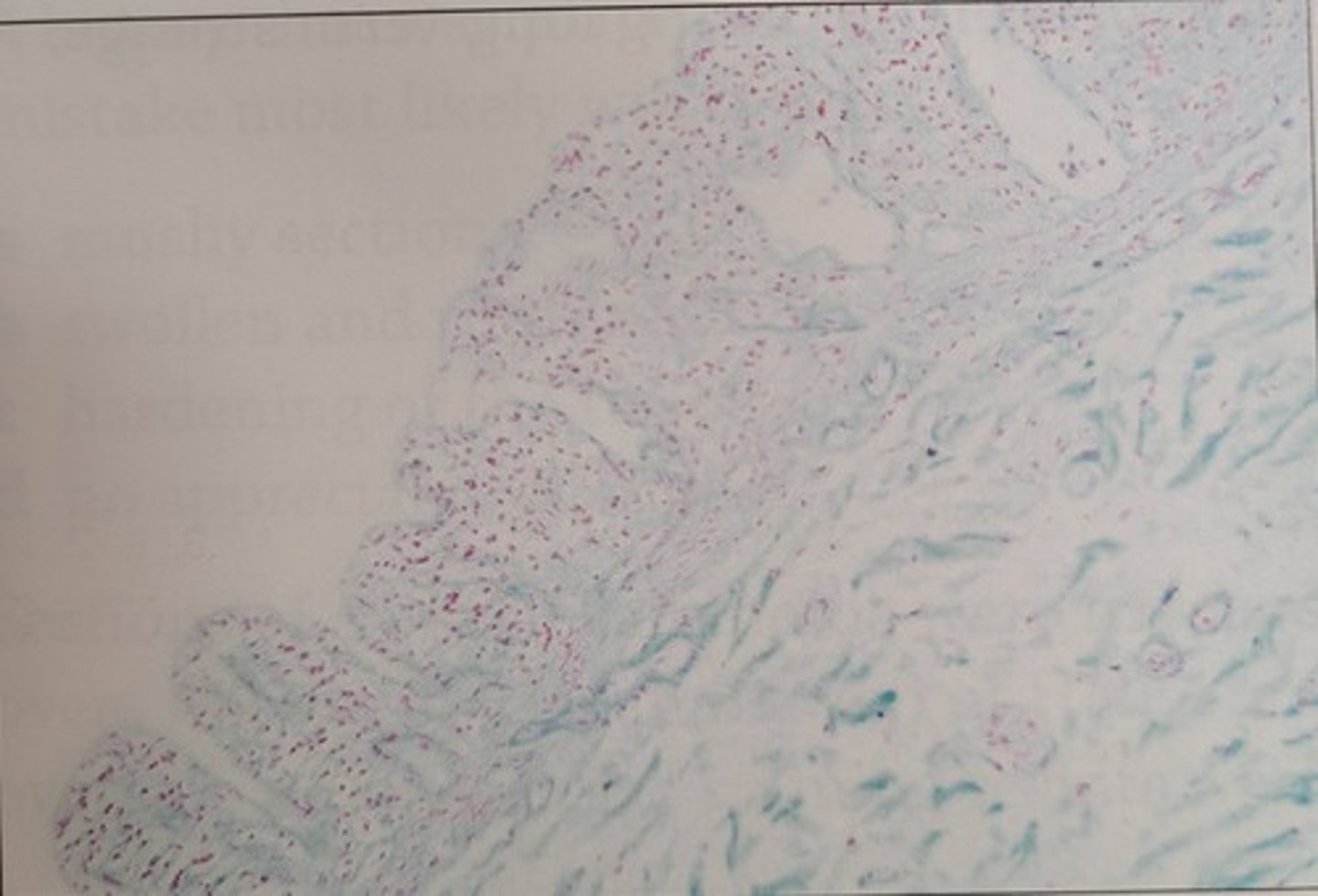
The problem seen in this image possibly could have been prevented by (SEE PICTURE):
a. buffering the formaldehyde solution
b. immediate contact with fixative solution
c. grossing the specimen more carefully
d. better processing protocol
b. immediate contact with fixative solution
- Some of the epithelium is gone in this section, indicating that there was a slight delay in fixation. GI specimens should be opened, pinned out, and placed in fixative as soon after interruption of the blood supply as possible
Bouin solution contains all of the following EXCEPT:
a. picric acid
b. absolute alcohol
c. 37% to 40% formaldehyde
d. glacial acetic acid
b. absolute alcohol
- Bouin solution does not contain absolute alcohol
Coagulant fixatives:
a. change the spongework of proteins into a mesh-like network
b. produce fewer artifacts than noncoagulant fixatives
c. act very slowly to fix tissues
d. leave protein linkages unaffected
a. change the spongework of proteins into a mesh-like network
- Coagulant fixatives establish a meshlike network in tissue that allows solution to readily penetrate or gain entry into the interior of the tissue
The breakdown of tissue by bacterial action is called:
a. autolysis
b. putrefaction
c. denaturation
d. oxidation
b. putrefaction
- Tissue breakdown by bacterial action is known as putrefaction
When ultrastructural preservation is of the utmost importance, the fixative used should have a pH of:
a. 6.8 to 7.0
b. 7.2 to 7.4
c. 7.6 to 7.8
d. 8.0 to 8.2
b. 7.2 to 7.4
- When ultrastructural preservation is the main purpose of fixation, the solution should be buffered to a pH of 7.2-7.4; this is a physiologic pH, or approximately the pH of tissue fluid
A fixative component that produces a diffuse brownish black pigment is:
a. picric acid
b. osmium tetroxide
c. mercuric chloride
d. acetic acid
c. mercuric chloride
- Mercuric salts will produce a brownish-black pigment in tissues
For the BEST preservation of staining properties during long-term storage, tissues should be stored in:
a. buffered formalin
b. 10% formal-saline
c. 70% ethanol
d. Zamboni solution
c. 70% ethanol
- The best solution for long term storage of tissue is 70% alcohol; this preserves both routine and immunohistochemical staining properties
Ethanol is useful as a fixative because it:
a. crosslinks proteins
b. increases tissue basophilia
c. prevents tissue shrinkage
d. preserves glycogen very well
d. preserves glycogen very well
- Ethyl alcohol is a precipitant fixative solution that is used primarily for the fixation of water soluble substances, such as glycogen and urate crystals. It is a nonadditive fixative that has no effect on tissue basophilia, and it shrinks and overhardens tissue
The nuclear problem seen in this image is most often attributed to (SEE PICTURE):
a. delay in fixation
b. incomplete fixation
c. overdehydration
d. poor paraffin infiltration
b. incomplete fixation
- Nuclear bubbling is most often the result of placing the incompletely fixed tissue in the dehydrating solutions
To prevent the formation of formalin pigment in tissues, formalin should be:
a. heated
b. cooled
c. buffered
d. acidified
c. buffered
- Formalin solutions should be buffered to a pH of 6.8-7.4 in order to prevent the formation of formalin pigment; this pigment usually occurs if the pH drops below 6.0
Which of the following fixative should be used for specimens that may NOT be processed for several days?
a. 10% neutral buffered formalin
b. Bouin solution
c. Helly solution
d. Zenker solution
a. 10% neutral buffered formalin
- Specimens may remain in 10% neutral buffered formalin indefinitely, and this is not true of the other fixatives listed; so if the date of processing is not definite, then formalin is the best choice
A biopsy that was placed in water by mistake is submitted to the laboratory. This mistake most likely will cause:
a. mushy sections
b. swollen and ruptured cells
c. hardening of the tissue
d. no appreciable changes
b. swollen and ruptured cells
- Placing a specimen in water will cause the cells to take up water and swell and rupture as a result. Placing tissue in any hypotonic solution can have this effect
Sections of a breast carcinoma were fixed in a saline solution in the microwave oven. Microscopic examination of H&E-stained sections show marked pyknotic, overstained nuclei. The staining results were most likely caused by the:
a. use of saline for fixation
b. solution temperature exceeding 68 degrees celcius
c. use of plastic containers in the microwave
d. presence of carcinoma in the breast tissue
b. solution temperature exceeding 68 degrees celsius
- If the temperature of the microwave over is allowed to exceed 68 degrees celsius, the tissue will show pyknotic, overstained nuclei
An unknown pigment in a tissue section that can be bleached with a saturated alcoholic solution of picric acid is most likely:
a. melanin pigment
b. formalin pigment
c. hemosiderin
d. mercury pigment
b. formalin pigment
- An alcoholic solution saturated with picric acid is commonly used to remove formalin pigment; melanin pigment is usually bleached with an oxidizing agent; hemosiderin, or iron pigment, is usually demonstrated with the Prussian blue reaction and mercury pigment is removed by iodine
The formaldehyde in Helly solution:
a. causes reduction of some chemicals in the solution
b. coagulates and denatures tissue proteins
c. prevents turbidity and precipitate formation
d. eliminates the need for postfixation washing
a. causes reduction of some chemicals in the solution
- Formaldehyde is a reducing agent, and will reduce some of the chemicals present in Helly solution. This results in the solution turning dark and turbid
Formaldehyde solutions for routine use are most commonly buffered by:
a. monobasic and dibasic phosphates
b. sodium acetate and acetic acid
c. s-collidine and hydrochloric acid
d. sodium barbitol and sodium hydroxide
a. monobasic and dibasic phosphates
- Monobasic and dibasic sodium phosphate are commonly used to buffer formaldehyde solutions for routine use
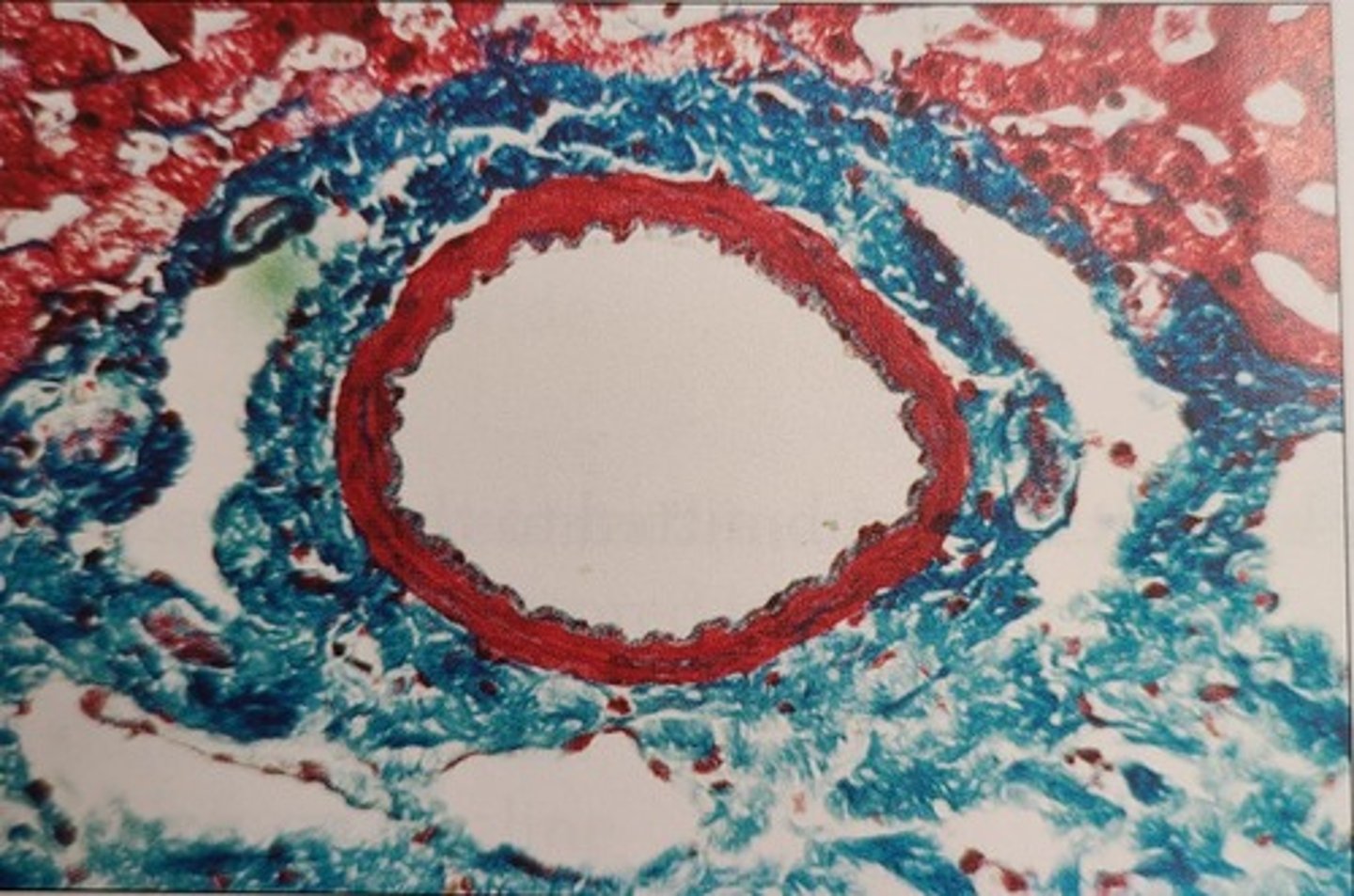
The preferred fixative for the image seen below is: (THIS HAS A PICTURE)
a. 10% neutral buffered formalin
b. alcohol
c. Clark solution
d. Bouin solution
d. Bouin solution
- The preferred fixative for the trichrome procedure shown in this image in Bouin solution
One characteristic of Zamboni fixative is that it:
a. does not stabilize cellular proteins
b. may be used for electron microscopy
c. is easily destroyed by tissue fluids
d. must be followed by osmium tetroxide
b. may be used for electron microscopy
- Zamboni fixative is a buffered formaldehyde-picric acid that is a good dual purpose fixative; that is, it is good for both light and electron microscopy
The BEST fixative for blood smears is:
a. Bouin solution
b. Carnoy solution
c. B-5 solution
d. methanol
d. methanol
- Methanol is the best fixative for blood smears
When used as a secondary fixative, osmium tetroxide should be:
a. used after lead citrate
b. heated prior to use
c. combined with alcohol
d. used under a chemical hood
d. used under a chemical hood
- Osmium tetroxide vaporizes readily and the vapor itself readily fixes the nasal mucosa or the conjunctiva; contract with the vapor must be avoided, and thus it must be used under a chemical hood
Which of the following fixatives is recommended for use in lipid histochemistry?
a. Zenker solution
b. Acetone
c. formalin-saline
d. calcium-formalin
d. calcium-formalin
- Calcium formalin is recommended for phospholipid preservation for any histochemical studies
In the Cajal method for demonstrating astrocytes, sections of brain should be fixed in formalin that contains:
a. sodium acetate
b. ammonium bromide
c. mercuric chloride
d. calcium chloride
b. ammonium bromide
- Formalin ammonium bromide is recommended for the fixation of tissue for staining with the Cajal method for astrocyte demonstration
Hollande solution is a modification of which of the following fixatives?
a. Helly solution
b. Orth solution
c. Carnoy solution
d. Bouin solution
d. Bouin solution
- Hollande solution is a modification of Bouin solution
Tissue fixed in which of the following solutions must be posttreated for mercuric chloride pigment?
a. B-5
b. Zamboni
c. Carnoy
d. Orth
a. B-5
- Tissue fixed in B-5 solution must be treated for the removal of the mercury pigment; B-5 solution contains mercuric chloride, sodium acetate, and formaldehyde
Acetone is recommended for the primary fixation of:
a. prostate tissue for immunohistochemistry
b. kidney tissue for fluorescent antibody techniques
c. muscle tissue for enzyme histochemistry
d. brain tissue for the diagnosis of rabies
d. brain tissue for the diagnosis of rabies
- Acetone is recommended for frozen sections of brain tissue to be stained for a diagnosis of rabies
Fresh, unfixed tissue can be stored safely for a short time by:
a. keeping it in a freezer
b. wrapping it in saline-moistened gauze and refrigerating it
c. placing it in physiologic saline at room temperature
d. leaving it in a dry specimen container on the counter with a note to the histologist
b. wrapping it in saline-moistened gauze and refrigerating it
- Fresh, unfixed tissue can be stored safely for a short time by wrapping it in saline-dampened gauze (excess saline squeezed out), and placing it on ice or in the refrigerator. It should never be placed in physiologic saline
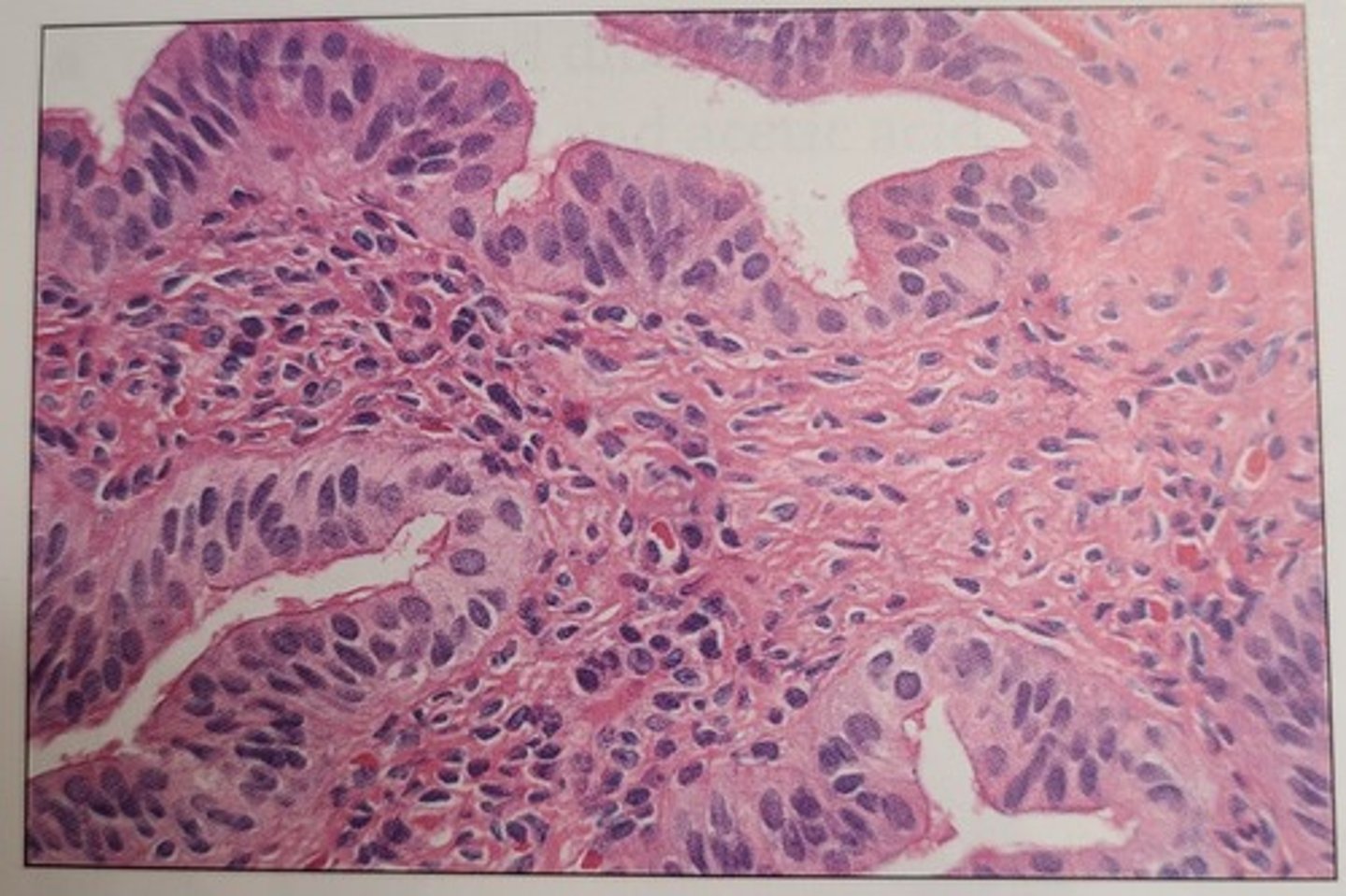
The nuclei in this image indicate (PICTURE):
a. excellent chromatic demonstration
b. the use of old hematoxylin
c. incomplete fixation
d. overhydration
c. incomplete fixation
- The smudgy nuclei, or lack of chromatin definition, seen in this image is attributed to incomplete fixation of the tissue
One characteristic of Bouin solution is that it:
a. penetrates poorly
b. destroys delicate structures
c. mordants connective tissue stains
d. preserves erythrocytes
c. mordants connective tissue stains
- Bouin solution is the best fixative for connective tissue stains; if tissue is fixed in formalin, the sections should be mordanted in Bouin solution before staining with trichrome procedures. Bouin solution is excellent for preserving structure with soft and delicate textures, lyses red cells, and has good penetration
The fixation of tissue by physical methods can be accomplished by the use of:
a. microincineration
b. microwaves
c. frozen sections
d. alcohol
b. microwaves
- The heat generated by microwaves will physically fix tissue
Fixation in Carnoy solution will result in:
a. swelling of the tissue
b. preservation of most cytoplasmic structures
c. superior staining of amyloid with Congo red
d. good preservation of red blood cells
c. superior staining of amyloid with Congo red
- Alcohol or Carnoy solution is preferred if Congo red staining for amyloid is to be done, although other fixatives may be used