Unit 6 Peptic Ulcer Disease (PUD) Gastrointestinal Drug Therapy
 Call Kai
 Learn
Learn Practice Test
 Spaced Repetition
 Match
Match Flashcards
 Knowt Play
1/40

There's no tags or description
Looks like no tags are added yet.
Name | Mastery | Learn | Test | Matching | Spaced | Call with Kai | Chat |
|---|
No analytics yet
Send a link to your students to track their progress
41 Terms
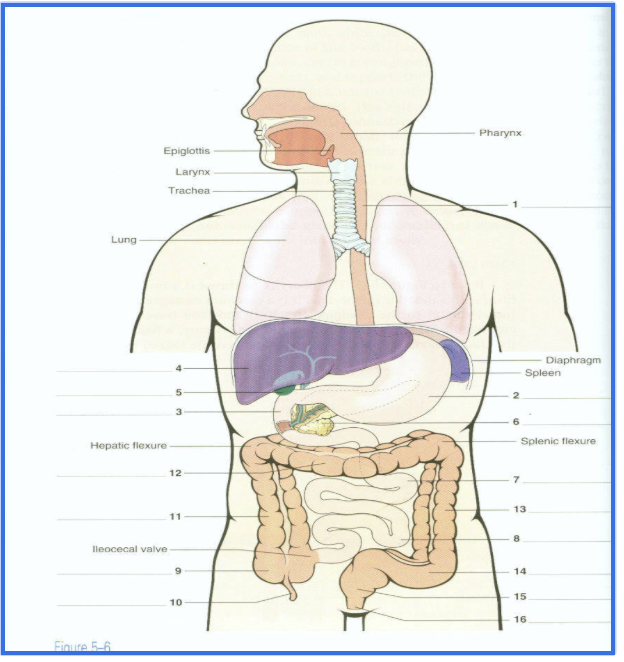
Gastrointestinal (GI) Tract = Digestive System
Think of it as the path food travels through your body :
🍽 Esophagus → carries food to the stomach
⬇
🥘 Stomach → breaks down food with acid
⬇
Duodenum → first part of small intestine; receives bile and enzymes
⬇
Jejunum → absorbs most nutrients
⬇
Ileum → absorbs remaining nutrients
⬇
Cecum → beginning of large intestine
⬇
Ascending colon → moves waste upward
⬇
Transverse colon → moves waste across
⬇
Descending colon → moves waste downward downward
⬇
Sigmoid colon → stores waste before leaving
⬇
Rectum → holds stool
⬇
Anus → removes stool from the body
Helper Organs (help digestion but food does not pass through them):
🟤 Liver → makes bile to help digest fats
🟢 Gallbladder → stores and releases bile
🟡 Pancreas → makes digestive enzymes
Easy Order Memory:
"Every Stomach Doctor Likes Eating Cold Apples And Tasty Desserts"
E sophagus
S tomach
D uodenum
L iver
G allbladder
P ancreas
J ejunum
I leum
C ecum
A ppendix
T ransverse colon
D escending colon
S igmoid colon
R ectum
A nus
(Think: Food goes down, gets digested, nutrients get absorbed, waste leaves. )
GI Tract Functions (Digestive System)
Think of the GI tract's job as:
Break food down → Absorb nutrients → Remove waste
1. Digestion 🍎
Digestion = breaking food into smaller pieces that the body can use.
There are 2 types:
A. Mechanical Digestion
Physical breakdown of food.
Example: chewing food or stomach mixing food.
Think:
➡ Breaking food apart
B. Chemical Digestion
Uses enzymes and chemicals to break food into smaller molecules.
Think:
➡ Changing food into usable nutrients
What Does Food Break Into?
🥩 Proteins → Amino Acids
Protein from food is broken down into amino acids .
Amino acids are used to build and repair tissues.
Memory:
Protein → Pieces = Amino acids
🍞 Carbohydrates (CHO) → Simple Sugars (Glucose)
Carbohydrates are broken down into glucose .
Glucose is used for energy.
Memory:
Carbs → Glucose = Energy
🧈 Lipids (Fats/Triglycerides) → Fatty Acids
Fats are broken down into fatty acids .
Used for energy storage and other body functions.
Memory:
Fat → Fatty acids
2. Absorption 🩸
After digestion:
➡ Food is small enough to be absorbed.
The GI tract moves nutrients into the bloodstream so the body can use them.
Examples:
Glucose → energy
Amino acids → build proteins
Fatty acids → energy/storage
Memory:
Digestion breaks it down → Absorption takes it in
3. Elimination (Defecation) 🚽
The GI tract also removes waste.
Anything the body cannot use becomes solid waste (stool).
Waste leaves the body through defecation .
Memory: Waste out = defecation
Super Fast Study Version
GI Tract Functions (Digestive System)
GI Tract Functions:
Digestion 🍽
→ Breaks food down
Protein → amino acids
CHO → glucose
Lipids → fatty acids
Absorption 🩸
→ Moves nutrients into the body to useElimination 🚽
→ Removes solid waste
Easy Memory:
"Break it → Take it → Toss it"
🍎 Digestion = Break it
🩸 Absorption = Take it
🚽 Elimination = Toss it
GI Tract Digestion (Stomach)
Think of the stomach as a food processor :
It adds acid to break food down.
It uses enzymes to digest proteins.
It protects itself from the acid.
1. Acid Secretion (HCl)
The stomach makes HCl (hydrochloric acid) .
How does the body know to make acid?
The vagus nerve (part of the parasympathetic nervous system ) sends a signal to the stomach.
This happens when you:
👀 See food
👃 Smell food
💭 Think about food
🍽 Food enters the stomach
The brain basically tells the stomach:
➡ "Food is coming, start preparing!"
The stomach releases HCl to help digest food.
2. Pepsin
Pepsin = enzyme that breaks down proteins
When food enters the stomach:
HCl helps activate pepsin.
Pepsin breaks large proteins into smaller pieces.
🥩 Pepsin = Protein cutter
3. Inhibitory Enzyme (Stops HCl Secretion)
The stomach has a safety system.
When there is enough acid:
An inhibitory enzyme sends a signal to slow/stop HCl production .
Why?
Because too much acid can damage the stomach.
🛑 Stop acid before it hurts the stomach
4. Mucus Protection
The stomach protects itself by making a mucus coating .
The mucus:
Covers the stomach lining
Creates a protective barrier
Prevents HCl from damaging the stomach
Easy memory:
🛡 Mucus = stomach shield
Super Fast Study Version
GI Tract
🍽 See/smell/think food → Vagus nerve → HCl released
⬇
🧪 HCl activates pepsin
⬇
🥩 Pepsin breaks down proteins
⬇
🛑 Inhibitory enzyme slows acid
⬇
🛡 Mucus protects stomach lining
Main idea:
The stomach uses acid to digest food but uses mucus to protect itself from that same acid.
Gastroesophageal Reflux Disease (GERD)
Think of GERD as stomach acid goes the wrong way — back up into the esophagus.
🔥 What Happens?
Normally:
Stomach → keeps acid inside
But in GERD:
The LES (lower esophageal sphincter) relaxes when it shouldn't.
The stomach acid and digestive juices move back up into the esophagus.
This irritates the esophagus and causes a burning feeling.
🔥 Heartburn
Burning sensation behind the sternum (breastbone).
Why?
➡ Acid touches the esophagus → irritation → burning pain.
🛏Why Does It Get Worse Lying Down?
When you lie down:
Gravity is no longer helping keep stomach contents down.
Acid can move back up more easily.
Easy Memory:
GERD = Acid Goes the Wrong Direction
⬇ Normal:
Stomach keeps acid ✅
⬆ GERD:
Acid goes back up → burning 🔥
Super Fast Study Version:
Gastroesophageal Reflux Disease (GERD)
GERD = LES relaxes → acid backs up → esophagus irritated → heartburn
🔥 Burning behind sternum
🛏 Worse when lying down
⬆ Acid reflux into esophagus
Memory trick:
LES = "Lower Esophagus Stopper" → when it fails, acid leaks back up.
Ulcers
Think of an ulcer as an open sore or “wound” in the lining of the GI tract.
What is an ulcer?
The mucosal lining is the protective layer inside organs like the stomach and intestines.
An ulcer happens when this lining gets damaged , creating an open sore.
Think:
🛡 Normal lining = protected
❌ Ulcer = damaged spot/open sore
Peptic Ulcers
Peptic ulcers are ulcers caused by damage from stomach acid and digestive juices.
They mostly occur in:
1. Stomach
It was called a gastric ulcer.
2. Duodenum
First part of the small intestine
Called a duodenal ulcer
Easy Way to Remember
Peptic = acid-related sore
🔥 Acid damages lining
⬇
🩹 Open sore forms
⬇
Pain/discomfort can occur
Super Fast Study Version
Ulcer = open sore in GI lining
Peptic ulcers happen mostly in:
🥘 Stomach
➡ Duodenum
Memory Trick:
"Peptic = Pain from acid eating the lining." 🩹🔥
Open sores in the mucosal membranes/linings
Peptic ulcers
Mostly occur in duodenum or stomach
Ulcer Causes / Risk Factors
Think of an ulcer happening when stomach acid is too strong or the stomach lining is not protected enough.
1. Increased HCl Production 🔥
Too much stomach acid can damage the lining.
More acid = more irritation.
Memory: Too much acid → sore
2. Inadequate Mucus Secretion 🛡
The stomach normally makes mucus to protect itself.
Less mucus = less protection from acid.
Memory: No shield → acid damage
3. Emotional & Physical Stress 😟
Stress can increase stomach acid and affect healing.
4. Increased Vagus Nerve Stimulation 🧠
The vagus nerve tells the stomach to make acid.
Too much stimulation → more HCl production.
Memory: Vagus nerve = acid signal
5. Alcohol 🍺
It can irritate and damage the stomach lining.
6. Drugs 💊
Some medications can damage the stomach lining (example: NSAIDs like ibuprofen).
7. Genetics 🧬
Some people may be more likely to develop ulcers because of family history.
8. Gastric Bacterial Infection (H. pylori) 🦠
H. pylori is a bacteria that damages the stomach lining.
It makes it easier for acid to cause an ulcer.
Super Fast Study Version:
Ulcer = Too much acid + weak protection
🔥 More acid:
↑ HCl
↑ Vagus nerve stimulation
Stress
🛡 Less protection:
↓ Mucus
Alcohol
Drugs
H. pylori
Genetics
Memory Trick:
"Acid up, mucus down = ulcer risk." 🩹
Ulcer Symptoms
Think of ulcer symptoms as signs that the stomach lining is irritated or damaged.
🤢 Nausea
Feeling like you may throw up.
🍽 Loss of Appetite
You may not feel hungry because your stomach feels uncomfortable.
🤮 Vomiting
Stomach irritation can cause vomiting.
🔥 Periodic Stomach/Abdominal Pain
Pain comes and goes because the ulcer gets irritated by stomach acid.
Super Fast Study Version:
Ulcer = irritated stomach lining
🤢 Nausea
🍽 Less appetite
🤮 Vomiting
🔥 On-and-off stomach pain
Memory:
"Ulcer hurts the stomach → nausea, no appetite, vomiting, pain."
Potential Mechanisms for
Disruption of Mucosal Defense
Disruption of Mucosal Defense (How Ulcers Form)
Think of the stomach lining as having a protective shield 🛡.
If that shield becomes weak, stomach acid can damage the lining and cause ulcers.
1. Depletion of endogenous Prostaglandins
Prostaglandins = protect the stomach lining
They help:
Make mucus
Protect the stomach from acid
If prostaglandins decrease:
⬇ Protection
⬆ Acid damage
➡ Higher risk of ulcers
Prostaglandins = stomach protectors
2. Helicobacter pylori (H. pylori)
H. pylori = bacteria that infects the stomach
What it does:
Damages the mucus lining
Weakens the stomach's protection
Allows acid to injure the tissue
This increases:
Risk of ulcers
Ulcer coming back (recurrence)
Easy memory:
H. pylori = bacteria that breaks the stomach shield
Super Fast Study Version
🛡 Healthy stomach: Prostaglandins + mucus protect lining
❌ Ulcer risk
↓ Prostaglandins → less protection
H. pylori → damages mucus lining
Main idea:
Weak defense + stomach acid = ulcer formation 🔥
Ulcer Formation
Think of an ulcer forming when stomach acid becomes stronger than the stomach's protection.
Step 1: HCl & Enzymes Become Concentrated 🔥
The stomach has acid (HCl) and enzymes that help digest food.
If they become too strong or too concentrated, they can start damaging the stomach lining.
Memory: Too much acid = damage
Step 2: Mucus Protection Is Disrupted 🛡
The stomach normally makes mucus to protect itself from acid.
If mucus production decreases, the stomach loses its protective shield.
Memory: Less mucus = less protection
Step 3: Erosion of Mucosa 🩹
Without enough protection, acid damages and wears away the stomach lining.
This creates an open sore (ulcer).
Memory: Acid breaks down lining → ulcer forms
Super Fast Study Version:
🔥 Too much acid + 🛡 weak mucus protection → 🩹 mucosal erosion → ulcer
Easy phrase:
"Acid attacks when the mucus shield is gone."
Ulcer Treatment
Think of ulcer treatment as reducing irritation + protecting the stomach + healing the sore.
1. Decrease Stress 😟⬇
Stress can increase stomach acid.
Less stress helps reduce irritation.
Memory: Less stress = less acid
2. Decrease Alcohol 🍺⬇
Alcohol can damage the stomach lining.
Reducing alcohol helps the lining heal.
Memory: Alcohol weakens the stomach shield
3. Decrease Spicy Foods 🌶⬇
Spicy foods can irritate an already sensitive stomach.
Avoiding them can reduce discomfort.
Memory: Avoid irritation
4. Decrease Smoking 🚭
Smoking slows healing.
It can increase ulcer problems.
Memory: Smoking delays healing
5. Drug Therapy 💊
Medications help by:
Decreasing stomach acid
Protecting the stomach lining
Treating H. pylori infection (if present)
Memory: Meds = reduce acid + heal lining
6. Surgical Intervention 🏥
Used only for severe ulcers or complications.
Helps repair problems when medications are not enough.
Memory: Surgery = last option
Super Fast Study Version:
Ulcer Treatment = Protect + Heal
⬇ Reduce:
Stress
Alcohol
Spicy foods
Tuxedo
💊 Drugs → decrease acid + heal
🏥 Surgery → severe cases
Easy phrase:
"Remove the irritants, reduce acid, repair the damage." 🩹
Ulcer Drug Therapy
Think of ulcer medications as doing 3 main things:
Decrease stomach acid 🔥
Protect the stomach lining 🛡
Kill H. pylori bacteria 🦠
1. Antacids 💊
What they do:
Neutralize stomach acid that is already there.
Makes the stomach less acidic.
Memory:
Antacid = Acid neutralizer
2. Anticholinergics 🛑
What they do:
Block signals from the vagus nerve.
This decreases stomach acid production.
Memory:
Block the signal → less acid
3. Histamine-2 (H2) Blockers
What they do:
Block histamine signals in the stomach.
This decreases HCl (stomach acid) production.
Memory:
H2 blocker = blocks acid release
4. Prostaglandins 🛡
What they do:
Increase mucus protection.
Help protect the stomach lining from acid.
Memory:
Prostaglandins = stomach shield
5. Proton Pump Inhibitors (PPIs)
What they do:
Strongly block the stomach's acid pump.
Greatly decrease HCl production.
Memory:
PPI = turns off acid pump
6. Antibiotics (if H. pylori is present) 🦠
What they do:
Kill the H. pylori bacteria.
Multiple antibiotics are used because bacteria can become resistant.
Memory:
H. pylori = treat with antibiotics
7. Protectants 🛡
What they do:
Coat the ulcer and create a protective barrier.
Prevent acid from damaging the sore.
Memory:
Protectant = covers the wound
Ulcer Drug Therapy
Super Fast Study Version
Ulcer Drugs:
🔥 Decrease acid:
Antacids → neutralize acid
Anticholinergics → block vagus signal
H2 blockers → block acid release
PPIs → shut down acid pump
🛡 Protect lining:
Prostaglandins → increase mucus
Protectants → coat ulcer
🦠 Kill bacteria:
Antibiotics → treat H. pylori
Easy Memory:
"Lower Acid, Protect Lining, Kill H. pylori" 🩹
Antacids
Think of antacids as acid fighters 🛡
MOA (How it works)
Antacids neutralize stomach acid that is already present .
They make the stomach contents less acidic , which helps relieve heartburn and ulcer pain.
Easy memory:
Antacid = Anti-acid → cancels out acid
Patient Teaching / Side Effects
🚽 Constipation
Some antacids can slow down the movement of the intestines.
This can make stools harder and cause constipation.
Easy memory:
Antacids can slow the gut → constipation
Super Fast Study Version:
💊 Antacids
MOA: Neutralize acid already in the stomach
Side effect: Constipation
Memory Trick:
"Antacid attacks acid, but can slow the stool." 🛡🚽
GASTROINTESTINAL SYSTEM DRUG THERAPY
Antacids
magnesium hydroxide Milk of Magnesia®
aluminum hydroxide
calcium carbonate Tums®
H-2 Receptor Antagonists
Think of H₂ blockers as acid blockers. 🛑🔥
MOA (How it Works)
They:
Decrease stomach acid (HCl) secretion
Decrease pepsin secretion
Why is that helpful?
Less acid + less pepsin = less irritation to the stomach and ulcers can heal.
Easy memory:
H₂ blocker = blocks acid production
Side Effects
🚽 Constipation
Can make it difficult to have a bowel movement.
🤕 Headache (HA)
Some people may get headaches.
Super Fast Study Version
💊 H₂ Blockers
⬇ Acid secretion
⬇ Pepsin secretion
Side effects:
🚽 Constipation
🤕 Headache
Memory Trick:
"H₂ = Halt HCl" 🛑🔥
(HCl = stomach acid)
GASTROINTESTINAL SYSTEM DRUG THERAPY
Histamine 2 receptor blockers
cimetidine Tagamet®
famotidine Pepcid®, Zantac 360®
nizatidine
Proton Pump Inhibitors (PPIs)
Think of PPIs as the strongest acid blockers. 💪🔥
When are they used?
Usually used when H₂ blockers are not working well enough , even at high doses.
Doctors move to PPIs because they are stronger.
Easy memory:
H₂ blocker not enough → use PPI
How Effective Are They?
PPIs are more effective than H₂ blockers .
They decrease stomach acid even more.
Easy memory:
H₂ blocker = good acid blocker
PPI = strongest acid blocker
Super Fast Study Version
💊 PPIs
Used when H₂ blockers aren't enough
Decrease stomach acid more than H₂ blockers
More effective for ulcers and GERD
Memory Trick:
🔥 Acid
H₂ Blocker = turns acid down ⬇
PPI = almost turns acid off ⛔🔥
PPI = Powerful Proton Pump Inhibitor = Powerful acid blocker 💪🛑🔥
Proton Pump Inhibitors (PPIs)
Think of PPIs as drugs that turn off the stomach's acid pump. 🛑🔥
MOA (How it Works)
Inhibits (blocks) acid production
The stomach makes much less acid.
Easy memory:
PPI = Stops acid production
Uses 🩹 Ulcers
Less acid = ulcers can heal.
🔥 GERD
Less acid backing up into the esophagus = less heartburn.
Easy memory:
PPIs treat ulcers and GERD by lowering acid.
Side Effects
🚽 Constipation
Harder to have bowel movements
🤕 Headache (HA) 🤢 Nausea
Upset stomach
💩 Diarrhea
Loose stools
🤕 Belly Pain
Abdominal pain/discomfort
Super Fast Study Version
💊 PPI
MOA: Blocks acid production
Uses: Ulcers + GERD
Side Effects:
🚽 Constipation
🤕 Headache
🤢 Nausea
💩 Diarrhea
🤕 Abdominal pain
Memory Trick
PPI = Powerful acid blocker 🛑🔥
Less acid = ulcers heal + less GERD 🩹🔥
GASTROINTESTINAL SYSTEM DRUG THERAPY
Proton Pump Inhibitors drug
lansoprazole Prevacid®
omeprazole Prilosec®
pantoprazole Protonix®
rabeprazole Aciphex®
esomeprazole Nexium®
Prostaglandins
Think of prostaglandins as stomach protectors. 🛡
MOA (How it Works)
🛡 Promote Mucus Secretion
Helps the stomach make more mucus.
Mucus protects the stomach from acid.
⚪ Increase Alkaline Production
Makes substances that help neutralize acid.
Gives extra protection to the stomach lining.
Easy memory:
Prostaglandins = Build the stomach's protective shield
Side Effects
🤕 Cramping
Stomach cramps
💩 Diarrhea
Loose stools
🤕 Headache (HA) 💨 Flatulence
Gas
🤢 Nausea
Upset stomach
⚠ Black Box Warning Causes of Uterine Contractions
Can make the uterus contract (squeeze).
Contraindicated in Pregnancy
It should NOT be used during pregnancy because it may harm the pregnancy.
Easy memory:
🤰 Pregnant = NO prostaglandins
Prostaglandins
Super Fast Study Version
💊 Prostaglandins
🛡 Increase mucus
⚪ Increase alkaline protection
MOA: promote mucus secretion and alkaline production
Side effects:
Cramping
Diarrhea
Headache
Gas
Nausea
⚠ Can cause uterine contractions
⚠ Do not use in pregnancy
Memory Trick:
"Prostaglandins Protect the stomach, but can Produce uterine contractions." 🛡🤰
GASTROINTESTINAL SYSTEM DRUG THERAPY
Prostaglandin (receptor agonist) what does it do
misoprostol Cytotec®
GI Protectant
Think of a GI protectant as a bandage for an ulcer. 🩹
MOA (How it Works)
1. Coats the Ulcer 🩹
Covers the ulcer with a protective layer.
Helps protect it from stomach acid.
2. Binds to HCl and Inhibits Pepsin
Binds to some stomach acid ( HCl ).
Decreases the activity of pepsin (the protein-digesting enzyme).
This means:
Less irritation
More healing
GI Protectant = Covers and Protects the Ulcer
Use
🩹 Ulcers
Helps ulcers heal by protecting them from acid and pepsin.
Patient Teaching
🍽Take on an Empty Stomach
Works best when there is no food in the stomach.
Allows the medicine to stick to the ulcer better.
Easy memory:
Empty stomach = better coating
Super Fast Study Version
💊 GI Protectant
🩹 Coats ulcer
🔥 Binds acid (HCl)
🥩 Pepsin Blocks
Use: Ulcers
Teaching: Take on an empty stomach
Memory Trick:
"Protectant = Protective Bandage for the Ulcer." 🩹🛡
GASTROINTESTINAL SYSTEM DRUG THERAPY
GI Protectant drug
sucralfate Carafate®
Antimicrobial Polypharmacy for Peptic Ulcer Disease
Polypharmacy just means using multiple medications together.
For ulcers caused by H. pylori bacteria , doctors usually give:
1. Proton Pump Inhibitor (PPI) 💊
Decreases stomach acid.
Helps the ulcer heal.
2. Antibiotic #1 🦠
Kills H. pylori bacteria.
3. Antibiotic #2 🦠
It also kills H. pylori.
Two antibiotics are used because H. pylori can be hard to kill and may be resistant to one antibiotic.
Goal
✅ Heal the ulcer
✅ Get rid of H. pylori
✅ Prevent the ulcer from coming back
Super Fast Study Version
Ulcer + H. pylori = 3 drugs
💊 PPI → lowers acid
🦠 Antibiotic 1 → kills bacteria
🦠 Antibiotic 2 → kills bacteria
Memory Trick:
"1 PPI + 2 Antibiotics = Kill H. pylori and Heal the Ulcer." 🩹🦠
For an ulcer caused by H. pylori , the patient usually takes:
💊 1 Proton Pump Inhibitor (PPI) → lowers acid
🦠 Antibiotic #1 → kills H. pylori
🦠 Antibiotic #2 → kills H. pylori
All are taken during the treatment period (at the same time as part of the regimen).
Non-pharmacological Therapy
These foods are avoided because they can irritate the stomach or increase stomach acid , which can make GERD, heartburn, or ulcers feel worse.
Easy Memory:
🔥 Spicy foods/hot peppers → irritate the stomach
🍟 Fried, fatty foods → stay in the stomach longer and can increase reflux
☕ Coffee → increases stomach acid
🍅 Tomato products → naturally acidic
🧅 Onions → can trigger heartburn and reflux
Super Short Memory Trick:
"Spicy, fatty, acidic, and coffee = more irritation and more reflux." 🔥🤢
Think of COX-1 = Protects the stomach + helps with pain/inflammation
Think of COX-2 = Pain and inflammation only
Regulate NSAIDs (COX-1 and COX-2 Inhibitors)
What do they do?
They block:
✅ COX-1 → decreases pain and inflammation
✅ COX-2 → decreases pain and inflammation
The Problem
Because COX-1 also helps make the stomach's protective mucus:
❌ Blocking COX-1 = less mucus protection
🔥 Acid can damage the stomach more easily
➡ Can lead to ulcers
Side Effects
🤢 Stomach upset
🩸 Intestinal bleeding
🩹 Ulcers
Easy memory:
Regular NSAIDs = Less pain BUT less stomach protection
COX-2 Inhibitors What do they do?
They only block:
✅ COX-2 → decreases pain and inflammation
Benefit
They do NOT block COX-1
SW:
🛡 Stomach mucus protection stays intact
➡ Lower ulcer risk than regular NSAIDs
Side Effect
⚠ Sulfa allergy concern
Easy memory:
COX-2 = Pain relief without hurting the stomach lining as much
NSAID Induced Ulcers
Super Fast Study Version
Regular NSAIDs
❌ Block COX-1 + COX-2
😊 Less pain
🛡 Less mucus
🩹 More ulcer risk
COX-2 Inhibitors
❌ Block COX-2 only
😊 Less pain
🛡 Mucus stays protected
🩹 Lower ulcer risk
⚠ Watch for sulfa allergies
Memory Trick:
COX-1 = Stomach protector
COX-2 = Pain/inflammation
Block COX-1 → ulcer risk ↑ 🔥🩹
Block only COX-2 → safer for stomach 🛡
Antiemetics 💊
What do they do?
✅ Stop or reduce nausea (feeling sick to your stomach)
✅ Stop or reduce vomiting (throwing up)
How?
They block the CTZ (chemoreceptor trigger zone) , which is the part of the brain that helps trigger nausea and vomiting.
Easy Memory:
🤢 Nausea + 🤮 Vomiting
⬇
💊 Antiemetics stop them by blocking the brain's "vomit signal." 🧠🛑
GASTROINTESTINAL SYSTEM DRUG THERAPY
Antiemetics drug
prochlorperazine
metoclopramide Reglan® (also gastroprokinetic)
ondansetron
Anti-diarrheals
Think of anti-diarrheals as drugs that slow down the intestines. 🚽
MOA (How it Works)
1. Decrease Muscle Contractions of the Intestine
The intestines move more slowly.
This gives the body more time to absorb water.
2. Bind to Irritants
Some anti-diarrheals attach to substances that irritate the intestines.
This helps reduce diarrhea.
Slow the gut = more water absorbed
Use 💩 Loose, Watery Stools (Diarrhea)
Diarrhea happens when the intestines don't absorb enough water.
Anti-diarrheals help the body absorb more water, making stools more solid.
Diarrhea = too much water in stool
Side Effect
🚽 Constipation
If the intestines slow down too much, stools can become hard.
Stops diarrhea, but can cause constipation
Super Fast Study Version
💊 Anti-diarrheals
⬇ Slow intestines
💧 More water absorbed
💩 Treat diarrhea
Side effect:
🚽 Constipation
Memory Trick:
"Slow the poop to stop the poop." 💩➡🚽🙂
GASTROINTESTINAL SYSTEM DRUG THERAPY
Anti-diarrheals drug
loperamide Imodium®
diphenoxylate/atropine Lomotil® (schedule V)
Laxatives
Think of laxatives as medicines that help you poop. 🚽
MOA (How They Work)
Different laxatives work in different ways:
🚽 Stimulate Defecation
Trigger a bowel movement.
➡Enhance Intestinal Motility
Make the intestines move faster.
Push stool through the intestines.
💧 Soak Up Water
Pull water into the stool.
Makes stool softer and easier to pass.
🧈 Emollient (Mineral Oil)
Lubricates and softens the stool.
Helps it slide out more easily.
⚠ Can Be Irritants
Some laxatives irritate the intestines to make them contract and move stool out.
Use
💩 Constipation Relief
Used when stool is hard or difficult to pass.
Super Fast Study Version
Laxatives = Help you poop
🚽 Stimulate bowel movement
➡ Move stool faster
💧 Add water to stool
🧈 Soften/lubricate stool
⚠ Some irritate intestines to push stool out
Memory Trick:
"Laxatives = Move it, soften it, or push it out." 💩🚽
GASTROINTESTINAL SYSTEM DRUG THERAPY
Laxatives drug
bisacodyl Dulcolax® (irritant)
psyllium Metamucil® (bulk forming)
polyethylene glycol MiraLAX®
magnesium citrate Citroma®
Stool Softeners
What do they do?
💧 They add water to the stool , making it softer and easier to pass .
Use:
💩 Helps with constipation (hard stools).
Side Effect:
🤕 Cramping (stomach cramps)
Easy Memory:
Stool softener = Water in stool = Softer poop = Easier to poop 🚽💧💩
MOA: adds H2O to stool
Patient teaching/Side effects: cramping
GASTROINTESTINAL SYSTEM DRUG THERAPY Stool softeners drug
docusate sodium Colace®
docusate calcium
Antiflatulent Agents
Think of antiflatulents as anti-gas medicines. 💨
MOA (How They Work)
💨 Prevent Gas Buildup
Help stop gas from building up in the intestines.
🚽 Help Pass Gas
Make it easier to pass gas (flatus/farting).
Antiflatulent = Anti-gas
Use
😖 Bloating, gas, and stomach fullness
Side Effect
🤢 GI upset
Mild stomach discomfort or upset stomach
Super Fast Study Version
💊 Antiflatulent
💨 Prevents gas buildup
🚽 Helps pass gas
Side effect: 🤢 GI upset
Memory Trick:
"Antiflatulent = Gets rid of gas." 💨🙂
MOA: prevents gas buildup, enables passing flatus
Patient teaching/Side effects: GI upset
GASTROINTESTINAL SYSTEM DRUG THERAPY
Antiflatulent Agents
drugs
simethicone Mylicon drops®, Gas-X®