Fungus and Prions
 Call Kai
 Learn
Learn Practice Test
 Spaced Repetition
 Match
Match Flashcards
 Knowt Play
1/29

There's no tags or description
Looks like no tags are added yet.
Name | Mastery | Learn | Test | Matching | Spaced | Call with Kai | Chat |
|---|
No analytics yet
Send a link to your students to track their progress
30 Terms
Superficial mycosis
infect skin, mucosa, hair, nails
Subcutcaneous Mycosis
infect skin and connective tissue
Systemic mycosis
infects internal organs
Opportunistic- seen mainly in immunocompromised hosts
Non-opportunistic- can occur in any host
Dermatophytosis (tinea/ringworm)
direct contact w/ people, animals, soil
Release keratin-degrading enzymes and infect skin, hair, and nails
Itchy, scaly, red lesions with a central clearing
Common in IMC, use topical or oral -azole

Tinea corporis
skin contact or contaminated objects
Dermatophyte infection of body
Scaly plaque w/ advancing border and clear clearing
Topical antifungal (ringworm)

Tinea capitis
person-person, animals
Dermatophytes infect scalp hair and follicles
scalp scaling, alopecia, inflammation
Oral antifungal
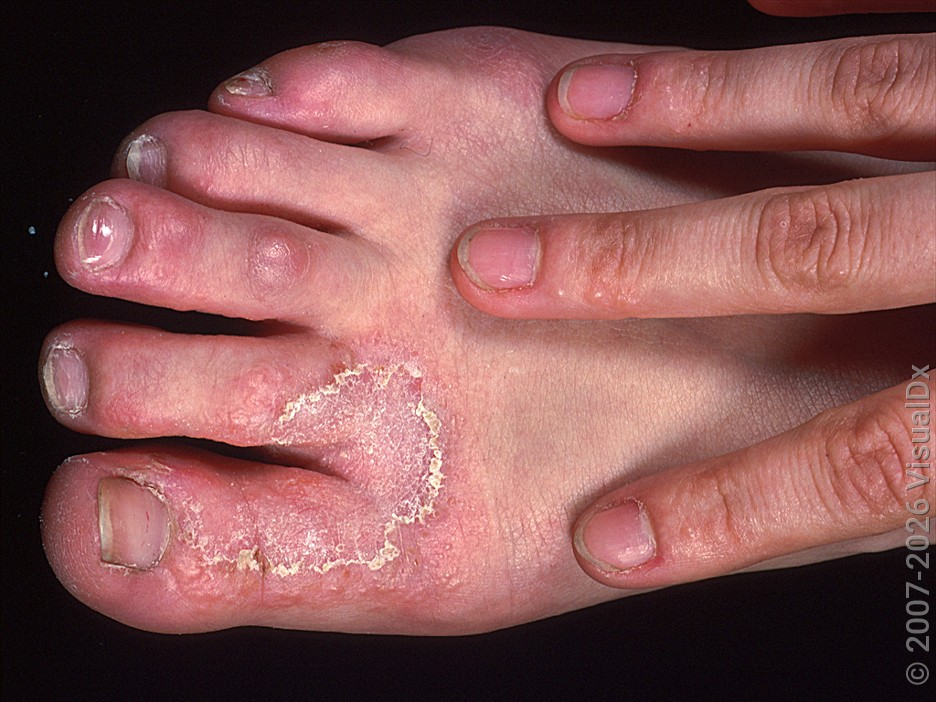
Tinea pedis
contaminated floors, shoes, socks
Infection of feet
Scaling, fissuring, burning and itching
Topical antifungal
Tinea cruris
direct contact, spread from tinea pedis
Dermatophyte infection of the groin
itchy, red, scaling groin rash w/ central clearing
Topical antifungal
Tinea barbae
infected animals
Dermatophyte infection of beard follicles
Inflammatory plaques, pustules, broken hairs
Oral antifungals

Tinea unguium
direct contact or spread from tinea pedis
Dermatophyte invades the nail plate and nail bed
Thick, brittle discolored nails
oral antifungal, terbinafine
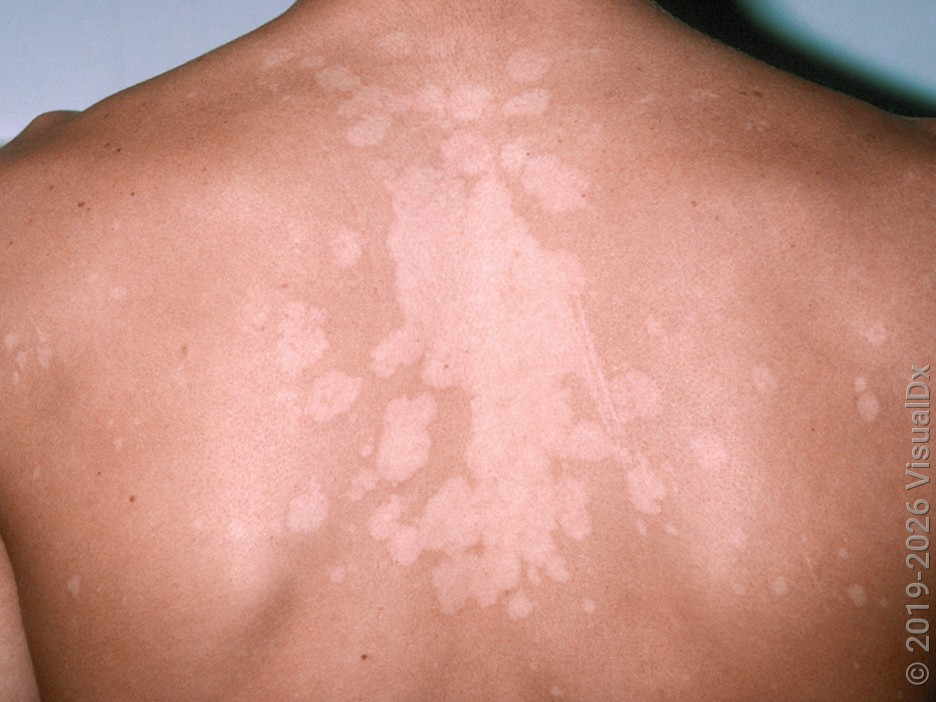
Tinea versicolor
not contagious, overgrowth of fungus in fat layer
Lipid-dependent yeast overgrows in the superficial stratum corneum and interferes with pigmentation
Hypo or Hyper pigmentation of finely scaling patches on trunk or shoulders
KOH: “spaghetti and meatballs”
Topical azole

Cutaneous candidiasis
overgrowth of pt own flora
Lives in warm, moist skin folds
Bright-red moist rash with satellite papules or pustules
Topical azole or nystatin
Oral candidiasis (Thrush)
overgrowth of own flora
Candida adheres to and inflames oral mucosa can move to pharynx
Painful white plaques that scrape off leaving red or bleeding base
Oral antifungals

Vulvovaginal candidiasis
overgrowth of own bacteria
altered vaginal flora (antibiotics) allows Candida to proliferate and inflame
very itchy, burning, red, thick cottage-cheese discharge, no odor
Topical azole
Candidal Funguria
UTI
May cause hesitency, urgency, fever, chills, flank pain
Yeast in urine of a catheterized or diabetic pt
Invasive Candida
endogenous spread or entry through an IV catheter
Enters blood to other organs
Persistent fever, sepsis, multiorgan
persistent fever/sepsis in a pt w/ central line
Candidal fungemia
found on very ill pts w/ indwelling instrumentation
IV is needed
Candida endocarditis
Candida grows on prosthetic heart valves
prosthetic valve + candidemia + large vegetations (mass of yeast)
Cryptococcus
inhaled from soil contaminated w/ pigeon droppings
Encapsulated budding yeast enters lungs → may disseminate to CNS, especially with impaired cell-mediated immunity
Headache, fever, altered mental status, acute meningitis, painful productive cough
IMC w/ acute meningitis outdoors
Oral fluconazole
Pneumocystis (PCJ)
airborne person-person exposure
Organisms fill alveoli with foamy material → impaired gas exchange and severe hypoxemia
progressive dyspnea, dry cough, fever, hypoxemia
Beta-D-glucan test, IMC vulnerable
AIDS + dry cough+ bilateral ground-glass/interstitial infiltrates
Histoplasmosis
inhalation contamination w/ bird or bat droppings near Ohio and Mississippi River valleys
Inhaled spores become yeast and survive inside macrophages → spread through reticuloendothelial system
fever, cough, weight loss, disseminated can affect liver, spleen, bone marrow
Intraconazole
Ohio/Mississippi River valleys + bird/bat droppings + intracellular yeast in macrophages

Coccidiomycosis
Inhalation of spores from desert soil in Southwest
Inhaled arthroconidia become tissue spherules containing endospores → granulomatous pulmonary inflammation
Fever, cough, sharp chest pain, erythema nodosum
desert dust + valley fever + erythema nodosum and arthralgia
Prion Pathophys
prion protein contacts a normal protein, converted into a beta-sheet-rich misfolded form, making insoluble amyloid-like fibrils, neuron damage leading to stress and cell death
Spongiform encephalopathy
Sporadic CJD
most common form
rapid progressive dementia, myoclonus, ataxia, behavior and visual changes
MRI, no cure, just hospice
death within one year
Familiar CJD
mutation of PRNP gene
rapid progressive dementia, myoclonus, ataxia, behavior and visual changes
Genetic testing and supportive care
Family history of rapidly progressive fatal dementia
Acquired CJD
contaminated neurosurgical instruments
Progressive dementia, myoclonus, ataxia and neurologic deterioration
MRI and lumbar puncture
Symptoms after a cadaveric graft or pituitary-derived hormone
Variant CJD
consumed contaminated beef
begins with psych issues then dementia
Younger pt w/ psych symptoms after exposure to contaminated beef
GSS Disease
PRNP mutation
Cerebellar ataxis then dementia and dysarthria
Familial genetic counseling
Kuru
consumption of infected human nervous tissue
tremor, cerebellar ataxia, dysarthria, emotional change, dementia
“laughing sickness”
Mad Cow Disease
cattle get prion from contaminated feed
neurologic degeneration in cattle
Causes variant CJD in humans