OPP II Sem 1
 Call Kai
 Learn
Learn Practice Test
 Spaced Repetition
 Match
Match Flashcards
 Knowt Play
1/59

There's no tags or description
Looks like no tags are added yet.
Name | Mastery | Learn | Test | Matching | Spaced | Call with Kai | Chat |
|---|
No analytics yet
Send a link to your students to track their progress
60 Terms
5 models of osteopathic care?
biomechanical → structural
resp-circ → venous, lymphatic
neuro → control, coordination, integration
metabolic → homeostasis, energy, immune/inflammation, digestion, waste removal, reproduction
behavioral → psych/soc, habits, values/attitude/belief
soft tissue principles? CI?
parallel/long., perp./lat., deep pressure/inhibition, effleurage, petrissage/skin rolling, tapotement
direct + passive
relative → fracture, open wound, infection, abscess, DVT, coagulopathy, neoplasm
absolute → skin/tissue not intact, trauma, friable
MFR principles? CI?
innate motion of myofascial structure (indirect/direct + passive)
relative → fracture, open wound, infection, abscess, DVT, anticoagulation, neoplasm, post-op near, aortic aneurysm
articulatory principles? CI?
gentile + repetitive motion → versatile, long lever
direct + passive
relative → upper cervical (VA compromise)
absolute → fracture/dislocation/instable joint, local inflammation, neuro entrapment, vasc. compromise, local malignancy, bleeding disorder
ME principles? CI?
direct + active (dec. gamma gain → dec. muscle spindle activity)
PIR (relaxation), joint mobilization, resp. assistance, oculocephalogyric, reciprocal inhibition (lengthen), crossed extensor, isokinetic strengthen, isolytic lengthen
relative → infection/hematoma/muscle tear, fracture/dislocation, rheumatologic, joint swelling, vasc. compromised, severe osteoporosis, neoplastic
CS principles? CI?
indirect + passive
tender points in muscle tissue
relative → can’t relax/ill, upper cervical rotation/extension w/ VS disease or ligamentous instability, dens malformation, severe osteoporosis, rheumatological flare, apprehension
absolute → neuro/vasc. symptoms, life threatening symptoms (EKG, O2 drop)
HVLA principles? CI?
direct + passive → articular SD, joint restriction w/ firm articular barrier
relative → herniate NP, radiculopathy, whiplash/spasm/strain, osteopenia/porosis, spondylolisthesis, hypermobility, implants/joint replacement, Hx inflammatory arthritidies
absolute → upper cervical (RA, DS, AD, chiari), fracture/dislocation/joint instable, joint fusion, klippel-feil, vertebrobasilar, acute inflammatory arthritidies, joint infection, malignancy, spinal cord pathology
neutral thoracic supine HVLA (kirksville krunch)?
stand on opp. side of rotation TP (place thenar eminence) + pt. cross arms (rotation side above)
pt. elbows into sternum + forearm support upper thoracic → SB away
thrust perpendicular w/ taking up slack

non-neutral thoracic supine HVLA (kirksville krunch)?
flexed → extend thorax + SB toward (opp. of Dx), take up slack + cephalad force
extended → flex thorax + SB towards (opp. of Dx), take up slack + caudad force

thoracic prone HVLA (texas twist)?
flexed → stand opp. rotation w/ caudad thenar eminence on TP, take up slack w/ SB (turn opp. of rot/SB= towards me), thrust towards fingers + ant.
neutral → stand same rotation w/ cephalad hypothenar on TP, take up slack w/ SB (same rot./SB = towards me)
NOT on extended

lateral recumbent HVLA?
rotation side down, monitor w/ cephalad hand
use ankle to flex hip + knee (for flex/extend)
hold top ankle + tell them to straighten bottom
switch monitor hand
inf. arm pull for rotation (opp. of SD)
type I (N) = pull inf.
type 2 (F/E) = pull sup.
forearm against greater trochanter + ant. axilla → take up slack via twist → thrust towards table

cervical HVLA?
stand on side of rotation w/ thumb on bone
OA → 2nd MCP on occiput, slight traction + ant. extension (decompress), rotate opp. + SB opp., thrust towards eye
AA → 2nd MCP on C1 AP, flex 45 + ant. pressure, rotate opp., thrust towards nose
typical (rotational emphasis) → 2nd MCP on AP, ant. pressure, flex, rotate opp. + SB ease
tensegrity? FPR principles? physiological mechanism?
integral balance of tensile + compressive force
direct + passive by Stanley Schiowitz
dec. muscle spindle (y-motor) activation in neutral position, lower afferent excitatory (Ia + II) input, dec. reflex a-MN act. → put into ease w/ facilitating force
3-5 seconds
FPR indications + CI?
myofascial or articular somatic dysfxn → dec. hypertonicity
relative (not tolerated, severe osteoporosis, malignancy, joint instability, spinal stenosis/impingment)
absolute (unstable fracture, neuro symptoms, life threatening)
EKG change, O2 drop
OA Dx? AA Dx? typical cervical Dx?
SB + rotation opposite (can F+E)
translation ease = SB opposite
rotation only w/ 45 flexion
SB + rotation same w/ F or E
translation ease = SB opposite
OA FPR? AA FPR?
pt. supine, physician at head
passive flexion → flatten
compression/distraction → position into freedoms
hold for 3-5 sec → return to neutral
reassess
FPR seated thoracic + lumbar?
stand on rotation side, monitor TP w/ hand opp. to rotation
forearm on R. trap w/ hand on neck
pt. sit up straight (neutral)
compression (1lb) + freedom (SB + rotation) 3-5 sec
neutral → reassess

FPR prone thoracic?
stand opp of SB/R
monitor TP of same side of SB/R w/ opp hand
grasp same shoulder → pull up (neutral) + toward feet (compression that = SB + E)
hold 3-5 sec → neutral
BETTER FOR EXTENDED

FPR prone lumbar?
sit on same side of dysfxn w/ thighs parallel
pillow under pelvis (neutral)
monitor same side TP w/ opp hand
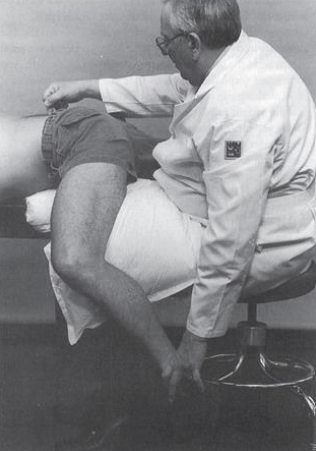
grasp knee + flex hip/knee → place leg on your thighs
localize via movie leg sup. (roll closer to head)
lat. knee push into pt. popliteal fossa (raise + lat = traction)
non monitoring hand pushes leg to floor until motion felt → hold 3-5 sec → neutral
BLT principles? CI?
minimize peri-articular tissue load via balanced tension in all planes → Tx ligamentous articular strains, indirect + passive
disengage → exaggerate → balance
relative → fracture, open wound, infection/abscess, DCT, anticoagulation, neoplasm, post. op, aortic aneurysm
absolute → fracture, neuro/life threatening symptoms
BLT steps?
Dx SD → compressive/traction (disengage)
engage ligaments + fascia to move towards ease in all planes
max. ease (balance pt.) → hold tissue
any additional movement = tension
feel pulsation/unwinding → release
return to original position
BLT prone lumbar?
place same side thumb over dysfxn TP + index/3rd over opposite TP
other hand same position on lower vertebra
compressive/traction + extend/flex
SB + rotate into ease
use respiration → return to neutral + reassess

BLT OA? typical?
OA = hypothenar eminence + medial palms hold occiput → palpate C1 TP w/ 2nd + 3rd fingers → ant. + cephalad force (extend C1) → use palms to move occiput indirectly to ease
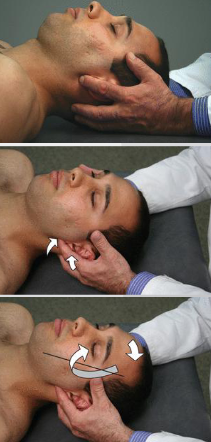
typical = hypothenar eminence hold occiput → palpate AP w/ 2nd + 3rd fingers → compress/traction to disengage → towards position of ease via E/F, SB, rot.
approach balance → press ant. on opp. AP to further rotate (disengage = balance, tension = not balance)
still technique principles? CI?
direct + indirect → indirect via axial force (compression, traction, torsion) then carry region through restrictive barrier
relative → loss of intersegmental motion (2ndary to spondylosis, osteoarthritis, RA), joint instability, acute sprain/strain
visceral manipulation? chapman reflexes? CI?
direct palpation of viscera + supporting structure (abnormal motion test/creates SD)
relative → aortic aneurysm, splenomegaly, GI obstruction, post surg, hernia, diastisis recti, complicated pregnancy, GI infection, ischemic bowel
rotatory motion address ST dysfxn (TTA = visceral pathology)
relative → skin/ST not intact, trauma, friable
absolute → fracture, open wound, infection/abscess, DVT, coagulopathy, neoplasm, over operation
lumbar facet? disc and nerve relation? ligament function?
lumbar facet → smaller IV foramen w/ extension (noci, mechano, proprioceptors)
bulging disc → nerve root pain
lumbar nerve exits sup. to vertebral disk → ruptured disc affects nerve root exiting below (L5 nerve root irritated via L4/5 disk rupture)
ligament fxn → bone to bone, proprioception, sensory, resist abnormal movement, tissue/joint injury feedback
types of LBP?
mechanical → arise form spinal or MSK (localized, radicular or non)
w/o radiation below knee → nonspecific, SD, DDD (xray, MRI), fracture/spondylolysis (xray, CT)
w/ radiation (MRI) → radiculopathy (dermatome), SS (numb/tingle), CES (urine/bowel)
non mechanical → systemic or structural (infection, neoplasm, inflammatory,
referred → visceral/retroperitoneal (GI, renal, gynecologic, vascular, psychological)
risk factors for low back pain? red flags?
excess weight, weak core, lack of exercise, smoking, poor posture; heavy lifting, repetitive motion, vibration, desk job; age, mental health, genetics
red flags: night sweats, weight loss, saddle anesthesia, gait disturbance, urinary retention, sphincter tone loss, recent prostate cancer Dx, corticosteroids, HIV
muscular condition causing LBP clinical patterns? ligaments?
psoas syndrome → prolonged flexed waist = inc. lumbar lordosis + SI joint compression
upper lumbar SD (R + SB towards psoas), ipsilateral post. pelvic tilt, ER distal LE
iliolumbar lig. syndrome → repetitive rotation + hips shifted lat. = ipsilateral SI joint pain
tender pt. sup. med. iliac crest
pelvic outlet/piriformis syndrome → buttock radiates to post thigh via trauma, use, sitting
LE ER supine, reproduce w/ resisted ER/AB
joint conditions causing LBP clinical patterns? spinal cord?
DDD + joint disease → injury/age in lumbar/cervical = osteophytes, spondylosis (ache + stiff, if compressed rad.)
L4/5, L5/S1 most common in radiculopathy via narrow PLL
SI joint pain → gaenslen, FABER, compression, thigh/sacral thrust
cauda equina syndrome (urgent) → compressed lumbosacral nerve root = severe LBP, urinary retention, lose anal sphincter tone, LE weak, saddle anesthesia
dirty ½ dozen (main types of SD)?
muscular imbalance of trunk + LE
non-neutral (T2) lumbar SD
dysfunction of symphysis pubis (pubic shear)
short leg + pelvic tilt/sacral base unlevel
restricted flex (nutation) of sacral base (post. sacral base or backward torsion)
innominate shear
low back pain physical exam tests?
forward bend (adam’s test) → scoliosis via palpate PV hump (if SB restores = functional)
facet loading (kemp’s test) → sit/stand, hand on shoulder + spine (extend, SB, rotate lumbar spine via compress shoulder) = pain
pelvic side shift → hold iliac crest + opp. shoulder, translate pelvis, note motion (+ = freer/name that side)
stork test → pt. flex hip + knee, extend lumbar spine (pars/stress fracture or spondylosis)
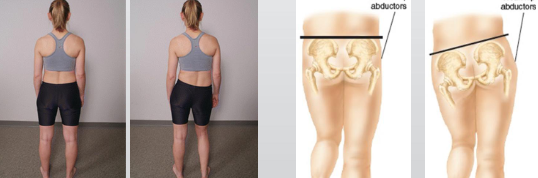
hip drop test → flex knee = opp. hip drops + lumbar spine SB away from wt bearing (+ = no drop w/ lumbar SB towards wt bearing → trouble bending opp. of + test)
trendelenburg test → pt. lifts leg (+ = tilt towards unaffected hip via weak gluteus medius on opp. leg)
standing flexion → PSIS motion
thomas test? straight leg raise? FABER/patrick test?
pt. supine at end of table w/ both legs flexed at knee + hip → 1 leg extend off table holding opp. knee → tests iliopsoas muscle tone (+ = contralateral raises off table)
passive raise pt. leg w/ knee extend → tests sciatic nerve (+ = pain @ 30-60)
bragards → lower leg below pain + ankle DF (+ = pain below knee)
flex, abduct, ER, extension → test SI joint
muscles contributing to pelvic SD?
iliolumbar ligament → prevents L5 ant. slide, blends w/ ant. SI for smooth symmetry, common SD cause
piriformis syndrome → sciatica compression (S1/2), gluteal ache, inc. pain sitting, paresthesia down post. thigh, w/ contralateral psoas syndrome
psoas syndrome → sudden lengthen (via sitting, bending, gardening then stand), overuse (sit-ups, hurdles), back/buttock pain, short/ER leg, ant. rot. innominate, hypertonic CL piriformis, flexed L1 or L2 SD rot. + SB ipsilateral

sacral axes? motions?
sup. (high S2) → resp. + cranial motion
middle (low S2) → SI axis (post. nutation/flexion + counternutation/extension)
inf. (S3) → IS axis (innominate ant./post. rotation)
central horizontal (flexion/extension), left oblique (L/L, R/L sacral torsion), right oblique (R/R, L/R sacral torsion)
innominate evaluation? sacral? L5 mechanics
standing flexion test or ASIS compression, ASIS, ASIS midline, pubic ramus, PSIS
seated flexion test or ASIS compression, sacral base, ILAs, L5, spring (+= stiff), sphinx (+ = no improvement)
L5 = rotates opp. sacrum + SB same as axis (ROSSA), forward torsion w/ N L5
non-physiologic (trauma) = shears + backward sacral torsion
sacrum Dx?

gait cycle relation to innominate? sacrum?
leg post. = ipsilateral innominate ant.
weigh bearing leg → sacrum engages ipsilateral oblique axis (forward torsion)
L5 (ROSSA)
innominate PIR MET anterior rotation? posterior?
pt. supine → flex, ER, ABduct knee (pull ischial tuberosity ant.), push knee into shoulder
pt. supine → stabilize opp. ASIS, leg + ischium off table (extend leg), pt. push thigh up

innominate PIR MET superior shear? inferior shear?
slight raise, abduct + IR (gap SI joint), lean back (traction = engage SI joint) → pt. hike hip up
OR → stabilize ASIS + leg off table (ischial tuberosity on), push thigh up
slight raise, abduct + IR, compress hip (engage SI joint) → pt. push heel down
OR → flex, ADduct hip w/ ischial tuberosity ant.

innominate PIR MET inflare? outflare?
flex affected hip + knee (cross over opp. knee) → stabilize opp. ASIS + ABduct hip → pt. push knee into hand
flex affected hip + knee w/ foot on table → monitor PSIS + ADduct hip → pt. push into hand

innominate PIR MET pubic compression? gapping?
flex hips + knees
ABduct pt. knee w/ forearm btwn → pt. ADduct knees
ABduct knees ~18 in. (w/ knee closer against abdomen), hold other knee w/ both hands → pt. ABduct knees

indirect sacral MFR w/ respiratory assist?
pt. prone, abduct legs 20-30 degree
place hands on sacrum w/ bottom pointing cephalad
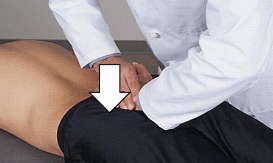
downward pressure on whole sacrum (press toward table to gap SI joint)
encourage unwinding
indirect sacrum BLT?
pt. supine w/ knees bent
caudad hand contacts sacrum (2nd-4th finger contact base) + cephalad hand contact ilia to disengage (2nd-4th finger contact ASIS)
disengage via bring ASIS closer (lat. traction force @ SI joint)
move sacrum into SD

SI joint BLT?
sit on side of SI restriction
contact pelvis at SI joint w/ finger pads + place other hand on ASIS
bring innominate into ease (ant. pressure to sacrum)

unilateral sacral flexion MET? extension?
abduct leg 15 deg. for SI joint + IR hip
place caudad hand on ILA (reinforce w/ cephalad hand) → inhale = push (encourage extension) + exhale = resist
sphinx, abduct leg 15 deg. for SI joint + IR hip
place cephalad hypothenar on sacral sulcus (reinforce w/ caudad hand) → exhale = push (encourage flexion) + inhale = resist

bilateral sacral flexion MET? extension?
place caudad hand on ILAs (fingers up) → downward pressure (inhale = push/extend) (exhale = resist)
contact sacral sulci → downward pressure (exhale = push/flex) (inhale = resist)
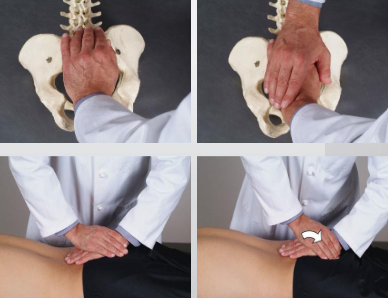
forward torsion? backward torsion?
down on axis, hug table, monitor sacral base w/ hips flexed >90, push down on feet
down on axis, monitor sacral base, draw shoulder to face up, flex hips <90, push down on knees
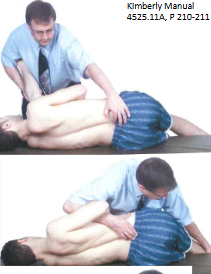
OMM geriatrics, theories/physiology aging
stressor compensation dec. efficiency + stressors inc. = frailty
hospital readmission, prevent high risk disease, fall prevention, manage multiple chronic conditions
age related postural change? gait change?
cervical lordosis (altered esophagus/trachea), thoracic kyphosis, lumbar lordosis (compensates upper back + pelvic tilt)
mandible protrusion (mastication strain), scapula retraction, ribcage depression (dec. AP), post. rot. pelvis, sacral counternutation (ext), iliopsoas short, knee flexion, DF ankle, altered vestibular
via osteoporosis/osteopenia, IV disk, sarcopenia, body fat, compensation, cumulative injury, ankylosing spondylitis, SD/VSR
dec. gait velocity, step/stride length, clearance; inc. initial contact, widened stance
evaluation and treatment of geriatric patients?
less tolerant to direct technique (use indirect)
form adhesions from chronic strain/SD
home exercise, loosen muscles, walk/aquatic, prevent fall risk
impaired homeostasis (dec. height, body mass, water, fat; thin/fragile hair, wrinkle skin, sweat gland atrophy; dec. lens elasticity (presbyopia), inc. lens density (cataract), glaucoma, dec. color; dec. lingual papilla, taste, smell, receding gums; dec. hearing + balance)
fall injury risks for geriatric patients?
tolerance to fall dec. w/ age (via dec. bone density/flexibility)
via dec. vision, balance, cerebral blood flow (syncope); inc. cognitive impairment, delirium
exercise = strength, stamina, balance, metabolic syndrome (high BP + fasting glucose, abdominal obesity, high TG, low HDL)
most common fatal + nonfatal injury
= 20-30% mortality w/in 1 yr; 70% never fully recover
indications for geriatric patients? contraindications?
chronic pain, dec. ROM, arthritis, postural imbalance, resp. support, lymph./circ. mobilization, autonomic balance, prevent 2ndary complication
unstable joints, acute bone injury, malignancy, severe infection, spinal abnormalities
relative → osteoporosis, joint inflammation, degenerative joint, anticoagulation therapy, vasc. disease, post. surg. joint, mental/psych dependence, herpes zoster
elements of ADLs?
basic → self-care for personal health/independence (bathe, groom, toilet, mobility/transfer, continence, feeding)
instrumental → complex for independent living in community (manage meds, finances, meals, housekeep/security, shop, transport/communication device)
treating neck pain in geriatric patients? back pain?
quick → OA release, ST cervical paraspinals
extended → FPR/BLT/MFR, thoracic ME, pec minor/levator scapulae/trapezius CS
quick → ST thoracic/lumbar paraspinal, piriformis CS, psoas major/QL ME
extended → lumbar, innominate, sacrum ME
pec minor CS? levator scapulae CS? trapezius CS?
@ coracoid, F ADD (stand on opp. side of SD + grab scapula)
@ sup. med. scapula, F ADD elevate scapula, pt. head can be turned towards (stand on same side of SD + compress up from elbow)
@ neck/shoulder jxn , F AB (stand on same side of SD + SB neck toward w/ R away, F/AB w/ traction via pulling)

piriformis CS? psoas major ME? QL ME?
@ midpt ILA sacrum + greater trochanter (F ABD ER prone)
supine (support pt leg on shoulder), lat. recumbent (leg off table on thigh)
supine, drop treatment side off table (AB + E) → push down on knee + stabilize opp. ASIS
supine, SB legs away from QL treated, CL arm in treatment side axilla → torso SB away via grasp axilla hand underback

lateral recumbent ME?
dysfxn side down w/ shoulders + hips perp. to table
monitor segment (caudad hand) → rotate towards DO/into barrier → cephalad (extension) or caudad (flexion)
switch monitoring hand (cephalad hand) → grasp ankles to move leg + pelvis (post. = E; ant. = flexion) **not needed for neutral
pt. legs lifted up (nonneutral) or dropped (neutral) for SB → pt. pushes down
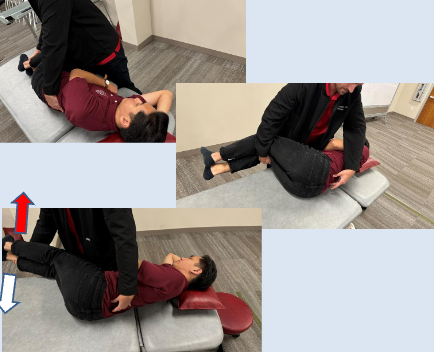
SOAP note components?
subjective = CC, HPI, pain
objective = specific Dx/tenderness + OMT procedure note (consent, region manipulated, technique, pt. response)
use ICD-10 (regional) + CPT OMT billing
assessment = SD
plan = medication, OMT, therapy (PT, OT, massage), human/holistic/lifestyle (education e.g posture), exercise, referral
humeroulnar joint dysfunction diagnosis? treatment? MIDTERM
restricted lat. glide of prox. ulna during adduction = abducted ulna w/ medial glide (inc. carrying angle)
restricted medial glide of prox. ulna during abduction = adducted ulna w/ lat. glide (dec. carrying angle)
Tx via MET (twist olecranon + push wrist into barrier) or HVLA (twist olecranon, push wrist + extend arm to feather’e edge → thrust = further extension of arm)
