Nematodes (roundworms)
 Call Kai
 Learn
Learn Practice Test
 Spaced Repetition
 Match
Match Flashcards
 Knowt Play
1/13

There's no tags or description
Looks like no tags are added yet.
Name | Mastery | Learn | Test | Matching | Spaced | Call with Kai | Chat |
|---|
No analytics yet
Send a link to your students to track their progress
14 Terms
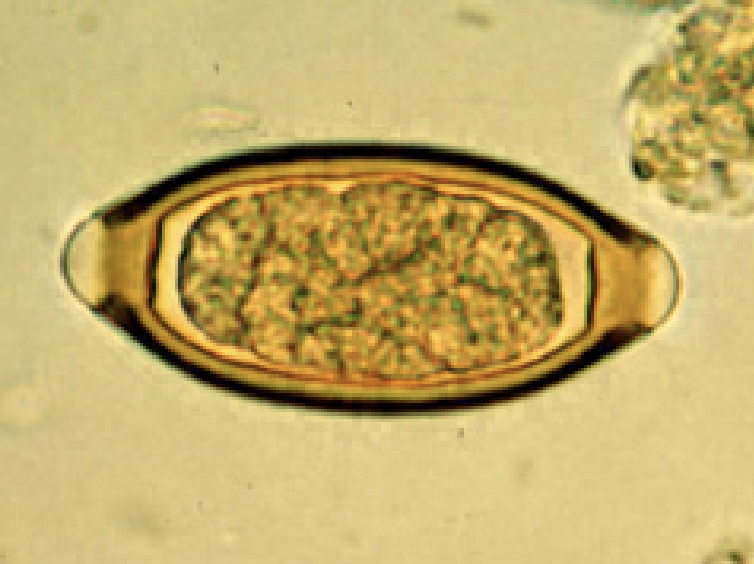
trichuris trichiura
The infective stage is the embryonated egg in soil. transmitted by ingestion of embryonated eggs from contaminated soil, food, or water, or hands. found in tropical and subtropical areas worldwide. sympt: a light infection is less than 100 tapeworms. heavy infection is more than that adn leads to TDS(bloody diarrhea, constant urge to defacate-tenesmus,and rectal prolapse)
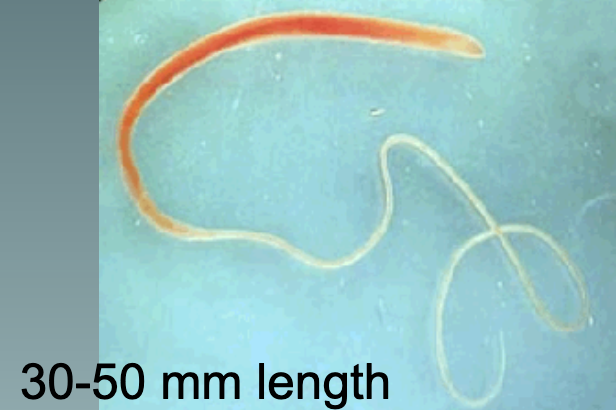
trichinella spiralis
infective stage is the encysted larva (nurse cell) in raw meat. transmitted by eating raw infected meat and freezing does not kill strains (t.nativa). found worldwide but mostly form game meat. sympt: enteral phase→nausea and diarrhea. parenteral phase→ larva migrate to muscle and cause intense muscle pain, periorbital edema, and nurse cells form. when intracellular its permanent
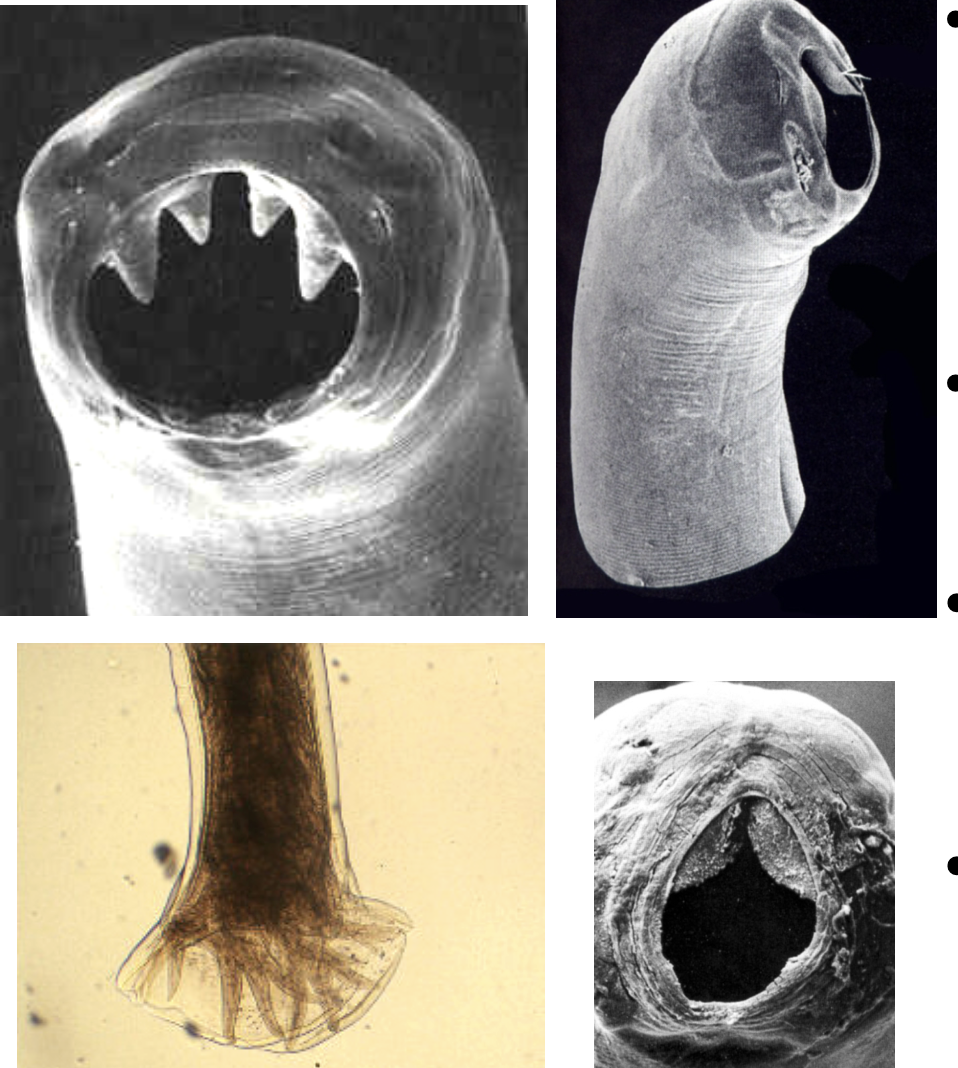
necator americanus
infective stahe is the flariform(L3 larva) found questing on grass blades. transmitted through skin penetration through bare feet or L3 larva in contaminated soil. found in the americas(brought by slave trade), sub saharan africa, and southeast asia. sympt: ground itch, loeffler’s symdrome (lungs), intestinal phase causes chronic blood loss and iron deficiency if infection is severe(more than 1,000 worms)
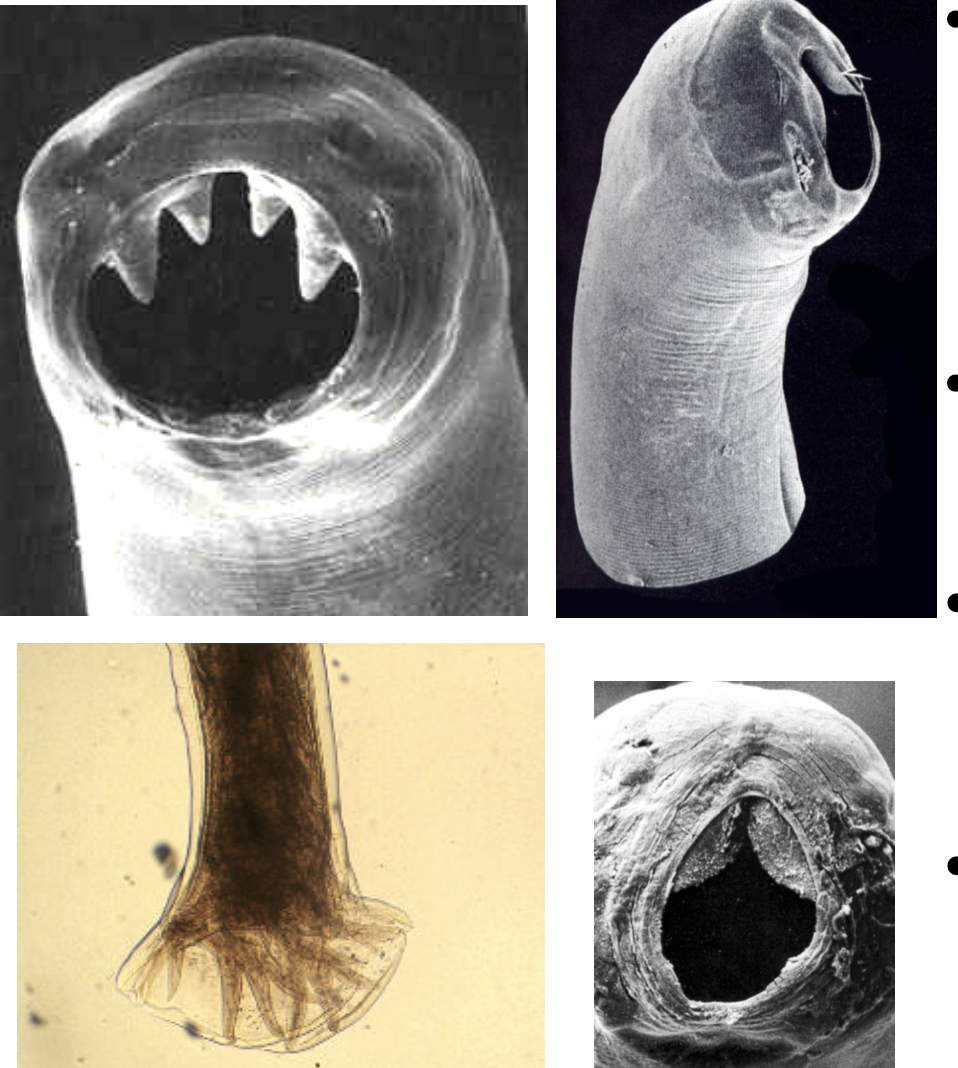
ancylostoma duodenale
infective stage is the filaform(L3) larva. transmitted by skin penetration or oral ingestion. found in the mediterranean, north africa. sympt: blood loss and iron deficiency but much more sever than n.americanus due to worms consuming more blood per worm. only more than 100 worms is a severe infection
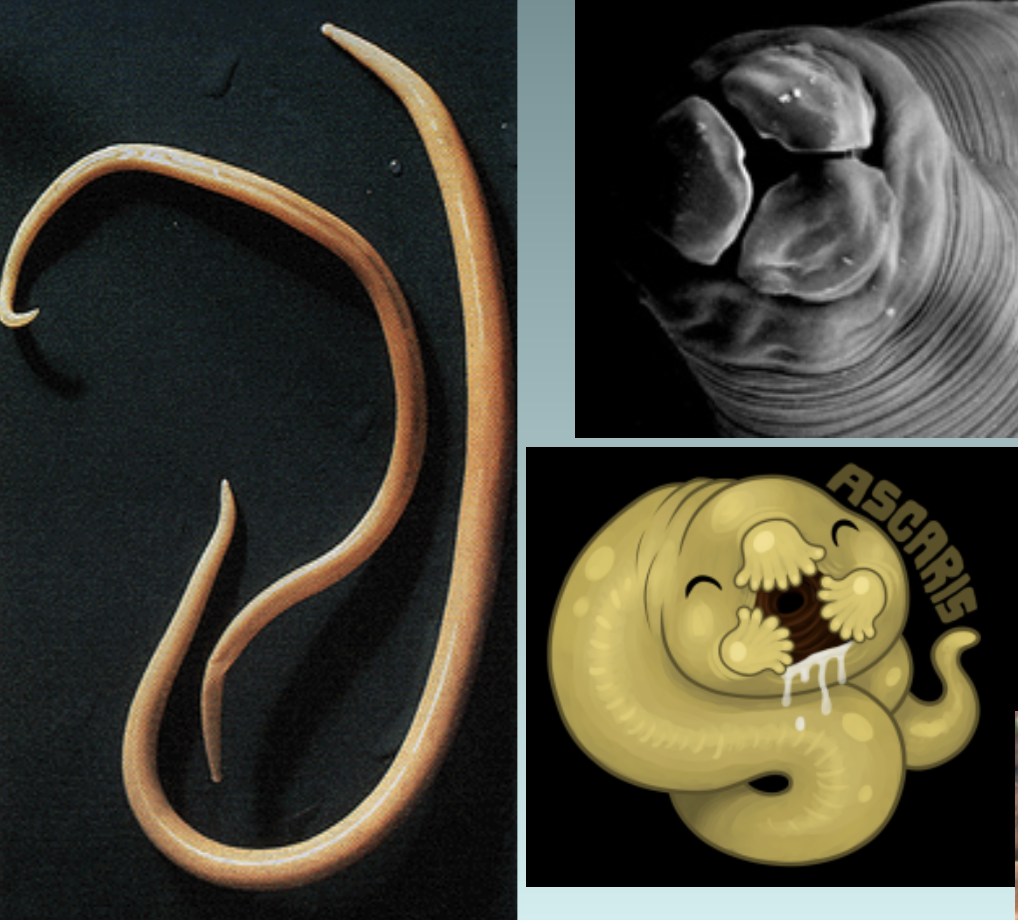
ascaris lumbricoides
infective stage is the embryonated egg containing L3 larva. transmitted though ingestion of embryonated eggs from contaminated soil, food, water, or hands. found worldwide and infects 25% of the population. sympt:lung phase is loefflers syndrome and intestinal phase is usually asymptomatic but heavy infection can lead to volvulus. hint: can resist very acidic environments, round and soft is fertilized egg
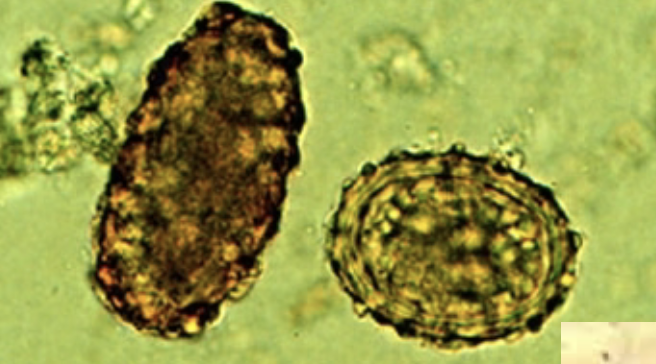
baylisascaris procyonis
infective stage is embryonated egg found in raccoon feces. transmitted through accidental ingestion of raccoon feces. found in north america. sympt: larvae migrate through cns and eyes and can lead to irreversible neurological damage.
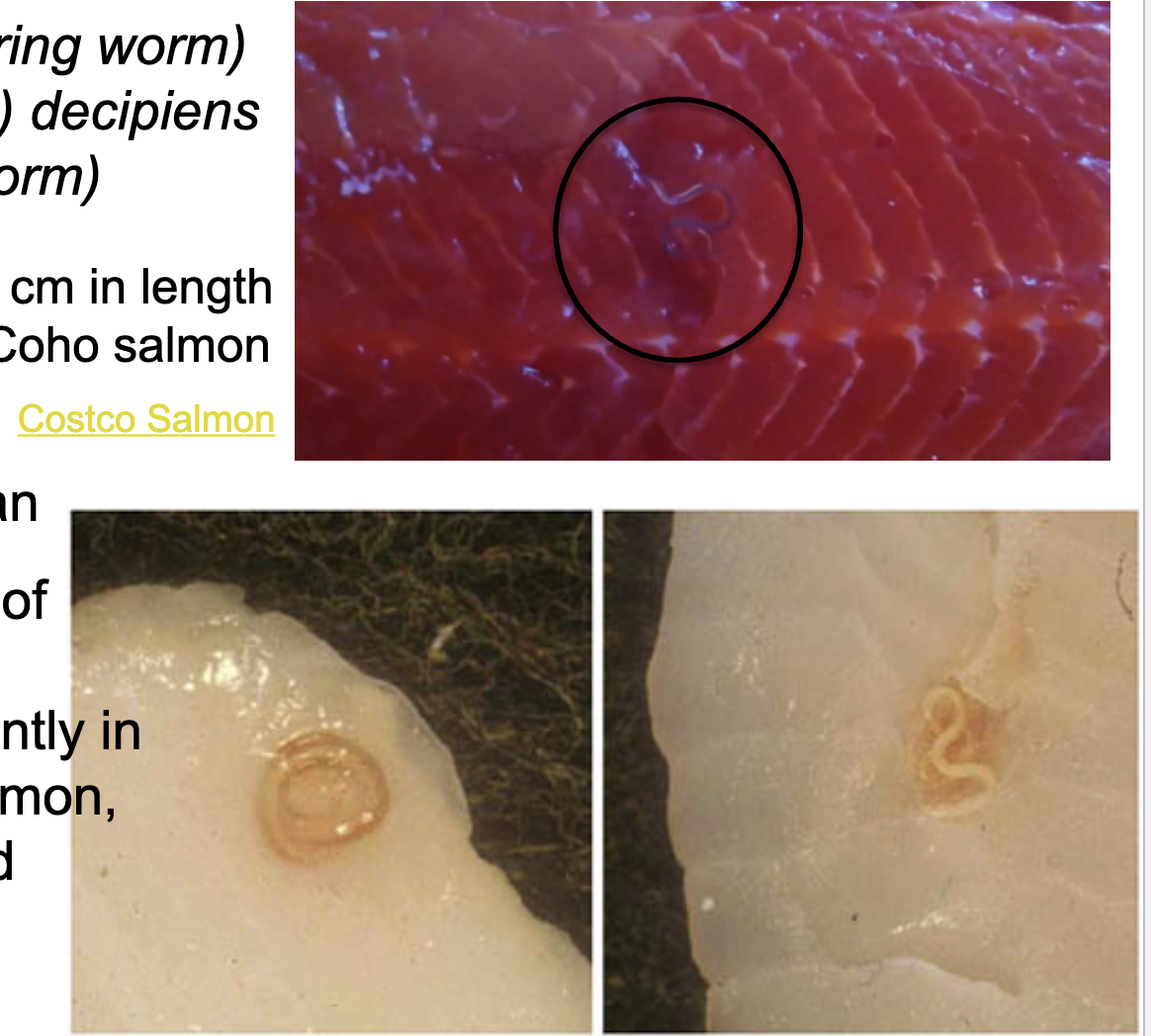
anisakis spp
infective stage is L3 larva in raw fish and squid. transmitted through eating raw fish. found in japan and scandinavia/netherlands. sympt: worm attaches to esophagus, stomach, or intestinal wall and causes symptoms that mimick crohn’s disease. treatment is through endoscopic removal.
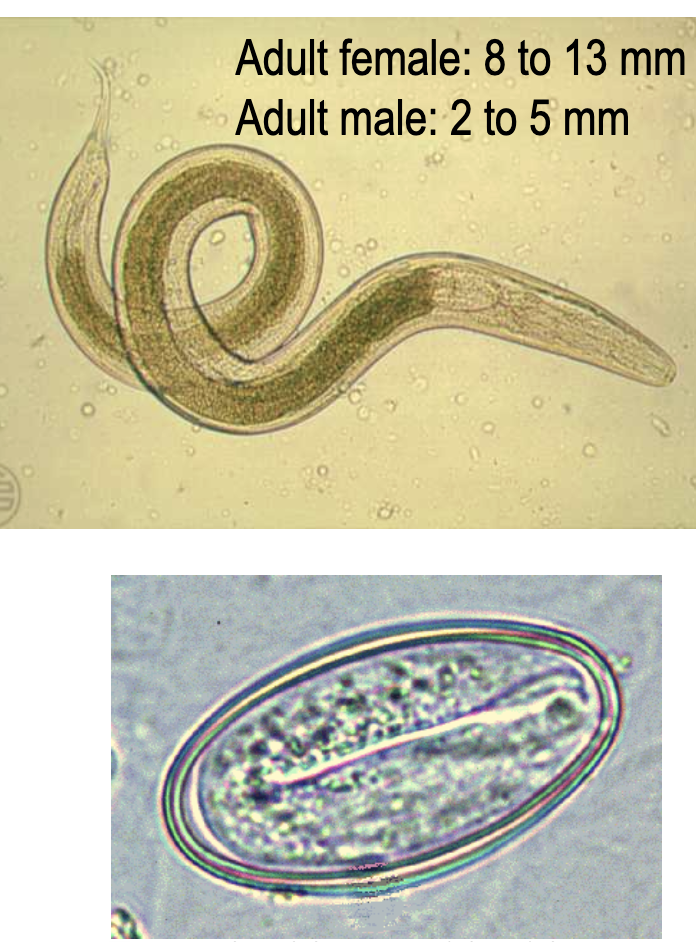
enterobius vermicularis
infective stage is embryonated egg. transmitted through fecal orla route for self infection or cross infection or retro infection(eggs hatch in gut, or eggs become airborn and are inhaled. found worldwide and msot common in US and cold climates. sympt; anal itching, insomnia, abdominal pain, diagnosed with cellophane tape test and treated with mebendazole for entire family
dracunculus medinensis (guinea worm disease)
infective stage is the L3 larva in infected copepods in drinking water. transmitted by drinking STAGNANT water containing infected copepods (cyclops). found histroically in west africa and india but now only in south sudan. sympt: asymptomatic for 10-14 moths bc worm produces morphine to mask migration, then blister forms with intense burning usually in the foot which leads to water exposure that triggers larval release. When a blister ruptures, the worm can be extracted by being wrapped around a stick.
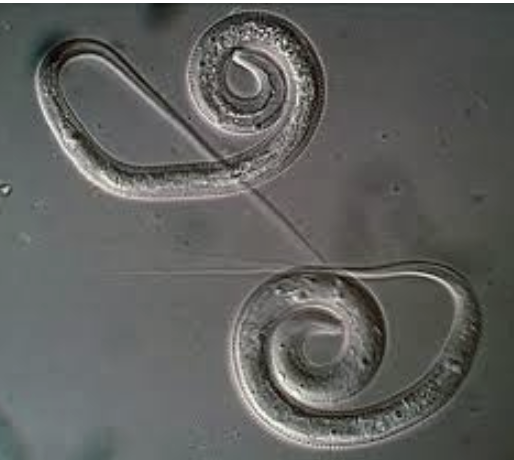
lymphatic filariasis (elephantiasis)
caused by wuchereiria bancrofti with infective stage being L3 larva in mosquito. transmitted by bite of infected female mosquito (eg. anopheles). found mainly in tropical areas around the equator. sympt: adult worms blok lymohatic vessels leading to lymphedema and massive swelling of the limbs, then skin breaks down and becomes elephant like that is permanent when established. wolbachia bacteria contributes to inflammation. blood to diagnose
onchocerca volvulus (river blindness)
infective stage is the L3 larva in black fly saliva. transmittd through bite of infected black fly(simulium) near FAST FLOWING rivers. found mostly in sub saharan africa. sympt: microfalariea migrate through skin and their death causes intense inflammation due to wolbachia released by microfilariae death. blindness comes from microfilariae dying on cornea. adults stay in nodules. 10-15 yr treatment and associated with nodding and nakalanga disease. Skin to diagnose
loa loa
infective stage is L3 larva in deer fly saliva. transmitted by bite on infected deer fly and found in west and central africa. sympt: no wolbachia so lesssevere inflammation, transient swellig as worm migrates, adult worm crawls visibly across conjuctiva of the eye and can be surgically removed.
dirofilaria immitis
infective stage is L3 larva in mosquito saliva. transmitted by bite of infected female mosquito but humans are accidental dead end hosts. sympt: in humans heart failure, worms stay sexually immature and die on pulmonary arteries which then appear as coin lesions on a chest x ray.
strongyloides stercoralis
infective stage is L3 and penetrates the skin, then to blood and then to lungs, trachea and then swallowed, small intestine.