MLT 101: Microscope Lesson
 Note
Note Call Kai
 Learn
Learn Practice Test
 Spaced Repetition
 Match
Match Flashcards
 Knowt Play
1/18

Earn XP
Description and Tags
These flashcards cover key terms and concepts from the lecture on hematology, including blood cell types, functions, and relevant processes.
Name | Mastery | Learn | Test | Matching | Spaced | Call with Kai | Chat |
|---|
No analytics yet
Send a link to your students to track their progress
19 Terms
The difference between a simple microscope and a compound microscope
The simple microscope is a magnifying glass with the sun being the light source. The Compound Microscope has two separate lenses with the light source being the light bulb
The calculation for Total magnification of a compound microscope
Total Magnification= Magnification of Objective lens X Magnification of the Eye Piece
Refractive Index
the amount of speed in which light bounces from the lens to the specimen. This is enhanced through the immersion oil.
Resolving Power
The ability of a microscope at a specific magnification to distinguish between 2 specific objects that are situated closely together. For example, the difference between an Apple Camera and an old Polaroid Camera
Depth of Field
The ability of the objective lens to focus through different planes
Magnification
The process of enlarging the apparent size, not physical size. Expressed as 10x the actual size or 100x the actual size and so forth
Par Focal Lens
a lens that stays in focus when magnification/focal length is changed. So as the objective switches, the lens stays in focus
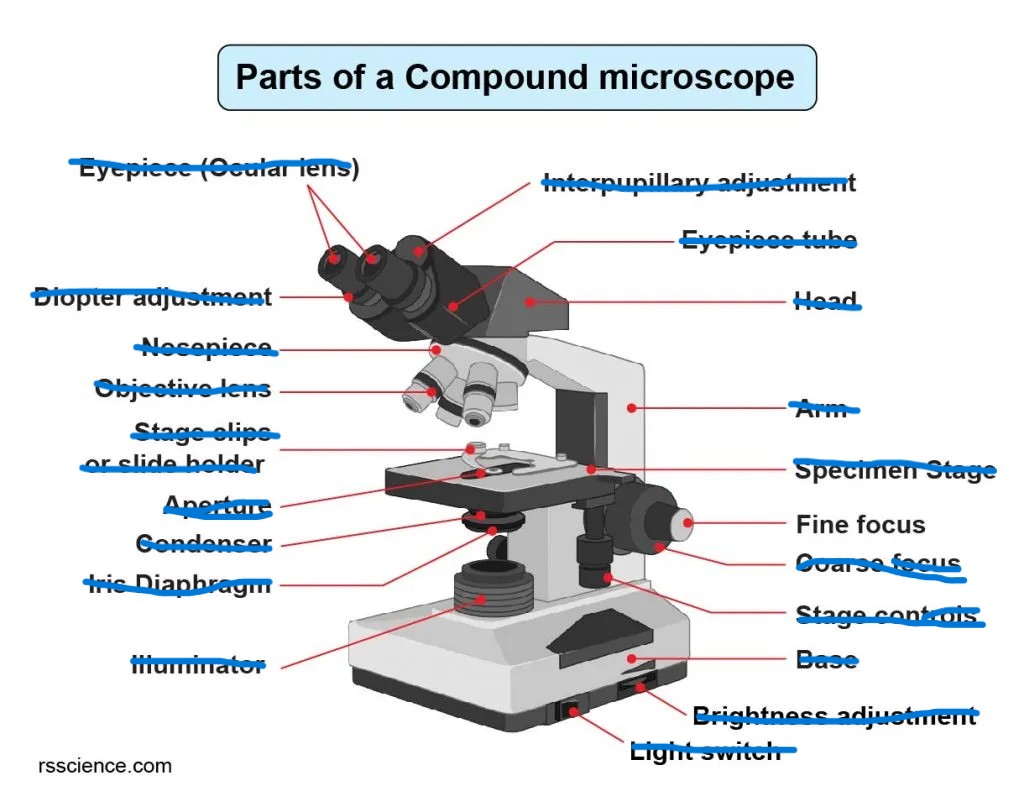
Stage
A place where the slide sits

Base
A place where the light adjuster and the power switch is underneath. This is the bottom of the microscope
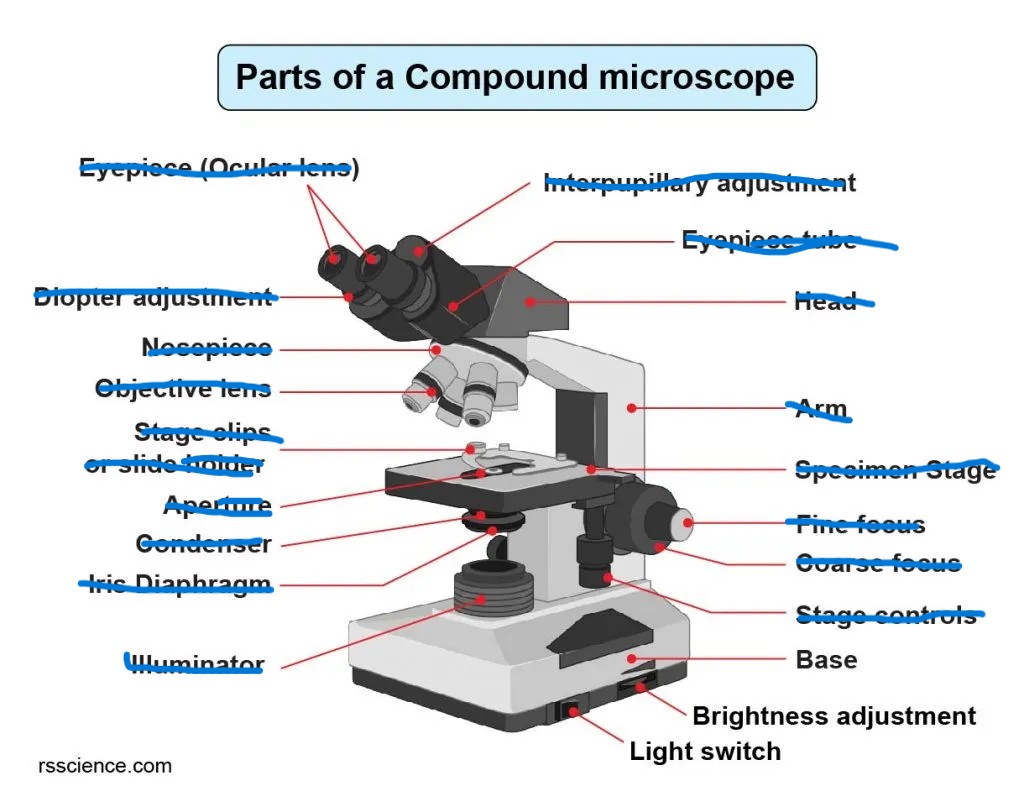
Diaphragm
A place where the light increases or decreases
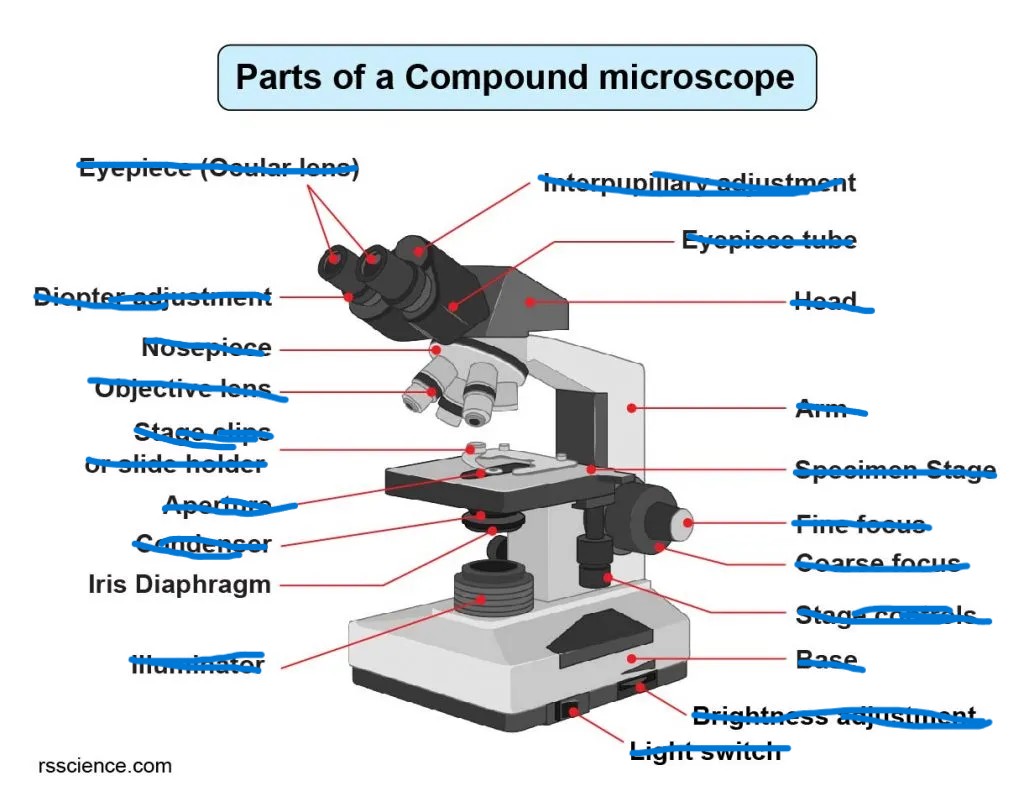
Condenser
Focuses light onto the specimen for clarity and contrast.
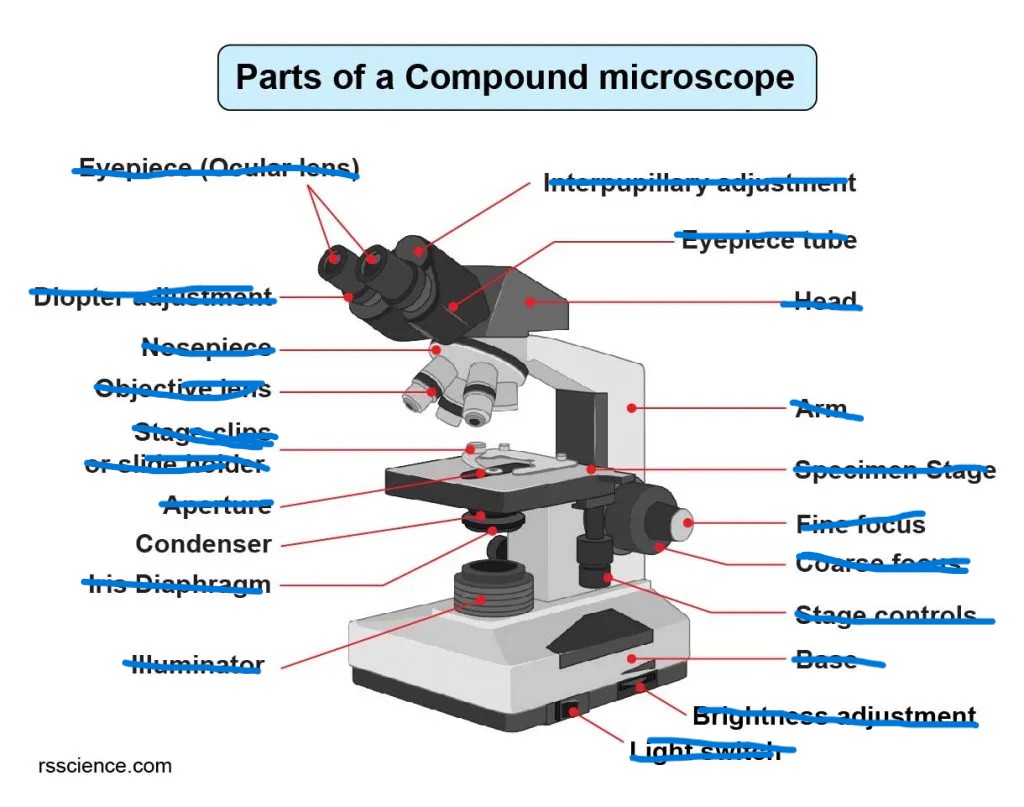
Eyepiece (or Ocular Lens)
A place where you put your eyes onto to view the specimen
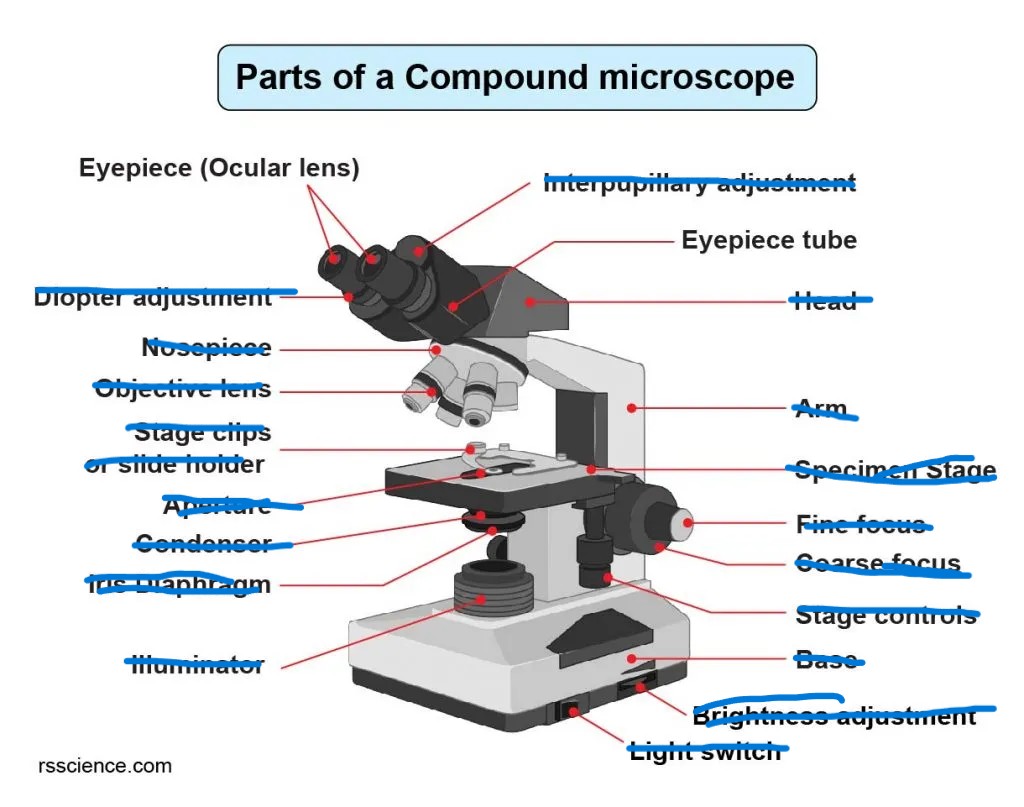
Objective Lens
The lens that helps you focus on the specimen with magnification and resolution. Has X10, X40 and X100-immersion oil objectives.

Light source of the microscope
The Light Bulb, found somewhere at the base of the microscope near the Illuminator
Coarse Adjustment Knob
The big knob that gives a rough focus on the specimen

Fine Adjustment Knob
The smaller knob outside the Coarse adjustment knob that fine tunes the view of the specimen
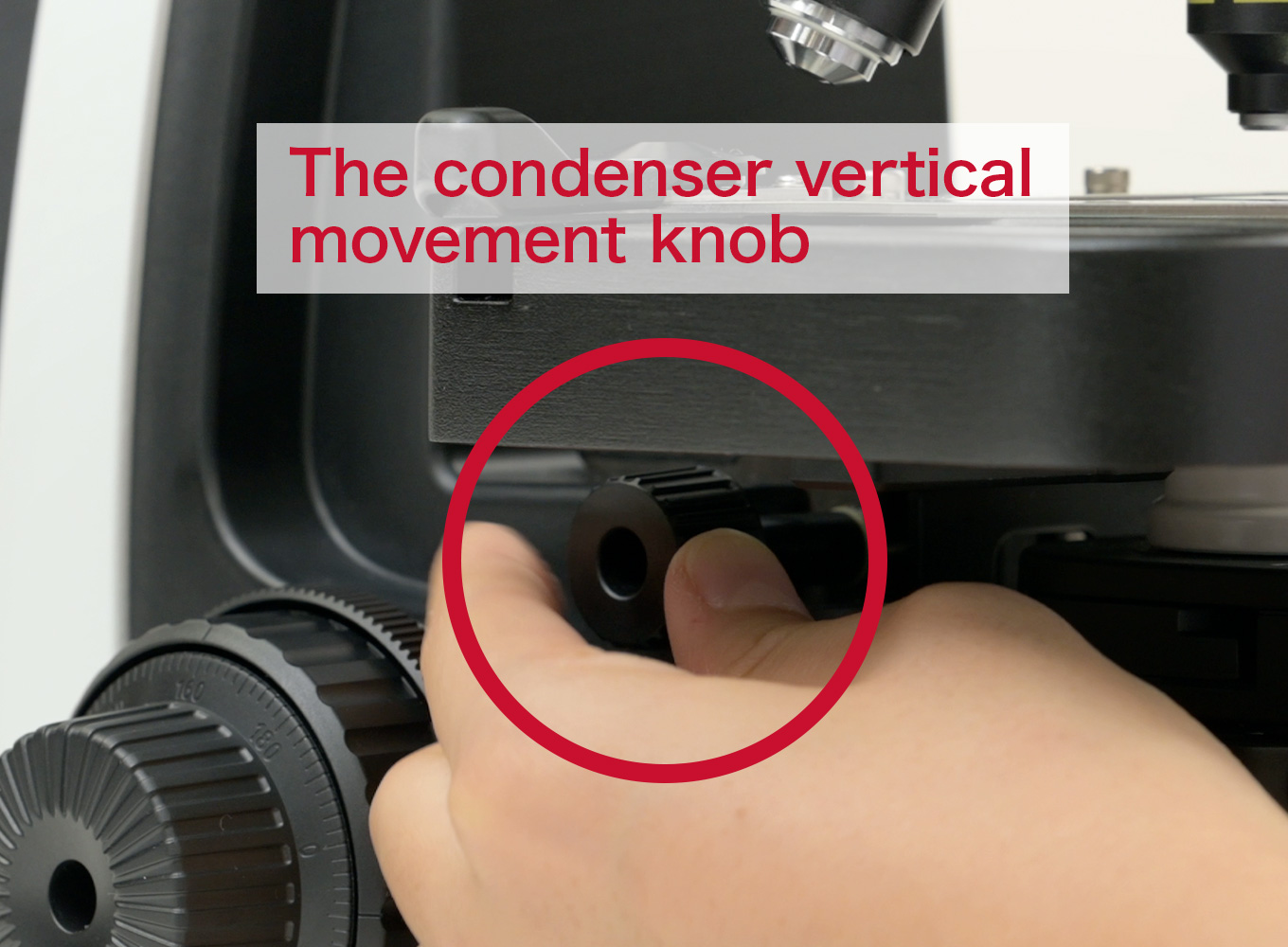
Condenser Adjustment Knob
This is the knob on the side beneath the stage that adjusts the beam of light up or down
How to properly clean the microscope
Please use lens paper to wipe the microscope and its lens. Use the lens cleaner and the lens paper to get the immersion oil off
Why we do not leave immersion oil on any lens of the microscope
Immersion oil dries and seeps under the objective lens