Chapter 19: Aldehydes and Ketones
 Call Kai
 Learn
Learn Practice Test
 Spaced Repetition
 Match
Match Flashcards
 Knowt Play
1/39

There's no tags or description
Looks like no tags are added yet.
Name | Mastery | Learn | Test | Matching | Spaced | Call with Kai | Chat |
|---|
No analytics yet
Send a link to your students to track their progress
40 Terms

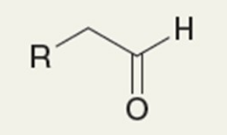
When treated with a strong oxidizing agent, primary alcohols
are oxidized to carboxylic acids. Formation of an aldehyde
requires a mild oxidizing agent, such as the oxidizing agents
shown above, that will not further oxidize the resulting
aldehyde.


Ozonolysis will cleave a C=C double bond. If either carbon
atom bears a hydrogen atom, an aldehyde will be formed.


Hydroboration-oxidation results in an anti-Markovnikov
addition of water across a 7 bond, followed by
tautomerization of the resulting enol to form an aldehyde.
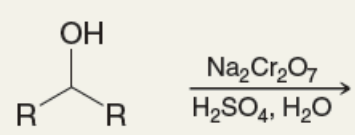
A variety of strong or mild oxidizing agents can be used to
oxidize secondary alcohols. The resulting ketone does not
undergo further oxidation.


tetrasubstituted alkenes are cleaved to form ketones

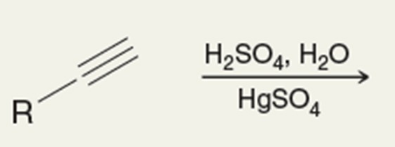
This procedure results in a Markovnikov addition of water across
the pi bond, followed by tautomerization to form a methyl ketone.
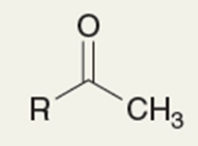

Aromatic rings that are not too strongly deactivated will react
with an acyl halide in the presence of a Lewis acid to produce
an aryl ketone.


a strong nucleophile means the reaction is under
basic conditions


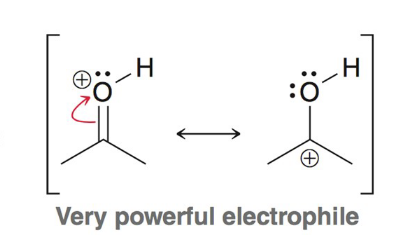
Acidic conditions are required in order for a weak nucleophile
to attack a carbonyl carbon

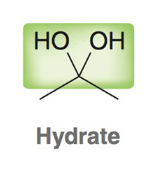
In the presence of water, a ketone/aldehyde is in equilibrium
with its hydrate
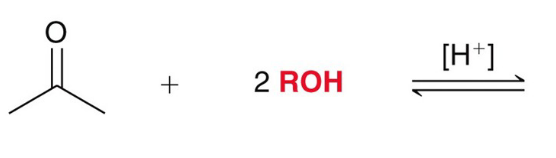
Under acidic conditions, one ketone/aldehyde reacts with
two alcohols to form an acetal


For most simple aldehydes, the acetal is favored at equilibrium


For most ketones, the acetal is not favored at equilibrium
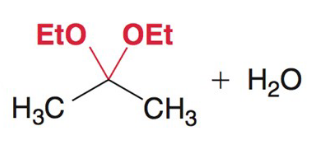

Acetal formation is reversible, and can be controlled by
adding/removing water:
To favor acetal formation, water is removed from the reaction
To convert an acetal back into the ketone/aldehyde, water is
added to the acetal, with H+ catalyst:


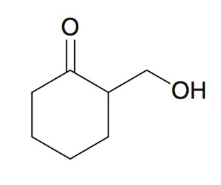
First, protect the ketone as a cyclic acetal
Then we can reduce the ester, and deprotect the ketone
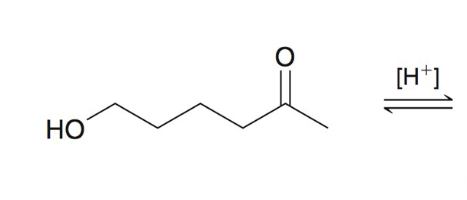
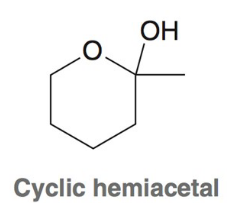
A cyclic hemiacetal is possible when a compound contains both
the carbonyl group and the hydroxy group
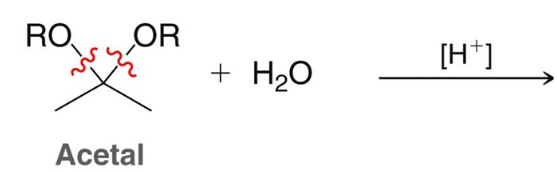
Acetals are hydrolyzed with aqueous acid to yield a ketone (or
aldehyde) and two equivalents of alcohol:
Simply the reverse of acetal formation


Acetals will only react with water under acidic condition
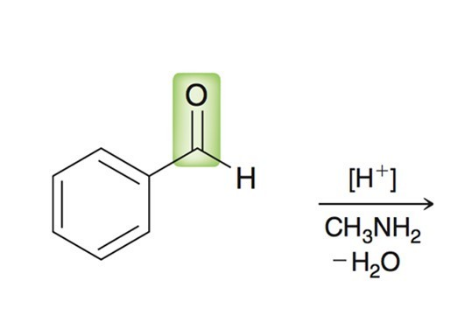
Under acidic conditions, aldehyde/ketone reacts with a 1º
amine to form an imine
The reaction requires acidic conditions to work

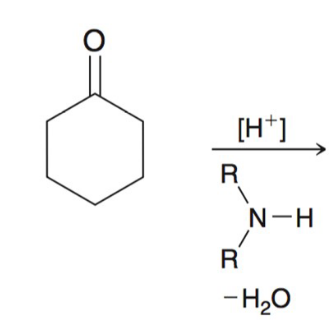
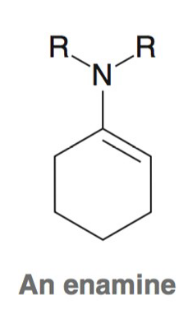
Under acidic conditions, aldehyde/ketone reacts with a 2º
amine to form an enamine
The reaction requires acidic conditions to work; the mechanism
is identical to imine formation, except for the last step

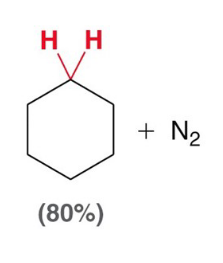
Wolff-Kishner reduction is a two-step synthesis, converting a
ketone to an alkane
First step is imine formation between the ketone and hydrazine
(which is like a primary amine)
Second reaction is like an elimination

Hydrolysis of imines and enamines undergoes a very similar
mechanism under acidic conditions


Hydrolysis of imines and enamines undergoes a very similar
mechanism under acidic conditions
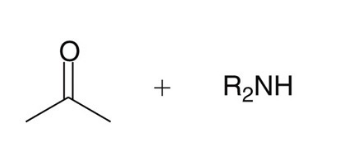

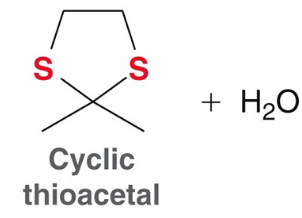
Ketones/aldehydes react with thiols virtually the same way
they react with alcohols
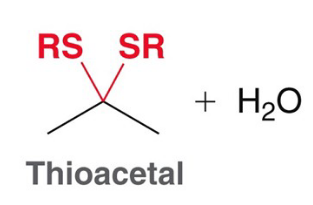

Ketones/aldehydes react with thiols virtually the same way
they react with alcohols


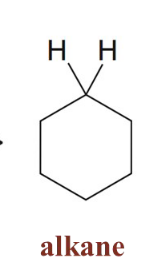

reductions are carried out under basic conditions
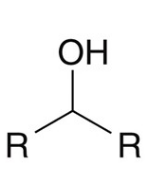

This reaction works better under
basic conditions, and so a catalytic
amount of base is usually used
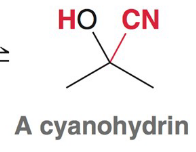
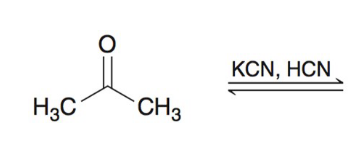

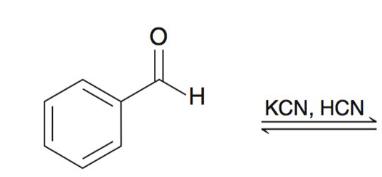
To achieve basic conditions, KCN is usually added along with
HCN.

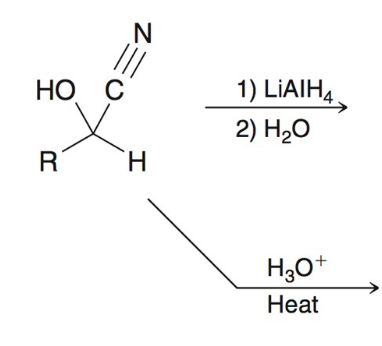
Installation of a cyano group is advantageous because it can be
converted to other functional groups

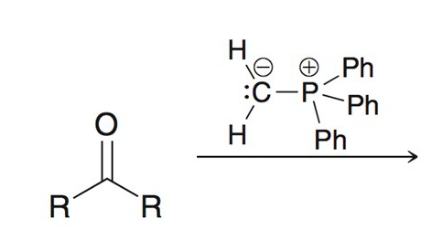
The Wittig Reaction is an extremely important reaction in organic chemistry, like Grignard reactions, in that the carbon skeleton is modified
Ketone/aldehyde is converted to an alkene, with the formation of a new C=C double bond
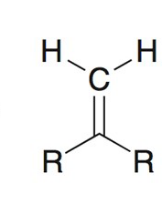

The Wittig Reaction is an extremely important reaction in organic chemistry, like Grignard reactions, in that the carbon skeleton is modified
Ketone/aldehyde is converted to an alkene, with the formation of a new C=C double bond


AND, the Wittig rxn is stereoselective:
Using a Wittig derived from a simple alkyl halide, the (Z) alkene is favored
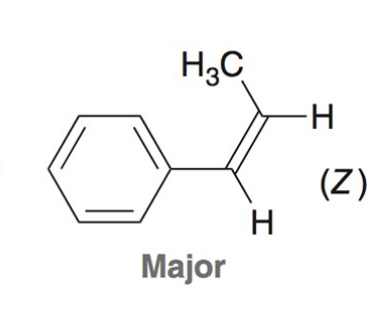

AND, the Wittig rxn is stereoselective:
But if the Wittig rgt contains an electron-withdrawing group,
the (E) alkene is the major product:


AND, the Wittig rxn is stereoselective:
But if the Wittig rgt contains an electron-withdrawing group,
the (E) alkene is the major product:


Horner-Wadsworth-Emmons (HWE) reaction employs a
reagent similar to a stabilized Wittig reagent, and also yields
E-alkenes as the major product


Baeyer-Villiger Oxidation - An oxygen is inserted into an
aldehyde/ketone between a carbonyl carbon and neighboring
alkyl group