LAB - L4:T5-T6 (Non-Narcotic A. / Antimigraine&Antigout)
 Call Kai
 Learn
Learn Practice Test
 Spaced Repetition
 Match
Match Flashcards
 Knowt Play
1/52

There's no tags or description
Looks like no tags are added yet.
Name | Mastery | Learn | Test | Matching | Spaced | Call with Kai | Chat |
|---|
No analytics yet
Send a link to your students to track their progress
53 Terms
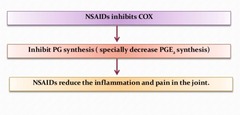
What is the mechanism of action for Non-Steroidal Anti-inflammatory Drugs (NSAIDs)?
They inactivate cyclooxygenase, the enzyme required for the production of prostaglandins.
What are the two types of cyclooxygenase (COX) enzymes?
COX 1 and COX 2.
Where is COX 1 primarily found?
In all tissues, especially the gastrointestinal tract, kidneys, endothelial cells, and platelets.
What is the primary role of COX 2?
To produce prostaglandins associated with pain and inflammation.
What are the indications for using NSAIDs?
To treat mild to moderate pain or inflammation, including musculoskeletal disorders, dysmenorrhea, minor trauma, and surgery.
Name a COX-2 inhibitor.
Celecoxib (Celebrex).
What are propionic acid derivatives?
A type of NSAID that includes ibuprofen, ketoprofen, naproxen, and fenoprofen.
What is a significant risk associated with ketorolac (Toradol)?
It can cause bleeding and is limited to a 5-day use.
What are some contraindications for NSAIDs?
Peptic ulcer disease, GI or bleeding disorders, hypersensitivity reactions, and impaired renal function.
What is the effect of NSAIDs on other drugs?
They can decrease the effects of ACE inhibitors, beta blockers, and diuretics.
What are salicylates?
Anti-inflammatory agents that block the inflammatory response and have antipyretic and analgesic properties.
What is a common home remedy that contains acetylsalicylic acid (ASA)?
Aspirin, used for headaches, colds, influenza, and other respiratory infections.
What is Reye's syndrome?
A condition that can occur in children with acute viral infections treated with ASA, leading to encephalopathy and fatty infiltration of organs.
What are the symptoms of salicylate toxicity?
Nausea, vomiting, tinnitus, hyperventilation, confusion, seizures, and potentially coma.
What emergency procedures are recommended for salicylate poisoning?
Gastric lavage, activated charcoal, IV bicarbonate, and hemodialysis.
What is the maximum recommended daily dose of acetaminophen?
4 grams per day.
What is the antidote for acetaminophen poisoning?
Acetylcysteine (Mucomyst).
What is the primary effect of acetaminophen compared to ASA?
It is equal in effectiveness for analgesic and antipyretic effects but lacks anti-inflammatory actions.
What can occur with acetaminophen overdose?
Toxic metabolites can damage liver cells.
What are the nursing considerations when administering NSAIDs?
Monitor temperature, CNS status, pulse, blood pressure, respiratory status, liver function, and laboratory tests.
What is the role of prostaglandins in the body?
They protect the kidneys and stomach, regulate vascular tone, and affect platelet function.
What are the adverse effects of acetic acid derivatives compared to propionic acid derivatives?
Acetic acid derivatives have more severe adverse reactions.
What is the significance of thromboxane A2 in relation to salicylates?
Thromboxane A2 increases platelet aggregation and blood clot formation, which is inhibited by salicylates.
What is the effect of ethanol on acetaminophen metabolism?
Ethanol induces drug-metabolizing enzymes in the liver, leading to rapid metabolism and potential toxicity.
What is the relationship between salicylates and fever reduction?
Salicylates block prostaglandin mediators of pyrogens at the hypothalamus, reducing fever.
What is the role of COX enzymes in the body's response to pyrogens?
They act on the hypothalamus to decrease the response to pyrogens and reset the body's thermostat.
What characterizes a migraine headache?
Throbbing and pulsating pain, sometimes preceded by an aura.
What are auras in relation to migraines?
Sensory cues that indicate an impending migraine attack.
What is a cluster headache?
A headache that begins during sleep and involves sharp, steady eye pain lasting 15 to 90 minutes.
What is the most common type of headache?
Tension headache, caused by tight muscles in the head and neck due to stress.
What is a common migraine?
A migraine occurring without an aura, causing severe unilateral pulsating pain, nausea, and sensitivity to light and sound.
What distinguishes classic migraines from common migraines?
Classic migraines are preceded by an aura involving sensory or motor disturbances.
What are first-choice analgesics for mild to moderate migraine attacks?
Ibuprofen, Acetylsalicylic acid (ASA), Diclofenac, Phenazon, Metamizol, Mefenamic Acid, Paracetamol, and Naproxen.
What is the mechanism of action of analgesics in migraine treatment?
Inhibition of prostaglandin synthesis and prevention of neurogenic inflammation.
What are triptans?
Selective serotonin 5-HT1 receptor agonists that increase serotonin in the brain and constrict blood vessels.
What are common adverse effects of triptans?
Parasthesia, dry mouth, dizziness, headache, palpitations, and chest pain.
What is ergotamine tartrate used for?
Treatment of migraine by constricting blood vessels.
What is a key characteristic of gout?
Recurrent attacks of inflammatory arthritis, often affecting the joint at the base of the big toe.
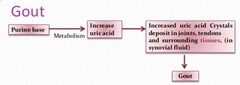
What causes gout?
Elevated levels of uric acid in the blood, leading to crystallization and joint inflammation.
What are the treatment options for acute gout attacks?
NSAIDs, steroids, or colchicine.
What is allopurinol used for?
Long-term prevention of gout by inhibiting uric acid production.
What is the role of probenecid in gout treatment?
It increases urinary excretion of uric acid and is not effective for acute attacks.
What are common side effects of colchicine?
Nausea, vomiting, and diarrhea.
What is the mechanism of action of corticosteroids in gout treatment?
Inhibiting the inflammatory process to control gout inflammation and pain.
What dietary changes can help prevent gout attacks?
High fluid intake and a diet rich in low-fat dairy products.
What is the significance of monitoring blood pressure in patients taking triptans?
To prevent severe vascular effects in patients with a history of coronary artery disease.
What is the recommended approach for treating menstrual migraines?
Start treatment one week before and during menses.
What are the adverse effects of ergot alkaloids?
CNS effects like numbness, CV effects like chest pain, and GI effects like nausea.
What is the purpose of using NSAIDs in gout treatment?
To relieve symptoms during acute attacks.
What is the role of lifestyle changes in gout management?
To lower uric acid levels and prevent future attacks.
What is the effect of thiazide diuretics on uric acid levels?
They can cause hyperuricemia, which may lead to gout.
What is the recommended treatment for chronic gout?
Maintenance drugs like allopurinol or probenecid.
What is the effect of high uric acid levels in the blood?
Crystallization and deposition in joints, leading to gout attacks.