2-RENAISSANCE THROUGH MODERN ART-2
 Call Kai
 Learn
Learn Practice Test
 Spaced Repetition
 Match
Match Flashcards
 Knowt Play
1/11

There's no tags or description
Looks like no tags are added yet.
Name | Mastery | Learn | Test | Matching | Spaced | Call with Kai | Chat |
|---|
No analytics yet
Send a link to your students to track their progress
12 Terms

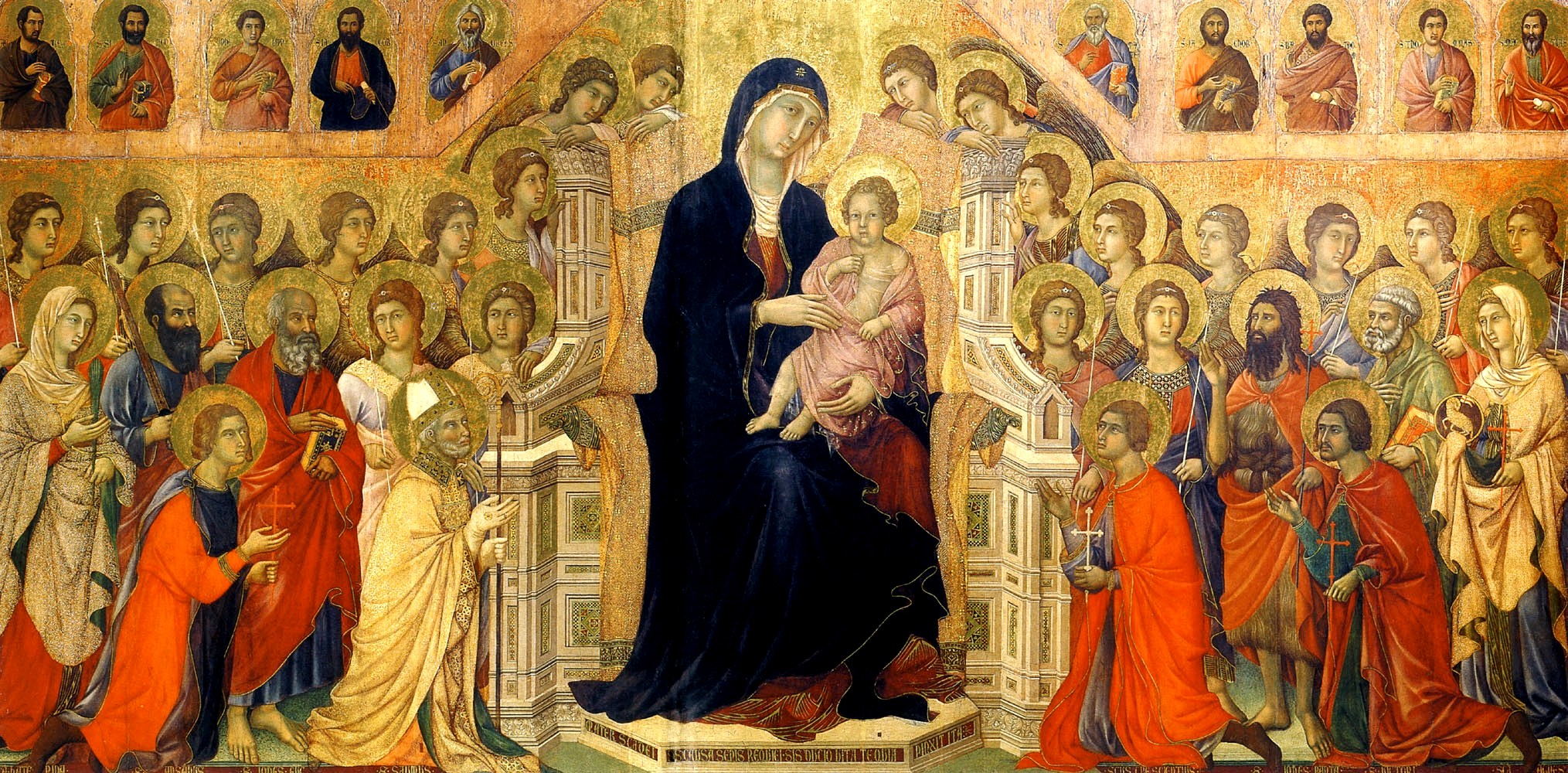
Duccio’s Maestà Altarpiece
are significant example of early Italian Renaissance art that showcase the transition towards more naturalistic styles and emotional expressions in religious imagery.

Giotto’s Madonna and Child Enthroned.
A renowned alter piece created by Giotto that exemplifies his innovative use of space and emotional depth in religious art during the early Renaissance.

Tempera
fast-drying painting medium, colored pigments mixed with a water-soluble binder, usually egg yolk, used for Giotto’s Madonna and Child Enthroned and Duccio’s Maestà Altarpiece

Fresco
A technique of mural painting executed upon freshly laid, wet lime plaster. For Giotto’s cycle in the Scrovegni (Arena) Chapel.

Scrovegni (Arena) Chapel in Padua, Italy
A revolutionary 14th-century fresco cycle painted by Giotto that changed the course of Western art.
Humanism
Employs a more naturalistic and human-centered observation of the world, connected to Giotto’s "modern, humanist approach" which allowing viewers to connect to sacred stories in a "deeply humanistic and emotional manner".
Contrapposto
It describes a human figure standing with most of its weight on one foot. This gives the figure a dynamic, relaxed, and realistic appearance "Recovery of Antiquity," notes how classical art observed, "how shifting weight to one leg or bending a knee causes the hips and torso to readjust".
Relief Sculpture
A sculptural technique where the sculpted elements remain attached to a solid background of the same material. Instead of being free-standing, the figures project out from a flat 2D surface.

Saint John the Baptist (1416) made by Lorenzo Ghiberti-• Humanism
This was the first monumental bronze statue of the Renaissance. While it retains elegant, looping Gothic drapery lines, it embraces Humanism through its intense, individualized psychological expression and heavy, physical presence inside its deep niche.

Saint Mark (1411) made by Donatello-• Contrapposto • Humanism
Classical contrapposto, the saint shifts his weight entirely to his right leg, causing his left knee to bend and his hips to tilt. Donatello realistically carves the drapery, so it cascades naturally over the bent leg and pulls over the weight-bearing leg. Humanism shines through St. Mark's deeply thoughtful, dignified facial features.

Four Crowned Saints made by Nanni di Banco (1412–15)• Humanism • Contrapposto • Relief Sculpture
The four Roman martyrs are arranged in a semi-circle, interacting in a psychological conversation (Humanism). Their bodies show classical weight shifts (Contrapposto), and their heads mimic Roman imperial portrait busts. Below them, Nanni carved a beautiful relief sculpture showing stonecutters actively at work.

The Feast of Herod (1423–1427) made by Donatello- Relief Sculpture • Humanism
This gilded bronze panel is an example of flattened relief sculpture. Instead of keeping everything on one flat plane, Donatello carved the background in shallow, paper-thin relief while pushing the foreground figures out into higher relief, realistic sense of architectural space. The intense emotional reactions of the figures to John the Baptist's severed head display a raw, visceral human emotion rooted in Humanist storytelling.