Chapter 12 - Soil and Agriculture
 Call Kai
 Learn
Learn Practice Test
 Spaced Repetition
 Match
Match Flashcards
1/40

There's no tags or description
Looks like no tags are added yet.
Name | Mastery | Learn | Test | Matching | Spaced | Call with Kai | Chat |
|---|
No analytics yet
Send a link to your students to track their progress
41 Terms
soil
A complex plant-supporting system consisting of disintegrated rock, organic matter, air, water, nutrients, and microorganisms.
parent material
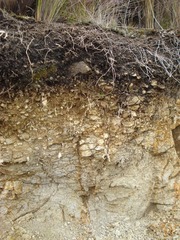
The base geological material in a particular location.
bedrock
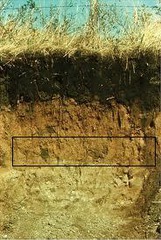
Rock that makes up Earth's crust; also the solid rock layer beneath the soil.
weathering
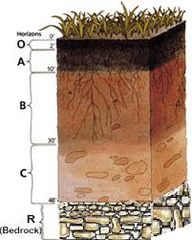
The chemical and physical process that breaks down rocks and minerals into smaller particles.
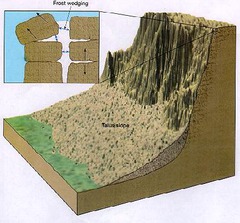
soil horizon
A layer of soil with properties that differ from those of the layer above or below it.
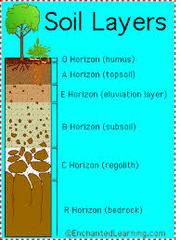
soil profile
A cross-section of all the soil horizons in a specific soil, from surface to bedrock.
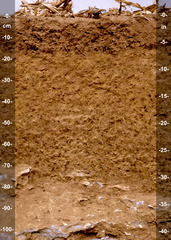
clay
Soil particles that are less than 0.002mm in diameter.
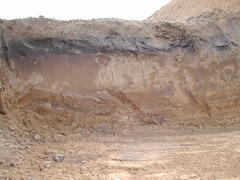
silt
Soil particles that are 0.002mm to 0.05mm in diameter.
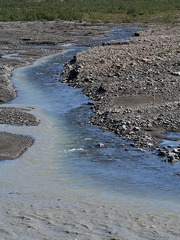
sand
Soil particles that are 0.05mm to 2mm in diameter.
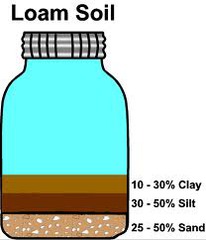
loam
Soil that is approximately equal parts clay, silt and sand.
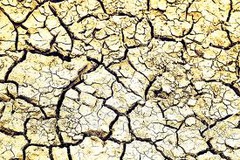
soil degradation
The deterioration of the soil characteristics needed for plant growth or other ecosystem services.
intercropping
A soil conservation method that which two or more crops are planted in one field.
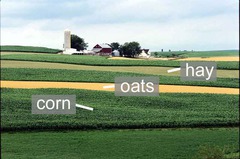
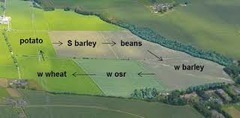
crop rotation
A soil conservation method in which the type of crop grown in a field is alternated from one season or year to the next.
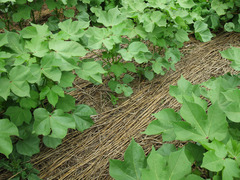
cover crop
A fast-growing crop that is planted in the interval between harvest and the next season's planting to prevent erosion and limit the loss of nitrogen.
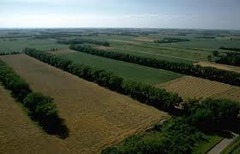
shelterbelt
One or more rows of trees or other tall plants planted along the edge of a field to prevent wind erosion (windbreak)
tilling
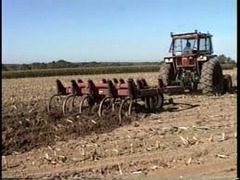
The turning-over of soil before planting.
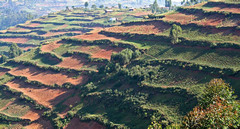
terracing
A soil conservation method in which sloped land is transformed into a series of steps to prevent soil erosion.
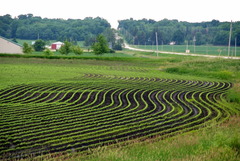
contour farming
A soil conservation method in which furrows are plowed across a hillside, perpendicular to its slope.
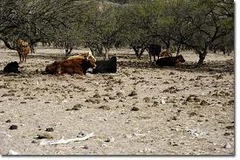
overgrazing
When too many animals eat too much of the plant cover and it impedes regrowth of vegetation.
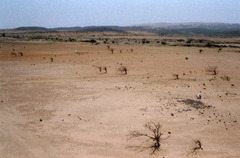
desertification
A loss of more than 10% of productivity due to erosion, soil compaction, forest removal, overgrazing, drought, salt buildup, climate change, depletion of water resources, and other factors.
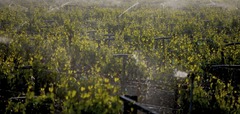
irrigation
The providing of water other than precipitation to crops.
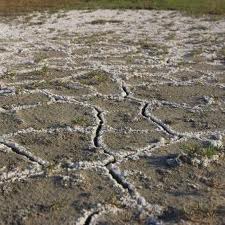
salinization
The build-up of salts in upper soil horizons.
pesticides
Chemicals that kill organisms that attack or compete with plants we value.

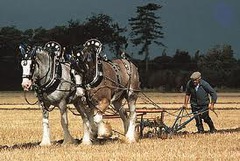
traditional agriculture
Biologically powered agriculture, in which human and animal muscle power, along with hand tools and simple machines, perform the work of gathering crops.
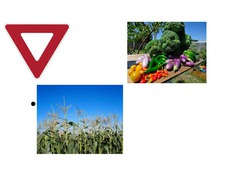
yield
The amount of a crop produced in a given area.
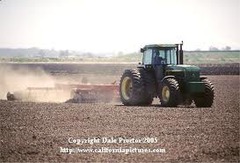
industrial agriculture
A form of agriculture that uses large-scale mechanization and fossil fuel combustion, enabling farmers to replace horses and oxen with faster and more powerful means of cultivating, harvesting, transporting and processing crops. Other aspects include irrigation and the use of inorganic fertilizers use of chemical herbicides and pesticides reduces competition from weeds and herbivory by insects.
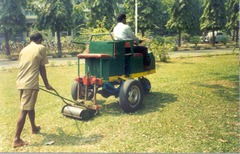
green revolution
The introduction of new technologies, crop varieties, and farming practices to the developing world in the third quarter of the 20th century.
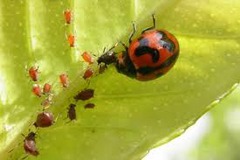
biological pest control
Using other animals to kill pest species.
integrated pest management (IPM)
Combined use of biological, chemical, and cultivation methods in proper sequence and timing to keep the size of a pest population below the size that causes economically unacceptable loss of a crop of livestock animals.
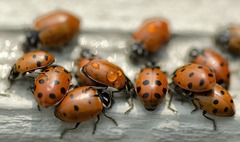
pollinator
An animal that carries pollen from one plant to another of the same species, enabling plants to reproduce.
arable land
Land that can be used to grow crops.
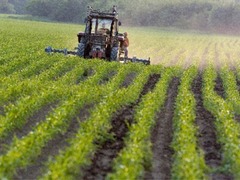
food security
People's ability to access sufficient, safe, nutritious food to maintain a healthy and active life.
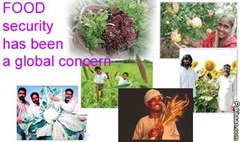
malnutrition
A condition that arises when the body does not get the right amount of vitamins, minerals, and other nutrients to maintain healthy tissues and proper organ function.
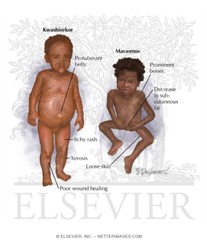
genetic engineering
Making changes to the DNA code of a living organism

genetically modified organism (GMO)
An organism whose genetic material has been altered through some genetic engineering technology or technique.
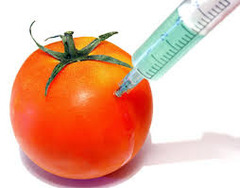
biotechnology
A form of technology that uses living organisms, usually genes, to modify products, to make or modify plants and animals, or to develop other microorganisms for specific purposes.
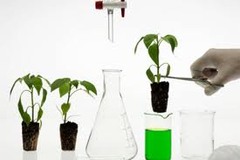
feedlot
A plot of land on which livestock are fattened for market.
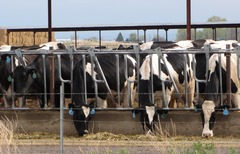
aquaculture
Production of fish and other marine products on fish farms.
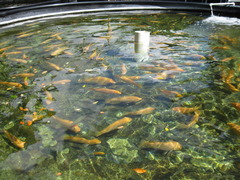
seed bank
A storehouse for samples of the world's crop diversity.
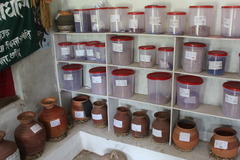
sustainable agriculture
Farming methods that preserve long-term productivity of land and minimize pollution, typically by rotating soil-restoring crops with cash crops and reducing inputs of fertilizer and pesticides.
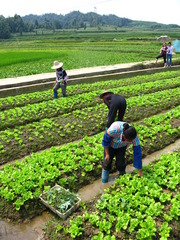
organic agriculture
Approach to farming and ranching that avoids the use of herbicides, pesticides, growth hormones, and other similar synthetic inputs.