Cardio Physiology 7 - Lymphatic System, Blood Pressure, Regulatory Mechs
 Call Kai
 Learn
Learn Practice Test
 Spaced Repetition
 Match
Match Flashcards
 Knowt Play
1/40

There's no tags or description
Looks like no tags are added yet.
Name | Mastery | Learn | Test | Matching | Spaced | Call with Kai | Chat |
|---|
No analytics yet
Send a link to your students to track their progress
41 Terms
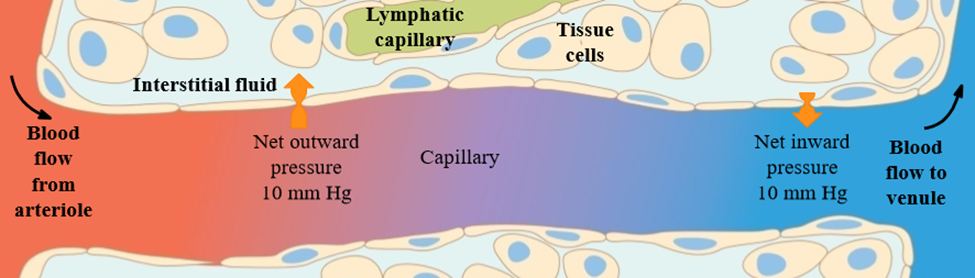
The Capillaries have more filtration than re-absorption. What happens to the excess fluid?
Returned to the circulatory system by the lymphatic system
Lymphatic system
System of lymph nodes and lymphatic vessels where lymph flows
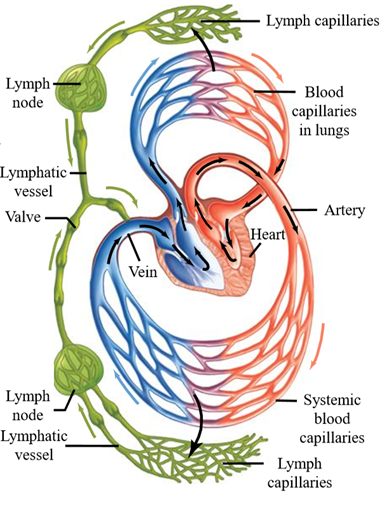
Lymphatic capillaries
Small, open-ended lymph vessels that that are permeable to all interstitial fluid, including proteins
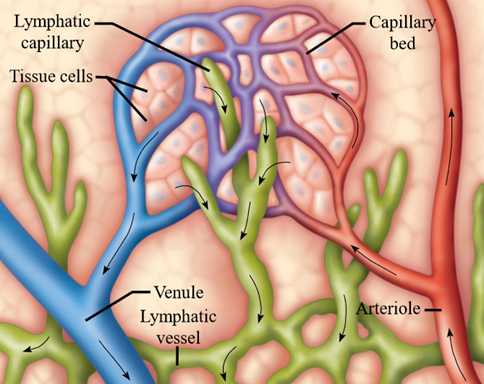
How does interstitial fluid flow in capillaries
Bulk flow
Lymphatic vessels
Vessels that lymph capillaries enter into, have one way valves to take lymph to the right atrium
What is lymph
Interstitial fluid that has entered the lymphatic system
Mechanisms of lymphatic flow
- Lymphatic vessels contain smooth muscle (rhythmic contractions, innervated by SNS)
- One way valves
- Skeletal muscle contraction
- Respiratory pump
How is blood pressure determined
The volume of blood and compliance of the vessel
Vessel compliance
Ability to distend and icnrease volume with increases transmural pressure (pressure inside the vessel - pressure outside the vessel)
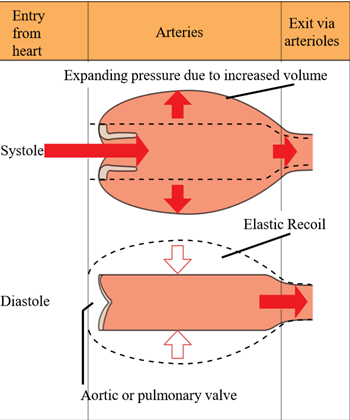
Why is artery pressure never 0?
During systole, only 1/3 of blood ejected by ventricle leaves the artery. The remaining remains in the arteries.
- When ventricle contraction ends, the arteries recoil passively and blood continues to be driven into arteries during diastole
- Blood leaves arteries, pressure and volume decrease
- But next contraction occurs while arteries are still stretched by remaining blood
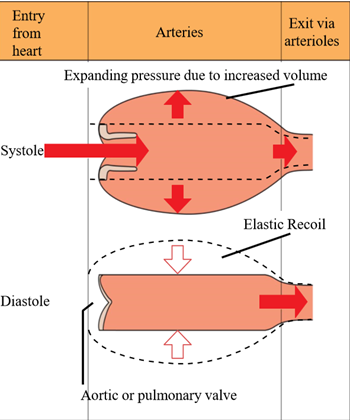
Why do larger arteries (aorta) act as pressure resovoirs
Elastic recoil, and maintain blood flow while ventricles relax
Systolic pressure
Max arterial pressure during peak ventricular ejection
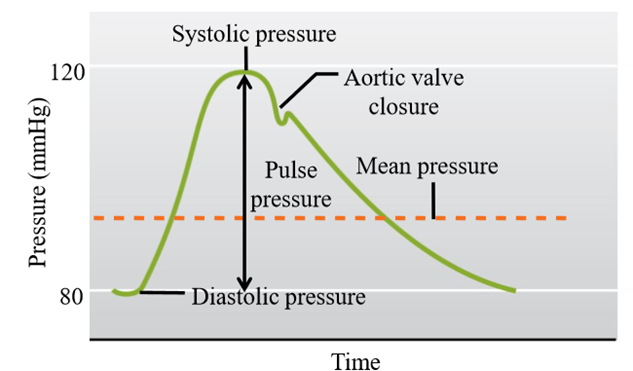
Diastolic pressure
The minimum arterial pressure reached just before ventricular ejection begins
Pulse pressure
Systolic - diastolic
Hypertension
high blood pressure - causes heart attack, stroke, kidney failure
Hypotension
low blood pressure - causes fainting, dizziness, angina, shock
Mean arterial pressure (MAP)
Pressure driving blood into tissues averaged over the cardiac cycle
Blood pressure is pulsatile - what does this mean?
As blood leaves the heart, it changes pressure (systole/diastole)
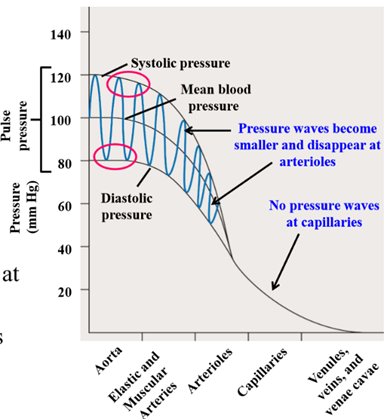
Effect of aorta on pulse pressure
Aorta is compliant - reduces pulsatile output of left ventricle = reduces pulse pressure
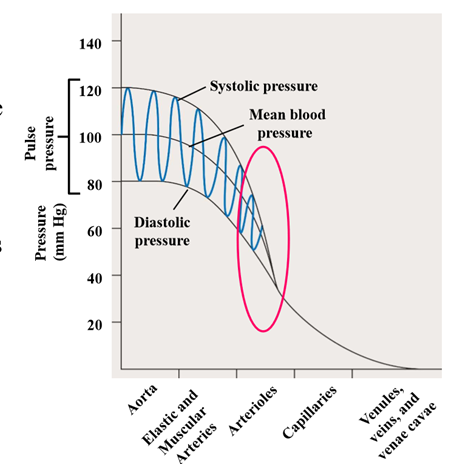
Distance impact on pulse pressure
As distance from heart increases, pulse pressure decreases due to cumulative effects of elastic rebound. In the capillaries, blood flows constantly and smoothly
Distance impact on MAP
MAP decreases as distance from heart increases.
How is MAP calculated (what factors effect MAP?)
MAP = CO x TPR
- Cardiac output x total peripheral resistance
What is TPR
Total peripheral resistance - combined resistance to flow of all systemic blood flows (pulmonary has almost no resistance)
Major site of resistance in systemic circuit
Arterioles
Why do arterioles provide most TPR?
Blood contacts arteriole wall (which has very small diameter). In the laminar flow, lots of blood has to contact the wall = increased resistance = increased pressure
How to impact cardiac ouput
CO = SV x HR
- Impact SV or HR
How is heart rate impacted
SA node sets heartrate
- Rate increased by sympathetic stimulation
- Rate decreased by parasympathetic stimulation
- Impacted by plasma epinephrine
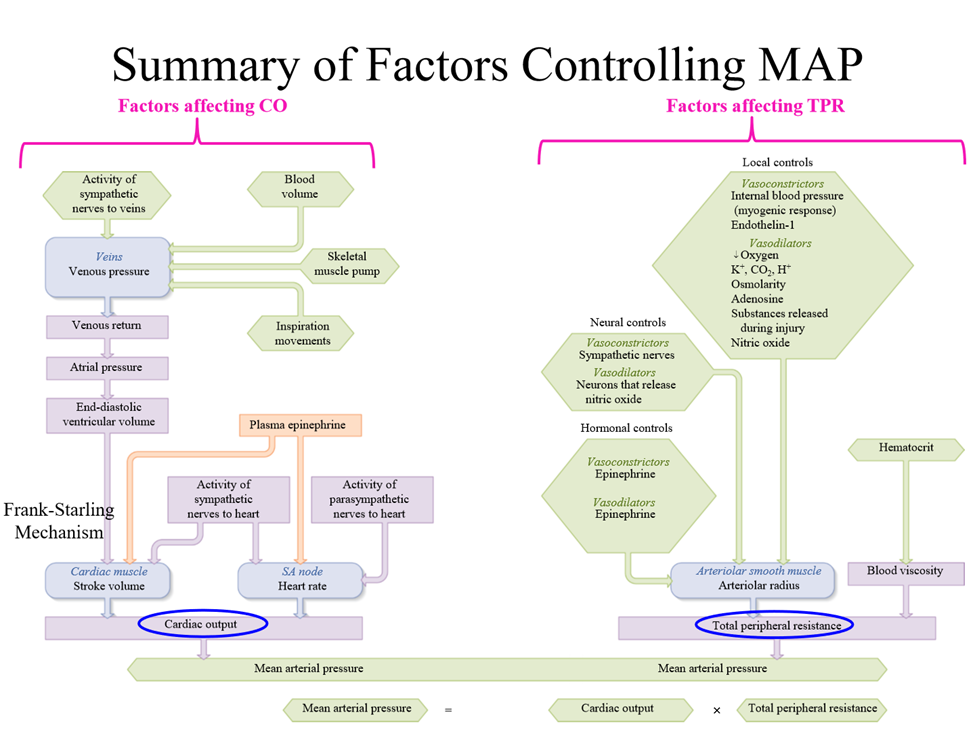
How to impact stroke volume
- Increased end diastolic volume (frank-starling mechanism)
- Sympathetic innervation to veins = increased veinous pressure = increased blood flow back to heart
- Amount of sodium ingested/excreted. Effects venous pressure
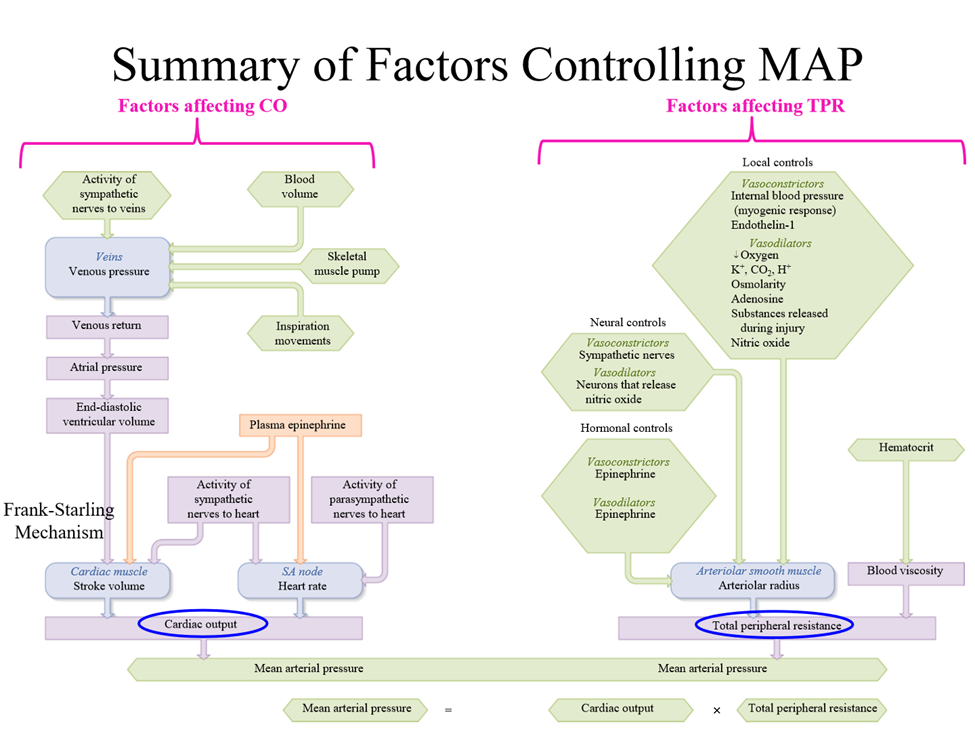
How to impact total peripheral resistance
· Effected by blood viscosity - increased Hct increases viscosity = more resistance
· Arteriole radius will effect total peripheral resistance (contraction/relaxation effects resistance)
· Vasoconstrictors - epinephrine and sympathetic nerves - increases total peripheral resistance
- Vasodilators - epinephrine (dependent on receptor) + Nitric oxide
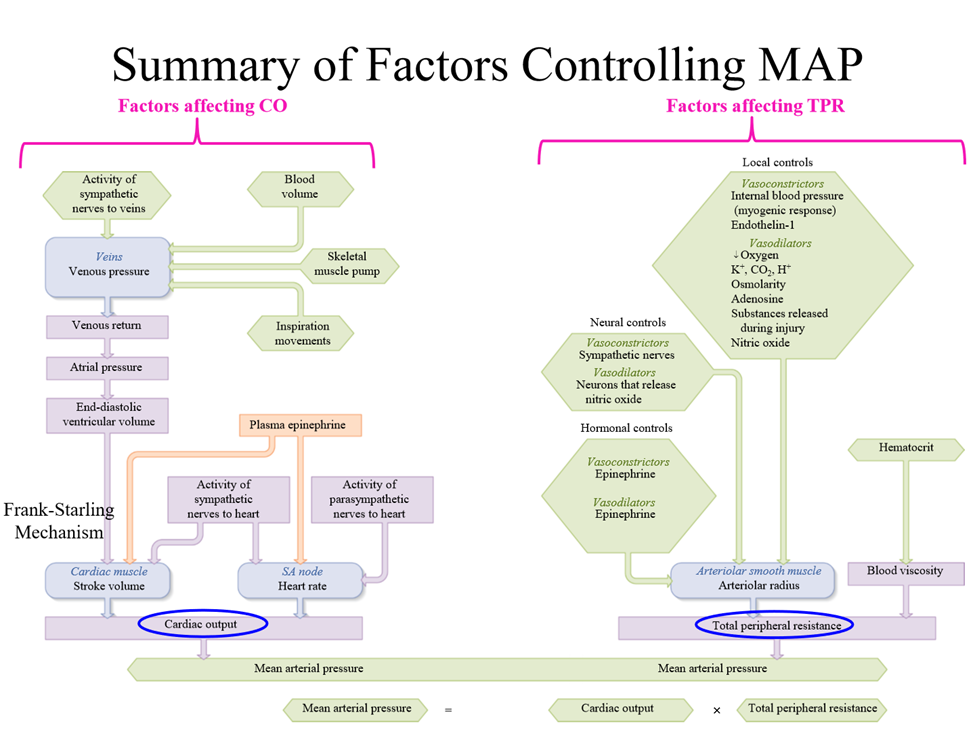
Local controls that impact arteriole radius (which impacts TPR)
- Vasoconstrictors - internal blood pressure from myogenic response
- Vasodilators - Decreased O2, potassium, CO2, protons, osmolarity, adenosine, substances released during injury
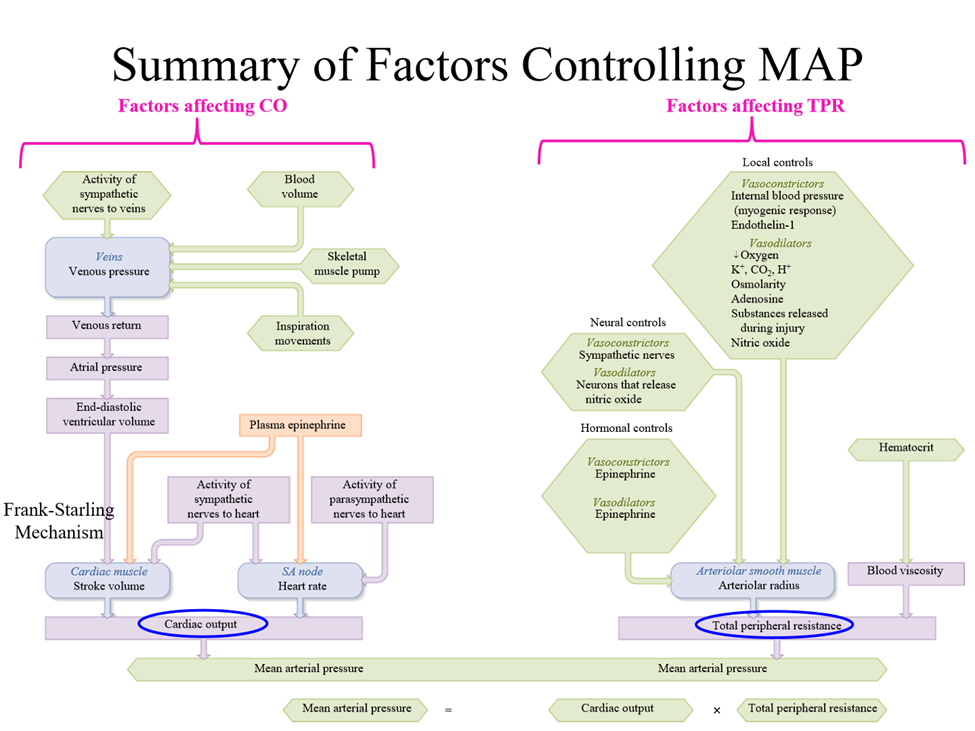
Two mechanisms of MAP
Short term regulation, long term regulation
Short term MAP regulation
Lasts seconds to hours - baroreceptors modify activity of ANS nerves supplying heart/blood vessels, and changes hormone secretion
- Adjusts CO and TPR by ANS
Long term MAP regulation
Adjusts blood volume - restores normal salt and water balance through mechanisms that regulate urine output and thirst
Arterial baroreceptors
Mechanoreceptors that detect changes in blood pressure. Respond to changes in MAP and pulse pressure
Where are arterial baroreceptors located?
carotid sinus and aortic arch. Afferent neurons travel from baroreceptors to brainstem
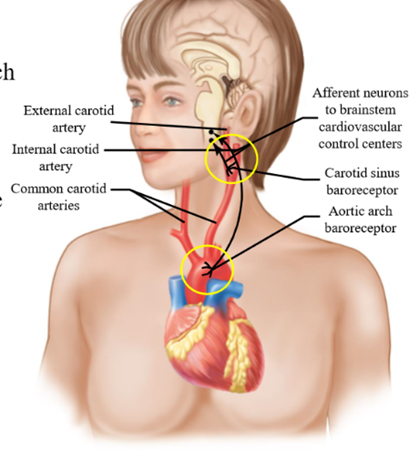
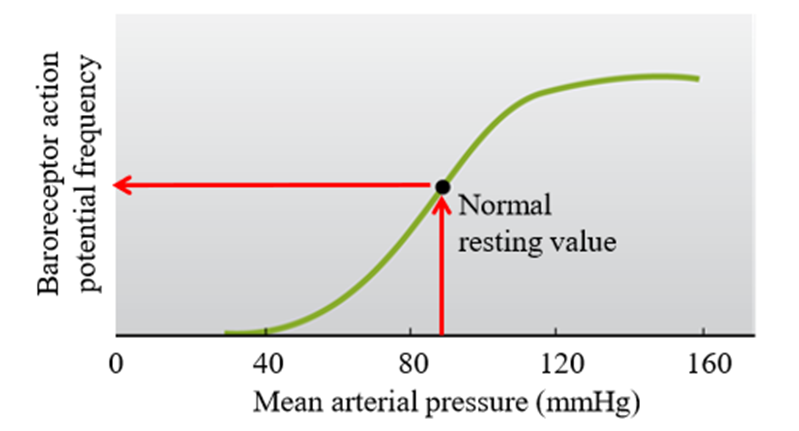
Baroreceptor action potential frequency
Rate of discharge of carotid sinus baroreceptor is directly proportional to the MAP. Increased arterial pressure = increased action potentials
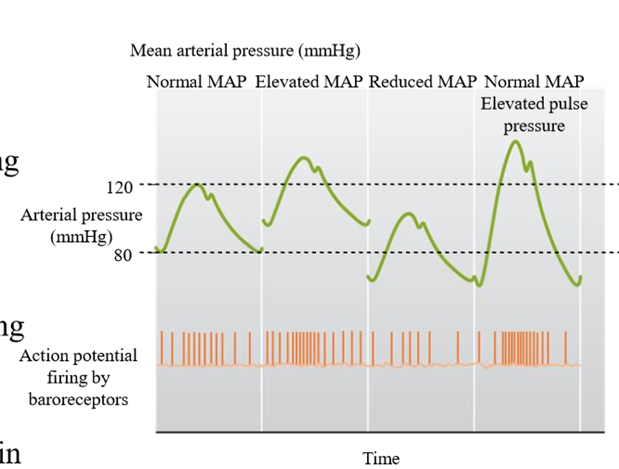
Effect of increased pulse pressure (normal MAP) on baroreceptor
Causes increase in overall action potential frequency
Location of the medullary cardiovascular center
Medulla oblongata
Role of medullary cardiovascular center
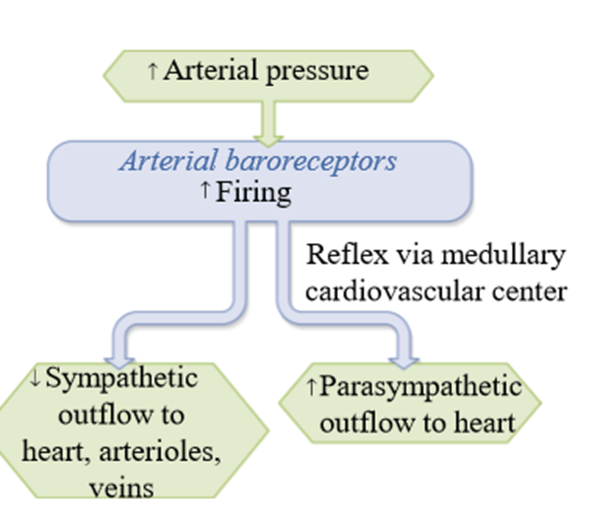
Receive action potentials from baroreceptors, and alters parasympathetic stimulation to the heart and sympathetic innervation to heart, arterioles, and veins
Regulation of high blood pressure steps
1. Increase in arteriole pressure = increased rate of firing for baroreceptors
2. Signals for the medullary cardiovascular to decrease sympathetic activity to the heart, arterioles, veins
3. Signals for medullary cardiovascular center to increase parasympathetic neuron activity to the heart
4. Arterial pressure decreases to normal level
Other reflexes that function to regulate heart rate
Chemoreceptors that regulate respiratoty activirty = aortic and carotid bodies
- Maintain O2, CO2, pH levels
- increase in CO2 or decrease in blood increases rate and depth of inspiration