(De)Hydration, Oxymercuration & Hydroboration
 Call Kai
 Learn
Learn Practice Test
 Spaced Repetition
 Match
Match Flashcards
 Knowt Play
1/14

There's no tags or description
Looks like no tags are added yet.
Name | Mastery | Learn | Test | Matching | Spaced | Call with Kai | Chat |
|---|
No analytics yet
Send a link to your students to track their progress
15 Terms
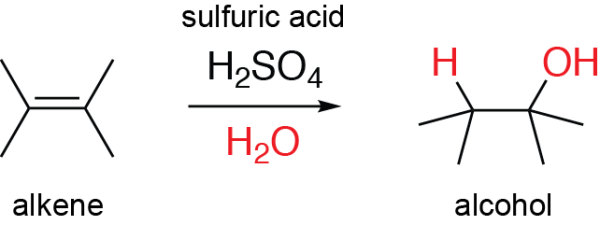
Hydration Reaction
adding water (H2O) across a double bond
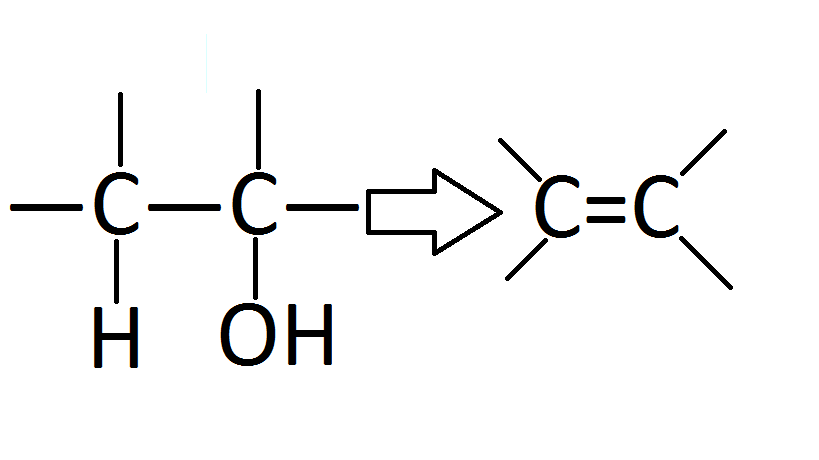
Dehydration
going backwards from a hydration reaction, removing water. Dehydrations can happen in acidic conditions.
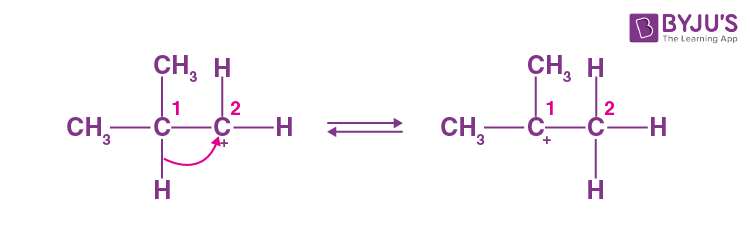
Hydride shift
A hydrogen moves with its two bonding electrons. (see image) The positive charge moves to a more substituted carbon. The goal is always: Make a more stable carbocation.
Migration
Sometimes there isn't a hydrogen that can move. Instead, an entire carbon group moves. CH3 moves to the neighboring carbon. The positive charge shifts to a more stable location.
Adding H2O, H-OH
the same thing
Adding HX
Adding Hydrogen + a halogen.
Reagant
a chemical added to make a reaction happen.
Oxymercuration & Hydroboration
Both reactions turn an alkene into an alcohol. The only big difference is where the OH goes
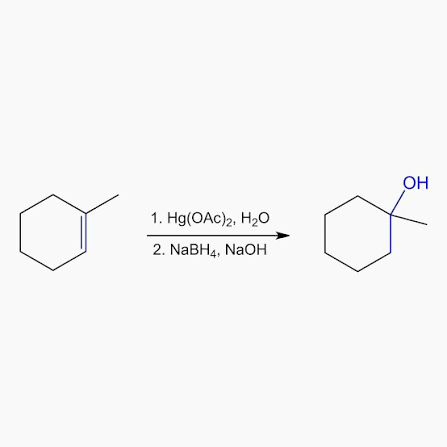
Oxymercuration
Add Reagents: Hg(OAc)2 & THF/H2O
Add NaBH4
The OH goes to the more substituted carbon (The carbon with the most carbons attached) (Major Product, Markovnikovs Product)
Hydroboration
Add Reagents: BH3 & THF
then add H2O2/OH
OH goes to the less substituted carbon (The carbon with the least carbons attached)
This is called: Anti-Markovnikov (minor product)
H2/Pt
makes an alkane
Hydrogen + Halogens
HBr
HCl
HI
Hydration
H2O/ H+ hydration —> alcohol (adding water to a double bond and making an alcohol).
Oxymercuration
Adding:
Hg(OAc)2, THF/H2O
and NaBH4
Hydroboration
Adding:
BH3, THF
and H2O2/OH-