Chapter 2.6: Functional Groups Give Molecules Specific Properties
 Call Kai
 Learn
Learn Practice Test
 Spaced Repetition
 Match
Match Flashcards
 Knowt Play
1/11

Name | Mastery | Learn | Test | Matching | Spaced | Call with Kai | Chat |
|---|
No analytics yet
Send a link to your students to track their progress
12 Terms

Functional groups
Groups of atoms that affect the four macromolecules through their number and location by conferring different properties
Organic chemistry
The study of carbon due to the available bonds that make it highly versatile
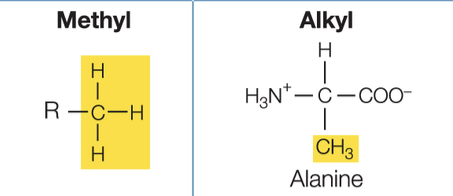
Methyl
A nonpolar group important for the modification of proteins and cytosine (C) nucleotide
Type of alkyl, expressed as CH3 to a substance

Hydroxyl
A polar group involved in hydrogen bonding and condensation reactions
Type of alcohol, expressed as OH to a substance
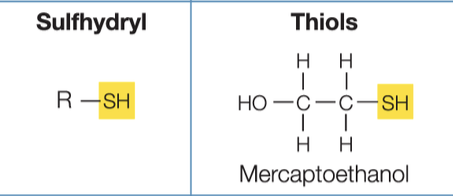
Sulfhydryl
A polar group that can form stabilizing disulfide bridges in proteins
Type of thiol, expressed as SH to a substance

Aldehyde
A very reactive polar group important in energy releasing reactions
Expressed as C that is double bonded to O and single bonded to H
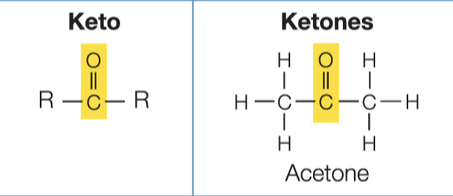
Keto
A polar group important in carbohydrates and energy reactions
Type of ketone, expressed as carbon double bonded to oxygen
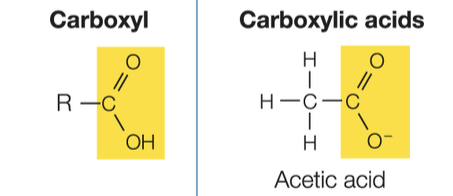
Carboxyl
A charged, acidic group that ionizes in living tissues to form COO- and H+, reacting with amino groups to form peptide bonds
Expressed as C double bonded to H and single bonded to OH
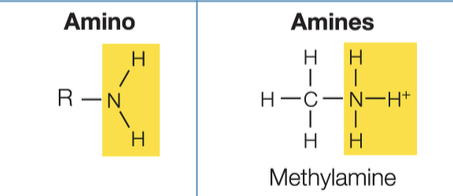
Amino
A charged, basic group that accepts H+ in living tissue to form NH3+; and reacts with carboxyl groups to form peptide bonds
Expressed as N single bonded to two different H atoms

Phosphate
A polar, hydrophilic, and acidic molecule that ionizes in living tissues and enters into condensation reactions
Strongly exergonic with hydrolysis in water
Structural isomers
Molecules with the same chemical composition but different groupings and joinings, like glucose and fructose both having C6H12O6
Stereoisomers
Molecules with the same chemical compositions and groups but differ in their three-dimensional geometry