Lab Exam 1
 Call Kai
 Learn
Learn Practice Test
 Spaced Repetition
 Match
Match Flashcards
 Knowt Play
1/125

There's no tags or description
Looks like no tags are added yet.
Name | Mastery | Learn | Test | Matching | Spaced | Call with Kai | Chat |
|---|
No analytics yet
Send a link to your students to track their progress
126 Terms

Simple Squamous Epithelium (Kidney)

Simple Squamous Epithelium (Venule)
Simple Squamous Epithelium Function
Exchange of elements; allows for transfer of gases, fluids, molecules.
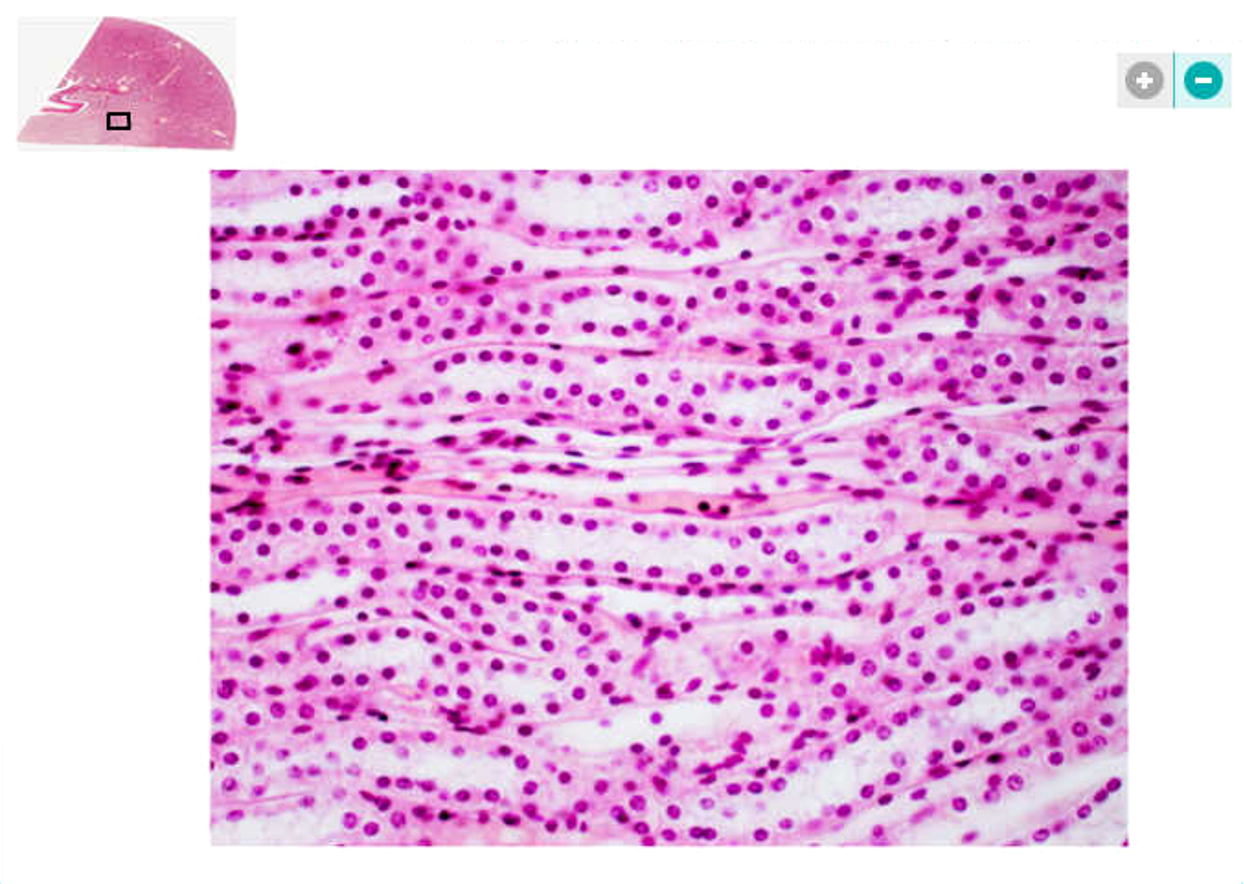
Simple Cuboidal Epithelium (Kidney)
Simple Cuboidal Epithelium Function
Secretion + Absorption

Simple Cuboidal Epithelium (Kidney)
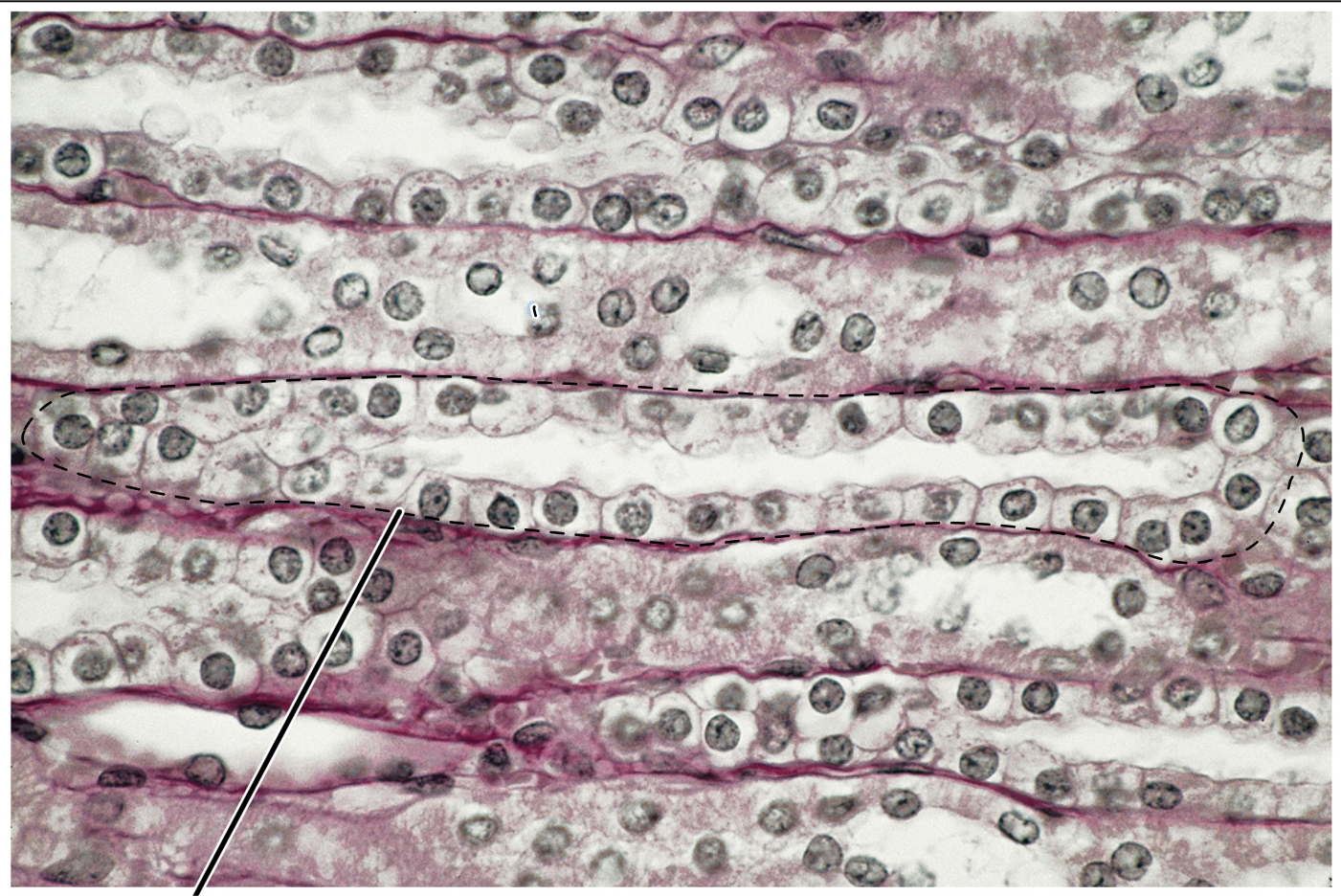
Basement Membrane

Simple Cuboidal Epithelium (Thyroid Gland)

Simple Columnar Epithelium (Small Intestine, Duodenum)
Simple Columnar Epithelium Function
Secretion + Absorption. Often have cilia or microvilli.

Simple Columnar Epithelium (Small Intestine)
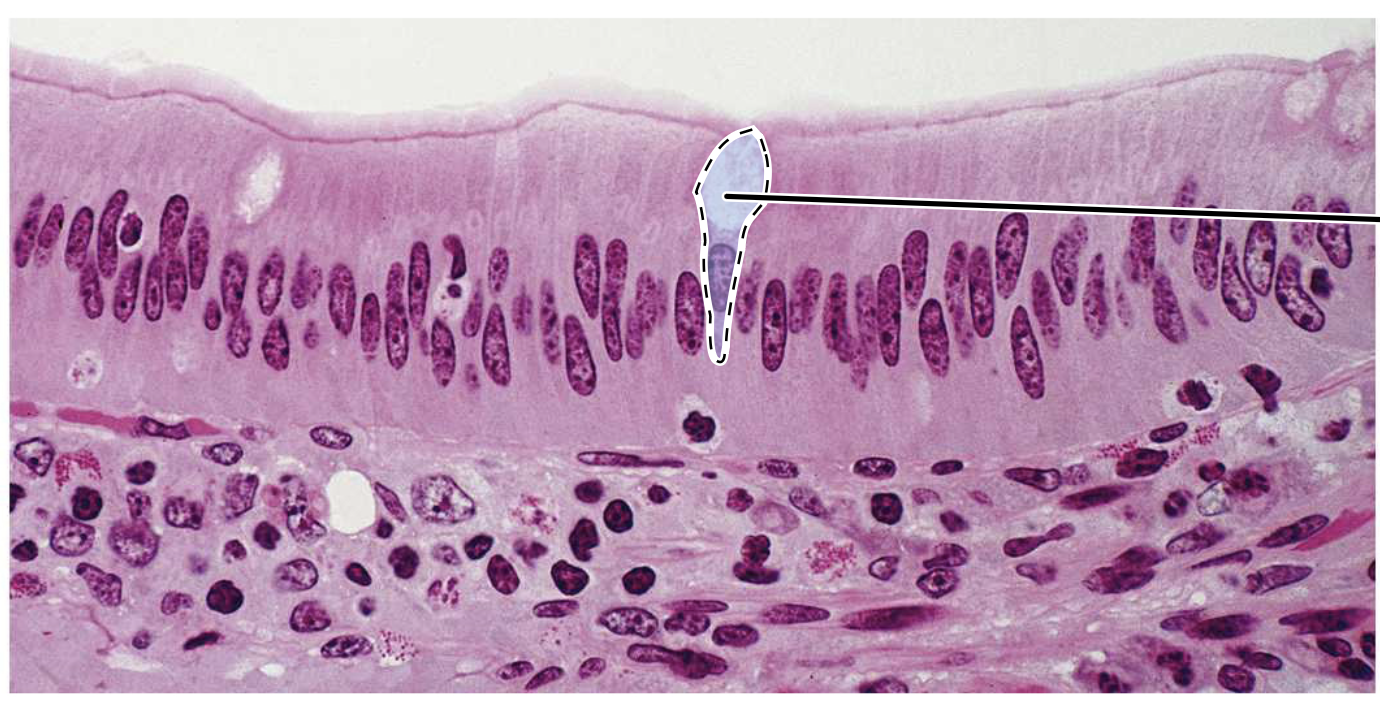
Goblet Cell
Goblet Cell Function
Secretes mucus to lubricate and protect epithelial surfaces.
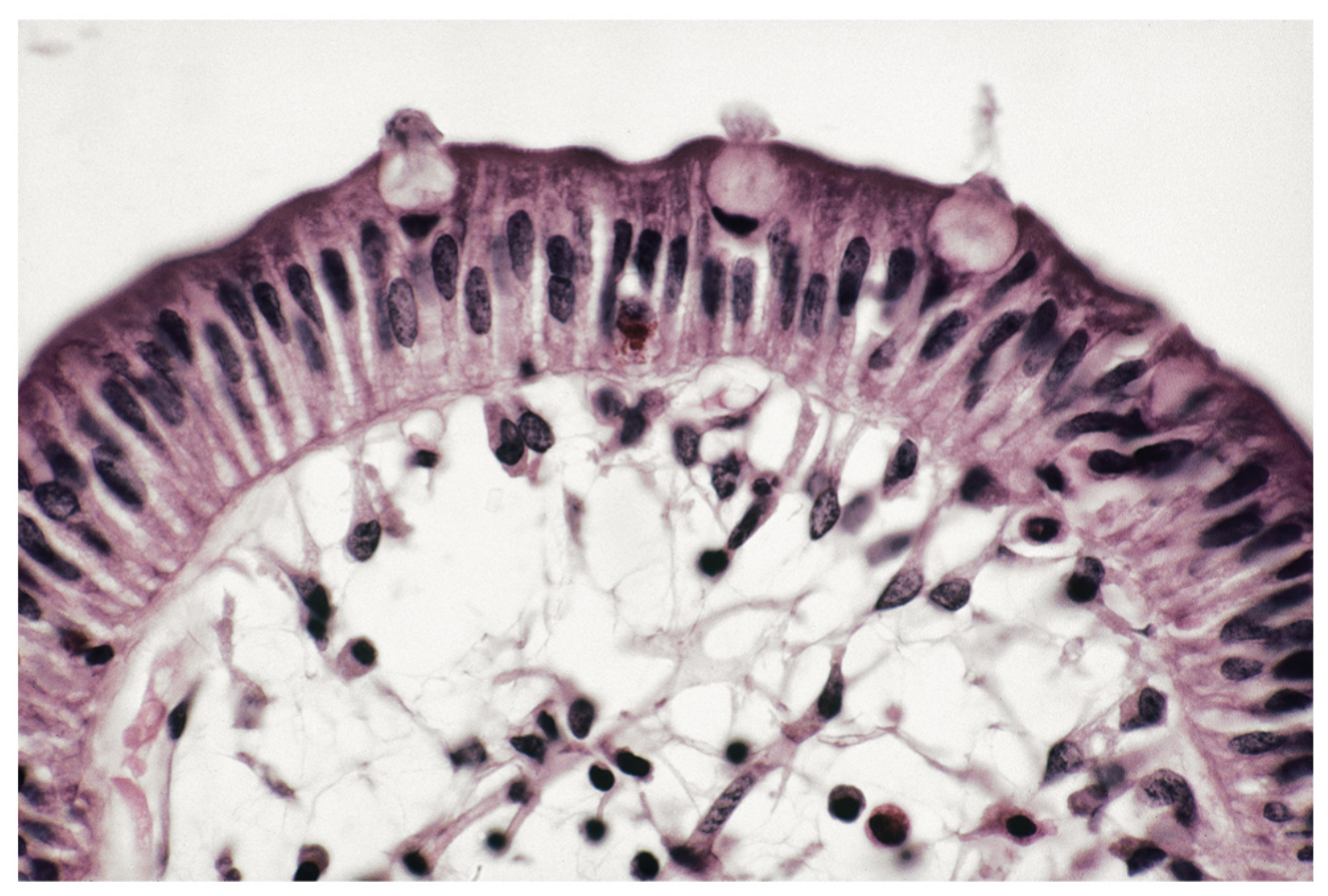
Simple Columnar Epithelium (Small Intestine)
Simple Columnar Epithelium Function
Secretion + Absorption. Often have cilia or microvilli.
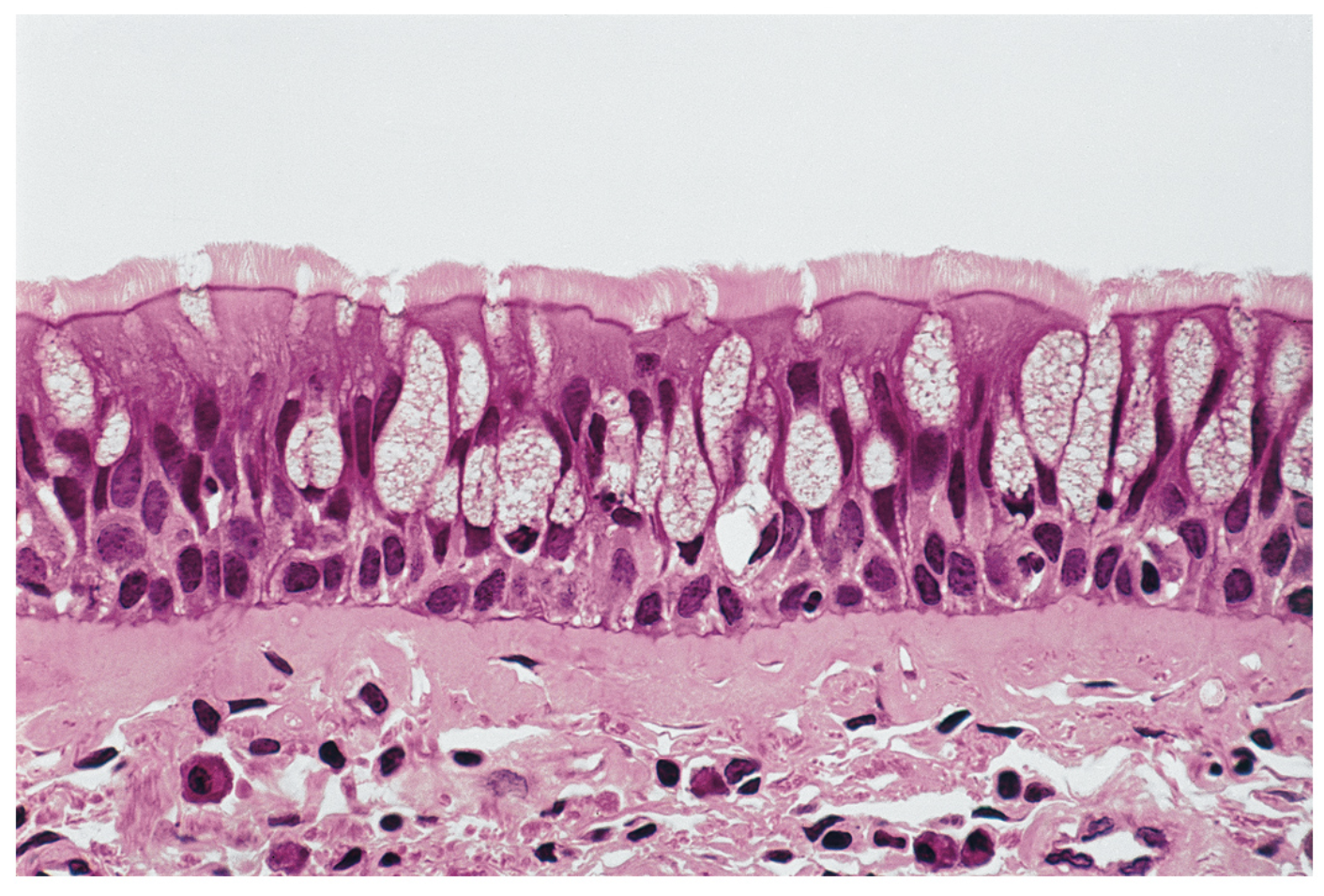
Pseudostratified Columnar Epithelium (Trachea)
Pseudostratified Columnar Epithelium Function
Protection + Secretion + Absorption. Usually has lots of cilia.

Nonkeratinized Stratified Squamous Epithelium (Vagina)
Nonkeratinized Stratified Squamous Epithelium Function
Provides layers and layers of protection.

Keratinized Stratified Squamous Epithelium (Thick Skin)
Keratinized Stratified Squamous Epithelium Function
Waterproofing. Multiple layers of protection.

Stratified Cuboidal Epithelium (Sweat Gland in Dermis)
Stratified Cuboidal Epithelium Function
Some Secretion + Absorption

Transitional Epithelium (Urinary Bladder)
Transitional Epithelium Function
Allows for expansion and contraction. Lines urinary tract and allows bladder to expand / shrink.

Areolar (Loose) Connective Tissue (Mesentery)

Collagen Fibers

Elastic Fibers
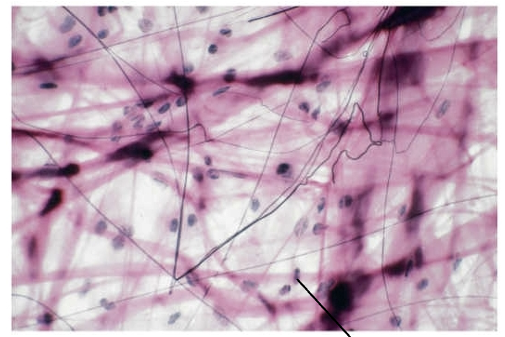
Fibroblast Nucleus
Areolar (Loose) Connective Tissue Function
Support + Protection

Dense Regular Connective Tissue (Tendon)
Dense Regular Connective Tissue Function
Strength

Dense Irregular Connective Tissue (Thick Skin)
Dense Irregular Connective Tissue Function
Strength
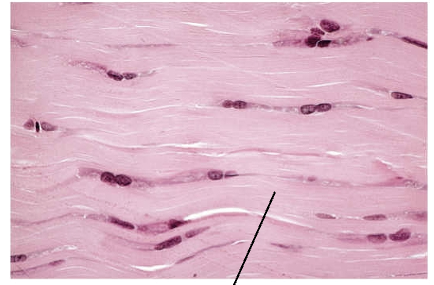
Collagen Fibers
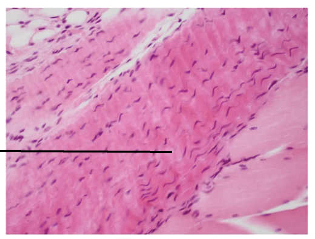
Collagen Fibers
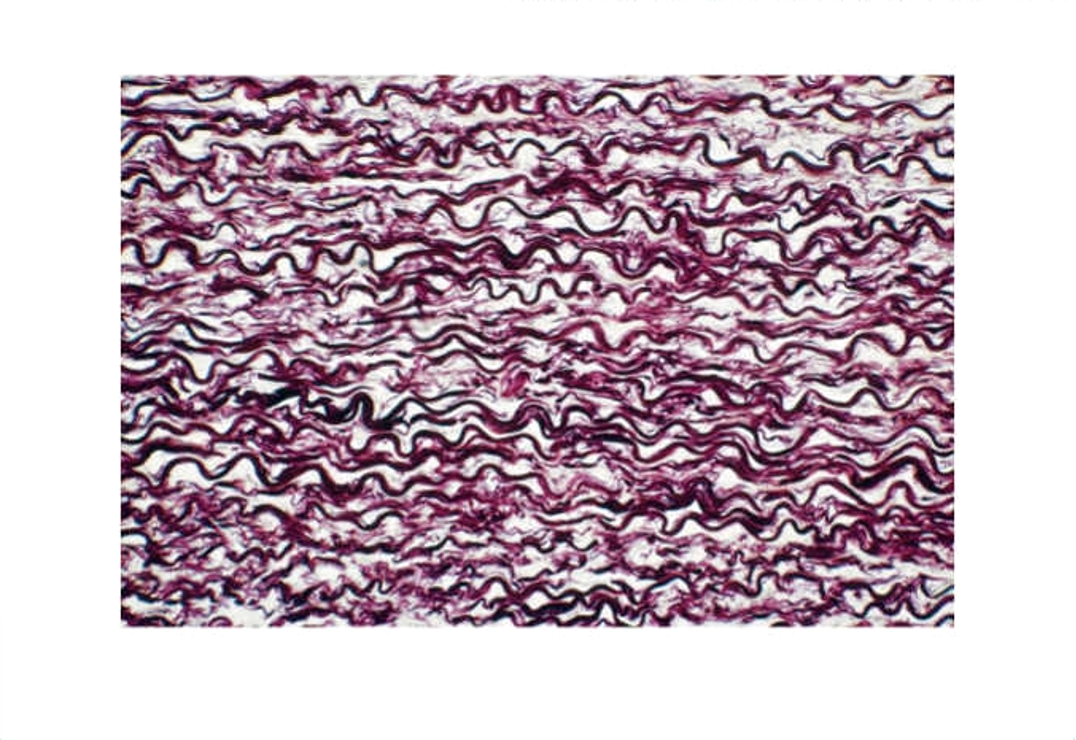
Elastic Connective Tissue (Aorta)
Elastic Connective Tissue Function
Allows for stretch + recoil

Elastic Connective Tissue (Aorta)

Reticular Connective Tissue (Lymph Node)
Reticular Connective Tissue Function
Forms internal structure of many organs.
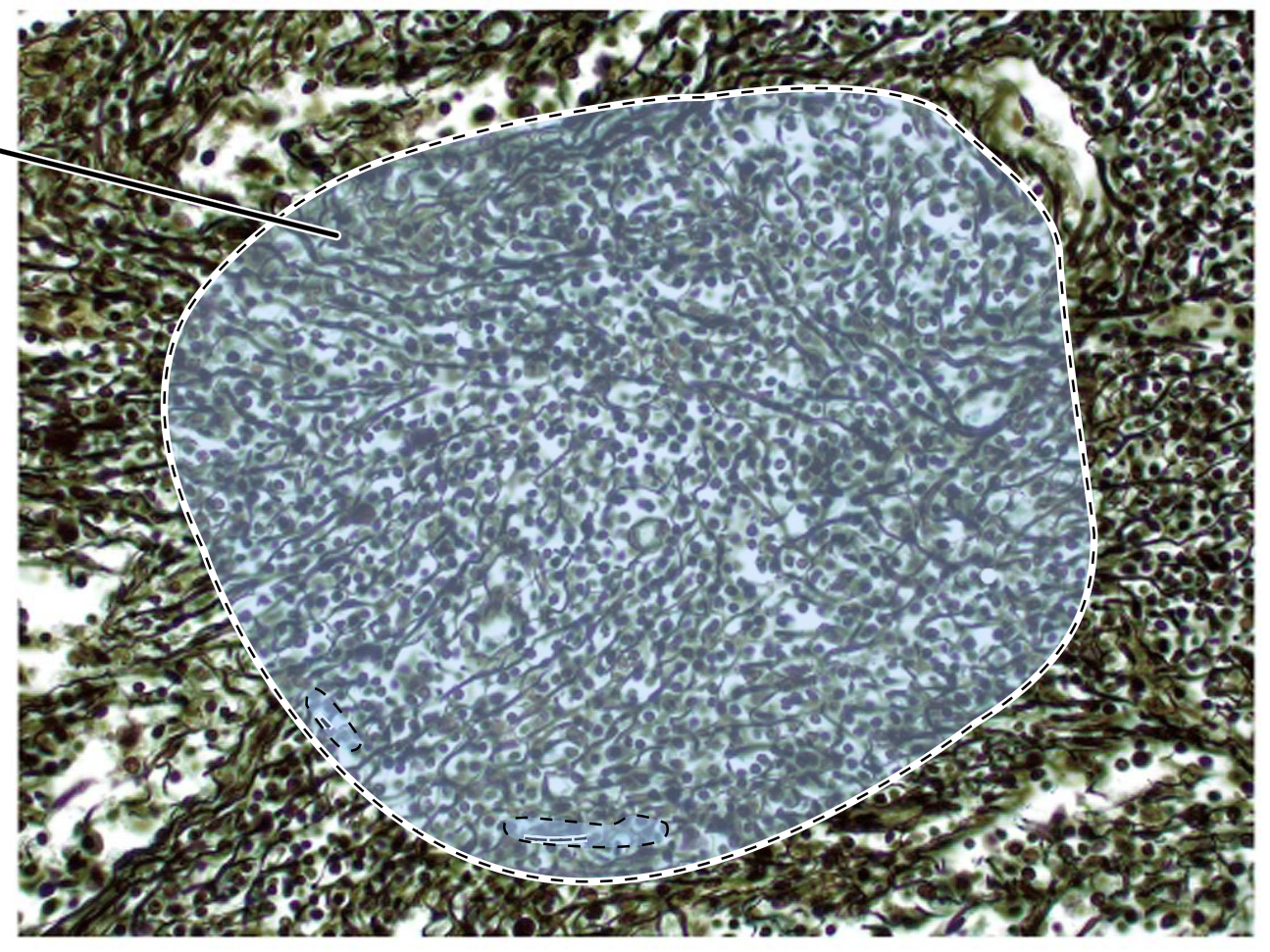
Lymphoid Follicle
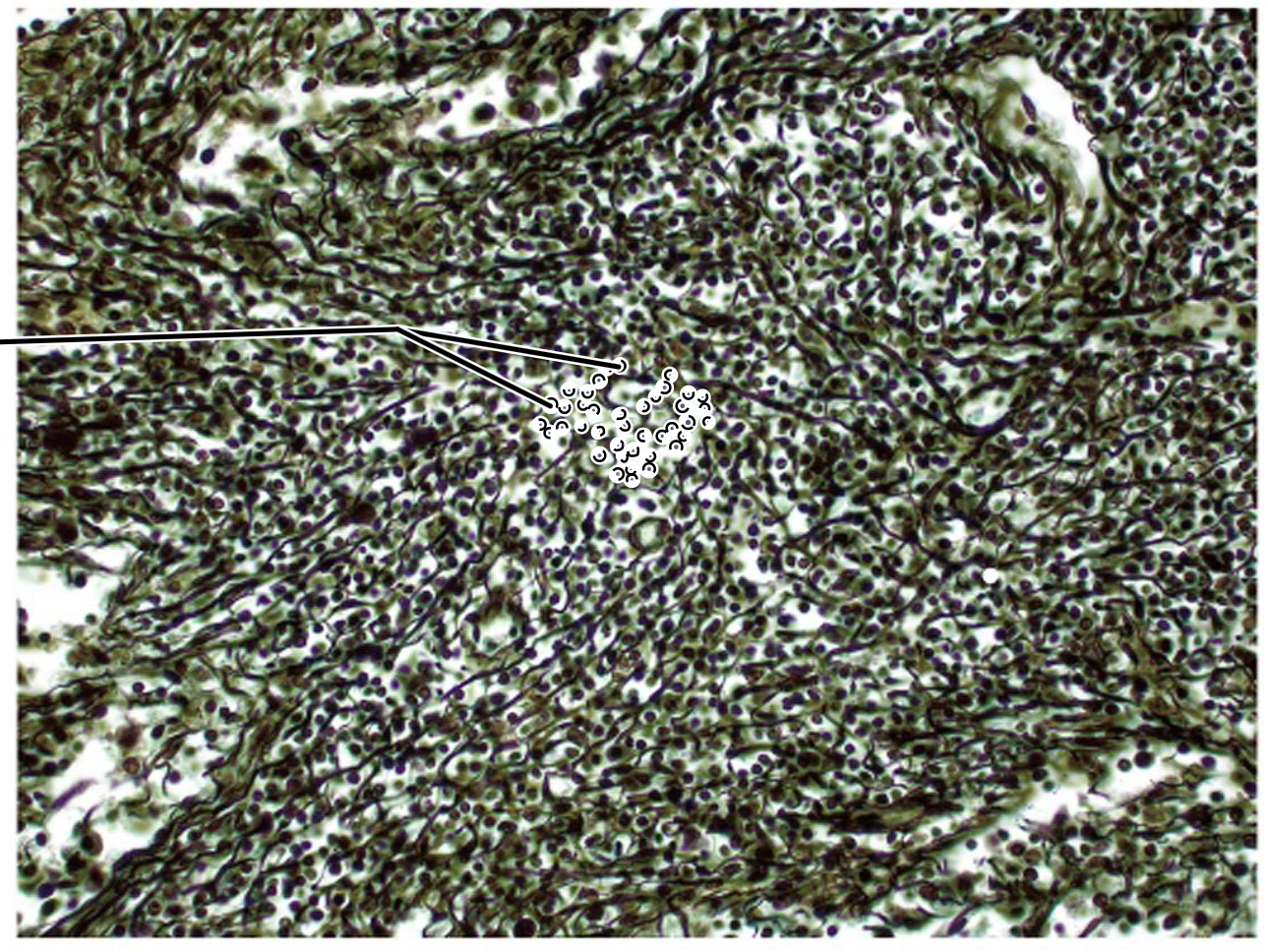
Lymphocytes
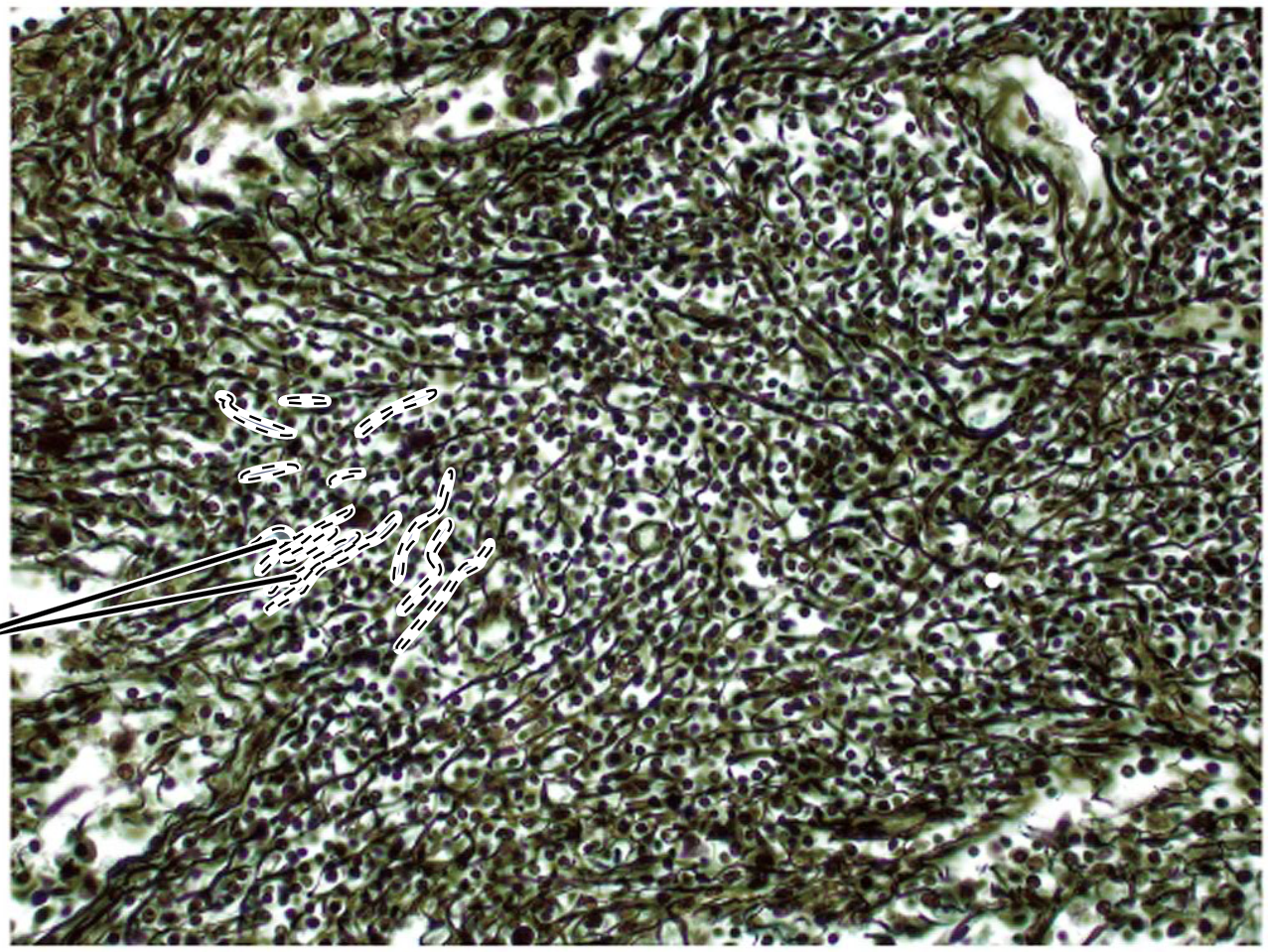
Reticular Fibers
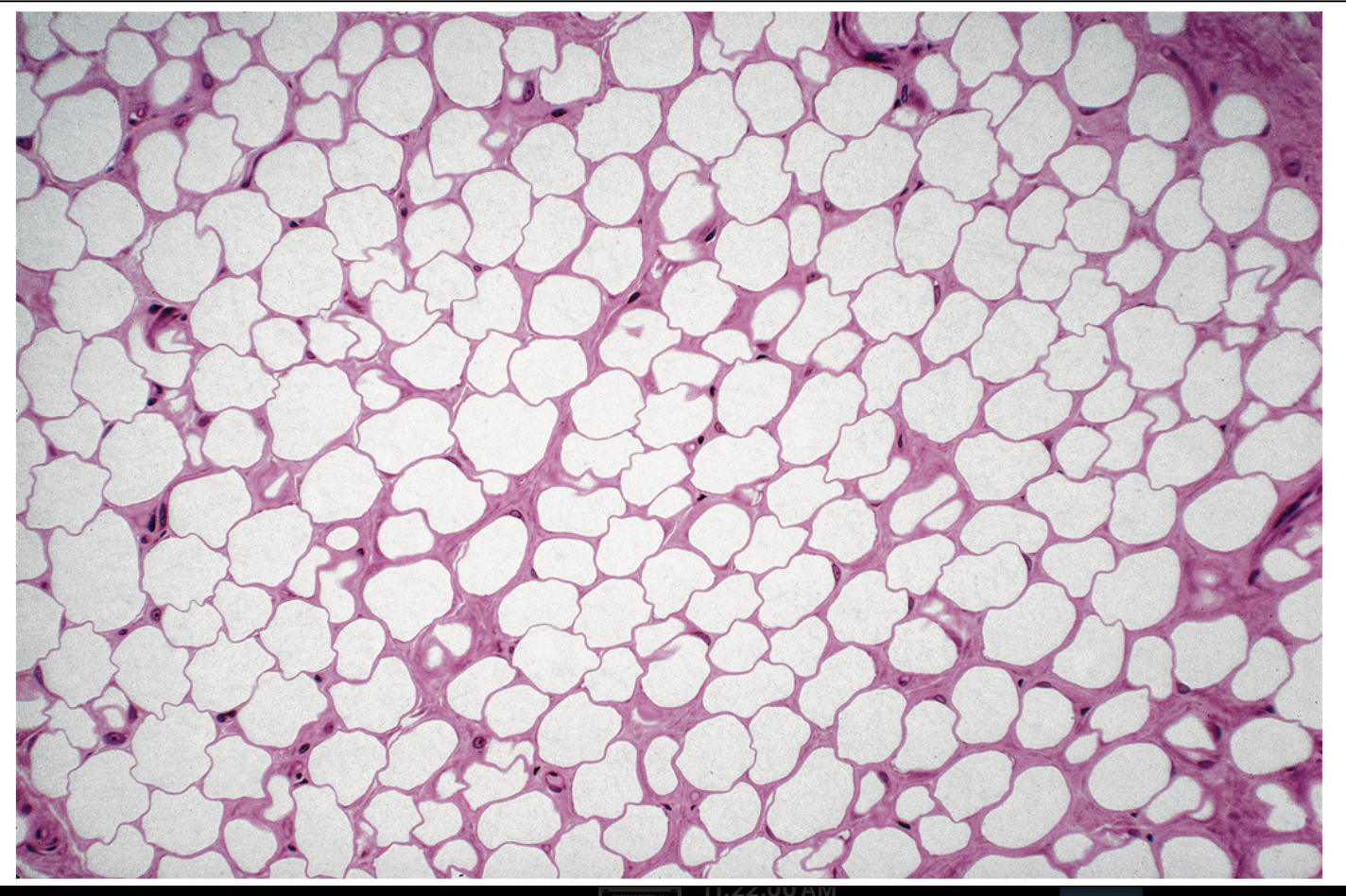
Adipose Tissue
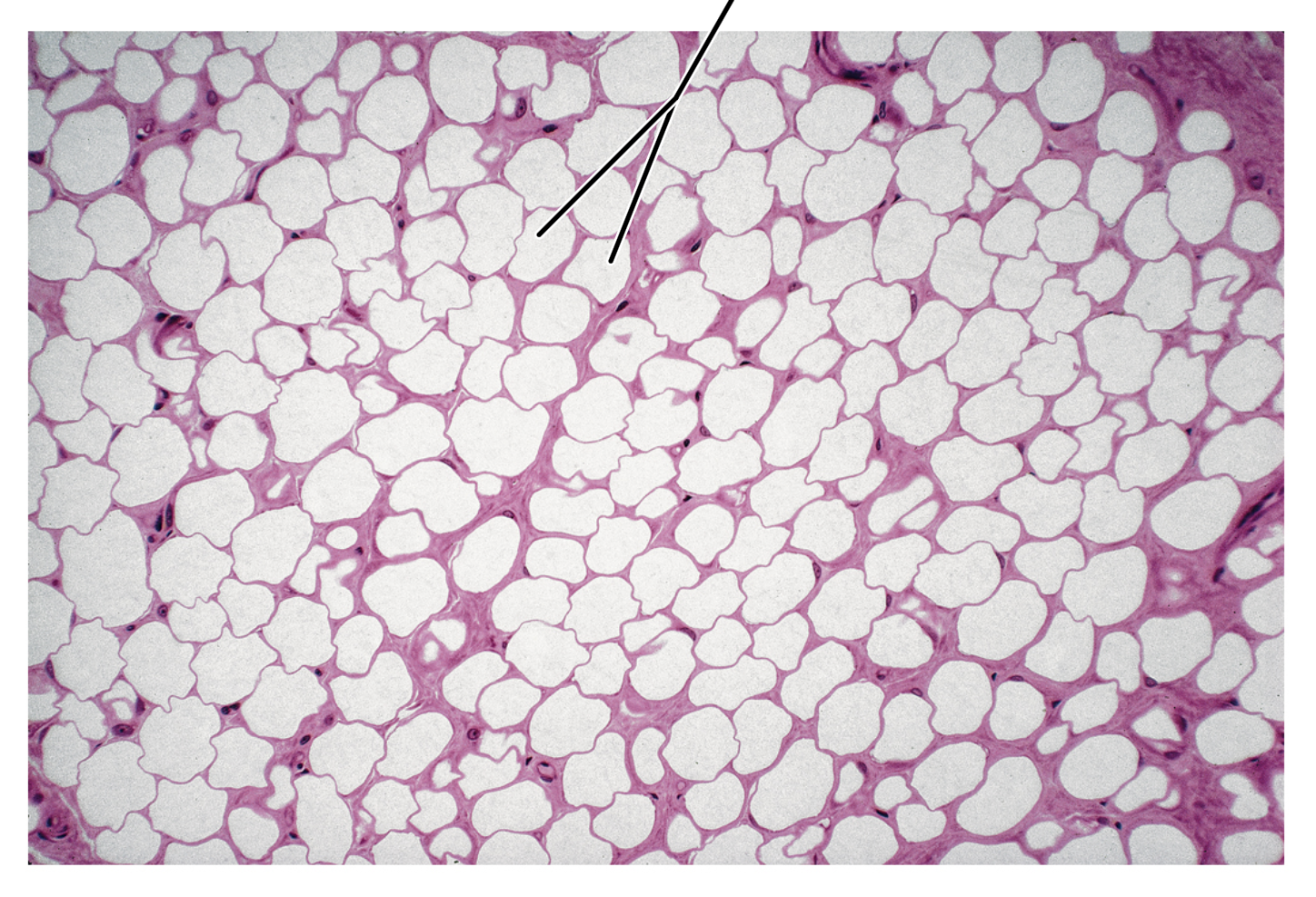
Adipocytes (Fat cells)
Adipose Tissue Function
Insulation, Protection, Energy Storage
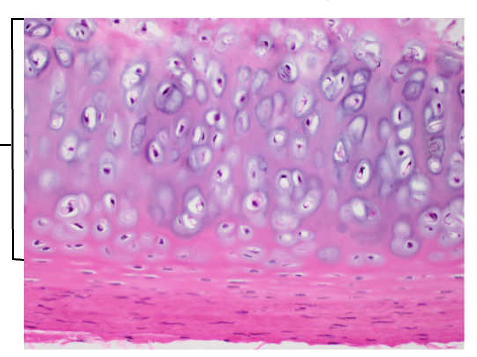
Hyaline Cartilage (Trachea)
Hyaline Cartilage Function
Support + Protection

Perichondrium

Chondrocytes in Lacunae

Matrix
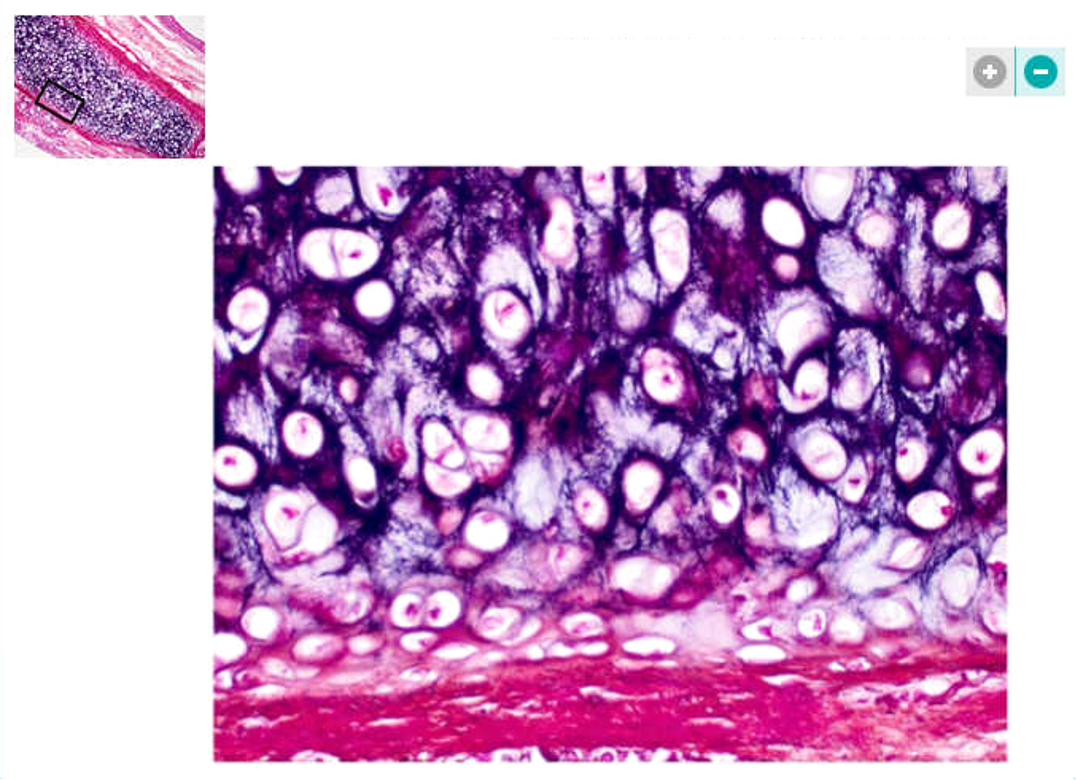
Elastic Cartilage (Epiglottis)
Elastic Cartilage Function
Maintains shape + flexible support.

Chondrocytes in Lacunae

Fibrocartilage (Pubic Symphysis)
Fibrocartilage Function
Support + Protection

Fibrocartilage (Intervertebral Disc)

Chondrocytes in Lacunae

Compact Bone
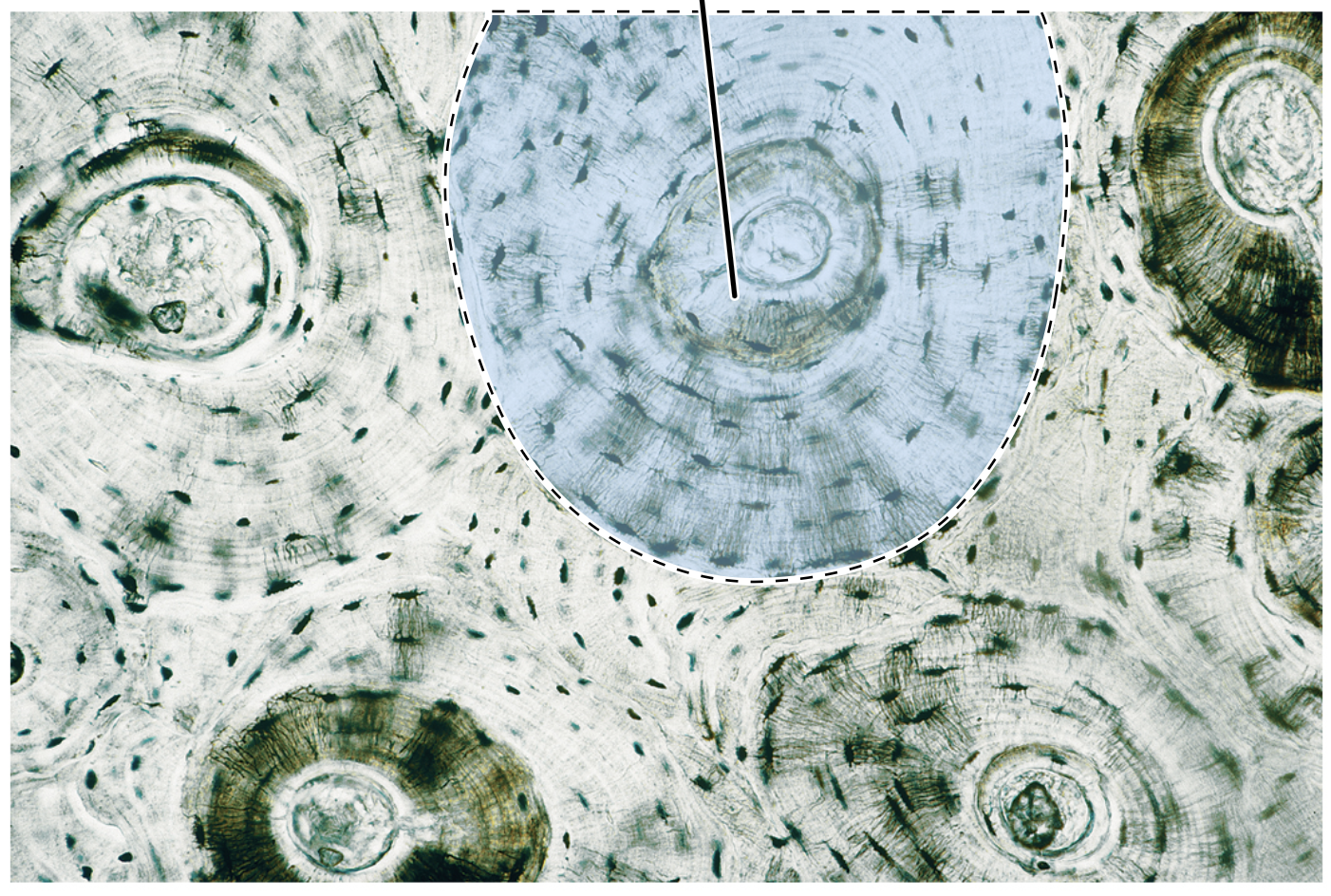
Osteon
Structural unit of compact bone.
Osteon

Central Canal
Channel that runs through the center of each Osteon. Contains blood vessels, nerves, lymphatic vessels.
Central Canal

Lamella
Ring-shaped layers of bone surrounding each Osteon. Provides structural strength and rigidity.
Lamella

Lacunae
Contains Osteocytes
Lacunae (in Compact Bone and Spongy Bone)
Osteocytes Function
Mature bone cells that maintain bone tissue.
Bone Function
Support, protection, leverage for movement, stores calcium.

Spongy Bone

Osteoblasts
Osteoblasts
Immature
Builds new bone matrix
Highly active (secretes osteoid)
Not connected via canaliculi
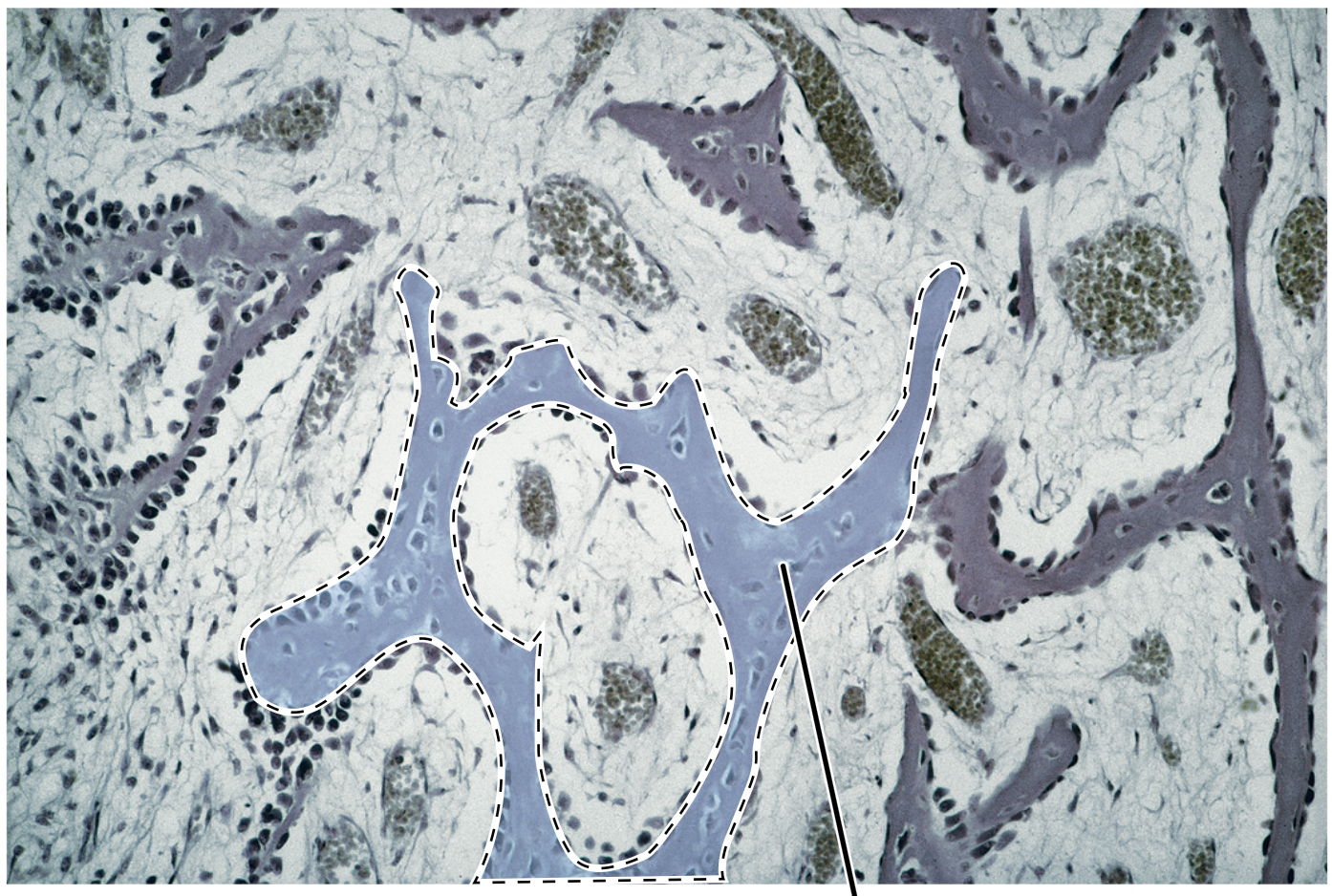
Trabeculae
Trabeculae
Structural elements of spongy bone
Composed of a network of thin plates
Provide strength and support

Endosteum
Endosteum
Thin membrane lining inner surface of bones. Contains osteoblasts and osteoclasts.

Osteocytes in Lacunae
Osteoctye
Mature
Maintains existing bone matrix
Less active (monitoring)
Connected to neighbors via canaliculi
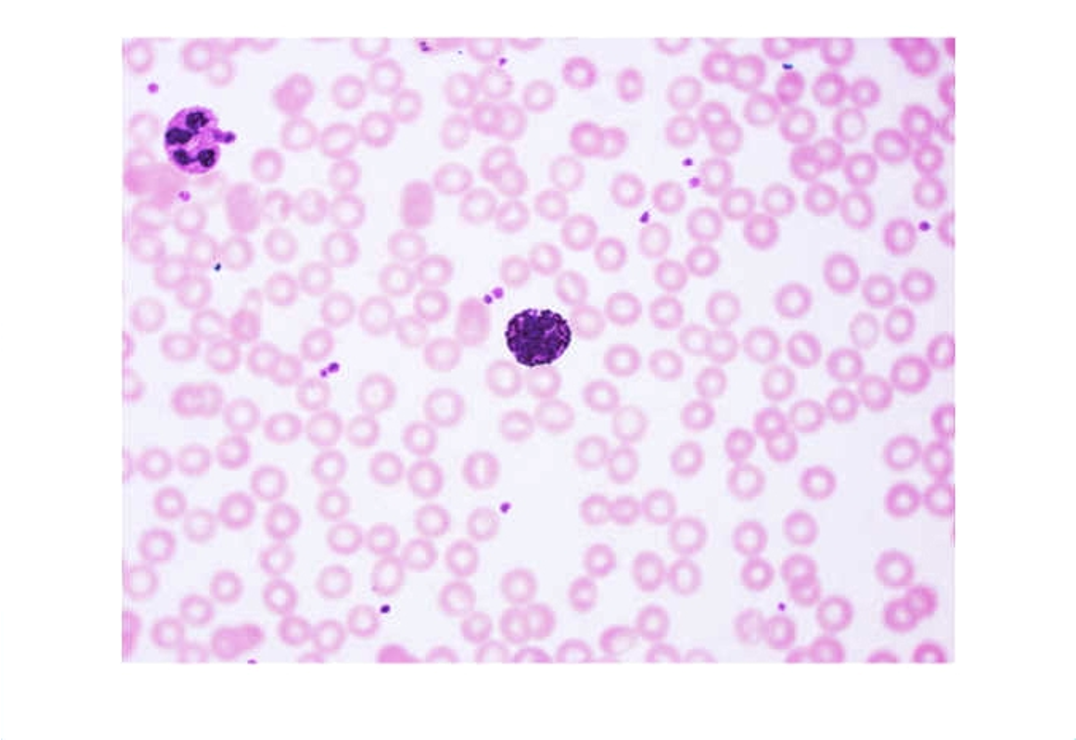
Blood Smear
Blood Functions
Transport nutrients, gases, wastes, immune cells.

Neutrophil
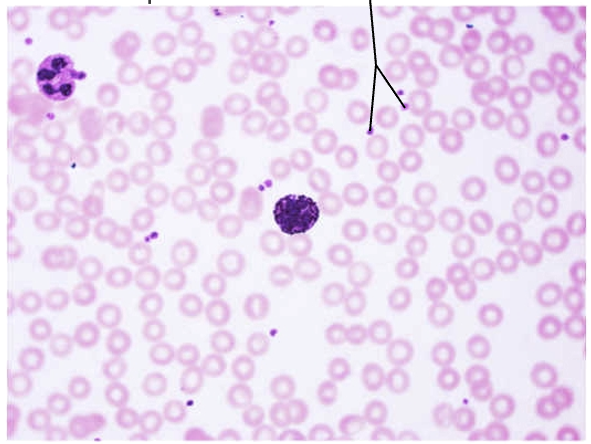
Platelets
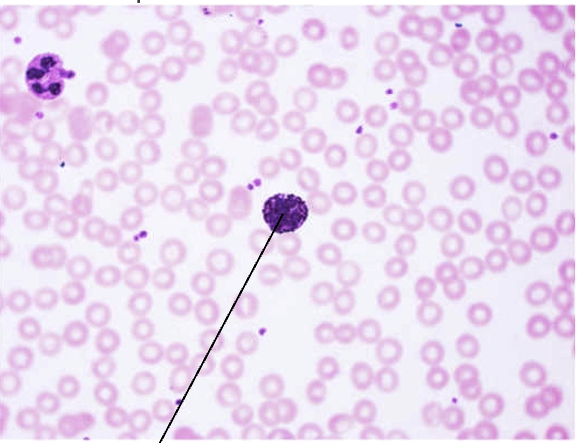
Basophil (Type of White Blood Cell)
Cranial
Towards the head end of the body
Caudal
Towards the tail end (lower part) of the body
Superior
Towards the head, or the upper part of a structure; above
Inferior
Away from the head, toward the lower part of a structure; below
Superficial
Towards or at the body surface
Deep
Away from the body surface; more internal
Medial
Toward the midline of the body; closer to the center.
Lateral
Away form the midline of the body; towards the sides of the body
Anterior
Towards the front of the body
Posterior
Towards the back of the body
Dorsal
Towards the back (spine) of the body. Corresponds to posterior in humans
Ventral
Towards the belly (front) of the body. Corresponds to anterior in humans
Prone
Lying face down (front of body facing down)
Supine
Lying face up (front of body facing up)
Coronal (Frontal) Section
A vertical plane that divides the body into anterior and posterior sections
Saggital Section
A vertical plane that divides the body into right and left parts.