Models of Heart, Eye, Ear
 Call Kai
 Learn
Learn Practice Test
 Spaced Repetition
 Match
Match Flashcards
 Knowt Play
1/35

There's no tags or description
Looks like no tags are added yet.
Name | Mastery | Learn | Test | Matching | Spaced | Call with Kai | Chat |
|---|
No analytics yet
Send a link to your students to track their progress
36 Terms
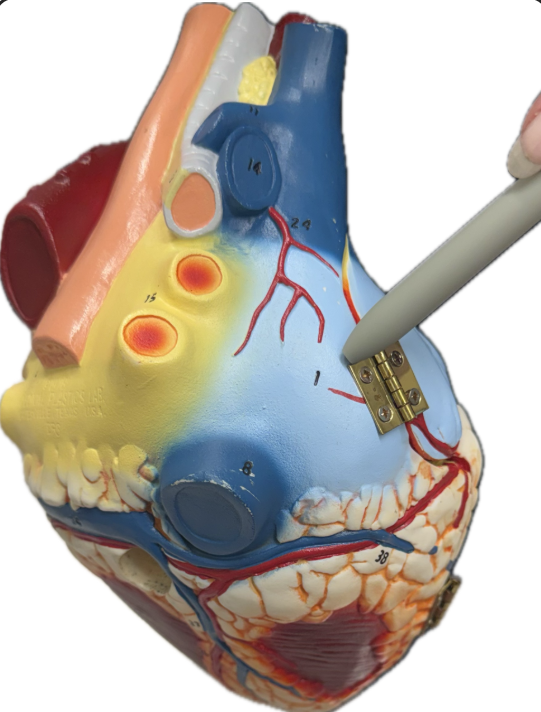
What is the structure and function?
Right atrium
Receives oxygen-poor blood returning from the body through the superior and inferior vena cava and sends it to the right ventricle.
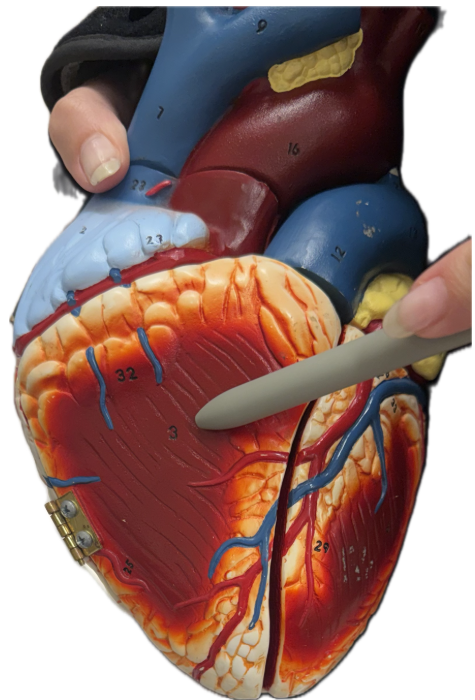
What is the structure and function?
Right ventricle
Pumps oxygen-poor blood through the pulmonary trunk and pulmonary arteries to the lungs for oxygenation.
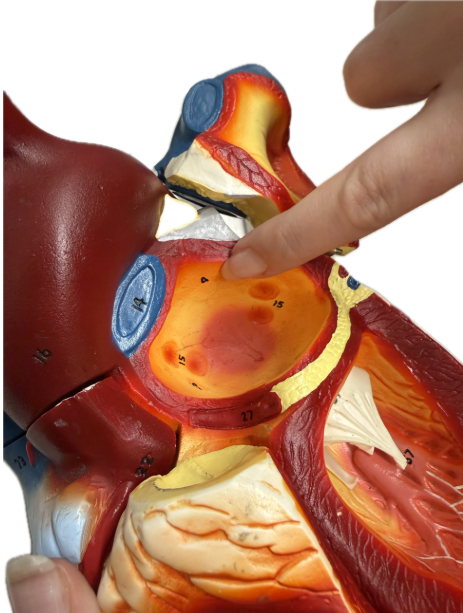
What is the structure and function?
Left atrium
Receives oxygen-rich blood from the lungs through the pulmonary veins and sends it to the left ventricle.
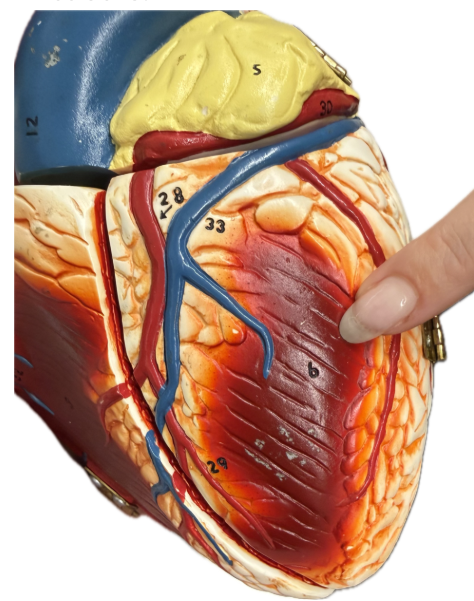
What is the structure and function?
Left ventricle
Pumps oxygen-rich blood into the aorta to supply the entire body. It has the thickest wall because it does the most work.
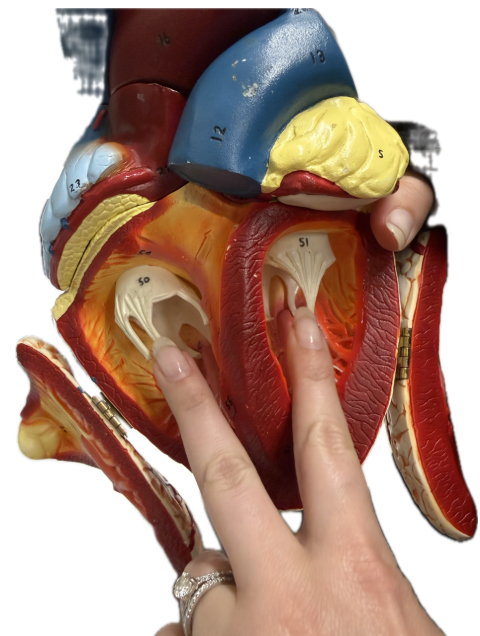
What is the structure and function?
Tricuspid valve (50)
Prevents blood from flowing backward from the right ventricle into the right atrium during ventricular contraction.
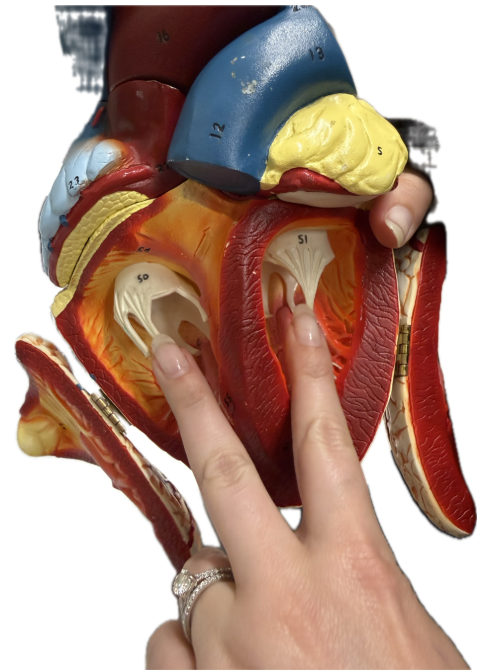
What is the structure and function?
Bicuspid (mitral valve) (51)
Prevents blood from flowing backward from the left ventricle into the left atrium during ventricular contraction.
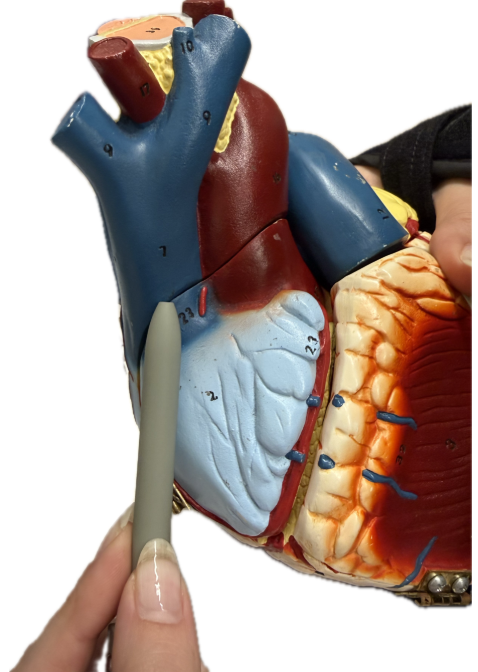
What is the structure and function?
Superior vena cava
Returns oxygen-poor blood from the head, neck, upper limbs, and chest to the right atrium.
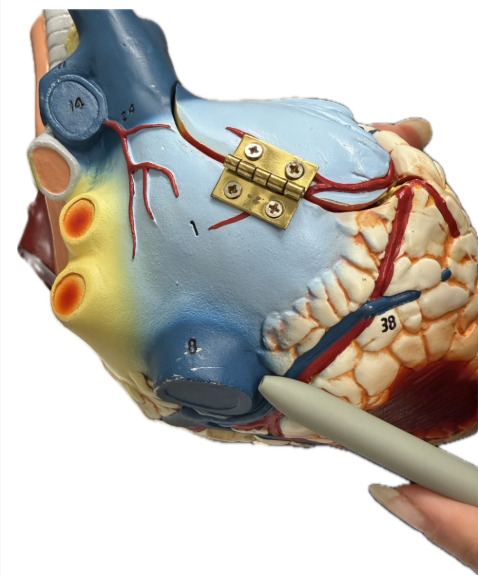
What is the structure and function?
Inferior vena cava
Returns oxygen-poor blood from the lower body to the right atrium.
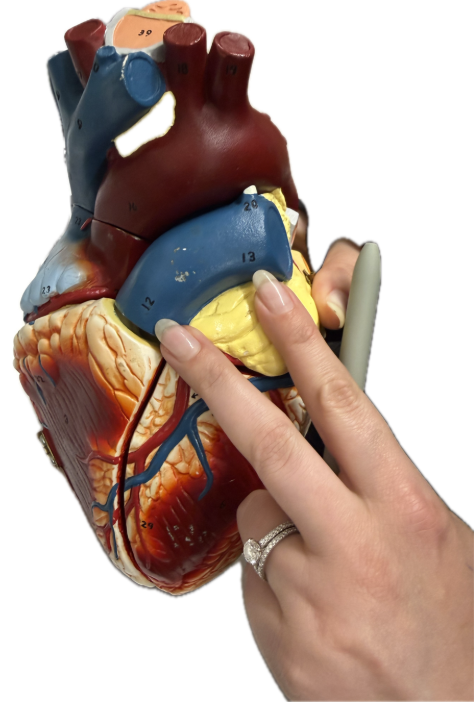
What is the structure and function?
Pulmonary trunk (12)
Carries oxygen-poor blood from the right ventricle and divides into the right and left pulmonary arteries.
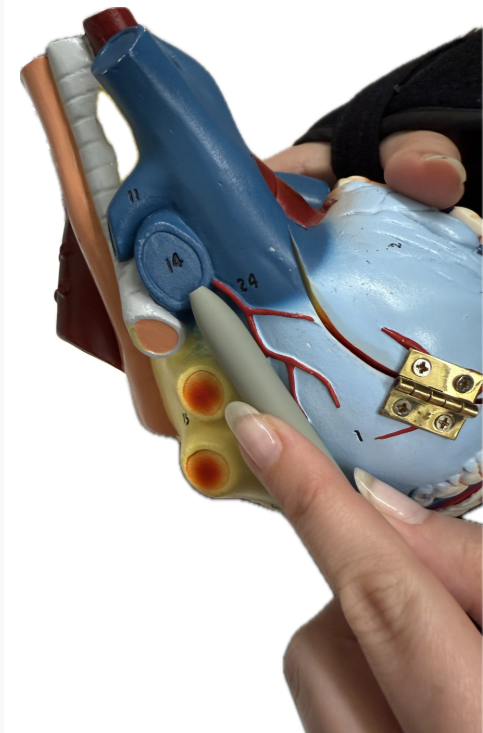
What is the structure and function?
Pulmonary arteries (13 + 14)
Carry oxygen-poor blood from the heart to the lungs for gas exchange.
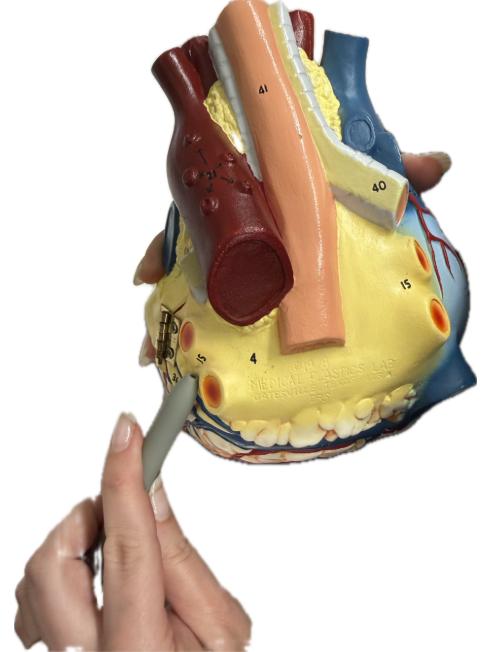
What is the structure and function?
Pulmonary veins
Carry oxygen-rich blood from the lungs back to the left atrium.
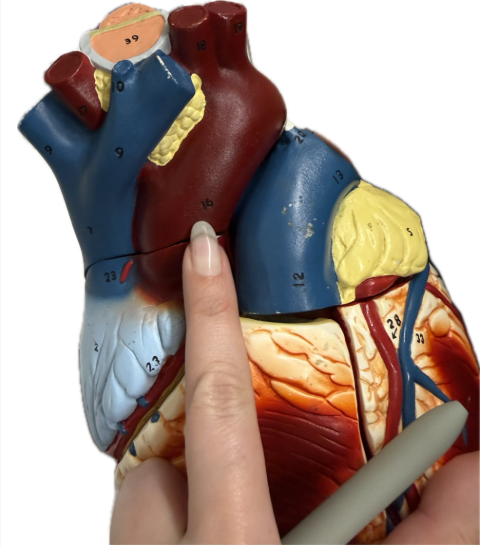
What is the structure and function?
Aorta
The body's largest artery; carries oxygen-rich blood from the left ventricle to the systemic circulation (the rest of the body).
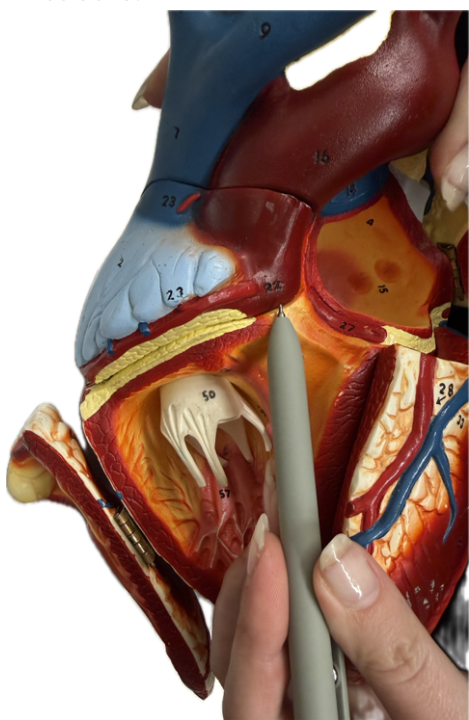
What is the structure and function?
Left coronary a.
Supplies oxygenated blood to much of the heart muscle, including the left ventricle, part of the right ventricle, and the anterior two-thirds of the interventricular septum through its branches.
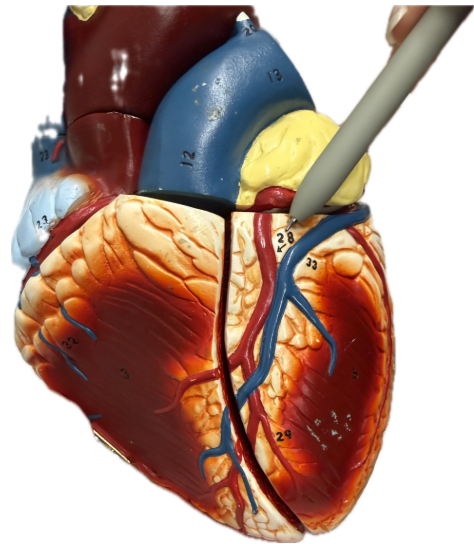
What is the structure and function?
Anterior interventricular coronary a.
Branch of the left coronary artery that supplies the anterior walls of both ventricles and the anterior two-thirds of the interventricular septum.
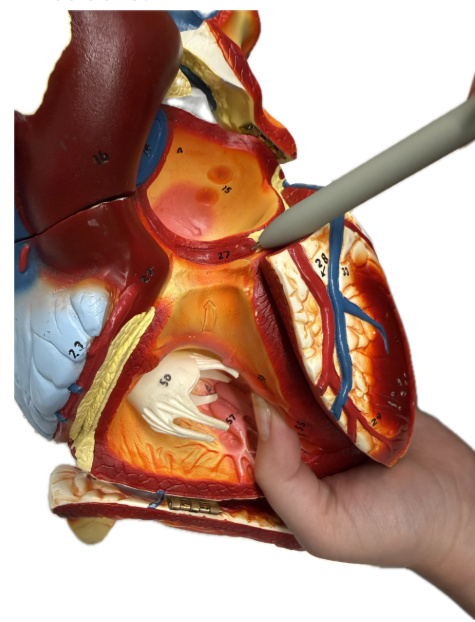
What is the structure and function?
Right coronary a.
Supplies oxygenated blood to the right atrium, right ventricle, and parts of the posterior heart through its branches.
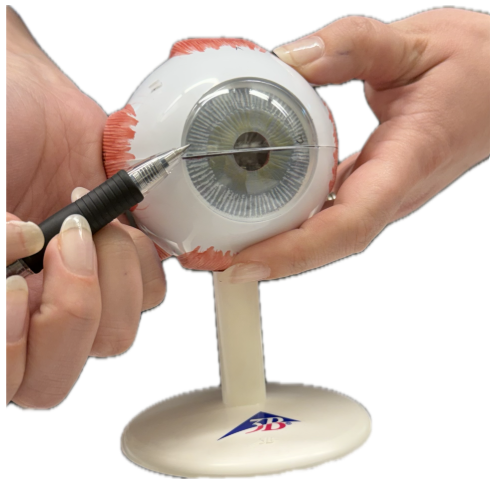
What is the structure and function?
Cornea
Transparent front of the eye that allows light to enter and begins focusing (refracting) light onto the retina.
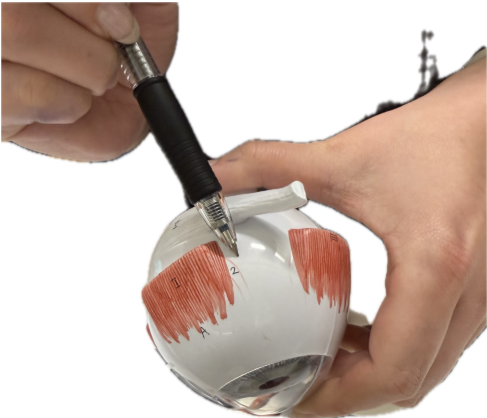
What is the structure and function?
Sclera
Tough white outer layer that protects the eye, maintains its shape, and provides attachment for eye muscles.
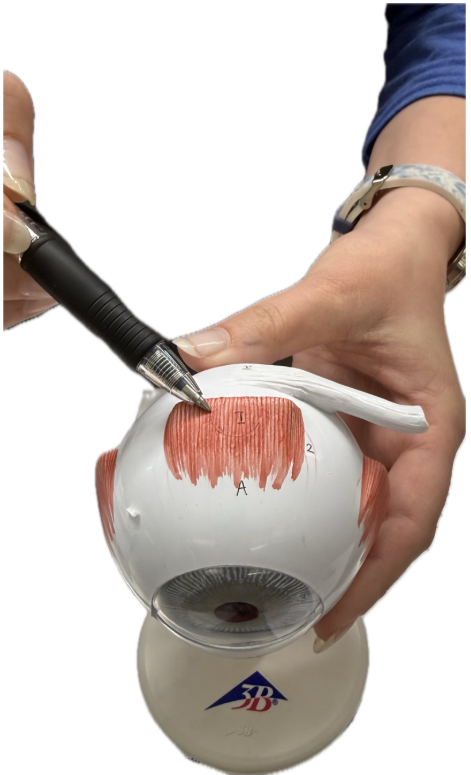
What is the structure and function?
Superior Rectus
Moves the eye upward.
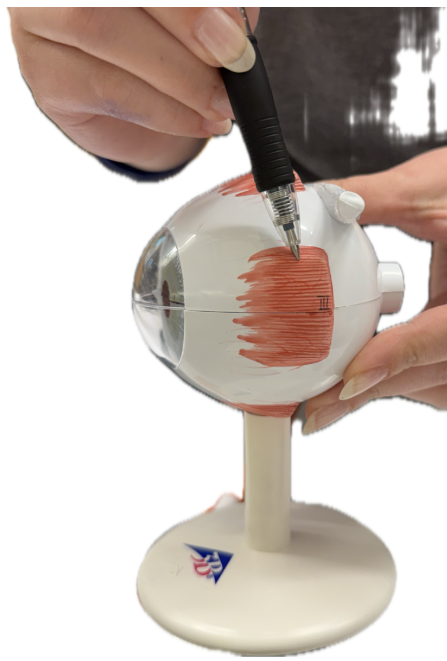
What is the structure and function?
Medial Rectus
Moves the eye toward the nose (medially).
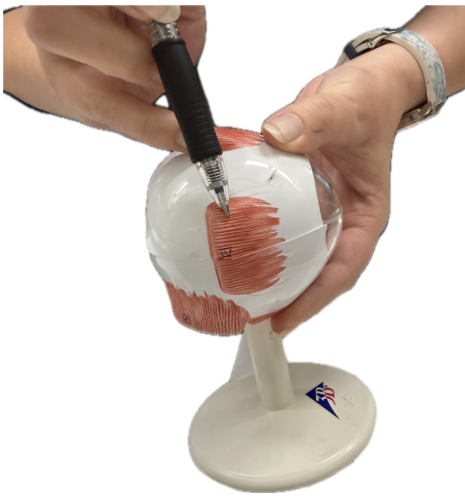
What is the structure and function?
Lateral Rectus
Moves the eye away from the nose (laterally).
What is the structure and function?
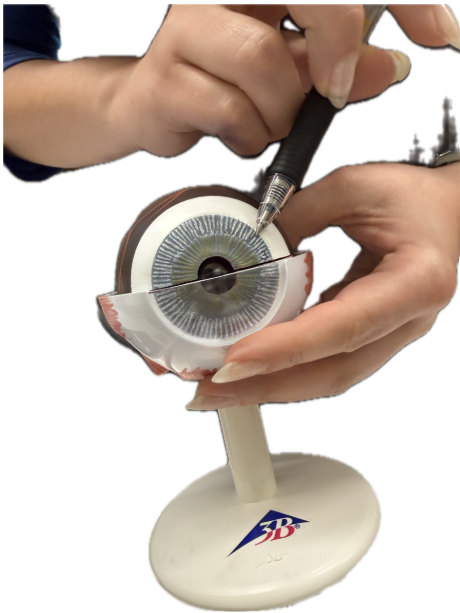
Iris
Colored part of the eye that controls the size of the pupil, regulating how much light enters the eye.
What is the structure and function?
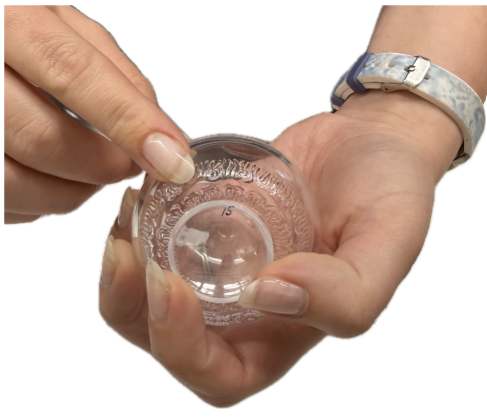
Lens
Transparent structure that changes shape to focus light onto the retina for near and distant vision.
What is the structure and function?
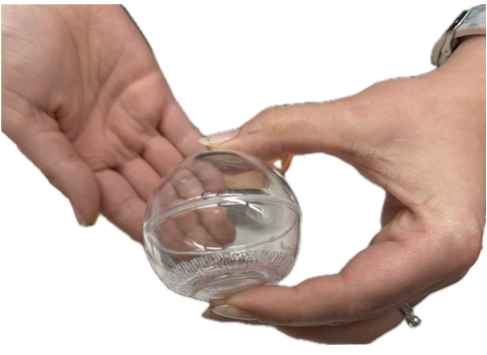
Vitreous humor
Jelly-like substance that maintains eye shape, supports the retina, and helps maintain intraocular pressure.
What is the structure and function?
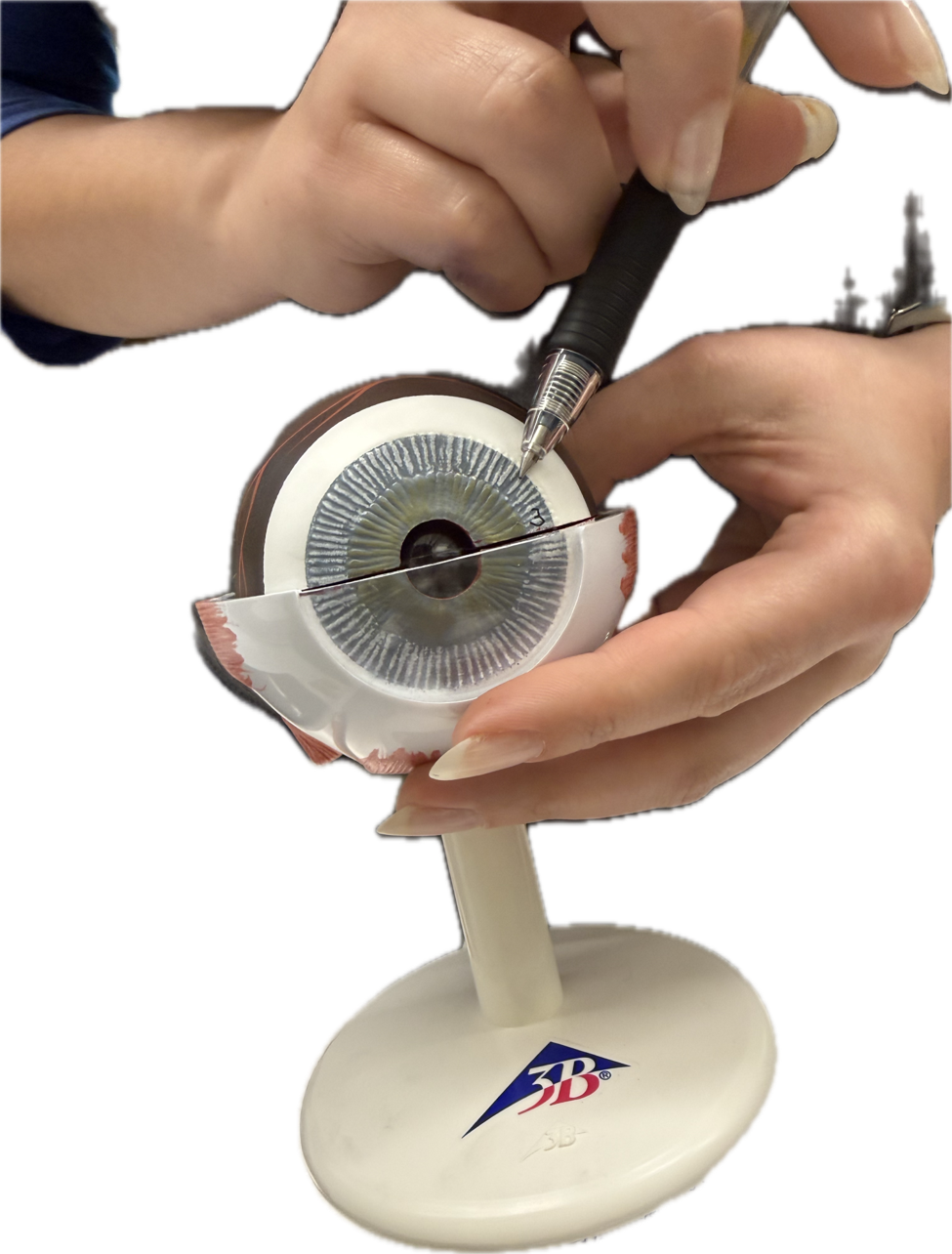
Pupil
Opening in the center of the iris that allows light to enter the eye.
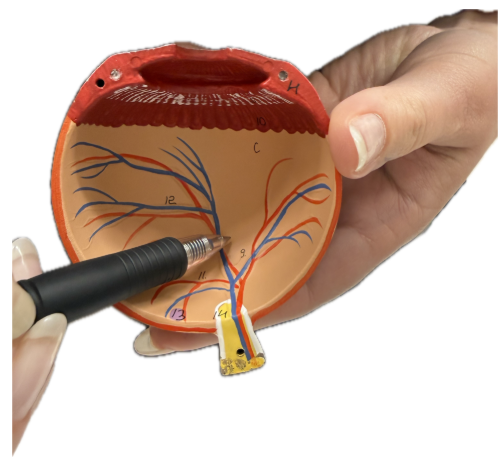
What is the structure and function?
Retina
Light-sensitive inner layer that contains photoreceptors and converts light into nerve impulses.
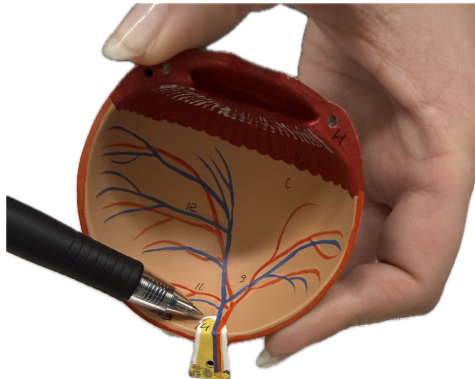
What is the structure and function?
Optic nerve
Carries visual nerve impulses from the retina to the brain for vision.
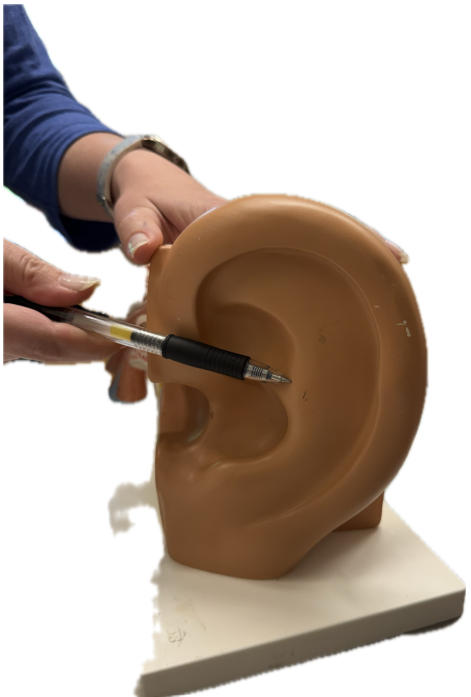
What is the structure and function?
Auricle
Collects and funnels sound waves into the ear canal.
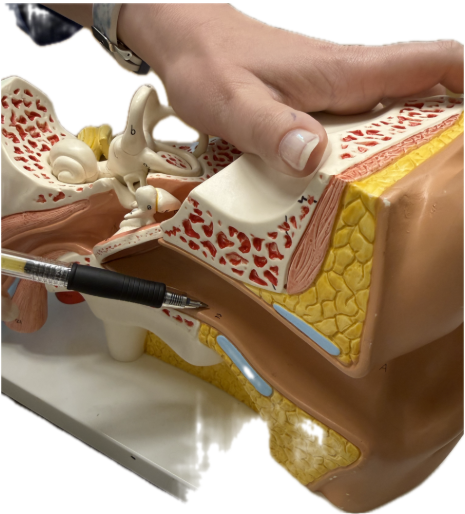
What is the structure and function?
External acoustic meatus
Ear canal that conducts sound waves to the tympanic membrane (eardrum).
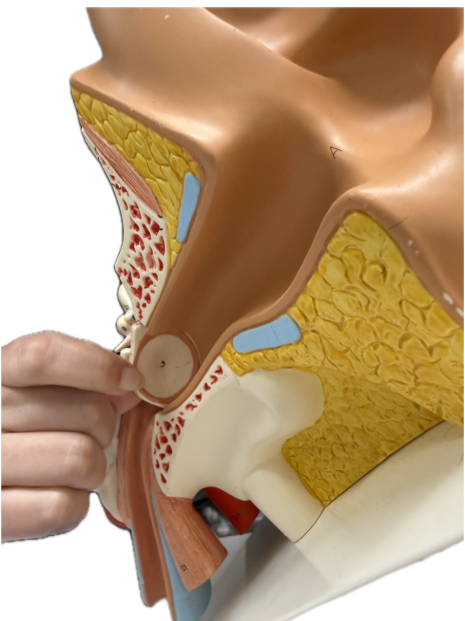
What is the structure and function?
Tympanic membrane
Eardrum that vibrates in response to sound waves and transfers vibrations to the ossicles.
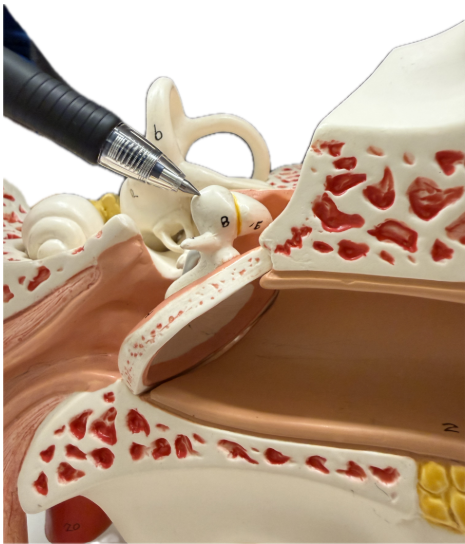
What is the structure and function?
Malleus
Attached to the eardrum; receives vibrations from the tympanic membrane and passes them to the incus.
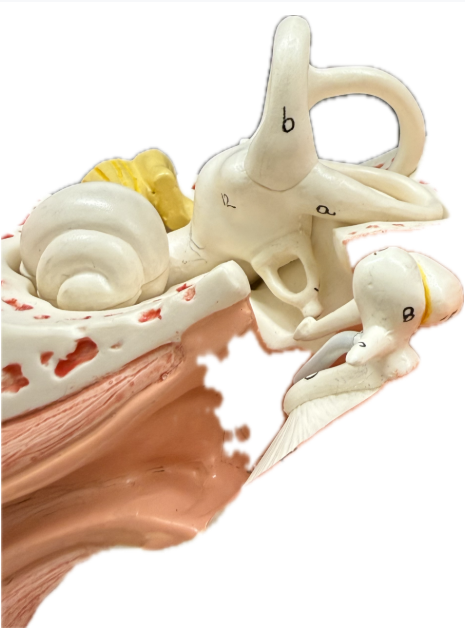
What is the structure and function?
Incus
Middle ossicle that transmits vibrations from the malleus to the stapes.
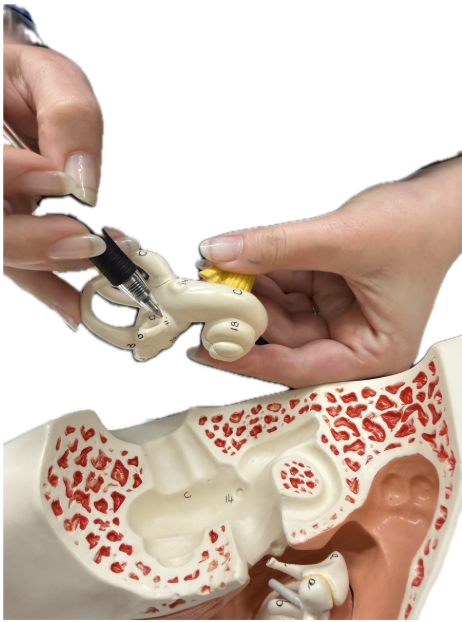
What is the structure and function?
Stapes
Last ossicle; transmits vibrations to the oval window of the inner ear, initiating fluid movement in the cochlea.
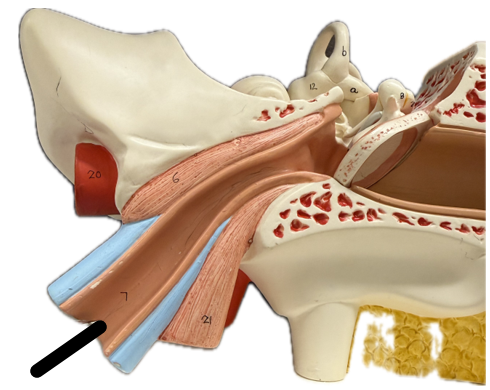
What is the structure and function?
Auditory tube
Equalizes air pressure between the middle ear and the throat and helps drain the middle ear.
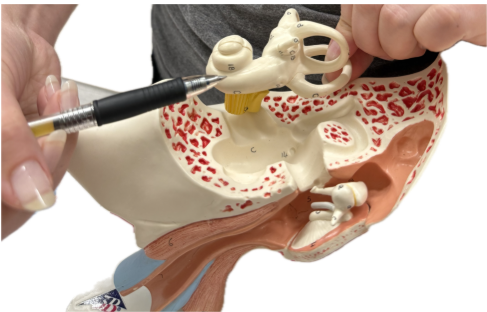
What is the structure and function?
Cochlea
Spiral-shaped organ of hearing that contains hair cells which convert sound vibrations into nerve signals.
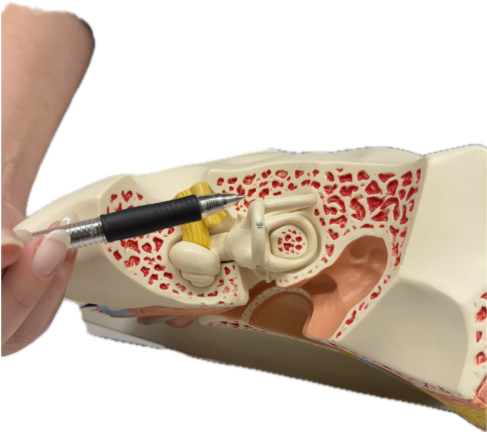
What is the structure and function?
Semicircular canals
Detect rotational (head) movements and help maintain balance and equilibrium.
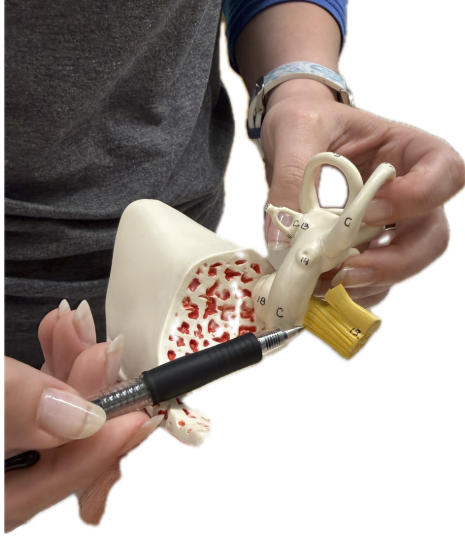
What is the structure and function?
Vestibulocochlear Nerve
Carries hearing and balance information from the inner ear to the brain.