Connective Tissue Disorders in Athletes: Marfan, Ehlers-Danlos, and Hypermobility
 Call Kai
 Learn
Learn Practice Test
 Spaced Repetition
 Match
Match Flashcards
 Knowt Play
1/27

There's no tags or description
Looks like no tags are added yet.
Name | Mastery | Learn | Test | Matching | Spaced | Call with Kai | Chat |
|---|
No analytics yet
Send a link to your students to track their progress
28 Terms
What are connective tissue disorders?
A group of disorders involving protein-rich tissue that supports organs and other body parts.
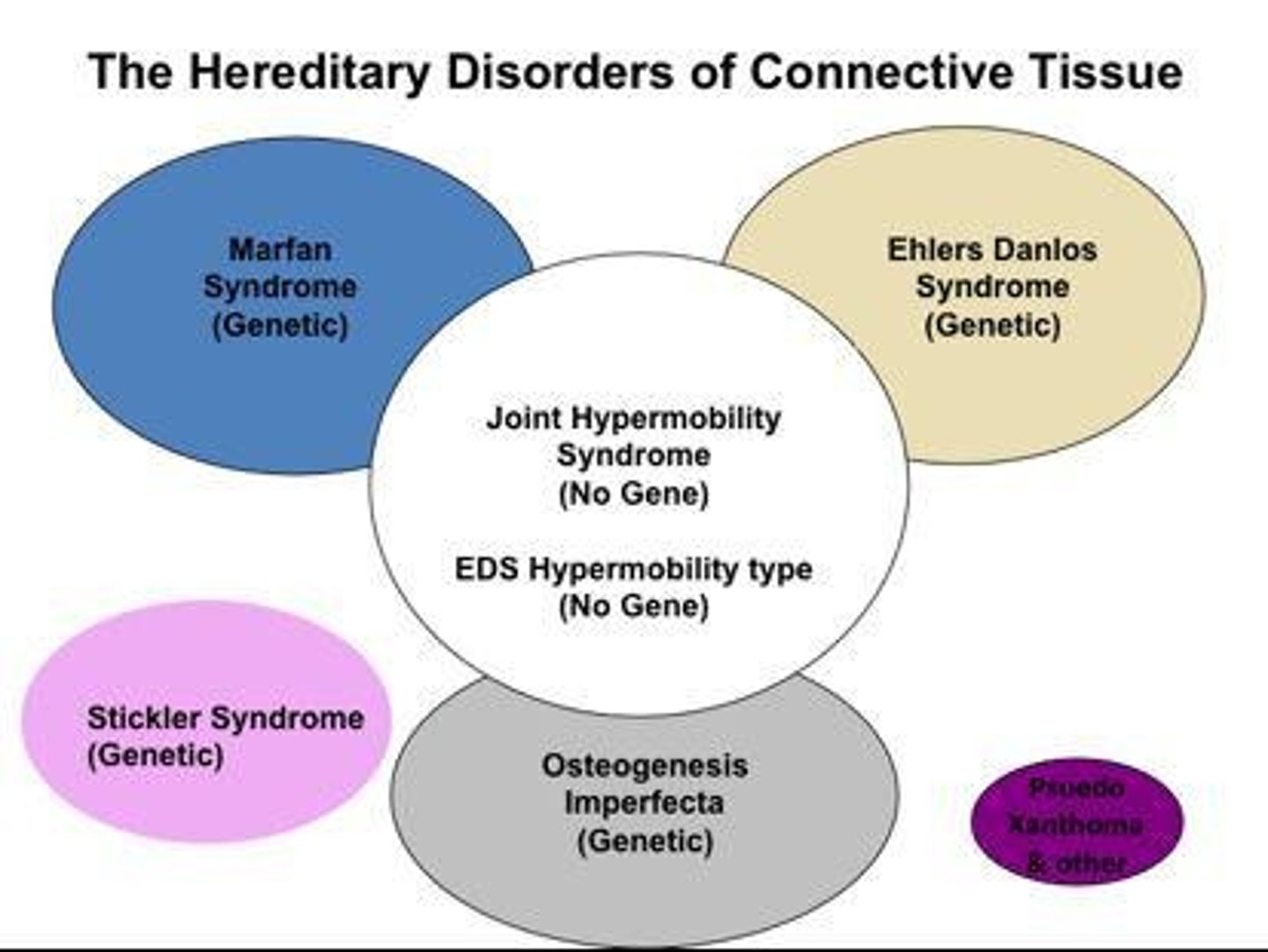
Name some common types of inherited connective tissue disorders.
Ehlers-Danlos Syndrome, Hypermobility Spectrum Disorder, Epidermolysis Bullosa, Marfan Syndrome, Osteogenesis Imperfecta.
What are some autoimmune connective tissue disorders?
Polymyositis, Dermatomyositis, Rheumatoid Arthritis (Juvenile), Scleroderma, Sjogren's, Lupus, Vasculitis, Mixed Connective Tissue Disease.
What is the Beighton Score used for?
To assess joint hypermobility in individuals.
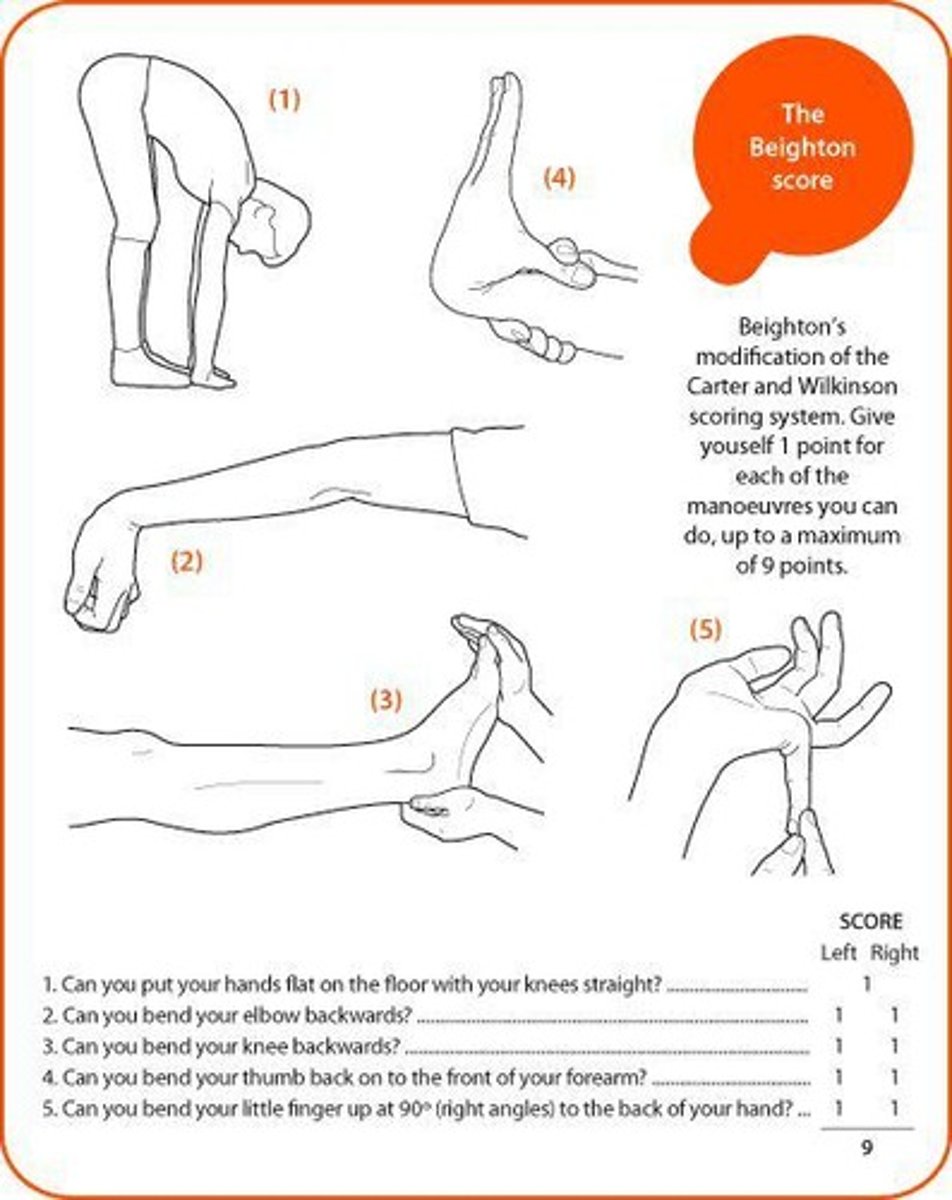
What score indicates generalized hypermobility in adults?
A Beighton Score of 5 or more.
What is the most common type of Ehlers-Danlos Syndrome?
Type III - Hypermobility type.
What are some symptoms of Ehlers-Danlos Syndrome - Hypermobility Type?
Hypermobile skin, recurrent dislocations, chronic joint pain, easy bruising, functional bowel disorders.
What is the primary cause of Ehlers-Danlos Syndrome?
A defect in the synthesis of collagen.
What is Marfan Syndrome caused by?
Overproduction of the protein transforming growth factor beta (TGF-β).
What are some symptoms of Marfan Syndrome?
Tall and thin body type, long arms and legs, flexible joints, scoliosis, and visual issues.
What is the incidence rate of Marfan Syndrome?
1 in 5000 to 10000.
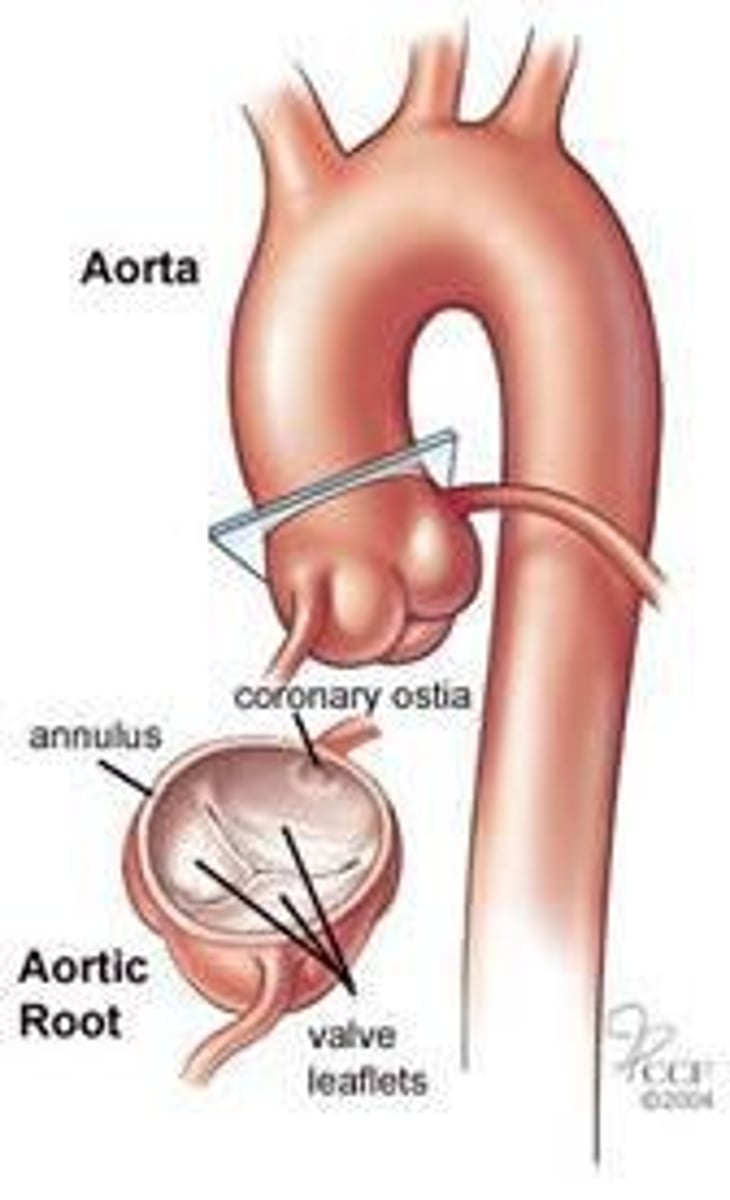
What is the recommended cardiac management for Marfan Syndrome?
Annual echocardiograms and monitoring of aortic dimensions.
What are the orthopedic sequelae associated with Marfan Syndrome?
Scoliosis, kyphosis, back pain, and hypermobility.
What is Juvenile Rheumatoid Arthritis?
An autoimmune condition affecting one or more joints in children.
What are some diagnostic tests for Juvenile Rheumatoid Arthritis?
RF, ESR, ANA, CBC, X-rays, Bone Scans, EKG.
What is the treatment for Juvenile Rheumatoid Arthritis?
NSAIDs and Methotrexate for more severe cases.
What is a common symptom of Hypermobility Spectrum Disorder?
Chronic pain due to trauma or repeated triggering of pain receptors.
What are some non-musculoskeletal symptoms of Hypermobility Spectrum Disorders?
Anxiety, POTS, functional GI disorders, pelvic and bladder dysfunction.
What is the role of physical therapy in managing Ehlers-Danlos Syndrome?
To improve joint stability and reduce future subluxations and pain.
What is the significance of genetic testing in Ehlers-Danlos Syndrome?
It can help confirm the diagnosis, particularly for the Hypermobility Type.
What are some common associated problems with Ehlers-Danlos Syndrome?
Chronic pain, bowel problems, aortic root dilation, and anxiety.
What is the recommended initial evaluation for Ehlers-Danlos Syndrome?
Thorough history and physical examination, assessment of pain and instability in joints.
What are some resources for learning more about Marfan Syndrome?
Marfan.org, Scientific American, and the Marfan Foundation Website.
What is the impact of connective tissue disorders on athletes?
They can lead to increased risk of injuries, chronic pain, and require tailored management strategies.
What is the clinical diagnosis for Ehlers-Danlos Syndrome - Hypermobility Type based on?
Clinical evaluation rather than a distinctive genetic marker.
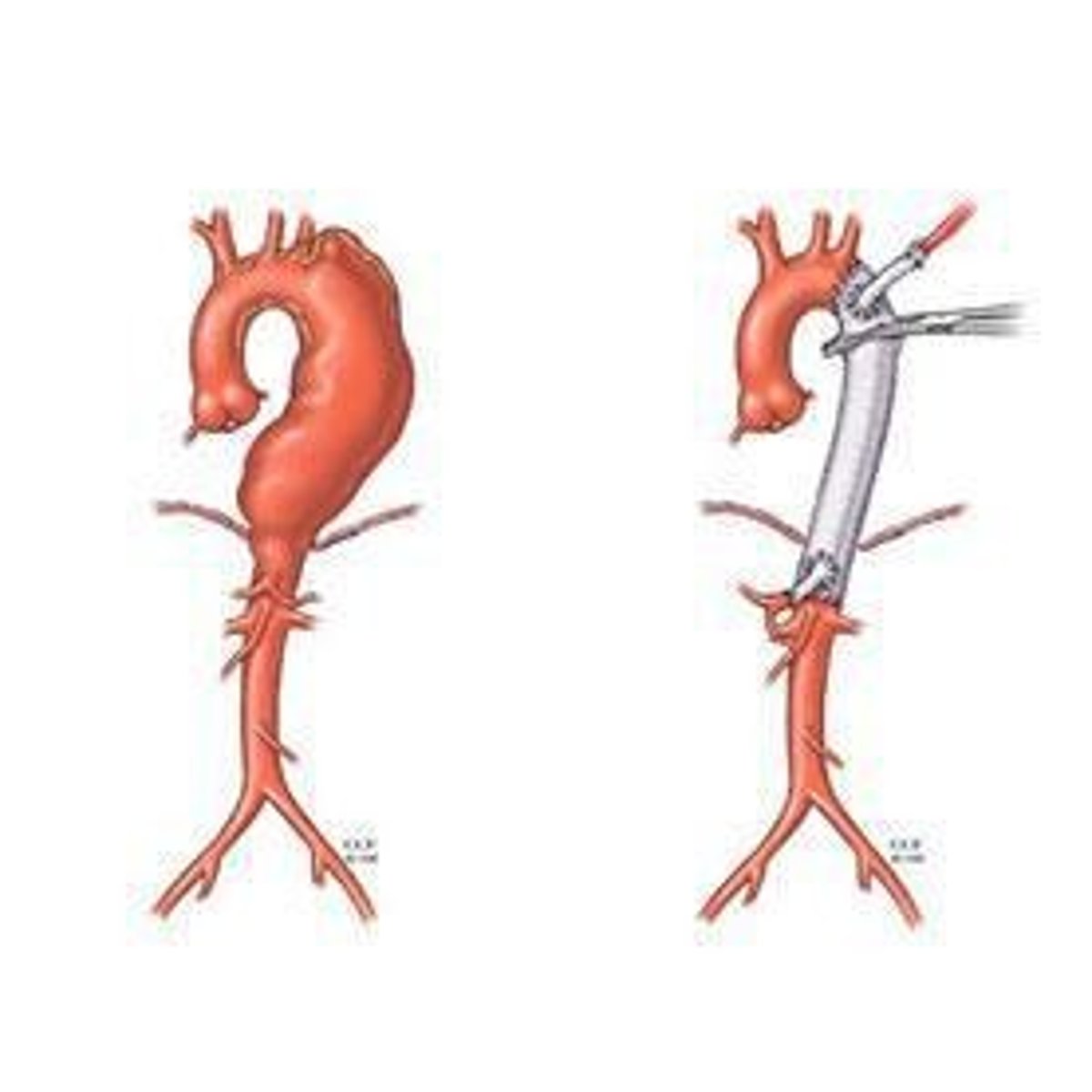
What is the importance of monitoring aortic dimensions in Marfan Syndrome?
To prevent complications such as aortic rupture, which can lead to sudden cardiac death.
What are the four types of Hypermobility Spectrum Disorder?
Generalized, Peripheral, Localized, and Historical.
What is the recommended frequency for echocardiograms in Marfan Syndrome patients with aortic dilation?
Every six months.