Chapter 11 - CELLS IN MULTICELLULAR ORGANISMS
 Call Kai
 Learn
Learn Practice Test
 Spaced Repetition
 Match
Match Flashcards
 Knowt Play
1/18

There's no tags or description
Looks like no tags are added yet.
Name | Mastery | Learn | Test | Matching | Spaced | Call with Kai | Chat |
|---|
No analytics yet
Send a link to your students to track their progress
19 Terms
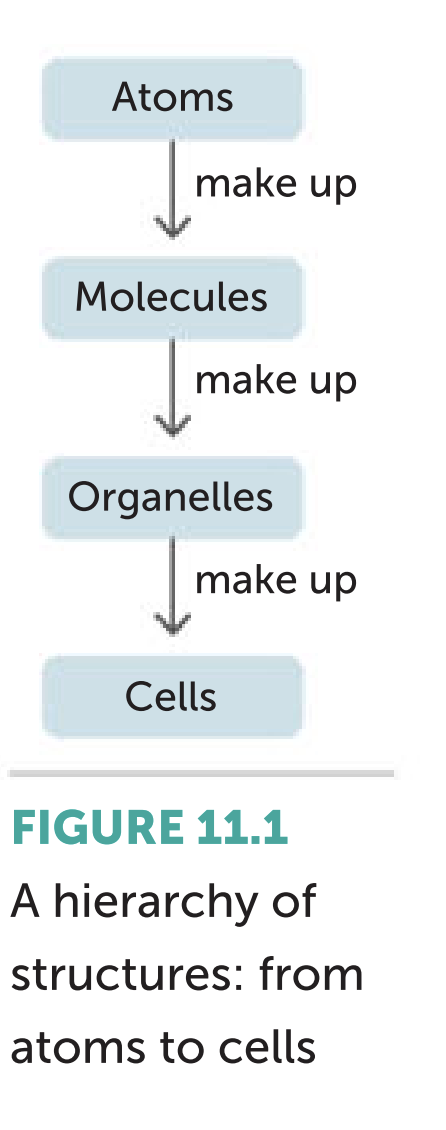
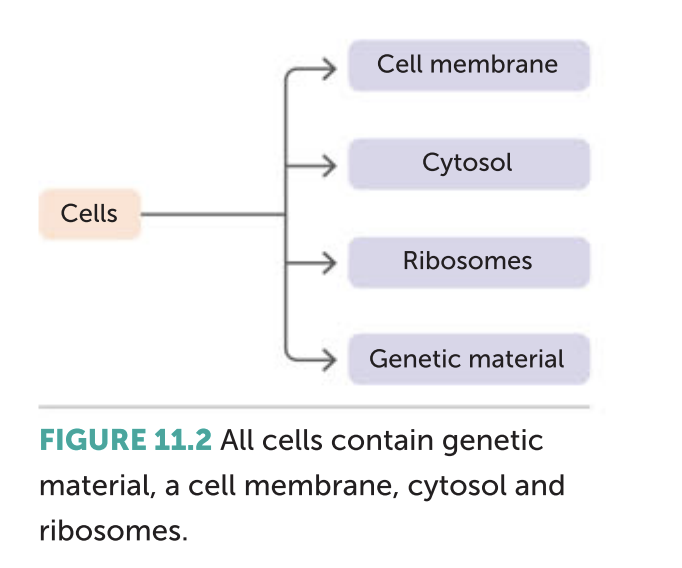
The unicellular paramecium shape
is shaped like a football and covered in cilia.
paramecium movement
The movements of the cilia are synchronised, enabling the organism to move through the water
paramecium special feature apart from other protists
One feature that sets paramecium apart from some other protists is that it gathers its organic nutrient requirements, such as bacteria, algae and yeasts, from its surroundings. By using its cilia, it sweeps food, along with some water, into its oral groove and then into the mouth of the cell.
paramecium food travel
The food travels through the cell mouth into the gullet, which is a temporary holding area for the food.
paramecium food
When there is enough food in the gullet, the food breaks away and forms a food vacuole.
paramecium waste
Expulsion of wastes from the food vacuole occurs through an anal pore.
paramecium expelling
Throughout this process, the vacuole is making its way to the back end of the cell. The paramecium collects the excess water that enters the cell with the food in a contractile vacuole and expels it from the vacuole back into the environment.
different types of tissue
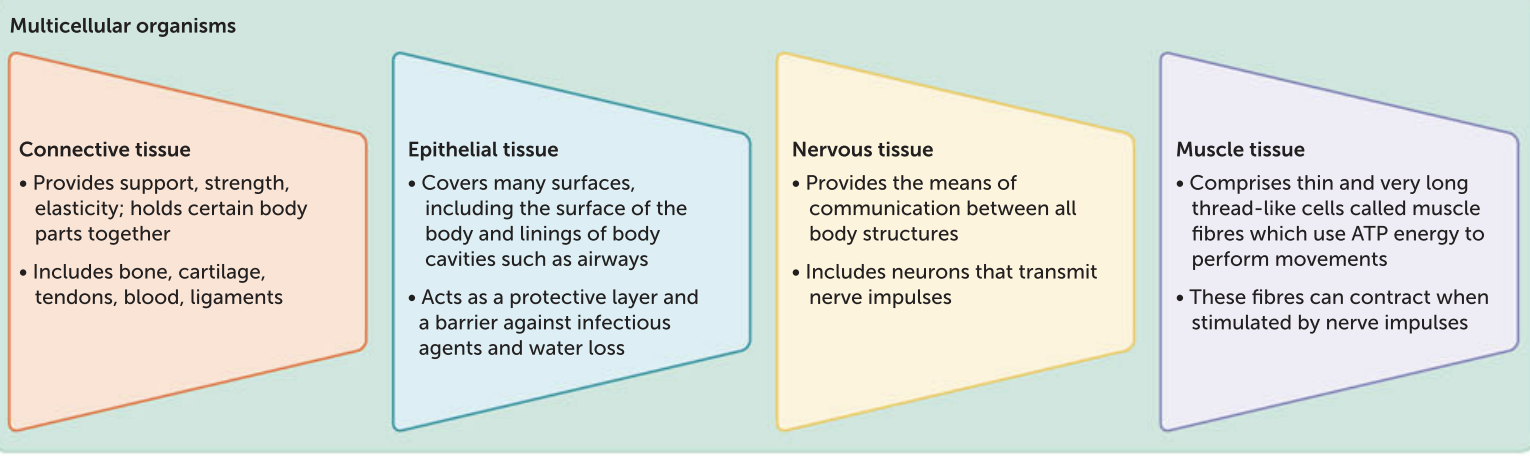
In a vascular plant, there are four main types of plant tissues:
meristematic, dermal, ground and vascular. These tissues perform specialised functions such as storage, transportation, photosynthesis and growth.
Explain Why cells in a multicellular organism cannot survive independently of other cells
Cells in multicellular organisms are specialised. They have specific structures and functions.
They are totally dependent on other cells to perform tasks that they cannot.
Distinguish between specialisation and differentiation
Cells become specialised (or different) through cellular differentiation. Specialisation is when
the different cells possess specific features that relate to a specific role or function.
If all cells of a multicellular organism contain the same genetic material, explain why they dont look the same
Only a small portion of the genetic material is actively ‘switched on’ in specialised cells. The
specific genes that are ‘switched on’ and expressed will determine the cell’s structure.
Disadvantage and Advantage of of specialised cells on the survival of organisms
The possession of specialised cells is advantageous to the survival of the organism because
cells are able to perform many more processes due to their more complex structures.
The possession of specialised cells is disadvantageous to the survival of the organism
because cells are so specialised that they cannot exist independently of other cells, so the
organism must spend energy on communication and coordination between cells.
Describe the differences in the structures involved in systematic and pulmonary circulation
During systemic circulation, arteries carry blood from the heart and veins carry blood to the
heart. The blood flow for pulmonary circulation is reversed; pulmonary arteries carry blood to
the heart and pulmonary veins carry blood from the heart
The fibrous nature of valves allows blood to push the flaps open, when being pushed by
muscular contractions of blood vessels or the heart, but prevents blood flowing backwards
The fibrous nature of valves allows blood to push the flaps open, when being pushed by
muscular contractions of blood vessels or the heart, but prevents blood flowing backwards