Neurochemistry, Pharmacology, and Behaviour Exam 1
 Call Kai
 Learn
Learn Practice Test
 Spaced Repetition
 Match
Match Flashcards
 Knowt Play
1/99

Earn XP
Description and Tags
Fall 2026, Marek Schwendt, UG section
Name | Mastery | Learn | Test | Matching | Spaced | Call with Kai | Chat |
|---|
No analytics yet
Send a link to your students to track their progress
100 Terms
Define Pharmacology
It is the scientific study of the interactions between a living organism and drugs that affect normal or abnormal biochemical function
Differentiate neuropharmacology, psychopharmacology, and neuropsychopharmacology
Neuropharmacology: Studies how drugs affect the structure and function of the nervous system
Psychopharmacology: Studies how mental processes, thinking, mood, and behaviour are impacted by psychoactive drugs
Neuropsychopharmacology: Combines both fields to investigate neural mechanisms and brain circuitry underlying drug-induced changes in behaviour and mood
Differentiate a drug action and a drug effect
Drug action: The initial consequence of a drug-receptor attraction and binding
Drug effect: Biochemical and physiological changes that occur as a consequence of drug action
Differentiate a therapeutic and a side effect
Therapeutic effect: The desired physiological or behavioural changes produced by a drug
Side effect: All other effects of a drug
At what levels to drug effect occur?
Molecular/cellular: At the molecular level, these are changes produced by a drug when it binds to a target site or receptor
Systemic: Changes in physiological or psychological functions
Differentiate specific from nonspecific drug effects
Specific: Based on the physical and biochemical interactions of a drug with a target site
Nonspecific: Based on certain unique characteristics of the individual like expectations or attitudes
What is a placebo, and how can double-blind experiments be used to mitigate confounding variables when using one?
Placebo: A pharmacologically inert compound that may or may not have real effects simply from the “belief in a drug” despite the lack of chemical activity. Used as a control in experimental studies like clinical trials.
Double-blind: You can use a double blind procedure (the researchers AND participants are unaware of what they will be receiving). Used to mitigate confounding variables like patient bias, doctor bias, and isolates the drug to prove it really works.
Differentiate between pharmacodynamics and pharmacokinetics in terms of interactions and amounts
Pharmacokinetics studies the amounts of a drug in the body over time (ADME), while pharmacodynamics studies the interactions between a drug and its biological targets (dose-response).
What are the 5 factors that contribute to drug bioavailability?
Drug administration: Oral, IV, IP, subcutaneous, IM, inhalation, rectally, etc
Absorption/distribution: Membranes of the oral cavity, GI tract, peritoneum, skin, muscles, and lungs
Binding: Neuron receptors are active and inactive sites are bone/fat/plasma/etc
Inactivation: Due to metabolic activity in the liver
Excretion: Intestines, kidneys, lungs, sweat glands, feces, urine, water vapor, saliva, etc.
Elaborate more about the route/method of administration and how it impacts bioavailability
Methods: IV, oral administration (PO), intramuscular, subcutaneous, inhalation, sublingual (beneath the tongue), intrarectal, topical, transdermal, epidural, ICV, intraperitoneal
Time of drug blood levels: View the graph below

Pros vs Cons of oral adminsitration
Pros: Economical, self-administered, low discomfort, safe
Cons: Drugs must be resistant to stomach acid/enzymes, often undergo a lot of first-pass metabolism, slow absorption
Pros vs Cons of IV injections
Pros: Most rapid and accurate
Cons: Quick onset of drug effect might be a hazard, drug cannot be removed from the body, requires a sterile needle and infusion pump
Elaborate more on how absorption/distribution impacts bioavailability including lipids, diffusion, the bbb, etc.
Factor: The most important factor determining drug bioavailability is the rate of the drug passage through cell membranes
Lipids: Lipid-soluble drugs pass through cell membranes via passive diffusion in which movement goes from higher → lower concentration and increased lipid solubility means higher absorption of into the bloodstream and brain. Most drugs aren’t very lipid-soluble as they are weak acids/bases which ionize in water depending on multiple factors
Facilitated passive diffusion: Transmembrane protein carriers mediate transport, no energy required, transport against concentration gradient can’t occur
Active transport: Carrier-mediated, selective, requires energy, might go against gradient, only for drugs similar to endogenous substances
Endo/pinocytosis: Fluid or particles are engulfed by a cell and forms a vesicle that later detaches and moves to the cell interior
BBB: The blood-brain barrier is the separation between the brain capillaries and the CSF that provides protection and a chemically stable environment. Brain capillaries have no gaps, tight junctions supported by astrocytes, limited pinocytosis, and only lipid soluble drugs can pass. Permeable at the area postrema and median eminence. Drugs can be designed to have good BBB permeability if it exists in a non-ionized form in the plasma, and has a chemical structure similar to endogenous compounds. Some brain areas like the area postrema and median eminence aren’t isolated.
Elaborate on how binding impacts bioavailability
Circulating drugs can bind at inactive sites where no biological effect is initiated known as drug depots (plasma albumin, muscle, fat, etc.). Impacts: Delays the onset, decreased the magnitude, and prolonged the duration of action.
Elaborate on how inactivation impacts bioavailability
Biotransformation: Drugs are eliminated via biotransformation/metabolism where the metabolites are then excreted also the metabolic rate is concentration-dependent. Happens in the liver.
Enzymes: Can be done by micosomal enzymes that lack specificity and metabolize a wide variety of drugs like the CYP450 family. Repeated use of a drug increases number of enzyme molecules which leads to faster biotransformation. Some drugs directly inhibit liver enzymes which leads to slower biotransformation. Some might compete for enzymes and lead to toxicity. Genetic polymorphisms for drug-metabolizing enzymes contribute to variability in metabolism.
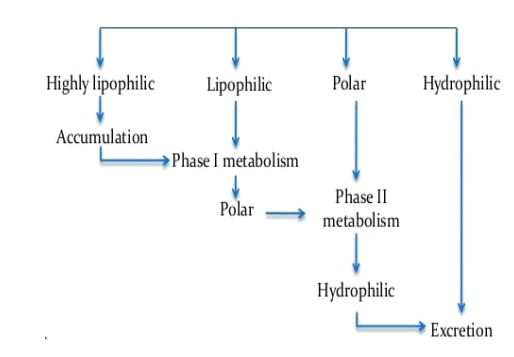
Two phases: Phase one is non-synthetic modification by oxidation, reduction, or hydrolysis whilst phase two is synthetic reactions requiring a combination of the drug with a small molecule (conjugations)
First-order kinetics: Drug clearance from the blood is usually exponential
Zero-order kinetics: Some drugs are eliminated this way at a constant rate regardless of concentration because the drug levels are high and routes of metabolism or elimination are saturated
Half-life and Therapeutic goal: Amount of time required for removal of 50% of the drug, which varies by the drug. The therapeutic goal is to maintain the concentration of a drug in the blood plasma at a constant level. Half-life determines the interval between doses and the time needed to reach the steady-state plasma level.

Elaborate on how excretion and urinary ph impacts bioavailability
Kidneys filter materials from the blood, urinary ph affects drug reabsorption in the kidney tubules so altering the pH is used to treat drug toxicity. Excretion directly reduces bioavailability by permanently removing an active drug or substance from the body, thereby limiting the total amount of the dose that can reach the systemic circulation and exert its intended effect.
What is a receptor, and what are the two principal types?
What: A specialized protein molecule of target cell that binds to specific signaling molecules to trigger a biological response
Surface: Embedded in a cell's plasma membrane. Includes ionotropic, metabotropic, and enzyme-linked types.
Intracellular: Located inside the cell's cytoplasm. Signaling molecules are lipid soluble to freely diffuse across the membrane, like steroid or thyroid hormones.
How do drugs interact with receptors? What models are used?
Binding: Ligand binding causes change in the receptor shape that initiates a series of changes/events in the cell. Ligand-receptor binding is temporary, after the ligand separates, the receptor is free to bind again.
Models: The lock and key model stipulates that if a ligand fits into a receptor, they will bind. However we now know that there are more complex conformational shape changes that occur when they bind.
What is an agonist? What does it mimic?
The best chemical “fit” for a receptor aka it has the highest affinity for it. Produces the most significant biological effect. Mimics a natural body substance like a neurotransmitter or hormone.
What is an antagonist?
Antagonists can fit into receptors but don’t produce a cellular effect. Receptor antagonists can prevent active ligands from binding.
What is a partial agonist?
Something that attaches to the same cellular site as a full agonist or natural chemical messenger but the response it produces is less than that of a full agonist.
Define inverse agonist
Something that produces a biological response opposite to that of the agonist.
NOT an antagonist since it actually produces a pharmacological effect. Can be difficult to clinically distinguish the two.
Readily observed with receptors which have constitutive activity such as histamine receptors and GABA receptors.
What is a dose response curve, and what does it show you?
A graph that shows how a living organism or cell reacts to different amounts of a substance, like a medicine or toxin.
The X axis shows the dose given. The Y axis shows the biological response or effect. Looks like an S shape usually. Follows a logarithmic curve.
List the things a dose-response curve can tell you
Potency: Shows how much substance you need to get a reaction/concentration of an agonist required to produce 50% of its maximal response (EC50). A more potent substance needs a smaller dose. Compare ED50 values. A drug that is more to the left (closer to the y axis) is more potent as it takes a smaller dose to do the same amount of work.
Efficacy: Shows the maximum effect the substance can create. Adding more after this point does not increase the result.
Threshold dose: Shows the minimum dose required to start seeing any change or effect.
Plateau: Shows the ceiling point where higher doses stop adding any extra benefit or change.
ED50: Shows the dose that gives 50% of the maximum possible response aka the dose that produces a desired effect in half the population (median dose).
ED100: Shows the maximum response.
EC50: Shows the half maximum effective concentration where the concentration of the drug is at 50% of its maximum response being observed.
ECmax/EC100: Shows the maximum effective concentration at which all the receptors are occupied.
TD50: The dose at which 50% of the population experiences a toxic effect of the drug.
LD50: Shows the lethal dose that kills 50% of a test population.
Therapeutic Index: Compares the toxic dose to the effective dose to measure how safe a medicine is. TI = TD50/ED50.
Competitive antagonists: Drugs that compete with agonists for the same binding site on the receptor. The potency of agonist decreases (produces less effect).
What is a noncompetitive antagonist?
It binds to the receptor at a site different from the agonist site and changes the ability of R to bind agonist or to initiate intracellular signaling which decreases the efficacy but not the potency.
Differentiate potency from efficacy
Potency: The amount of a drug required to produce an effect of given intensity. Differences are evaluated by comparing ED50 or EC50 values.
Efficacy: The ability of the drug to produce a maximum response. Differences are evaluated by comparing difference in the maximum response at a high drug dose or concentration.
What is an allosteric modulator?
Allosteric modulators are compounds that bind to a secondary, distinct site on a receptor or protein to indirectly alter its response to a primary (orthosteric) agonist or substrate.
A NAM is a negative allosteric modulator whilst a PAM is a positive allosteric modulator.
Drug interactions at the systemic level.
Two drugs can reduce effectiveness of each other which is physiological antagonism.
They could also augment each other like additive effects and potentiation.

Biobehavioural effects of chronic drug use
Drug tolerance: Diminished response to a drug after repeated exposure. You therefore need to increase the dosage to obtain the same effect. Different mechanisms can lead to this like metabolic, pharmacodynamic, and/or behavioural tolerances.
Drug sensitization: AKA reverse tolerance, when you get enhancement of drug effects after repeated administration of the same dose.
Describe metabolic tolerance
AKA PK tolerance (pharmacokinetic)
Repeated use of a drug → enzyme induction → increased metabolic capacity → more efficient metabolism = reduced amount of the drug available at the target tissue and therefore a diminished drug effect.
How to remember: What does the body do to the drug? It metabolizes it!
Pharmacodynamic tolerance
AKA PD tolerance
Changes in a drug/target tissue that compensate for the continued presence of the drug, such as compensatory receptor downregulation after chronic agonist treatment. For example, many antipsychotic drugs to reduce shizophrenia symptoms are D2 receptor antagonists so long-term usage of it is linked to upregulation of dopamine D2-receptors in the striatum = dopamine supersensitivity which manifests as drug tolerance.
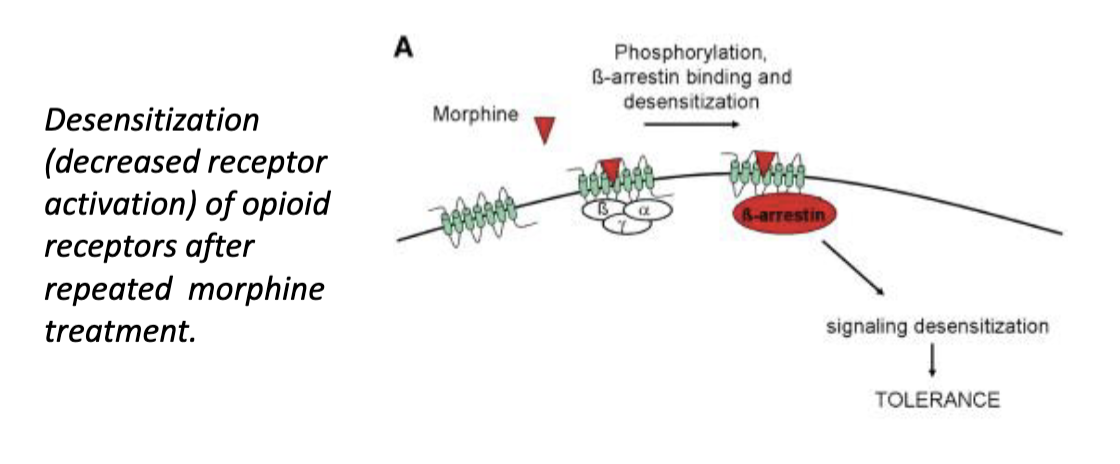
Behavioural/learned tolerance is …
AKA learned tolerance because it depends on learning processes
Decrease of a drug-induced disruption of a goal-oriented behaviour with repeated dosing. Classical, operant, and state-dependent learning can contribute to this.
For development of tolerance, the “anticipatory” or conditioned response must be compensatory.
For example, the man who died from the same dose of meth as an “OD” even though he took less than his limit because his anticipated response failed to kick in.
Give an example of behavioural tolerance with operant conditioning
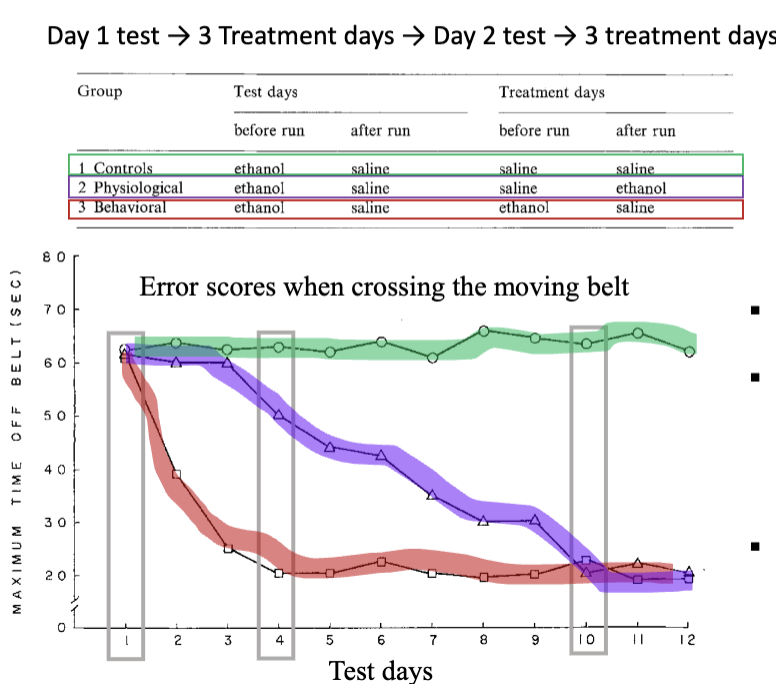
Tolerance to the impairing effects of repeated alcohol consumption developed more rapidly in rats that were trained “under the influence”.
Initially, ethanol disrupted performance in all rats. Tolerance to impairing effects developed first in the group that received ethanol before training (learned/behavioral tolerance; and PK+PD)
Tolerance developed later in rats that received ethanol after training (PK+PD tolerance only).
Give an example of behavioural tolerance with classical/pavlovian conditioning
Context-specific tolerance: Toelrance isn’t apparent or is reduced in a novel environment
Animal research example: Tolerance to morphine-induced hyperthermia emerges in a drug-associated environment
Human example: The eaviest and most experienced drinkers often demonstrate behavioral tolerance or lesser impairment to alcohol than lighter drinkers or very infrequent drinkers. (lesser impairment in - sensory perception, memory tasks, psychomotor tasks, and steadiness of gait or body sway)

Give an example of behavioural tolerance with state-dependent learning
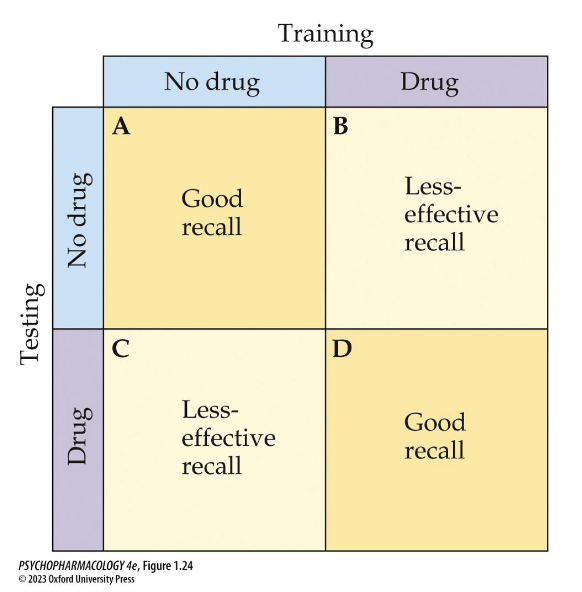
Four different conditions show the difficulties involved in transferring learning from one drug state to another.
Individuals trained without drug and tested without drug (A) show maximum performance that is not much different from the performance of those trained and tested under the influence of the drug (D).
However, subjects asked to perform in a state different from the training condition (B and C) showed recall that was less efficient
Describe behavioural sensitization
Enhancement of drug effects after repeated administration of the same dose that can persist over long periods of abstinence. Some drugs induce tolerance for some effects but sensitization for others.
What is synaptic transmission and what structures are involved
What is it: The biological process by which a neuron communicates with a target cell across a synapse. Chemical transmission involves the release of a NT from the pre-synaptic neuron and it binding to post-synaptic receptors. Electrical types involves transfer of electrical signals via gap junctions.
Structure: Axon terminal of the presynaptic neuron, small 2nm gap, the dendritic spine/soma of the post synaptic neuron, synapse surrounded by astrocytic processes, can occur with other neurons or at the neuromuscular junction or at the adrenal glands, only goes from presynaptic → postsynaptic but the postsynaptic cell can release molecues that reduce or enhance transmitter release from the terminal (inhibition vs facilitation)
Explain the life cycle of neurotransmitters from creation to clearance
Synthesis: Neurons build NTs from precursors, small-molecule transmitters are made directly in the axon terminal, larger peptide transmitters made in cell body then transported down the terminal.
Storage: Newly made NTs are packed into synaptic vesicles which cluster near the presynaptic membrane until signaled.
Release: AP travels down to the terminal the electrical shift opens voltage-gated calcium channels, letting calcium flow into the cell and trigger the vesicles to fuse with the cell membrane, spilling neurotransmitters into the synaptic cleft.
Binding: NTs lock on to receptors on the post synaptic cell which opens or closes channels to make new electrical/chemical signals in the next cell.
Clearance: Reuptake, degradation, diffusion, and recycling.
List the 5 main types of molecular targets of psychotropic drugs
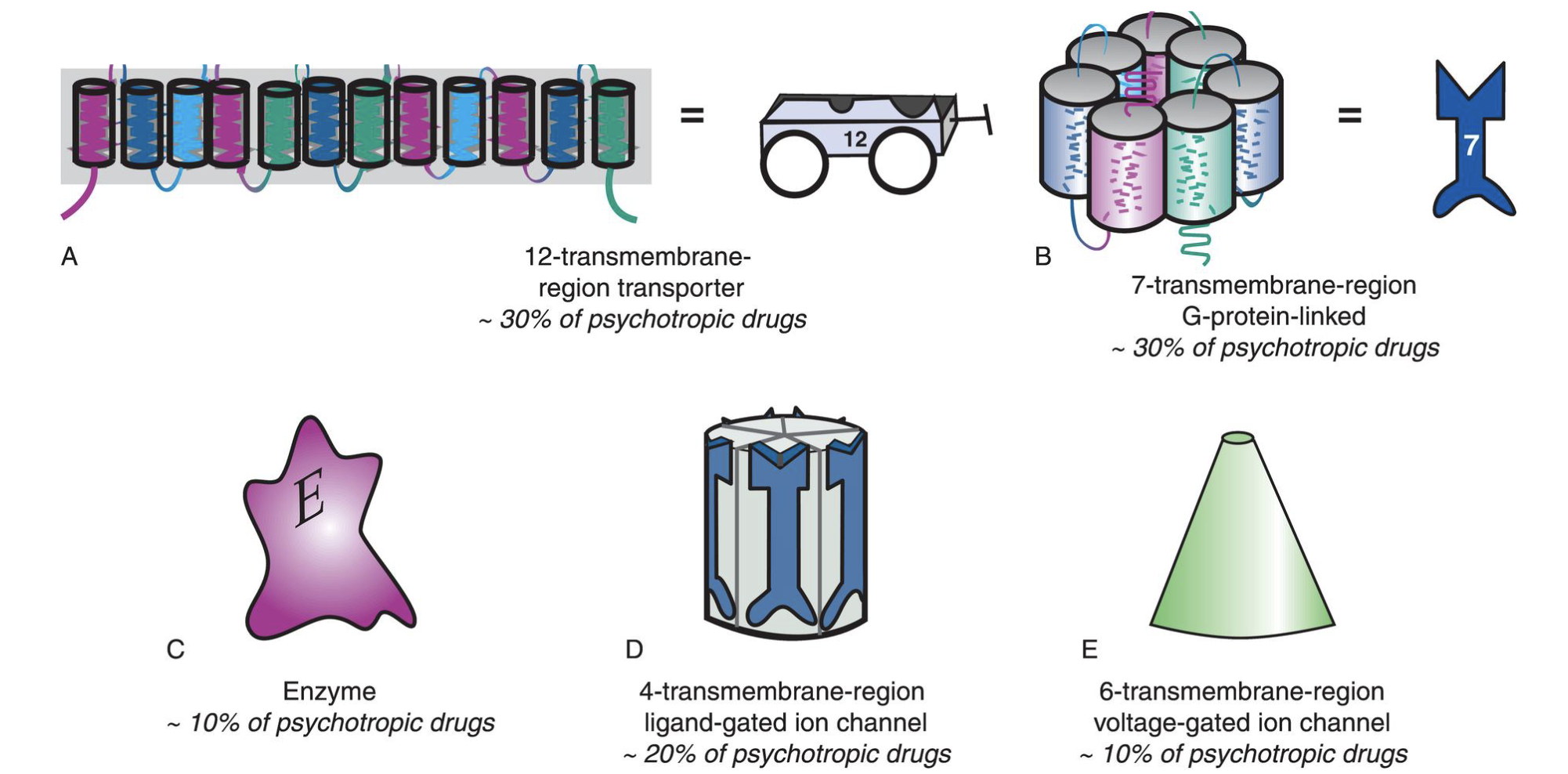
5 Types: GPCRs/metabotropic receptors, transporters, enzymes, voltage-gated ion channels, and ligand-gated ion channel/ionotropic receptors
12-transmembrane-region transporter: Around 30% of drugs, targets neurotransmitter transporters, span the membrane 12 times, vacuum-like proteins that pump used NTs in the original cell, drugs block such vacuums from working meaning there's more chemicals in the synapse like SSRIs, includes serotonin transporter (SERT), norepinephrine transporter (NET), and dopamine transporter (DAT).
7-transmembrane-region G-protein-linked: 30% of psychotropic drugs, targets GPCRs, bind to the NTs and activate internal cell signals. AKA metabotropic transporters.
Enzyme: 10% of psychotropic drugs, targets/blocks enzymes, catalytic proteins responsible for synthesizing/breaking down neurotransmitters like monoamine oxidase inhibitors/MAOIs which block the enzyme to let NT accumulate/remain active longer
4-transmembrane-region ligand-gated ion channel: Around 20% of them, AKA ionotropic receptors, targets ligand-gated ion channels.
6-transmembrane-region voltage-gated ion channel: 10% of psychotropic drugs, target voltage-gated ion channels, heavily utilized by mood hyperactivity.
Describe an ionotropic receptor
Structure: 4 or 5 subunits with an ion channel in the center
Function: When a transmitter bind to the receptors, the channel opens and allows ion flow = ligand-gated ion channel
Types: Na+, Na+/Ca++, Cl-
Result: Fast but short-lived effects

Describe a metabotropic receptor
Structure: One subunit with 7 transmembrane domains, the N-terminal is extracellular which is the ligand-binding pocket, and the C-terminal is intracellular which binds to G-proteins
Function: When a transmitter binds to a receptor, G-proteins are activated hence why they are called G-protein coupled receptors
Result: Slower, but effects last much longer
2 ways of action: Stimulate or inhibit effector enzymes that synthesize or break down second messenger molecules OR to inhibit or activate ion channels
Example: Muscarinic cholingeric receptors
Second messenger systems
First messenger: Neurotransmitter
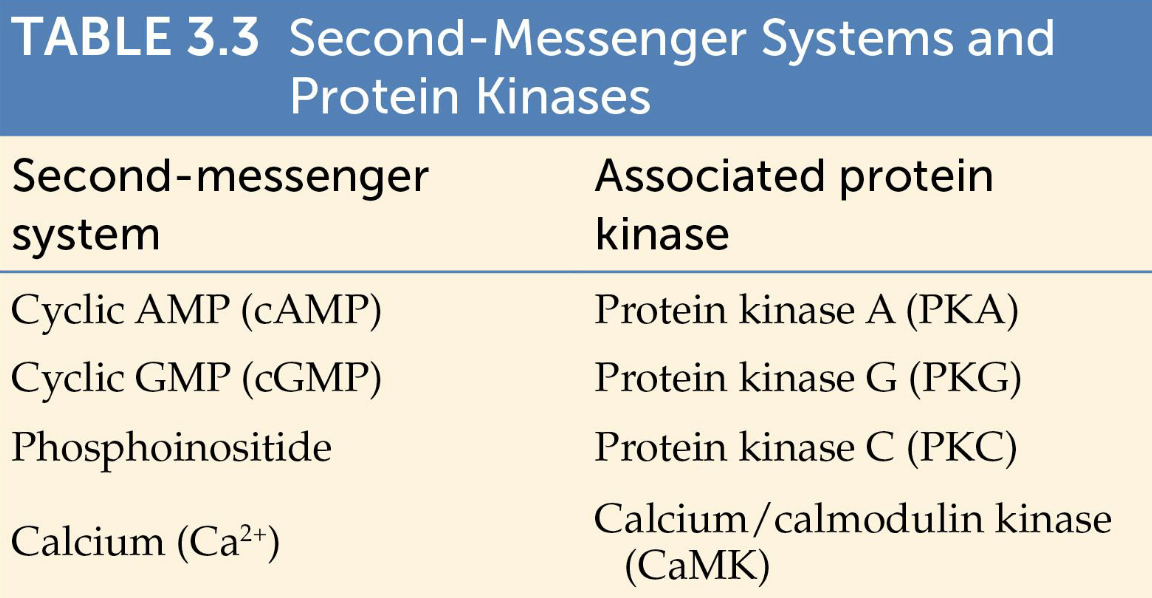
Second messenger: Molecules inside the cell that activate the protein kinases to cause phosphorylation of substrate proteins.
Advantage: Signal amplification

List significant second messengers
cAMP: cAMP (cyclic adenosine monophosphate) stimulates PKA/protein kinase A)
Phosphoinositide: A critical intracellular signaling pathway that converts extracellular signals—like hormones and neurotransmitters—into biological responses by cleaving membrane lipids into active messenger molecules involving DAG/diacylglycerol and IPs/inositol triphosphate
Ca++: Binds to calmodulin then activated calcium/calmoduline kinase aka CaMK
cGMP: Cyclic guanosine monophosphate is regulated by nitric oxide gas and stimulates protein kinase g/PKG
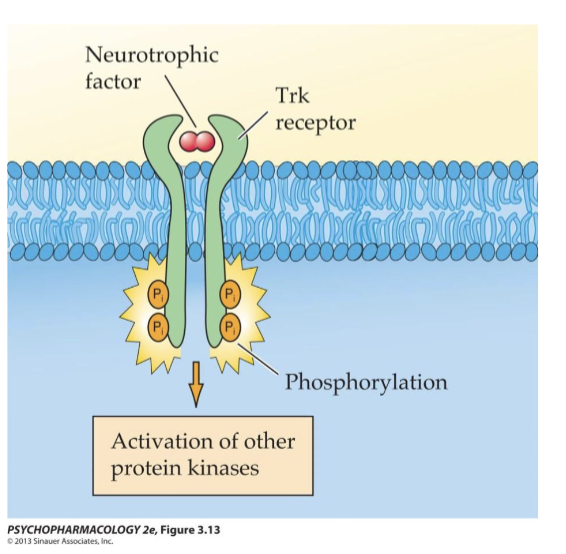
Explain tyrosine kinase receptors (trk)
Job: They mediate the action of neurotrophic factors like NGF (nerve growth factor), BDNF (brain-delivered neurotrophic factor), NT-3 and NT-4.
Function: Neurotrophic factors bring 2 trk receptors together and this results in reciprocal phosphorylation of tyrosine (tyr) residues and activation of other protein kinases
Explain how neurotransmitter transporters work
Reuptake: Reuptake pumps/plasma membrane transporters on presynaptic terminals or glial cells clear the synaptic cleft to terminate neurotransmission by using co-transport with the sodium gradient to drag NTs back into the cell like SERT/NET/DAT/GAT/EAATs.
Vesicular: Located on vesicle walls, they pack neurotransmitters into synaptic vesicles to protect them from metabolic degradation and prepare them for release. This uses counter-transport and the H+ proton to make an acidic/positively charged vesicle interior so the transporter swaps exiting proteins to pull NTs inside like VMAT2/VAChT or VGluT.
How do neurotransmitters get inside synaptic vesicles?
A vacuolar H⁺-ATPase (proton pump) in the vesicle membrane hydrolyzes ATP to forcefully pump hydrogen ions (H⁺) from the cytoplasm into the vesicle. This creates a highly acidic, positively charged interior. Specialized vesicular transporters utilize this gradient as an energy source. The transporter binds a cytoplasmic neurotransmitter and swaps it for internal protons. As protons flow "downhill" out into the cytoplasm, the released energy forces the neurotransmitter "uphill" into the vesicle.
Reversible vs irreversible enzyme inhibitors
Reversible: Mostly used for therapy. Uses weak non-covalent interactions so it can detach easily and the enzyme can recover its function.
Irreversible: Might have toxic effects. Permanently shut down enzymes by forming a strong covalent bond such that adding more substrate doesn't reverse the effect/you just need more enzymes to be made.
What makes a chemical a neurotransmitter?
Presynaptic cell contains the chemical plus a mechanism to make it.
Chemical is released from axon terminal when neuron is stimulated.
Receptors for the chemical are present on the postsynaptic cell.
A mechanism for inactivating the chemical should also be present.
Direct application of chemical or an agonist drug has same effect on post-synaptic cell as stimulating the presynaptic neuron.
Applying an antagonist drug that blocks the receptors inhibits both the chemical’s action and the effect of stimulating the presynaptic neuron
Elaborate on NTs, NPs, and NMs
NTs: Neurotransmitters! Most are made in axon terminals and can be quickly synthesized.
NPs: Neuropeptides are made from protein precursors that are shipped from the cell body to axon terminal in large vesicles which then an enzyme breaks down the precursors
NMs: Neuromodulators enhance, reduce, or prolong the action of a neurotransmitter but can also diffuse away from the site of release to influence other cells which is known as volume transmission vs synaptic transmission = wiring transmission.
Explain neurotransmission step by step and what regulates it
Wave of depolarization reaches the axon terminal
Voltage-gated Ca++ channels (concentrated in active zones of the terminal membrane) open → Ca++ rushes into the cell
High Ca++ levels trigger neurotransmitter release, vesicles with NT dock with the cell membrane in the active zone and are primed by release + a reserve pool of vesicles
Ca++ binds to the receptors and results in fusion of vesicle membranes with the cell membrane which releases the NT molecules into the synaptic cleft
Binding of NT to postsynaptic receptors
The vesicle membrane is recycled by endocytosis
Regulated by the rate of presynaptic neuron firing, the probability that vesicles will undergo exocytosis (10%-90%), and autoreceptors (receptors for the same transmitter released by the neuron; terminal autoreceptors are activated by the NT whilst heteroreceptors are receptors for other transmitters released at axoaxonal synapses). Transmitter can be broken down by enzymes or actively taken up by transporters.
Define what a drug is and describe the goal of pharmacology/psychopharmacology as a scientific discipline
Definition: A chemical substance that, when introduced to the body, will alter a living organism's structure or function. It is typically an exogenous substance that isn't a nutrient. Achieves effects by interacting w/ target molecules.
Goal: Map out a complete profile of a chemical substance's interaction with the body via pk and pd to translate it into rational therapeutic. Psychopharm focuses on the nervous system to examine brain-behaviour relationships with drugs.
Understand that drug effects can be studied at the molecular/cellular and systemic levels, with observed systemic effects possibly resulting from a local or remote drug interaction.
Molecular/Cellular: This focuses on the immediate, microscopic biochemical interaction. It answers the question: What happens when the drug molecule binds to its target? In psychopharmacology, this usually means a drug binding to a specific receptor, blocking a neurotransmitter transporter, opening an ion channel, or inhibiting an enzyme.
Systemic Level: This focuses on the macroscopic result across entire neural circuits, organ systems, or the individual's overall behavior. It answers the question: How does that cellular change alter the organism as a whole?
Local: A drug binds to the receptors directly inside the specific tissue or brain region where the clinical effect is being observed. The systemic effect could be reduced hand tremors in a Parkinson's patient, or for molecular it could be L-DOPA being converted to dopamine and directly stimulates dopamine receptors in the striatum.
Remote: When a drug binds to receptors in one part of the body/brain but triggers a chain reaction/domino effect which manifests as a change somewhere else. A drug that blocks receptors on blood vessels in the kidneys (local molecular action) might alter full-body fluid retention and cardiac output, changing systemic blood pressure across the whole organism (remote systemic effect).
Distinguish between specific and nonspecific drug effects, and describe the possible mechanism responsible for the ‘placebo’ effects. Note the significance of the placebo in controlled clinical studies.
Specific drug effects: Alterations in psychological/physiological function resulting directly from the physical/biochemical interactions of a drug w/ targeted site. Effects should be reproducible, predictable, and dependent on the drug's molecular structure and dosage.
Nonspecific drug effects: Changes no based on drug-receptor interaction's chemical activity but rather from the characteristics unique to the individual (genes, expectations, environment, ritual, etc.)
Placebo effect: An inert substance produces a measurable improvement psychologically or physiologically. Results from many factors like expectations/prefrontal cortex activation, expectation of relief causing the brain to release endorphins (in cases of placebo analgesia or dopamine/reward), and classical conditioning.
Differentiate pharmacokinetics from pharmacodynamics and explain how each contributes to drug effects and therapeutic outcomes.
PK: The movement of a drug inside the body over time and what happens to it. Focuses on drug concentration at the site of action, how fast it is absorbed, where it goes, how it is broken down/eliminated, etc. Looks at half life, bioavailability, clearance, and volume of distribution. Determines the speed of onset, intensity, and duration of the effect.
PD: Drug binds to a specific target molecules and triggers a signal transduction pathway by acting as either an agonist or antagonist or inverse/partial agonist. Determines the nature and quality of the drug effect and dictates if the molecule successfully triggers the intended therapeutic cascade or not.
Define drug bioavailability and describe how the five discussed pharmacokinetic processes influence the amount of drug available to reach target tissues in the body and brain.
Definition: The reaction or percentage of an administered drug dose that successfully reaches the systemic circulation in its unchanged, active form.
Routes of administration: Fast-acting routes like IV injection or inhalation deliver the drug to the bloodstream instantly by bypassing protective tissue barriers whilst oral administration has to pass through first-pass metabolism and takes quite a while which delays onset.
Absorption: Drugs have to cross lipid-rich membranes so lipophilic/non-ionized drugs pass through easier via passive diffusion so they have high bioavailability in the CNS.
Binding: Free molecules pass membranes. Drugs w/ high affinities for plasma/fat stores get "trapped" in inert depots which delays onset/reduces immediate bioavailability + prolongs drug effect.
Inactivation: For oral medications, the liver plays a devastating role known as the first-pass effect. Blood flowing from the GI tract travels directly through the portal vein to the liver before accessing the rest of the body. If the liver enzymes are highly efficient at degrading that specific chemical structure, a massive fraction of the active drug is destroyed on its very first pass, severely tanking its systemic and central bioavailability
Excretion: Final elimination in the kidneys, GI tract, lungs, or sweat. If excretion outpaces absorption/distribution then the concentration of the drug at the target tissue plummets rapidly.
Compare major routes of drug administration (e.g., oral, intravenous, intramuscular, subcutaneous, inhalation, transdermal) in terms of onset, advantages, disadvantages, and effects on bioavailability.
Oral (PO): Slow onset of 30-90 minutes, low to moderate bioavailability but is highly variable, safe, self-administered, unpredictable absorption, recallable via stomach pumping
IV: Immediate/in seconds, 100% bioavailable, instantaneous effect, prcise dose control, high risk of OD/toxicity effects
IM: Moderate 10-30 minute waiting time, high bioavailability, faster than oral, sustained release, painful
SC: Slow to moderate 15-60 minutes, high bioavailability, slow but steady absorption, can be self-administered, limited to small volumes
Inhalation: Rapidly taken in from seconds to minutes, high bioavailability, near-instant brain delivery which is good for asthma, risk of airway irritation, hard to regulate exact dose
TD: Extremely slow, moderate to high bioavailability, controlled drug delivery over days, convenient like birth control patches, bypasses 1st pass metabolism, only works for low-doses of lipid-soluble molecules
Explain first-pass metabolism and predict how it alters the effectiveness of orally administered drugs. What class of enzymes are important?
Definition: PK phenomenon in which the concentration of an orally administered drug is greatly reduced before it ever reaches the systemic circulation.
Effects: Drug dissolves in the GI tract + absorbed in mucusal walls, goes through the hepatic portal vein to the liver, the CYP450 family of enzymes neutralize foreign chemicals by chemically metabolizing them, whatever survives can circulate after being delivered by the hepatic vein.
Drug absorption - predict how lipid solubility, ionization state, environmental pH, and pKa influence drug movement across biological membranes.
Lipophilicity: Drugs that like fats easily dissolve into the core of the lipid bilayer.
Ion: Un-ionized molecules are lipophilic and diffuse freely across membranes.
Environmental: Most drugs are weak organic acids or weak bases. The local pH of the bodily environment (like the stomach or small intestine) combined with the drug's acid dissociation constant (pKa) dictates the exact ratio of ionized to un-ionized molecules via the Henderson-Hasselbalch equation.
Analyze how drug binding to plasma proteins, fat, or other tissue depots affects the magnitude, duration, and onset of drug action.
Plasma proteins: Albumin primarily binds to weak acids and neutral drugs to weak acids/neutral drugs but alpha1-acid glycoprotein binds to weak bases. This is a circulating reservoir.
Fat: Lipiphilic drugs accumulate in adipose tissue.
Depots: Certain drugs bind to specific cellular components, like tetracyclines binding to bone calcium or antimalarials binding to nucleic acids.
Impacts: Delays the onset, decreased the magnitude, and prolonged the duration of action.
Drug inactivation/metabolism/biotransformation - Interpret drug concentration-time curves to calculate or estimate drug half-life and predict dosing intervals required to maintain therapeutic drug levels.
Estimate half-life: Most drugs follow first-order kinetics, meaning a constant percentage of the drug is eliminated per unit of time. Find the starting concentration, then the point where it is cut in half, then calculate the time elapsed which gives you the half life.
Predicting intervals: To maintain safe and effective drug levels, doses must be spaced carefully according to the half-life and the width of the drug's therapeutic window. It is commonly at a drug's half-life but if the TI is narrow then the dosing intervals must be shorter than the halflife w/ smaller + more frequent doses to avoid high toxic peaks.
Steady state: A balance called steady state is when the drug accumulates in the body until the rate of administration equals the rate of elimination. Takes about 4-5 half-lives.
Describe key differences between first-order and zero-order kinetics and predict how changes in drug concentration influence rates of metabolism and elimination for each mechanism.
First-order kinetics: Constant percentage is drug per unit time, half-life is constant, exponential decay curve, most drugs are therapeutically dosed with this like penicilin.
Zero-order kinetics: Constant amount of drug is cleared per unit time, variable life-life, straight linear curve, such as when alcohol takes up all the receptors and takes a while to get out of the body.
Describe the major pathways of drug biotransformation, including Phase I and Phase II metabolism and the role of cytochrome P450 enzymes in psychopharmacology.
Phase 1: Introduces/unmasks a polar functional group like -OH on the drug molecule. This includes oxidation, reduction, and hydrolysis. The drug becomes slightly more polar, could be inactivated or turned into an active metabolite.
Phase 2: Conjugation in which it covalently attaches a large, highly polar endogenous molecule to the drug or its phase 1 metabolite. Includes glucuronidation, sulfation, acetylation, and gluthione conjugation. Results in a water-soluble thing that is pharmacologically inactive and is rapidly excreted.
CYP450 ‘zymes: The CYP450 superfamily (located primarily in liver endoplasmic reticulum) catalyzes the vast majority of Phase I oxidation reactions for psychiatric medications.
Evaluate how enzyme induction, enzyme inhibition, drug-drug interactions, and genetic variation can alter drug metabolism, affecting efficacy, and/or toxicity.
Enzyme inhibition: When a drug/substance binds to a metabolic enzyme, commonly CYP450, and decreases the activity. Usually rapid. Can lead to drug accumulation for standard active drugs or for prodrugs it prevents activation which means therapeutic failure.
Enzyme induction: When the drug triggers the cell to produce more metabolic enzymes. It is slow, but makes metabolism accelerate so parent drug concentrations decrease rapidly.
Drug-drug interactions: DDIs occur when two or more drugs compete for the same metabolic pathways, or when one drug actively induces or inhibits the metabolism of another.
Genetic variation: Inherited mutations or copy number variations in genes coding for metabolic enzymes create permanent baseline differences in how individuals process drugs.
Differentiate pharmacodynamics from pharmacokinetics and explain how drug concentration (bioavailability) and drug effects are related but distinct concepts.
PK: ADME (absorption, distribution, metabolism, excretion). Visualized with drug concentration-time curves. Bioavailability is a pk property as it is the fraction of an administered drug dose that reaches systemic circulation completely unchanged.
PD: Receptor binding, signal transduction, physiological response, potency, efficacy, affinity, therapeutic index, visualized with dose-response curves. Drug effects are pd outcomes since they represent the actual structural changes, etc.
Define receptors and ligands. Compare intracellular vs. cell-surface receptors and know at least one example of each kind.
Receptors: These are specialized protein molecules located either on the cell surface or inside the cell. They are structurally designed to receive and translate chemical signals.
Ligands: These are chemical signaling molecules (such as drugs, hormones, or neurotransmitters) that bind specifically to a receptor to trigger a biological response.
Cell-surface: Embedded in the plasma membrane, hydrophilic, binds to external ligands/triggers intracellular cascade via second messengers, rapid, GPCRs, ionotropic receptors, enzyme-linked receptors.
Intracellular: Located in the cytoplasm or nucleus, lipophilic, acts as a transcription factor to alter gene expression, slow due to protein synthesis, nuclear receptors, steroid receptors, glucocorticoid receptor.
Interpret dose-response curves and predict how changes in drug concentration influence receptor occupancy and biological responses. Distinguish among full agonists, partial agonists, antagonists, and inverse agonists based on their effects on receptor signaling and pharmacological responses.
Dose-Response: A dose-response curve (or concentration-response curve) is a graphic representation that maps the relationship between the amount of a drug administered (the X-axis, usually plotted on a logarithmic scale) and the resulting biological effect (the Y-axis). Receptor occupancy is the probability of a drug molecule colliding and binding with an empty receptor which increases with drug concentration. Emax is the horizontal plateau which represents the maximum biological response the drug can possibly achieve, regardless of how much more concentration you add to the system. EC50 is the concentration of the drug required to produce an effect that is exactly 50% of its own maximal response. On a graph, look at the 50% mark on the Y-axis and look down to the X-axis. A curve positioned further to the left represents a more potent drug because it requires a smaller concentration to achieve the same halfway effect.
Agonist spectrum: See the graph below.

Explain the mechanism by which inverse agonists reduce constitutive receptor activity and downstream signal transduction.
Receptor baseline: Receptors naturally pulse to trigger cell signals even if nothing is attached so they flip from inactive and active shapes to send signals (one does, one doesn't).
Inverse agonists: Prevent the inactive shape so when it binds it forces the receptor to stop flipping into the active shape which lowers the cell's baseline signal output lower than the resting state. This is different from a regular blocker (antagonist), which only stops other messengers from binding without changing the baseline signal.
Downstream: Cells produce fewer secondary messenger molecules so the physiological response drops below resting levels.
Define and interpret key pharmacodynamic measures that can be derived from a dose-response curve, including threshold dose, EC50/ED50, ED100/max response, and explain their experimental or clinical significance.
Threshold Dose: The absolute lowest dose that creates any noticeable biological effect. Giving a dose below this point results in zero visible changes because it fails to trigger enough cellular receptors. Used to find the safe zone where a drug doesnt show adverse effects!
EC50 or ED50 (Effective Concentration/Dose 50): The exact concentration or dose that produces a half-maximal (50 percent) response. This is the universal benchmark used to measure a drug's potency. The lower this number is, the more powerful the drug molecule is. Used to see safety margins.
ED100 or Max Response (Emax): The peak horizontal plateau on the graph where the drug hits its maximum possible ceiling. Once a drug reaches this ceiling, adding more of the chemical will not produce any extra therapeutic benefit. This measures a drug's overall efficacy. Important for addiction and behavioural components as well.
Differentiate affinity, potency, and efficacy and evaluate how each property influences drug action and therapeutic effectiveness. Be able to compare and sort drugs based on their high-low affinity (Kd), or potency.
Affinity: The chemical attraction or bonding strength between a drug molecule and its receptor target. It describes how tightly the drug "clings" to the receptor pocket. High affinity = locking onto receptors tightly and staying longer.
Potency: The amount or dose of a drug required to produce a specific level of effect (usually measured at the 50 percent maximum response mark, known as the ED50 or EC50). Allows for a smaller milligram dose which can reduce off-target side effects if it is potent enough especially in the digestive tract.
Efficacy: The drug’s intrinsic ability to physically activate the receptor once it is bound, initiating a downstream biological response. This is measured by the peak horizontal ceiling (Emax) on a dose-response curve. Efficacy is the most clinically vital property for therapeutic success. It dictates the maximum relief a patient can possibly achieve.
Evaluate the clinical implications of dose-response relationships, including therapeutic index (TI), and the balance between therapeutic and toxic effects.
TI: Calculates the elative safety of a drug. It acts as a safety cushion indicator by comparing the dose required to trigger toxic effects against the dose required to trigger therapeutic effects. Derived with TD50/ED50 (toxic dose over effective). In animal models, LD50 (lethal dose) might be used instead. The larger the resulting TI number, the safer the drug is. A large number means the toxic dose is far away from the effective dose.
Windows: Wide windows have a safe distance between the effective and toxic dose. Narrow window means the effective dose curve and the toxic dose curve sit dangerously close together on the graph. Super high toxicity risk/accidental overdose risk.
Compare the effects of competitive and noncompetitive antagonists on dose-response curves, including their differential effects on potency and efficacy.
Competitive: Competitive antagonists bind to the active site and can be overcome by high concentrations of the agonist, resulting in decreased potency and a parallel shift of the dose-response curve to the right without changing efficacy.
Noncompetitive: Noncompetitive antagonists bind to allosteric sites or irreversibly to the active site and cannot be overcome by adding more agonist, which decreases maximum efficacy and flattens the curve downward.
Understand the difference between the orthosteric and allosteric ligand binding sites and how they explain the mechanisms of action of positive and negative allosteric modulators (PAMs and NAMs) on receptor activation (by a full agonist).
Orthosteric Site: This is the primary, active docking pocket. It is the exact site recognized by the brain's natural neurotransmitters (endogenous ligands) and full agonists.
Allosteric Site: This is a separate, physically distinct "side-pocket" located elsewhere on the receptor protein structure. It does not bind the primary neurotransmitter. Instead, it binds modulator molecules that alter how the main orthosteric site behaves.
PAMs: Twists the receptors architecture when it binds to the side-pocket which makes it more stable for a full agonist/amplifies its effects.
NAMs: Induces a conformational shift that warps the main orthosteric site to make it less optimal for binding which dampens the agonist's biological output.
Evaluate the consequences of systemic agonist and antagonist drug administration, and how their effects differ from local agonist/antagonist action
Systemic: The drug is distributed globally throughout the entire body and brain via the circulatory system, interacting with all available target receptors simultaneously. Because it lacks anatomical selectivity, a systemic drug causes widespread effects. Systemic agonists or antagonists hit "on-target" therapeutic sites while simultaneously hitting "off-target" receptors in other circuits or organs, creating unavoidable side effects.
Local: The drug is microinjected directly into a discrete, highly specific brain region or nucleus (using a surgically implanted cannula in laboratory models). The drug's physical presence is restricted to that exact coordinate, leaving the rest of the brain and body unaffected. Any observed behavioral or systemic changes are downstream, remote effects caused by altering that single node in the neural network.
Differentiate between drug tolerance and drug sensitization, including how repeated drug exposure can lead to decreased vs. increased responsiveness to a drug's effects. What mechanisms are involved?
Tolerance: A state where repeated drug exposure leads to a decreased responsiveness to the exact same dose of a drug over time. PK mechanisms include the liver making more degrading enzymes, PD mechanisms include the brain fighting overstimulation by shrinking the receptor count which is downregulation. Behaviourally, it is seen in chronic opiod/alcohol usage.
Sensitization: A state where repeated drug exposure leads to an increased responsiveness to the exact same dose of a drug over time (also known as reverse tolerance). Intermittent drug hits cause structural modifications in the brain's reward pathways, often resulting in altered dopamine release or receptor changes in the nucleus accumbens. Environmental cues and rituals become deeply paired with the drug's effects, causing the brain to pre-activate its circuitry and hyper-respond to the substance.
Explain how changes produced by chronic drug exposure can be interpreted through compensatory physiological (mal)adaptations aimed at maintaining homeostasis.
Disruption of Equilibrium: The brain operates on the principle of homeostasis, constantly working to maintain a stable internal balance. An acute drug hit severely disrupts this baseline by over-activating or suppressing specific neural circuits.
Compensatory Adaptations: To defend against this chemical disruption, the nervous system deploys counter-regulatory mechanisms over time to neutralize the drug's presence and drag the system back to its original baseline.
Receptor Downregulation: In response to chronic overstimulation by an agonist, neurons physically remove receptors from the cell membrane (endocytosis) or decouple them from their G-proteins to dampen downstream signaling.
Receptor Upregulation: In contrast, chronic blockade by an antagonist deprives the cell of necessary signals, prompting the neuron to manufacture and insert extra receptors into the membrane to increase sensitivity.
The Transition to Maladaptation: While these modifications successfully restore balance while the drug is present (causing tolerance), they turn into severe biological maladaptations the moment the drug is removed.
The Mechanism of Withdrawal: When the drug leaves the body, the brain's internal compensatory pushback is left running completely unopposed, crashing the circuit far below normal baseline limits and triggering physical withdrawal symptoms.
Understand the key characteristics of tolerance, including different mechanisms (metabolic, pharmacodynamic, and behavioral) and whether all drugs produce all types of tolerance.
Metabolic (Pharmacokinetic) Tolerance: This occurs when repeated drug exposure causes the liver to increase its production of metabolic enzymes, such as the Cytochrome P450 family. As a result, the body breaks down and clears the drug much faster, reducing the total amount of active compound that successfully reaches brain tissue.
Pharmacodynamic (Cellular) Tolerance: This occurs when the brain alters its own internal chemistry to protect itself from excessive drug signaling. Neurons achieve this by physically reducing their receptor counts (downregulation), decreasing receptor binding affinity, or decoupling receptors from their downstream G-protein and second-messenger cascades.
Behavioral (Conditioned) Tolerance: This occurs when environmental cues, context, or learned behaviors lessen a drug's overall impact. The brain anticipates the drug hit based on the surrounding environment (such as a specific room or ritual) and initiates a conditioned, opposite physiological response to counteract the drug before it is even consumed.
Describe how metabolic tolerance develops through drug-induced changes in enzyme activity and predict how these changes alter drug concentrations and behavioral effects.
Development: When certain drugs enter the liver, they act as direct chemical signals that turn on specific genes in liver cells. This process triggers the accelerated production of metabolic enzymes, most notably the Cytochrome P450 (CYP450) family. The liver essentially builds extra chemical factories to handle the toxic load. With repeated drug exposure, the concentration of these clearing enzymes spikes significantly, drastically increasing the liver's overall metabolic capacity. Once these liver enzymes are turned up, they will aggressively break down any drug that fits into their active pockets, not just the original drug that triggered the upregulation.
[]s: Because there is a massive excess of metabolic enzymes waiting in the liver, drug molecules are intercepted and chemically altered much faster than normal. The total concentration of active, unchanged drug floating in the bloodstream drops rapidly. The amount of active drug that successfully survives the liver checkpoint and crosses the blood-brain barrier to reach the brain is heavily slashed.
Behaviour: Because fewer drug molecules are reaching brain receptors, the observed behavioral, psychological, or therapeutic effects are severely dampened. The behavioral high or therapeutic window cuts off much sooner because the liver is clearing the substance at an accelerated rate. To overcome this liver bottleneck and achieve the original behavioral or therapeutic effect, the individual must continuously ingest larger doses of the substance.
Analyze how receptor regulation (e.g., down- or up-) contributes to pharmacodynamic tolerance during chronic agonist or antagonist drug treatment.
Downregulation: An agonist continuously hyper-activates postsynaptic receptors, sending an overwhelming flood of signals down the neural circuit. To protect itself from overstimulation, the neuron executes receptor downregulation by swallowing active receptors back inside the cell via endocytosis to be stored or destroyed. Because the physical number of available receptor targets on the membrane is depleted, the same dose has fewer places to bind, crashing downstream signaling and requiring a larger dose to achieve the original effect.
Upregulation: An antagonist continuously blocks active sites, depriving the neuron of its natural, baseline neurotransmitter signals. The neuron perceives this silence as an emergency and initiates receptor upregulation, manufacturing new receptor proteins and inserting them directly into the cell membrane to maximize sensitivity. The membrane becomes heavily crowded with extra receptors to counteract the blockade. This creates tolerance to the antagonist, but if the drug is stopped, natural neurotransmitters will flood the over-sensitized membrane, causing a hyperactive rebound.
Explain how learning processes contribute to behavioral tolerance, including the roles of classical conditioning, operant conditioning, and state-dependent learning (interpret findings from included animal and human studies and also assigned reading – heroin OD case study).
Classical: Environmental contexts and rituals act as a conditioned stimulus that predicts a drug's physiological impact, prompting the brain to proactively launch homeostatic countermeasures before the drug enters the body. This is illustrated by landmark heroin overdose data showing that individuals who survive a high dose in their usual drug-taking environment can instantly suffer a fatal overdose when given the exact same amount in a novel setting. In these unfamiliar environments, the missing environmental cues fail to trigger the brain's protective, conditioned compensatory response, causing chronic pharmacological tolerance to suddenly fail.
Operant: Operant behavioral tolerance develops when an organism actively learns to modify and correct its behavioral impairments while under the influence of a drug to successfully secure a reward or avoid a penalty. This is proven by animal studies showing that rats trained to perform a motor task while actively intoxicated with alcohol quickly learn to overcome their coordination impairments to win food rewards, whereas control animals given the exact same amount of alcohol after their daily training sessions display zero tolerance. This confirms the contingency rule: simply exposing the brain to a chemical is not enough, as the behavior must be actively performed while intoxicated for operant tolerance to manifest.
State-dependent: State-dependent learning occurs because information, memories, and physical tasks learned while under the influence of a psychoactive drug become chemically tied to that internal physiological environment, meaning they are recalled and executed significantly better when the individual is returned to that exact drugged state. This contributes to a form of behavioral tolerance because experienced users repeatedly practice navigating their daily lives while intoxicated, allowing them to cognitively adapt and effectively mask their true level of chemical and behavioral impairment as long as they remain within that specific internal drug state.
Interpret behavioral, subjective, and neurochemical evidence of drug sensitization and discuss the significance of sensitized responses to repeated stimulant exposure in both humans and animal models
Behavioral Evidence: Repeated, intermittent exposure to psychostimulants causes a clear escalation in motor output over time. In animal models, the exact same dose of a drug triggers progressively higher levels of locomotor activity, rearing, and repetitive, stereotyped behaviors like intense sniffing or head-bobbing. In humans, this behavioral sensitization manifests as a progressive increase in hyperactive movements, focused stereotypies, and side effects like jaw-clenching or pacing.
Subjective Evidence: In human stimulant users, subjective sensitization often develops toward the psychological side effects and cravings rather than the primary euphoric high. Over time, repeated drug exposure causes an escalation in subjective feelings of intense anxiety, paranoia, panic, and drug-induced psychosis. Furthermore, the subjective psychological "craving" or wanting for the drug becomes powerfully sensitized, amplifying the intense urge to seek out the substance even when the actual pleasure undergoes tolerance.
Neurochemical Evidence: At the cellular level, repeated stimulant hits permanently alter neurotransmitter release machinery within the brain's reward architecture. When a sensitized organism is given a subsequent challenge dose of the drug, the mesolimbic pathway releases a significantly larger flood of synaptic dopamine into the nucleus accumbens compared to the amount released during the very first exposure. This hyper-reactivity is accompanied by cellular adaptations, including altered sensitivity of dopamine and glutamate receptors and structural changes in dendritic spines.
Describe individual steps in synaptic transmission and explain how psychotropic drugs alter neurotransmission by acting on specific molecular targets within the synapse.
Action Potential: An electrical impulse (action potential) travels down the axon of the presynaptic neuron until it reaches the terminal membrane.
Calcium Influx: The arrival of this voltage change forces open voltage-gated calcium channels. Because calcium is heavily concentrated outside the cell, it rapidly floods into the presynaptic terminal. Vesicle Fusion and
Exocytosis: The sudden surge of internal calcium acts as a physical chemical trigger. It binds to sensor proteins, prompting synaptic vesicles (which are filled with neurotransmitters via vesicular transporters) to migrate to the presynaptic wall, fuse with the membrane, and spill their chemical cargo into the synaptic cleft (exocytosis).
Receptor Activation: The released neurotransmitters diffuse across the fluid-filled gap and dock onto specialized neurotransmitter receptors on the postsynaptic membrane.
Signal Termination: To prevent the signal from firing endlessly, the neurotransmitter must be quickly removed. This is achieved via two primary routes - reuptake and enzymatic degradation.
Identify and describe the major molecular targets of psychotropic drugs, including neurotransmitter receptors, transporters, and enzymes.
Ionotropic receptors: Drugs can act as positive allosteric modulators (PAMs) to boost the channel's natural activity. Benzodiazepines can bind to GABA receptors, increasing chloride influx to sedate overactive circuits. Ketamine blocks ionotropic NMDA glutamate receptors to produce fast-acting antidepressant effects.
Metabotropic: Drugs can act as full agonists or antagonists or partial or inverse agonists. Atypical antipsychotics can act as antagonists on D2 receptors to stop hyperactive dopamine signaling.
Reuptake pumps: Blocking these transporters leaves the neurotransmitter stuck in the synapse longer, forcing it to continuously fire across neighboring receptors. Examples include SSRIs which block SERT and psychostimulants that block DAT and NET to increase focus/alertness.
Vesicular transporters: Inhibiting these pumps depletes the neuron's chemical stores, lowering the amount of transmitter available for release. An example is a VMAT2 inhibitor to block Vesicular Monoamine Transporter 2 to reduce excessive dopamine release, treating hyperkinetic movement disorders like tardive dyskinesia.
Enzyme: Inhibiting a degrading enzyme prevents it from destroying a neurotransmitter. This causes the transmitter to accumulate inside the cell or synapse, magnifying its signaling capacity. For example, MAOIs block the MAO enzyme, stopping it from destroying serotonin, norepinephrine, and dopamine inside the neuron, which treats severe depression OR AChE inhibitors which block the enzyme that degrades acetylcholine in the synaptic cleft, preserving acetylcholine levels to temporarily boost memory and cognition in Alzheimer's disease.
Differentiate between ionotropic and metabotropic receptors with respect to their structure, signaling mechanisms, and functional time course.
Ionotropic: 4-5 subunits making a central pore, direct NT binding opens a built-in channel, extremely rapid and precise, terminates quickly, examples include NMDA and nicotinic ach receptors.
Metabotropic: Continuous protein chain, 7 tm domains, indirect NT binding triggers a G-protein cascade, slower and prolonged, long-term plasticity, examples are muscarinic ach and most serotonin receptors.
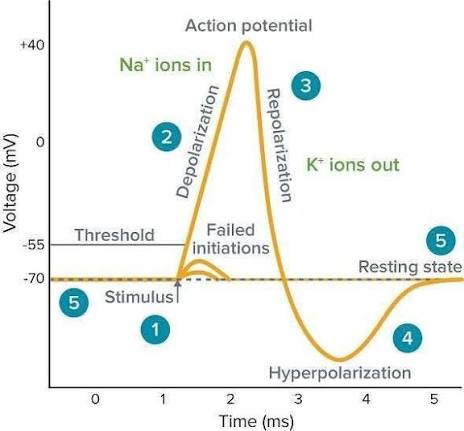
Predict the effects of receptor activation on neuronal excitability by relating ion channel permeability (e.g., K+, Na+, Ca++, Cl-) to excitation or inhibition.
Sodium: Electrical charge is +, naturally wants to enter the cell, depolarizes it (moves it closer to 0mV), excitation (triggers an AP), examples are nicotingic ach and ampa/glutamate receptors.
Calcium: Electrical charge is ++, enters the cell naturally, depolarization and second messenger activation, excitation + structural signaling, example receptor is NMDA for glutamate.
Chloride: Negatively charged (Cl-), enters the cell, hyperpolarizes by moving it further from 0mV, inhibition (suppresses action potential), example is GABA.
Potassium: One positive charge, exits the cell, hyperpolarizes since it leaves the inside more negative, inhibition, examples are GABA via GPCR.
Describe the role of G protein-coupled receptors (GPCRs) in intracellular signaling, including the functions of Gs, Gi/o, and Gq pathways.
Core mechanism: When no neurotransmitter is bound, the GPCR is physically attached on the inside to a three-part complex with alpha, beta, and gamma subunits. When a NT docks on the exterior of the receptor it shifts shape. Loading up on GTP is like a chemical trigger which is then broken down.
Gs: Stimulatory that acts as a primary cellular accelerator. Once it turns on adenylyl cyclase it rapidly converts ATP into cAMP which activates PKA once levels rise. PKA phosphorylates ion channels to increase cellular excitability and travels to the nucleus to activate the transcription factor CREB, promoting gene expression. Also important are dopamine D1/D5 receptors, serotonin receptor 5-HT4/6/7
Gi/o: Inhibitory/acts like a cellular brake. Inhibits adenylyl cyclase. The alpha subunit shuts down adenylyl cyclase to crush cAMP production/deactivate PKA. Beta subunits block voltage-gated calcium channels (prevents vesicle release). The cell becomes hyperpolarized (highly negative inside), making it incredibly difficult for the neuron to fire an action potential. This is the primary mechanism for presynaptic autoreceptors that shut down further neurotransmitter release.
Gq: Structural modifier and calcium mobilizer. Effector enzyme is phospholipase c being activated and it slices a membrane phospholipid into two distinct second messengers IP3 (forces opens gates to allow Ca++ to flood in to the cell) and DAG (turns on PKC with the freed calcium)
Compare the major second-messenger systems (cAMP, DAG/IP₃, Ca²⁺/calmodulin, and cGMP) and explain how they amplify cellular responses to neurotransmitters.
cAMP: Adenylyl Cyclase is the primary effector enzyme, the key second messenger molecule is cyclic Adenosine Monophosphate (cAMP), the primary protein kinase that is activated is PKA (Protein Kinase A), the downstream effects are that is opens/closes ion channels and activates CREB transcription factor in the nucleus.
DAG/IP3: Primarily effects phospholipase C via DAG and IP3. The primary downstream target is protein kinase c and calcium release. Smooth muscle contraction, activates metabolic pathways, modulates excitability.
Ca++/Calmodulin: The primary enzyme/effector is a voltage or ligand channel or IP3 receptor, the secondary messengers are Ca++ ions, the downstream targets are CAMKII, and the effects include synaptic plasticity + NT release + enzyme activation.
cGMP: Guanylyl cyclase is the primary effector which generates cGMP as a secondary messenger. The primary downstream target is PKG. Effects include visual phototransduction, smooth muscle relaxation via nitric oxide (NO)
Explain the function of neurotrophic factor receptors (Trk receptors) and discuss their relevance to neuroplasticity and antidepressant drug actions.
Structure/function: Trk receptors are a class of receptor tyrosine kinases. The most heavily studied receptor in psychopharmacology is TrkB, which serves as the primary docking station for Brain-Derived Neurotrophic Factor (BDNF). When BDNF binds to the extracellular portion of a TrkB receptor, it forces two neighboring TrkB proteins to pair up (dimerize). This physical coupling triggers autophosphorylation, where the receptors cross-phosphorylate each other's internal tyrosine tails.
Relevance to neuroplasticity: Neuroplasticity is the brain's ability to structurally adapt, rewire circuits, grow new connections (synaptogenesis), and generate new neurons (neurogenesis) in response to learning, environment, or injury. TrkB activation is the primary engine of neuroplasticity. When BDNF stimulates TrkB receptors, the resulting intracellular cascades travel all the way to the cell nucleus. There, they activate a vital transcription factor called CREB which triggers the expression that manufacture new synaptic machinery.
Relevance to antidepressant drug actions: Whether a patient takes an SSRI, an SNRI, or undergoes electroconvulsive therapy (ECT), the ultimate downstream destination is the upregulation of the BDNF-TrkB pathway. Long-term AD treatment keeps MA levels elevated which leads to upregulation and CREB in the nucelus which prompts the cell to synthesize/secrete a lot of BDNF.
Distinguish between plasma membrane neurotransmitter transporters and vesicular transporters, including the mechanisms that drive neurotransmitter uptake and storage.
Plasma membrane: The outer cell membrane of presynaptic neurons or neighboring glial cells (astrocytes). Uptake is done to terminate neurotransmission by vacuuming transmitters out of the synaptic cleft. The Na+/K+ pump is a secondary active co-transport driven by Na+ gradients. Moves transmitters from outside the cell to inside the cell cytoplasm.
Vesicular: The internal membrane of synaptic vesicles resting inside the cell cytoplasm. They are stored by concentrating and protecting transmitters inside vesicles, preparing them for exocytosis. The vesicular H-ATPase proton pump counter transports driven by proton gradients. Moves transmitters from the cell cytoplasm into the interior of the vesicle cavity.
State some examples of neurotransmitter transporters
Plasma membrane transporters: Reuptake pumps like monoamine transporters (serotonin, dopamine, norepinephrine). Proteins sit on the outer membrane of the presynaptic neuron or neighboring glial cells and use na+ gradients as the driving energy source to pull neurotransmitters back into the cell. There are also amino acid transporters (gaba, excitatory amino acid).
Vesicular transporters: Transporters sit on the internal membrane of synaptic vesicles inside the cytoplasm. Instead of sodium, they are powered by proton gradients generated by vesicular ATP proton pumps which exchange H+ out of the vesicle to force NTs inside.
Evaluate how enzyme inhibition can be used therapeutically or produce toxicity, using acetylcholinesterase inhibitors as an example.
Therapeutic use: For Alzheimer's disease, there is a loss of cholinergic neuron loss in the basal forebrain which drops ach (cripples memory, cognitions, learning). Treatments use reversible ache inhibitors to temporarily bind the active site of the ache enzyme to block it from breaking down ach.
Poisoning/toxicity: When the body cannot clear the drug and has to synthesize entirely new batches of the enzyme to recover and no functioning ache, ach is never broken down and thus builds up to catatrophic levels, which floods muscarinic and nictoininc receptors and the toxicity hits the NMJ.
How do routes of administration impact pharmacokinetic trajectories in THC
Inhalation: Bypasses the GI tract/liver and goes to pulmonary circulation in seconds. Bioavailability is low but due to avoiding immediate metabolism, parent compounds like delta-9-THC rapidly spike.
Oral ingestion: Edibles or oils are subject to first-pass metabolism so bioavailability drops even lower. THC is converted by liver enzymes to a highly active metabolite called 11-hydroxy-THC.
How do routes of administration in meth impact pharmacokinetic availability and trajectories
IV: Produces a nearly instantaneous high with a high Cmax to deliver a sudden bolus of the drug directly to the brain which maximizes the rate of transporter reversal.
Snorting: Slower absorption profiles across the mucosal/gastric membranes which means lower peak plasma concentrations/reduces behavioural “rush”.
How did Gerevich’s reading about meth relate to pavlovian conditioning?
The user prepares their typical dose, which they are usually able to handle due to compensatory tolerance. But because the environment is new there are no conditioned stimuli present, so the brain fails to recognize that a drug influx is imminent and doesn’t deploy the preemptive conditioned response. The user injects the drug. The Unconditioned Stimulus (US) hits a completely unprepared physiological system. The resulting hyperthermia and cardiovascular strain hit at maximum, lethal velocity, causing an overdose on a dose the user took safely the day before.
Define steady state
Steady state in pharmacokinetics is the balance point where the rate of a drug entering the body equals the rate of the drug leaving the body. Takes around 4-5 half lives to get there. High and low points repeat evenly with each new dose. The drug works best only after reaching this stable level. Regular, smaller doses keep the drug at this steady level. Doctors use a large first dose to reach steady state instantly when a drug has a long half-life.
Explain synaptic transmission step by step
Step 1: An electrical action potential arrives at the axon terminal of the sending neuron.
Step 2: Voltage-gated calcium channels open, allowing calcium ions to rush into the cell.
Step 3: Calcium triggers synaptic vesicles to fuse with the membrane and release neurotransmitters.
Step 4: Neurotransmitter molecules float across the narrow gap called the synaptic cleft.
Step 5: Neurotransmitters bind to specific receptors on the receiving cell's membrane.
Step 6: Ion channels open, changing the receiving cell's electrical charge to excite or inhibit it.
Step 7: Enzymes break down the remaining neurotransmitters or the sending neuron pumps them back inside for recycling
What is receptor downregulation, what is it caused by, and what does it cause to happen?
What it is: Chronic use of agonist that results in continued receptor stimulation leading to the down regulation of receptors. This is a decrease in the total number of receptors on a target cell/tissue.
It is caused by: Internalization of receptors, subsequent degradation of receptors, decreased synthesis of receptors.
It causes: Receptor desensitization and reduced response and tolerance.
What is upregulation, and what is it caused by?
Definition: Upregulation is the chronic use of an antagonist or a prolonged deprivation of an agonist which may lead to the proliferation or up regulation of receptors.
It causes: An increase in the number of receptors, unmasking of receptors/signal amplification, externalization of receptors, increased sensitivity of receptors.
Orthostatic vs Allosteric modulators
Orthosteric modulators bind directly to the active, primary site of a receptor (competing with the body's natural molecules), while allosteric modulators bind to a separate, alternative site to indirectly fine-tune the receptor's activity (PAMs vs NAMs).
PK vs PD in simple words
PK (pharmacokinetics) is what the body does to a drug, while PD (pharmacodynamics) is what the drug does to the body (like how kinetics is a type of motion and the body moves a drug around while dynamics refer to relationships and the drug and body have a relationship that has certain effects)
What is the sequence of steps for the activation of a metabotropic receptor?
Activation of G protein → change in activity of effector enzyme → change in second messenger levels → activation of protein kinase