UE Practical
 Call Kai
 Learn
Learn Practice Test
 Spaced Repetition
 Match
Match Flashcards
 Knowt Play
1/104

Earn XP
Description and Tags
UE bones & bony landmarks in the shoulder complex, elbow, wrist, hand + O/I/A/N for muscles in the shoulder complex, elbow, wrist, hand (including actions of intrinsic/extrinsic muscles of the hand + concentric/eccentric/isometric exercises isolating a muscle in the shoulder complex, elbow, wrist, hand + arthrokinematics of a joint in the shoulder complex, elbow, wrist, hand (bones in the joint, which bone is concave/convex, slide/glide based on movement) + kinetic chain + pathologies
Name | Mastery | Learn | Test | Matching | Spaced | Call with Kai | Chat |
|---|
No analytics yet
Send a link to your students to track their progress
105 Terms
SHOULDER COMPLEX — upper trapezius
SYNDAVER

O/I/A/N: upper trapezius
O: superior nuchal line, external occipital protuberance, ligamentum nuchae
I: lateral 1/3 of the clavicle + acromion of scapula
A: scapular elevation + scapular upward rotation
N: accessory nerve

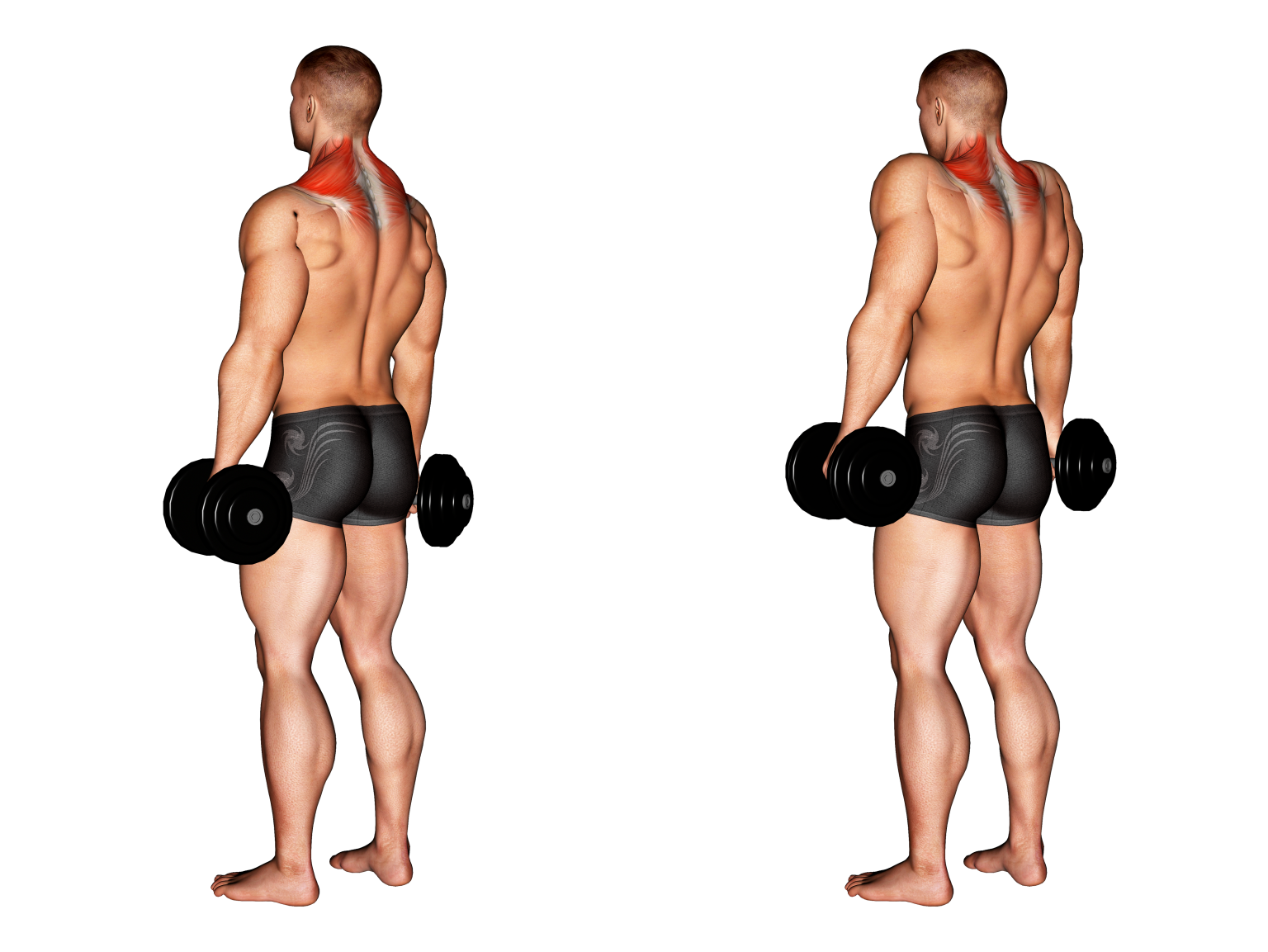
Concentric, Eccentric, Isometric action — upper trapezius
concentric = shoulder shrugs w/ dumbbells
eccentric = slowly lowering shoulders from top of shrug w/ DBs
isometric = holding the shrug at the midrange point w/ DBs
SHOULDER COMPLEX — middle trapezius
SYNDAVER

O/I/A/N: middle trapezius
O: spinous process of thoracic vertebrae T1-T4
I: acromion & superior surface of spine of scapula
A: scapular retraction
N: accessory nerve

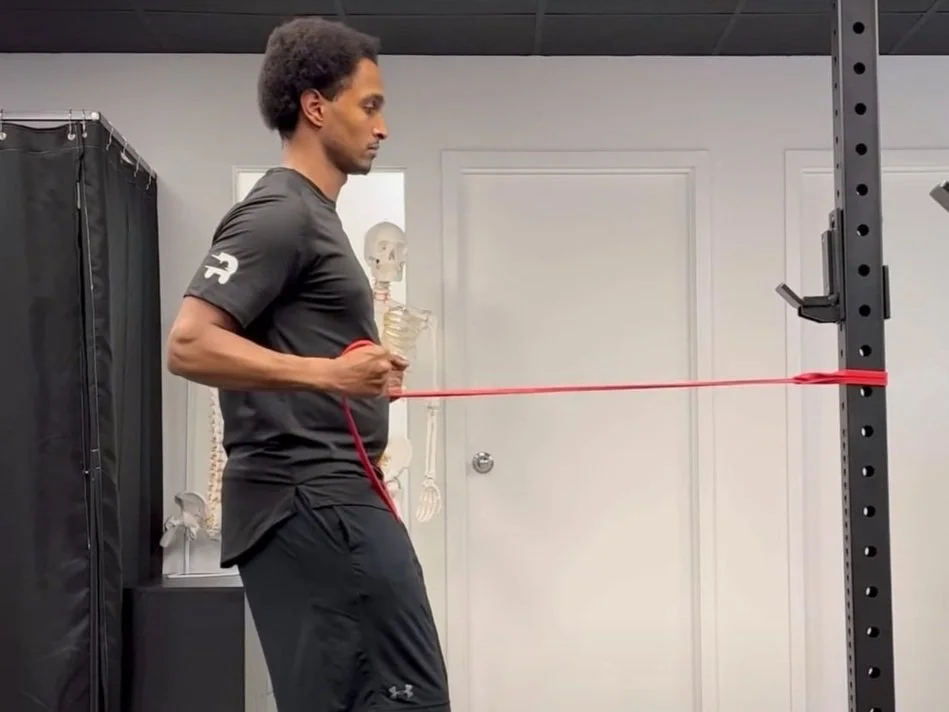
Concentric, Eccentric, Isometric action — middle trapezius
concentric = TB rows
eccentric = slowly lowering a DB to starting position after DB row
isometric = prone T hold
SHOULDER COMPLEX — lower trapezius
SYNDAVER

O/I/A/N: lower trapezius
O: spinous process of thoracic vertebrae T4-T12
I: medial border of scapula
A: scapular depression + scapular upward rotation
N: accessory nerve

Concentric, Eccentric, Isometric action — lower trapezius
concentric = Y raise (thumb up) w/ TB (TB down)
eccentric = slowly lowering TB Y raise
isometric = holding TB Y position halfway

O/I/N: trapezius (as a whole)
O: external occipital protuberance, superior nuchal line, ligaments nuchae, spinous processes of C7-T-12
I: lateral 1/3 of the clavicle, acromion, & spine of the scapula
N: accessory nerve

SHOULDER COMPLEX — levator scapulae
SYNDAVER

O/I/A/N: levator scapulae
O: transverse processes of cervical vertebrae C1-C4
I: medial border of scapular (aka between superior angle & superior portion of spine of scapula)
A: extends head/neck, rotates head, lateral flexion
N: cervical nerve

Concentric, Eccentric, Isometric action — levator scapulae
concentric = lateral flexion (side bends)
eccentric = slowly coming up to center from lateral flexion
isometric = LS isometrics (LS stretch position & resist against your arm)
SHOULDER COMPLEX — rhomboids (combined major & minor)
SYNDAVER

O/I/A/N: rhomboids (combined major & minor)
O: spinous processes of C7-T5
I: medial border of the scapula
A: scapular retraction
N: dorsal scapular nerve

Concentric, Eccentric, Isometric action — rhomboids (combined major & minor)
concentric = TB row
eccentric = slowly lengthening arms after squeezed TB row position
isometric = scap squeeze hold
SHOULDER COMPLEX — serratus anterior
SYNDAVER

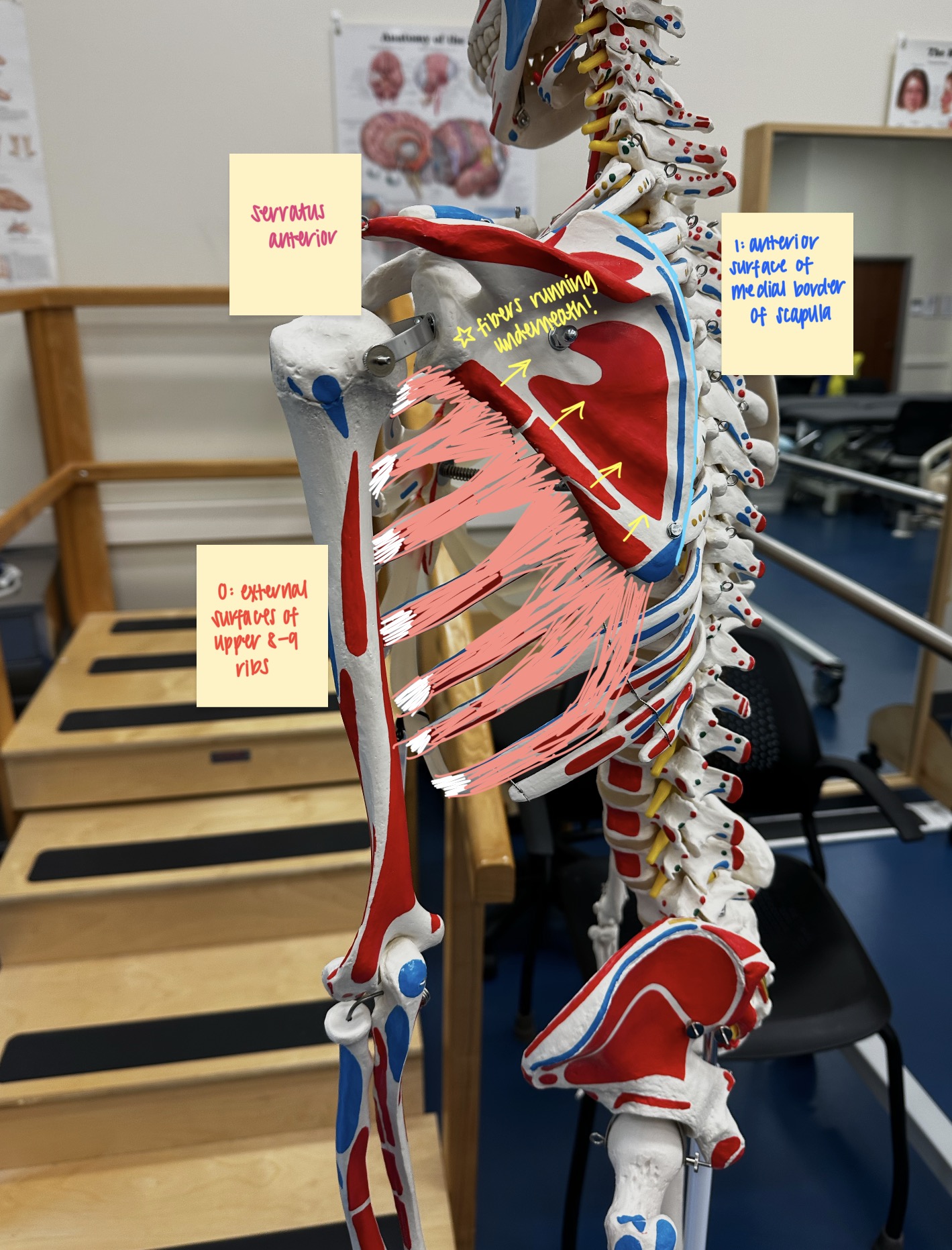
O/I/A/N: serratus anterior
O: external surfaces of upper 8 or 9 ribs (ribs 1-8/9)
I: anterior surface of medial border of scapula
A: scapular protraction
N: long thoracic nerve
Concentric, Eccentric, Isometric action — serratus anterior
concentric = supine serratus punches w/ DBs
eccentric = slowly lowering serratus punch
isometric = holding punched position

SHOULDER COMPLEX — pectoralis major
SYNDAVER

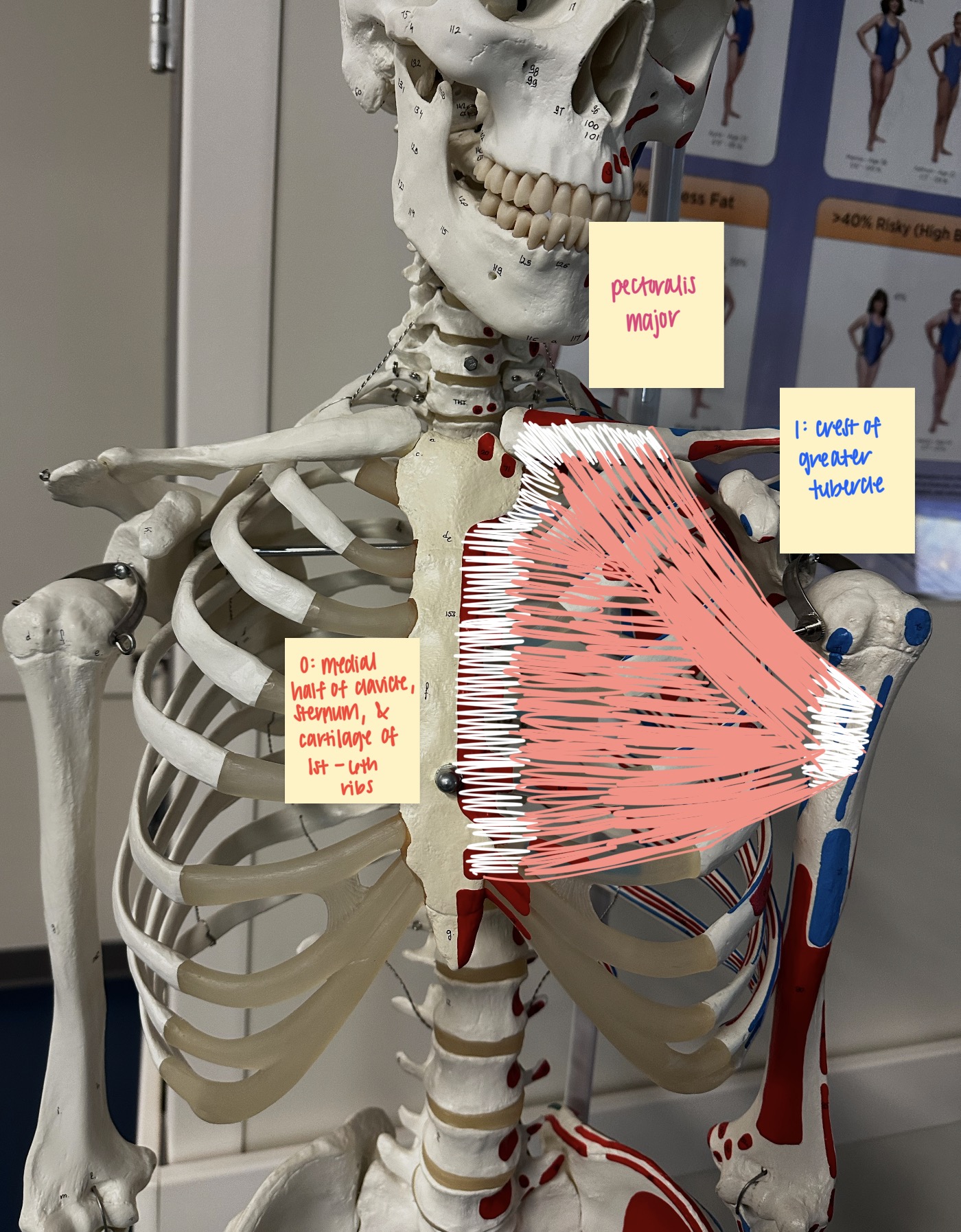
O/I/A/N: pectoralis major
O: medial half of clavicle + sternum + cartilage of ribs 1-6
I: crest of greater tubercle of humerus
A: shoulder IR + shoulder ADDuction
N: lateral & medial pectoral nerve
Concentric, Eccentric, Isometric action — pectoralis major
concentric = IR w/ TB
eccentric = slowly coming to neutral w/ TB
isometric = holding midrange of IR w/ TB
SHOULDER COMPLEX — pectoralis minor
SYNDAVER

O/I/A/N: pectoralis minor
O: 3rd, 4th, & 5th ribs
I: medial surface of coracoid process of the scapula
A: scapular protraction + shoulder ABDuction
N: medial pectoral nerve
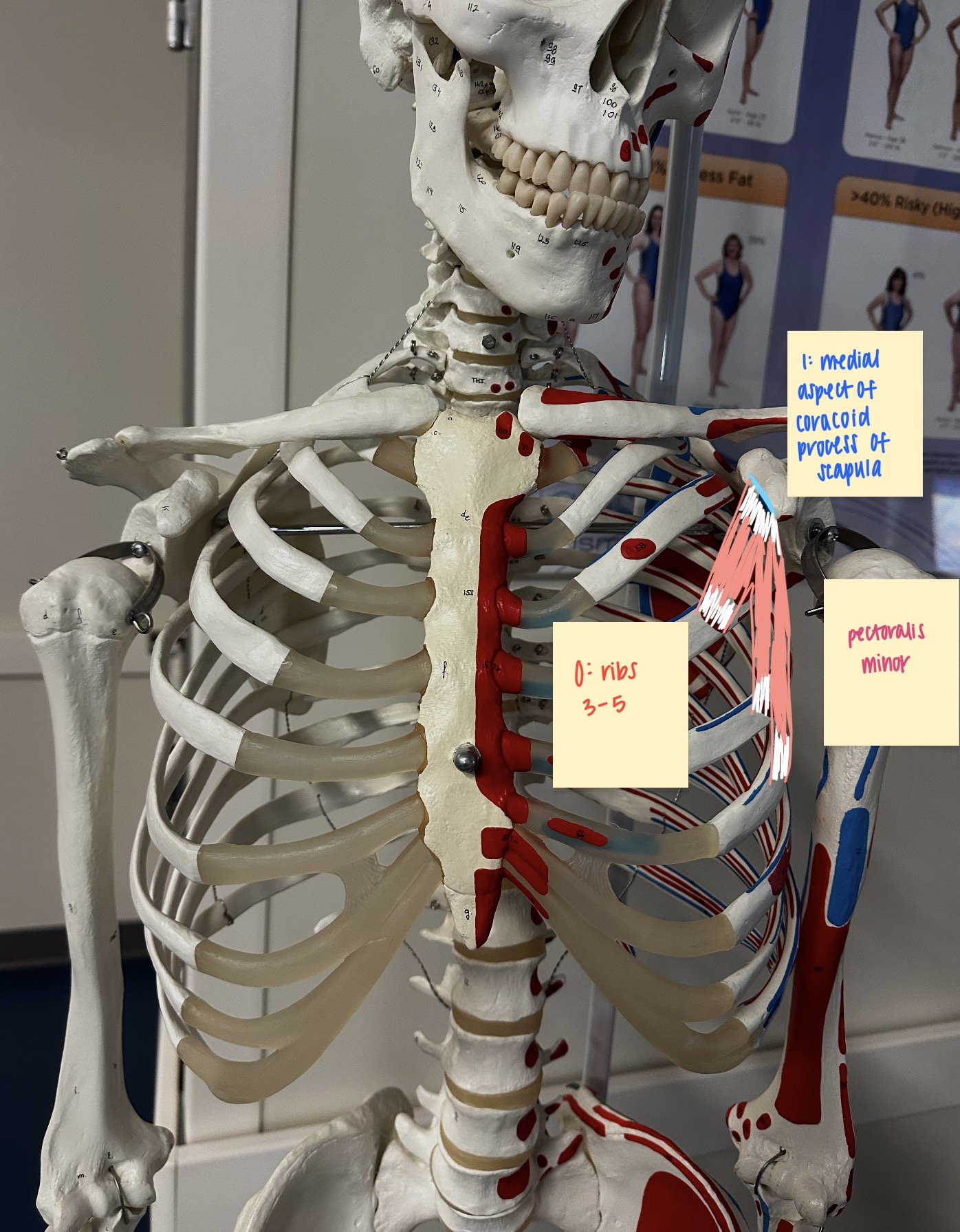
Concentric, Eccentric, Isometric action — pectoralis minor
Concentric = chest press w/ TB (PT stands behind pt)
Eccentric = slowly bringing TB back to bent elbow
Isometric = hold it halfway
SHOULDER COMPLEX — supraspinatus (RTC muscle)
SYNDAVER

O/I/A/N: supraspinatus (RTC muscle)
O: supraspinous fossa of the scapula
I: greater tubercle of the humerus
A: shoulder ABDuction
N: suprascapular nerve

Concentric, Eccentric, Isometric action — supraspinatus (RTC muscle)
concentric = scaption raise
eccentric = slowly going down from scaption raise
isometric = shoulder ABD iso @ wall
SHOULDER COMPLEX — infraspinatus (RTC muscle)
SYNDAVER

O/I/A/N: infraspinatus (RTC muscle)
O: infraspinous fossa of scapula
I: greater tubercle of the humerus
A: shoulder ER + shoulder ADDuction
N: suprascapular nerve

Concentric, Eccentric, Isometric action — infraspinatus (RTC muscle)
concentric = ER w/ TB
eccentric = slowly bringing it back to neutral
isometric = holding halfway
SHOULDER COMPLEX — teres minor (RTC muscle)
SYNDAVER

O/I/A/N: teres minor (RTC muscle)
O: upper 2/3 of lateral border of the scapula
I: greater tubercle of the humerus
A: shoulder ER
N: axillary nerve

Concentric, Eccentric, Isometric action — teres minor (RTC muscle)
concentric = ER w/ TB
eccentric = bringing it back to neutral slowly
isometric = holding it halfway
SHOULDER COMPLEX — subscapularis (RTC muscle)
SYNDAVER

O/I/A/N: subscapularis (RTC muscle)
O: subscapular fossa of the scapula
I: lesser tubercle of the humerus
A: shoulder IR
N: upper & lower subscapular nerve

Concentric, Eccentric, Isometric action — subscapularis (RTC muscle)
concentric = shoulder IR w/ TB
eccentric = slow shoulder IR w/ TB back to neutral
isometric = holding the IR w/ TB at mid range
SHOULDER COMPLEX — teres major
SYNDAVER

O/I/A/N: teres major
O: inferior angle + lower 1/3 of lateral border of the scapula
I: crest of lesser tubercle of humerus
A: shoulder ADDuction + shoulder ER
N: lower subscapular nerve
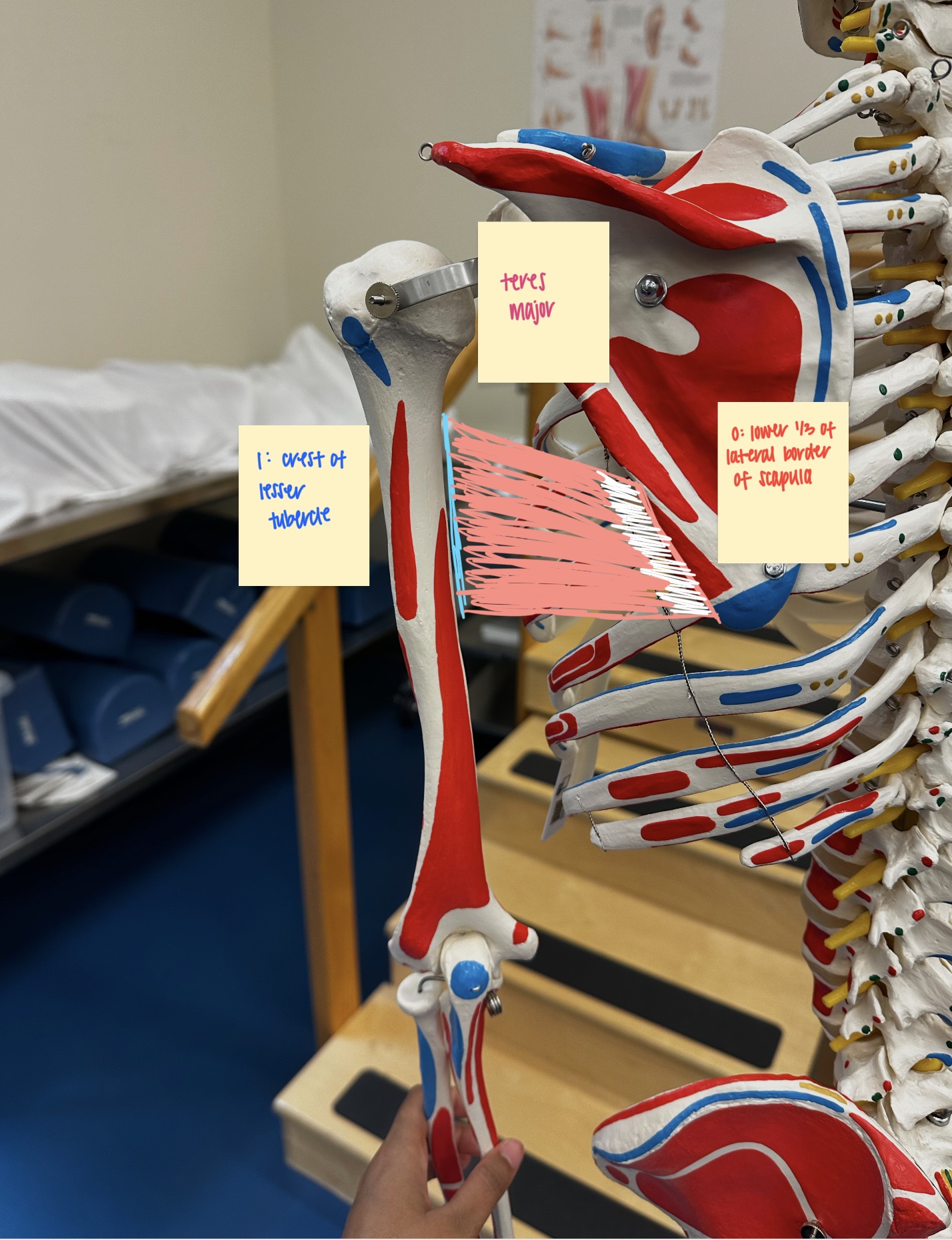
Concentric, Eccentric, Isometric action — teres major
concentric = ER w/ TB
eccentric = slowly returning to neutral from ER w/ TB
isometric = holding ER at midrange point w/ TB
SHOULDER COMPLEX — latissimus dorsi
SYNDAVER

O/I/A/N: latissimus dorsi
O: inferior angle of the scapula + spinous process of last 6 thoracic vertebrae + last 3 or 4 ribs + thoracolumbar fascia + posterior iliac crest
I: bicipital groove of humerus
A: shoulder ADDuction + shoulder extension
N: thoracodorsal nerve

Concentric, Eccentric, Isometric action — latissimus dorsi
Concentric = TB lat pulldown
Eccentric = pulling up slowly
Isometric = holding halfway
SHOULDER COMPLEX — biceps brachii
SYNDAVER

O/I/A/N: biceps brachii
long head:
O: supraglenoid tubercle of glenoid fossa (scapula)
short head:
O: coracoid process of scapula
I: radial tuberosity + aponeurosis of biceps brachii
A: elbow flexion + shoulder flexion + forearm supination (synergist)
N: musculocutaneous
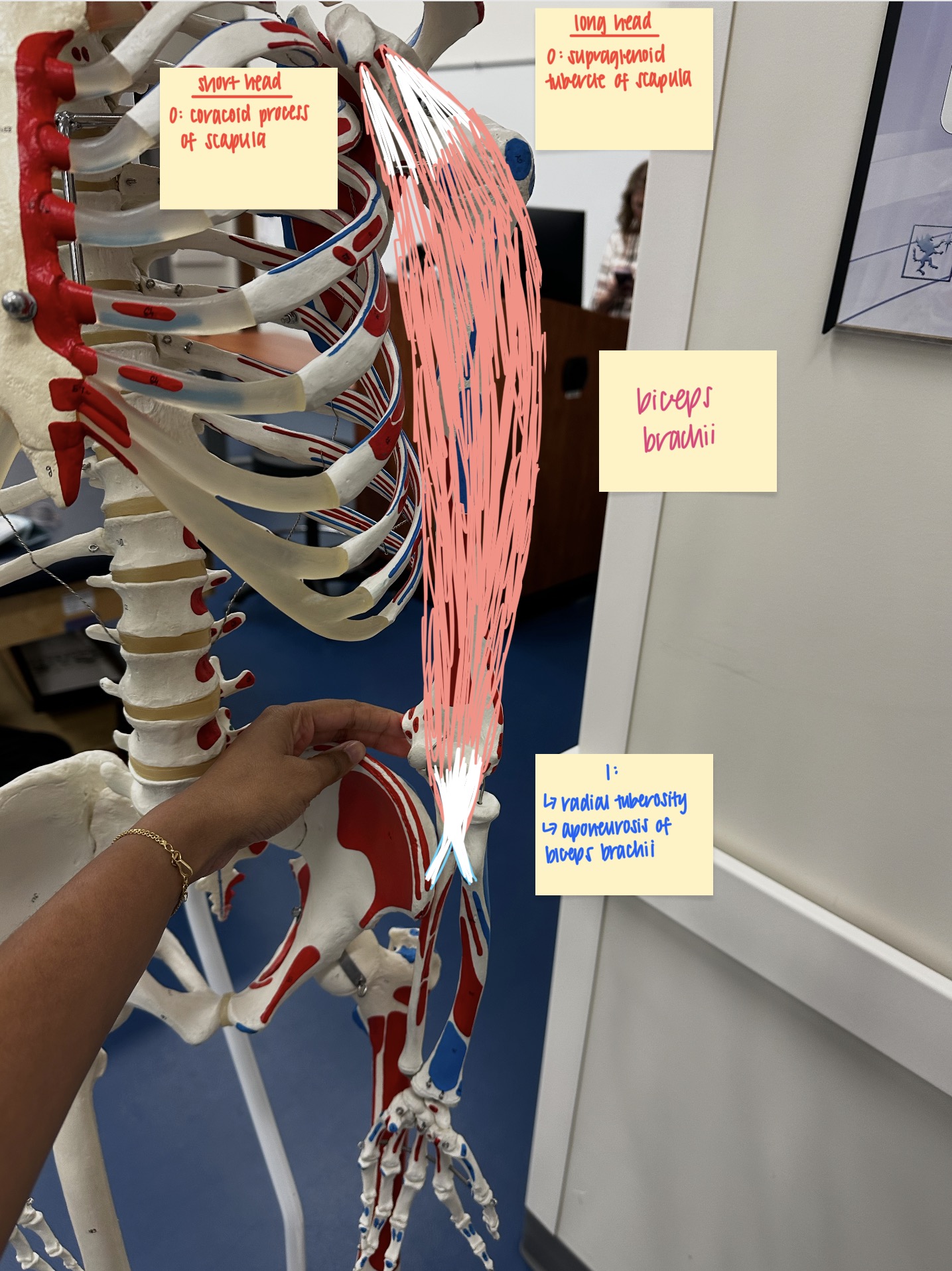
Concentric, Eccentric, Isometric action — biceps brachii
concentric = bicep curl w/ DB
eccentric = slowly lowering the DB in bicep curl
isometric = holding the bicep curl halfway
SHOULDER COMPLEX — corachobrachialis
SYNDAVER

O/I/A/N: coracobrachialis
O: coracoid process of scapula
I: medial surface of mid-humeral shaft
A: shoulder ADDuction + shoulder flexion (dabbing)
N: musculocutaneous nerve

Concentric, Eccentric, Isometric action — coracobrachialis
concentric = D1/ D2 flex w/ TB
eccentric = slowly lowering TB
isometric = holding the TB halfway
SHOULDER COMPLEX — triceps
SYNDAVER

O/I/A/N: triceps
long head:
O: infraglenoid tubercle of scapula
lateral head:
O: posterior surface of proximal half of the humerus
medial head:
O: posterior surface of the distal half of the humerus
I: olecranon process of the ulna
A: elbow extension + (long head) shoulder extension & shoulder ADDuction
N: radial nerve

Concentric, Eccentric, Isometric action — triceps
concentric = tricep extension w/ DB
eccentric = coming back from tricep ext. slowly
isometric = tricep ext. hold
SHOULDER COMPLEX — anterior deltoid
SYNDAVER

O/I/A/N: anterior deltoid
O: lateral 1/3 of the clavicle
I: deltoid tuberosity of humerus
A: shoulder flexion + horizontal ADD + shoulder ABD + shoulder IR
N: axillary nerve

Concentric, Eccentric, Isometric action — anterior deltoid
concentric = frontal raise w/ DB
eccentric = lowering the DB front raise slowly
isometric = holding the frontal raise
SHOULDER COMPLEX — medial deltoid
SYNDAVER

O/I/A/N: medial deltoid
O: acromion process of scapula
I: deltoid tuberosity of humerus
A: shoulder ABD
N: axillary nerve

Concentric, Eccentric, Isometric action — medial deltoid
concentric = lateral raise w/ DB
eccentric = lowering lateral raise slowly
isometric = holding lateral raise w/ DB
SHOULDER COMPLEX — posterior deltoid
SYNDAVER

O/I/A/N: posterior deltoid
O: spine of scapula
I: deltoid tuberosity
A: shoulder extension + horizontal ABD + shoulder ABD + shoulder ER
N: axillary nerve

Concentric, Eccentric, Isometric action — posterior deltoid
concentric = rear delt fly w/ DB
eccentric = lowering DB slowly from rear delt fly
isometric = holding the DB up at peak
Explain the arthrokinematics of GH shoulder flexion and extension.
Both occur in the sagittal plane about a medial-lateral axis of rotation; the convex humeral head spins on the glenoid fossa around a relatively fixed axis
Flexion — the convex humeral head rolls posteriorly (towards the back) & slides inferiorly (down into the glenoid fossa) as the arm elevates
Extension — the convex humeral head rolls anteriorly (towards the front) & slides superiorly as the arm moves backward

Explain the arthrokinematics of GH shoulder internal & external rotation
Both occur in the transverse (horizontal) plane about a vertical (longitudinal) axis of rotation
IR — anterior surface of the humeral head glides medially
ER — anterior surface of the humeral head glides laterally

Explain the arthrokinematics of GH shoulder abduction & adduction
Both occur in the frontal plane about an anterior-posterior axis of rotation
ABD — the convex humeral head rolls superiorly while simultaneously sliding inferiorly
ADD — the convex humeral head rolls inferiorly while simultaneously sliding superiorly

When does the medial end of the clavicle become concave/convex on an SC joint? When does the clavicular notch on the sternum become concave/convex on the SC joint?
If we’re trying to do movement in the frontal plane (depression & elevation), the clavicle is convex, while the sternum is concave
Elevation — convex clavicle rolls up (superiorly), & glides down (inferiorly) on the concave manubrium
Depression — convex clavicle rolls down (inferiorly), & glides up (superiorly) on the concave manubrium
If we’re trying to do movement in the transverse plane (protraction & retraction), the sternum is convex, while the clavicle is concave
Protraction — concave clavicle rolls & glides anteriorly (towards the front) on the convex manubrium
Retraction — concave clavicle rolls & glides posteriorly (towards the back) on the convex manubrium

Name the 4 muscles that make up the rotator cuff (RTC).
Supraspinatus
Infraspinatus
Teres minor
Subscapularis
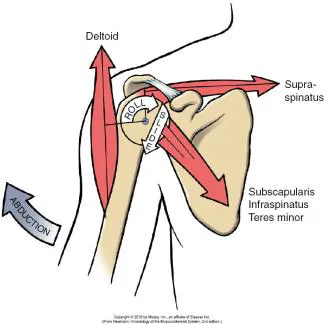
How are the RTC muscles involved in shoulder ABDuction?
Supraspinatus initiates abduction for the first 15°, compressing humeral head into glenoid fossa; deltoid then becomes prime mover for additional ABD movement
Infraspinatus, teres minor, & subscapularis produce an inferiorly directed force to counteract the deltoid force going upwards → this allows the humeral head to glide inferiorly into the glenoid fossa + prevents it from hitting acromion
Infraspinatus & teres minor externally rotate the humeral head to also prevent the greater tubercle from hitting the acromion, causing impingement
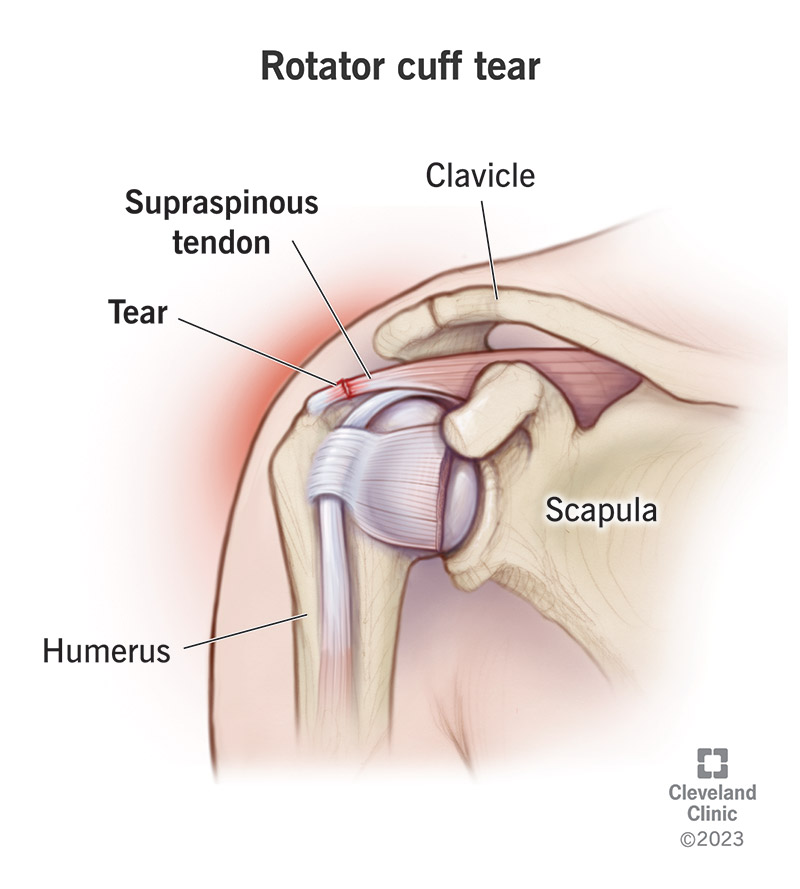
What is a rotator cuff tear (RTC tear)?
An injury where one or more of the tendons or muscles that stabilize the shoulder joint become frayed or damaged; Most tears occur in the supraspinatus tendon because of its position in the subacromial space
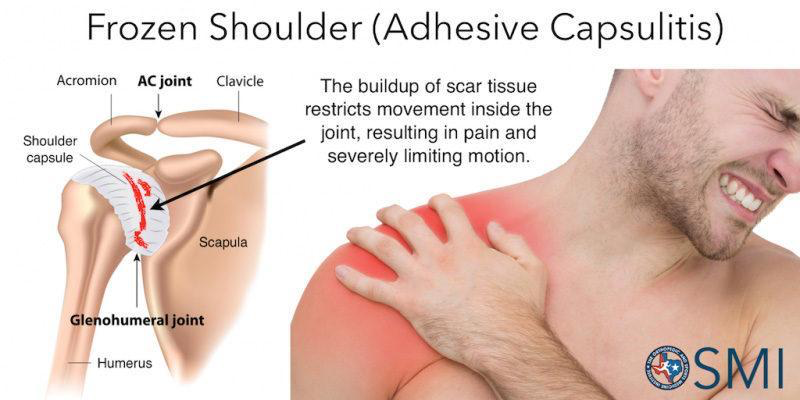
What is frozen shoulder (adhesive capsulitis)?
Idiopathic (aka it can just happen) chronic synovial inflammation
3 stages: Freezing, Frozen, Thawing
Too much scar tissue builds up, restricting movement inside the joint. This causes pain and severe limiting of ROM
ELBOW COMPLEX — radial notch of the ulna
SKELETON

ELBOW COMPLEX — ulnar notch of the radius
SKELETON

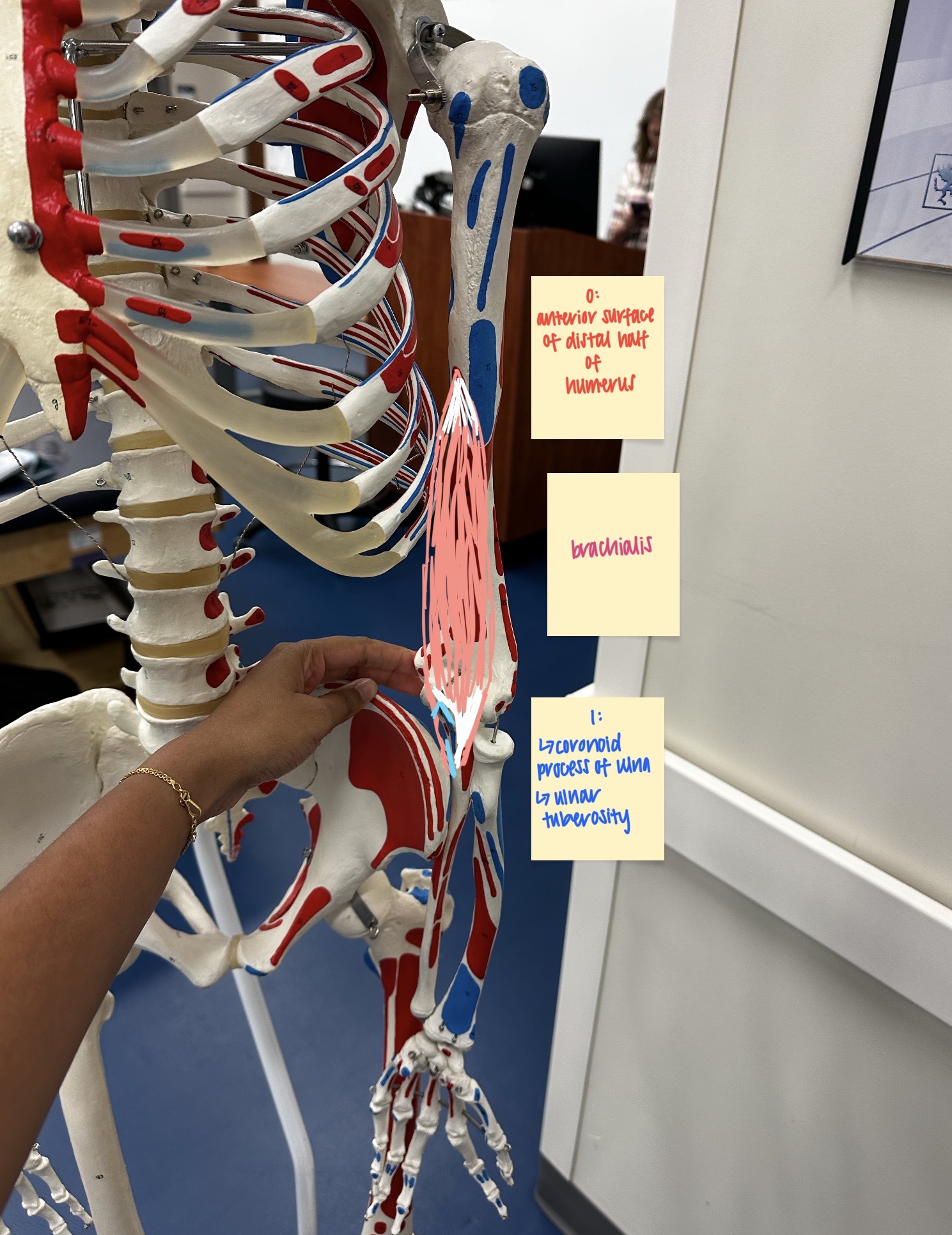
ELBOW COMPLEX — brachialis
SYNDAVER

O/I/A/N: brachialis
O: distal half of the anterior surface of the humerus
I: coronoid process of the ulna + ulnar tuberosity
A: elbow flexion
N: musculocutaneous nerve
Concentric, eccentric, isometric activation — brachialis
concentric = pronated bicep curl w/ DB
eccentric = slowly lowering the pronated bicep curl w/ DB
isometric = holding the halfway point of a pronated bicep curl w/ DB
ELBOW COMPLEX — brachioradialis
SYNDAVER

O/I/A/N: brachioradialis
O: proximal 2/3 of the lateral supracondylar ridge of the humerus
I: radial styloid process
A: elbow flexion of the neutral wrist (hammer curl) + pronation (synergist)
N: radial nerve

Concentric, eccentric, isometric activation — brachioradialis
concentric = neutral grip bicep curl w/ DB (hammer curls)
eccentric = slowly lowering the hammer curl w/ DB
isometric = holding hammer curl at the halfway point
ELBOW COMPLEX — supinator
SYNDAVER

O/I/A/N: supinator
O: lateral epicondyle of the humerus, RCL/LCL, annular ligament, & supinator crest of the ulna
I: lateral surface of proximal 1/3 of radial shaft
A: forearm supination
N: radial nerve
Concentric, eccentric, isometric activation — supinator
concentric = TB supination
eccentric = slowly moving back into neutral from supination w/ TB
isometric = holding the midrange point between neutral & supination w/ TB

ELBOW COMPLEX — pronator teres
SYNDAVER

O/I/A/N: pronator teres
O: common flexor tendon (CFT) from medial epicondyle of humerus + coronoid process of the ulna
I: middle of lateral aspect of radius
A: forearm pronation + elbow flexion (synergist)
N: median nerve

Concentric, eccentric, isometric activation — pronator teres
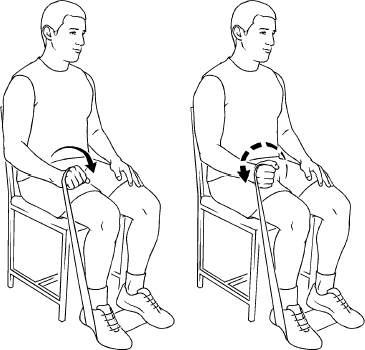
concentric = TB pronation
eccentric = slowly moving back into neutral from pronation w/ TB
isometric = holding midrange point between neutral & pronation w/ TB
ELBOW COMPLEX — pronator quadratus
SYNDAVER

O/I/A/N: pronator quadratus
O: medial, anterior surface of distal ulna
I: lateral, anterior surface of distal radius
A: forearm pronation
N: median nerve
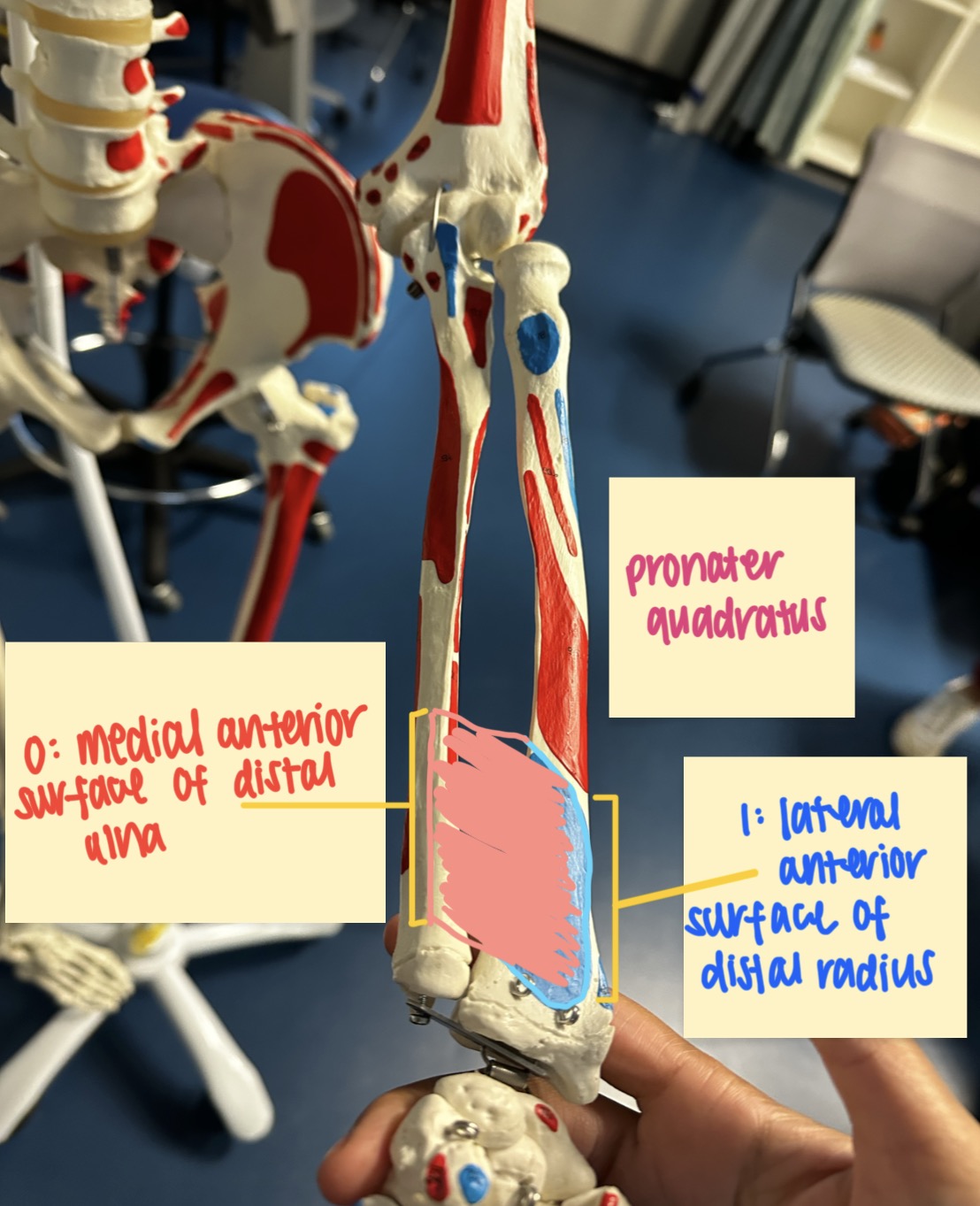
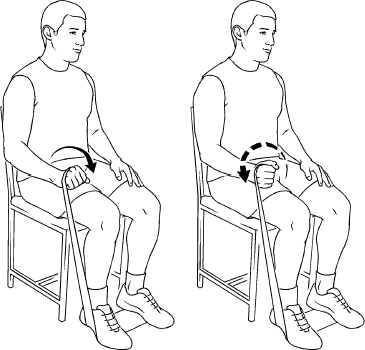
Concentric, eccentric, isometric activation — pronator quadratus
concentric = TB pronation
eccentric = slowly moving back into neutral from pronation w/ TB
isometric = holding midrange point between neutral & pronation w/ TB
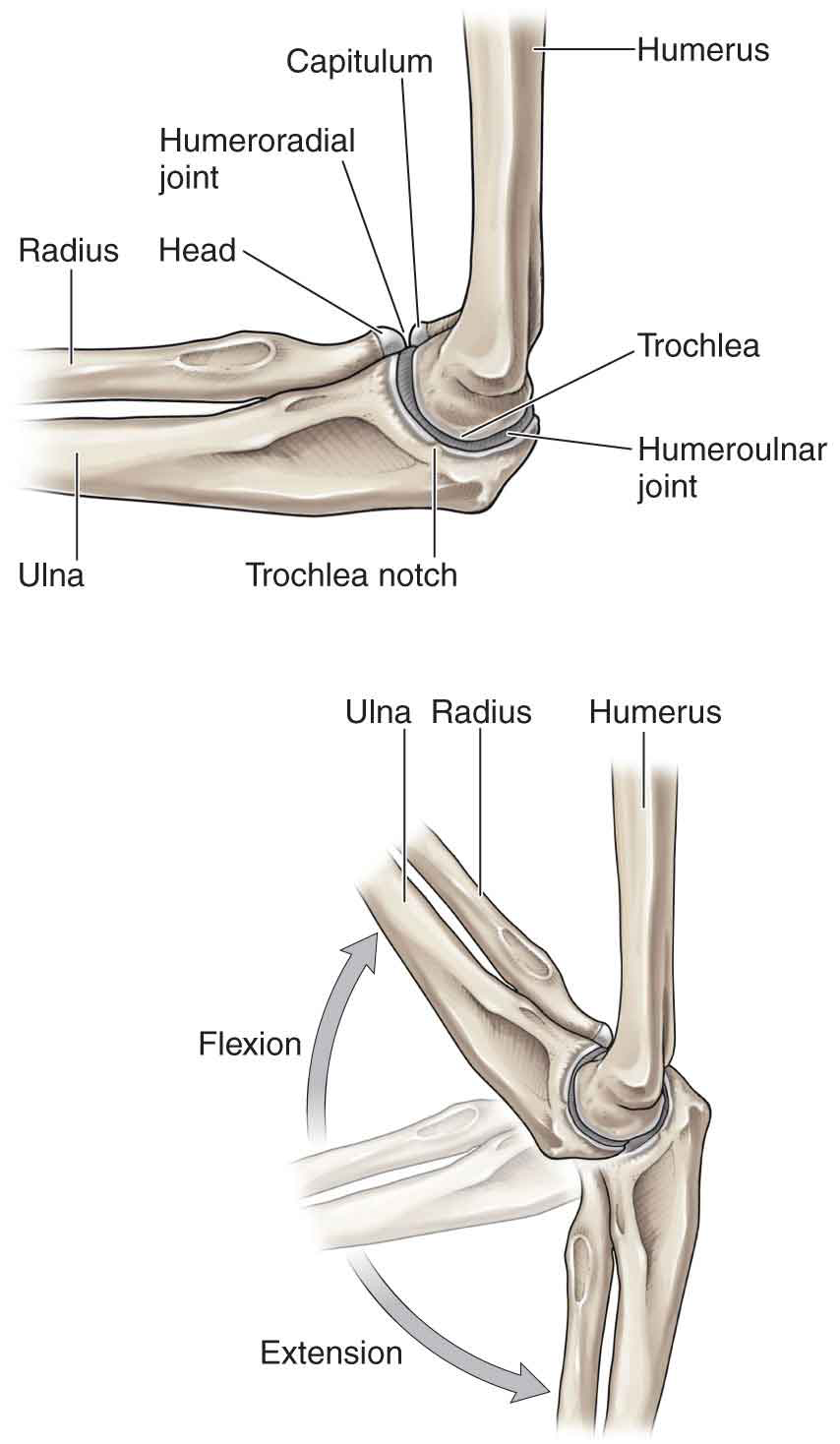
Describe the arthrokinematics of the humeroulnar joint during flexion/extension.
The concave trochlear notch rotates on the convex trochlea:
Flexion: concave trochlear notch rolls and glides anteriorly on the concave trochlea
Extension: concave trochlear notch rolls and glides posteriorly on the concave trochlea

Describe the arthrokinematics of the humeroradial joint during elbow flexion/extension.
The concave fovea of the radius rotates on the convex capitulum of the humerus.

Describe the arthrokinematics of the proximal radioulnar joint during pronation.
The convex radial head spins/pivots within the concave radial notch of the ulna opposite direction.

Describe the arthrokinematics of the distal radioulnar joint during supination/pronation.
The concave ulnar notch of the radius rolls and slides in the same direction over the convex ulnar head.

O/I/A/N: extensor carpi radialis longus (ECRL)
O: distal 1/3 of lateral supracondylar ridge of humerus
I: base of 2nd metacarpal
A: extends wrist + wrist radial deviation + elbow flexion (synergist)
N: radial nerve


O/I/A/N: extensor carpi radialis brevis (ECRB)
O: common extensor tendon (CET) from the lateral epicondyle of the humerus
I: base of 3rd metacarpal
A: extends wrist + wrist radial deviation
N: radial nerve


O/I/A/N: extensor carpi ulnaris (ECU)
O: common extensor tendon (CET) from the lateral epicondyle of the humerus
I: base of the 5th metacarpal
A: extends wrist + wrist ulnar deviation
N: radial nerve


O/I/A/N: extensor digitorum (ED)
O: common extensor tendon (CET) from the lateral epicondyle of the humerus
I: bases of middle & distal phalanxes 2-5
A: extends digits 2-5 (not the thumb!)
N: radial nerve


O/I/A/N: extensor indicis (EI)
O: posterior surface of distal shaft of the ulna + interosseous membrane
I: base of middle & distal 2nd phalanx via extensor digitorum tendon
A: extends digit #2 (index finger)
N: radial nerve


O/I/A/N: extensor pollicis longus (EPL)
O: posterior surface of the ulna + interosseous membrane
I: base of distal phalanx of thumb
A: extends the thumb at the interphalangeal (IP) joint
N: radial nerve


O/I/A/N: extensor pollicis brevis (EPB)
O: posterior surface of radius + interosseous membrane
I: base of proximal phalanx of thumb
A: extends the thumb @ MCP & carpometacarpal joints
N: radial nerve

What 3 muscles make up the Wad of 3?
Brachioradialis
Extensor carpi radialis longus (ECRL)
Extensor carpi radialis brevis (ECRB)

O/I/A/N: flexor carpi radialis (FCR)
O: common flexor tendon (CFT) from medial epicondyle of the humerus
I: base of 2nd & 3rd metacarpal
A: flexes wrist & wrist radial deviation
N: median nerve


O/I/A/N: flexor carpi ulnaris (FCU)
O: common flexor tendon (CFT) from the medial epicondyle of the humerus
I: base of 5th metacarpal, pisiform, & hook of hamate
A: flexes the wrist + wrist ulnar deviation
N: ulnar nerve
