ACC 403: Financial Accounting
 Call Kai
 Learn
Learn Practice Test
 Spaced Repetition
 Match
Match Flashcards
 Knowt Play
1/20

Earn XP
Description and Tags
BYU Intermediate Financial Accounting Flash Cards
Name | Mastery | Learn | Test | Matching | Spaced | Call with Kai | Chat |
|---|
No analytics yet
Send a link to your students to track their progress
21 Terms
Current Ratio
Current Assets ➗ Current Liabilities
A liquidity ratio
Tells us how well the companies assets can cover current obligations. Asses against industry average
Quick Ratio
Quick Assets ➗ Current Liabilities
Quick Assets are Current assets minus prepaids, inventory, and restricted cash
A liquidity ratio more rigorous than the current ratio
Debt-to-Equity Ratio
Total Liabilities ➗ Shareholders Equity
A Solvency ratio that tells a companies capital structure (more debt or equity?).
The higher it is the riskier the company is because creditors have more claim to assets if they default
Times Interest Earned Ratio
(Net income + Interest Exp. + Income tax Exp.) ➗ Interest Expense
A Solvency Ratio that tells us how many times the firm can cover its current interest. I.e. how protected are creditors
Profit Margin on Sales
Net income ➗ Net Sales
A profitability ratio that tells us the portion of revenue that is available after expenses
Return on Assets (ROA)
Net income ➗ Average total assets
A profitability ratio that tells us the % of average total assets available to generate income
can also be calculated as:
ROA = NI/S * S/AVG Assets
Return on Equity (ROE)
Net Income ➗ Shareholders Equity
Profitability Ratio that tells us the return to suppliers of equity after company operations
The result of the DuPont Framework
DuPont Frame Work
ROE = Profit Margin * Asset turnover * Equity Multiplier
NI/E = NI/S * S/Avg.A * AVG.A/E
Direct method for CFO aspects
Sales revenue —> Cash received from customers
COGS —> cash paid for inventory
Salaries expense —> cash paid for employee salaries
Cash Flows From Customers
Sales - increase in A/R + Increase in deferred revenue

Cash Received from Investment Revenue
simply recorded in CFO as a cash receipt
Cash Paid for Inventory
COGS - Decrease in inventory - Increase in A/P

Find inventory purchases and then use that to determine how much A/P you paid off in cash
Cash Paid for Salaries
Salaries Expense +

Decrease in salaries payable
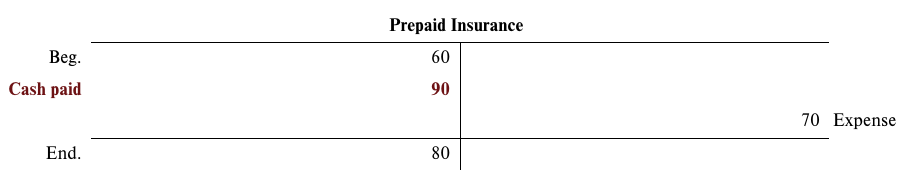
Cash Paid for Insurance
Insurance expense + Increase in prepaid insurance
Cash paid for Interest
Interest Expense + decrease in interest payable
Cash Paid for Income Taxes
Income Tax Expense + Decrease in income tax payable

Operating Cash Inflows
cash received from customers for sale of inventory and services, collection of interest, tax refunds, lawsuit settlements and dividends
Operating Cash Outflows
cash paid for inventory, operating expenses (like salaries, rent and utilities), interest on debt, income taxes, and lawsuit settlements.
Investing Cash Outflows
cash paid for investments, PPE, intangible assets, and lending with notes receivable.
Investing Cash Inflows
sale of investments, PPE, intangibles, collecting notes receivable