MSK of the Back and Spine
 Call Kai
 Learn
Learn Practice Test
 Spaced Repetition
 Match
Match Flashcards
 Knowt Play
1/239

There's no tags or description
Looks like no tags are added yet.
Name | Mastery | Learn | Test | Matching | Spaced | Call with Kai | Chat |
|---|
No analytics yet
Send a link to your students to track their progress
240 Terms
how many bones are in the human body?
206
what percent of body weight does the skeleton contribute?
14%
how many bones are in the appendicular skeleton?
126
how many bones are in the axial skeleton?
80
how many total vertebrae are in the body?
33
what are the three classifications of ribs?
true, false, floating
what are the parts of the sternum?
manubrium, sternal angle, body, and xyphoid process
osteologic features of vertebrae
body and end plate, processes, foramina, and the arch
What are the processes of a vertebra?
spinous, transverse, and superior/inferior facets
what are the foramina of a vertebra?
vertebral, intervertebral, and transverse
laminar arch
transverse process to transverse process
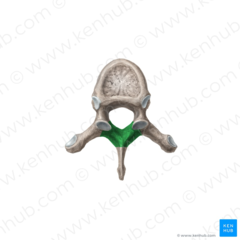
pedicle
vertebral body to the transverse process

types of vertebrae
cervical, thoracic, lumbar, sacral, and coccyx
curves of the spine
lordosis and kyphosis
lordosis
convex anteriorly
kyphosis
convex posteriorly
where is there a natural lordosis in the spine?
lumbar and cervical regions
where is there a natural kyphosis in the spine?
sacral and thoracic regions
1st cervical vertebra
atlas
2nd cervical vertebra
axis
movements of atlas and axis
flexion, extension, and rotation
common features of cervical vertebrae
transverse foramen, uncovertebral joints, bifurcating spinous process, small body
why is C7 different?
A large spinous process because an artery does not pass through the transverse foramen
bodies of the thoracic vertebrae
increase in size caudally
spinous processes of thoracic vertebrae
long, slender, and directed caudally to overlap with the succeeding vertebra
movements of thoracic spine
lateral flexion and rotation
limited movements of thoracic spine
flexion and extension due to rib cage
where to the ribs attach to the throacic vertebrae?
superior and inferior costal facets of vertebral body and costal facet on transverse process
true ribs
attach directly to sternum
what are the true ribs
1-7
false ribs
attach via cartilage to the cartilage of the rib above
what ribs are false ribs
8-10
another name for false ribs
vertebrochondral ribs
floating ribs
verebrae posteriorly with no anterior attachment
what ribs are floating ribs
11-12
typical ribs
3-9
atypical ribs
1, 2, 10, 11, 12
why is the first rib atypical?
it has a single head facet and scalene tubercle
why is the second rib atypical?
two head facets and tuberosity for serratus anterior
why are ribs 10-12 atypical ribs?
one head facetand articulate with only one vertebra
why are ribs ONLY 11 and 12 atypical ribs?
no neck or tubercle
lumbar vertebra
largest and heaviest vertebrae that are wider and longer than others with short, heavy pedicles and broad spinous processes
mamillary process

spinous process
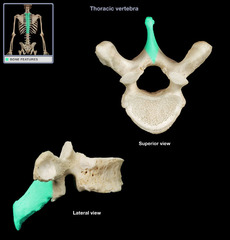
transverse process

superior articular facet of vertebra
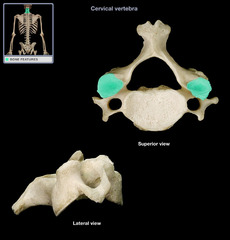
inferior articular facet of vertebra

vertebral foramen

intervertebral foramen

transverse foramen
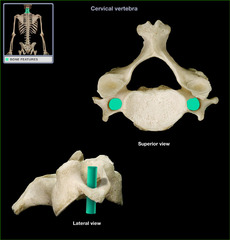
lamina

costal facet on transverse process
E
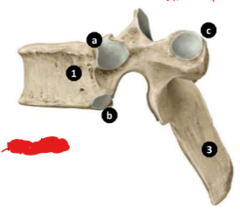
inferir costal facet
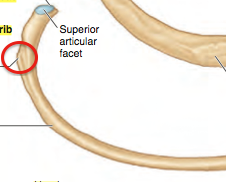
costal tubercle
what is the orientation of the facets in the lumbar spine?
in the sagittal plane
what is the major motion of the lumbar spine
flexion and extension
what is the minor motion of the lumbar spine
lateral flexion and extension
what is the shape of the sacrum?
wedge
superior articular processes of sacrum
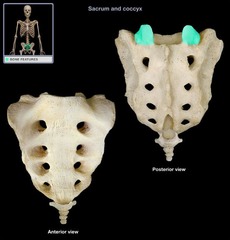
auricular surface of sacrum

sacral hiatus
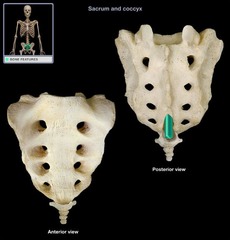
dorsal foramen of sacrum
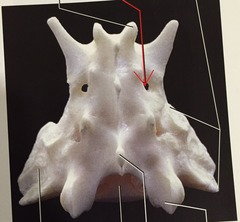
anterior foramen of sacrum

where is the pelvic surface concave?
articulating with the ilium
coccyx
4 fused vertebrae
concave surface of the coccyx
anterior surface
convex surface of the coccyx
posterior surface
transverse processes of coccyx

what is the ONLY ligament to resist extension?
anterior longitudinal ligament
anterior longitudinal ligament

where is the anterior longitudinal ligament
cranium to sacrum
posterior longitudinal ligament
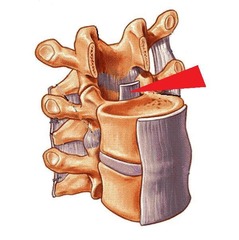
what does the posterior longitudinal ligament resist?
hyperflexion
where does the PLL attach?
intervertebral discs
why does the PLL attach to the intervertebral discs
prevent direct posterior herniation of the nucleus pulposus
where is the PLL?
C2-sacrum
where does the PLL turn into the tectorial membrane?
C1
intertransverse ligament

what does the intertransverse ligament resist?
lateral flexion
ligamentum flavum
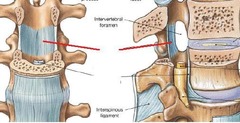
what does the ligamentum flavum do?
provide constant tension in neutral and flexed spines
why is the ligamentum flavum unique?
only ligament with elasticity
where does the ligamentum flavum attach?
lamina to lamina
why do the intervertebral discs require compression from the elastic fibers in the ligamentum flavum?
increased pressure = increased sitiffness = increased support in neutral spine
interspinous ligament
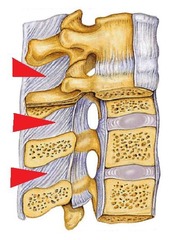
what does the interspinous ligament limit?
spinal flexion
supraspinous ligament
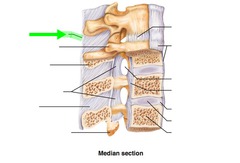
what does the supraspinous ligament limit?
flexion
where is the supraspinous ligament?
whole spine except C spine
what is the supraspinous ligament in the c spine?
ligamentum nuchae
which is the first posterior ligament to fail?
supraspinous ligament
why is the supraspinous ligament the first to typically fail?
composed primarily of collagen
ligaments that resist flexion
supraspinous ligament, ligamentum nuchae, interspinous ligaments, ligamentum flavum, PLL
intervertebral discs
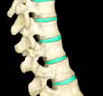
how does the thickness of intervertebral discs change?
increases caudally
annulus fibrosis
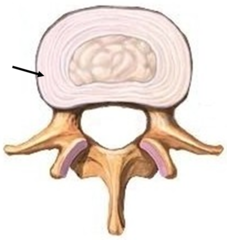
what is the annulus fibrosis made of?
fibrocartilage
how does blood supply and innervation change within the annulus fibrosis?
decreases with deeper rings
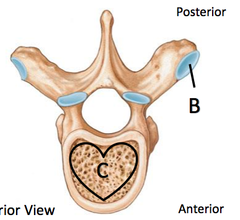
nucleus pulposus
B
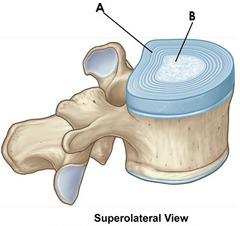
what is the nucleus pulposus composed of?
mucoid material interspersed with reticular and collagen fibers