Weight, Energy Science, and Health at Every Size
 Call Kai
 Learn
Learn Practice Test
 Spaced Repetition
 Match
Match Flashcards
 Knowt Play
1/76

There's no tags or description
Looks like no tags are added yet.
Name | Mastery | Learn | Test | Matching | Spaced | Call with Kai | Chat |
|---|
No analytics yet
Send a link to your students to track their progress
77 Terms
What are the components of a healthy body weight?
Physiologic, genetic, cultural, and social factors.
What does BMI stand for and what are its limitations?
Body Mass Index; it does not account for muscle mass, age, or ethnic differences.
What is Total Energy Expenditure (TEE)?
The total number of calories burned each day.
What are the three primary components of TEE?
Basal Metabolic Rate (BMR), Thermic Effect of Food (TEF), and Physical Activity.
What percentage of TEE does Basal Metabolic Rate (BMR) represent?
60-75% of TEE.
What is the Thermic Effect of Food (TEF)?
The increase in energy expenditure associated with the processing of food.
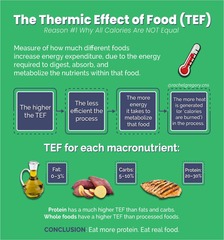
What percentage of TEE does the Thermic Effect of Food (TEF) account for?
About 10% of TEE.
What are the two categories of energy expenditure from physical activity?
Exercise Activity Thermogenesis (EAT) and Non-Exercise Activity Thermogenesis (NEAT).
What is the role of bariatric surgery in weight loss?
It is a medical procedure that aids in significant weight loss for individuals with obesity.
What is the impact of dieting on weight loss?
Dieting can have limitations and complications, often leading to weight regain.
What does the HAES movement stand for?
Health At Every Size; it promotes health and well-being regardless of body weight.
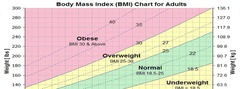
How is Body Mass Index (BMI) calculated?
BMI = weight (kg) / height (m)^2.
What BMI value indicates obesity?
A BMI of 30 or greater.
What are the BMI classifications for underweight, normal weight, overweight, and obesity?
Underweight:
What is the flaw in using BMI as a health measure?
It does not account for muscle mass, age, and ethnic differences.
What is the previous guideline for ideal body weight (IBW) for women?
Height 5' = 100 pounds; add 5 pounds for each inch over 5'.
How do you calculate Adjusted Ideal Body Weight (Adj IBW)?
((actual weight - IBW) * 0.25) + IBW.
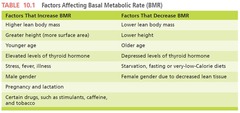
What is the relationship between lean body mass and BMR?
More lean body mass increases BMR.
How does age affect Basal Metabolic Rate (BMR)?
BMR decreases by 3-5% per decade after age 30.
What is the obesity paradox?
The observation that some individuals with obesity may have better health outcomes than those with normal weight.
What factors can manipulate Total Daily Energy Expenditure (TDEE)?
Diet, exercise intensity, and duration, and body composition.
What is the significance of evaluating body weight in relation to health?
It helps in understanding risks of chronic diseases and tailoring medical care.
What role does food quality play in health?
Nutrient-rich foods contribute to better health outcomes.
What is body composition?
Measurement of body fat and lean body mass.
What is the gold standard for measuring body composition?
Dual-energy x-ray absorptiometry (DEXA) and Bod Pod.
What methods can be used to measure body composition?
Underwater weighing, skinfold measurements, bioelectrical impedance analysis (BIA), DEXA, and Bod Pod.
How is fat distribution pattern measured?
By waist-to-hip ratio and waist circumference.
What waist-to-hip ratio indicates a higher disease risk in men?
Higher than 0.90.
What waist-to-hip ratio indicates a higher disease risk in women?
Higher than 0.80.
What are the two body shape fat distribution patterns?
Apple-shaped (mid-body) and pear-shaped (lower body).
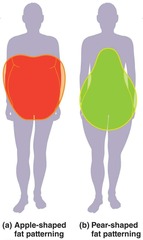
What chronic diseases are associated with apple-shaped fat patterning?
Type 2 diabetes, heart disease, and hypertension.
What factors influence body weight and composition?
Energy intake vs. energy expenditure, genetic factors, diet composition, metabolic factors, physiological factors, cultural and economic factors, social factors, and emotional factors.
What genetic component influences body shape and size?
Body shape and size have a strong genetic component.
What is the FTO gene associated with?
Fat mass and obesity.
What does the thrifty gene theory propose?
A gene causes people to be energetically thrifty.
What is the set-point theory?
It proposes that each person's weight stays within a small range.
What role do hormones play in weight and metabolism?
Hormones are chemical messengers that affect growth, sexual function, mood, and metabolism.
What is ghrelin known as?
The hunger hormone.
Where is ghrelin produced?
In the stomach and duodenum.
What happens to ghrelin levels between meals?
Ghrelin levels increase when the stomach is empty and return to normal after eating.
What is leptin known as?
The satiety (fullness) hormone.
What happens to leptin levels as body fat decreases?
Leptin levels decrease, leading to increased appetite.
What causes leptin resistance?
High stress, poor sleep, overeating, high insulin and triglycerides, and excessive snacking.
What cultural factors can influence body weight?
Cultural customs, beliefs about body size, and access to healthful foods.
What is a healthful body weight?
A weight maintained without constant dieting, compatible with normal blood pressure, lipid levels, and glucose tolerance.
What is the most common approach to weight loss?
Calorie reduction, often referred to as dieting.
What are characteristics of fad diets?
Claims rapid weight loss, eliminates food groups, requires product purchase, and often results in short-term success.
What is pharmacotherapy in the context of weight loss?
The use of prescription medication to aid in weight loss for individuals with a BMI ≥30 or BMI ≥27 with comorbid conditions.
What are some FDA-approved drugs for weight loss?
Orlistat, Phentermine-Topiramate, Naltrexone-Bupropion, Liraglutide, Semaglutide, and Tirzepatide.
What criteria qualify someone for bariatric surgery?
BMI >40, BMI 35-39.9 with 1 co-morbidity, or BMI 30-34.9 with 2 co-morbidities.
What are the two GLP-1 medications mentioned for weight loss?
Liraglutide (Saxenda) and Semaglutide (Wegovy)
What is the BMI threshold for considering bariatric surgery?
BMI > 40 or BMI 35-39.9 with 1 co-morbidity
How does bariatric surgery aid in weight loss?
By restricting stomach capacity, creating malabsorption, or a combination of both.
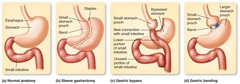
What are some metabolic benefits of weight loss surgery?
Improvement or elimination of type 2 diabetes, improved blood lipids, and improved sleep apnea.
What percentage of dieters regain weight within 5 years?
Estimates suggest 95% of people who diet regain all or more weight within 5 years.
What hormonal changes occur with calorie deprivation?
Leptin decreases, leading to increased hunger, while ghrelin increases to stimulate appetite.
What is weight cycling?
A pattern of losing weight followed by regaining it, often leading to increased inflammation and health risks.
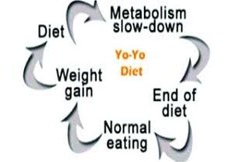
What are the risks associated with weight cycling?
Increased risk of cardiovascular disease, stroke, diabetes, and altered immune function.
How much weight loss does pharmacologic therapy provide after 1-2 years?
2.7-6.8 pounds, with GLP-1 medications yielding 10-15 pounds without lifestyle change.
What does the Health at Every Size (HAES) approach emphasize?
Adopting health habits for well-being rather than weight control, focusing on body diversity and health.
What are some alternatives to dieting for weight balance?
Eating whole, nutrient-dense foods, regular meals, and addressing mental roadblocks.
What is the impact of weight stigma in healthcare?
It can lead to shame, avoidance of care, and worsening health conditions.
What is the bottom line regarding weight loss and dieting?
It is much easier to gain weight than to lose it, and dieting often leads to negative metabolic adaptations.
What is the recommended approach for healthcare practitioners regarding weight?
Focus on treating specific health concerns rather than advocating for weight loss.
What role do micronutrients play in weight management?
They support a healthy metabolism and help maintain satiety.
What is the effect of calorie deprivation on metabolism?
It leads to a decrease in basal metabolic rate (BMR) and slows metabolism.
What should be minimized in a healthy eating plan?
Sugars, processed foods, and poor quality fats.
What is the importance of planning ahead in weight management?
It helps maintain healthy eating patterns and prevents impulsive food choices.
What is the significance of addressing mental health in weight management?
Mental health concerns can create roadblocks to maintaining a healthy weight.
What does the HAES approach aim to reduce?
Weight bias and stigma, promoting health and longevity instead.
What does the research suggest about the effectiveness of dieting?
Most people find dieting ineffective for long-term weight management.
What is the recommended focus for lifestyle changes in weight management?
Creating long-term, manageable changes rather than temporary diets.
What is a common misconception about obesity?
That it is solely a matter of willpower; many factors influence weight.
What is the relationship between obesity and healthcare access?
Larger bodied individuals may face stigma that hinders access to necessary healthcare.
What is the goal of the HAES Health Care Provider Letter?
To provide resources for a weight-inclusive approach in healthcare settings.
What is the impact of restrictive dieting on hormones?
It can lead to hormonal shifts that increase hunger and make weight maintenance difficult.
What is the role of exercise in weight management?
Regular movement helps support weight balance and overall health.