ECN 102 Exam 1
 Call Kai
 Learn
Learn Practice Test
 Spaced Repetition
 Match
Match Flashcards
 Knowt Play
1/59

There's no tags or description
Looks like no tags are added yet.
Name | Mastery | Learn | Test | Matching | Spaced | Call with Kai | Chat |
|---|
No analytics yet
Send a link to your students to track their progress
60 Terms
Cost-Benefit Principle
Pursue a choice if and only if the extra benefits are at least as large as the extra costs
Willingness to Pay
The maximum monetary amount a person is willing to pay to get a benefit or avoid a cost
Economic Surplus
The total benefits minus total costs flowing from a decision
Framing Effect
A cognitive bias where decisions are influenced by how choices or information are presented
Opportunity Cost
The true cost of something measured by the value of the next best alternative given up
Scarcity
The problem of limited resources forcing trade-offs across unlimited wants
Sunk Cost
A cost that has already been incurred and cannot be reversed so it should be ignored in future decisions
Production Possibilities Frontier (PPF)
A visual graph showing the maximum combination of outputs attainable with scarce resources
Marginal Principle
The idea that quantity decisions should be made iteratively in small incremental steps
Marginal Benefit
The extra benefit resulting from one additional unit of an activity or good
Marginal Cost
The extra cost incurred from one additional unit of an activity or good
Rational Rule
If something is worth doing keep doing it until marginal benefit equals marginal cost
Interdependence Principle
The principle that your best choice depends on your other choices others' choices other markets and expectations
Macroeconomics
The study of total aggregate economy-wide outcomes like income production and price levels
Circular Flow Diagram
A simple macroeconomic model illustrating the flow of real resources and money between households and businesses
Gross Domestic Product (GDP)
The market value of all final goods and services produced within a country in a given year
Final Good
A good or service sold to its end user and counted in GDP
Intermediate Good
A good or service used as an input in the production of another product and excluded from GDP
Expenditure Approach
Y = C + I + G + NX measuring total economic spending
Consumption (C)
Household spending on final goods and services excluding new residential housing
Investment (I)
Business spending on capital goods new housing construction and inventory changes
Government Purchases (G)
Federal state and local government spending on goods and services excluding transfer payments
Net Exports (NX)
Total spending on exports minus total spending on imports
Value Added
Total sales revenue minus the cost of intermediate inputs at each production stage
Shadow Economy
Illegal or unreported economic activity omitted from official GDP statistics
Nominal GDP
GDP evaluated at current market prices without adjusting for inflation
Real GDP
GDP measured using constant base-year prices to isolate changes in actual physical output
Rule of 70
A rule stating that doubling time in years is approximately equal to 70 divided by the annual percentage growth rate
Production Function
The method or recipe by which inputs are transformed into total economic output
Aggregate Production Function
An economic model linking total GDP to aggregate labor human capital and physical capital inputs
Labor (L)
The total sum of all hours worked across the economy
Human Capital (H)
The accumulated knowledge skills and expertise that make a worker more productive
Physical Capital (K)
The stock of tools machinery equipment and infrastructure used to produce output
Labor Productivity
The quantity of goods and services produced per hour of work
Technological Progress
New methods or recipes for combining existing resources to create more valuable output
Constant Returns to Scale
The property where scaling up all inputs by a given factor scales up total output by the exact same factor
Law of Diminishing Returns
The principle that adding more of one input while holding others constant eventually yields smaller incremental increases in output
Catch-Up Growth
The rapid economic growth experienced by poorer nations when accumulating physical capital
Solow Model
An economic model analyzing how savings capital accumulation depreciation and technology drive growth
Depreciation
The loss of physical capital over time due to wear tear obsolescence or damage
Property Rights
The legal framework establishing ownership and control over tangible and intangible resources
Working-Age Population
Non-institutionalized civilians aged 16 and older available to participate in the labor market
Employed
Working-age individuals currently working for pay self-employed or temporarily absent from work
Unemployed
Working-age individuals who are without work but actively searching for jobs and available to work
Labor Force
The sum of all employed and unemployed individuals in an economy
Labor Force Participation Rate
The percentage of the working-age population in the labor force calculated as employed+unemployed / working age population * 100

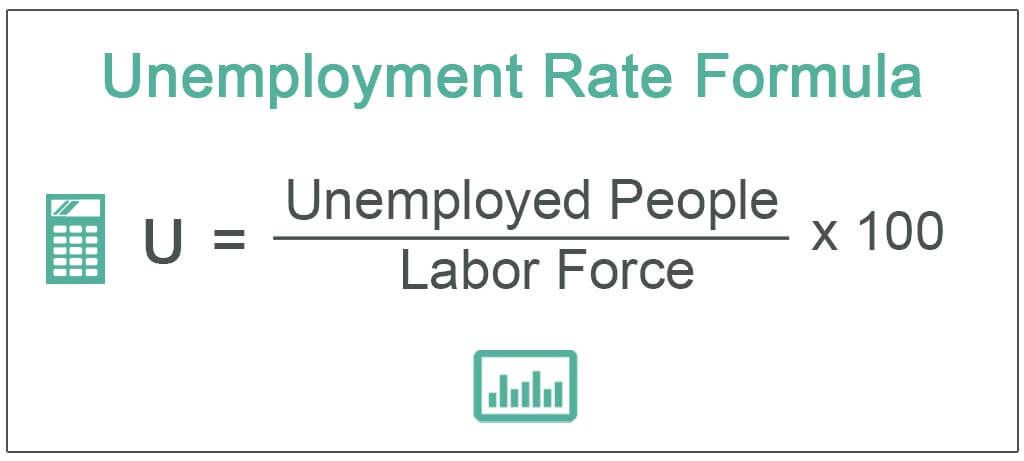
Unemployment Rate
The percentage of the labor force that is unemployed calculated as unemployed / labor force * 100
Equilibrium Unemployment Rate
The long-run rate toward which the unemployment rate naturally tends to return
Marginally Attached Workers
Individuals who want a job and searched in the past year but are not currently searching
Discouraged Workers
Marginally attached individuals who stopped job searching specifically because they believe no jobs are available
Underemployed
Workers employed below their skill level or working part-time involuntarily when seeking full-time work
Frictional Unemployment
Short-term unemployment associated with the time required to match job-seekers with open jobs
Structural Unemployment
Unemployment occurring when wages remain above market equilibrium due to institutional barriers or efficiency wages
Cyclical Unemployment
Unemployment caused by recessions or temporary downturns in the business cycle
Efficiency Wages
Higher-than-market wages voluntarily paid by employers to increase worker productivity and retention
Hysteresis
The condition where a prolonged recession leads to a permanent rise in the equilibrium unemployment rate
Inflation
A generalized rise in the overall price level across an economy
Deflation
A generalized fall in the overall price level across an economy
Consumer Price Index (CPI)
An index tracking the average price paid by urban consumers for a fixed basket of goods and services
Inflation Rate
The annual percentage change in the price index calculated as Current CPI - last years CPI / last years CPI *100
