South, East, and Southeast Asia
 Call Kai
 Learn
Learn Practice Test
 Spaced Repetition
 Match
Match Flashcards
 Knowt Play
1/45

There's no tags or description
Looks like no tags are added yet.
Name | Mastery | Learn | Test | Matching | Spaced | Call with Kai |
|---|
No analytics yet
Send a link to your students to track their progress
46 Terms
Hinduism
where: founded in India
what: the belief that the soul goes through reincarnation in an endless cycle; rebirth is affected by karma in the present life
diety: Vishnu, Brahma, and Shiva
Buddhism
where: founded in India
what: the belief that the cause of suffering in human life is greed, the only way to become free from suffering is to let go of materialistic possessions and reach nirvana
diety: the Buddha
Daoism
where: founded in China
what: the belief that you should have no resistance to fate and to align yourself with the Dao (the indefinable flow of the universe)
Confucianism
where: founded in China
what: the affirmation of accepted values and norms of behavior in primary social institutions and basic human relationships
Jainism
where: founded in India
what: belief in divine consciousness through self-help and self-reformation by using wisdom, self-control and pacifism
diety: none
Sikhism
where: founded in India
what: the belief that people of all faiths worship one Divine Being
diety: only one creator- ”ik onkor”
Shintoism
where: founded in Japan
what: the belief that every living thing in nature contains kami/gods
diety: Kami
circumambulation
(in Buddhist worship) walking around stupa clockwise, a process intended to bring the worshiper into harmony with the cosmos
seen in Great Stupa at Sanchi
bi
(in ancient China) jade disks carved as ritual objects for burial with the dead; often decorated w/ piercings that extended entirely through the object w/ surface carving
Buddha
(in Buddhism) an awakened one or enlightened one; the one who has become awakened to the ultimate truth of all phenomena
Bodhisattva
(in Buddhism) an enlightened being who delays personal nirvana in order to compassionately help others reach Buddhahood
iconoclasm
the destruction of religious or sacred images
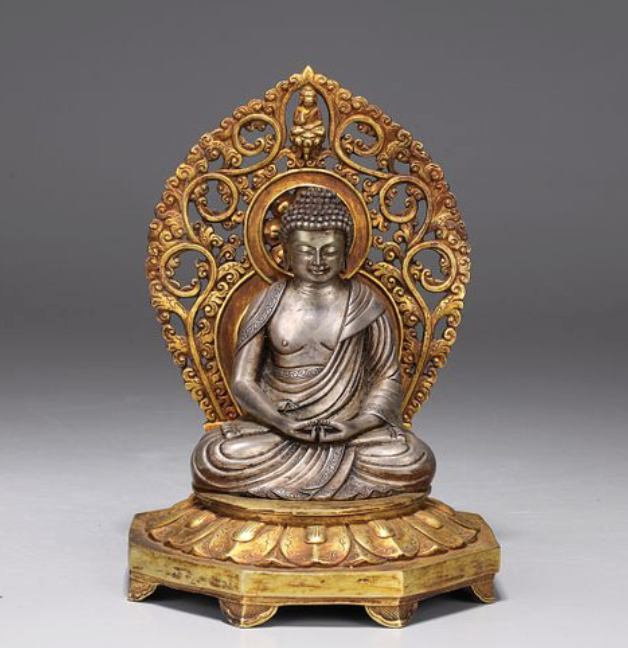
mandorla
(in Buddhist Japan) a lotus-petal-shaped nimbus surrounding the entire figure of a holy person
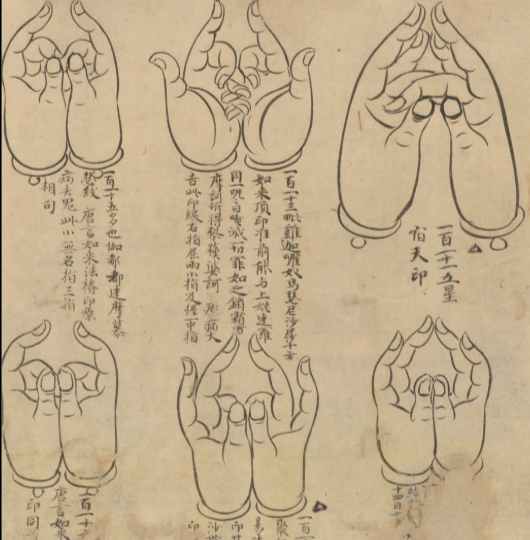
mudra
(in Buddhist and Hindu iconography) a stylized and symbolic hand gesture
nirvana
(in Buddhism and Hinduism) a blissful state brought about by absorption of the individual soul or consciousness into the supreme spirit (Maksha)
Sakyamuni
(in Buddhism) the Buddha
Shiva
(in Buddhism) a powerful diety who serves as a protector of Buddhist teachings
stupa
(in Buddhism) a large, mound-shaped Buddhist temple
torana
gateway in the stone fence around a stupa, located at cardinal points of a compass
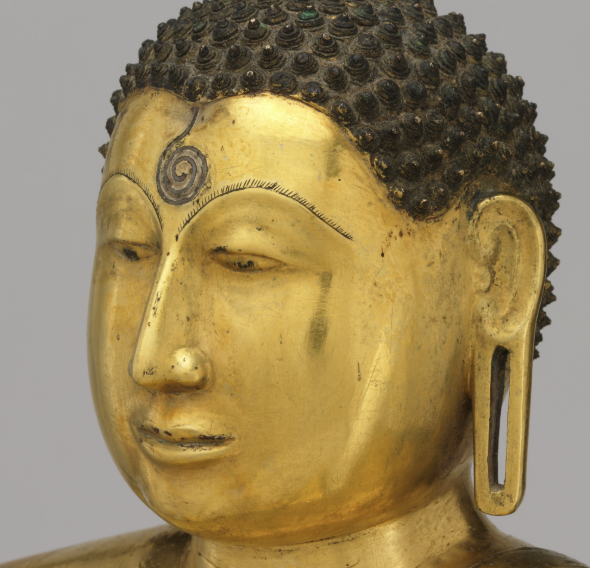
urna
a whorl of hair represented as a dot between the brows; one of the lakshanas of the Buddha
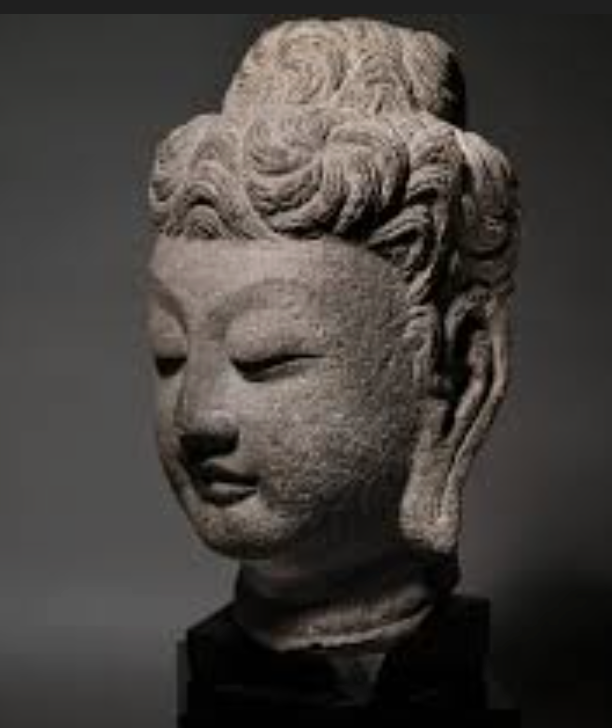
ushinisha
a knot of hair on the top of the head; one of the lakshanas of the Buddha
Vairocana
(in Buddhism) a celestial Buddha regarded as the supreme “Primordial Buddha” or the embodiment of emptiness, light, and universal truth
Vishnu
(in Hinduism) a principal diety in Hinduism, revered as the preserver and protector of the universe
wat
(in Buddhism) a Buddhist monastery in Cambodia
yakshi
ancient nature spirits, often portrayed as female dieties
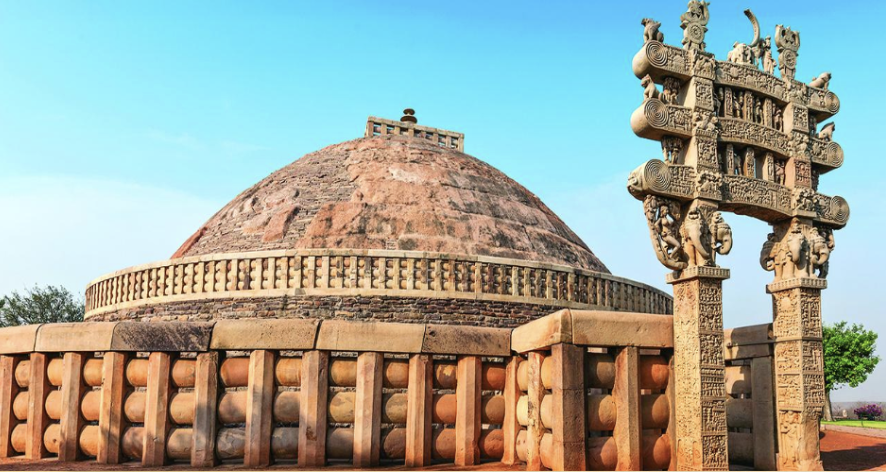
Great Stupa at Sanchi
300 BCE-100 CE, Buddhist
Madhya Pradesh, India
stone masonry
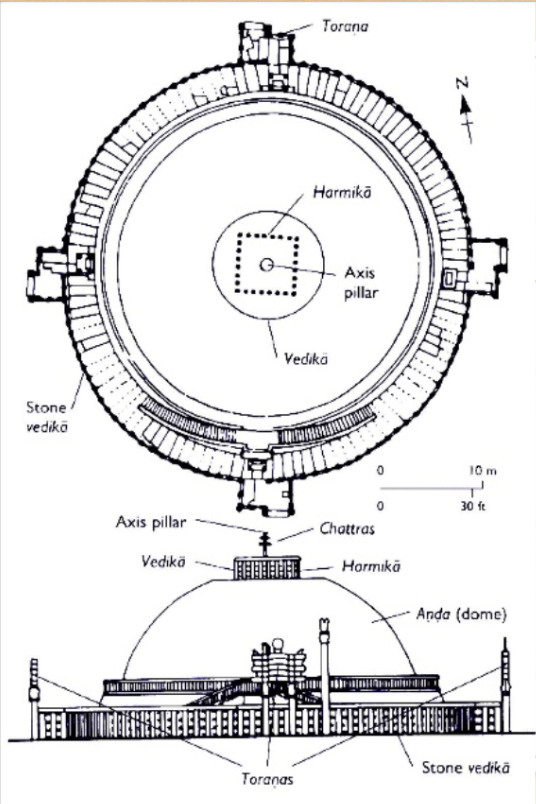
Great Stupa at Sanchi
stupa
reliquary monuments to house ashes of Buddha, important teachers, or other relics
seen in Great Stupa at Sanchi
axis mundi
a central, sacred pillar or bridge connecting heaven, earth, and the underworld
4 gates to stupa
birth
enlightenment
first sermon
death
seen in Great Stupa at Sanchi
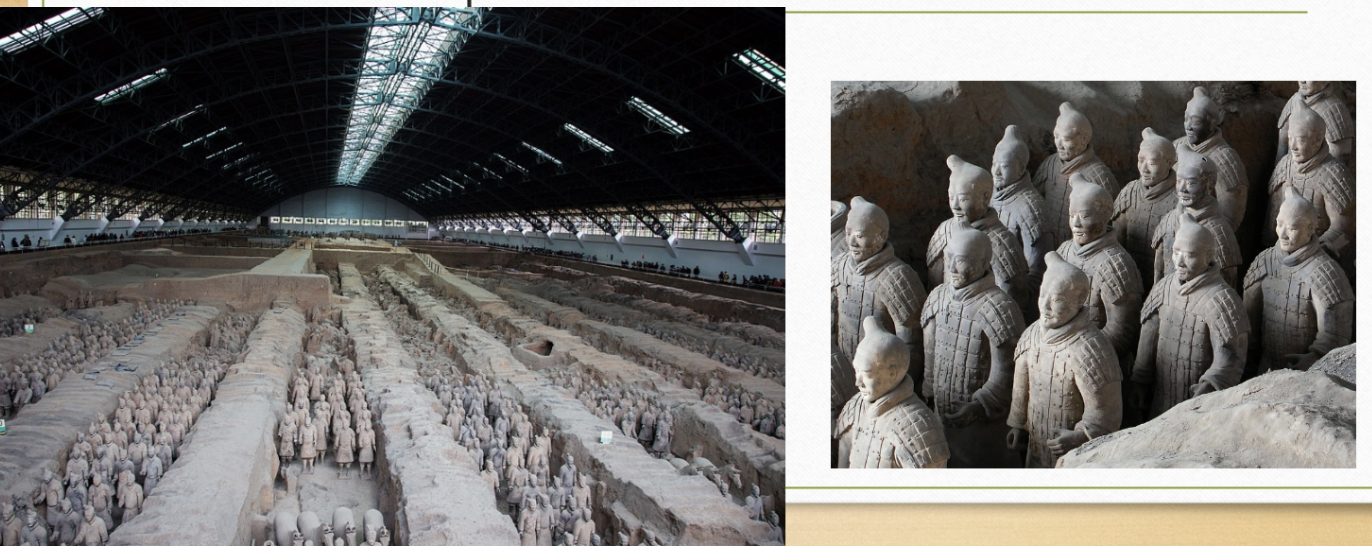
Terracotta Warriors
220 BCE, Qin Dynasty
Shaanxi, China
painted terracotta
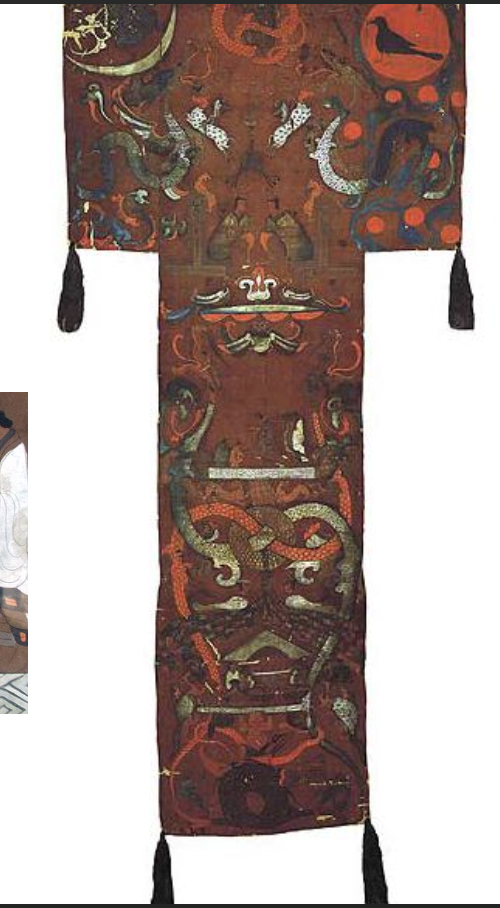
Funeral Banner of Lady Dai
180 BCE, Han Dynasty
China
paint on silk
order of depictions in Funeral Banner of Lady Dai
(top to bottom)
heavenly realm
Lady Dai + her attendants
body of Lady Dai w/ mourners
underworld
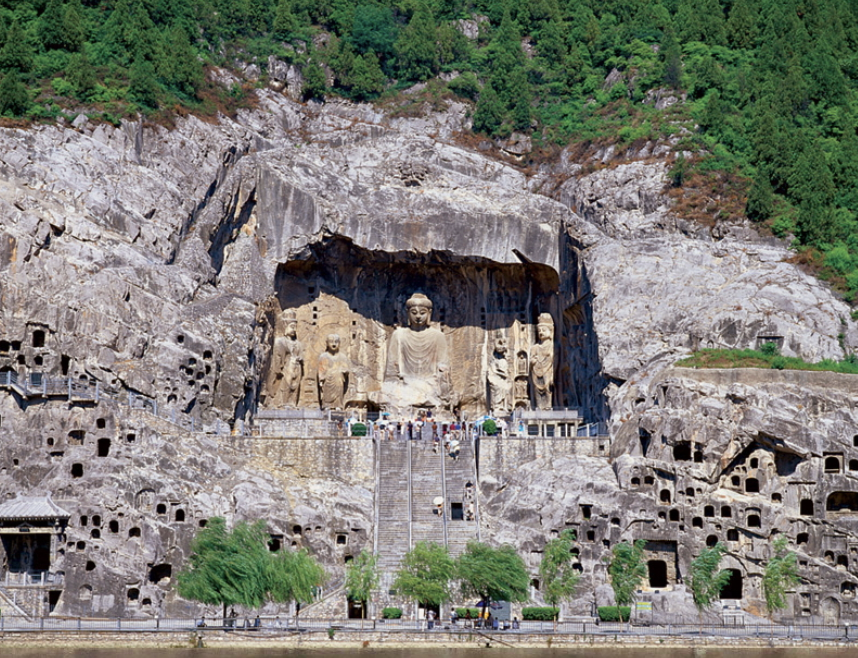
Longmen Caves
500 CE-1130 CE, Tang Dynasty
Luoyang, China
limestone
anatomy of Buddha
eyes: nearly closed to show meditation + inward looking
ears: elongated to show listening and empathy OR point to Buddha’s wealthy early life where jewelry would have been worn, shows Buddha’s choice to forsake that privilege
arms: long to show generosity
round heels: show an even temperament
full lips: symbolize eloquence
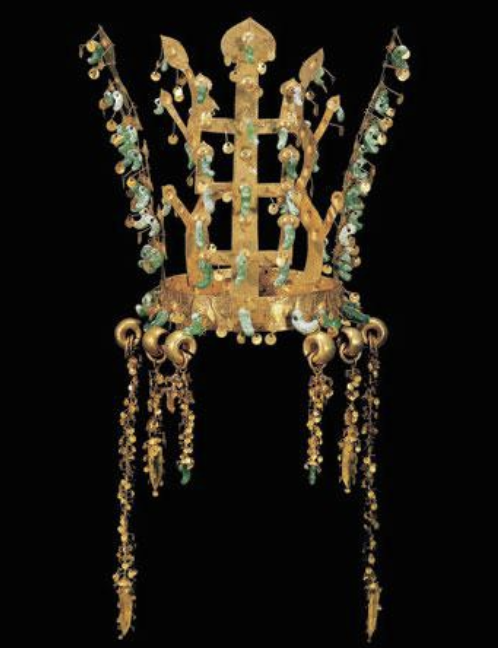
Gold and Jade Crown
5th-6th CE, Silla Kingdom
Silla Kingdom, Korea
metalwork
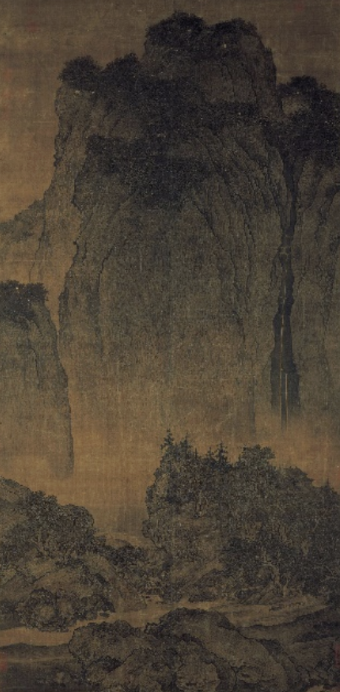
Travelers Among Streams and Mountains
1000 CE, Song Dynasty
China
ink on silk hanging scroll
Fan Kuan
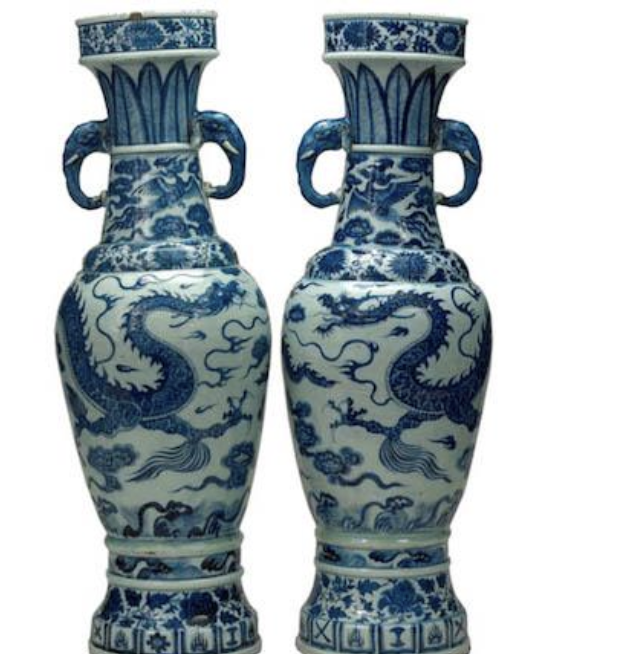
The David Vases
1350 CE, Yuan Dynasty
China
white porcelain w/ cobalt-blue underglaze
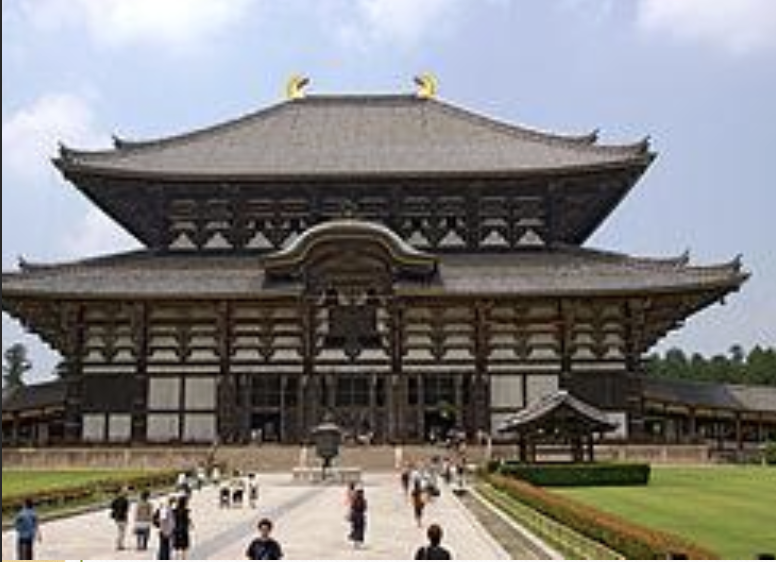
Todai-Ji
740 CE (original) + 1700 CE (rebuilt), Buddhist
Nara, Japan
cedar/wood, copper/bronze (Buddha)
Inside
Great Buddha (17th century)
Nio Guardian Statues (1200 CE)
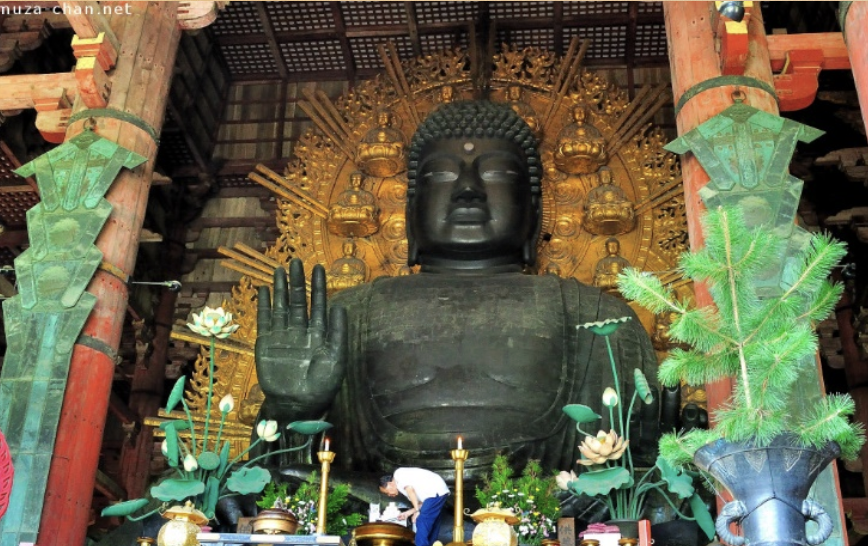
Great Buddha
12th century (original) 17th century (rebuilt), Buddhist
Todai-Ji, Nara, Japan
copper (original) + bronze (rebuilt)
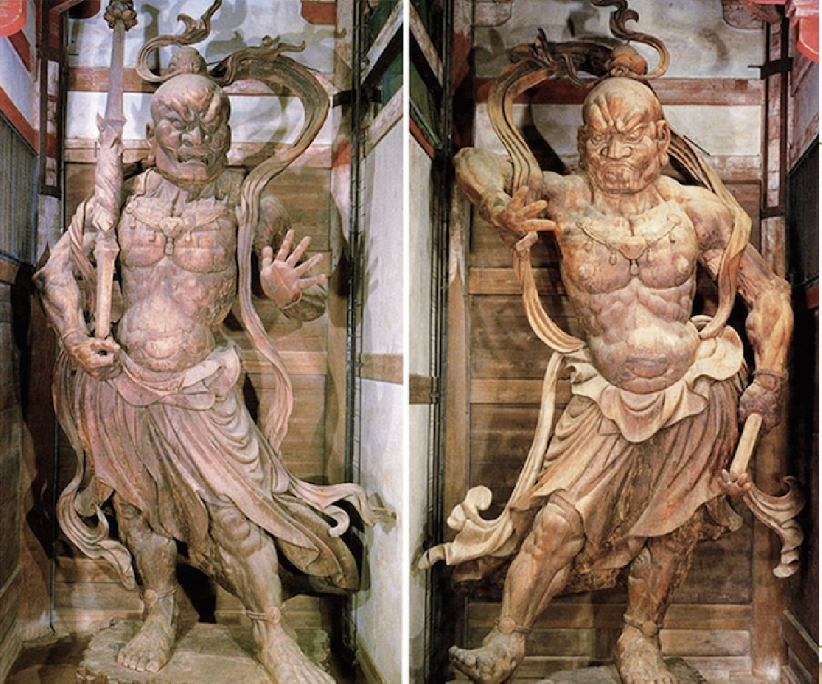
Nio Guardian Statues
1200 CE, Buddhist/Kei
Todai-Ji, Nara, Japan
wood
Unkei
characteristcis of Keischool style
~1200 CE
muscularity
dynamism
movement
seen in Todai-Ji
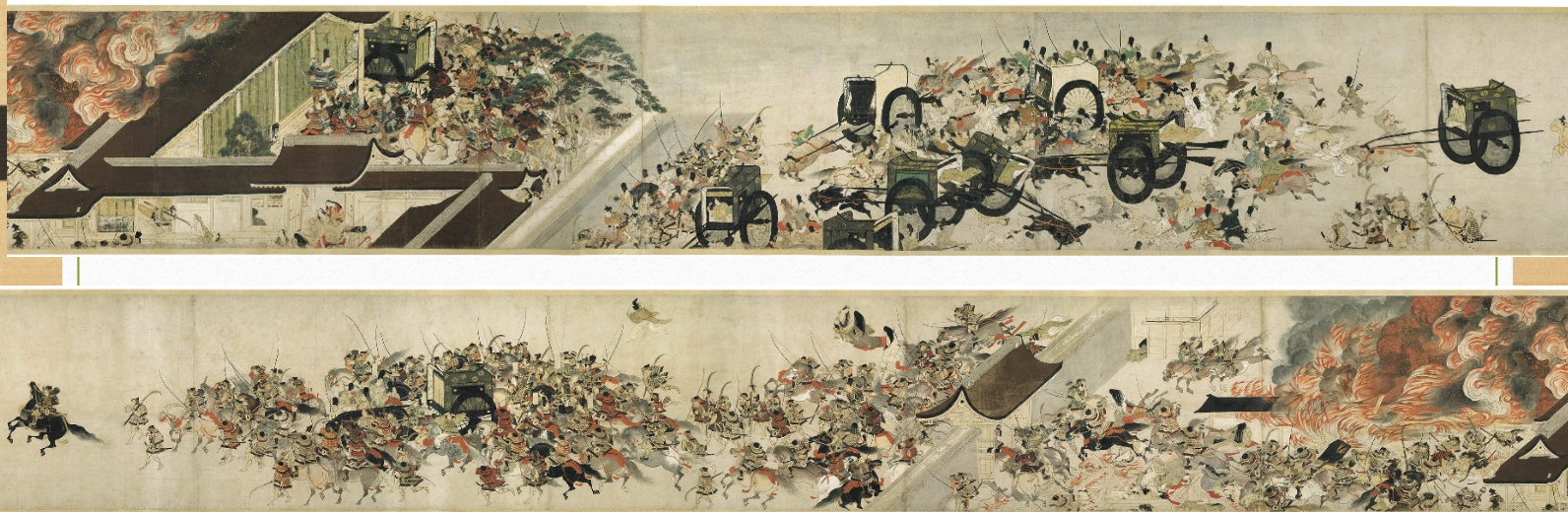
Night Attack on the Sanjo Palace
1250-1300 CE, Kamakura Period
Japan
ink and color on paper
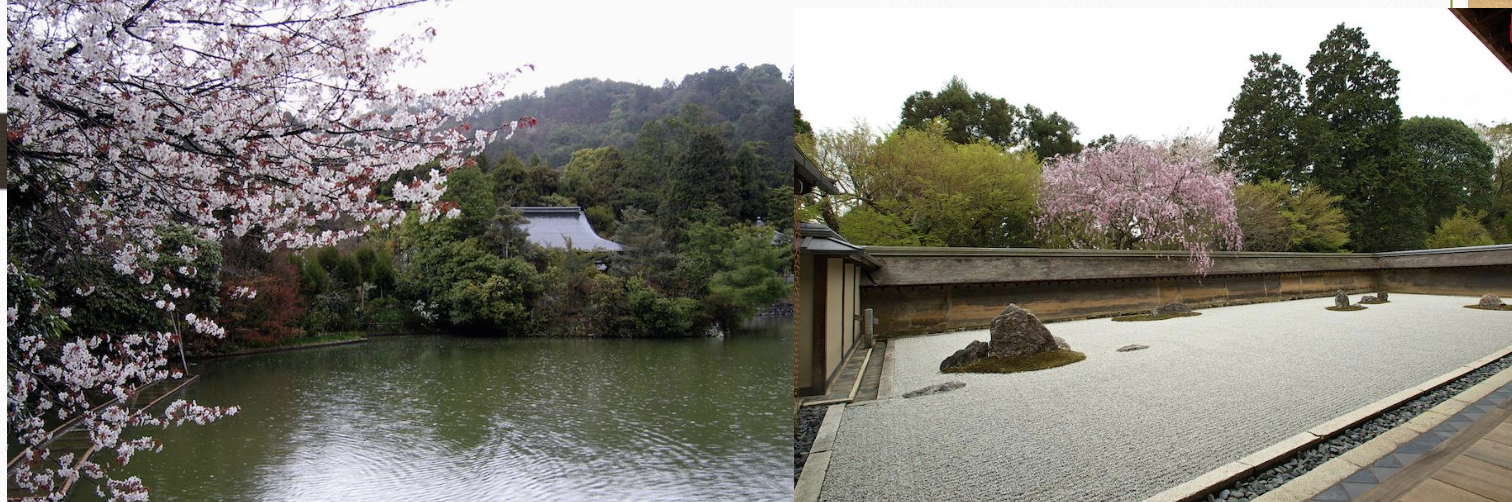
Ryoan-Ji Temple
1480 CE + 1700 CE (rock garden), Zen Buddhism
Kyoto, Japan
rock garden/dry garden
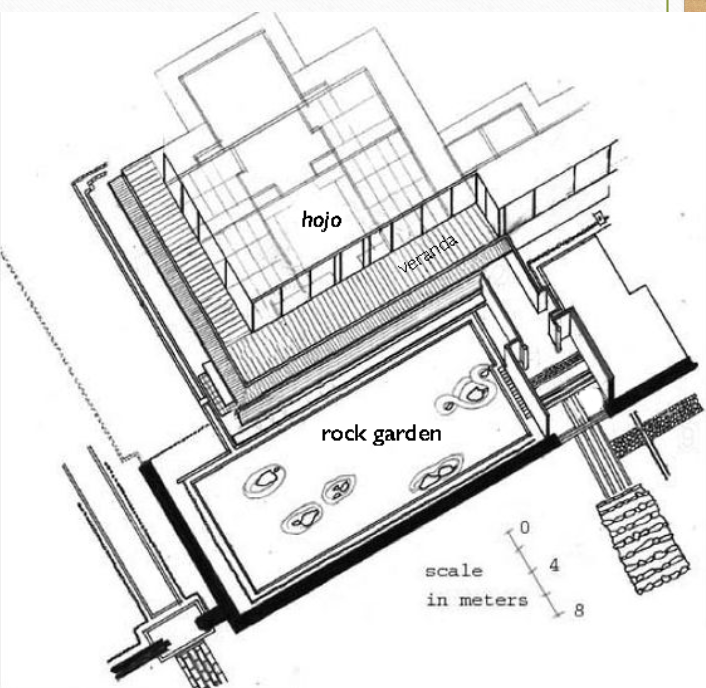
Ryoan-ji Temple
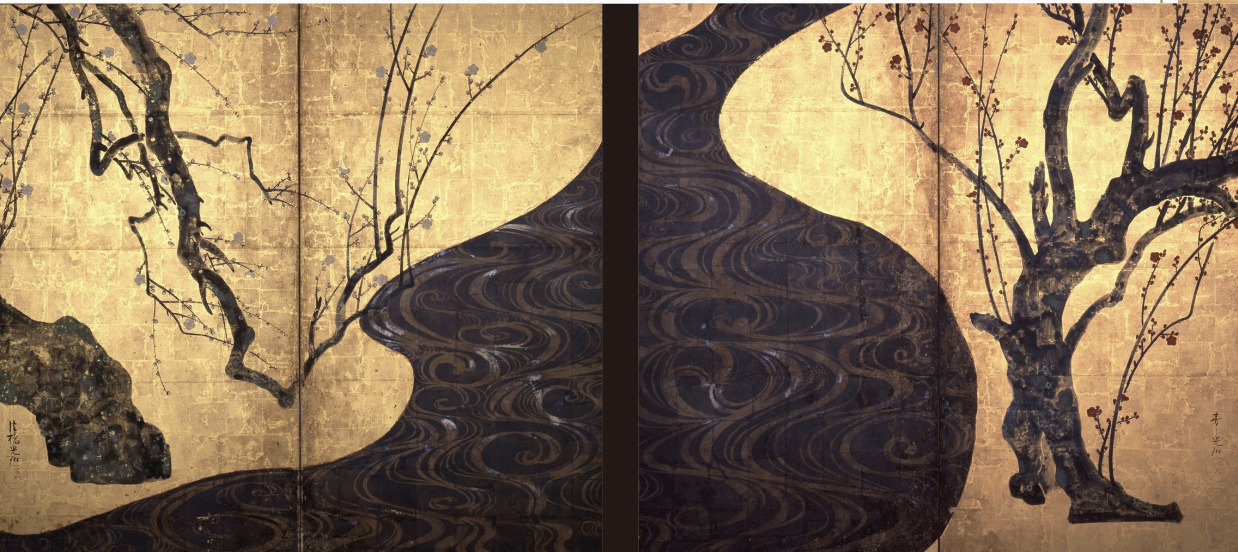
White and Red Plum Blossoms
1710 CE
Japan
ink and watercolor gold leaf on paper
Ogata Korin

