Financial Management
 Call Kai
 Learn
Learn Practice Test
 Spaced Repetition
 Match
Match Flashcards
 Knowt Play
1/43

There's no tags or description
Looks like no tags are added yet.
Name | Mastery | Learn | Test | Matching | Spaced | Call with Kai | Chat |
|---|
No analytics yet
Send a link to your students to track their progress
44 Terms
Key Financial Terms
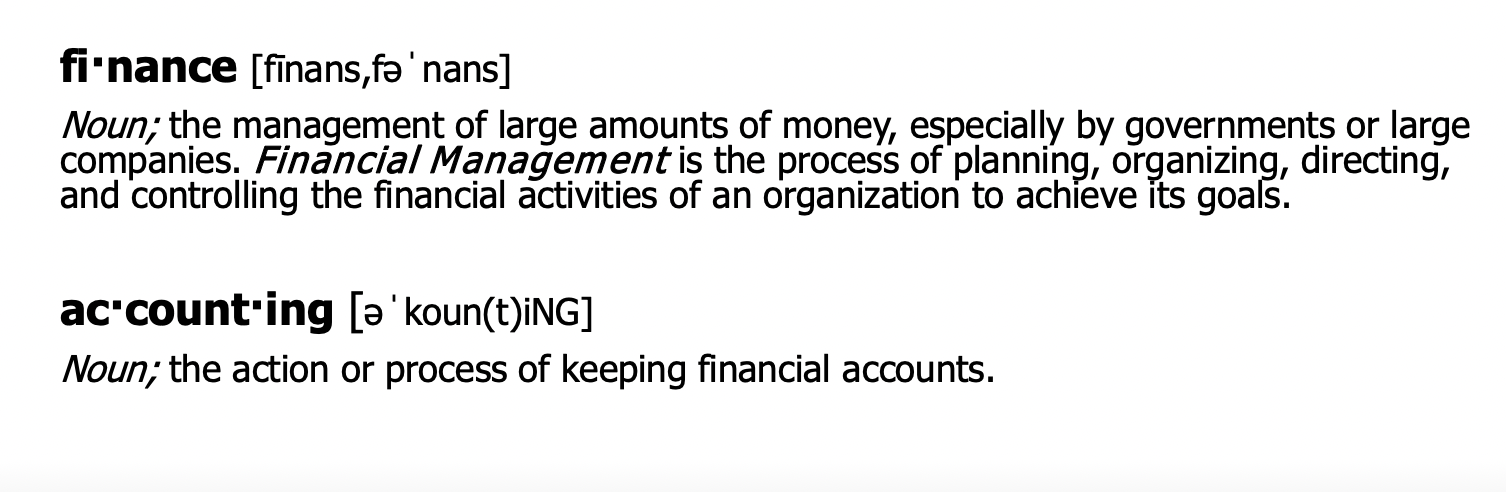
Finance vs Accounting
Some Basic Accounting Terms/Concepts

Basic Financial Statements
(Financial Reports)

Income Statement

Income Statement Elements


Income Statement Example

Sample Retail Pharmacy Income Statement

Cash Flow Statement

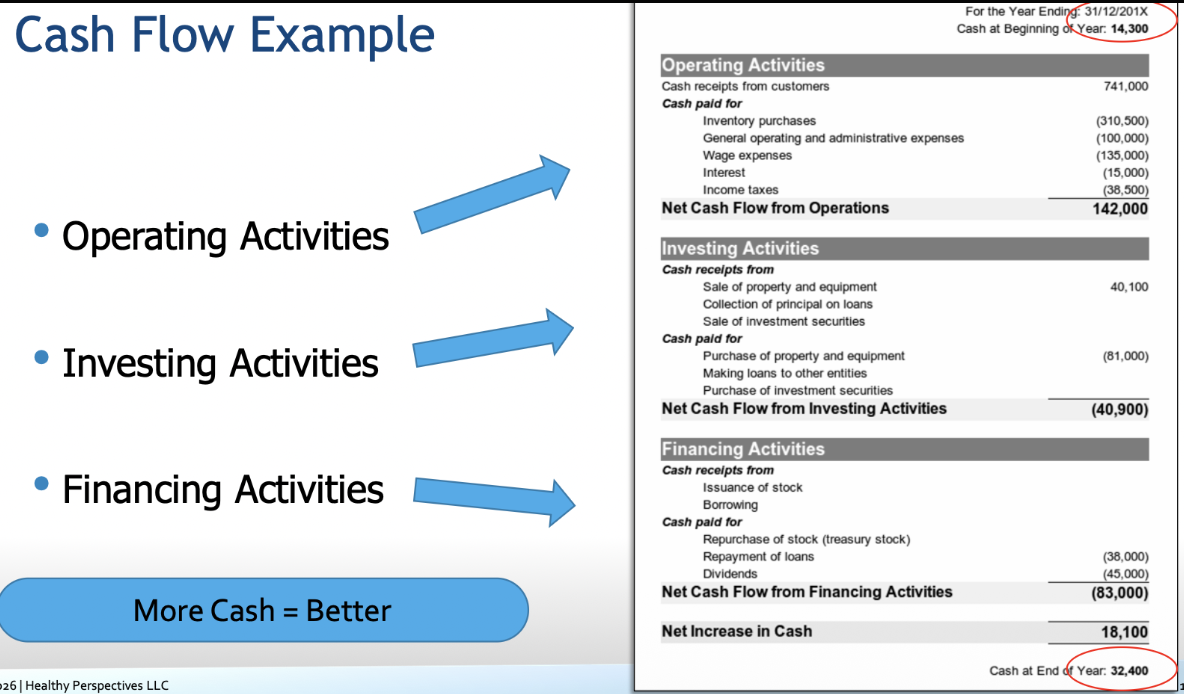
Cash Flow Example

Cash Flow Concern
Balance sheet

Balance Sheet example

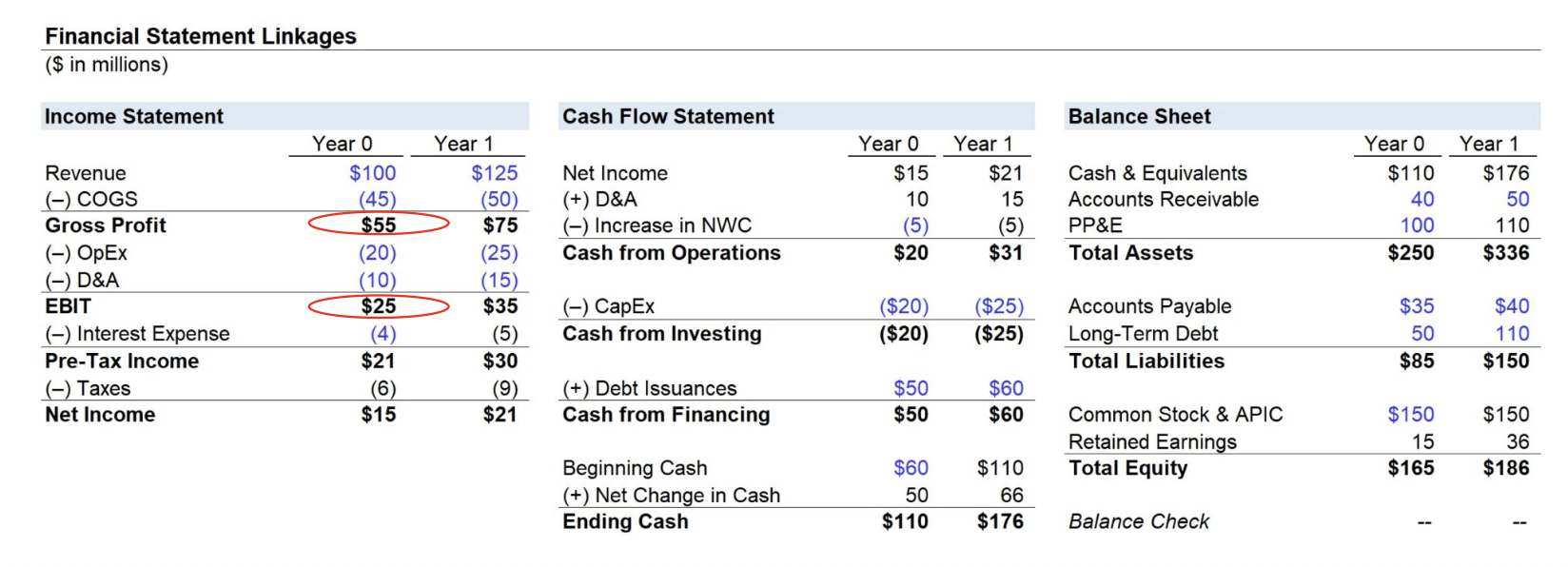
How the three statements work together

Financial Ratios

Key Financial Ratios

Using the Ratios In Practice
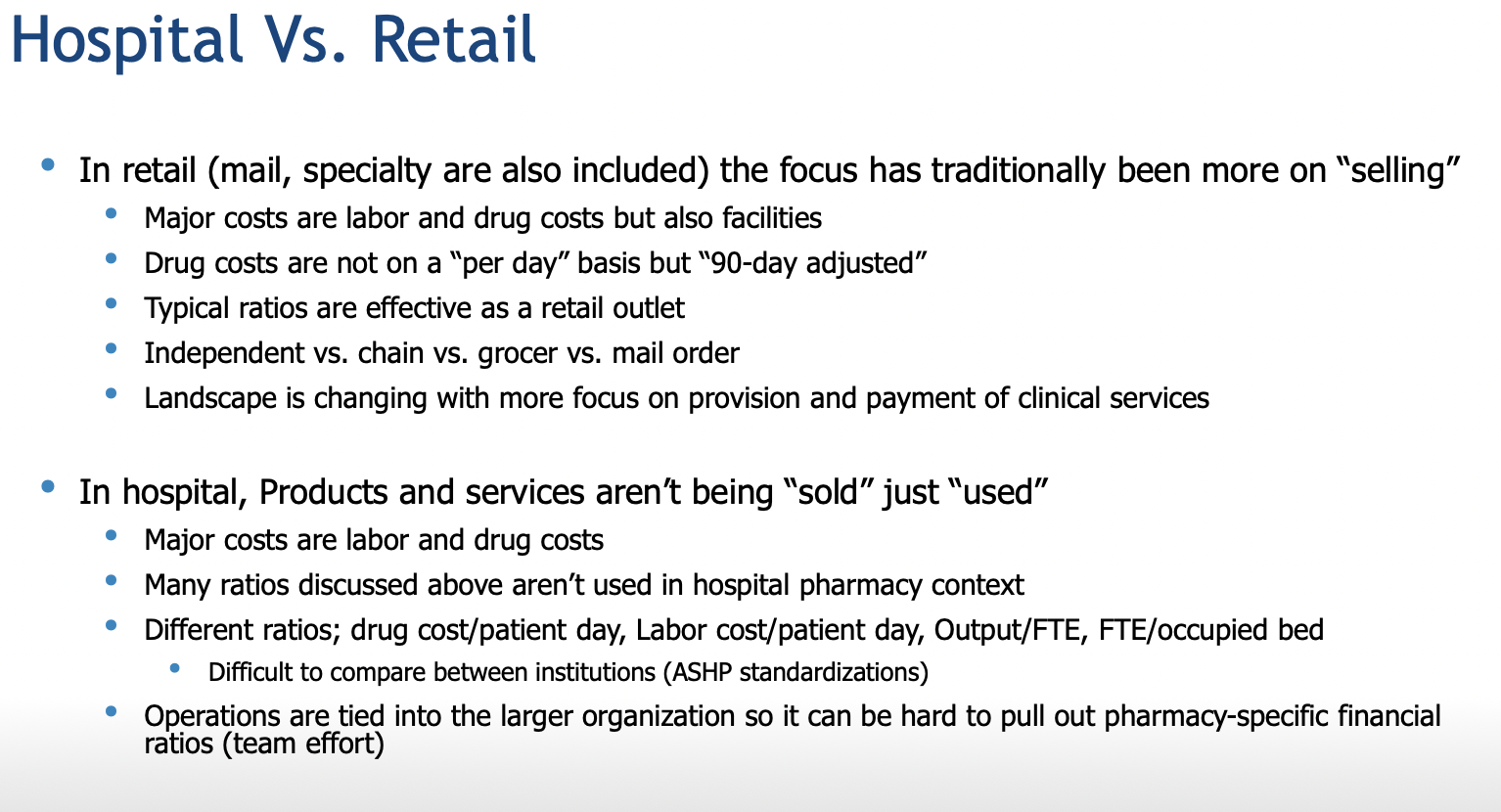
Hospital Vs. Retail
Hospital flow chart

Retail flow chart


Example of Rx economics for a third party payer

Vaccine Story

Employer Prescription Benefit Contracting

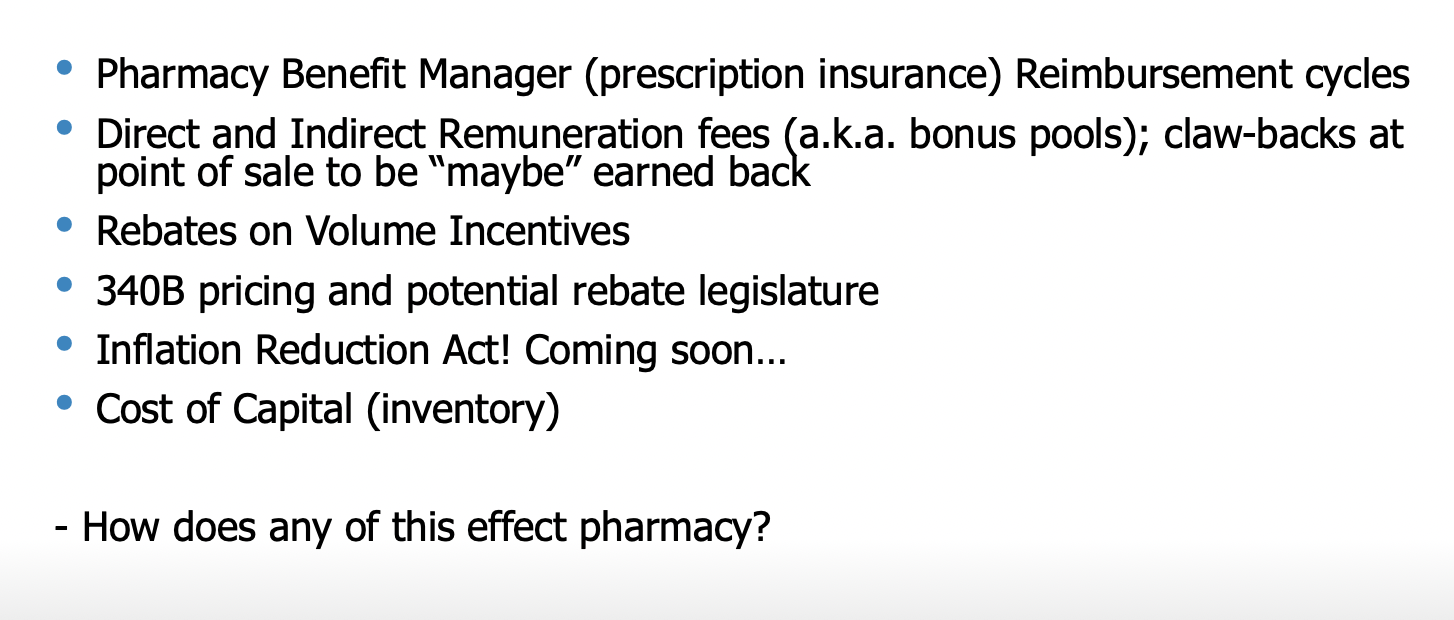
Reimbursement (PBM) Reform
Last year vs now

LAST YEAR: Inflation Reduction Act (IRA) Coming Soon…

TODAY: IRA Drug Negotiation From Forecast to Live Operations

Takeaways

Casey’s Takes

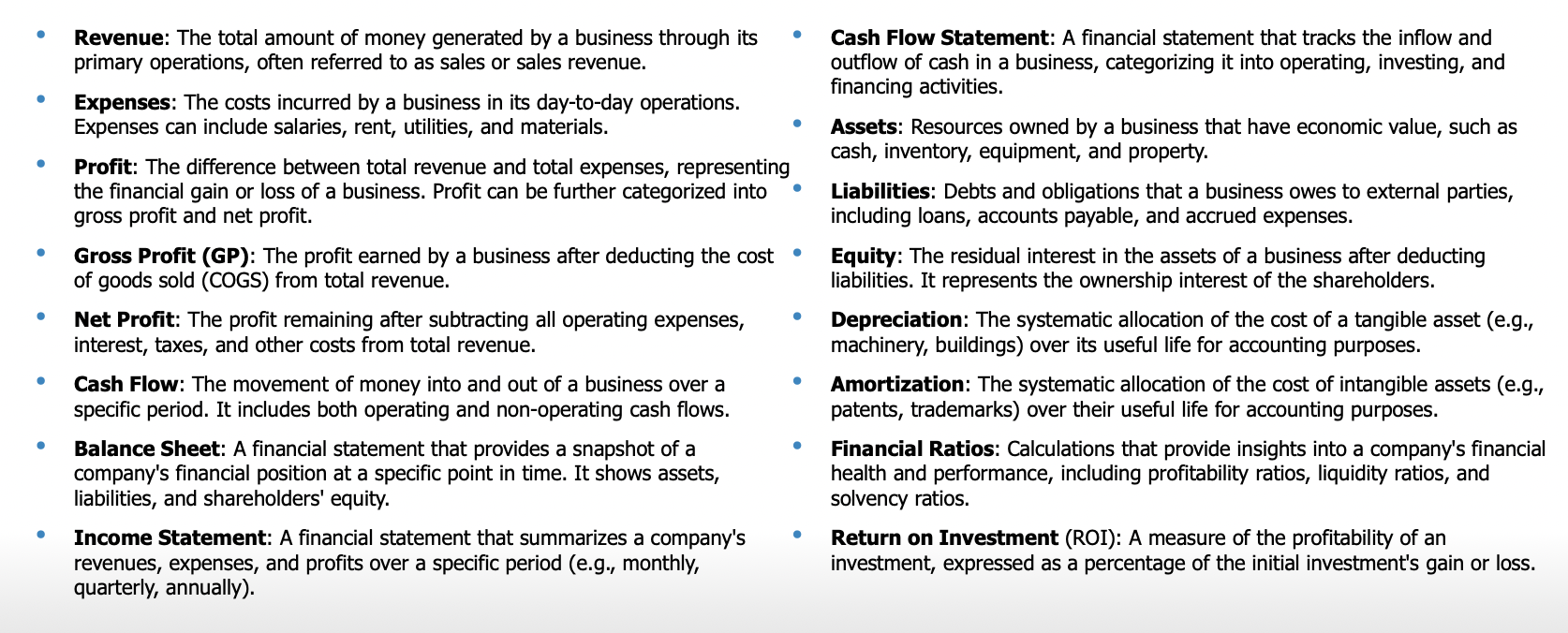
Revenue:
The total amount of money generated by a business through its primary operations, often referred to as sales or sales revenue
Expenses:
The costs incurred by a business in its day-to-day operations. Expenses can include salaries, rent, utilities, and materials.
Profit:
The difference between total revenue and total expenses, representing
the financial gain or loss of a business. Profit can be further categorized into
gross profit and net profit.
Gross Profit (GP):
The profit earned by a business after deducting the cost
of goods sold (COGS) from total revenue.
Net Profit:
The profit remaining after subtracting all operating expenses,
interest, taxes, and other costs from total revenue.
Cash Flow:
The movement of money into and out of a business over a
specific period. It includes both operating and non-operating cash flows.
Balance Sheet:
A financial statement that provides a snapshot of a
company's financial position at a specific point in time. It shows assets,
liabilities, and shareholders' equity
Income Statement:
A financial statement that summarizes a company's
revenues, expenses, and profits over a specific period (e.g., monthly,
quarterly, annually).
Cash Flow Statement:
A financial statement that tracks the inflow and
outflow of cash in a business, categorizing it into operating, investing, and
financing activities
Assets:
Resources owned by a business that have economic value, such as
cash, inventory, equipment, and property.
Liabilities:
Debts and obligations that a business owes to external parties,
including loans, accounts payable, and accrued expenses.
Equity:
The residual interest in the assets of a business after deducting
liabilities. It represents the ownership interest of the shareholders
Depreciation:
The systematic allocation of the cost of a tangible asset (e.g.,
machinery, buildings) over its useful life for accounting purposes.
Amortization:
The systematic allocation of the cost of intangible assets (e.g.,
patents, trademarks) over their useful life for accounting purposes
Financial Ratios:
Calculations that provide insights into a company's financial
health and performance, including profitability ratios, liquidity ratios, and
solvency ratios.
Return on Investment (ROI):
A measure of the profitability of an
investment, expressed as a percentage of the initial investment's gain or loss.