7.4 Trophic Levels in an Ecosystem
 Call Kai
 Learn
Learn Practice Test
 Spaced Repetition
 Match
Match Flashcards
 Knowt Play
1/17

There's no tags or description
Looks like no tags are added yet.
Name | Mastery | Learn | Test | Matching | Spaced | Call with Kai | Chat |
|---|
No analytics yet
Send a link to your students to track their progress
18 Terms
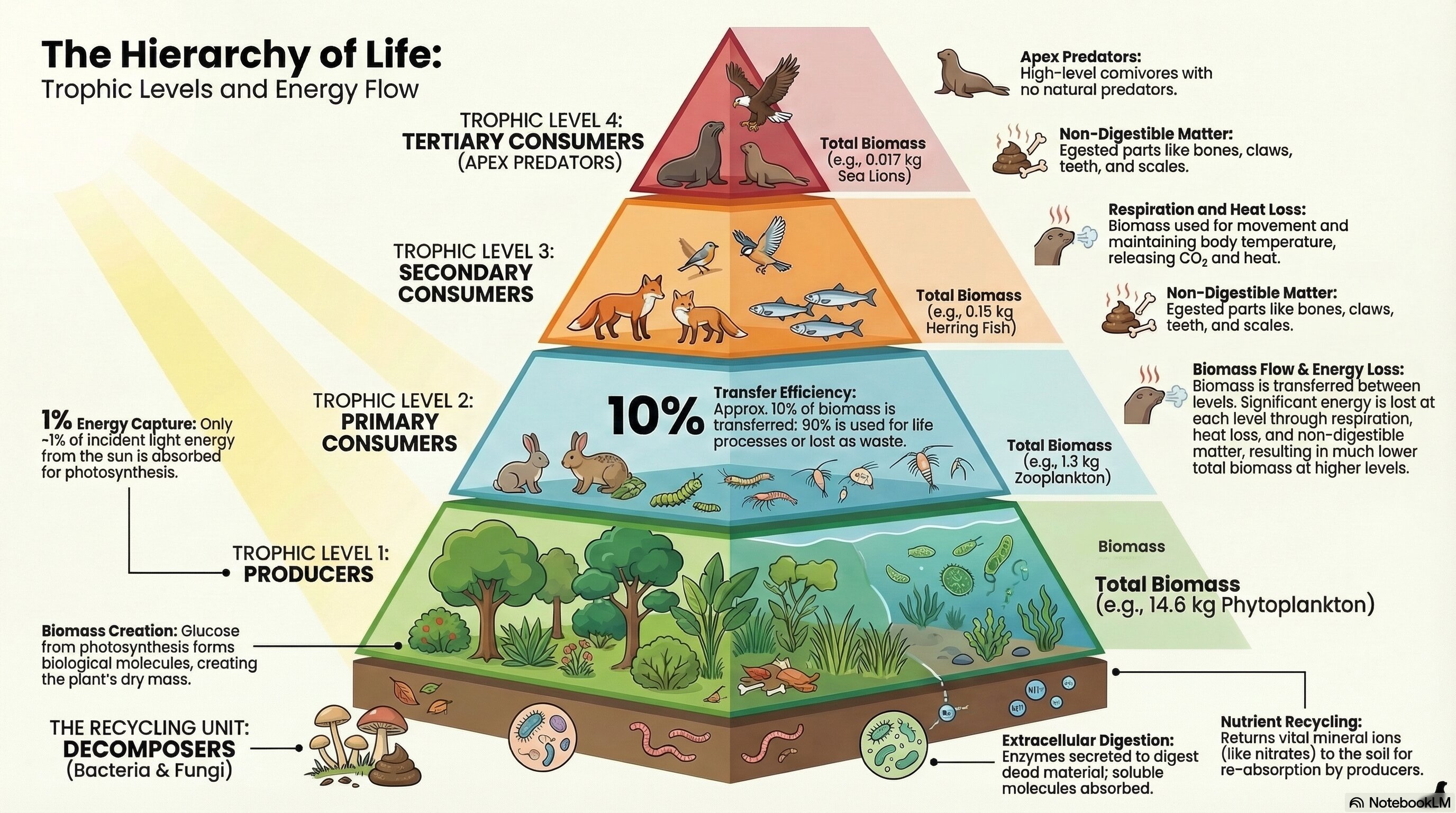
What are producers and what trophic level are they?
Plants and algae that make their own food.
1
What are primary consumers and what trophic level are they?
Herbivores that eat plants/algae.
2
What are secondary consumers and what trophic level are they?
Carnivores that eat herbivores
3
What are tertiary consumers and what trophic level are they?
Carnivores that eat other carnivores
4
What are apex predators?
Carnivores with no predators
How do decomposers break down dead plant and animal matter?
Secreting enzymes into the environment
Small soluble food molecules diffuse into microorganism
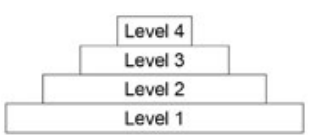
What is the order of tropic levels?
level 1 (producers) → level 2 (primary consumers) → level 3 (secondary consumers) → level 4 (tertiary consumers)
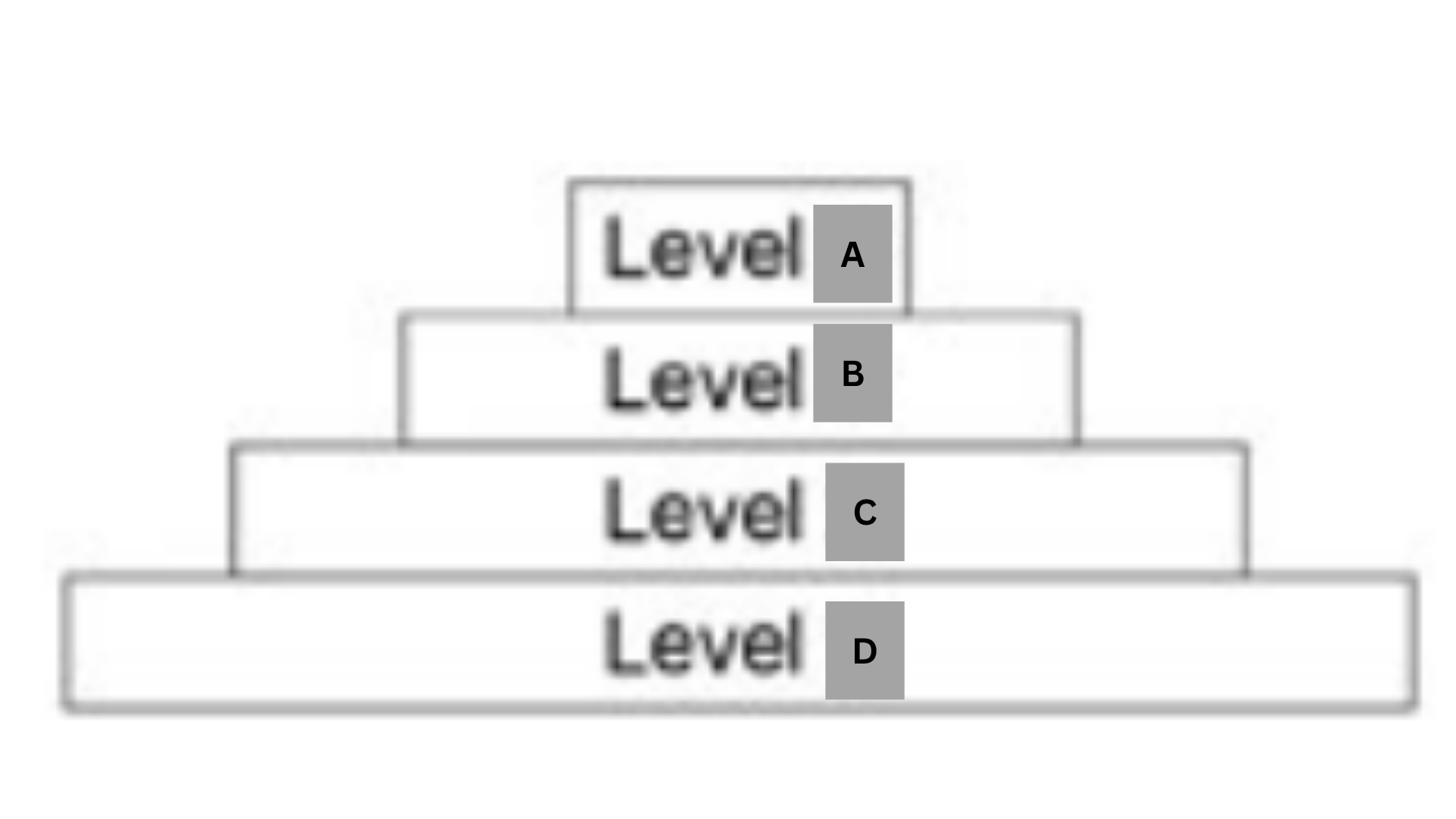
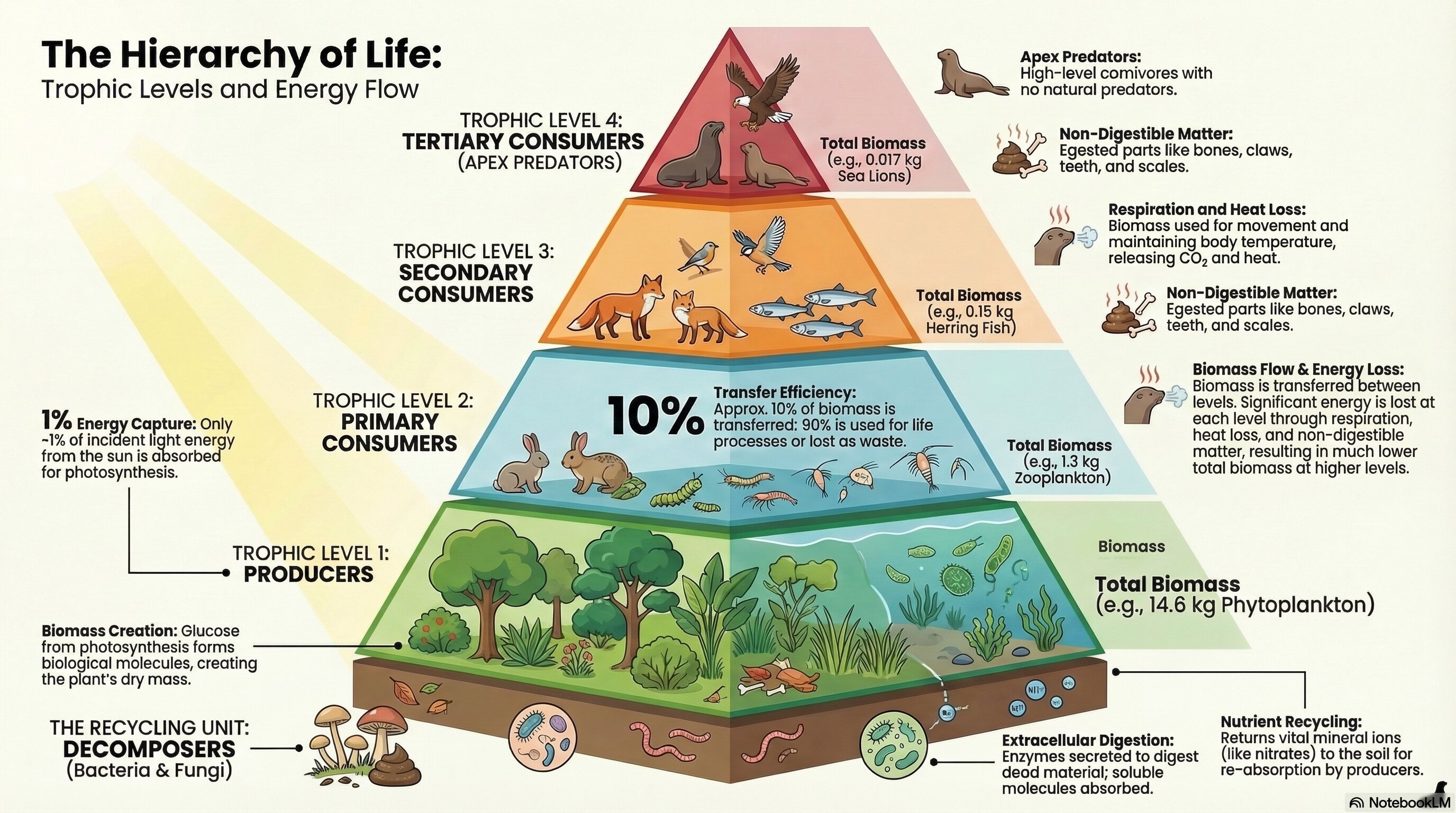
Label this pyramid of biomass.
A — 4
B — 3
C — 2
D — 1
Producers are mostly ________ and ________ which transfer about 1% of the incident _________ from light for ______________.
plants
algae
energy
photosynthesis
What percentage of biomass from each trophic level is transferred to the level above it?
10%
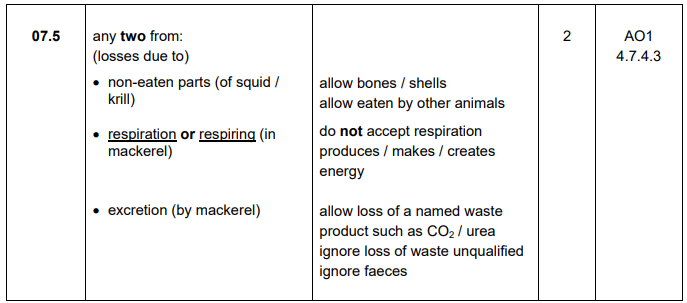
What are losses of biomass due to? (3)
Not all ingested material is absorbed — some is egested as faeces
Some absorbed material is lost as waste — e.g:
carbon dioxide and water in respiration
urea in urine
Not all biomass can be eaten — e.g. bones, claws, teeth etc.
Large amounts of _________ are used in repiration.
glucose
How do you calculate the efficiency of biomass transfers?
efficiency = (biomass available after transfer ÷ biomass available before transfer) × 100
![<ul><li><p>A food web contains several food chains.</p></li><li><p><strong>Figure 9 </strong>shows a food web.</p></li><li><p>The animals in <strong>Figure 9</strong> get their energy by eating other organisms</p></li></ul><p>Describe how the algae get energy. [2 marks]</p>](https://assets.knowt.com/user-attachments/6d203744-0495-485f-ade3-6602bdd502b5.png)
A food web contains several food chains.
Figure 9 shows a food web.
The animals in Figure 9 get their energy by eating other organisms
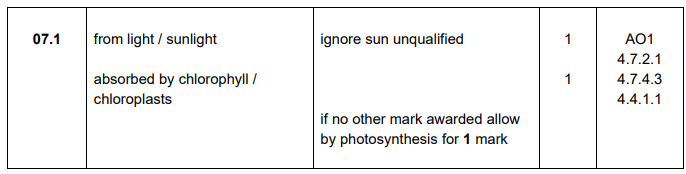
Describe how the algae get energy. [2 marks]
From light
Absorbed by chlorophyll
![<ul><li><p>A food web contains several food chains.</p></li><li><p><strong>Figure 9 </strong>shows a food web.</p></li></ul><p>Name one primary consumer in <strong>Figure 9</strong>. [1 mark]</p>](https://assets.knowt.com/user-attachments/584dc9c7-d60d-4d70-bfa0-6b4ffd89b651.png)
A food web contains several food chains.
Figure 9 shows a food web.
Name one primary consumer in Figure 9. [1 mark]
Krill

![<ul><li><p>A food web contains several food chains.</p></li><li><p><strong>Figure 9 </strong>shows a food web.</p></li></ul><p>Name one producer in <strong>Figure 9</strong>. [1 mark]</p>](https://assets.knowt.com/user-attachments/9ad52f0f-9c00-4b9e-bd06-08506f84225c.png)
A food web contains several food chains.
Figure 9 shows a food web.
Name one producer in Figure 9. [1 mark]
Algae
![<ul><li><p>A food web contains several food chains.</p></li><li><p><strong>Figure 9 </strong>shows a food web.</p></li><li><p>The different food chains in <strong>Figure 9</strong> have different numbers of organisms.</p></li></ul><p>Complete <strong>Figure 10</strong> to show a food chain in <strong>Figure 9</strong> with five organisms, including the human. [1 mark]</p><p><strong>Figure 10</strong></p><p>1. _________________________</p><p>2. _________________________</p><p>3. _________________________</p><p>4. _________________________</p><p>5. Human</p>](https://assets.knowt.com/user-attachments/c3065a8a-752c-4ddd-af7d-d272067ac03f.png)
A food web contains several food chains.
Figure 9 shows a food web.
The different food chains in Figure 9 have different numbers of organisms.
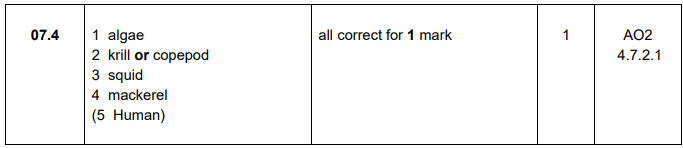
Complete Figure 10 to show a food chain in Figure 9 with five organisms, including the human. [1 mark]
Figure 10
1. _________________________
2. _________________________
3. _________________________
4. _________________________
5. Human
Algae
Krill
Squid
Mackerel
![<ul><li><p>A food web contains several food chains.</p></li><li><p><strong>Figure 9 </strong>shows a food web.</p></li><li><p><strong>Figure 9</strong> shows that mackerel eat krill and squid.</p></li><li><p>The biomass of mackerel is much less than the combined biomass of krill and squid.</p></li><li><p>One reason for this is that the mackerel cannot digest all parts of the krill and squid.</p></li></ul><p>Give two other reasons. [2 marks]</p>](https://assets.knowt.com/user-attachments/41465c59-6129-4baf-b1a0-fbeb6f8740db.png)
A food web contains several food chains.
Figure 9 shows a food web.
Figure 9 shows that mackerel eat krill and squid.
The biomass of mackerel is much less than the combined biomass of krill and squid.
One reason for this is that the mackerel cannot digest all parts of the krill and squid.
Give two other reasons. [2 marks]
Non-eaten parts
Respiration