PRAXIS: CLEFT PALATE/CRANIOFACIAL ANOMALIES/GENETIC SYNDROMES
 Call Kai
 Learn
Learn Practice Test
 Spaced Repetition
 Match
Match Flashcards
 Knowt Play
1/31

There's no tags or description
Looks like no tags are added yet.
Name | Mastery | Learn | Test | Matching | Spaced | Call with Kai | Chat |
|---|
No analytics yet
Send a link to your students to track their progress
32 Terms
clef lip
opening in closed structure that should not be there (mouth in this scenario)
more often unilateral
congenital
cleft palate
opening in hard palate that should not be there
when do the facial features develop in utero?
3 - 8 weeks
stomodeum
primitive mouth and nose developed in utero (3 - 8 weeks)
develops into the frontonasal process which includes upper lip and primary palate
maxillary process
forms most of mouth, cheeks, and face in utero
when does the lip/alveolar ridge close in utero?
7 weeks
mandibular process
forms lower jaw/chin/lips in utero and all fuses together by 4th or 5th week
when is growth of the hard/soft palates identifiable in utero?
5th week
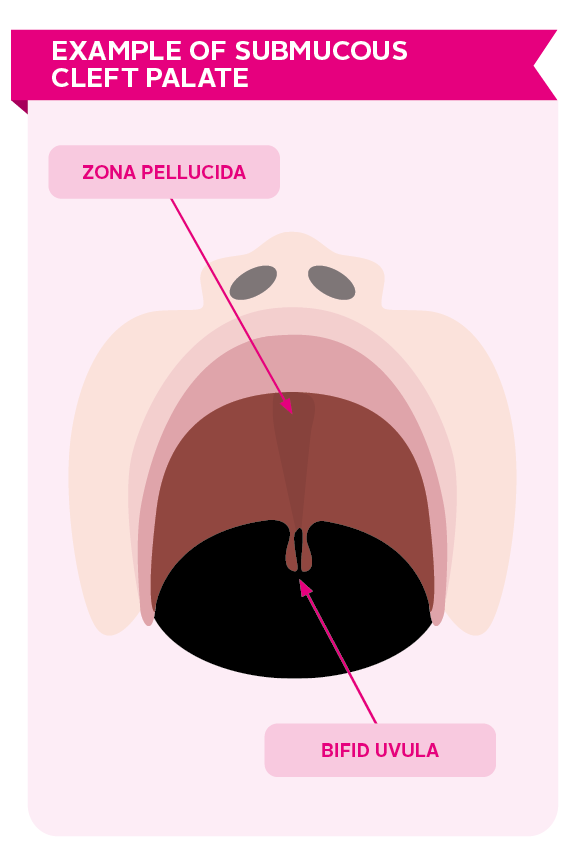
submucous cleft
tissue of hard/soft palate fuse but underlying muscle/bone tissue does not
makes a lack of muscle tissue/positioning
bifid uvula might also be present
kid with this usually has hypernasal speech
treatment must be medical
congenital palatopharyngeal incompetence
velopharyngeal closing valve is impaired
laryngeal structures can be normal tho
hypernasal speech that can be helped with therapy or medical
hearing loss and clefts
HL, otitis media, and Eust tube dysfunction are common in kids with cleft palates.
ETD probo from lack of contraction of tensor veli platini. after surgery this can be improve but might never be ‘normal’
SSD and clefts
most issues are with unvoiced sounds bc there’s no voicing, just muscle work
biggest issues are sibilants (/s/), high pressure stops (/b/ /p/) and fricatives (/f/)
lang disorders and clefts
delayed lang development but gets better as they grow older
usually good receptive but delayed expressive language
laryngeal/phonation disorders and clefts
more likely to have vocal nodules, hypertropy and edema of VF, vocal hoarseness, and hyper/hponasality
treatment of SSD in cleft
treat in order of sounds → syllables → words → phrases → sentences
teach more visible sounds before less visible ones
stops and fricatives first
/k/ and /g/ might be inappropriate goals if velopharyngeal functioning in inadequate
use auditory and visual ques
minimal pairs can help, no proof for OMEs
treatment of lang disorders in cleft
work with parents to stimulate expressive communication
treatment of resonance disorders in cleft
IF BC VPI: don’t treat until surgery
if kid is hypernasal that can be helped through SLP therapy
Angelman Syndrome
chromosome 15 is duplicated from dad or deleted from mom
diagnosed between 3 and 7
developmental delay, seizures, jerky/stiff gait, happy and easily excited, short attention span, and hypermotoric behavior
very little words these guys. nonverbal and receptive skills are so much stonger
Apert syndrome
spontaneous autosomal dominant mutations (cause)
syndactyly (fused digits), craniosynostosis (bones in brain fuse too early),
hyponasality and articulation disorders involving mostly alveolars and labiodentals
some normal intelligent, some mild to mod ID
cri du chat syndrome
absence of short arm of 5th chromosome
low set ears, narrow oral cavity, laryngeal hypoplasia, microcephaly, and oral clefts
comm problems include artic and language problems that come with ID
Crouzon syndrome
craniosynostosis, hypoplasia of midface/maxillar/both
some with conductive hearing loss, artic disorders assocaited with HL and CLFTP, hyponasality, and language disorders
Down syndrome
extra chromosome 21
can have HL, may be lang delays/disorders (esp. morphological and syntactic but with p good vocab skills), hypernasality, and artic can be there
Fragile X
caused by expansion of nucleic acid CCG
large/long/poorly framed pinna, big jaw and high forehead
can have mood instability, anxiety, seizures, aggression, ID
uses a lot of jargon, echolalia, lack of nonverbal means of comm, voice issues, and artic disorders, speech intelligibility can be an issue (read: cluttering)
Hurler’s Syndrome
rare congenital metabolic disease. most die early
dwarfism, hunched back, ID, short thick bones, deafness, hoarseness bc of metabolites in larynx
Landau-Kleffner syndrome
unknown cause and rare
healthy kids around 3 - 7 lose ability to comprehend and speak language (gradual or sudden aphasia)
treatment usually involved meds and speech therapy
Marfan syndrome
inherited disorder
can affect body’s connective tissue and may include bone overgrowth and loose joints
lung disease is common
austin carlile
Pierre-Robin syndrome
autosomal recessive inheritance
mandibular hypoplasia, cleft in soft palate, velopharyngeal incompetence, deformed pinna, low set ears,
glossoptosis: tongue is positioned posteriorly, causing blockage in airway and pharynx that impacts eating and breathing
can have feeding tube, hearing loss, hypernasality, artic disorders and lang delays
Prader Willi Syndrome
sus caused by autosomal dominant inheritance
low muscle tone and feeding issues (not enough and then waaay too much)
artic and oral motor issues and hypernasality, prosody can also be impacted
hypotonia: slow movement of articulators with slow rate of speech and imprecise artic
altered growth of larynx which leads to pitch variations
cognitive sequencing problems and ID
behavior issues
Treacher Collins Syndrome
caused by autosomal dominant inheritance and some spont mutation
coloboma, underdeveloped facial bones, small chin and cheek,
can have HL, and lang disorders associated with HL, can have hypernasality and artic issues
Turner Syndrome
in girls caused by missing or deformed X chromosome (in both genders in Noonan syndrome)
infertility (LUCKY 👿 ), swelling of feet/neck/hands, narrow maxilla
HL and OM common, lang and artic issues associated with HL/visualspatial/attention problems
Usher syndrome
caused by autosomal recessive inheritance in most cases but can be X linked in rare ones
blind and deaf
SNHL, lang and artic issues that come with HL
Velocardiofacial syndrome
commonly associated with cleft palate
cause not known
often middle ear infections, learning problems, speech/feeding issues
lang/artic/ID issues
feeding issues when baby