Viral, bacterial, mycotic diseases

0.0(0)
studied byStudied by 0 people
0.0(0)
full-widthCall Kai
learnLearn
examPractice Test
spaced repetitionSpaced Repetition
heart puzzleMatch
flashcardsFlashcards
GameKnowt Play
Card Sorting

1/13

encourage image

There's no tags or description

Looks like no tags are added yet.

Study Analytics
Name
Mastery
Learn
Test
Matching
Spaced

No study sessions yet.

14 Terms

1
New cards

Mycobacteriosis

Pathogen

Susceptible hosts and age categories

Clinical signs

Pathological changes

Prevention and therapy

Diagnosis

Mycobacteriosis (Fish Tuberculosis)

Causative agents:

  • Mycobacterium marinum, M. fortuitum+ 16 other species

  • Others: M. chelonae, M. neoaurum (esp. salmonids)

Hosts:

  • All fish species (probably the most common chronic disease affecting aquarium fish)

  • Zoonotic → non-healing skin ulcers (“fish tank granuloma”)

Transmission:

  • Horizontal: ingestion most common, skin ulcers, urine, feces

  • Vertical: transovarian ( not in salmonids)

Clinical signs:

  • Emaciation, poor growth

  • Retared sexual maturation, or decreased reproductive performance

Pathological changes:

  • Chronic, non-healing skin ulcers

  • Fin erosion, skeletal deformities

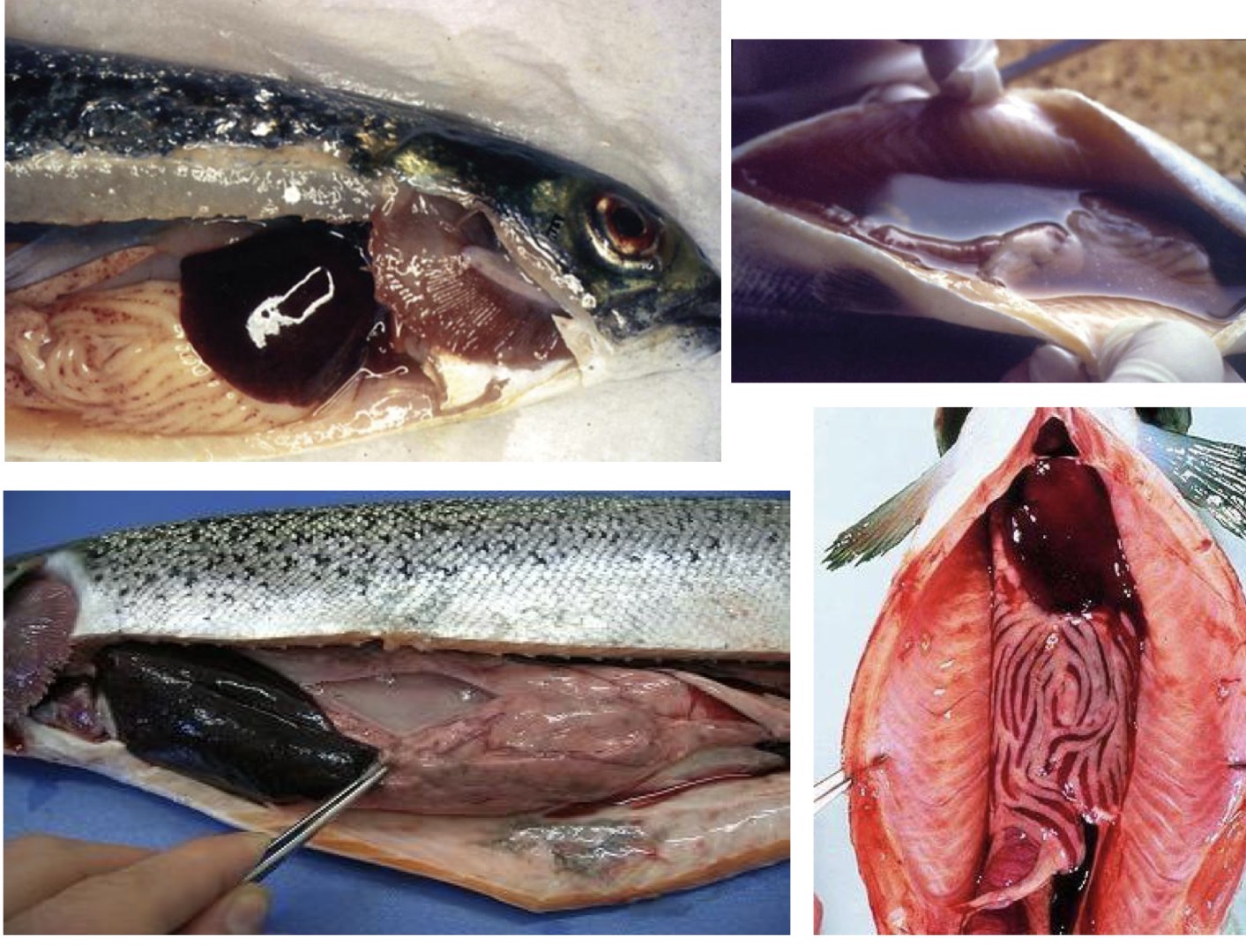
  • White nodules (granulomas) in viscera

Prevention & Therapy (det her e fra chat. fant ikke noe i pp)

  • No effective therapy in fish (treatment not recommended)

  • Prevention only:

    • Strict biosecurity

    • Remove and cull infected fish

    • Disinfection of equipment and tanks

    • Avoid stress, overcrowding

    • PPE for humans (zoonosis!)

Diagnosis

  • Clinical suspicion

  • Necropsy (granulomas in organs)

  • Bacterial culture (definitive)


One-sentence oral exam answer

“Mycobacteriosis is a chronic, zoonotic bacterial disease of fish caused mainly by Mycobacterium marinum, transmitted horizontally, causing emaciation and granulomas, with no effective treatment—only prevention and culling.”
<p><strong>Mycobacteriosis (Fish Tuberculosis)</strong></p><p><strong>Causative agents:</strong></p><ul><li><p><em><mark data-color="red" style="background-color: red; color: inherit;">Mycobacterium marinum</mark></em><mark data-color="red" style="background-color: red; color: inherit;">, </mark><em><mark data-color="red" style="background-color: red; color: inherit;">M. fortuitum</mark>+ 16 other species</em></p></li><li><p>Others: <em>M. chelonae</em>, <em>M. neoaurum</em> (esp. salmonids)</p></li></ul><p><strong>Hosts:</strong></p><ul><li><p><strong>All fish species </strong>(probably the most common chronic disease affecting aquarium fish)</p></li><li><p><strong>Zoonotic</strong> → non-healing skin ulcers (“fish tank granuloma”)</p></li></ul><p><strong>Transmission:</strong></p><ul><li><p><strong>Horizontal:</strong> ingestion most common, skin ulcers, urine, feces</p></li><li><p><strong>Vertical:</strong> transovarian (<span data-name="warning" data-type="emoji">⚠</span> <strong>not in salmonids</strong>)</p></li></ul><p><strong>Clinical signs:</strong></p><ul><li><p>Emaciation, poor growth</p></li><li><p>Retared sexual maturation, or decreased reproductive performance</p></li></ul><p><strong>Pathological changes:</strong></p><ul><li><p>Chronic, <strong>non-healing skin ulcers</strong></p></li><li><p>Fin erosion, skeletal deformities</p></li><li><p><strong>White nodules (granulomas)</strong> in viscera</p></li></ul><p></p><p><strong>Prevention &amp; Therapy (det her e fra chat. fant ikke noe i pp)</strong></p><ul><li><p><span data-name="cross_mark" data-type="emoji">❌</span> <strong>No effective therapy</strong> in fish (treatment not recommended)</p></li><li><p><strong>Prevention only</strong>:</p><ul><li><p>Strict <strong>biosecurity</strong></p></li><li><p>Remove and cull infected fish</p></li><li><p>Disinfection of equipment and tanks</p></li><li><p>Avoid stress, overcrowding</p></li><li><p>PPE for humans (zoonosis!)</p></li></ul></li></ul><p><strong>Diagnosis</strong></p><ul><li><p>Clinical suspicion</p></li><li><p>Necropsy (granulomas in organs)</p></li><li><p><strong>Bacterial culture</strong> (definitive)</p></li></ul><p><br></p><p><strong>One-sentence oral exam answer</strong></p><figure data-type="blockquoteFigure"><div><blockquote><p>“Mycobacteriosis is a chronic, zoonotic bacterial disease of fish caused mainly by <em>Mycobacterium marinum</em>, transmitted horizontally, causing emaciation and granulomas, with no effective treatment—only prevention and culling.”</p></blockquote><figcaption></figcaption></div></figure><p></p>
2
New cards

Salmonid rickettsial septicemia (Piscirickettsia salmonis)

Pathogen

Susceptible hosts and age categories

Clinical signs

Pathological changes

Prevention and therapy

Diagnosis

Causative agent:

  • Piscirickettsia salmonis (intracellular bacterium)

Hosts:

  • Salmonids of all ages

  • Also reported in other fish species

  • Major problem in marine cage farming

Transmission:

  • Horizontal: via skin, gills, mucous membranes, renal tubules, cannibalism

  • Vertical transmission rare

  • Possible vectors (ectoparasites) suggested but not fully proven

  • high fish density is important for transmission!

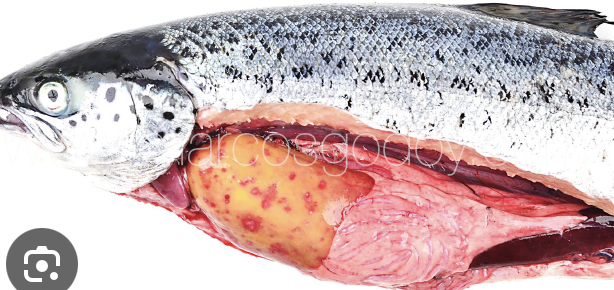
Clinical signs

  • non-specific or absent

Pathological changes

  • Acute form → up to 90% mortality

  • Pale gills, low hematocrit (anemia)

  • Hemorrhages in muscles and organs

  • Necrosis of hematopoietic organs (kidney, spleen)

  • Granulomatous inflammation in internal organs

Prevention & Therapy

  • Antibiotics (treatment possible but resistance is a concern)

  • Vaccination (important preventive measure in salmon aquaculture)

  • Biosecurity, stress reduction, good management

Diagnosis

  • Bacterial culture

One-sentence oral exam answer

“Salmonid rickettsial septicemia is a severe intracellular bacterial disease of salmonids caused by Piscirickettsia salmonis, transmitted mainly horizontally, causing granulomatous septicemia with high mortality, controlled by vaccination and antibiotics.”
<p><strong>Causative agent:</strong></p><ul><li><p><em><mark data-color="red" style="background-color: red; color: inherit;">Piscirickettsia salmonis</mark></em><mark data-color="red" style="background-color: red; color: inherit;"> </mark>(intracellular bacterium)</p></li></ul><p><strong>Hosts:</strong></p><ul><li><p><strong>Salmonids of all ages</strong></p></li><li><p>Also reported in other fish species</p></li><li><p>Major problem in <strong>marine cage farming</strong></p></li></ul><p><strong>Transmission:</strong></p><ul><li><p><strong>Horizontal</strong>: via skin, gills, mucous membranes, renal tubules, cannibalism</p></li><li><p><strong>Vertical transmission rare</strong></p></li><li><p>Possible <strong>vectors</strong> (ectoparasites) suggested but not fully proven</p></li><li><p>high fish density is important for transmission!</p></li></ul><p></p><p><strong>Clinical signs</strong></p><ul><li><p><strong>non-specific or absent</strong></p></li></ul><p></p><p><strong>Pathological changes</strong></p><ul><li><p><strong>Acute form → up to 90% mortality</strong></p></li><li><p>Pale gills, <strong>low hematocrit (anemia)</strong></p></li><li><p>Hemorrhages in muscles and organs</p></li><li><p><strong>Necrosis of hematopoietic organs</strong> (kidney, spleen)</p></li><li><p><strong>Granulomatous inflammation</strong> in internal organs</p></li></ul><p></p><p><strong>Prevention &amp; Therapy</strong></p><ul><li><p><strong>Antibiotics</strong> (treatment possible but resistance is a concern)</p></li><li><p><strong>Vaccination</strong> (important preventive measure in salmon aquaculture)</p></li><li><p>Biosecurity, stress reduction, good management</p></li></ul><p></p><p><strong>Diagnosis</strong></p><ul><li><p><strong>Bacterial culture</strong></p></li></ul><p></p><p><strong>One-sentence oral exam answer</strong></p><figure data-type="blockquoteFigure"><div><blockquote><p>“Salmonid rickettsial septicemia is a severe intracellular bacterial disease of salmonids caused by <em>Piscirickettsia salmonis</em>, transmitted mainly horizontally, causing granulomatous septicemia with high mortality, controlled by vaccination and antibiotics.”</p></blockquote><figcaption></figcaption></div></figure><p></p>
3
New cards

Bacterial kidney disease (Renibacterium salmoninarum)

Pathogen

Susceptible hosts and age categories

Clinical signs

Pathological changes

Prevention and therapy

Diagnosis

Causative agent:

  • Renibacterium salmoninarum (Gram-positive, intracellular)

Hosts:

  • Cultured salmonids of all ages

  • Freshwater and seawater stages

  • Atlantic salmon, rainbow trout, wild salmonids

Transmission

  • Horizontal:

    • Waterborne exposure

    • Entry via GIT and skin lesions

  • Vertical:

    • Transovarian transmission via eggs (very important)

  • Vectors:

    • Not proven; mechanical vectors possible but not essential

Clinical signs

  • Often non-specific or absent

  • Lethargy, anorexia, poor growth (when present)

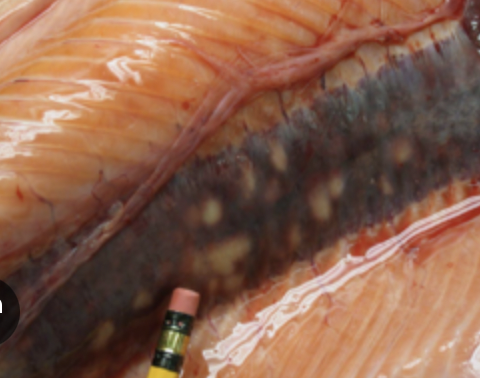
Pathological changes

  • Kidney most affected:

    • Granulomatous and necrotic lesions

    • White caseous deposits

  • Spread to liver, spleen, heart

  • Bacteria enter bloodstream → bacteremia

  • Leads to anemia and immunosuppression

  • Frequent secondary infections

Prevention & Therapy

  • Antibiotics (limited effect, long treatment needed)

  • Vaccines: Renogen

  • Key prevention:

    • Egg screening and disinfection

    • Broodstock control and culling

    • Biosecurity

Diagnosis

  • Necropsy: enlarged kidney with white nodules

  • Bacterial culture

One-sentence oral exam answer

“BKD is a chronic intracellular bacterial disease of salmonids caused by Renibacterium salmoninarum, transmitted horizontally and vertically via eggs, characterized by granulomatous kidney lesions, bacteremia, anemia, and immunosuppression.”
<p><strong>Causative agent:</strong></p><ul><li><p><em><mark data-color="red" style="background-color: red; color: inherit;">Renibacterium salmoninarum</mark></em><mark data-color="red" style="background-color: red; color: inherit;"> </mark>(Gram-positive, intracellular)</p></li></ul><p><strong>Hosts:</strong></p><ul><li><p>Cultured salmonids of <strong>all ages</strong></p></li><li><p>Freshwater and seawater stages</p></li><li><p>Atlantic salmon, rainbow trout, wild salmonids</p></li></ul><p></p><p><strong>Transmission</strong></p><ul><li><p><strong>Horizontal:</strong></p><ul><li><p>Waterborne exposure</p></li><li><p>Entry via <strong>GIT and skin lesions</strong></p></li></ul></li><li><p><strong>Vertical:</strong></p><ul><li><p><strong>Transovarian transmission via eggs</strong> (very important)</p></li></ul></li><li><p><strong>Vectors:</strong></p><ul><li><p>Not proven; mechanical vectors possible but not essential</p></li></ul></li></ul><p></p><p><strong>Clinical signs</strong></p><ul><li><p>Often <strong>non-specific or absent</strong></p></li><li><p>Lethargy, anorexia, poor growth (when present)</p></li></ul><p></p><p><strong>Pathological changes</strong></p><ul><li><p><strong>Kidney most affected</strong>:</p><ul><li><p>Granulomatous and necrotic lesions</p></li><li><p>White caseous deposits</p></li></ul></li><li><p>Spread to <strong>liver, spleen, heart</strong></p></li><li><p>Bacteria enter bloodstream → <strong>bacteremia</strong></p></li><li><p>Leads to <strong>anemia and immunosuppression</strong></p></li><li><p>Frequent <strong>secondary infections</strong></p></li></ul><p></p><p><strong>Prevention &amp; Therapy</strong></p><ul><li><p><strong>Antibiotics</strong> (limited effect, long treatment needed)</p></li><li><p><strong>Vaccines:</strong> Renogen</p></li><li><p>Key prevention:</p><ul><li><p><strong>Egg screening and disinfection</strong></p></li><li><p>Broodstock control and culling</p></li><li><p>Biosecurity</p></li></ul></li></ul><p></p><p><strong>Diagnosis</strong></p><ul><li><p><strong>Necropsy:</strong> enlarged kidney with white nodules</p></li><li><p><strong>Bacterial culture</strong></p></li></ul><p></p><p><strong>One-sentence oral exam answer</strong></p><figure data-type="blockquoteFigure"><div><blockquote><p>“BKD is a chronic intracellular bacterial disease of salmonids caused by <em>Renibacterium salmoninarum</em>, transmitted horizontally and vertically via eggs, characterized by granulomatous kidney lesions, bacteremia, anemia, and immunosuppression.”</p></blockquote><figcaption></figcaption></div></figure><p></p>
4
New cards

Bacterial cold-water disease (Flavobacterium psychrophilum)

Pathogen

Susceptible hosts and age categories

Clinical signs

Pathological changes

Prevention and therapy

Diagnosis

Causative agent:

  • Flavobacterium psychrophilum (Gram-negative, psychrophilic)

  • usually pathogenic at below 10degrees, in spring

Hosts:

  • Freshwater salmonids, especially fry and juveniles

  • Serious problem in salmonid hatcheries

  • Can recur after stress and in co-infections (often viral)

Transmission

  • Horizontal via water

  • Entry through skin, gills, mouth

  • Vertical transmission suspected (eggs), but not fully proven

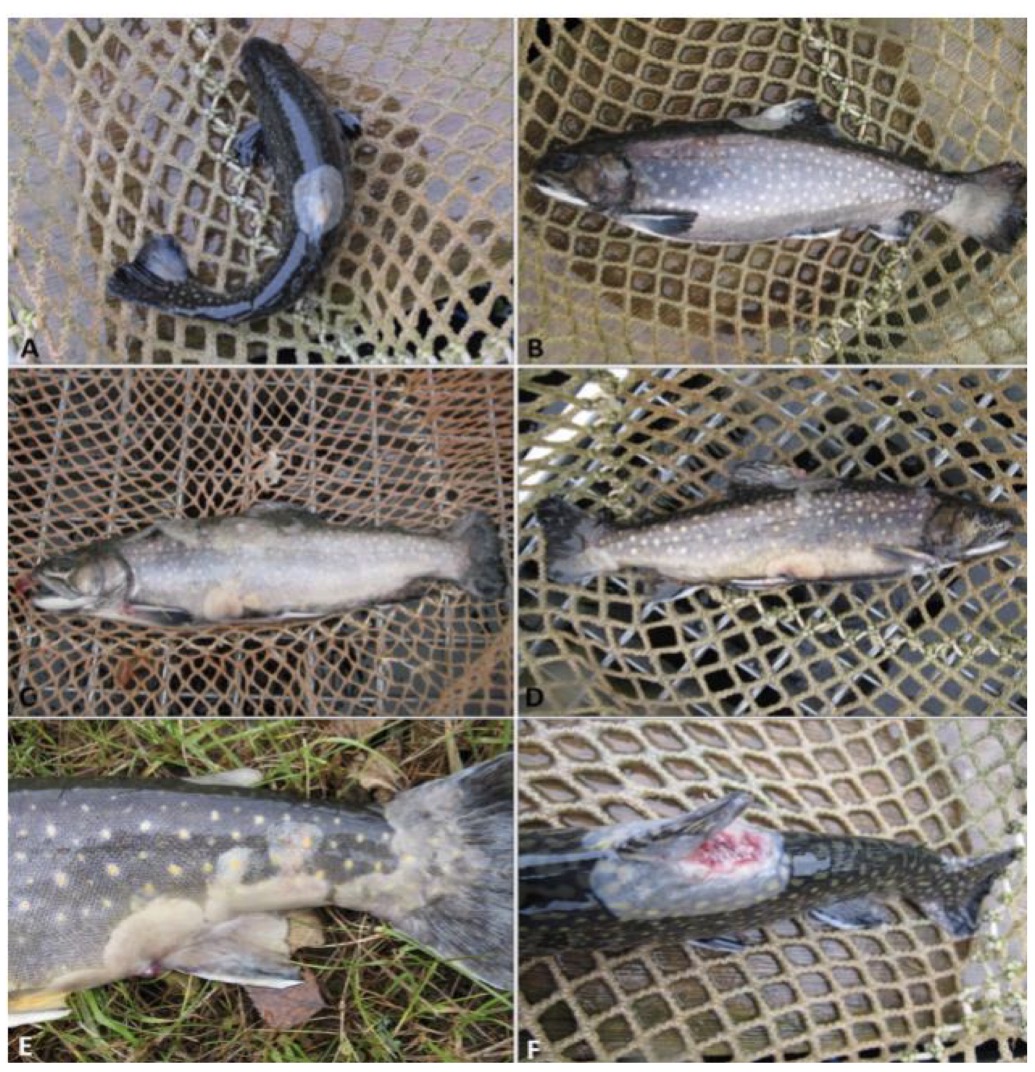
Clinical signs

  • Distended abdomen

  • Exophthalmos

  • Severe anemia

  • Spinal deformities

  • extracellular products are the major cause of clinical signs!

Pathological changes

  • Epithelial erosion, necrotic skin lesions

  • Often become systemic septicemia

  • Acute/subacute disease in fry

  • Chronic disease in older fish

Prevention & Therapy

  • Stress reduction (key!):

    • Proper stocking density

    • Good water quality

    • Gentle handling

  • Antibiotics (based on sensitivity testing)

  • Hatchery management:

    • Egg disinfection

    • Biosecurity

    • Remove sick fish early

Diagnosis

  • Clinical signs + history (cold water, fry)

  • Bacterial cultivation (definitive)

  • Often supported by histopathology / PCR

One-sentence oral exam answer

“Bacterial cold-water disease is a hatchery-associated disease of young salmonids caused by Flavobacterium psychrophilum, transmitted horizontally, producing skin erosion, anemia, spinal deformities, and sometimes septicemia, controlled mainly by stress reduction and antibiotics.”
<p><strong>Causative agent:</strong></p><ul><li><p><em><mark data-color="red" style="background-color: red; color: inherit;">Flavobacterium psychrophilum</mark></em><mark data-color="red" style="background-color: red; color: inherit;"> </mark>(Gram-negative, psychrophilic)</p></li><li><p>usually pathogenic at below 10degrees, in spring</p></li></ul><p><strong>Hosts:</strong></p><ul><li><p><strong>Freshwater salmonids</strong>, especially <strong>fry and juveniles</strong></p></li><li><p>Serious problem in salmonid <strong>hatcheries</strong></p></li><li><p>Can recur after <strong>stress</strong> and in <strong>co-infections</strong> (often viral)</p></li></ul><p></p><p><strong>Transmission</strong></p><ul><li><p><strong>Horizontal</strong> via water</p></li><li><p>Entry through <strong>skin, gills, mouth</strong></p></li><li><p><strong>Vertical transmission suspected</strong> (eggs), but not fully proven</p></li></ul><p></p><p><strong>Clinical signs</strong></p><ul><li><p>Distended abdomen</p></li><li><p><strong>Exophthalmos</strong></p></li><li><p><strong>Severe anemia</strong></p></li><li><p>Spinal deformities</p></li><li><p>extracellular products are the major cause of clinical signs!</p></li></ul><p></p><p><strong>Pathological changes</strong></p><ul><li><p><strong>Epithelial erosion</strong>, necrotic skin lesions</p></li><li><p>Often become <strong>systemic septicemia</strong></p></li><li><p><strong>Acute/subacute</strong> disease in fry</p></li><li><p><strong>Chronic</strong> disease in older fish</p></li></ul><p></p><p><strong>Prevention &amp; Therapy</strong></p><ul><li><p><strong>Stress reduction</strong> (key!):</p><ul><li><p>Proper stocking density</p></li><li><p>Good water quality</p></li><li><p>Gentle handling</p></li></ul></li><li><p><strong>Antibiotics</strong> (based on sensitivity testing)</p></li><li><p>Hatchery management:</p><ul><li><p>Egg disinfection</p></li><li><p>Biosecurity</p></li><li><p>Remove sick fish early</p></li></ul></li></ul><p></p><p><strong>Diagnosis</strong></p><ul><li><p>Clinical signs + history (cold water, fry)</p></li><li><p><strong>Bacterial cultivation</strong> (definitive)</p></li><li><p>Often supported by histopathology / PCR</p></li></ul><p></p><p><strong>One-sentence oral exam answer</strong></p><figure data-type="blockquoteFigure"><div><blockquote><p>“Bacterial cold-water disease is a hatchery-associated disease of young salmonids caused by <em>Flavobacterium psychrophilum</em>, transmitted horizontally, producing skin erosion, anemia, spinal deformities, and sometimes septicemia, controlled mainly by stress reduction and antibiotics.”</p></blockquote><figcaption></figcaption></div></figure><p></p>
5
New cards

Enteric red mouth disease (Yersinia ruckeri)

Pathogen

Susceptible hosts and age categories

Clinical signs

Pathological changes

Prevention and therapy

Diagnosis

Causative agent:

  • Yersinia ruckeri (Gram-negative bacterium)

Hosts:

  • Salmonids of all ages, Especially rainbow trout

  • Common in market-size fish

Transmission

  • Horizontal: Per os and via gills

  • Spread from clinically sick carriers

Clinical signs

  • Darkened fish

  • Disorientation / blindness → cannot find food

  • Depression, lethargy

  • Acute to chronic mortality

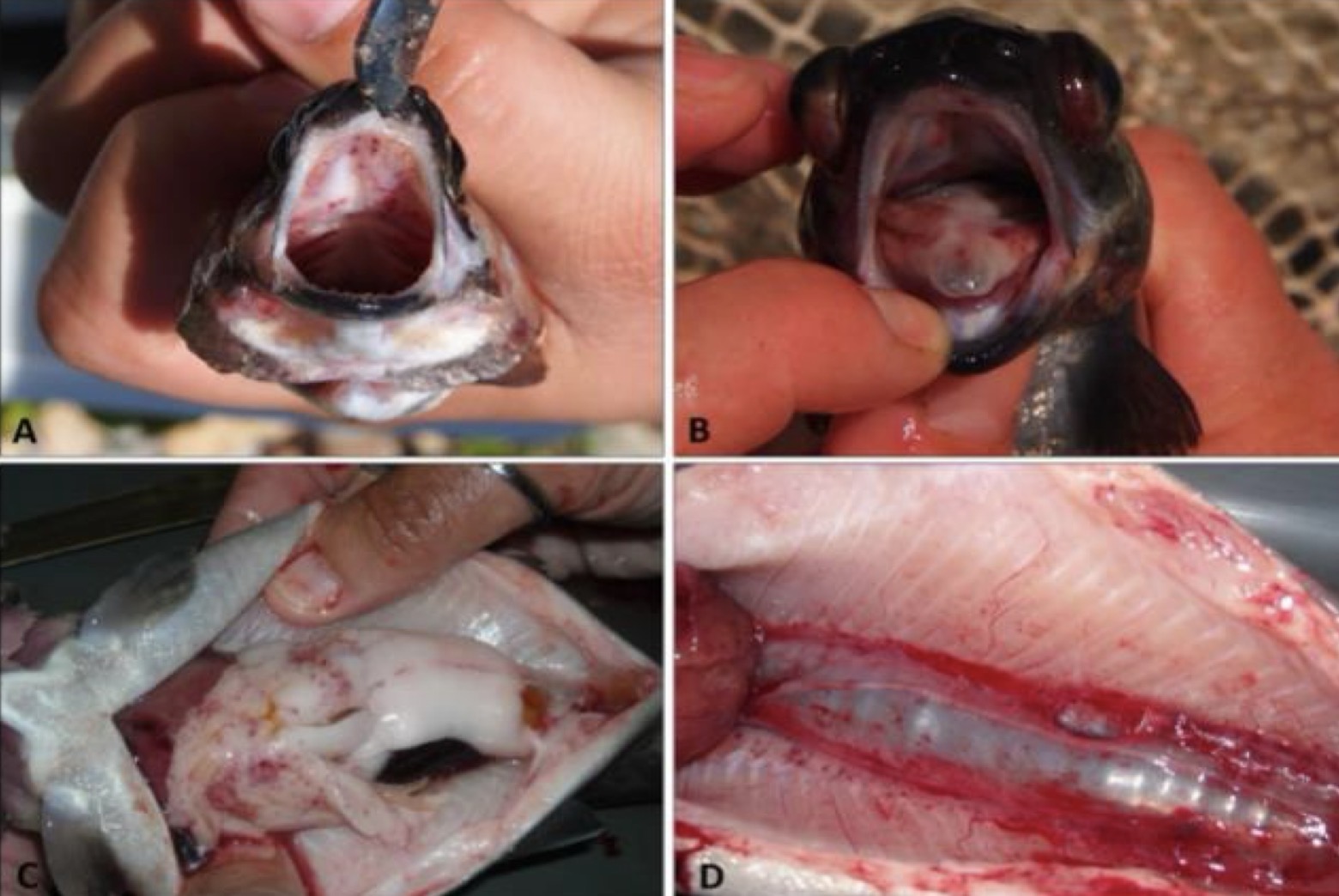
Pathological changes

  • Hemorrhagic septicemia

  • Hemorrhages in mouth, eyes, skin (“red mouth”)

  • Exophthalmos

  • Swollen abdomen

  • Acute disease in young fish, chronic form in older fish

Prevention & Therapy

  • Vaccination (important, but strain variation exists!!)

  • Antibiotics (based on sensitivity testing)

  • Lower water temperature helps reduce outbreaks

  • Biosecurity and stress reduction

Diagnosis

  • Clinical suspicion

  • Bacterial cultivation (definitive)

One-sentence oral exam answer

“Yersiniosis is a hemorrhagic septicemia of salmonids caused by Yersinia ruckeri, transmitted horizontally, especially affecting rainbow trout, and controlled mainly by vaccination and antibiotics.”
<p><strong>Causative agent:</strong></p><ul><li><p><em><mark data-color="red" style="background-color: red; color: inherit;">Yersinia ruckeri</mark></em><mark data-color="red" style="background-color: red; color: inherit;"> </mark>(Gram-negative bacterium)</p></li></ul><p><strong>Hosts:</strong></p><ul><li><p><strong>Salmonids of all ages, </strong>Especially <strong>rainbow trout</strong></p></li><li><p>Common in <strong>market-size fish</strong></p></li></ul><p></p><p><strong>Transmission</strong></p><ul><li><p><strong>Horizontal: Per os</strong> and via <strong>gills</strong></p></li><li><p>Spread from <strong>clinically sick carriers</strong></p></li></ul><p></p><p><strong>Clinical signs</strong></p><ul><li><p>Darkened fish</p></li><li><p>Disorientation / <strong>blindness → cannot find food</strong></p></li><li><p>Depression, lethargy</p></li><li><p><strong>Acute to chronic mortality</strong></p></li></ul><p></p><p><strong>Pathological changes</strong></p><ul><li><p><strong>Hemorrhagic septicemia</strong></p></li><li><p>Hemorrhages in <strong>mouth, eyes, skin</strong> (“red mouth”)</p></li><li><p><strong>Exophthalmos</strong></p></li><li><p>Swollen abdomen</p></li><li><p>Acute disease in <strong>young fish</strong>, chronic form in <strong>older fish</strong></p></li></ul><p></p><p><strong>Prevention &amp; Therapy</strong></p><ul><li><p><strong>Vaccination</strong> (important, but strain variation exists!!)</p></li><li><p><strong>Antibiotics</strong> (based on sensitivity testing)</p></li><li><p>Lower water temperature helps reduce outbreaks</p></li><li><p>Biosecurity and stress reduction</p></li></ul><p></p><p><strong>Diagnosis</strong></p><ul><li><p>Clinical suspicion</p></li><li><p><strong>Bacterial cultivation</strong> (definitive)</p></li></ul><p></p><p><strong>One-sentence oral exam answer</strong></p><figure data-type="blockquoteFigure"><div><blockquote><p>“Yersiniosis is a hemorrhagic septicemia of salmonids caused by <em>Yersinia ruckeri</em>, transmitted horizontally, especially affecting rainbow trout, and controlled mainly by vaccination and antibiotics.”</p></blockquote><figcaption></figcaption></div></figure><p></p>
6
New cards

Furunculosis (A. salmonicida subsp. Salmonicida)

Causative agent:

  • Aeromonas salmonicida subsp. salmonicida (Gram-negative)

Hosts:

  • Salmonids, especially trout

  • All age groups

  • also affect non-salmonids

Transmission

  • Horizontal:

    • Per os, via gills, damaged skin, anal opening

  • Spread by contaminated water and sick carriers

  • Vectors: fish lice (Argulus)

Clinical signs

  • Depression, anorexia

  • Hemorrhages in internal organs

  • Muscle abscesses → furuncles (boil-like lesions)

Pathological changes

  • Acute form (young farmed fish):

    • Septicemia → sudden death within 2-3 days

    • High mortality

    • acute is more common in older in nature as youngs are more resistant

  • Subacute or Chronic form (older fish, wild populations):

    • Abscesses in skin with surface remission in the form of furuncules

Prevention & Therapy

  • Antibiotics (based on sensitivity testing)

  • Vaccination (important preventive measure in aquaculture)

  • Biosecurity and stress reduction

Diagnosis

  • Bacterial cultivation

  • Supported by clinical signs and necropsy

One-sentence oral exam answer

“Furunculosis is a systemic bacterial disease of salmonids caused by Aeromonas salmonicida, transmitted horizontally, producing septicemia and characteristic muscle abscesses that develop into furuncles.”
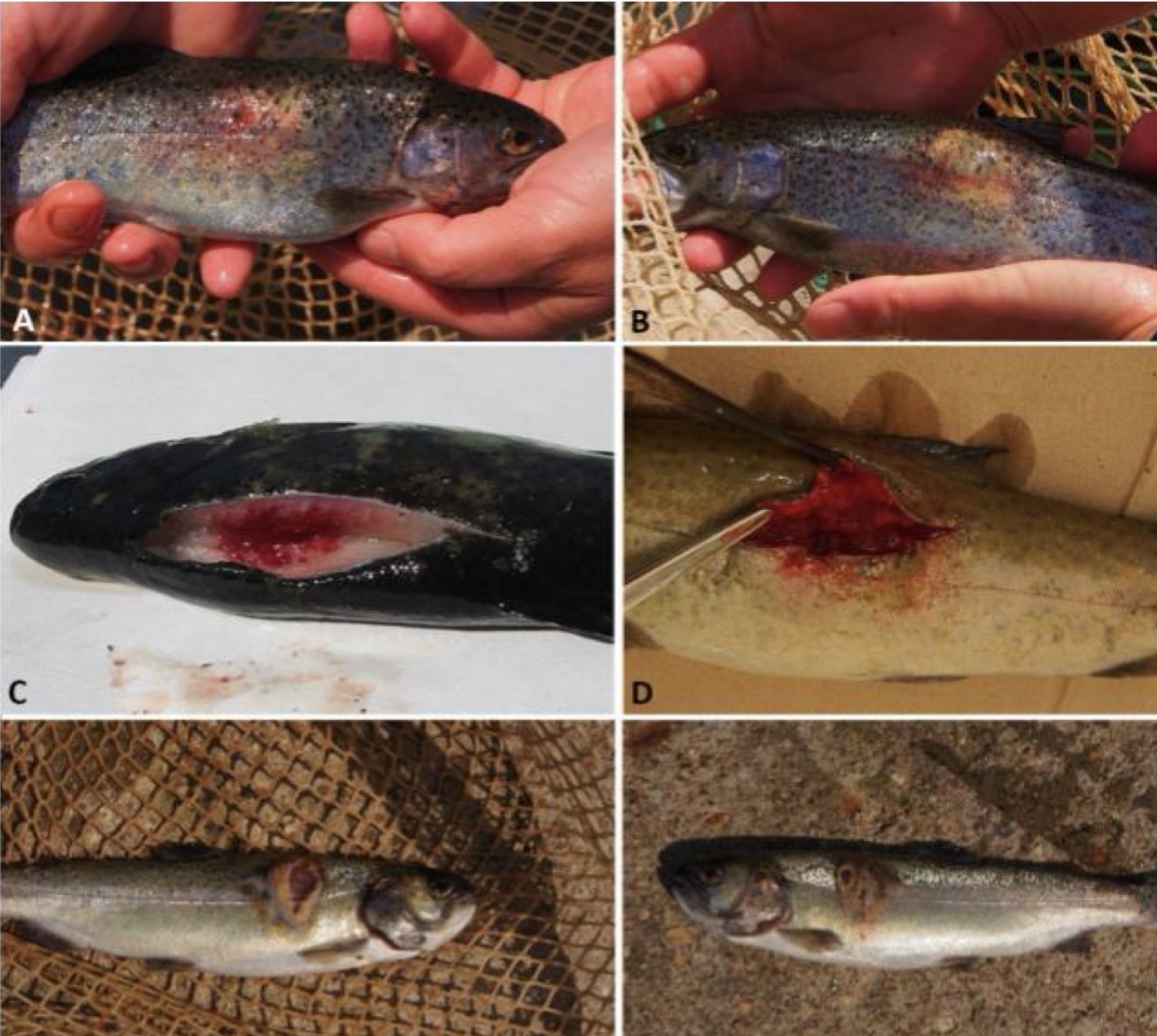
<p><strong>Causative agent:</strong></p><ul><li><p><em><mark data-color="red" style="background-color: red; color: inherit;">Aeromonas salmonicida</mark></em><mark data-color="red" style="background-color: red; color: inherit;"> subsp. </mark><em><mark data-color="red" style="background-color: red; color: inherit;">salmonicida</mark></em><mark data-color="red" style="background-color: red; color: inherit;"> </mark>(Gram-negative)</p></li></ul><p><strong>Hosts:</strong></p><ul><li><p><strong>Salmonids</strong>, especially <strong>trout</strong></p></li><li><p><strong>All age groups</strong></p></li><li><p><strong>also affect non-salmonids</strong></p></li></ul><p></p><p><strong>Transmission</strong></p><ul><li><p><strong>Horizontal</strong>:</p><ul><li><p><strong>Per os, </strong>via <strong>gills, damaged skin, anal opening</strong></p></li></ul></li><li><p>Spread by <strong>contaminated water</strong> and <strong>sick carriers</strong></p></li><li><p><strong>Vectors:</strong> fish lice (<em>Argulus</em>)</p></li></ul><p></p><p><strong>Clinical signs</strong></p><ul><li><p>Depression, anorexia</p></li><li><p><strong>Hemorrhages in internal organs</strong></p></li><li><p><strong>Muscle abscesses → furuncles</strong> (boil-like lesions)</p></li></ul><p></p><p><strong>Pathological changes</strong></p><ul><li><p><strong>Acute form</strong> (young farmed fish):</p><ul><li><p>Septicemia → sudden death within 2-3 days</p></li><li><p><strong>High mortality</strong></p></li><li><p>acute is more common in older in nature as youngs are more resistant</p></li></ul></li><li><p><strong>Subacute or Chronic form</strong> (older fish, wild populations):</p><ul><li><p>Abscesses in skin with surface remission in the form of furuncules</p></li></ul></li></ul><p></p><p><strong>Prevention &amp; Therapy</strong></p><ul><li><p><strong>Antibiotics</strong> (based on sensitivity testing)</p></li><li><p><strong>Vaccination</strong> (important preventive measure in aquaculture)</p></li><li><p>Biosecurity and stress reduction</p></li></ul><p></p><p><strong>Diagnosis</strong></p><ul><li><p><strong>Bacterial cultivation</strong></p></li><li><p>Supported by clinical signs and necropsy</p></li></ul><p></p><p><strong>One-sentence oral exam answer</strong></p><figure data-type="blockquoteFigure"><div><blockquote><p>“Furunculosis is a systemic bacterial disease of salmonids caused by <em>Aeromonas salmonicida</em>, transmitted horizontally, producing septicemia and characteristic muscle abscesses that develop into furuncles.”</p></blockquote><figcaption></figcaption></div></figure><p></p>
7
New cards

Vibriosis

Vibriosis - salt water furunculosis

Causative agents:

  • Vibrio anguillarummost common, “saltwater furunculosis”

  • Allivibrio salmonicida – Hitra disease (sea-cultured Atlantic salmon)

  • Moritella viscosa – winter ulcer (Atlantic salmon in Norway, trout, cod)

Hosts:

  • Marine fish

  • Freshwater fish fed marine offal

  • Zoonotic!

Transmission

  • Horizontal - Via water, infected carriers, food

  • Entry through gills or injured skin

Clinical signs

  • Skin ulcers

  • Signs of systemic disease

Pathological changes

  • Peracute: sudden death from bacteremia, minimal lesions

  • Acute / subacute:

    • Hemorrhagic septicemia

    • Hemorrhages in skin, muscles, internal organs

  • Chronic:

    • Necrosis

    • Subcutaneous abscesses

    • Ulceration (esp. winter ulcer)

Prevention & Therapy

  • Antibiotics (based on susceptibility testing)

  • Vaccination (important preventive measure in aquaculture)

Diagnosis

  • Bacterial cultivation

  • Supported by clinical signs and necropsy findings

One-sentence oral exam answer

“Vibriosis is a hemorrhagic septicemic disease of marine fish caused mainly by Vibrio anguillarum and related species, transmitted horizontally through water and skin or gills, producing ulcers and systemic infection.”
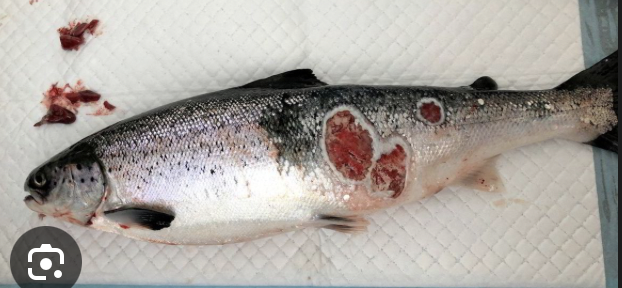
<p><strong>Vibriosis - salt water furunculosis</strong></p><p><strong>Causative agents:</strong></p><ul><li><p><strong><mark data-color="red" style="background-color: red; color: inherit;">Vibrio anguillarum</mark></strong> – <em>most common</em>, “saltwater furunculosis”</p></li><li><p><strong><mark data-color="red" style="background-color: red; color: inherit;">Allivibrio salmonicida</mark></strong> – Hitra disease (sea-cultured Atlantic salmon)</p></li><li><p><strong><mark data-color="red" style="background-color: red; color: inherit;">Moritella viscosa</mark></strong> – winter ulcer (Atlantic salmon in Norway, trout, cod)</p></li></ul><p><strong>Hosts:</strong></p><ul><li><p><strong>Marine fish</strong></p></li><li><p>Freshwater fish fed <strong>marine offal</strong></p></li><li><p><strong>Zoonotic!</strong></p></li></ul><p></p><p><strong>Transmission</strong></p><ul><li><p><strong>Horizontal - </strong>Via <strong>water</strong>, <strong>infected carriers</strong>, <strong>food</strong></p></li><li><p>Entry through <strong>gills</strong> or <strong>injured skin</strong></p></li></ul><p></p><p><strong>Clinical signs</strong></p><ul><li><p><strong>Skin ulcers</strong></p></li><li><p>Signs of <strong>systemic disease</strong></p></li></ul><p></p><p><strong>Pathological changes</strong></p><ul><li><p><strong>Peracute:</strong> sudden death from bacteremia, minimal lesions</p></li><li><p><strong>Acute / subacute:</strong></p><ul><li><p><strong>Hemorrhagic septicemia</strong></p></li><li><p>Hemorrhages in skin, muscles, internal organs</p></li></ul></li><li><p><strong>Chronic:</strong></p><ul><li><p>Necrosis</p></li><li><p>Subcutaneous abscesses</p></li><li><p>Ulceration (esp. winter ulcer)</p></li></ul></li></ul><p></p><p><strong>Prevention &amp; Therapy</strong></p><ul><li><p><strong>Antibiotics</strong> (based on susceptibility testing)</p></li><li><p><strong>Vaccination</strong> (important preventive measure in aquaculture)</p></li></ul><p></p><p><strong>Diagnosis</strong></p><ul><li><p><strong>Bacterial cultivation</strong></p></li><li><p>Supported by clinical signs and necropsy findings</p></li></ul><p></p><p><strong>One-sentence oral exam answer</strong></p><figure data-type="blockquoteFigure"><div><blockquote><p>“Vibriosis is a hemorrhagic septicemic disease of marine fish caused mainly by <em>Vibrio anguillarum</em> and related species, transmitted horizontally through water and skin or gills, producing ulcers and systemic infection.”</p></blockquote><figcaption></figcaption></div></figure><p></p>
8
New cards

Infectious salmon anemia (Orthomyxovirus)

Causative agent:

  • Salmon isavirus (ISAV)

  • Family Orthomyxoviridae

  • OIE-listed disease (notifiable)

Susceptible hosts

  • Atlantic salmon (most susceptible, especially marine phase)

  • Rainbow trout, brown trout, Pacific salmon (less susceptible)

Transmission

  • Horizontal - penetrates through gills

  • Mechanical vector: sea lice (Lepeophtheirus salmonis)

  • Spread via water and infected fish

Clinical signs

  • Severe anemia

  • Lethargy, darkening of skin

  • Loss of appetite

  • Ascites

  • Respiratory distress

Pathological changes

  • Hemorrhages in internal organs

  • Scaly edema

  • Splenomegaly

  • Darkened liver

  • Necrosis of renal tubules

Prevention & Therapy

  • Vaccination (reduces severity, not fully protective)

  • Strict biosecurity

  • Control of sea lice

  • No curative treatment

Diagnosis

  • Virus isolation

  • PCR (most important)

  • ELISA, virus neutralization test (VNT)

One-sentence oral exam answer

“Infectious salmon anemia is a notifiable viral disease of Atlantic salmon caused by ISAV, transmitted horizontally mainly through gills and via sea lice, leading to anemia, hemorrhages, and high mortality.”

Exam memory tips

  • ISA = anemia + Orthomyxovirus

  • Marine phase + sea lice vector

  • OIE listed → strict control

<p><strong>Causative agent:</strong></p><ul><li><p><strong><mark data-color="red" style="background-color: red; color: inherit;">Salmon isavirus (ISAV)</mark></strong></p></li><li><p>Family <strong>Orthomyxoviridae</strong></p></li><li><p><strong>OIE-listed disease</strong> (notifiable)</p></li></ul><p></p><p><strong>Susceptible hosts</strong></p><ul><li><p><strong>Atlantic salmon</strong> (most susceptible, especially <strong>marine phase</strong>)</p></li><li><p>Rainbow trout, brown trout, Pacific salmon (less susceptible)</p></li></ul><p></p><p><strong>Transmission</strong></p><ul><li><p><strong>Horizontal - </strong>penetrates through <strong>gills</strong></p></li><li><p><strong>Mechanical vector:</strong> sea lice (<em>Lepeophtheirus salmonis</em>)</p></li><li><p>Spread via water and infected fish</p></li></ul><p></p><p><strong>Clinical signs</strong></p><ul><li><p><strong>Severe anemia</strong></p></li><li><p>Lethargy, darkening of skin</p></li><li><p>Loss of appetite</p></li><li><p><strong>Ascites</strong></p></li><li><p>Respiratory distress</p></li></ul><p></p><p><strong>Pathological changes</strong></p><ul><li><p><strong>Hemorrhages in internal organs</strong></p></li><li><p><strong>Scaly edema</strong></p></li><li><p><strong>Splenomegaly</strong></p></li><li><p>Darkened liver</p></li><li><p><strong>Necrosis of renal tubules</strong></p></li></ul><p></p><p><strong>Prevention &amp; Therapy</strong></p><ul><li><p><strong>Vaccination</strong> (reduces severity, <strong>not fully protective</strong>)</p></li><li><p>Strict <strong>biosecurity</strong></p></li><li><p>Control of <strong>sea lice</strong></p></li><li><p>No curative treatment</p></li></ul><p></p><p><strong>Diagnosis</strong></p><ul><li><p><strong>Virus isolation</strong></p></li><li><p><strong>PCR</strong> (most important)</p></li><li><p>ELISA, virus neutralization test (VNT)</p></li></ul><p></p><p><strong>One-sentence oral exam answer</strong></p><figure data-type="blockquoteFigure"><div><blockquote><p>“Infectious salmon anemia is a notifiable viral disease of Atlantic salmon caused by ISAV, transmitted horizontally mainly through gills and via sea lice, leading to anemia, hemorrhages, and high mortality.”</p></blockquote><figcaption></figcaption></div></figure><p></p><p><strong>Exam memory tips</strong></p><ul><li><p><strong>ISA = anemia + Orthomyxovirus</strong></p></li><li><p><strong>Marine phase + sea lice vector</strong></p></li><li><p><strong>OIE listed → strict control</strong></p></li></ul><p></p>
9
New cards

Infectious pancreatic necrosis (Aquabirnavirus)

Causative agent:

  • Aquabirnavirus of IPNV

Susceptible hosts

  • Salmonids, especially fry and juveniles

  • Older fish often asymptomatic carriers

Transmission

  • Horizontal: contact, ingestion, feces

  • Vertical: transovarian (via eggs)

  • Highly contagious in hatcheries

Clinical signs

  • Dorsal darkening

  • Trailing white feces

  • Abdominal distention

  • Exophthalmos

  • Ventral hemorrhage

  • Pale gills

  • CNS signs → abnormal swimming

Pathological changes

  • Necrosis of pancreas (primary target) → 90% mortality in fry

  • Damage to kidneys and intestinal mucosa

  • Older fish: carriers without symptoms

Prevention & Therapy

  • No effective treatment

  • Eliminate infected stock

Diagnosis

  • Virus isolation (definitive)

  • PCR can be used for detection in carriers

One-sentence oral exam answer

“IPN is a highly contagious viral disease of salmonid fry caused by Aquabirnavirus, transmitted horizontally and vertically, causing pancreatic necrosis, high mortality in fry, and carrier status in older fish.”

Memory tip

  • IPN → fry disease + pancreas + high mortality

  • Older fish = silent carriers

<p><strong>Causative agent:</strong></p><ul><li><p><strong><mark data-color="red" style="background-color: red; color: inherit;">Aquabirnavirus</mark></strong><mark data-color="red" style="background-color: red; color: inherit;"> of IPNV</mark></p></li></ul><p></p><p><strong>Susceptible hosts</strong></p><ul><li><p><strong>Salmonids</strong>, especially <strong>fry and juveniles</strong></p></li><li><p>Older fish often <strong>asymptomatic carriers</strong></p></li></ul><p></p><p><strong>Transmission</strong></p><ul><li><p><strong>Horizontal:</strong> contact, ingestion, feces</p></li><li><p><strong>Vertical:</strong> transovarian (via eggs)</p></li><li><p>Highly contagious in hatcheries</p></li></ul><p></p><p><strong>Clinical signs</strong></p><ul><li><p>Dorsal <strong>darkening</strong></p></li><li><p><strong>Trailing white feces</strong></p></li><li><p>Abdominal distention</p></li><li><p><strong>Exophthalmos</strong></p></li><li><p>Ventral hemorrhage</p></li><li><p>Pale gills</p></li><li><p>CNS signs → <strong>abnormal swimming</strong></p></li></ul><p></p><p><strong>Pathological changes</strong></p><ul><li><p><strong>Necrosis of pancreas</strong> (primary target) → 90% mortality in fry</p></li><li><p>Damage to <strong>kidneys and intestinal mucosa</strong></p></li><li><p>Older fish: carriers without symptoms</p></li></ul><p></p><p><strong>Prevention &amp; Therapy</strong></p><ul><li><p><strong>No effective treatment</strong></p></li><li><p><strong>Eliminate infected stock</strong></p></li></ul><p></p><p><strong>Diagnosis</strong></p><ul><li><p><strong>Virus isolation</strong> (definitive)</p></li><li><p>PCR can be used for detection in carriers</p></li></ul><p></p><p><strong>One-sentence oral exam answer</strong></p><figure data-type="blockquoteFigure"><div><blockquote><p>“IPN is a highly contagious viral disease of salmonid fry caused by Aquabirnavirus, transmitted horizontally and vertically, causing pancreatic necrosis, high mortality in fry, and carrier status in older fish.”</p></blockquote><figcaption></figcaption></div></figure><p></p><p><strong>Memory tip</strong></p><ul><li><p><strong>IPN → fry disease + pancreas + high mortality</strong></p></li><li><p><strong>Older fish = silent carriers</strong></p></li></ul><p></p>
10
New cards

Cardiomyopathy syndrome (PMC virus)

Causative agent:

  • Piscine myocarditis virus (PMC virus)

Susceptible hosts

  • Farmed Atlantic salmon - common in Trøndelag, Norway

  • Especially:

    • Fish at slaughter weight in sea

    • Young salmon recently transferred to saltwater

  • Stress can trigger outbreaks

Transmission

  • Horizontal: fish-to-fish

Clinical signs

  • Often absent, CMS evolves slowly and it can take a while before fish shows sign of disease

  • Occasionally sudden death without warning

Pathological changes

  • Circulatory disturbances

  • Atrial lesions / degeneration

  • Pericardial effusion (fluid in pericardium)

  • Heart coagulations / myocardial necrosis

Prevention & Therapy

  • No vaccine available

  • Management: reduce stress, good biosecurity

Diagnosis

  • Histology: myocardial degeneration, atrial lesions

  • Some dead fish may show no gross lesions, so careful tissue sampling needed

One-sentence oral exam answer

“Cardiomyopathy syndrome is a viral disease of farmed Atlantic salmon caused by PMC virus, transmitted horizontally, often asymptomatic, but can cause sudden death with characteristic atrial lesions and pericardial fluid.”

Exam memory tip

  • CMS = heart disease + sudden death + stress trigger

  • Often no clinical signs until dead fish
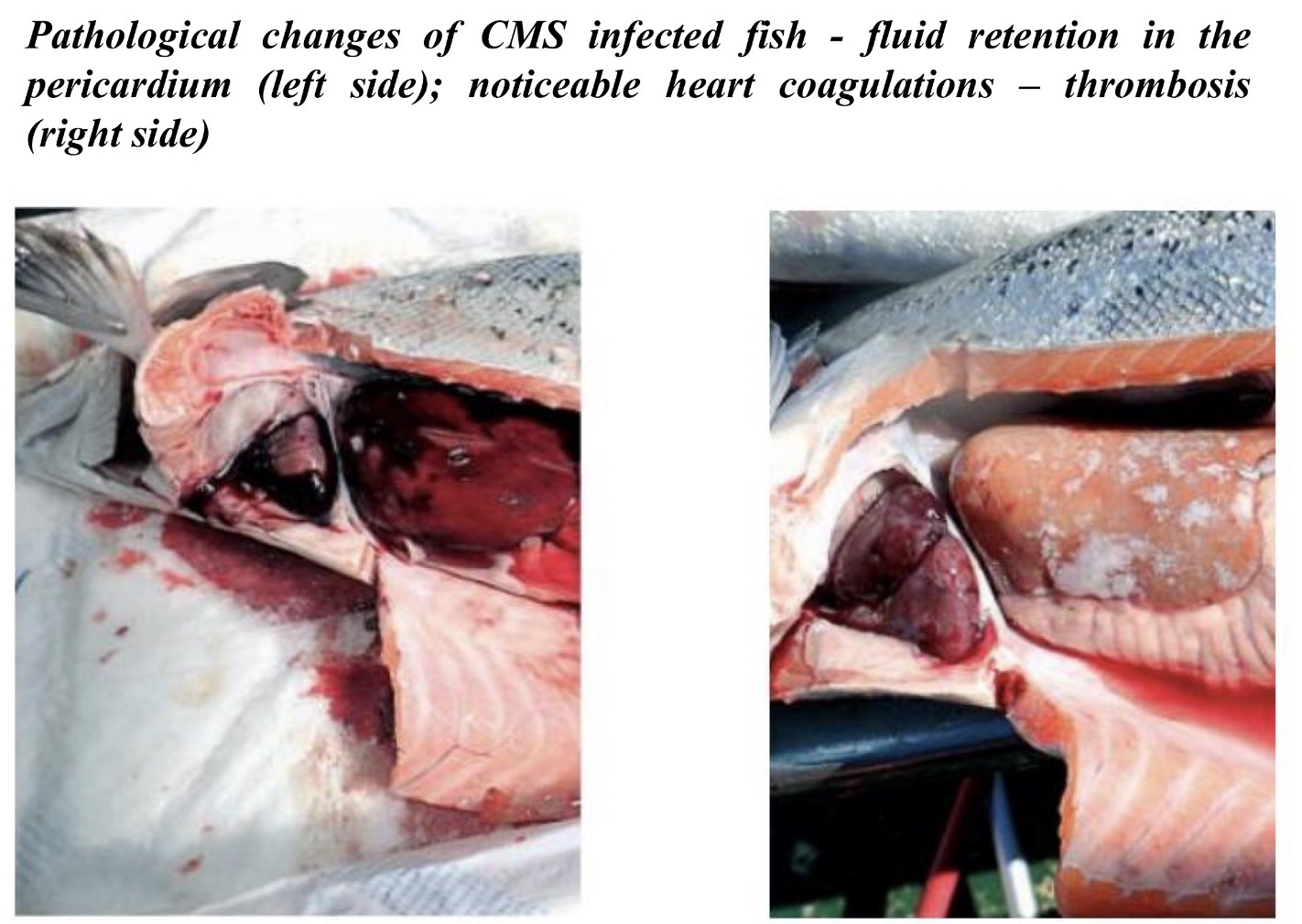
<p><strong>Causative agent:</strong></p><ul><li><p><strong><mark data-color="red" style="background-color: red; color: inherit;">Piscine myocarditis virus</mark> (PMC virus)</strong></p></li></ul><p></p><p><strong>Susceptible hosts</strong></p><ul><li><p><strong>Farmed Atlantic salmon - common in Trøndelag, Norway</strong></p></li><li><p>Especially:</p><ul><li><p>Fish at <strong>slaughter weight</strong> in sea</p></li><li><p>Young salmon <strong>recently transferred to saltwater</strong></p></li></ul></li><li><p><strong>Stress</strong> can trigger outbreaks</p></li></ul><p></p><p><strong>Transmission</strong></p><ul><li><p><strong>Horizontal:</strong> fish-to-fish</p></li></ul><p></p><p><strong>Clinical signs</strong></p><ul><li><p>Often <strong>absent, </strong>CMS evolves slowly and it can take a while before fish shows sign of disease</p></li><li><p>Occasionally <strong>sudden death</strong> without warning</p></li></ul><p></p><p><strong>Pathological changes</strong></p><ul><li><p><strong>Circulatory disturbances</strong></p></li><li><p><strong>Atrial lesions / degeneration</strong></p></li><li><p><strong>Pericardial effusion</strong> (fluid in pericardium)</p></li><li><p><strong>Heart coagulations / myocardial necrosis</strong></p></li></ul><p></p><p><strong>Prevention &amp; Therapy</strong></p><ul><li><p><strong>No vaccine</strong> available</p></li><li><p>Management: reduce <strong>stress</strong>, good biosecurity</p></li></ul><p></p><p><strong>Diagnosis</strong></p><ul><li><p><strong>Histology</strong>: myocardial degeneration, atrial lesions</p></li><li><p>Some dead fish may show <strong>no gross lesions</strong>, so careful tissue sampling needed</p></li></ul><p></p><p><strong>One-sentence oral exam answer</strong></p><figure data-type="blockquoteFigure"><div><blockquote><p>“Cardiomyopathy syndrome is a viral disease of farmed Atlantic salmon caused by PMC virus, transmitted horizontally, often asymptomatic, but can cause sudden death with characteristic atrial lesions and pericardial fluid.”</p></blockquote><figcaption></figcaption></div></figure><p></p><p><strong>Exam memory tip</strong></p><ul><li><p><strong>CMS = heart disease + sudden death + stress trigger</strong></p></li><li><p>Often <strong>no clinical signs until dead fish</strong></p></li></ul><p></p>
11
New cards

Viral hemorrhagic septicemia (Novirhabdovirus)

Causative agent:

  • Novirhabdovirus (VHSV)

  • Family: Rhabdoviridae

Susceptible hosts

  • Rainbow trout (most important in aquaculture)

  • All age categories - mortality up tp 100% in fry, 30-70% in older fish

Transmission

  • Horizontal: virus excreted in urine and skin

  • Entry via gills and skin

Clinical signs

  • Often non-specific

  • May be acute, chronic, or nervous forms

Pathological changes

  • Hemorrhages in muscles, internal organs

  • Present everywhere, Predilection organs: anterior kidney, heart, spleen

  • Chronic stage: brain involvement

  • Gill and liver anemia, ascites, splenomegaly, renal necrosis

  • Acute form: vascular endothelial damage

Prevention & Therapy

  • Reduce stress

  • Strict biosecurity / zoohygienic measures

  • No curative treatment

Diagnosis

  • Necropsy (hemorrhages in tissues)

  • PCR (most sensitive)

  • Virus Neutralization Test (VNT)

One-sentence oral exam answer

“Viral hemorrhagic septicemia is a viral disease of rainbow trout caused by VHSV, transmitted horizontally via gills and skin, producing hemorrhages in muscles and organs, kidney and spleen necrosis, and sometimes chronic nervous signs.”

Exam memory tips

  • VHSV → hemorrhages everywhere + rainbow trout

  • Acute → vascular damage

  • Chronic → brain involvement

  • Think: “VHS = blood everywhere

<p><strong>Causative agent:</strong></p><ul><li><p><strong><mark data-color="red" style="background-color: red; color: inherit;">Novirhabdovirus (VHSV)</mark></strong></p></li><li><p>Family: <strong>Rhabdoviridae</strong></p></li></ul><p></p><p><strong>Susceptible hosts</strong></p><ul><li><p><strong>Rainbow trout</strong> (most important in aquaculture)</p></li><li><p>All age categories - mortality up tp 100% in fry, 30-70% in older fish</p></li></ul><p></p><p><strong>Transmission</strong></p><ul><li><p><strong>Horizontal:</strong> virus excreted in <strong>urine and skin</strong></p></li><li><p>Entry via <strong>gills and skin</strong></p></li></ul><p></p><p><strong>Clinical signs</strong></p><ul><li><p>Often <strong>non-specific</strong></p></li><li><p>May be acute, chronic, or nervous forms</p></li></ul><p></p><p><strong>Pathological changes</strong></p><ul><li><p><strong>Hemorrhages</strong> in muscles, internal organs</p></li><li><p><strong>Present everywhere, Predilection organs:</strong> anterior kidney, heart, spleen</p></li><li><p><strong>Chronic stage:</strong> brain involvement</p></li><li><p><strong>Gill and liver anemia</strong>, ascites, splenomegaly, renal necrosis</p></li><li><p>Acute form: <strong>vascular endothelial damage</strong></p></li></ul><p></p><p><strong>Prevention &amp; Therapy</strong></p><ul><li><p>Reduce <strong>stress</strong></p></li><li><p>Strict <strong>biosecurity / zoohygienic measures</strong></p></li><li><p>No curative treatment</p></li></ul><p></p><p><strong>Diagnosis</strong></p><ul><li><p>Necropsy (hemorrhages in tissues)</p></li><li><p><strong>PCR</strong> (most sensitive)</p></li><li><p>Virus Neutralization Test (VNT)</p></li></ul><p></p><p><strong>One-sentence oral exam answer</strong></p><figure data-type="blockquoteFigure"><div><blockquote><p>“Viral hemorrhagic septicemia is a viral disease of rainbow trout caused by VHSV, transmitted horizontally via gills and skin, producing hemorrhages in muscles and organs, kidney and spleen necrosis, and sometimes chronic nervous signs.”</p></blockquote><figcaption></figcaption></div></figure><p></p><p><strong>Exam memory tips</strong></p><ul><li><p><strong>VHSV → hemorrhages everywhere + rainbow trout</strong></p></li><li><p><strong>Acute → vascular damage</strong></p></li><li><p><strong>Chronic → brain involvement</strong></p></li><li><p>Think: “<strong>VHS = blood everywhere</strong>”</p></li></ul><p></p>
12
New cards

Heart and skeletal muscle inflammation (Orthoreovirus)

Causative agent:

  • Piscine reovirus (PRV)

  • Family: Reoviridae, Orthoreovirus

Susceptible hosts

  • Farmed Atlantic salmon (sea-water phase)

  • Wild salmon, rainbow trout, sea trout

Transmission

  • Horizontal: via movement of clinically healthy but infected fish

Clinical signs

  • Often none or non-specific

Pathological changes

  • Cell death and infection in heart and skeletal muscles

  • Pale heart

  • Ascites (fluid accumulation)

  • Yellow and bloody liver

  • Splenomegaly

Prevention & Therapy

  • No treatment or vaccine

  • Stress reduction and good farm management are key

Diagnosis

  • Necropsy: heart and skeletal muscle lesions, circulatory failure

  • PCR can detect virus in tissues

One-sentence oral exam answer

“HSMI is a viral disease of farmed Atlantic salmon caused by PRV, transmitted horizontally, often subclinical, but characterized by heart and skeletal muscle inflammation, ascites, liver changes, and circulatory failure.”

Exam memory tip

  • HSMI → PRV → heart + skeletal muscles

  • Often subclinical, unlike ISA or IPN

  • Think: “Heart + muscles + silent virus

<p><strong>Causative agent:</strong></p><ul><li><p><strong><mark data-color="red" style="background-color: red; color: inherit;">Piscine reovirus (PRV)</mark></strong></p></li><li><p>Family: <strong>Reoviridae, Orthoreovirus</strong></p></li></ul><p></p><p><strong>Susceptible hosts</strong></p><ul><li><p><strong>Farmed Atlantic salmon</strong> (sea-water phase)</p></li><li><p>Wild salmon, rainbow trout, sea trout</p></li></ul><p></p><p><strong>Transmission</strong></p><ul><li><p><strong>Horizontal:</strong> via movement of clinically healthy but infected fish</p></li></ul><p></p><p><strong>Clinical signs</strong></p><ul><li><p>Often <strong>none</strong> or <strong>non-specific</strong></p></li></ul><p></p><p><strong>Pathological changes</strong></p><ul><li><p><strong>Cell death and infection</strong> in heart and skeletal muscles</p></li><li><p><strong>Pale heart</strong></p></li><li><p><strong>Ascites</strong> (fluid accumulation)</p></li><li><p>Yellow and bloody liver</p></li><li><p><strong>Splenomegaly</strong></p></li></ul><p></p><p><strong>Prevention &amp; Therapy</strong></p><ul><li><p><strong>No treatment or vaccine</strong></p></li><li><p><strong>Stress reduction</strong> and good farm management are key</p></li></ul><p></p><p><strong>Diagnosis</strong></p><ul><li><p><strong>Necropsy:</strong> heart and skeletal muscle lesions, circulatory failure</p></li><li><p>PCR can detect virus in tissues</p></li></ul><p></p><p><strong>One-sentence oral exam answer</strong></p><figure data-type="blockquoteFigure"><div><blockquote><p>“HSMI is a viral disease of farmed Atlantic salmon caused by PRV, transmitted horizontally, often subclinical, but characterized by heart and skeletal muscle inflammation, ascites, liver changes, and circulatory failure.”</p></blockquote><figcaption></figcaption></div></figure><p></p><p><strong>Exam memory tip</strong></p><ul><li><p><strong>HSMI → PRV → heart + skeletal muscles</strong></p></li><li><p>Often <strong>subclinical</strong>, unlike ISA or IPN</p></li><li><p>Think: “<strong>Heart + muscles + silent virus</strong>”</p></li></ul><p></p>
13
New cards

Infectious hematopoietic necrosis (Rhabdovirus/Novirhabdovirus)

Causative agent:

  • Salmonid novirhabdovirus (IHNV)

  • OIE-listed disease

Susceptible hosts

  • Salmonids, especially fry and juveniles

  • Older fish may be asymptomatic carriers

  • depends on age and weight (fry up to 3g → 100% mortality)

Transmission

  • Horizontal: via water, infected fish, ingestion of tissues, contaminated feed

  • Excretion: urine and mucus

  • Vertical transmission: not confirmed

Clinical signs

  • Often non-specific

  • Abdominal distention

  • Exophthalmos

  • Darkened skin

  • Pale gills

  • Older fish may show no signs

Pathological changes

  • High mortality: up to 95% in fry

  • Organs affected: spleen, cranial kidney, also liver, pancreas, heart, muscles

Prevention & Therapy

  • No effective treatment

  • Stress reduction and good hygiene/biosecurity

Diagnosis

  • Virus isolation from organ suspension

  • PCR for detection

  • Virus Neutralization Test (VNT)

One-sentence oral exam answer

“IHN is a viral disease of salmonid fry caused by salmonid novirhabdovirus, transmitted horizontally, producing high mortality, affecting hematopoietic organs, and controlled only by hygiene and stress management.”

<p><strong>Causative agent:</strong></p><ul><li><p><strong><mark data-color="red" style="background-color: red; color: inherit;">Salmonid novirhabdovirus</mark> (IHNV)</strong></p></li><li><p><strong>OIE-listed disease</strong></p></li></ul><p></p><p><strong>Susceptible hosts</strong></p><ul><li><p><strong>Salmonids</strong>, especially <strong>fry and juveniles</strong></p></li><li><p>Older fish may be <strong>asymptomatic carriers</strong></p></li><li><p><strong>depends on age and weight (fry up to 3g → 100% mortality)</strong></p></li></ul><p></p><p><strong>Transmission</strong></p><ul><li><p><strong>Horizontal:</strong> via water, infected fish, ingestion of tissues, contaminated feed</p></li><li><p><strong>Excretion:</strong> urine and mucus</p></li><li><p><strong>Vertical transmission:</strong> not confirmed</p></li></ul><p></p><p><strong>Clinical signs</strong></p><ul><li><p>Often <strong>non-specific</strong></p></li><li><p>Abdominal distention</p></li><li><p>Exophthalmos</p></li><li><p>Darkened skin</p></li><li><p>Pale gills</p></li><li><p>Older fish may show <strong>no signs</strong></p></li></ul><p></p><p><strong>Pathological changes</strong></p><ul><li><p><strong>High mortality:</strong> up to <strong>95% in fry</strong></p></li><li><p>Organs affected: <strong>spleen, cranial kidney, also liver, pancreas, heart, muscles</strong></p></li></ul><p></p><p><strong>Prevention &amp; Therapy</strong></p><ul><li><p><strong>No effective treatment</strong></p></li><li><p><strong>Stress reduction</strong> and good <strong>hygiene/biosecurity</strong></p></li></ul><p></p><p><strong>Diagnosis</strong></p><ul><li><p><strong>Virus isolation</strong> from organ suspension</p></li><li><p><strong>PCR</strong> for detection</p></li><li><p>Virus Neutralization Test (VNT)</p></li></ul><p></p><p><strong>One-sentence oral exam answer</strong></p><figure data-type="blockquoteFigure"><div><blockquote><p>“IHN is a viral disease of salmonid fry caused by salmonid novirhabdovirus, transmitted horizontally, producing high mortality, affecting hematopoietic organs, and controlled only by hygiene and stress management.”</p></blockquote><figcaption></figcaption></div></figure><p></p>
14
New cards

Pancreas disease (Alphavirus)

Causative agent:

  • Salmonid alphavirus (SAV)

  • OIE-listed disease

Susceptible hosts

  • Sea-cultured salmonids, All age categories

Transmission

  • Horizontal: from infected facilities to non-infected facilities with the current in the fjord systems , also by movement of infected fish

  • Stress triggers outbreaks

  • Wild fish may be vectors

Clinical signs

  • Loss of appetite

  • Swim close together at surface against water flow

  • Can be asymptomatic in mild cases

Pathological changes

  • Severe muscle damage of esophagus

  • damaged pancreas

  • infection of heart and skeletal muscles

  • Chronic disease with long-term impacts on growth and survival

Prevention & Therapy

  • No effective treatment

  • Vaccine available (reduces mortality and severity)

  • Good hygiene, biosecurity, stress reduction

Diagnosis

  • Necropsy: lesions in pancreas, heart, skeletal muscles

  • Virus isolation

  • PCR detection

One-sentence oral exam answer

“Pancreas disease is a chronic viral disease of sea-cultured salmonids caused by SAV, transmitted horizontally, affecting pancreas, heart, and skeletal muscles, with possible asymptomatic carriers and control via vaccination and biosecurity.”

Exam memory tip

  • PD → pancreas + heart + skeletal muscles

  • Think: “swimming at surface + chronic muscle disease