Histology (tissue types)

0.0(0)
Studied by 1 person
call kaiCall Kai
Locked
learnLearn
examPractice Test
spaced repetitionSpaced Repetition
heart puzzleMatch
flashcardsFlashcards
GameKnowt Play
Card Sorting

1/42

flashcard set

Earn XP

Last updated 5:42 PM on 8/30/26
Name
Mastery
Learn
Test
Matching
Spaced
Call with Kai
Chat

No analytics yet

Send a link to your students to track their progress

43 Terms
1
New cards
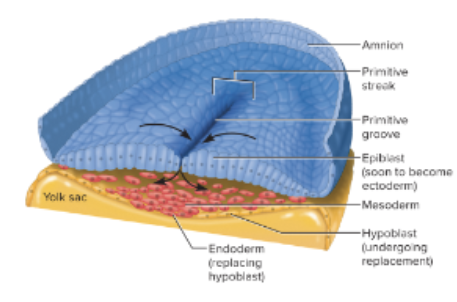
<p>what are the primary embryonic tissue types?</p>

what are the primary embryonic tissue types?

ectoderm (outer layer), mesoderm (middle layer), endoderm (innermost layer)

2
New cards

ectoderm

  • Derivatives kin, eyes, brain

  • “attractoderm” - everything that makes you attractive


3
New cards

mesoderm

  • Derivatives cardiac (heart), bone, blood 

  • “Mesochyme”


4
New cards

endoderm

  • Mucus membranes of the GI & respiratory system

  • Helps with digestive glands


5
New cards
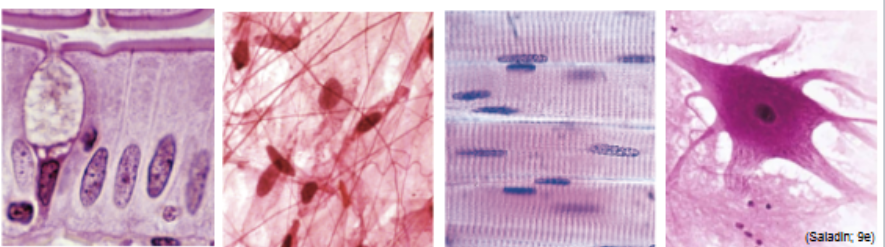
<p>what are the 4 primary tissue types:</p>

what are the 4 primary tissue types:

Epithelium, connective, muscle, nervous

6
New cards

what do epithelia tissues do?

Protect, Absorption, filtration, excretion, secretion, sensory

7
New cards

what are epithelial tissues key characteristics

  • Apical Surface: borders open space

  • Basal surface: next to underlying connective tissue


8
New cards

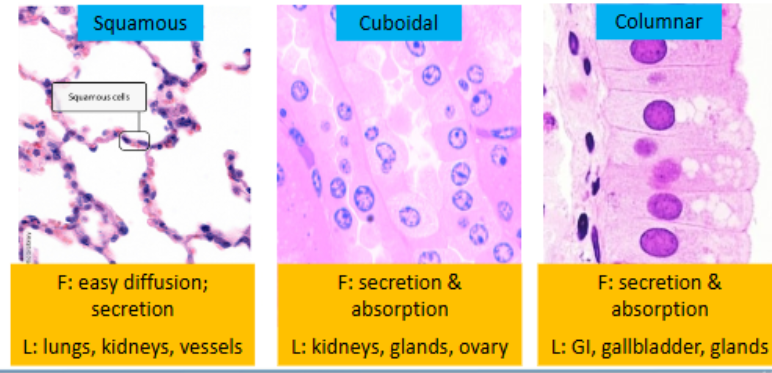
how to identify epithelial tissues?

  • Shape: Squamous (flat), Cuboidal (square shape), Columnar (long columns)

  • Number: Simple (1 layer), Stratified (multiple layers)


9
New cards

simple epithelium examples


<p></p>
10
New cards

simple squamous (function & location)

  • Easy diffusion; secretion

  • Found in lungs, kidneys, vessels


11
New cards

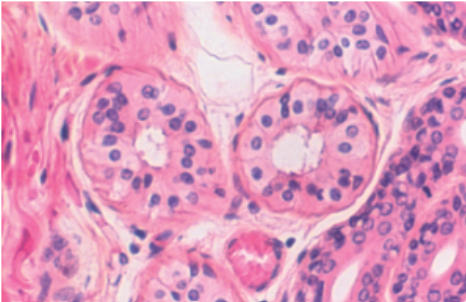
simple cuboidal (function & location)

  • Secretion & absorption

  • Found in kidneys, glands, ovary


12
New cards

simple columnar (function & location)

  • Secretion & absorption

  • Found in GI, gall bladder, glands


13
New cards

Pseudostratified Columnar Epithelium (function and location):

  • Single, but appears stratified due to different heights

  • Secretion, propel mucus

  • (cilia) trachea and upper respiratory tract

  • (non-cilia) in sperm carrying ducts and large glands


<ul><li><p><span style="background-color: transparent; font-family: &quot;Playfair Display&quot;, serif;">Single, but appears stratified due to different heights</span></p></li><li><p><span style="background-color: transparent; font-family: &quot;Playfair Display&quot;, serif;">Secretion, propel mucus</span></p></li><li><p><span style="background-color: transparent; font-family: &quot;Playfair Display&quot;, serif;">(cilia) trachea and upper respiratory tract</span></p></li><li><p><span style="background-color: transparent; font-family: &quot;Playfair Display&quot;, serif;">(non-cilia) in sperm carrying ducts and large glands</span></p></li></ul><p></p>
14
New cards

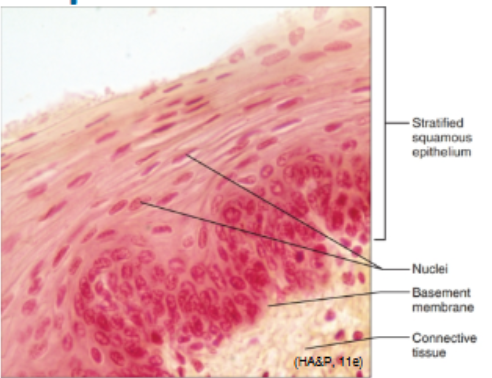
Stratified Squamous Epithelium (function and location) :

  • Protection

  • (Non keratinized) esophagus, mouth, vagina

  • (keratinized) skin


<ul><li><p><span style="background-color: transparent; font-family: &quot;Playfair Display&quot;, serif;">Protection</span></p></li><li><p><span style="background-color: transparent; font-family: &quot;Playfair Display&quot;, serif;">(Non keratinized) esophagus, mouth, vagina</span></p></li><li><p><span style="background-color: transparent; font-family: &quot;Playfair Display&quot;, serif;">(keratinized) skin</span></p></li></ul><p></p>
15
New cards

Stratified Cuboidal Epithelium (function and location):

  • Secretion

  • Sweat glands, ovaries, testes


<ul><li><p><span style="background-color: transparent; font-family: &quot;Playfair Display&quot;, serif;">Secretion</span></p></li><li><p><span style="background-color: transparent; font-family: &quot;Playfair Display&quot;, serif;">Sweat glands, ovaries, testes</span></p></li></ul><p></p>
16
New cards

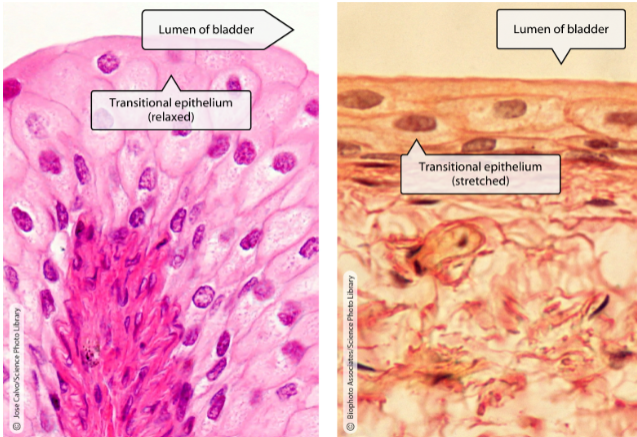
Transitional Epithelial (urothelium) (function and location):

  • Stretches

  • Urinary tract & bladder


<ul><li><p><span style="background-color: transparent; font-family: &quot;Playfair Display&quot;, serif;">Stretches</span></p></li><li><p><span style="background-color: transparent; font-family: &quot;Playfair Display&quot;, serif;">Urinary tract &amp; bladder</span></p></li></ul><p></p>
17
New cards

Connective tissues

  • 11 types of connective tissue

  • Connective tissue proper =fibrous connective tissue
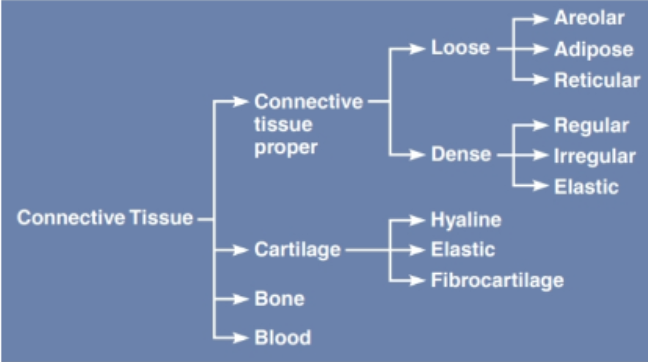

<ul><li><p><span style="background-color: transparent; font-family: &quot;Playfair Display&quot;, serif;">11 types of connective tissue</span></p></li><li><p><span style="background-color: transparent; font-family: &quot;Playfair Display&quot;, serif;">Connective tissue proper =fibrous connective tissue</span></p></li></ul><p></p>
18
New cards

what does connective tissue do?

  • Binding & support, Protection, Insulation, Storing, Transportation


19
New cards

connective tissue characteristics

  • Extracellular matrix > cells

  • Common Origin


20
New cards

Proper Connective tissues: Loose Areolar


  • Support, defense, storage

  • Universal; present in all mucous membranes as lamina propria 


<p></p><ul><li><p><span style="background-color: transparent; font-family: &quot;Playfair Display&quot;, serif;">Support, defense, storage</span></p></li><li><p><span style="background-color: transparent; font-family: &quot;Playfair Display&quot;, serif;">Universal; present in all mucous membranes as lamina propria&nbsp;</span></p></li></ul><p></p>
21
New cards

Proper Connective tissues: adipose (fat)

  • Support, defense, insulation, storage

  • Universal; ~18% of weight

  • Looks like stone or bubbles


<ul><li><p><span style="background-color: transparent; font-family: &quot;Playfair Display&quot;, serif;">Support, defense, insulation, <strong>storage</strong></span></p></li><li><p><span style="background-color: transparent; font-family: &quot;Playfair Display&quot;, serif;">Universal; ~18% of weight</span></p></li><li><p><span style="background-color: transparent; font-family: &quot;Playfair Display&quot;, serif;">Looks like stone or bubbles</span></p></li></ul><p></p>
22
New cards

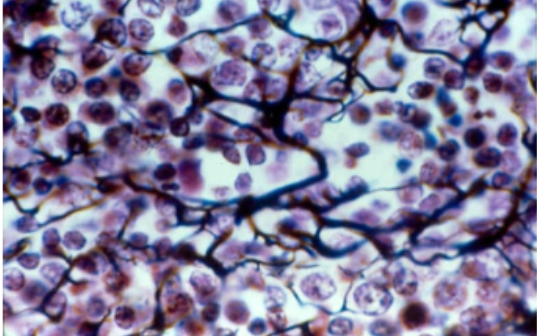
Proper Connective tissues: loose recticular

  • Support defense cells

  • Lymphoid organs (lymph nodes, bone marrow, spleen)

  • Looks like blueberry bush


<ul><li><p><span style="background-color: transparent; font-family: &quot;Playfair Display&quot;, serif;">Support defense cells</span></p></li><li><p><span style="background-color: transparent; font-family: &quot;Playfair Display&quot;, serif;">Lymphoid organs (lymph nodes, bone marrow, spleen)</span></p></li><li><p><span style="background-color: transparent; font-family: &quot;Playfair Display&quot;, serif;">Looks like blueberry bush</span></p></li></ul><p></p>
23
New cards

Proper Connective tissues: dense regular

  • Strength

  • Tendons, ligaments, aponeuroses


<ul><li><p><span style="background-color: transparent; font-family: &quot;Playfair Display&quot;, serif;">Strength</span></p></li><li><p><span style="background-color: transparent; font-family: &quot;Playfair Display&quot;, serif;">Tendons, ligaments, aponeuroses</span></p></li></ul><p></p>
24
New cards

Proper Connective tissues: dense irregular

  • Strength (structural and functional)

  • Capsules, dermis, digestive tract

  • Looks like a steak marbling


<ul><li><p><span style="background-color: transparent; font-family: &quot;Playfair Display&quot;, serif;">Strength (structural and functional)</span></p></li><li><p><span style="background-color: transparent; font-family: &quot;Playfair Display&quot;, serif;">Capsules, dermis, digestive tract</span></p></li><li><p><span style="background-color: transparent; font-family: &quot;Playfair Display&quot;, serif;">Looks like a steak marbling</span></p></li></ul><p></p>
25
New cards

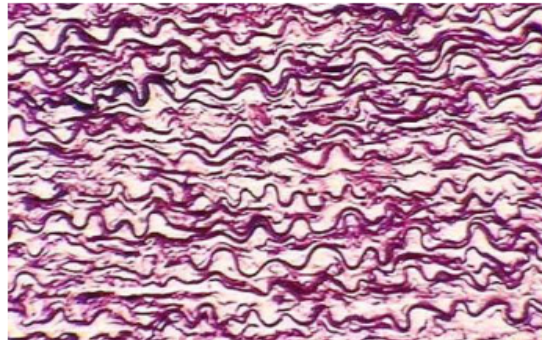
Proper Connective tissues: dense elastic

  • Recoil

  • Arteries, some ligaments, lungs

  • Looks like curly hair strands 


<ul><li><p><span style="background-color: transparent; font-family: &quot;Playfair Display&quot;, serif;">Recoil</span></p></li><li><p><span style="background-color: transparent; font-family: &quot;Playfair Display&quot;, serif;">Arteries, some ligaments, lungs</span></p></li><li><p><span style="background-color: transparent; font-family: &quot;Playfair Display&quot;, serif;">Looks like curly hair strands&nbsp;</span></p></li></ul><p></p>
26
New cards

Cartilage tissues: hyaline (articular cartilage)

  • Support and cushion

  • Ends of bones, costal cartilages, nose, trachea, and larynx

  • Googly eyes


<ul><li><p><span style="background-color: transparent; font-family: &quot;Playfair Display&quot;, serif;">Support and cushion</span></p></li><li><p><span style="background-color: transparent; font-family: &quot;Playfair Display&quot;, serif;">Ends of bones, costal cartilages, nose, trachea, and larynx</span></p></li><li><p><span style="background-color: transparent; font-family: &quot;Playfair Display&quot;, serif;">Googly eyes</span></p></li></ul><p></p>
27
New cards

Cartilage tissues: elastic

  • Shape and flexibility

  • External ear; epiglottis

  • Rubber bands


<ul><li><p><span style="background-color: transparent; font-family: &quot;Playfair Display&quot;, serif;">Shape and flexibility</span></p></li><li><p><span style="background-color: transparent; font-family: &quot;Playfair Display&quot;, serif;">External ear; epiglottis</span></p></li><li><p><span style="background-color: transparent; font-family: &quot;Playfair Display&quot;, serif;">Rubber bands</span></p></li></ul><p></p>
28
New cards

Cartilage tissues: fibrocartilage

  • Strength and shock absorption

  • Intervertebral discs, menisci, pubic symphysis

  • Feathers


<ul><li><p><span style="background-color: transparent; font-family: &quot;Playfair Display&quot;, serif;">Strength and shock absorption</span></p></li><li><p><span style="background-color: transparent; font-family: &quot;Playfair Display&quot;, serif;">Intervertebral discs, menisci, pubic symphysis</span></p></li><li><p><span style="background-color: transparent; font-family: &quot;Playfair Display&quot;, serif;">Feathers</span></p></li></ul><p></p>
29
New cards

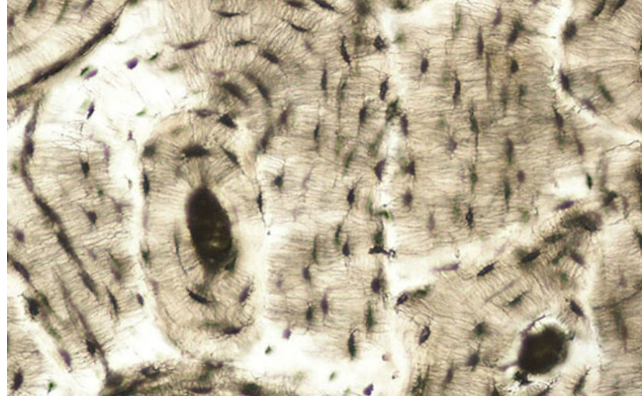
Cartilage tissues: bone

  • Hard, calcified matrix (osteons) with peripheral osteocytes (black dots)

  • “Tree ring” pattern

  • Support and protection


<ul><li><p><span style="background-color: transparent; font-family: &quot;Playfair Display&quot;, serif;">Hard, calcified matrix (osteons) with peripheral osteocytes (black dots)</span></p></li><li><p><span style="background-color: transparent; font-family: &quot;Playfair Display&quot;, serif;">“Tree ring” pattern</span></p></li><li><p><span style="background-color: transparent; font-family: &quot;Playfair Display&quot;, serif;">Support and protection</span></p></li></ul><p></p>
30
New cards

Cartilage tissues: blood

  • Non traditional:

  • Cells (erythrocytes) surrounded by fluid (plasma)

  • Carry nutrients, wastes, respiratory gases, and other substances


<ul><li><p><span style="background-color: transparent; font-family: &quot;Playfair Display&quot;, serif;">Non traditional:</span></p></li></ul><ul><li><p><span style="background-color: transparent; font-family: &quot;Playfair Display&quot;, serif;">Cells (erythrocytes) surrounded by fluid (plasma)</span></p></li></ul><ul><li><p><span style="background-color: transparent; font-family: &quot;Playfair Display&quot;, serif;">Carry nutrients, wastes, respiratory gases, and other substances</span></p></li></ul><p></p>
31
New cards

Muscle Tissue types

Skeletal muscle, smooth muscle, cardiac

32
New cards

What do muscle tissues do


  • Contraction/movement

Voluntary (skeletal) or involuntary (smooth and cardiac)
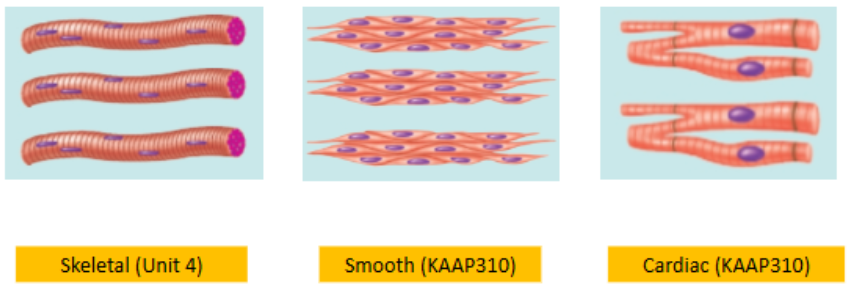
<p></p><ul><li><p><span style="background-color: transparent; font-family: &quot;Playfair Display&quot;, serif;">Contraction/movement</span></p></li></ul><p><span style="background-color: transparent; font-family: &quot;Playfair Display&quot;, serif;">Voluntary (skeletal) or involuntary (smooth and cardiac)</span></p>
33
New cards

Skeletal muscle:

  • Long, cylindrical shaped with many peripheral nuclei

  • Patterned striations

  • L: Skeletal muscle


<ul><li><p><span style="background-color: transparent; font-family: &quot;Playfair Display&quot;, serif;">Long, cylindrical shaped with many peripheral nuclei</span></p></li><li><p><span style="background-color: transparent; font-family: &quot;Playfair Display&quot;, serif;">Patterned striations</span></p></li><li><p><span style="background-color: transparent; font-family: &quot;Playfair Display&quot;, serif;">L: Skeletal muscle</span></p></li></ul><p></p>
34
New cards

Smooth muscle

  • Spindle shaped (thick in the middle, thinner on the end) with one central nucleus

  • No visible striations

  • L: digestion, urinary tract/bladder, uterus, blood vessels
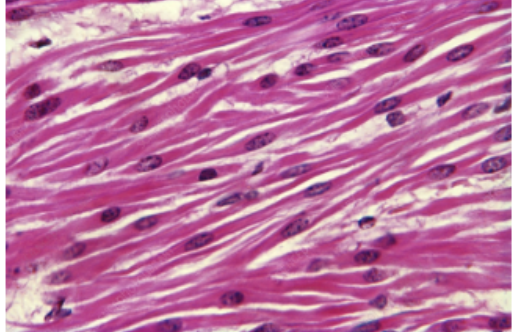

<ul><li><p><span style="background-color: transparent; font-family: &quot;Playfair Display&quot;, serif;">Spindle shaped (thick in the middle, thinner on the end) with one central nucleus</span></p></li><li><p><span style="background-color: transparent; font-family: &quot;Playfair Display&quot;, serif;">No visible striations</span></p></li><li><p><span style="background-color: transparent; font-family: &quot;Playfair Display&quot;, serif;">L: digestion, urinary tract/bladder, uterus, blood vessels</span></p></li></ul><p></p>
35
New cards

Cardiac muscle:

  • Branching cells with one central nucleus

  • Cells connected with intercalated discs (dark bands of tissue (dark pink lines)

  • L: heart


<ul><li><p><span style="background-color: transparent; font-family: &quot;Playfair Display&quot;, serif;">Branching cells with one central nucleus</span></p></li><li><p><span style="background-color: transparent; font-family: &quot;Playfair Display&quot;, serif;">Cells connected with <strong>intercalated discs</strong> (dark bands of tissue (dark pink lines)</span></p></li><li><p><span style="background-color: transparent; font-family: &quot;Playfair Display&quot;, serif;">L: heart</span></p></li></ul><p></p>
36
New cards

Nervous tissues

Responds to a stimuli

  • Generates impulse 

Transmit impulse

37
New cards

Nervous Tissue key characteristics:

Cell body, dendrites, single axon

<p><span style="background-color: transparent; font-family: &quot;Playfair Display&quot;, serif;">Cell body, dendrites, single axon</span></p>
38
New cards

Neurons:

Highly specialized nerve cells

39
New cards

Neuroglia:

Support, insulate, and protect the neurons

40
New cards

Glandular Epithelia:

  1. All glands produce a product, or secretion

  • Serous (thin, watery) or Mucous (mucin)

  • Water-based with protein, lipid, or steroid

  1. Classified by where they secrete

  • Endocrine (inside) or exocrine (outside)

  1. Classified by number of cells

  • Unicellular or multicellular


41
New cards

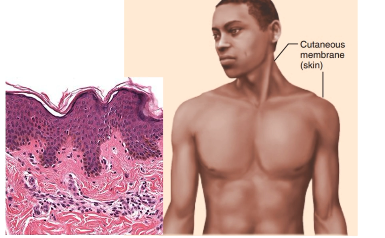
Cutaneous membranes:

  • The superficial layer is made up of keratinized stratified epithelium (epidermis) attached to connective tissue (dermis)

  • Only dry membrane (exposed to air)


<ul><li><p><span style="background-color: transparent; font-family: &quot;Playfair Display&quot;, serif;">The superficial layer is made up of keratinized stratified epithelium (epidermis) attached to connective tissue (dermis)</span></p></li><li><p><span style="background-color: transparent; font-family: &quot;Playfair Display&quot;, serif;">Only <strong>dry</strong> membrane (exposed to air)</span></p></li></ul><p></p>
42
New cards

Mucus membranes:

  • Made of superficial layer of stratified squamous/simple columnar over a layer of areolar connective tissue (lamina propria)

  • Line all body cavities that open to the outside world

- Digestive* 

- Respiratory*

- Urinary 

  • Wet membrane 

- Absorption & secretion


<ul><li><p><span style="background-color: transparent; font-family: &quot;Playfair Display&quot;, serif;">Made of superficial layer of stratified squamous/simple columnar over a layer of areolar connective tissue (<strong>lamina propria)</strong></span></p></li><li><p><span style="background-color: transparent; font-family: &quot;Playfair Display&quot;, serif;">Line <strong>all </strong>body cavities that open to the outside world</span></p></li></ul><p><span style="background-color: transparent; font-family: &quot;Playfair Display&quot;, serif;">- Digestive*&nbsp;</span></p><p><span style="background-color: transparent; font-family: &quot;Playfair Display&quot;, serif;">- Respiratory*</span></p><p><span style="background-color: transparent; font-family: &quot;Playfair Display&quot;, serif;">- Urinary&nbsp;</span></p><ul><li><p><span style="background-color: transparent; font-family: &quot;Playfair Display&quot;, serif;"><strong>Wet </strong>membrane&nbsp;</span></p></li></ul><p><span style="background-color: transparent; font-family: &quot;Playfair Display&quot;, serif;">- Absorption &amp; secretion</span></p><p></p>
43
New cards

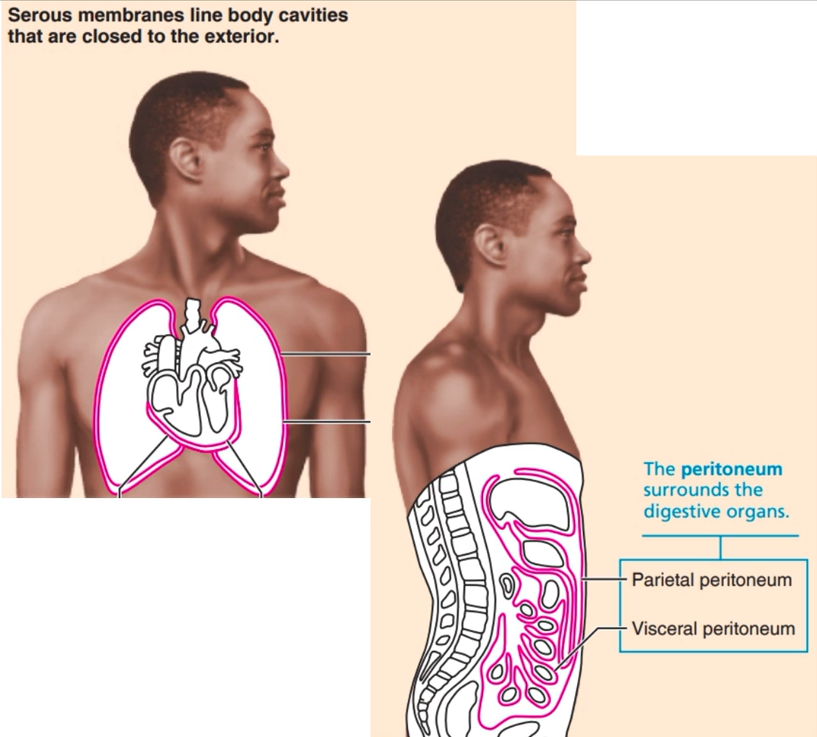
Serous membranes:

  • Simple squamous (mesothelium) over a thin layer of areolar connective tissue

  • Line all body cavities that do NOT open to the outside world

- Pleurae 

- Pericardium 

- Peritoneum 

  • Wet membrane

- Secrete serous fluid


<ul><li><p><span style="background-color: transparent; font-family: &quot;Playfair Display&quot;, serif;">Simple squamous (mesothelium) over a thin layer of areolar connective tissue</span></p></li><li><p><span style="background-color: transparent; font-family: &quot;Playfair Display&quot;, serif;">Line <strong>all</strong> body cavities that do <strong>NOT</strong> open to the outside world</span></p></li></ul><p><span style="background-color: transparent; font-family: &quot;Playfair Display&quot;, serif;">- Pleurae&nbsp;</span></p><p><span style="background-color: transparent; font-family: &quot;Playfair Display&quot;, serif;">- Pericardium&nbsp;</span></p><p><span style="background-color: transparent; font-family: &quot;Playfair Display&quot;, serif;">- Peritoneum&nbsp;</span></p><ul><li><p><span style="background-color: transparent; font-family: &quot;Playfair Display&quot;, serif;">Wet membrane</span></p></li></ul><p><span style="background-color: transparent; font-family: &quot;Playfair Display&quot;, serif;">- Secrete serous fluid</span></p><p></p>