Theme 4 Composition
 Call Kai
 Learn
Learn Practice Test
 Spaced Repetition
 Match
Match Flashcards
 Knowt Play
1/17

Earn XP
Description and Tags
Principles and Concepts
Name | Mastery | Learn | Test | Matching | Spaced | Call with Kai |
|---|
No analytics yet
Send a link to your students to track their progress
18 Terms
What is ORDER in architecture?
When individual elements are set in logical relation with other unique elements with the intention of building up a harmonic composition. Similar to an orchestra where many unique elements (instruments) make up 1 harmonic unit.
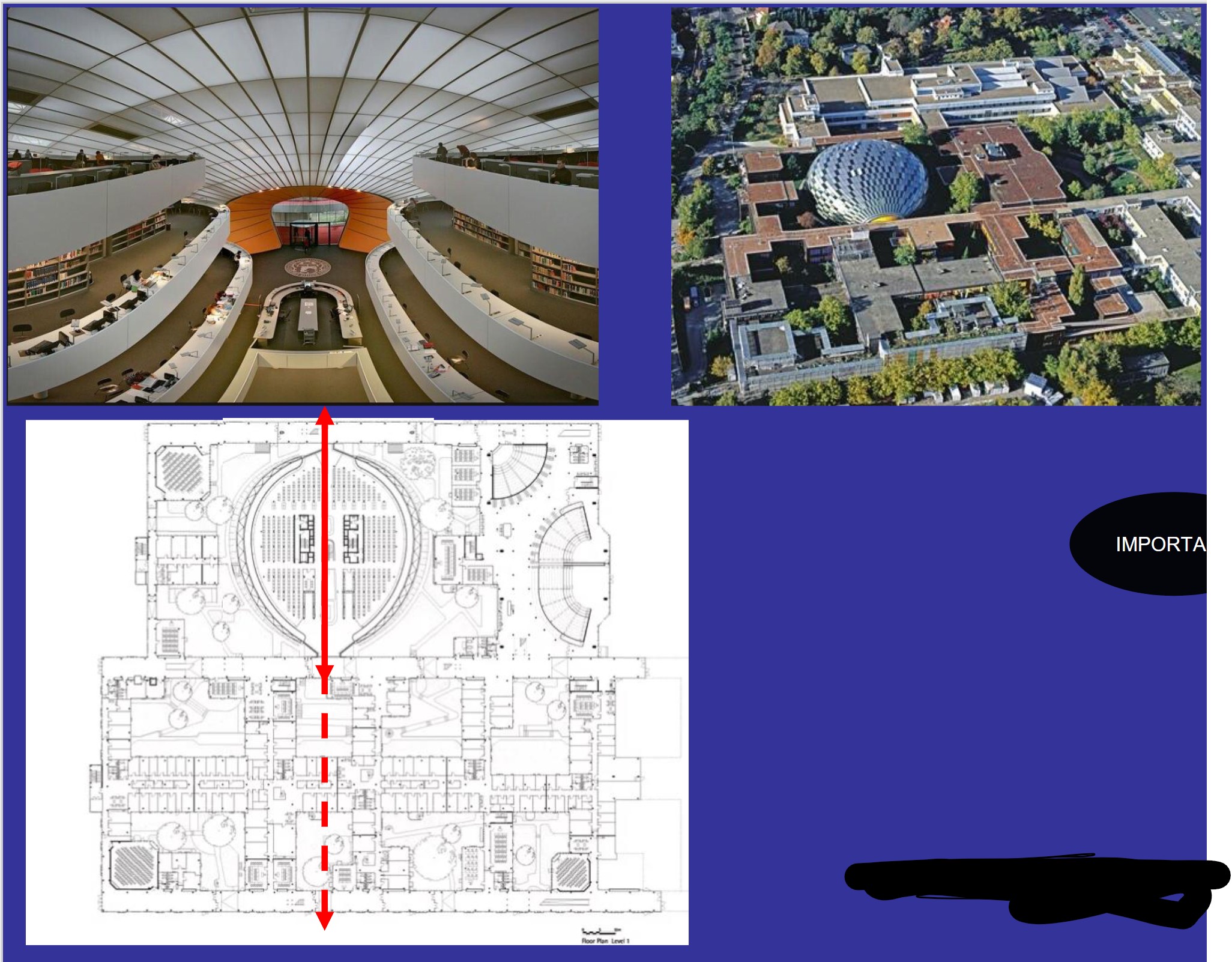
Library FUB (Foster): Symmetrical composition with central oval inside a balanced composition (global campus). Oval element is balanced among its frame of the existing global campus.
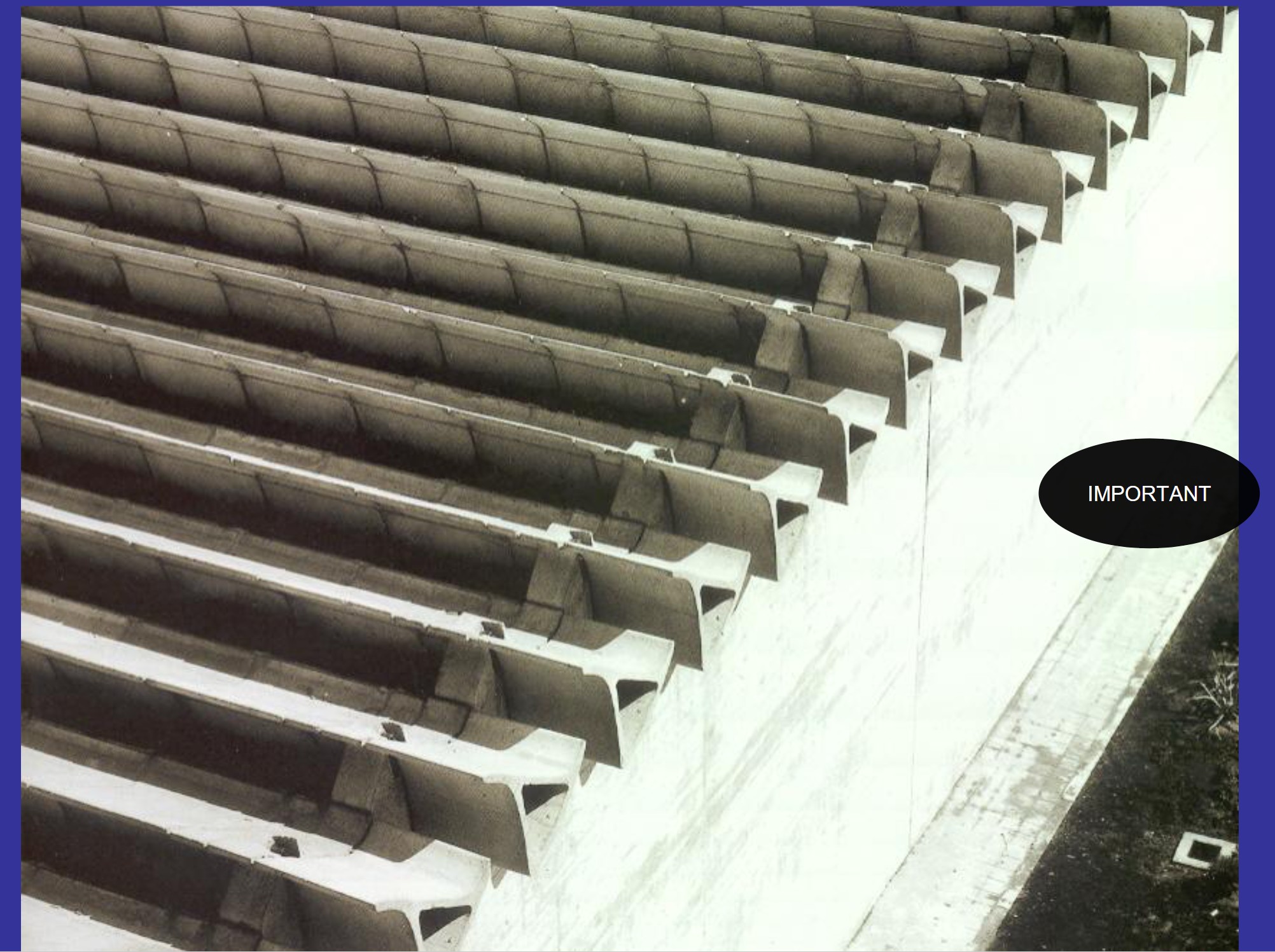
Centro de Estudios Hidograficos Miguel Fisac): Composition based on an assembly pattern. Roof beam avoids any vertical elements and instead uses bone-like beams (inspired by pork chop) to remove non-working material and leave only the structural. Example of assembly for its repeating parts
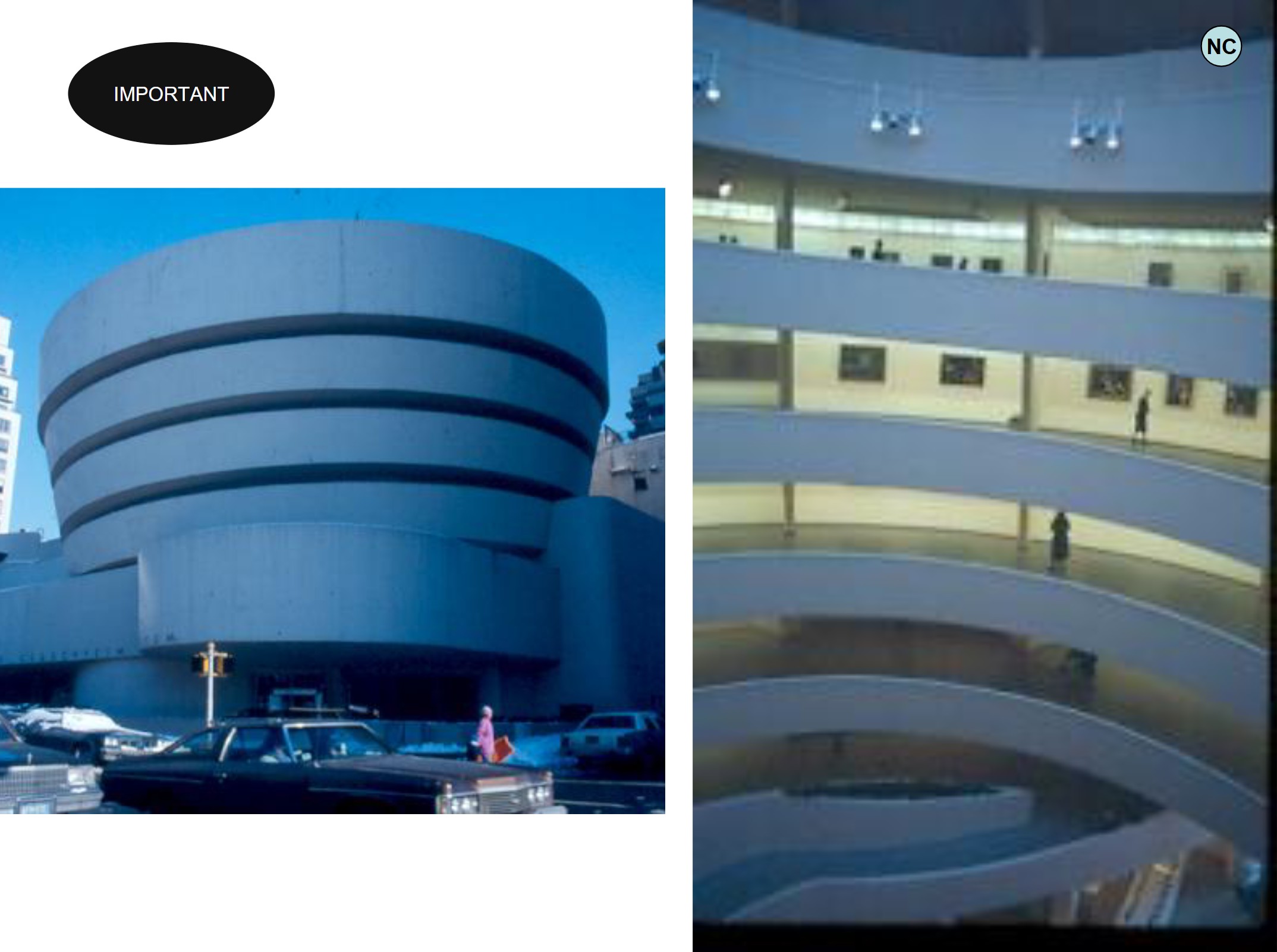
Guggenheim Museum (FLW): Composition based on MOLDING, not assembly. Large sculptural mass with subtractive forms, not an assembly of small fragments.
Difference between ORDER and DISORDER
Ordered compositions are ruled by a general principle, disordered are not.
Psychological Connotations of symmetry vs asymmetry
Symmetry = rest and construction, ORDER
Asymmetry = movement and liberation
What is an AXIS?
Axis = linear element which orders units on both of its sides. Can be material/real (Ex: Versailles) or virtual/implied
Why did the Greeks prefer lateral perspectives instead of frontal/central ones?
Notions of democracy. Ex: in the Pantheon which is laterally facing, viewers have their own sense of control
What is BALANCE?
Balance is composed of the ‘distance’ and ‘weight’ of each volume or element of the composition. This theme isn’t about the shape of the buildings, but rather the experience of walking between them based on their balance/symmetry.
When a building has bigger visual weight, it must also have a greater distance to achieve balance.
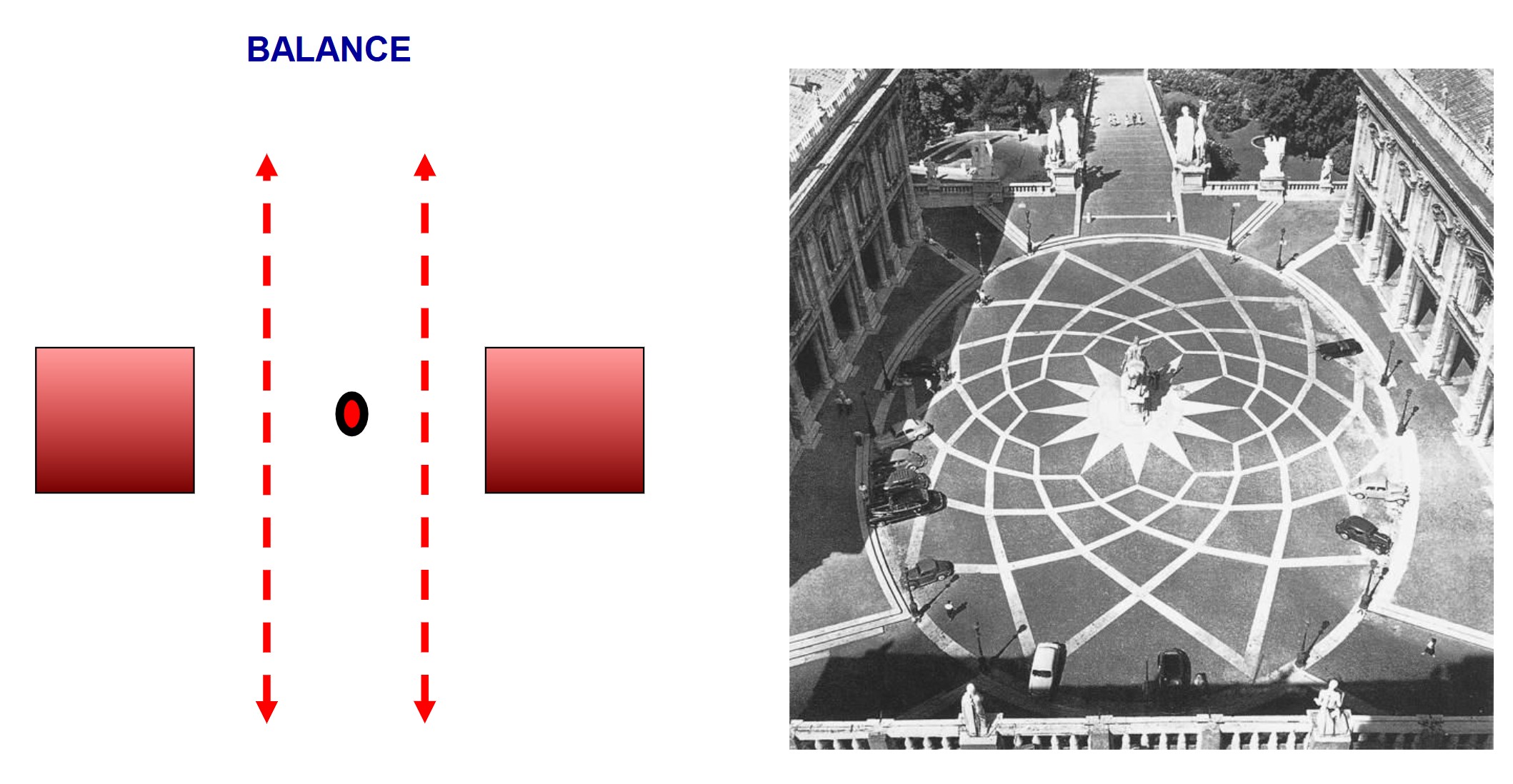
Piazza Campidoglio (Micheangelo): Acceptable form of balance when central element is tiny and surrounding volumes are larger because the center carries a symbolic monument
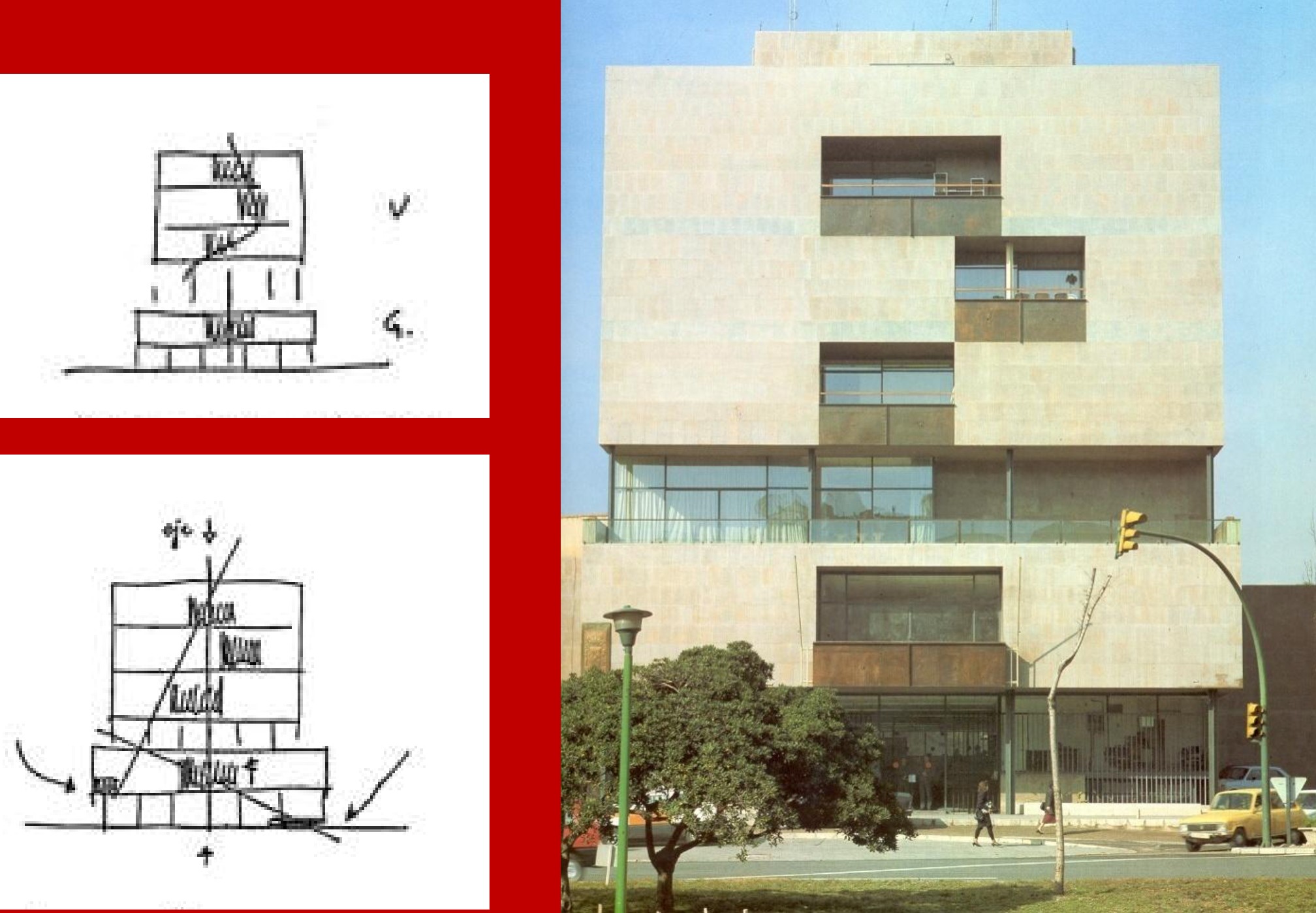
Gobierno Civil (Sota): Top and bottom parts are symmetrical, central part loses symmetry but remains balanced which leads to captivating energy
What are the 3 steps along the projection process of a building?
Establish an ideological model (what the client wants, make a sign of identity/representation taking the context into account)
Establish a type model (intention of client. ex: activities in building, first sketches, outlines, etc.)
Establish a project scheme (make use of geometry)
What are the 2 types of COMPOSITION METHODS
Assembly (elements stacked together and assembled. ex: columns, entablatures, roofs, etc.) Gothic and classical architecture.
Molding (not a combination of fragments, but a sculpture). Subtractive, not addative. Modern architecture.
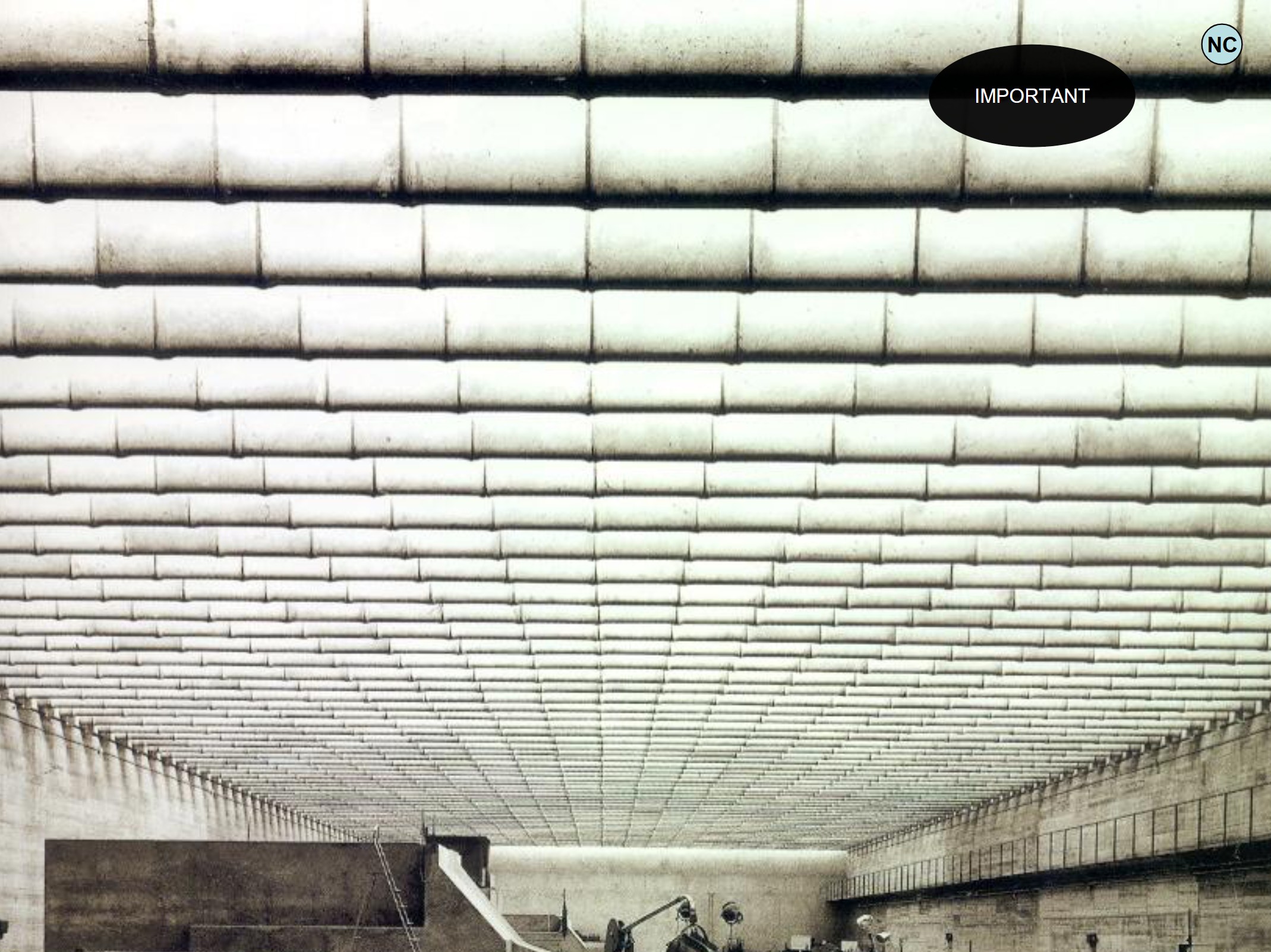
Centro de Estudios Hidograficos Miguel Fisac): Composition based on an assembly pattern. Roof beam avoids any vertical elements and instead uses bone-like beams (inspired by pork chop) to remove non-working material and leave only the structural. Example of assembly for its repeating parts
Modern Construction Techniques
Can be both assembly and molding at the same time
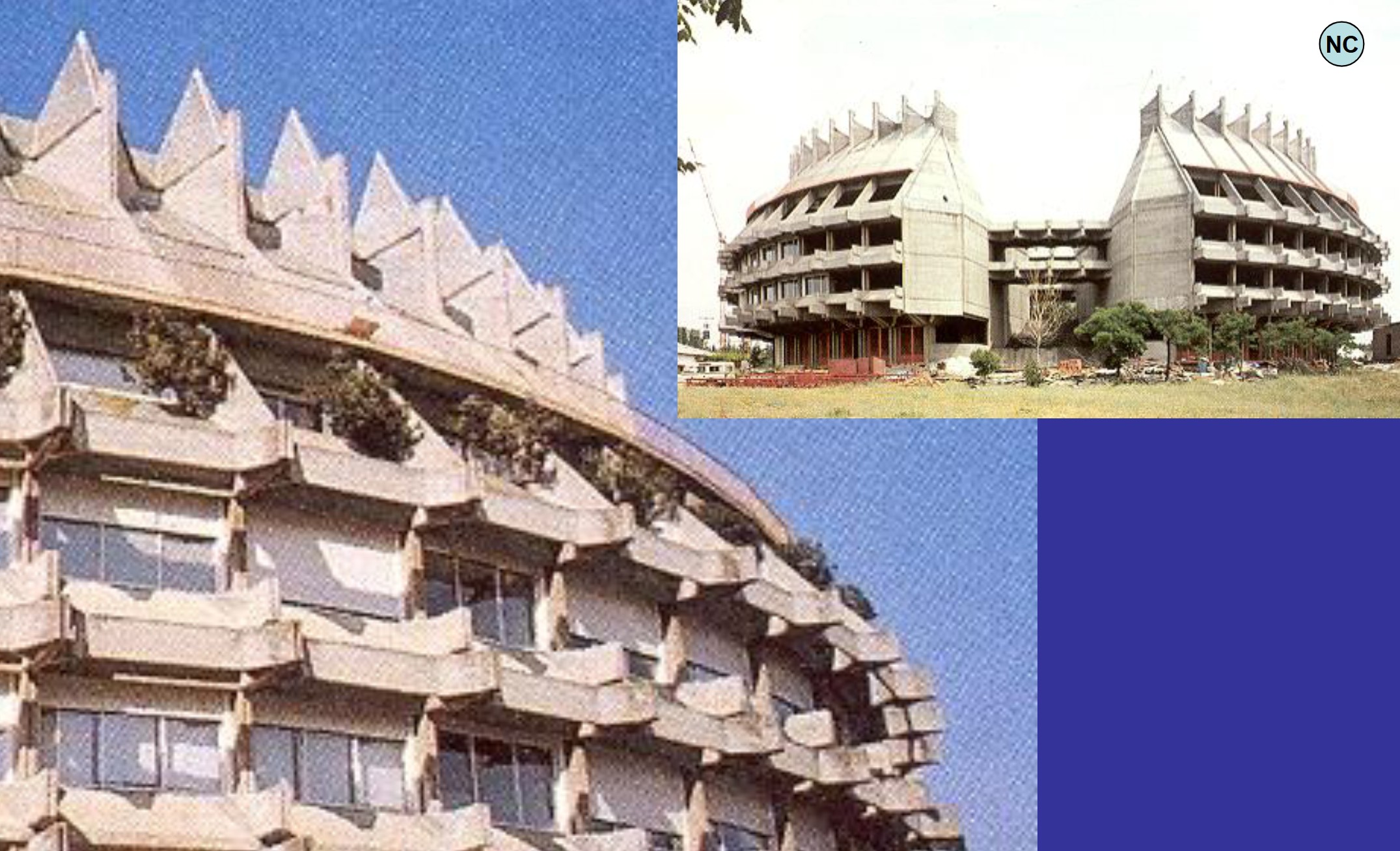
Higueras-Miró
Centro Rest-CU: Both ASSEMBLY and MOLDING. Molding = cylindrical shape. Assembly = repetition of parts
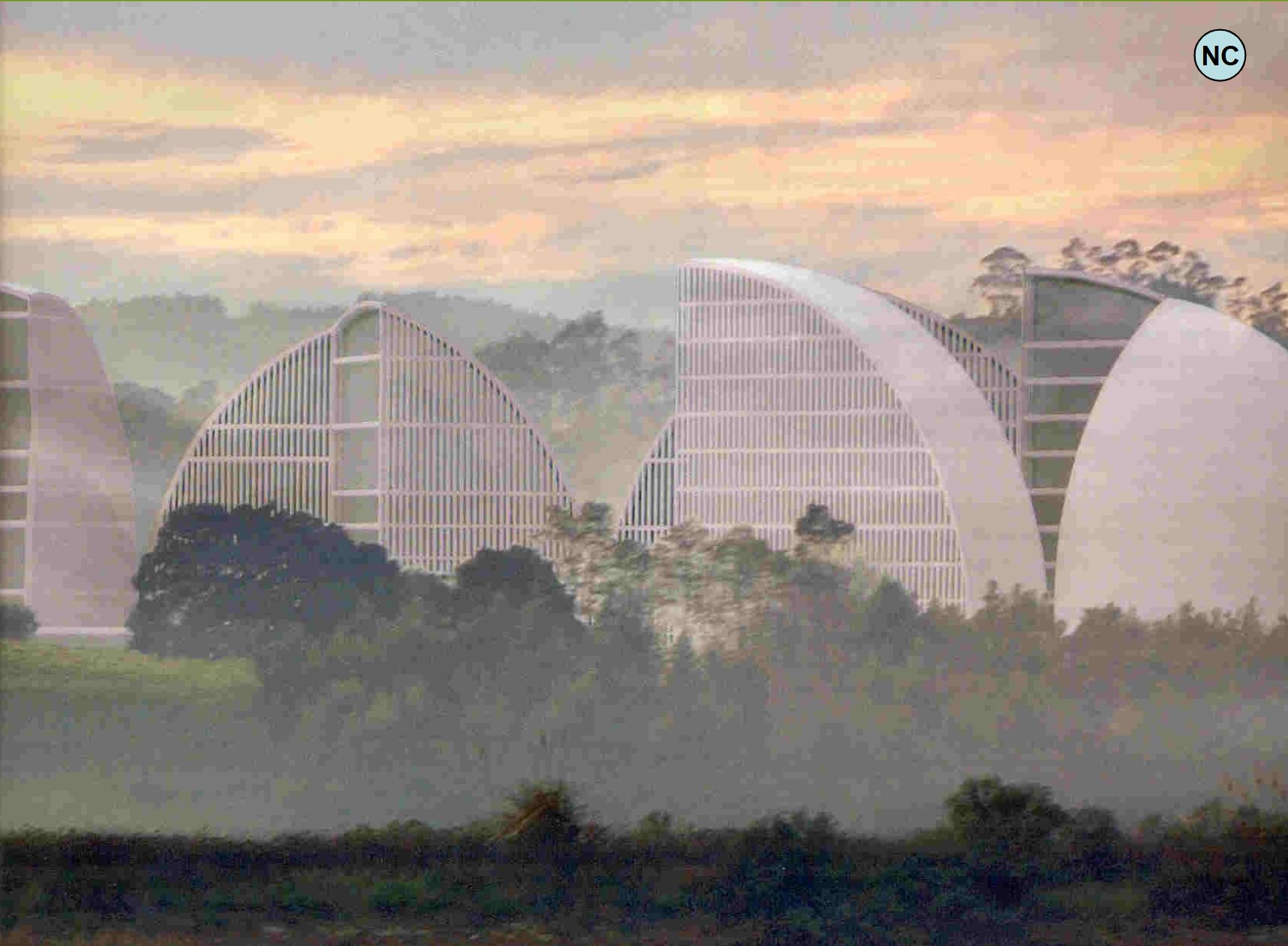
Tuñón-Mansilla Institutional Building in the City of Environment (Soria): example of decomposition that leads to synthesis of a project (rounded divided parts of sphere rearrangd to form masses)
What must always be present in a projection process?
UNIFIED LOGIC!!! (analysis, conception, project-execution)

