Chapter 6
 Call Kai
 Learn
Learn Practice Test
 Spaced Repetition
 Match
Match Flashcards
 Knowt Play
1/27

There's no tags or description
Looks like no tags are added yet.
Name | Mastery | Learn | Test | Matching | Spaced | Call with Kai | Chat |
|---|
No analytics yet
Send a link to your students to track their progress
28 Terms
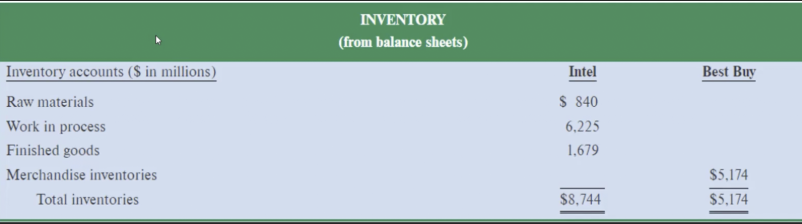
Manufacturing items
Raw materials – what we need to make goods
Work in process – starting to build goods
Finished goods
Merchandising items
Merchandise inventories
Inventory - manufacturing and merchandising
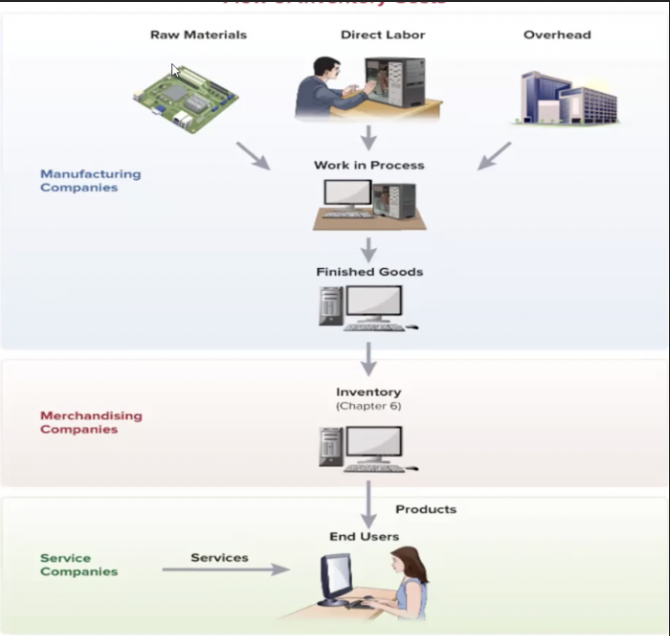
Flow of Inventory Costs visual
Raw materials, Labor, and Overhead lead to work in progress then finished product (manufacturing companies)
merchandising companies have inventory
service companies give products and services to end users
Relationship w inventory and cost of goods sold
Cost of goods sold shows up as expense the income statement and inventory shows up as asset the balance sheet
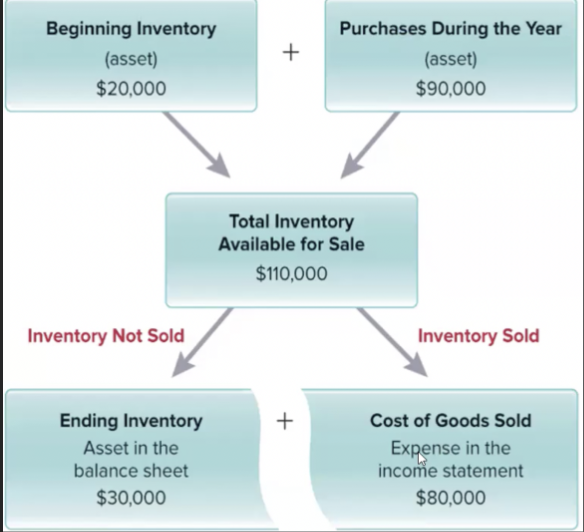
Cost of goods sold
amount of inventory that we moved away from ending inventory that has been sold
Ex. 10 units of chairs in inventory and 5 are sold. Cost of 5 chairs are the cost of goods sold
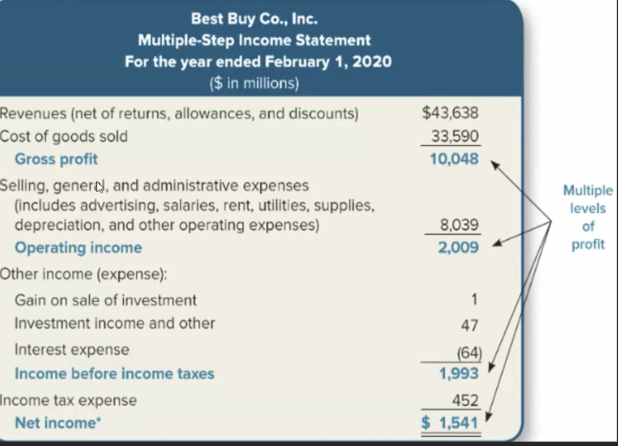
Multiple-step income statement / 4 things
Shows Gross Profit, Operating Income, Income before income taxes, and net income
Valuation: Inventory and cost of goods sold
Inventory transactions for a game shop
Pay attention to unit cost and how it goes up in during dif dates
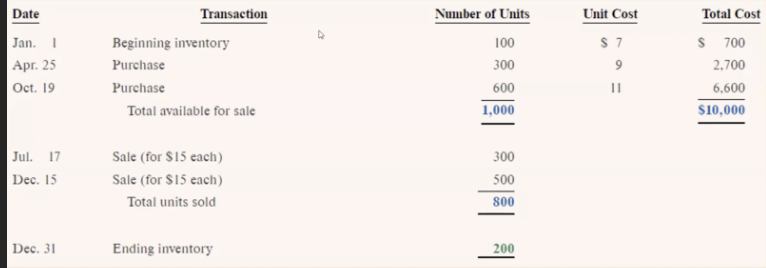
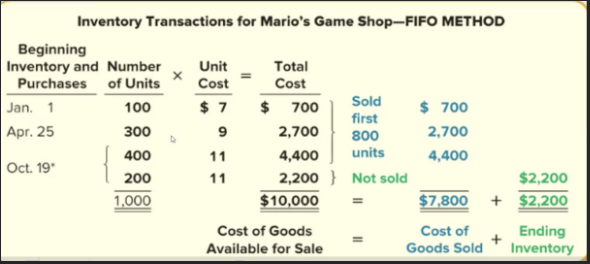
First in first out (FIFO) inventory method
First in you look at the first units sold and work your way down, $7 per unit, then $9, then $11
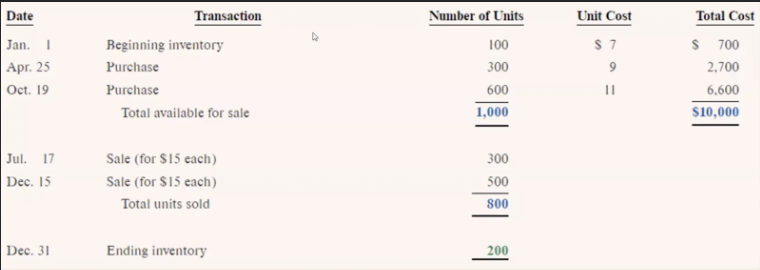
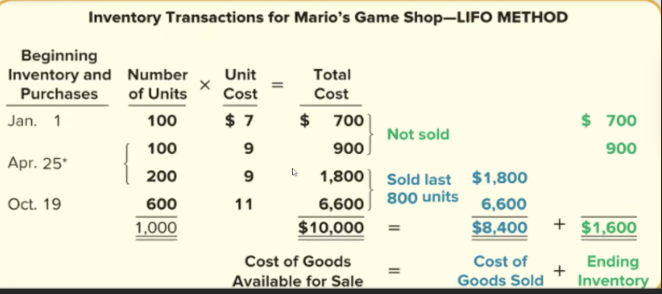
Last in first out (LIFO) inventory method
Start with the units that are $11 per unit first
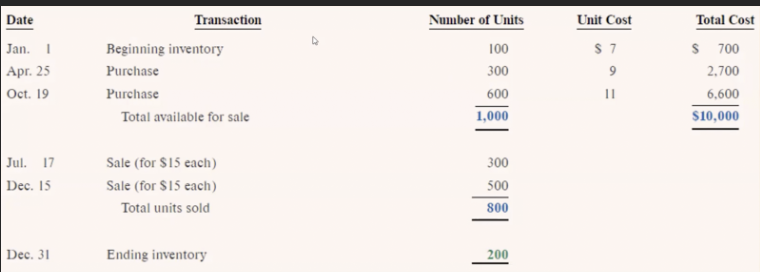
With graph if you sell 500 units
FIFO 100 units are sold at $7; 300 units are 9$, and the remaining 100 units are $11
LIFO all 500 units are sold at $11
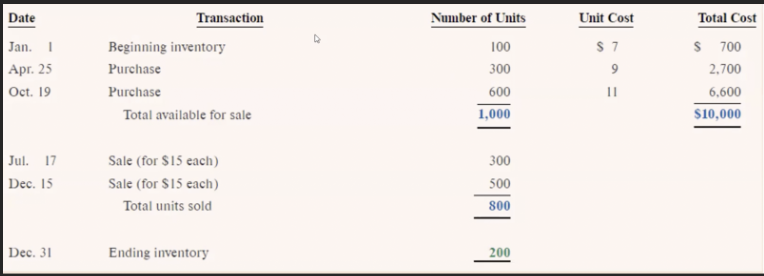
First-in First-out game shop
Look at how 800 units are sold and the way they work down line
Last-in First-out game shop
See how all 800 units are covered by the last units that came in
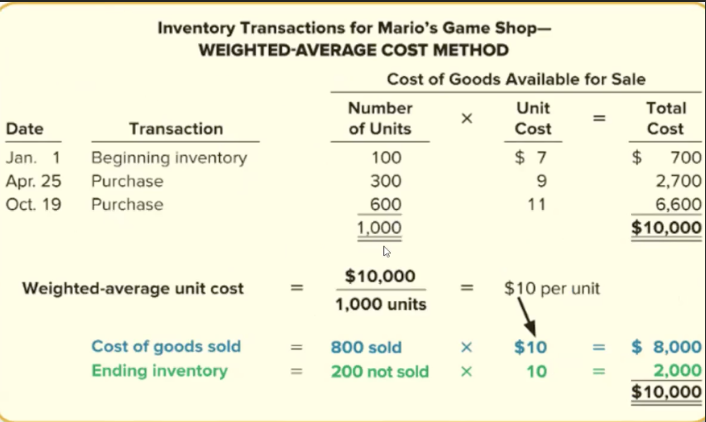
Weighted-average cost
Take total cost and divide by total units, here you find the cost of the unit
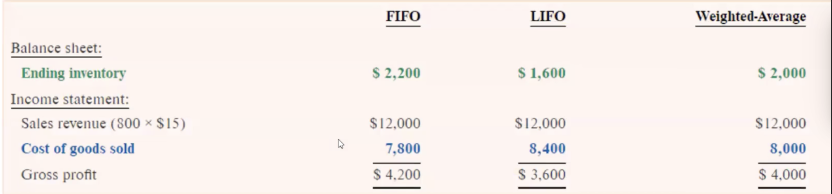
Ending effect of FIFO, LIFO, and Weighted-Average
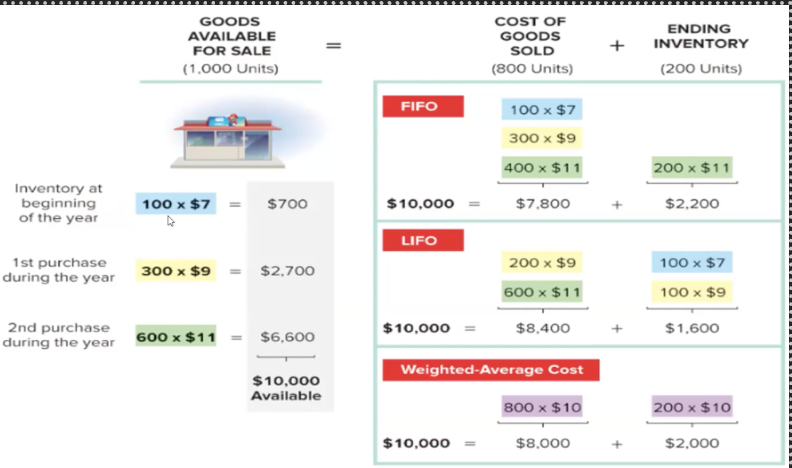
LIFO and FIFO specs
FIFO: Lower COGS → Higher gross profit and net income → Higher ending inventory.
LIFO: Higher COGS → Lower gross profit and net income → Lower ending inventory.
Ending effects of FIFO, LIFO, and Weighted average cost
Shipping terms
2 terms are FOB shipping point and FOB destination
FOB stands for freight on board
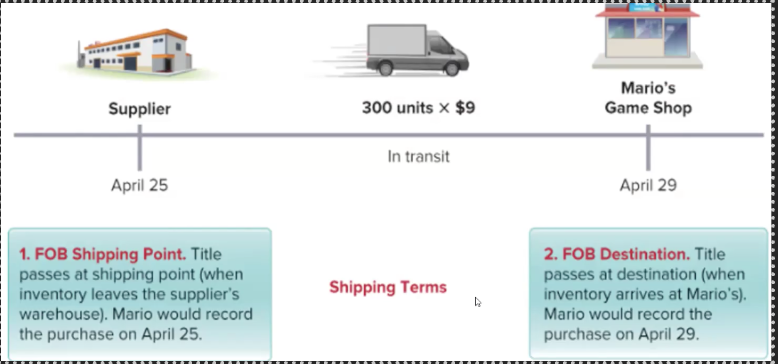
FOB shipping point
Ownership transfers when the seller ships the goods.
The buyer owns the goods while they are in transit.
The buyer is generally responsible for shipping costs and any loss or damage during transit (unless the contract says otherwise).
FOB destination
Ownership transfers when the goods arrive at the buyer's location.
The seller owns the goods while they are in transit.
The seller is generally responsible for shipping costs and bears the risk of loss until delivery.
Journal entry for FOB destination and FOB shipping point
FOB shipping point entry is made as soon as items ship
FOB destination entry is made when goods are received
Formula for COGS
Beginning inventory + Purchses - Ending Inventory
Gross Profit
revenues - COGS
Types of operating expenses
advertising, salaries, rent, utilities, supplies, depreciation,
aka selling, general, and administrative expenses
Operating income
Gross profit - operating expenses
Income before income taxes
Operating income - Other income expenses
other income expenses may be investment income and interest expense
Net income
income before taxes - income tax expense
Journal entry of goods costing 550k being sold for 335k
