Skin and Eyes Diseases
 Call Kai
 Learn
Learn Practice Test
 Spaced Repetition
 Match
Match Flashcards
 Knowt Play
1/42

There's no tags or description
Looks like no tags are added yet.
Name | Mastery | Learn | Test | Matching | Spaced | Call with Kai |
|---|
No analytics yet
Send a link to your students to track their progress
43 Terms
Staphylococcus epidermidis
90% of normal skin microbiota ; healthcare-associated pathogen (biofilm on catheters)
Staphylococcus aureus
May produce damaging toxins and cause sepsis.
Secretes proteins and toxins that kill phagocytes.
MRSA strains of Staphylococcus aureus
Antibiotic resistant
Folliculitis
Infection of hair follicles ; Staphylococcal
Furuncle / Boil
Type of abscess ; Staphylococcal
Carbuncle
Damage and inflammation of deep tissue from spreading furuncle ; Staphylococcal
Impetigo
Crusting (nonbullous) sores spread from one body part to another ; can be caused by Streptococcus pyogenes or Staphylococcal
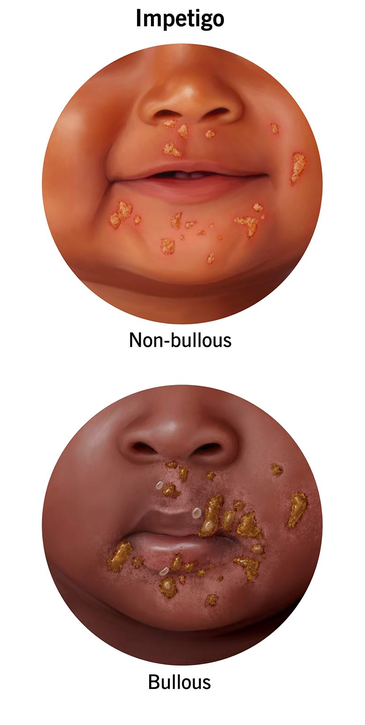
Scalded Skin Syndrome
Bullous impetigo ; exfoliative toxin A and B ; Staphylococcal
Exfoliative Toxin A of Scalded Skin Syndrome
Bullous impetigo remains localized in an area.
Exfoliative Toxin B of Scalded Skin Syndrome
Bulbous impetigo spreads to distant sites.
Toxic Shock Syndrome (TSS)
Fever, vomiting, shock, and organ failure caused by toxic shock syndrome toxin 1 (TSST-1) in blood ; Staphylococcal
What is TSS associated with?
Tampon use and nasal surgery
Streptococcal Skin Infections
Gram positive chain cocci; produce hemolysins
Staphylococcal Skin Infections
Spherical gram-positive bacteria ; forms clusters
How is Streptococci differentiated?
Into groups A-T based on antigenic cell wall carbohydrates
Group A Streptococci (GAS)
Streptococcus pyogens ; produce virulence factors
Virulence factors of GAS
Streptolysins
M Proteins
Hyalauronidase
Streptokinases
Streptolysins
Lyse RBCs
M Proteins
Blocks complement activation, enables evasion of phagocytes, kill neutrophils, and allow bacteria to adhere to mucous membrane ; external to cell wall.
Hyaluronidase
Dissolves connect tissue
Streptokinases
Dissolve blood clots that isolate bacteria.
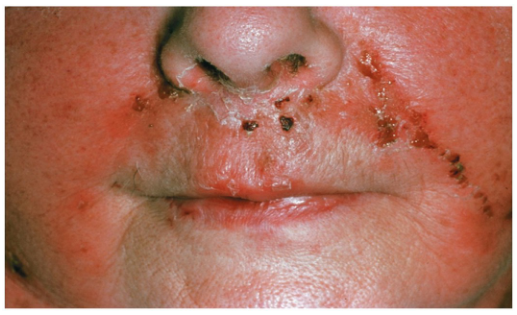
Erysipelas
S. pyogenes infect dermal layer of skin causing local tissue destruction and sepsis
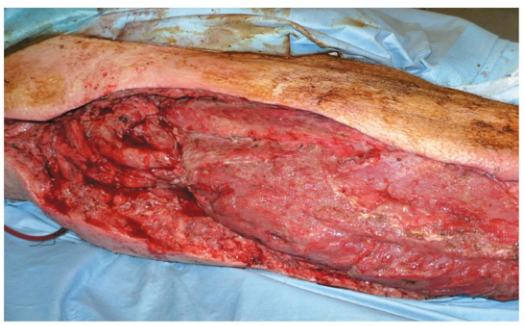
Necrotizing Fasciitis
“Flesh eating” disease ; pyrogenic toxin produced by S. pyogenes acts as superantigen
Streptococcal Toxic Shock Syndrome
Fever, vomiting, shock, and organ failure; more deadly than regular TSS
Pemphigus neonatorum
impetigo of the newborn
Human herpesvirus 1 (HSV-1) / Herpes Simplex
Spread primarily by oral or respiratory routes
Usually develop as cold sores or fever blisters
90% of the U.S. population is infected
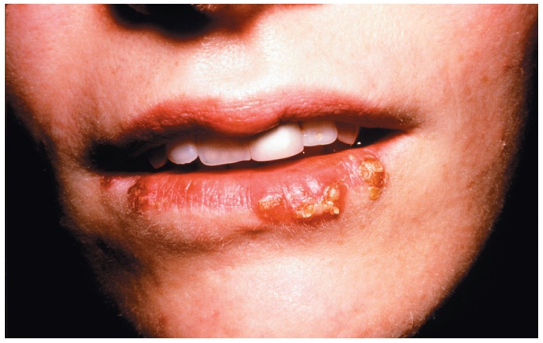
What is HSV-1 triggered by?
Sun, stress, or hormonal changes
What is used to treat HSV-1
Acyclovir
Varicella / Chickenpox
Herpesvirus varicella-zoster (human herpesvirus 3)
Transmitted via the respiratory route
Causes pus-filled vesicles after a 10–14 day
incubation
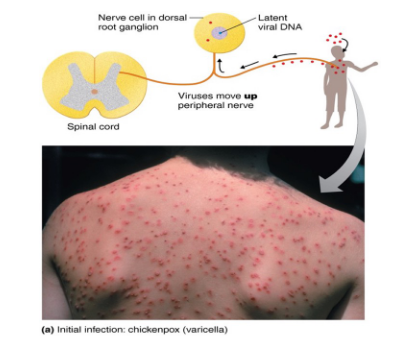
Reye’s syndrome
Severe complications of chickenpox; vomiting and brain dysfunction ; aspirin increase risk
Shingles / Herpes Zoster
Reactivation of the latent varicella-zoster virus that moves from dorsal root ganglia along peripheral nerves to the skin ; due to high stress of lowered immunity
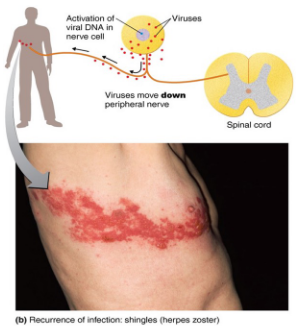
Postherpetic neuralgia
Painful stinging and burning sensation for months to years following shingles
Treatment for Shingles
Acyclovir, valacyclovir, famciclovir may lessen symptoms
Measles
Cold-like symptoms, macular rash, Koplik’s spots
Infected individual sheds virus for several days before
symptoms appearTransmitted by the respiratory route
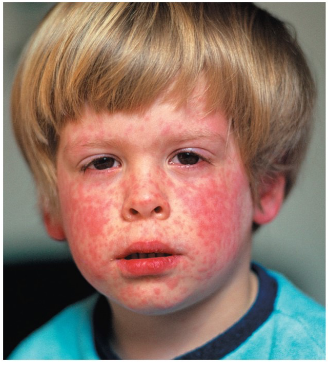
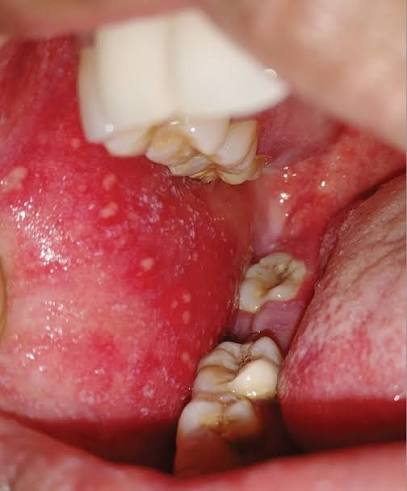
Koplik’s spots
Red spots on the oral mucosa opposite the molars
Subacute sclerosing panencephalitis
A rare, progressive, and fatal neurological disorder caused by a persistent, mutated measles virus infection ; caused by reactivation of old measles virus
MMR Vaccine
Measles, mumps, and rubella vaccine
TORCH Screen
Panel of tests that screens for antibodies to infections in pregnant women or in newborn
TORCH Screen acronym
T - toxoplasmosis
O - other (syphilis, chickenpox, HIV, measles, mumps, hep B)
R - rubella
C - cytomegalovirus
H - herpes simplex
Conjunctivitis / Pink Eye
Inflammation of the conjunctiva ; commonly caused by Haemophilus influenzae
Ophthalmia Neonatorum
Large amount of pus forms; ulceration of corneas results
Caused by Neisseria gonorrhoeae
Transmitted to a newborn’s eyes during passage through
the birth canal
Trachoma
Infection causes permanent scarring; scars abrade the cornea, leading to blindness
Caused by some serotypes of Chlamydia trachomatis
Transmitted via hand contact or flies
Leading cause of blindness worldwide
Trachoma