Chapter 15: Microbial Mechanisms of Pathogenicity
 Call Kai
 Learn
Learn Practice Test
 Spaced Repetition
 Match
Match Flashcards
 Knowt Play
1/40

There's no tags or description
Looks like no tags are added yet.
Name | Mastery | Learn | Test | Matching | Spaced | Call with Kai | Chat |
|---|
No analytics yet
Send a link to your students to track their progress
41 Terms
pathogenicity
ability of pathogen to cause dz in host
virulence
enhanced ability of pathogen to cause infection
virulence factor
characteristic or trait of pathogen that makes it harmful/dangerous (ex. capsules, toxins, antigenic variation → Ag change appearance/composition ex. virus spikes)
mechanisms of pathogenicity
different ways a pathogen can cause an infectious disease
mechanisms of pathogenicity
# of invading microbes
portals of entry
adherence
penetration of host defenses
evasion of host defenses
damage to host cells
portals of exit
portals of entry
mucous membrane @ respiratory, GI, genito-urinary tracts
(broken) skin
parenteral route
non-oral (bypass GI tract)
pathogens deposited into bloodstream
“injection” into blood vessel (ex. needles/insect bites)
number of invading microbes
if # pathogens ↑ → overwhelm host defenses → infection → dz!
some bacteria produce toxins → cause death of host (lethality of toxin)
ID50 (Infectious Dose 50)
# pathogens required to make 50% of population sick
measures virulence of microbe
low ID50 → ↑ infectiousness/virulent (very dangerous)
high ID50 = ↓ infectiousness/virulent
indicator for portal of entry to cause dz

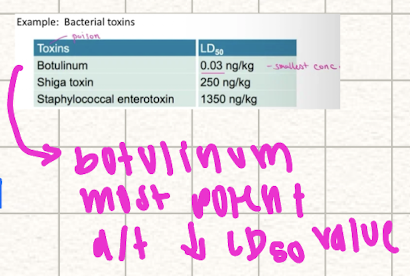
LD50 (Lethal Dose 50)
amount (concentration) of toxin required to kill 50% of population
measures potency of toxin
↓ LD50 = ↑ toxin lethality
↑ LD50 = ↓ toxin lethality
adherence (adhesion)
ability of pathogen to attach to host tissues/cells
bacterial adhesins (ligands)
substances on pathogen that bind to receptors on host cell (may act as VF)
vs. antigenic determinant → binds to Ab
types of adhesins (5)
capsules
fimbriae
*M proteins
*Opa proteins
hooks (anchors)
*in bact. C.W.
coagulase
(penetration factors / bacterial enzymes)
helps form blood clot → stops blood flow → host defenses cannot reach bacterium; bact. can also surround themselves in a clot
kinase
(penetration factors / bacterial enzymes)
breaks down blood clot surrounding bacterium → free to spread
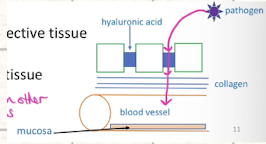
hyaluronidase
(penetration factors / bacterial enzymes)
breaks down hyaluronic acid in connective tissue
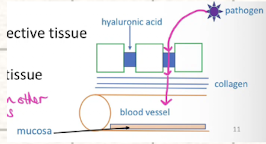
collagenase
(penetration factors / bacterial enzymes)
breaks down collagen in CT
IgA protease
(penetration factors / bacterial enzymes)
destroys IgA antibodies
survival inside phagocytes
(evasion of host defenses)
pathogen escapes from phagosome before lysosomal fusion
prevention of fusion of lysosome w/ phagosome
resist lysosomal enzymes (ex. mycolic acid)
antigenic variation
(evasion of host defenses)
pathogens change their surface antigens (antigenic determinants) via genetic mutations/recombination
a key virulence factor in VIRUSES (w/spikes)
ex. influenza virus, HIV
toxin
(=Ag) poisonous substance acting as Ag produced by pathogens (ex. toxigenic bact.)
may produce fever, cardiovascular problems, diarrhea, shock (sudden ↓ BP)
many cases toxin creates symptoms
key virulence factor in bacteria
exotoxins (3): made of proteins → strong immune response
endotoxins: made of lipids → weak immune response
toxingenicity
ability of pathogen to produce a toxin
toxemia
presence of toxin in bloodstream
toxoid
chemically modified toxin → no longer toxic (harmless - ex. vaccination)
stimulates immune response w/o harming host
antitoxin
antibody/Ig against a toxin (NOT against bact!)
injected into host (artificial passive immunity)
toxin production
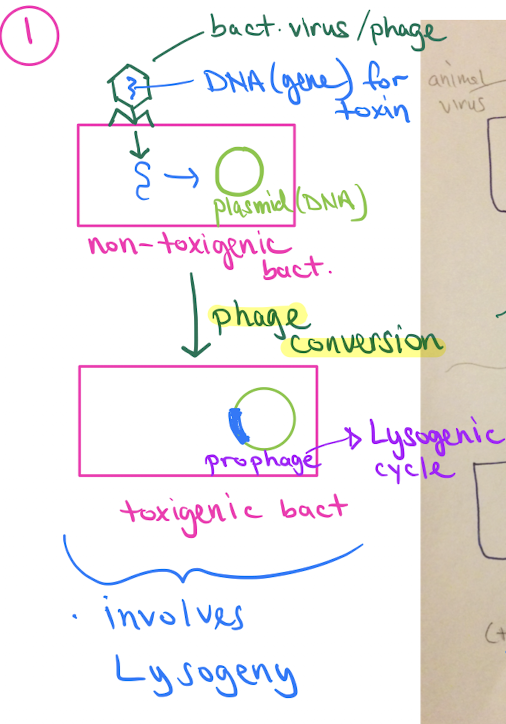
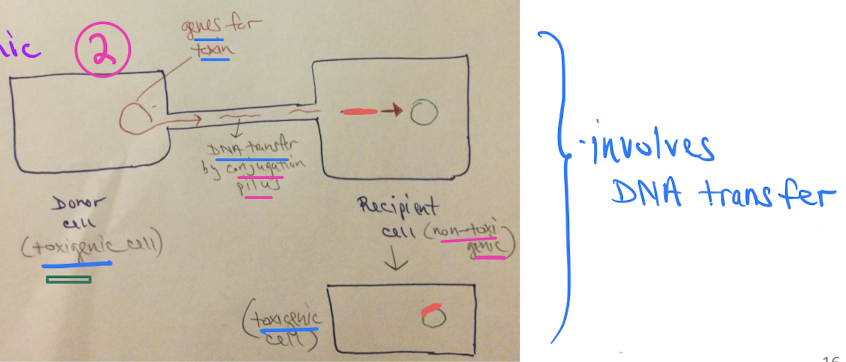
may involve bacterial plasmids that carry genes for toxins
as a result of lysogeny involving phage (bacterial virus) conversion
or
as a result of DNA transfer involving a conjugation pilus
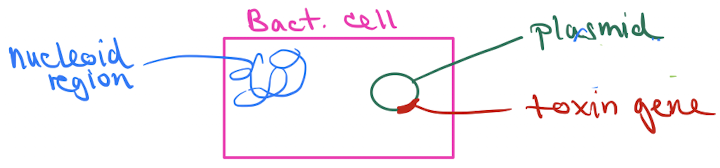
lysogeny (toxin production)
bact. virus/phage contains DNA (gene) for toxin
attach to non-toxigenic bact.
(phage conversion) DNA incorporates w/ non-toxigenic bact. plasmid (DNA)
prophage created via lysogenic cycle
nontoxigenic → toxigenic bact.
DNA transfer (toxin production)
transfer of toxin DNA genes from donor cell (toxigenic cell) to recipient cell (non-toxigenic cell) via conjugation pilus
immunogen
act as an antigen (stimulates immune system)
ex. toxin
stimulates immune system to produce Ab’s
strong immunogen (toxin)
(strong immune response) good stimulator of immune response → Ab’s made → no fever*
ex. protein toxins
*exception: Type I exotoxin (super Ag) produce fever
weak immunogen (toxin)
(weak immune response) poor stimulator of immune response → no Ab’s made → fever
ex. lipid & polysaccharide toxins
exotoxins (7)
bacterial source: secreted by mostly gram-positive (some gram-negative)
location: metabolic byproduct of live bacterium (secreted + released)
comp: PROTEIN (strong immune response)
toxicity: high (↓ LD50)
fever: NO
neutralized by antitoxin (Ab): YES (b/c strong immune response)
LD50: small (very dangerous)
summary: mostly gram positive, protein, no fever
endotoxins (7)
bacterial source: secreted by gram-negative
location: LPS of C.W. outer membrane
comp: LIPID
toxicity: low (↑ LD50)
fever: YES
neutralized by antitoxin (Ab): NO (b/c poor immune response)
LD50: large (not so dangerous)
summary: gram negative, lipid, fever
type I exotoxoms
name: superantigens
characteristics: Ag’s that cause very strong immune response
MOA: super Ag → proliferation of T cells → release cytokines → FEVER, nausea, vomiting, shock
type II exotoxins
name: membrane-disrupting (MD) toxins
characteristics: cause lysis of host cells by disrupting cell membranes
MOA: MD toxins form channels in C.M. OR disrupt phospholipid part of C.M.
type III exotoxins
name: A-B toxins
characteristics: consist of 2 parts (A/B), most common type of exotoxins
MOA: A-B toxins inhibit protein synthesis in host cells
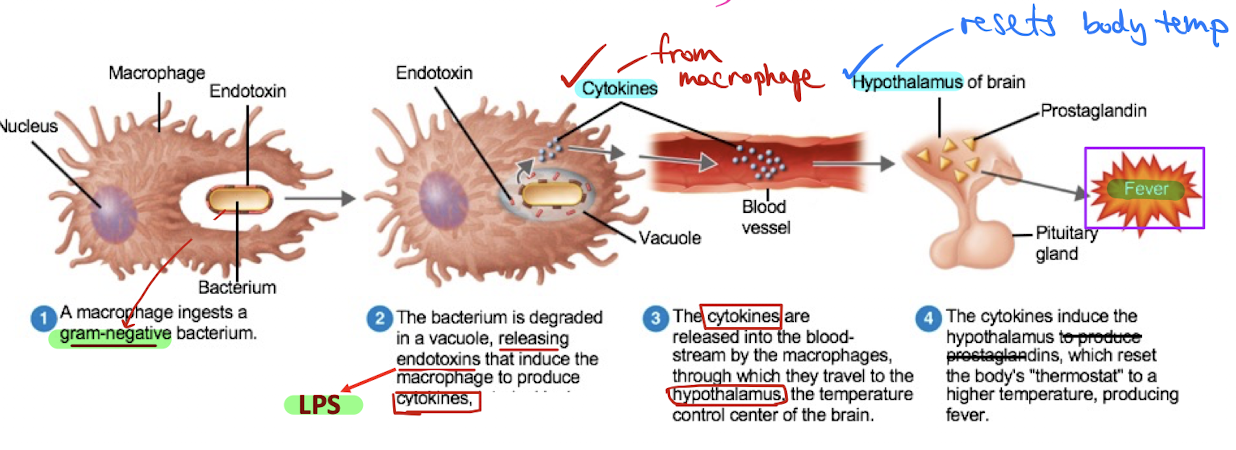
endotoxins & pyrogenic response
endotoxin from dying gram neg. bact. C.W. → LPS → lipid toxin
macrophage ingests gram-negative bacterium
bacterium degraded in a vacuole, releasing endotoxins (LPS) → macrophage produce cytokines
cytokines (from macrophage) released in blood stream → hypothalamus (temp. control center of brain)
hypothalamus reset body’s thermostat to a higher temp → fever
fungal toxins
contaminate food supply
provoke an allergic response
carcinogenic (cancer-causing)
ex. Aflatoxin
parasitic protozoa
(k. protista)
large # protozoa feed on host tissue
cause damage to intestinal lining → diarrhea or dysentery (mucous blood diarrhea)
avoid host defenses by:
growing in phagocytes
antigenic variation (VF)
parasitic helminths (worms)
(k. animalia)
not very pathogenic
use host’s nutrients or tissues w/o killing host
presence in GI tract in ↑ numbers interferes w/ host food absorption → fatigue/weight loss (d/t anemia)
portals of exit (5)
(leave same way they entered the body)
respiratory tract: coughing/sneezing
gastrointestinal tract: feces/saliva
genitourinary tract: urine/genital secretions
skin
blood: arthropods that bite, needles, or syringes