Chapter 4 General Inspection and Measurements of Vital Signs
 Call Kai
 Learn
Learn Practice Test
 Spaced Repetition
 Match
Match Flashcards
 Knowt Play
1/84

There's no tags or description
Looks like no tags are added yet.
Name | Mastery | Learn | Test | Matching | Spaced | Call with Kai | Chat |
|---|
No analytics yet
Send a link to your students to track their progress
85 Terms
axillary, temporal, and tympanic temperatures
For pediatric patients newborn to 5 years of age use:
Axillary temperature
place the probe in the middle of the axilla
Poorly reflects core temperature (not close to major blood vessels
Temperatures are 1 degree lower than oral temperatures

temporal temperature
uses Infrared technology to measure temporal artery temperature
place the disposable cover on the probe
place in the center of the forehead, press the button, and slide along the hairline and behind the ear then release the button
Non-invasive and shows a high level of accuracy in children and critically ill adults

tympanic temperature
measures tympanic membrane temperature
probe is covered and placed inside the external ear canal with firm but gentle pressure
the probe must come into contact with all sides of the ear canal
tug the helix of the ear downward for infants/children
tug helix of the ear upward for adults
impacted cerumen can interfere with the measurement
research has shown that likely due to errors in technique this method may be unreliable

oral temperature
acceptable for ages 5 to adults (hold probe for children)
In adults- smoking, eating, and drinking can impact for 10 minutes
place in the posterior sublingual pocket
measures the temperature of the carotid artery
pacifier thermometers are gaining popularity for infants

rectal temperature
last resort in children because of fear and potential rectal perforation
position children in a side-lying position with knees flexed
lubricate the probe and insert a maximum of 2.5 cm
96.4 F - 99.1 F with an average of 98.6 F
The expected temperature ranges from:
Diurnal variations of 1 F to 1.5 F
The lowest temperature is found early in the morning and the highest temperature is found in the late afternoon and early evening
0.5 F to 1 F at ovulation until the cycle ceases
during the menstrual cycle, a woman's temperature increases by:
newborns temperature
Less effective heat-control mechanisms
Hyperthermia - viral/bacterial infections, dehydration, exposure to heat
Hypothermia - environmental exposure
older adult temperature
Usually lower due to decreased metabolism and less physical activity (97.2 degree F)
oxygen saturation
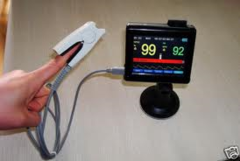
measured with a pulse oximeter
estimates the oxygen saturation of hemoglobin in the blood
probe clipped to finger, toe, ear lobe, or nose
90% to 100% is the normal range
hypoxia
less than 90% oxygen saturation
Low oxygen saturation of the body, not enough oxygen in the blood
heart rate
The number of times the heart beats per minute
commonly assessed indirectly by palpating a pulse
radial artery, brachial artery, carotid artery, and auscultating apical pulse
can find heart rate by palpating the:
apical pulse
auscultation of the heart
usually done in infants
can use bell or diaphragm to count the heart sounds
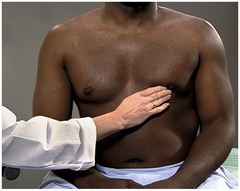
left side of the chest in the 5th intercostal space at the midclavicular line
The apical pulse is located at the:
rhythm
time between each pulsation
rate
number of pulsations per minute
if regular, palpate for 30 seconds and multiply by 2
if irregular, palpate for 1 full minute
infants/children auscultate for 1 full minute
100-160 bpm
infant (1 to 12 months) heart rate:
98-140 bpm
toddler (1 to 3 years) heart rate:
75-118 bpm
school-age child (3 to 12 years) heart rate:
60-100 bpm
adolescent (12-18 years) heart rate:
60-100 bpm
adult heart rate:
increases as much as 10-15 bpm
pregnancy heart rate:
cardia
heart rate
tachycardia
fast heart rate
bradycardia
slow heart rate
respiratory rate
the number of complete ventilator cycles (inspiration/expiration) in one minute
abdominal breathers
men/babies are:
thoracic breathers
women are:
rhythm, depth, and effort
In addition to assessing the respiratory rate, note the:
fever, anxiety, exercise, and increased altitude
elevations of respiratory rate:
30-53 breaths/min
newborn (birth to 28 days) or infant (1 month-12 months) respiratory rate:
22-37 breaths/min
toddlers (1 to 3 years) respiratory rate:
18-25 breaths/min
school-age children (3 to 12 years) respiratory rate:
12-20 breaths/min
adolescent (12 to 18 years) respiratory rate:
12-20 breaths/min
adult respiratory rate:
pnea
respiratory rate or breathing
tachypnea
fast respiratory rate or breathing
bradypnea
slow respiratory rate or breathing
pediatric blood pressure assessment
measurement should occur with every health visit over age 3
may be taken in arm or leg
less than 120 and less than 80
normal blood pressure
120-129 and less than 80
elevated blood pressure
130-139 OR 80-89
stage 1 hypertension
140 or higher OR 90 or higher
stage 2 hypertension
180 or higher OR 120 or higher
hypertensive crisis
blood pressure
measurement of the force of blood against arterial walls
reflects the relationship between cardiac output and peripheral resistance
systolic blood pressure
maximum pressure on arteries when ventricles contract
diastolic blood pressure
minimum blood pressure exerted on vessels as ventricles are relaxed
pulse pressure
difference between systolic and diastolic pressure
usually 30-40 mmHg is expected
Example: 120-80 mmHg = 40 mmHg
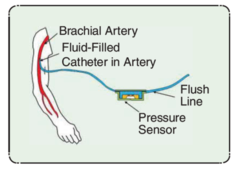
direct blood pressure
invasive procedure of inserting catheter into an artery
continuous measurement and arterial waveforms
used in critical care setting
indirect blood pressure
includes manual blood pressure and automated blood pressure
manual blood pressure
auscultation of sounds using sphygmomanometer

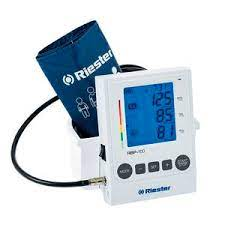
automated or oscillometric blood pressure
detection of blood flow vibrations and converts to electrical impulses
blood pressure auscultation method
Blood flows freely until the inflated cuff occludes the artery and silences sound.
As pressure is released listen for Korotkoff sounds (clear rhythmic thumping)
first Korotkoff sound
systolic blood pressure
Fifth Korotkoff sound
when the sound disappears
diastolic blood pressure
age, gender, pregnancy, race, diurnal variations, emotions, pain, personal habits, and weight
physiologic factors that affect blood pressure are:
patient's legs crossed, arm below the level of heart, cuff bladder is too narrow, cuff is too loose, reinflating without complete deflation, and failure to wait 1-2 minutes before repeating measurements
false high blood pressure:
the patient's arm is above the level of the heart, the cuff is too wide, not inflating enough, deflating cuff too quickly (faster than 2 mmHg per second), and pressing diaphragm too firmly on brachial artery
false low blood pressure:
midway between the olecranon and acromial process
the arm circumference should be measured:
80 to 100% of arm circumference
cuff bladder length:

40% of arm circumference
cuff bladder width:

orthostatic hypotension
a decrease in systolic blood pressure of at least 20 mmHg or a decrease in diastolic blood pressure of at least 10 mmHg when the patient moves from a lying or sitting position to standing
systolic 72-104 and diastolic 37-56
newborn (birth to 28 days) blood pressure:
systolic 86-106 and diastolic 42-63
toddler (1 to 3 years) blood pressure:
systolic 97-115 and diastolic 57-76
school-age children (3 to 12 years) blood pressure:
systolic 110-131 and diastolic 64-83
adolescent (12-18 years) blood pressure:
systolic less than 120 and diastolic less than 80
adult blood pressure:
height assessment
Taken at every visit until age 18-20years
Infants - recumbent length (head to heel)
Have the patient stand on the scale without shoes
Move the headpiece to the top of head
Record in inches or centimeters
Adult height is achieved between 18-20years
Most older adults have a decrease r/shortening of vertebrae and thinning vertebral disks
weight assessment
taken at every visit until age 18-20 years
Infant: platform scale. Has curved sides to keep the infant from rolling off. Place paper on the scale. Child in a dry diaper.
Older adult: may need handles on the scale or close by
BMI is calculated beginning at age 2
Pregnancy: target weight gain is 25-35pounds for normal prepregnancy weight
Unintentional changes can be a significant finding
Fluid retention- 1 L of fluid increases weight by 2.2 lbs. (1 kg)
Older adults: over 80 yrs may decrease r/tmuscle wasting and a decrease in water
skinfold caliper
a tool used to measure the thickness of subcutaneous tissue

wood lamp
used to detect fungal infections of the skin or corneal abrasions of the eye

ophthalmoscope
the instrument used to inspect the internal structures of the eye

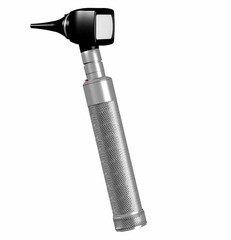
otoscope
the instrument used to inspect external auditory canal and tympanic membrane
audioscope
used to perform basic screening for hearing acuity
The patient is instructed to raise an index finger when the tone is heard, which should correspond to the light seen on the audiometer

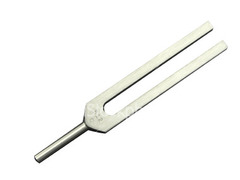
tuning fork
auditory screening and assessment of vibratory sensation
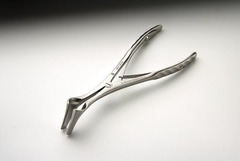
nasal speculum
Spreads opening of nares to inspect internal surfaces of nose
doppler
a device that amplifies sounds that are difficult to hear with an acoustic stethoscope

goniometer
an instrument used to measure the flexure or extension of a joint

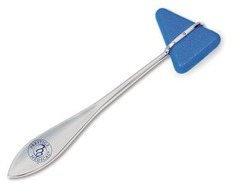
percussion hammer
an instrument with a rubber head, used for testing reflexes
monofilament
an instrument used to test for sensation on the lower extremities

vaginal speculum
an instrument used to open the vagina to examine it and the cervix
transilluminator
used to differentiate the characteristics of tissue, fluid, and air within a specific body cavity
